

A stolen zero-turn mower, a crew stuck in traffic on the way to job three, a timecard nobody can quite verify. These are the everyday leaks that quietly drain a landscaping company's margin, and they rarely show up until you add up the year.
GPS tracking for landscaping closes those leaks. A tracker plugged into a truck or hidden on a trailer gives you a live, timestamped record of where every vehicle and piece of equipment is, all day, every day. For a landscaping business running two, five, or a dozen vehicles, that visibility turns into faster routes, lower fuel spend, fewer stolen mowers, and payroll numbers you can actually trust. This guide walks through exactly how it works, what to look for in a system, and how to pick the right tracker for your trucks, trailers, and equipment.
Quick answer: GPS tracking for landscaping uses a small device plugged into a truck's OBD-II port or hidden on a trailer or mower to send live location, route, and usage data to an app. Landscaping companies use it to optimize crew routes, cut fuel and idle time, verify job-site arrivals for payroll and billing, and get an instant alert if a truck or piece of equipment moves without authorization.
What Is GPS Tracking for Landscaping?
GPS tracking for landscaping is the use of GPS-enabled devices, plugged into trucks or hidden on trailers and equipment, to monitor the real-time location, movement, and usage of a landscaping company's mobile assets. Instead of relying on a phone call or a guess at where a crew is, an owner or dispatcher opens an app and sees exactly where every truck, trailer, and mower has been.
How It Actually Works
A GPS tracker uses satellite signals to pin down a vehicle's location, then sends that data over a cellular network to an app on your phone or computer. There are two hardware types worth knowing:
- OBD-II plug-in trackers plug into the diagnostic port under a truck's dash, pull power from the vehicle, and need no wiring or tools. Good for company trucks and vans that always have power.
- Battery-powered trackers run on a rechargeable battery and magnet-mount anywhere, no OBD port required. Good for trailers, mowers, and other equipment with no power source of its own.
Most systems refresh every 5 to 60 seconds while a vehicle is moving, log the full route for later playback, and let you draw a geofence, a virtual boundary around a job site or storage yard, that triggers an alert the moment a truck or trailer crosses it unexpectedly.
Why Landscaping Companies Are Switching to GPS Fleet Tracking
Landscaping is a mobile, asset-heavy business, several crews, multiple trucks, and thousands of dollars in equipment moving between job sites every day. That combination makes landscaping operations especially exposed to the two costs GPS tracking targets directly: fuel waste and equipment theft.
Equipment theft alone is a real number. The National Equipment Register estimates $300 million to $1 billion in construction and landscaping equipment is stolen every year, and recovery rates without a tracker stay low. On the growth side, Grand View Research projects the global landscaping services market will reach $484.8 billion by 2030, meaning more trucks, more crews, and more equipment on the road competing for the same job sites and the same margins.
A gps fleet tracking for landscaping company setup addresses both sides at once: it protects the assets you already own and makes the crews using them more efficient.
7 Ways GPS Tracking Maximizes Efficiency for Landscaping Operations
1. Optimized Routes Between Job Sites
Route optimization is where GPS tracking pays for itself fastest. With live crew positions on a map, a dispatcher can assign a new customer request to whichever crew is actually closest, not whoever answers the phone first. Comparing planned routes against actual routes over a few weeks also surfaces patterns, a crew consistently taking a slower path, a stop that could be reordered, that quietly add up to more completed jobs per day.
2. Lower Fuel and Idle-Time Costs
Fuel is one of the largest controllable costs in landscaping operations. GPS tracking flags excessive idling, unauthorized after-hours use, and inefficient routes, three of the biggest sources of fuel waste. Reviewing that data weekly, not quarterly, is what actually moves the needle on operational costs.
3. Theft Prevention and Faster Recovery
A tracker hidden on a trailer, mower, or piece of heavy equipment does two things: it deters theft in storage yards and job sites through geofencing alerts, and if something does go missing, it gives you the last known location to hand to police instead of a guess. For high-value assets like a zero-turn mower or an enclosed trailer, this alone can justify the cost of the system.
4. Real Crew Accountability, Not Guesswork
When crews know their location is visible, unsafe driving, unauthorized stops, and off-route detours drop. Real-time tracking gives managers a factual record instead of a he-said-she-said conversation, which improves both safety and trust on the team.
5. Accurate Time Tracking and Payroll
Timestamped geofence records show exactly when a crew arrived at and left a job site, automatically. That eliminates padded hours, resolves billing disputes before they start, and makes payroll and invoicing something you calculate instead of negotiate.
6. Proactive Maintenance Alerts
Automated maintenance reminders, tied to mileage or engine hours, help you service a truck or piece of equipment before it breaks down mid-job. Keeping ahead of maintenance extends the life of landscaping equipment and avoids the much larger cost of an emergency repair or a missed job.
7. Verified Customer Communication
Clients increasingly expect proof, not just a promise, that the work happened on schedule. GPS logs give you accurate arrival windows to share with customers and a timestamped record of service completion, which improves customer satisfaction and cuts down on "did anyone actually show up" disputes.
The pattern across all seven
Every one of these efficiency gains comes from the same source: turning "we think" into "we know." GPS tracking doesn't add work to a landscaping business, it removes the guesswork that was costing time and money in the background all along.
GPS Tracker for Trucks vs. Trailers & Equipment: Which Do You Need?
Most landscaping companies actually need both hardware types, just for different assets. Here's the split:
| Asset | Best tracker type | Why |
|---|---|---|
| Company trucks & vans | OBD-II plug-in | Vehicle-powered, plugs in under 2 minutes, no maintenance |
| Trailers | Battery-powered, magnet-mount | No power source of its own, needs to hide or mount anywhere |
| Zero-turn mowers & heavy equipment | Battery-powered, weatherproof | Exposed to dust, rain, and vibration; no OBD port |
| Storage yard / job site boundary | Geofencing on either device | Alerts on unauthorized movement regardless of asset type |
ShadowGPS covers both sides of that split. ShadowAuto is the OBD-II tracker built for trucks and vans, ShadowTrack is the battery-powered, weatherproof tracker built for trailers and equipment that don't have their own power.
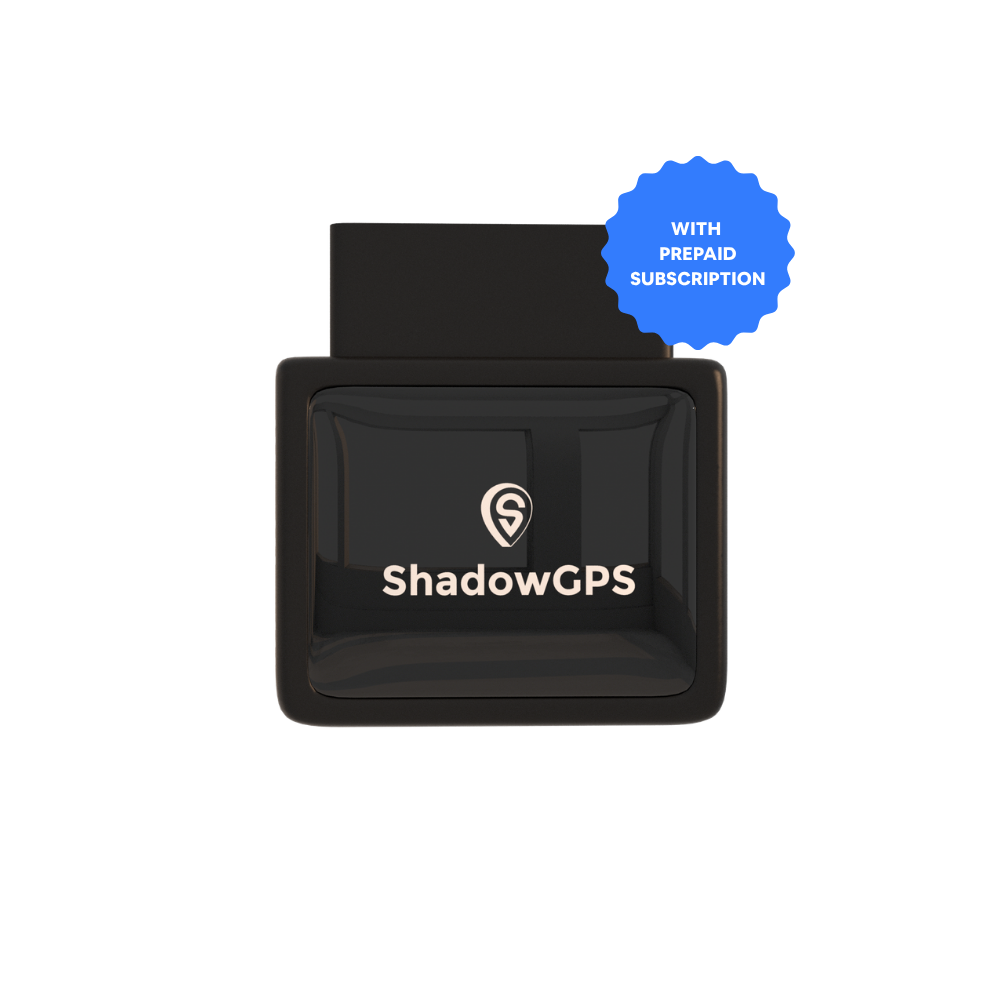
ShadowAuto
- Plugs into the OBD-II port in under 2 minutes
- Updates every 5 seconds while the truck is moving
- Vehicle-powered, zero maintenance, engine diagnostic codes


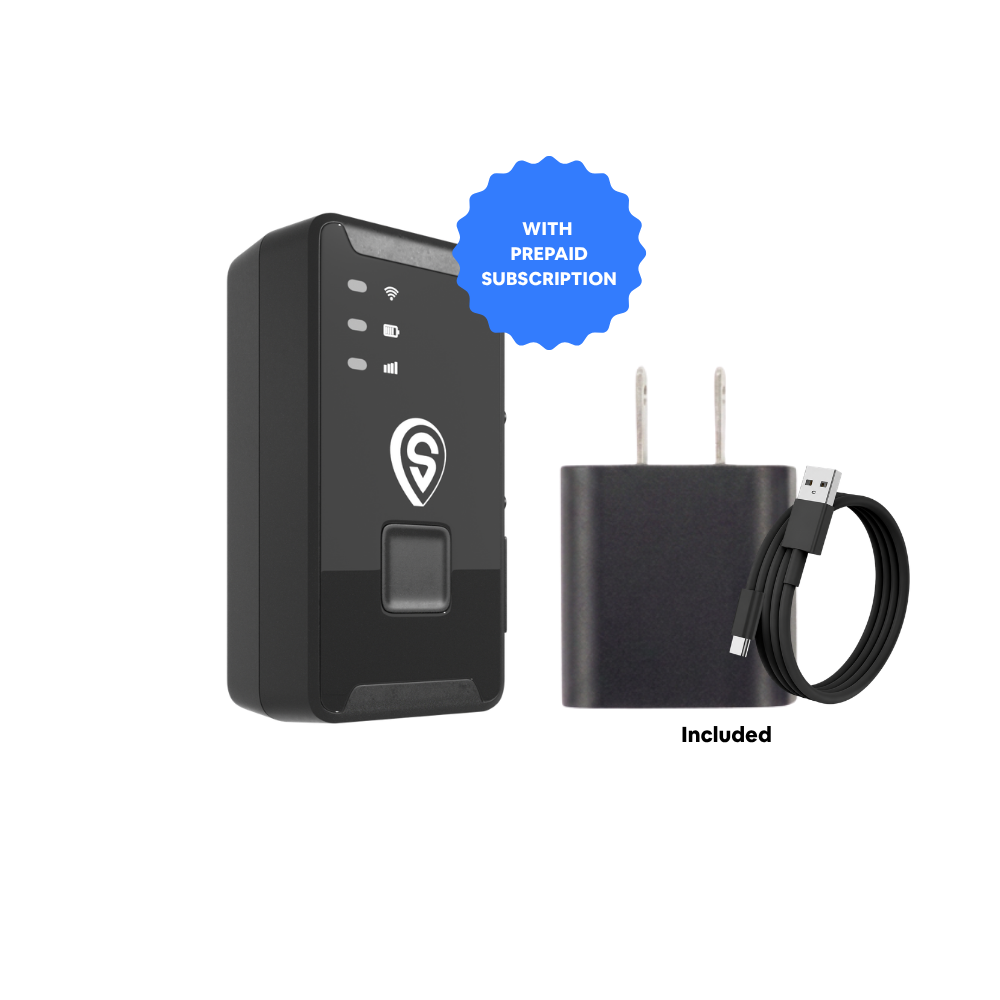
ShadowTrack
- Magnet-mounts or hides anywhere in under 2 minutes
- Weatherproof case built for dust, rain, and vibration
- Rechargeable battery, roughly 15 days per charge
How to Choose the Right GPS Tracking System
Not every tracker fits a landscaping operation. Before buying, check a system against these five criteria:
- Refresh rate: a tracker that updates every 5 seconds gives you real-time decisions, one that updates every 60 seconds gives you a rough history.
- Durability: landscaping equipment lives in dust, heat, and rain, look for a weatherproof, commercial-grade case, not a consumer gadget.
- No contract: a landscaping business is seasonal, month-to-month billing beats a locked-in annual contract you can't scale down in winter.
- Geofencing: confirm the app lets you draw a custom boundary around job sites and your storage yard with instant alerts.
- Setup time: plug-in or magnet-mount, not a wiring job, so a crew of five can be tracked in an afternoon, not a week.
Is It Legal to Put a GPS Tracker on a Company Vehicle?
Yes. It's legal in all 50 states to GPS track a vehicle your business owns. Courts have consistently upheld this, including Elgin v. St. Louis Coca-Cola Bottling Co., which affirmed an employer's right to track company-owned vehicles. Roughly ten states, including New York, Connecticut, Delaware, and California, require written notice or consent before tracking begins, so put your tracking policy in writing and share it with your crew even where it isn't strictly required.
The legal question only gets complicated with vehicles your business doesn't own, an employee's personal truck used for a job, for example. For company-owned trucks, trailers, and equipment, you're on solid legal ground. For the full state-by-state breakdown, Freightwaves Checkpoint's GPS tracking laws guide is a useful reference.
A Day in the Life: With vs. Without GPS Tracking
7:00 AM, no tracking
Dispatcher texts three crews asking where they are, waits for replies, guesses at the closest one for a new same-day request.
7:00 AM, with tracking
Dispatcher opens the app, sees all three crews on the map, assigns the new job to whoever's closest without a single phone call.
5:00 PM, invoicing
Without tracking it's a memory and a paper timecard. With tracking it's a timestamped geofence log, ready for payroll and the client invoice.
Common Mistakes to Avoid
Mistake 1: Buying the tracker and ignoring the data
A GPS system only pays off if someone reviews the route and idle-time reports weekly. Set a recurring 15-minute check-in, not a quarterly afterthought.
Mistake 2: Choosing a consumer gadget over a commercial-grade tracker
A tracker built for tagging luggage won't survive a season of mowing dust and rain. Match the hardware to the job it's actually doing.
Mistake 3: Skipping crew training
Even the best tracker fails if the dispatcher and crew leads don't know how to read the map and the alerts. Budget 30 minutes for a walkthrough before go-live.
Mistake 4: Tracking without telling anyone
Even in states where consent isn't required, a written policy shared with your crew builds trust and heads off any "why is my truck being tracked" conversation before it starts.
GPS Tracking ROI for Landscaping Businesses
The cost side is straightforward: hardware, a monthly fee, and optional professional installation for a larger fleet. The return shows up across several line items at once.
| Cost driver | Without GPS tracking | With GPS tracking |
|---|---|---|
| Fuel & idle time | Untracked, estimated only | Flagged and reduced through route data |
| Equipment theft | Full loss, slow or no recovery | Geofence alert + last known location |
| Payroll accuracy | Manual timecards, disputed hours | Automatic, timestamped arrival/departure |
| Maintenance | Reactive, breakdown-driven | Scheduled alerts before failure |
| Crew visibility | Phone calls and guesswork | Live map, real time |
Frequently Asked Questions
How much does a fleet GPS tracker cost?
Expect a device cost plus a monthly fee per tracker, with no long-term contract. Reframe the price as value, not a discount, faster refresh rates and rugged, weatherproof hardware cost more than a basic consumer tracker for a reason.
Is it illegal to put a tracking device on a company vehicle?
No. It's legal in all 50 states to track a vehicle your business owns. About ten states require written notice to employees first, so put your policy in writing even where it's optional.
What is a good GPS tracker for lawn equipment?
Look for a battery-powered, weatherproof tracker that magnet-mounts, since mowers and trailers don't have an OBD-II port to plug into. ShadowTrack is built for exactly this.
Do I need my employees' consent to GPS track a company truck?
Not in most states, since the company owns the vehicle. A handful of states require written notice before tracking begins. Sharing a written policy with your crew is good practice everywhere, required or not.
What's the difference between an OBD-II and a battery-powered GPS tracker?
An OBD-II tracker plugs into a truck's diagnostic port and draws power from the vehicle, no maintenance. A battery-powered tracker recharges on its own schedule and can be hidden or mounted anywhere, which makes it the better fit for trailers and equipment.
Plug it in. See it move. Cancel any time.
Match the right ShadowGPS tracker to your trucks, trailers, and equipment, no contract, ever.
Sources: National Equipment Register (equipment theft loss estimate), Grand View Research (landscaping services market size), Freightwaves Checkpoint (GPS tracking law summary). Last updated September 2026.

