

You're staring at a tracker on your screen, cart half-loaded, and one question is holding up the whole purchase: does this thing need a SIM card to actually work?
It's a fair question, and it trips up more buyers than you'd think. The short version is "usually, yes, if you want real-time tracking," but the full answer depends on which kind of tracker you're looking at and what you actually need it to do.
This guide breaks down exactly how the SIM card fits into a GPS tracker, which trackers skip it entirely, what kind of SIM card actually belongs in one, and what it costs to keep one running month to month.
Yes, most GPS trackers need a SIM card to send you real-time location updates. The GPS chip finds the location; the SIM card is what sends that location to your phone over a cellular network. Without one, a tracker can only log where it's been, not tell you where it is right now. The exception is Bluetooth trackers and satellite trackers, which use different connections entirely.
How a GPS tracker actually finds you, and why a SIM card comes into it at all
A GPS tracker does two separate jobs, and it's easy to blur them together.
The first job is figuring out where it is. A tracker's GPS receiver talks to satellites in the Global Positioning System and calculates its own latitude and longitude. This part has nothing to do with a SIM card. It works the same way your phone's Maps app works when you're off Wi-Fi.
The second job is telling you where it is. This is where the SIM card comes in. Once the tracker knows its own location, it needs a way to get that information off the device and onto your phone or laptop. A SIM card lets the tracker connect to a mobile network, the same kind your cell phone uses, and push that location data to a central server. From there, an app or web dashboard pulls it up for you.
Put plainly: GPS finds the location. The SIM card and mobile network deliver it. A tracker without a data connection is a device that knows where it is and has no way to tell you.
The five-step trip your location data actually takes
1. The GPS receiver calculates exact coordinates. 2. The tracker packages that with speed, direction, and battery data. 3. The SIM card connects to the nearest cell tower. 4. The data transmits over the internet to a central server. 5. The server processes it and pushes it to your app, where you see the dot move.
Do GPS trackers need a SIM card? It depends which type you're buying

Not every tracking device for vehicles works the same way. Here's how the main categories actually break down.
1. Cellular GPS trackers (SIM card required)
These are the trackers most people picture when they hear "GPS tracker for my car." A SIM card, sometimes a physical card, sometimes a built-in eSIM, connects the device to a cellular network so it can send continuous, real-time location updates.
This is the category ShadowAuto and ShadowTrack fall into, and it's the standard for anyone who wants to open an app and see exactly where their vehicle is right now, not where it was an hour ago.
Pros
- Real-time, continuous location updates
- Alerts for speeding, geofence exits, and towing
- Works anywhere there's cell coverage
Cons
- Needs a monthly data plan or fee
- Updates pause in dead zones with no signal
Best for: anyone who wants to know where their car or truck is right now, not just where it's been.
2. Satellite GPS trackers (no SIM card)
These skip cell towers entirely and transmit over satellite networks instead. Because they're not tied to cellular coverage, they can send a signal from places a normal tracker never could, deep backcountry, open water, or remote job sites.
The tradeoff is real. Devices and service plans both run more expensive, and updates tend to arrive slower and less frequently than a cellular tracker's live feed.
Best for: assets that regularly travel off the grid, far outside any cell tower's reach.
3. Bluetooth trackers (no SIM card)
Bluetooth trackers, the kind you'd clip to keys or a bag, use GPS or Bluetooth signal to find themselves but only communicate over short range, typically 100 to 200 feet, to a nearby phone. No SIM, no cellular bill, no long-distance range.
Best for: finding something nearby that's gone missing in the house, the car, or a hotel room. Not a fit for tracking a vehicle across town.
4. GPS data loggers (no SIM card)
GPS loggers record location data locally, on the device itself, without transmitting anything in real time. You get the history only after you physically retrieve the device and download it.
Best for: after-the-fact trip logging, like mileage records, where you don't need to see the dot move today.
The SIM card question people actually mean: does mine need a special one?
Once buyers understand a SIM is involved, the next question is usually whether any SIM card will do. It won't. GPS trackers rely on M2M (machine-to-machine) or IoT SIM cards, not a standard phone SIM.
Here's the distinction that trips people up: a standard mobile SIM card, the kind in your phone, supports voice, text, and data. A data-only SIM strips out voice and text and keeps just the data connection. That sounds like it should be enough for a tracker, but it isn't. Many GPS trackers still rely on SMS commands for things like configuration, remote resets, or status checks, so a data-only SIM can quietly disable essential functions even though the tracker still seems to power on fine.
M2M and IoT SIM cards solve this by supporting the full set of voice, text, and data capabilities a tracker actually uses, while being built specifically for low-bandwidth, uninterrupted device-to-device communication rather than a person's daily calls and browsing. Many can also switch automatically between carrier networks to hold onto the strongest signal as a vehicle moves, something a standard consumer SIM generally isn't built to do.
| SIM type | Voice & text support | Built for | Good fit for a tracker? |
|---|---|---|---|
| Standard mobile SIM | Yes | Phones (calls, texts, browsing) | Not designed for it |
| Data-only SIM | No | Data-only devices | No, can disable SMS-based functions |
| M2M / IoT SIM | Yes | Low-bandwidth device communication | Yes, this is the correct type |
Most tracker manufacturers, ShadowGPS included, handle the SIM provisioning and network switching for you, so this isn't something you have to shop for or configure yourself. It's worth knowing the difference mainly so you understand why "just pop in an old phone SIM" isn't a workaround, and why APN settings occasionally need to be right on trackers that do let you install your own SIM.
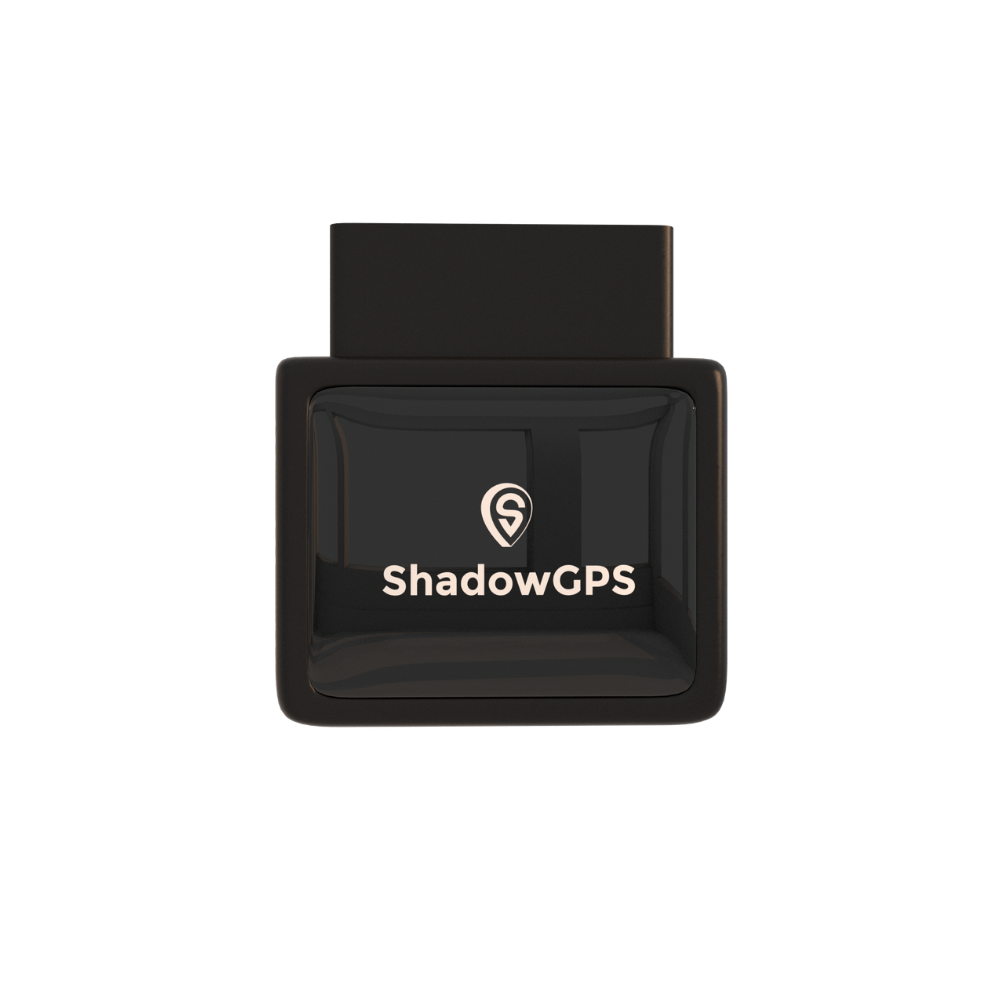
ShadowAuto (pre-installed SIM)
- Updates every 5 seconds while moving
- SIM and network switching handled for you
- Car Alarm & vehicle diagnostics


What it actually costs to run a SIM-based tracker
This is usually the second question, right behind "does it need a SIM." Monthly SIM costs on their own tend to run in the $5.00 to $7.00 range for a prepaid, low-data M2M plan, though this is only one piece of what you pay.
- Hardware: the one-time cost of the tracker itself.
- Monthly service fee: covers the SIM's data usage plus access to the tracking app or dashboard.
- Platform or app fees: some fleet-style systems charge separately for software access.
What actually moves that monthly number up or down comes down to a few factors: how often the tracker checks in, how many alerts it's sending (more geofence pings and speed alerts mean more data transmitted), and whether it's on a cellular or a pricier satellite connection. Automatic top-up features on prepaid data plans are worth having too, since they quietly prevent a lapsed SIM from silently killing your tracking mid-month.
ShadowGPS folds the SIM and data costs into one flat monthly fee, $12 to $15 a month depending on the plan, after a 14-day free trial, with no contract and no surprise line items for alerts or updates.
When you genuinely don't need a SIM card
A SIM-free tracker isn't automatically the wrong choice. It's the right one in a few specific situations.
Nearby, low-stakes items
Keys, a bag, or a bike parked in view. A Bluetooth tracker's short range is plenty, and it's genuinely more cost-effective long-term with zero monthly fee.
After-the-fact mileage logs
If you only need a record of where a vehicle went, not where it is this second, a GPS data logger stores everything locally with nothing to subscribe to.
Truly off-grid assets
Equipment or vehicles that spend real time outside cell coverage need a satellite connection instead of a SIM, not because a SIM is optional but because cellular isn't an option there at all.
Outside of those cases, real-time tracking capabilities, the kind a parent watching a teen driver or a Turo host checking on a rental actually wants, require a live data connection. That means a SIM card, full stop.
Read: Best SIM Card for GPS Tracker
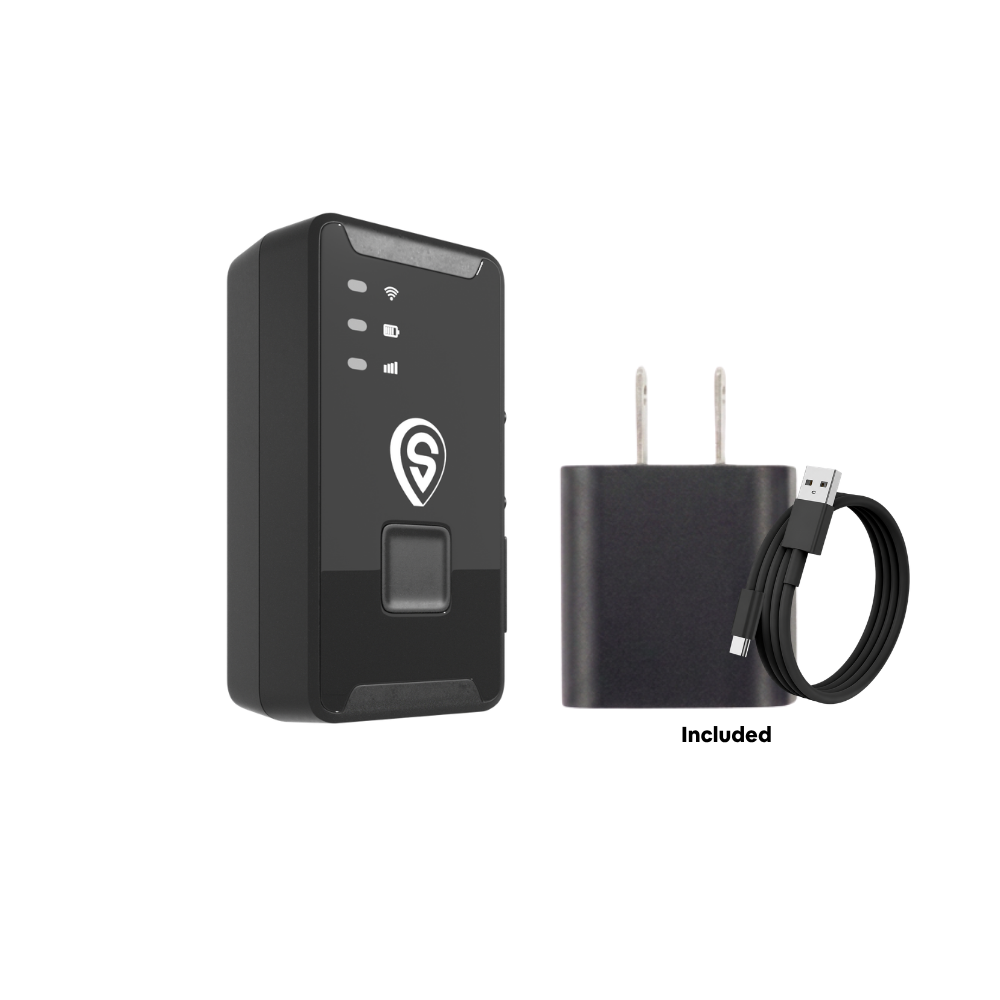
ShadowTrack (pre-installed SIM)
- Updates every 5 seconds while moving
- Weatherproof, magnetic mount
- Up to ~15 days per charge
Cellular vs. satellite vs. Bluetooth vs. logger, side by side
| Tracker type | Needs a SIM? | Real-time updates? | Range | Typical monthly cost |
|---|---|---|---|---|
| Cellular (ShadowAuto / ShadowTrack) | Yes, M2M SIM | Yes, every 5 sec while moving | Anywhere with cell coverage | $12–$15 |
| Satellite tracker | No | Limited, slower intervals | Global, including off-grid | $12–$50+ |
| Bluetooth tracker | No | No, proximity only | ~100–200 ft | $0 |
| GPS data logger | No | No, retrieved manually | N/A, stored locally | $0 |
Frequently asked questions
Do all GPS vehicle trackers need a SIM card to work?
No. Cellular GPS trackers need a SIM card for real-time updates, but satellite trackers, Bluetooth trackers, and GPS data loggers all work without one. If you want live location for a car or truck, though, a SIM-based tracker is the standard choice.
Is there a monthly fee if my tracker uses a SIM card?
Yes, a SIM card connection comes with a monthly cost to cover data usage and app access. A basic prepaid M2M plan alone runs around $5 to $7 a month, and ShadowGPS bundles the SIM and full tracking service into one flat $12 to $15 monthly fee after a 14-day free trial, no contract, ever.
Can I put my own phone SIM card into a GPS tracker?
Generally, no. Trackers rely on M2M or IoT SIM cards built for low-bandwidth device communication, with voice, text, and data support that many trackers use for SMS-based commands. A standard mobile SIM, or a data-only SIM, can leave essential tracker functions disabled.
What happens if my GPS tracker doesn't have a SIM card?
Without a SIM card, a tracker can still find its own location using GPS, but it has no way to send that location to your phone in real time. Data loggers store it locally for later download, and Bluetooth trackers only share it with a nearby phone over short range.
Is a GPS tracker without a SIM card more cost-effective?
Over time, yes, since there's no monthly SIM data cost to pay. The tradeoff is losing real-time tracking capabilities. For low-stakes items like keys or a bag, that tradeoff makes sense. For a vehicle you actually want to locate right now, most owners find the monthly fee worth the peace of mind.
Can multiple devices or vehicles share one SIM card?
No, each GPS tracker needs its own SIM card and its own data connection, since each one is transmitting its own location independently. If you're tracking multiple vehicles, expect a separate monthly fee per device, though most providers, ShadowGPS included, offer per-vehicle pricing that stays flat regardless of fleet size.
Know where it is. Every 5 seconds.
Plug it in, see it move, cancel any time. No contract, ever.
This guide reflects pricing, specifications, and SIM/network information published as of August 2026. Subscription pricing and features are subject to change by each manufacturer; confirm current plan pricing before purchasing. Amazon links are affiliate links; ShadowGPS may earn a commission at no extra cost to you.

