

You're standing in the parking lot, phone in hand, trying to decide between a $29 AirTag from the shelf at Target and an actual GPS tracker for your car. Both promise the same basic thing: know where it is. Only one of them actually delivers on that promise once your car is moving, or gone.
The confusion is fair. Apple markets AirTag with location language, reviewers compare it to "real" trackers, and on paper the price gap looks like a no-brainer. But an AirTag and a GPS tracker are built on completely different technology, and that difference decides whether you get a live location or a shrug when it matters most.
Below, we break down exactly how each one works, where AirTag genuinely wins, where a GPS tracker is the only real option, and what a parent, a Turo host, or a small fleet owner should actually buy for a vehicle.
A GPS tracker beats an AirTag for anything that drives away. AirTag is a $29 Bluetooth tag that borrows location updates from nearby iPhones, so it has no independent GPS radio and goes quiet in areas without Apple devices around it. A GPS tracker like ShadowAuto or ShadowTrack has its own GPS radio and cellular connection, so it reports your car's exact position every 5 seconds, anywhere there's cell coverage, whether an iPhone is nearby or not.
How an Apple AirTag Actually Works
An AirTag has no GPS radio and no gps trackers work like this at all: it's a small Bluetooth beacon. It broadcasts a low-power bluetooth signal, and any nearby apple device, an iPhone, iPad, or Mac signed into Find My, quietly picks up that signal and reports the AirTag's approximate location back to Apple's servers.
This is Apple's "Find My" crowdsourced network, sometimes called Precision Finding when you're within ultra wideband range of your own iPhone. It's a clever piece of technology, and it's genuinely useful for tracking objects you misplace around town: keys, a backpack, a suitcase.
But notice what's missing. There's no gps radio inside the tag itself, no cellular connection, and no way for the AirTag to determine its own coordinates. Every location update depends entirely on some other apple device happening to pass within bluetooth range. Take away nearby apple devices, and the AirTag goes dark.
Where AirTag shines
- $29, no monthly subscription fee
- Long battery life, about 12 months on one coin cell
- Great for keys, a bag, or a suitcase
- Works well in cities with lots of nearby apple devices
Where it falls short for a car
- No independent gps tracking, only bluetooth range (about 30 meters, max)
- No real time tracking, only whenever a device happens to pass by
- Ineffective in remote areas with no apple device nearby
- No speed alerts, no trip history, no geofencing
Apple AirTag
Small, round, and easy to drop in a glove box or bolt under a bumper. It's a fine backup for personal items, and plenty of people use it that way.


Best for: keys, bags, and other personal items you might misplace nearby, not a car you need to find after it's driven off.
How a Real GPS Tracker Works
A gps tracker for your car carries its own gps radio. It listens directly to global positioning system satellites, calculates its exact position, and then transmits that location over a cellular connection, the same kind of network your phone uses. No nearby apple device required, no waiting for a stranger's iPhone to drive past.
That's the entire difference in one sentence: an AirTag borrows other people's phones to guess where it is, while a gps tracker figures out where it is on its own and tells you directly. This is why gps tracking works anywhere there's cellular connection, from a downtown garage to a gravel road two hours outside town.
ShadowAuto plugs into your car's OBD-II port in under 2 minutes and pulls power straight from the vehicle, so it never needs charging. ShadowTrack is the battery-powered version, built for a magnetic, hidden mount on a trailer, a motorcycle, or any vehicle without an OBD-II port. Both update your car's position every 5 seconds while moving, giving you real time tracking instead of a last-known guess.
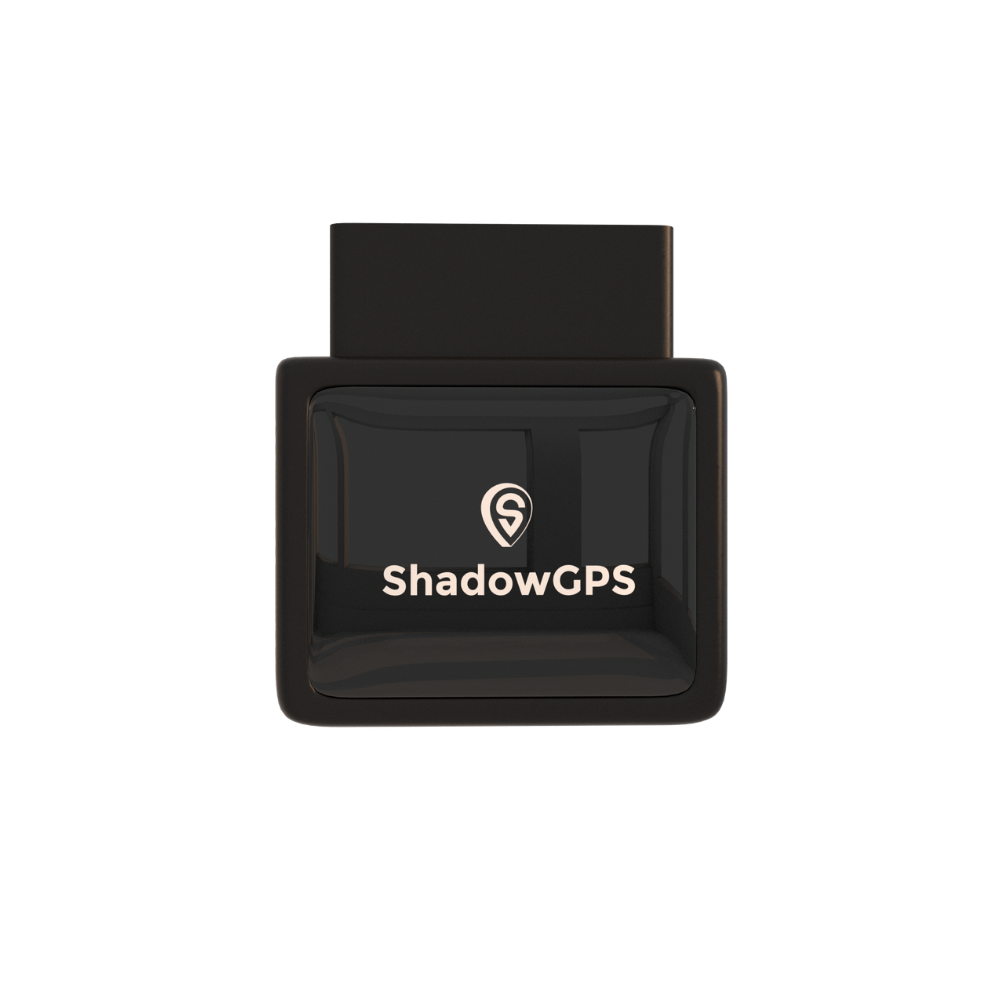
ShadowAuto
- Updates every 5 seconds while moving
- Plug it in, no installer, under 2 minutes
- Car alarm, trip replay, engine diagnostics

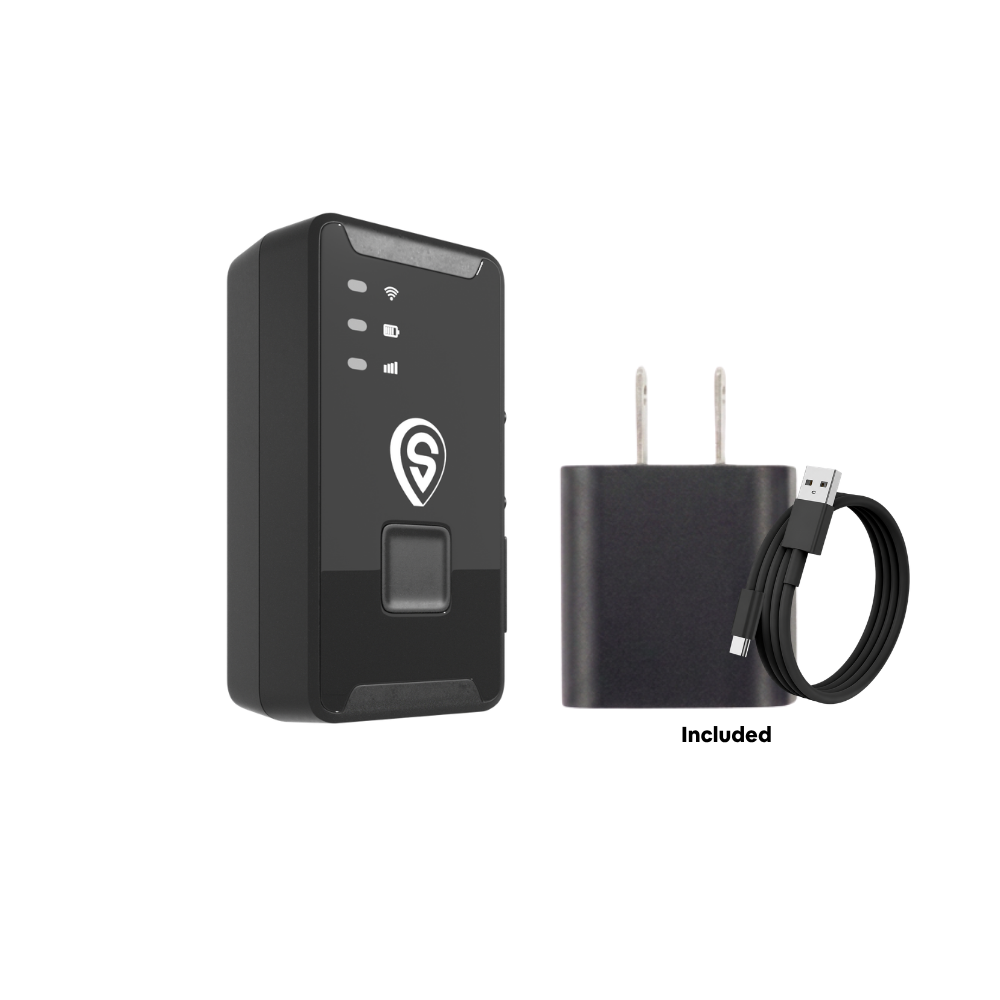
ShadowTrack
- Hidden, portable, no OBD-II port needed
- Updates every 5 seconds while moving
- Weatherproof magnetic case
AirTag vs GPS Tracker: Side-by-Side Comparison
Here's how the two technologies stack up on the things that actually matter for a car, a truck, or a trailer.

| Feature | Apple AirTag | ShadowGPS Tracker |
|---|---|---|
| Location technology | Bluetooth + Find My network | Independent GPS radio + cellular |
| Real-time tracking | No, only when a device is nearby | Yes, every 5 seconds while moving |
| Works in remote areas | No, needs nearby Apple devices | Yes, anywhere with cell coverage |
| Range | ~30 meters direct Bluetooth range | Nationwide, no distance limit |
| Speed alerts & trip history | Not available | Included on every plan |
| Battery life | ~12 months, coin cell | Never charge (ShadowAuto) or ~15 days/charge (ShadowTrack) |
| Upfront cost | $29 | $69.90 |
| Monthly fee | None | $10-$13/mo, no contract |
| Best for a vehicle you need to recover | Not recommended | Built for exactly this |
Can You Use an AirTag as a GPS Tracker?
Not really, and this is the airtag vs gps tracker question that trips people up most. An AirTag can tell you where it last was seen by a nearby Apple device. A gps tracker tells you where your car actually is, right now, moving or parked, with or without a stranger's iPhone anywhere close by.
If your car is stolen and driven straight out to a rural area or a chop shop with no foot traffic, an AirTag has nothing to report. A gps tracker keeps sending its exact position over the cellular network the entire time, because it never depended on nearby apple devices in the first place.
Is There a Monthly Fee for AirTag?
No. An AirTag costs $29 with no monthly subscription fee, which is exactly why it looks so appealing next to a gps tracker's monthly fee. But that upfront price buys you a bluetooth tag with a 30-meter range, not real time tracking. A gps tracker's monthly fee is what pays for the cellular connection and satellites that make live tracking possible in the first place. No contract, ever, month-to-month or prepay and save.
How Far Away Can AirTags Be Tracked?
Directly, an AirTag's own bluetooth signal reaches about 30 meters, roughly 100 feet, before it drops off your phone entirely. Beyond that direct bluetooth range, the AirTag only shows up on a map when some other apple device happens to pass within its bluetooth range and relays the ping to Apple's Find My network.
In a busy city, that can feel like near-global tracking, since apple devices are everywhere. Drive into a rural stretch, an industrial lot, or anywhere without much iPhone traffic, and that same AirTag can go silent for hours. A gps tracker has no such gap: its gps radio and cellular connection give it global coverage everywhere a cell tower reaches, with no dependence on other users being nearby.
What Is the Downside of AirTags?
The core downside of AirTags for vehicle security comes down to three things:
- No independent location data. It can't determine its own position; it always needs help from a nearby apple device.
- No real time tracking or speed alerts, so you can't watch your car move or get warned the moment it leaves.
- Easy to find and remove. AirTags also alert nearby iPhones to an unknown tag traveling with them, an anti-stalking feature that can tip off whoever took your car.
Real-World Use Cases
Parent of a teen driver
You want trip history and speed alerts, not a hope that another iPhone drives by. A gps tracker gives you both, plus a live location any time you check.
Turo host
Renters can find and remove an AirTag in seconds. A hidden, plug-in gps tracker with car alarm and geofencing protects your car between bookings and during them.
Small fleet, 2-5 vehicles
Trip replay and live tracking across every truck, with no per-vehicle contract, beats guessing where a van is from a crowdsourced network.
Cost Over Time: What You're Really Paying For
The sticker price makes AirTag look like the obvious deal, but the real comparison is what each option delivers for that price, not just the number on the box.
| Apple AirTag | ShadowGPS Tracker | |
|---|---|---|
| Upfront cost | $29 | $69.90 |
| Recurring cost | $0/mo | $10-$13/mo with 4+ devices |
| What that recurring cost buys | Nothing, there isn't one | Real-time tracking, alerts, trip history, geofencing |
| What you're actually protecting | Low-value items you might misplace | A vehicle worth thousands, that can be driven away |
For a set of house keys or a backpack, $29 with no ongoing cost is the easy, obvious choice. For a car, truck, or trailer, the monthly fee is what buys the one feature that actually matters if it's ever stolen: independent, real time tracking that doesn't depend on someone else's phone happening to drive past.
Our Verdict: AirTag vs GPS Tracker
Buy an AirTag for what it's actually good at: keys, a bag, a suitcase, anything small you occasionally misplace around places with plenty of apple devices nearby. It's cheap, the battery life is excellent, and it does that one job well.
For a car, a truck, a trailer, or anything else you can't afford to lose track of, choose a real gps tracker. Plug it in, and see your vehicle update every five seconds. Cancel any time.
Frequently Asked Questions
Is a GPS tracker better than an AirTag?
For a vehicle, yes. A gps tracker has its own gps radio and cellular connection, so it gives you real-time tracking anywhere there's cell coverage. An AirTag only updates when a nearby apple device happens to relay its location, which makes it unreliable for anything that can drive away.
Can I use an AirTag as a GPS tracker?
Not effectively. An AirTag has no gps radio of its own and can't determine its location independently. It relies entirely on nearby apple devices to relay a position, so in areas without much iPhone traffic, it simply won't report an updated location.
How far away can AirTags be tracked?
Directly, an AirTag's bluetooth range is about 30 meters. Beyond that, it can only be tracked when another apple device comes within that same 30-meter bluetooth range and relays the location through Apple's Find My network, so effective range depends entirely on how many apple devices are nearby.
What is the downside of Apple AirTags?
AirTags can't determine their own location, don't offer real-time tracking or speed alerts, and are easy for a thief to find and remove. They're also ineffective in remote areas without nearby apple devices to relay a position.
Is there a monthly fee for AirTag?
No. AirTags cost $29 upfront with no monthly subscription fee. A gps tracker typically runs $12-$15/mo, which covers the cellular connection and real-time tracking that an AirTag doesn't provide.
Can you track an AirTag miles away?
Only if an apple device happens to pass near it. There's no built-in range limit to the Find My network itself, since any iPhone anywhere can relay a ping, but that also means coverage is unpredictable. A gps tracker has practically limitless range anywhere there's cellular coverage, with no dependence on other users being nearby.
Plug it in. See it move. Know for sure.
ShadowAuto and ShadowTrack give you real-time tracking every 5 seconds, no waiting on a stranger's iPhone. No contract, ever.
Prices and specs current as of August 2026. Amazon links are affiliate links.

