

What problems does a fleet tracking system actually solve? In plain terms, it tells you where every car or truck you're responsible for is right now, where it's been, and when something's off. That turns seven of the most common fleet management problems from guesswork into something you can see on your phone.
And "fleet" doesn't have to mean fifty trucks. If you've got a teen driver and the family SUV, two cars on Turo, or three work vans, you're already running a small fleet. You face the same headaches the big operators do, just without a dispatcher or an IT team to handle them.
Below, we walk through each problem, what it really costs you, and how the best fleet tracking system for a small operation fixes it, using current numbers from the NICB, NHTSA and the U.S. Department of Energy.
The 7 fleet management problems a GPS fleet tracking system solves:
- Not knowing where your vehicles are right now
- Wasted fuel from idling and long routes
- Unauthorized or after-hours use
- Missed maintenance and surprise breakdowns
- Not knowing how your car or truck is being driven
- Disputes over deliveries, hours or rental trips
- Theft and lost trailers or equipment
A plug-in GPS tracker with live location, trip history and instant alerts covers all seven, whether you own one car or run a 2 to 5 vehicle fleet.
This guide is written for:
Why "fleet tracking" isn't just for big fleets
Most fleet tracking systems on the market were built for operators with dozens of trucks, DOT compliance and a full-time fleet manager. They come with dash cams, dispatch software, quote-based pricing and, often, multi-year contracts.
That's not most people. The real day-to-day problems sit with the owner of one car that matters, or the owner-operator with a handful of vehicles. Every section below covers both: what the problem looks like for one car, and what it looks like when you're running a few.
The 7 fleet management problems (and how a GPS tracker solves each)
1. You don't know where your vehicles are right now
This is the root of almost every other problem on this list. Without a live location, you're left texting "where are you?", guessing ETAs for customers, or lying awake waiting to hear the garage door.
For a small business, the cost shows up as wasted calls and missed time windows. For a family, it shows up as worry.
How a fleet tracking system fixes it
A GPS tracking device for company vehicles or family cars puts every vehicle on one live map in your phone or web browser. Open the app and you see where your car or truck is, which way it's heading, and where it stopped last.
Refresh speed matters here more than people expect. ShadowAuto updates every 5 seconds while moving, compared with about 15 seconds on Bouncie and several minutes on the base plans of many budget trackers. When you're watching a car that shouldn't be moving, that gap is the difference between "it's on Main Street" and "it was on Main Street a few minutes ago."
- One car: see that your teen made it to practice, or that your truck is still in the driveway, without calling anyone.
- 2-5 vehicles: send the closest van to the next job and give customers a real arrival time.
The simplest way to get this is a tracker you plug into your car's OBD-II port. No tools, no installer, under 2 minutes.
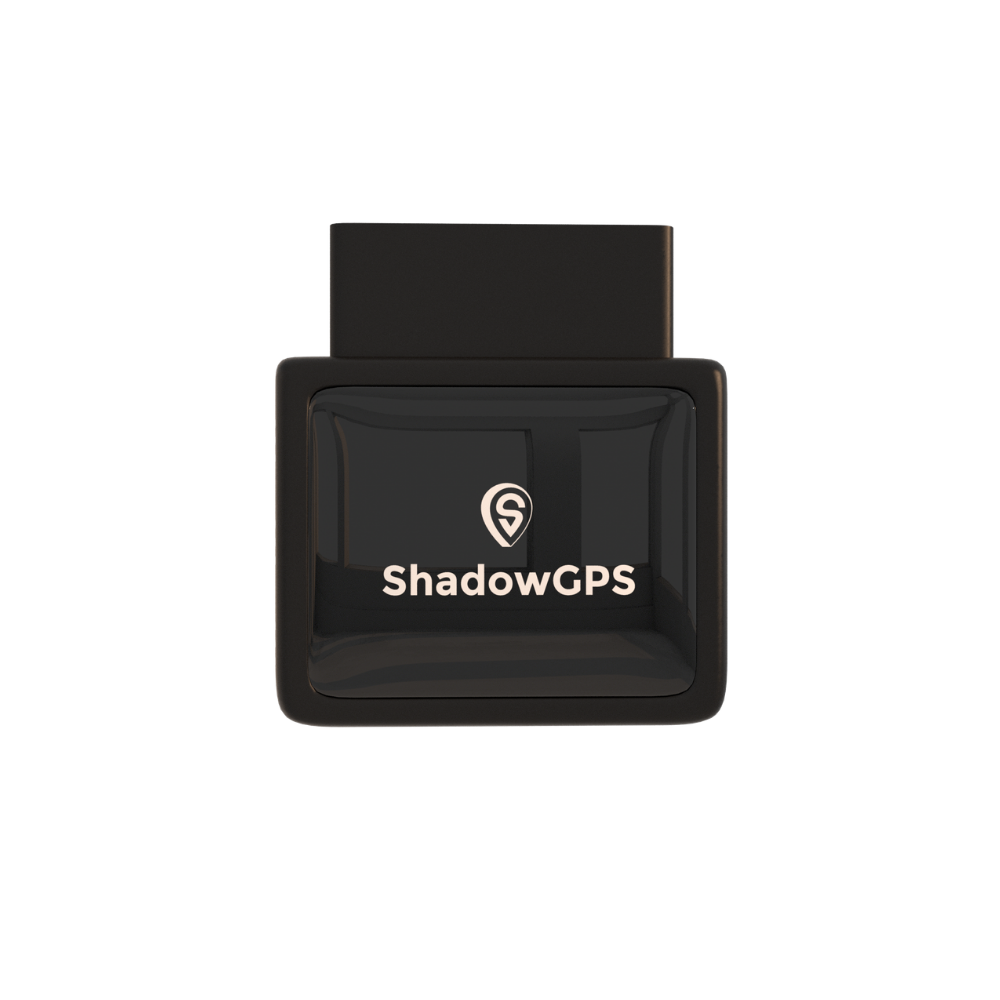
ShadowAuto
- Plugs into the OBD-II port in under 2 minutes, never needs charging
- Live tracking, trip timeline and trip replay
- Car Alarm alerts and engine code diagnostics


Best for: any car or truck with an OBD-II port (most vehicles built since 1996), including family cars, Turo listings and small work fleets.
2. Fuel disappears into idling and long routes
Fuel leaks out of a budget quietly. A detour here, a truck left running at a job site there, and nobody notices until the card statement arrives.
Idling alone adds up faster than most people think. The U.S. Department of Energy says a car can burn a quarter to a half gallon of fuel per hour while idling, depending on engine size and A/C use. Bigger work trucks burn more.
A quick example
Say you run three service vans, and each one idles about an hour a day while the crew works. At half a gallon an hour and $3.50 a gallon, that's roughly $1,300 a year across 250 workdays, before you count a single detour. (3 vans × 1 hr × 0.5 gal × $3.50 × 250 days.) Plug in your own numbers; the math is the point.
How a fleet tracking system fixes it
Trip timeline and trip replay show the exact route each vehicle took and every stop it made. A 12-mile detour, a lunch run across town or a van that sat at one address for three hours becomes obvious in a few seconds of scrolling.
- One car: see whether the "quick errand" really took the long way, and track your own mileage for reimbursement or taxes.
- 2-5 vehicles: spot which routes run long, regroup jobs by area, and set a simple "engine off at the job site" rule you can actually check.
3. Your car or truck gets used when it shouldn't
The work truck goes out on a Saturday. A teen takes the car somewhere they said they wouldn't. A rental guest drives three states away when the listing said local trips only.
Unauthorized use adds wear, burns fuel and creates liability you didn't sign up for. And without a record, it's your word against theirs.
How a fleet tracking system fixes it
Geofences are the tool here. You draw a zone on the map, like home, school, a job site or your Turo pickup spot, and get an alert when your car enters or leaves it. Pair that with the trip timeline and you can see when a vehicle moved and where it went, with timestamps.
- One car: get a heads-up when the car leaves home after curfew, or when it arrives safely at school.
- 2-5 vehicles: see weekend and after-hours trips at a glance, then have one calm conversation backed by facts.
Our guides on stopping unauthorized vehicle use and setting up geofence alerts walk through the exact settings.
One rule we always recommend: tell people the tracker is there. Openness tends to change behavior on its own, and it keeps you on the right side of the law (more on that below).
4. Maintenance slips until something breaks
Without a system, service schedules live in someone's head or on a sticky note. Then the check engine light comes on, nobody knows what it means, and a small fix turns into a tow, a lost workday and an unhappy customer.
How a fleet tracking system fixes it
Because ShadowAuto plugs into the OBD-II port, it can read engine codes. Instead of "the light's on," you get the actual code, so you know whether it's a loose gas cap or something that needs a shop this week.
Your trip history also gives you a running record of how much each vehicle is being driven, which makes it easy to plan oil changes and tire rotations around real use instead of guesses.
- One car: know what the warning light means before you call the mechanic.
- 2-5 vehicles: rotate the hardest-worked truck into service before it fails on a job. Our post on why vehicle downtime costs more than you think breaks down the hidden costs.
5. You can't see how your car or truck is being driven
Your drivers carry your name on the side of the van, or your family's safety in the front seat. But once they pull out of the driveway, you have no view of the trip.
The stakes are real. NHTSA reports that 11,288 people died in speeding-related crashes in 2024, 29% of all U.S. traffic deaths. Young drivers stand out: among drivers ages 15 to 20 in fatal crashes, 39% of young men and 20% of young women were speeding, the highest of any age group.
How a fleet tracking system fixes it
Trip replay lets you play back any drive: the route, the stops and the timing. For a parent, that turns "how was the drive?" into a real conversation. For a business owner, it's the starting point for coaching, not punishment.
A straight answer on limits: if you need camera footage, in-cab coaching or hard-braking scorecards for a large team, that's the job of enterprise dash cam platforms. For a teen driver or a small crew, knowing where and when each trip happened is usually all you need to start the right conversation. Our guide for parents of teen drivers covers how to have it.
6. Someone disputes where you were, or when
A customer says the delivery never showed up. A client questions the hours on an invoice. A rental guest swears they returned the car on time and stayed in town.
Without proof, you either eat the cost or argue. Neither is good for your reputation.
How a fleet tracking system fixes it
Every trip is stored with times and locations. You can show exactly when a vehicle arrived at an address, how long it stayed and when it left. That's hard to argue with, and it usually settles things in one message.
- Turo and rental hosts: trip history backs up your claims about mileage, late returns and trips outside the agreed area. See our Turo host page.
- Service businesses: arrival and departure times support your invoices and timesheets.
7. Theft and lost trailers or equipment
The good news first: U.S. vehicle thefts fell 23% in 2025 to the lowest level in decades, according to the National Insurance Crime Bureau. Still, 659,880 vehicles were reported stolen, about one every 48 seconds.
For a small business, losing a truck, trailer or piece of equipment means lost jobs on top of the deductible.
How a fleet tracking system fixes it
- Car Alarm alerts tell you when your car moves when it shouldn't, so you hear about it in minutes, not the next morning.
- Unplug and tamper alerts flag it if someone pulls the tracker from the OBD-II port.
- Share Location lets you send the live location straight to the police. Never try to recover a vehicle yourself; let officers handle it.
Trailers, equipment and older vehicles often have no OBD-II port at all, and a thief who knows where OBD trackers live may unplug one. That's what a battery-powered tracker is for. It hides almost anywhere, sticks on with a magnet, and keeps reporting no matter what's plugged in. Our post on GPS trackers vs. car theft goes deeper.
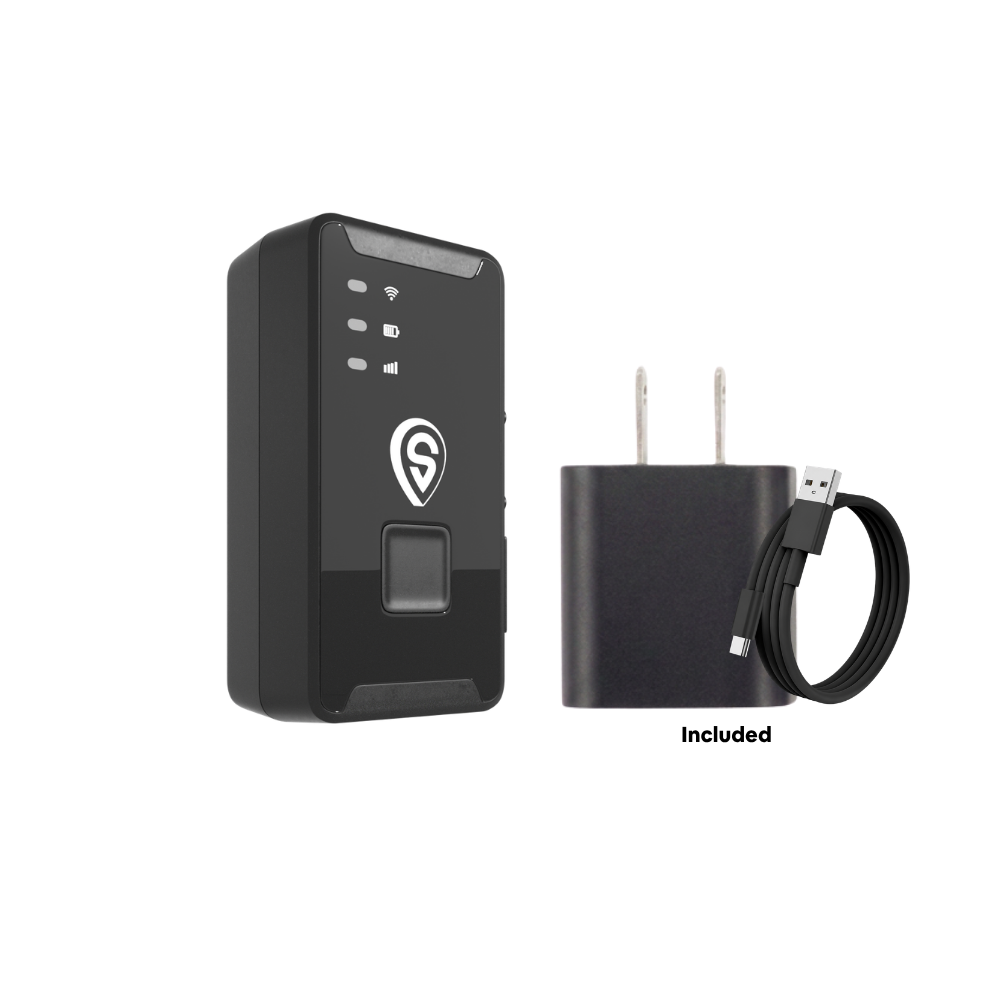
ShadowTrack
- Up to about 15 days per charge
- Weatherproof magnetic case, hides almost anywhere
- Works on trailers, equipment and vehicles with no OBD-II port
Best for: trailers, equipment, older vehicles, and a hidden backup alongside ShadowAuto on the car you'd hate most to lose.
Problem-to-feature cheat sheet
Here's the whole list in one place, with the feature that solves each problem and which ShadowGPS tracker handles it.
| Problem | Feature that solves it | ShadowAuto | ShadowTrack |
|---|---|---|---|
| Don't know where vehicles are | Live map on phone and web | Yes | Yes |
| Wasted fuel, long routes | Trip timeline and trip replay | Yes | Yes |
| Unauthorized or after-hours use | Geofence alerts, timestamped trips | Yes | Yes |
| Missed maintenance | Engine codes, mileage history | Yes | Mileage history only |
| Unknown driving habits | Trip replay | Yes | Yes |
| Disputed trips or hours | Stored trip history with times | Yes | Yes |
| Theft and lost assets | Car Alarm, unplug alerts, Share Location | Yes | Hidden, battery-powered, keeps reporting |
How the main types of fleet tracking systems compare
Not every "tracker" solves these problems the same way. Here's how the four main options stack up for an individual owner or a small fleet.
| Type (example) | Location updates | If unplugged | Setup | Contract | Monthly fee | Best for |
|---|---|---|---|---|---|---|
| Bluetooth tag (Apple AirTag) | Only when near other Apple devices, not live GPS | Coin battery | Drop it in | None | None | Keys and bags |
| Budget OBD tracker (Bouncie) | About every 15 sec | Stops reporting | Plug in | None | About $9-$10 | One car, OBD only |
| Enterprise fleet platform (Samsara, Verizon Connect) | Live, plus cameras and compliance tools | Usually hardwired | Often professional hardwiring | Often multi-year | Quote-based | Large fleets with ELD and DOT needs |
| ShadowTrack (battery) | Every 5 sec while moving | Runs on battery, about 15 days | Magnet or hide, under 2 min | None, ever | $9-$15 | Trailers, equipment, hidden backup |
| ShadowAuto (OBD-II) | Every 5 sec while moving | Sends an unplug alert | Plug in, under 2 min | None, ever | $9-$15 | Cars, trucks, Turo, 2-5 vehicle fleets |
ShadowGPS pricing as of October 2026 for 1-3 trackers; 4+ trackers run $8-$13/mo. Competitor details are from public product listings and may change. Check each brand's site before you buy.
How to choose the best fleet tracking system for a small fleet
When people ask us which fleet tracker to buy, the questions almost always come in the same order. Here's how to judge any option, ours included.
1. Is there a monthly fee, and am I locked in?
Every real-time GPS tracker has a monthly fee, because it uses a cellular connection to send its location. What matters is whether you're stuck with it. Avoid anything that needs a 2- or 3-year contract for its best rate.
ShadowGPS plans run $15/mo month-to-month for 1 to 3 trackers, or as low as $9/mo if you prepay for two years. With 4 or more trackers, it's $13/mo month-to-month down to $8/mo. No contract. Month-to-month, or prepay and save. Our breakdown of what GPS tracking costs a small fleet compares the options.
2. Does it need a SIM card?
Not with ShadowGPS. The cellular connection is built in and included in your plan, running on major U.S. and Canadian LTE-M networks. There's no SIM to buy or swap.
3. Is it hard to set up?
A plug-in OBD-II tracker takes under 2 minutes and no tools. Hardwired systems usually need a professional and an afternoon per vehicle. For a small fleet, plug-in wins. If you're torn, read battery-powered vs. OBD GPS trackers.
4. How fast does it update?
Update speed is what makes "real-time" real. A tracker that checks in every few minutes is fine for a parked trailer, but not for a car that's moving when it shouldn't be. Check the refresh rate on the base plan, not just the premium tier.
5. Does it fit every vehicle you own?
If you have trailers, equipment or an older vehicle, you'll want a battery option alongside the plug-in. One app for both keeps everything on one map.
Set up fleet tracking in one afternoon: a 5-step plan
- Plug in. Find the OBD-II port, usually under the dash near the steering column, and plug in ShadowAuto. Magnet-mount ShadowTrack on trailers or equipment.
- Name everything. Label each tracker in the app ("Blue F-150," "Mom's RAV4," "Turo Camry") so alerts make sense at a glance.
- Draw your geofences. Home, school, job sites, your yard, your Turo pickup spot.
- Turn on alerts. Car Alarm, unplug alerts and geofence enter/exit. Start with a few; you can add more later.
- Review weekly. Spend 10 minutes each week on the trip timeline. Patterns, good and bad, show up fast.
And before any of that: tell your drivers. It builds trust and heads off the "you're tracking me?" conversation before it starts. Our guide on introducing GPS tracking to employees has a script.
What this looks like in real life
Three typical setups we see, and which problems each one is solving:
The parent of a new driver
One ShadowAuto in the family car. Geofences at home and school, a curfew alert, and a quick trip replay on Sunday nights. Solves problems 1, 3 and 5.
The Turo host with 3 cars
ShadowAuto in each car, plus a ShadowTrack hidden in the one that rents most. Trip history settles mileage and late-return claims. Solves problems 3, 6 and 7.
The contractor with 4 trucks and a trailer
ShadowAuto in each truck, ShadowTrack on the trailer. Live map for dispatch, engine codes for service, weekend alerts. Solves all seven.
Is a fleet tracker worth it? A simple check
Skip the big ROI spreadsheets. Ask one question: what did the last problem on this list cost you?
Think about the tow and lost day from one missed repair, one disputed invoice you wrote off, one rental claim you couldn't prove, or one insurance deductible. Then compare that with a year of tracking. The bigger win is harder to price: knowing where your car or truck is, every time you check.
And because there's no contract, you're never stuck. If it's not earning its place, cancel any time. ShadowGPS also offers a 30-day money-back guarantee.
Is fleet tracking legal?
In the U.S., you can generally track a vehicle you own. Tracking company vehicles your employees drive is also generally allowed, but some states require notice or consent, especially for personal vehicles or off-hours use. Tracking a vehicle you don't own or have rights to is a different story and can break stalking laws.
The safest habit is simple: track vehicles you own, and tell the people who drive them. For state-by-state detail, see our guide on GPS tracking laws for employee vehicles. This isn't legal advice; check with a local attorney if you're unsure.
How we put this guide together
This guide is written by the ShadowGPS team. We build and support ShadowAuto and ShadowTrack and answer questions from owners, parents, Turo hosts and small fleet operators every day. Statistics come from the NICB, NHTSA and the U.S. Department of Energy, linked where they appear. Product details reflect our current specs and pricing as of October 2026.
Frequently asked questions
What are the most common fleet management problems?
The most common fleet management problems are not knowing where vehicles are, wasted fuel from idling and long routes, unauthorized use, missed maintenance, unsafe driving, disputed deliveries or hours, and theft. A GPS fleet tracking system addresses all of them with live location, trip history and alerts.
What problems does GPS tracking solve?
GPS tracking shows where your car or truck is right now and where it's been. That helps you find a vehicle fast after theft, catch after-hours use, back up delivery and rental claims, plan routes and service, and check in on new drivers without calling them.
What is the best fleet tracking system for a small business?
For a business with 2 to 5 vehicles, the best fleet tracking system is usually a plug-in OBD-II tracker with fast live updates, a simple app and no contract, plus a battery tracker for trailers or equipment. Enterprise platforms make more sense for large fleets that need ELD compliance and dash cams.
Is there a monthly fee for a fleet GPS tracker?
Yes. Any real-time tracker needs a cellular plan to send its location. ShadowGPS plans run $9 to $15 a month for 1 to 3 trackers and $8 to $13 for 4 or more, depending on how you pay. No contract. Month-to-month, or prepay and save.
Does a GPS fleet tracker need a SIM card?
Not with ShadowAuto or ShadowTrack. The cellular connection is built in and included in your plan, so there's no SIM card to buy, insert or manage.
Is a fleet tracker hard to set up?
No. ShadowAuto plugs into your car's OBD-II port in under 2 minutes, with no tools and no installer. ShadowTrack mounts with a magnet or hides in a glovebox, trailer or toolbox.
How many vehicles count as a fleet?
There's no single rule. Insurers and leasing companies set their own thresholds. For tracking purposes, if you're responsible for two or more vehicles, like family cars, rental cars or work trucks, you'll get the same benefits a larger fleet does.
Can I legally track my employees' company vehicles?
Generally yes, for vehicles your business owns, though some states require notice or consent. Put it in writing, tell drivers what's tracked and when, and avoid tracking personal vehicles without consent. Check your state's rules or a local attorney.
Will a GPS tracker lower my insurance?
It might. Some insurers offer discounts for anti-theft or tracking devices, but not all do, and the rules vary. Ask your insurer before you buy, and keep your account details handy in case they ask for proof.
What happens if someone unplugs the tracker?
ShadowAuto sends an unplug alert, so you know right away. For vehicles you'd hate most to lose, add a ShadowTrack hidden somewhere else. It runs on its own battery and keeps reporting either way.
Know where it is. Every time.
Plug it in, see it move, cancel any time. One car or five, the setup takes minutes and there's no contract, ever.
Pricing and specs current as of October 2026. Some links on this page are affiliate links; ShadowGPS may earn a commission on qualifying purchases at no extra cost to you. Sources: National Insurance Crime Bureau, 2025 Vehicle Theft Report (March 2026); NHTSA Traffic Safety Facts, Speeding, 2024 data; U.S. Department of Energy, fueleconomy.gov. Legal information is general and not legal advice.

