

You back down the ramp on a Saturday morning, and the slip is empty. Or the trailer spot behind the garage is empty. That gap between "my boat is gone" and "I know exactly where it is" is the worst part of owning a boat, and it is the part a boat GPS tracker is built to close.
Here is the thing most buying guides skip: your boat spends most of its life sitting still. In a slip, on a lift, on a trailer in the driveway. That is where boats get taken, and that is where a tracker earns its keep. What happens 40 miles offshore matters too, but it is a different job that needs different hardware.
This guide separates those two jobs cleanly. You will get the picks that actually fit each one, a plain comparison table, real waterproof ratings, honest battery numbers, and the specific places on a boat where a tracker keeps signal and stays out of sight.
Choose a cellular boat GPS tracker if your boat lives within cell coverage, and a satellite tracker if it does not. For a trailered or marina-kept boat, the ShadowTrack battery tracker is the strongest pick: a weatherproof magnetic case, roughly 15 days per charge, live location, and geofencing alerts around your slip, with a 14-day free trial and no contract at $12 to $15 a month.
For offshore or blue-water use, SPOT Trace runs on the Globalstar satellite network with no cell dependency, and the Garmin inReach Mini 2 adds two-way messaging plus an SOS button over Iridium. Skip Apple AirTag for a boat entirely: it has no GPS chip and no cellular connection of its own.
What a Boat GPS Tracker Actually Does
A boat GPS tracker is a small self-contained device you hide on your boat. It reads its position from GPS or GNSS satellites, then sends that position to your phone over a cellular network or a satellite network.
Two separate systems are at work, and confusing them is where most buyers go wrong. Every tracker on this list receives location from satellites. Only some of them transmit over satellites. The rest transmit over cell towers, which is cheaper and faster but stops at the edge of coverage.
Once your position is flowing, the software is what you actually use day to day:
- Live location on a map, in your app or on the web, so you can check the slip from your couch.
- Geofencing alerts. Draw a boundary around your marina, dock, or driveway and get notified the moment the boat crosses it.
- Movement and unauthorized movement alerts. The boat was stationary, now it is not, and your phone tells you before anyone else does.
- Trip history and route records. Every trip logged, replayable, useful for fuel planning, favorite fishing runs, and insurance paperwork.
- Speed alerts if someone else runs your boat, whether that is a family member, a captain, or a charter guest.
- Share location with a spouse, a fishing partner, law enforcement, or your insurer.
What a tracker is not: it is not a chartplotter, and it is not a distress beacon. A chartplotter helps you navigate. An EPIRB or a personal locator beacon summons rescue. A tracker tells you where your boat is. Those are three different products, and serious offshore boaters carry more than one.
Cellular or Satellite: the One Decision That Changes Everything
Answer this before you compare anything else. Where does your boat spend its time?
Cellular trackers send position data through LTE towers. They are smaller, cheaper to run, update far more often, and work anywhere you get bars on your phone. That covers lakes, rivers, the Intracoastal, most inshore and nearshore coastal water, every marina, every driveway, and every storage lot.
Satellite trackers send position through orbiting networks instead. Globalstar, the network behind SPOT devices, claims coverage of more than 80% of the world's surface. Iridium, the network behind Garmin inReach, uses 66 satellites and covers the entire globe including polar regions. The tradeoff is cost, size, and update frequency measured in minutes rather than seconds.
| Question | Cellular tracker | Satellite tracker |
|---|---|---|
| Boat lives in a slip, on a lift, or on a trailer | Yes, ideal | Overkill |
| Lakes, rivers, ICW, nearshore coastal | Yes | Not needed |
| Offshore beyond cell range, blue water, remote cruising | No, goes dark | Yes, required |
| Typical location updates | Seconds while moving | Every 5 to 60 minutes, by plan |
| Typical monthly fee | $12 to $25 | $12 to $50+, often billed annually |
| Two-way messaging and SOS | No | On some devices |
| Best all-round answer for a US recreational boat owner | Cellular, because the theft risk is at the dock | Add satellite only if you run offshore |
Plenty of cruisers run both: a cellular tracker hidden in the bilge for theft, and a satellite communicator at the helm for safety. That combination costs less than one high-end marine tracking system and covers both jobs properly.
Why Boat Theft Is a Recovery Problem, Not Just a Theft Problem
The National Insurance Crime Bureau released its 2025 recreational vehicle theft analysis in August 2026. Thefts across motorcycles, ATVs, snowmobiles, and watercraft fell 20% year over year to 58,957. Recovery, though, went the other way: roughly 63% of everything stolen in 2025 was never recovered.
NICB's own framing is the useful part. Recovery odds depend on how fast the theft is discovered and reported, and more than half of all recoveries happen inside two weeks of the report. A boat can be trailered across state lines, stripped, or re-registered with altered hull numbers in a weekend.
That is the entire argument for a tracker with movement alerts. Not the tracking. The timing. A geofence alert at 2:14 a.m. and a live position you can hand to a deputy is a completely different situation than noticing an empty slip on Saturday morning. You can read NICB's release directly at nicb.org.
The Best Boat GPS Trackers in 2026
Ranked by the job they do best, not by price. Every pick below is judged on waterproofing, honest battery life, alert quality, setup effort, and what the monthly fee actually buys.
1. ShadowTrack: Best for Trailered, Slip-Kept, and Marina Boats
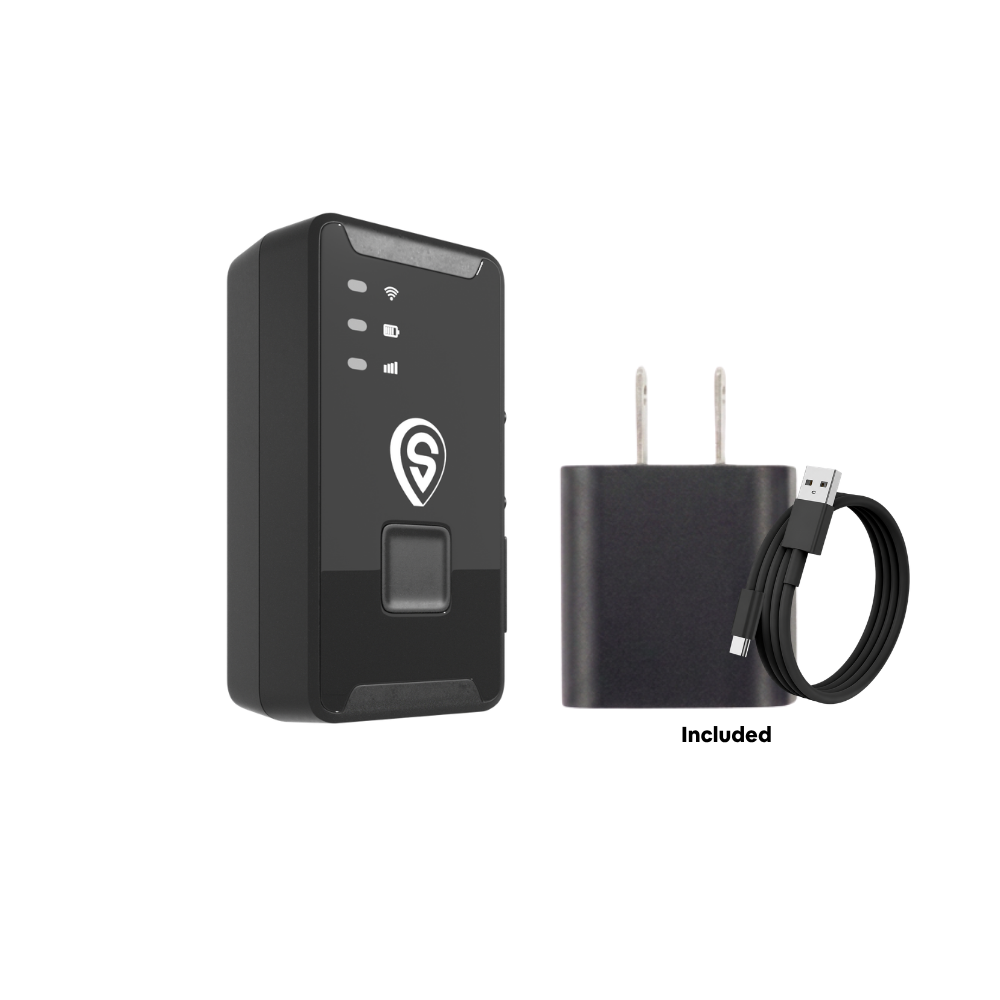
If your boat lives anywhere with cell coverage, this is the pick. ShadowTrack is a battery-powered tracker in a weatherproof magnetic case, which is exactly the form factor a boat needs: nothing to wire, nothing to splice into a marine electrical system, and no OBD port required because boats do not have one.
You charge it, mount it, and hide it. The magnet holds it to any steel surface, and the case handles rain, spray, and washdown. Where it separates from the marine field is the software. Live location refreshes every 5 seconds while the boat is moving, which means a stolen boat on a trailer shows up as a moving dot on I-95 rather than a breadcrumb every ten minutes.
ShadowTrack Battery GPS Tracker
- Live location, trip timeline, and trip replay
- Geofence your slip, dock, or driveway
- Movement, tamper, and alarm alerts to your phone
- Share live location with family or law enforcement
- Web and app access, 30-day money-back guarantee

Pros
- Weatherproof magnetic case, hides almost anywhere on a boat
- Fast refresh means a live chase, not a stale breadcrumb
- No contract, ever, and speed is not paywalled behind a premium tier
- Same tracker moves to the trailer, the dinghy, or the outboard in the off-season
Cons
- Cellular only, so it goes quiet offshore beyond LTE coverage
- Needs recharging roughly every two weeks in active use
- No SOS button or two-way messaging, so it is not a safety beacon
- Not the lowest monthly fee in the category
Best for: the owner of one boat that matters, kept on a trailer, a lift, or in a slip, who wants to know it is still there without thinking about it.
2. SPOT Trace
SPOT Trace is the default answer when cellular is not an option. It transmits over the Globalstar satellite network, so it keeps reporting where no cell tower reaches, and it is built around one job: telling you that a stationary asset started moving.
It runs on lithium AA batteries rather than a rechargeable pack, which is genuinely the right call on a boat that sits for months. Its sibling, the SPOT Gen3, is documented at over a month of battery life even at five-minute transmission intervals. Expect longer from Trace at slower update rates, and much shorter if you set it to report aggressively.
Pros
- No cellular dependency, works well offshore
- Movement-triggered alerts are its core design, not an add-on
- Replaceable lithium AAs, months of standby, nothing to recharge
- Weather-sealed and small enough to hide in a locker or bilge
Cons
- Update intervals in minutes, so no live chase view
- Needs a clear sky view, so a metal locker or deep bilge can block it
- Satellite service is typically billed annually, not month to month
- No two-way messaging and no SOS button on Trace


Best for: boats moored or cruising beyond cell coverage, where any position beats no position.
3. Garmin inReach Mini 2
The inReach Mini 2 is not really a theft tracker. It is a satellite communicator, and it is on this list because a lot of people searching for a boat GPS tracker actually want what it does: a way to be found, and a way to talk, when there is no signal.
It runs on Iridium, which uses 66 satellites for genuine global coverage including the poles. You get two-way text messaging, tracked position sharing on a web page your family can watch from home, and a dedicated SOS button that routes to an emergency coordination center. Settings are managed through a Bluetooth app on your phone, the same way the older DeLorme inReach devices worked.
Pros
- True global coverage over Iridium, including polar and mid-ocean
- Two-way messaging plus a dedicated SOS button
- Shareable live tracking page for people ashore
- Rugged, floats in a case, goes in a ditch bag as easily as a helm mount
Cons
- Highest hardware cost on this list by a wide margin
- Useless as an anti-theft device, since it is visible and portable by design
- No geofencing around your slip and no tamper alerts
- Needs charging, and tracking intervals drain it fast

Best for: offshore anglers and cruisers who want to be reachable and rescuable, paired with a separate cellular tracker for theft.
4. LandAirSea 54
The LandAirSea 54 is a magnetic, waterproof cellular tracker aimed squarely at exactly this use case, and its headline claim is battery life: up to 12 months in Energy Saver mode. Read that mode carefully, because it buys those months by reporting rarely.
Setup is genuinely simple. Download the SilverCloud app, create an account, scan the QR code on the back of the tracker, and it is on your account in three steps with no wiring at all. LandAirSea is also honest in its own fine print that battery life depends on location, cell and GPS signal access, refresh rate, and temperature, which is the single most useful disclaimer in this whole category.
Pros
- Up to 12 months per charge in Energy Saver mode
- Strong built-in magnet and waterproof housing
- Three-step app setup, no wiring, widely stocked
- Location sharing tools aimed at insurers and law enforcement
Cons
- The fastest refresh tiers cost considerably more per month
- Best headline rates require a long prepay commitment
- Recurring customer complaints about unexpected monthly fees
- The 12-month battery figure and useful refresh rates are mutually exclusive

Best for: a boat in winter storage or a rarely used second vessel, where one check-in a day is plenty.
5. Trackimo
Trackimo has been marketing to boat owners for years, and its pitch is speed of setup: register the tracker on the website or the iOS or Android app, attach it to the boat with the marine accessory, and it is active in about five minutes with no wiring.
The honest limitation is battery. Trackimo delivers up to 96 hours per charge, so roughly four days. That is fine for a weekend trip or a delivery run and awkward for a boat you leave in a slip and forget about. It also has the alert set boat owners actually use: speed alerts when your set limit is exceeded, and fence crossing alerts when the boat leaves its zone.
Pros
- Active in about five minutes, no wiring needed
- Speed alerts and geofence crossing alerts included
- Boat-specific mounting accessory available
- Web and app access from anywhere with cell reception
Cons
- Up to 96 hours of battery life, the shortest here
- Needs frequent recharging on a stored boat
- Weatherproofing is less marine-focused than the magnetic-case options
- Cellular only, so no offshore coverage

Best for: a boat in regular use where you are aboard often enough to keep it topped up.
6. Apple AirTag: Why It Fails on a Boat
An AirTag in the glovebox is one of the most common things boat owners try, and it is worth explaining plainly why it does not work. An AirTag has no GPS chip and no cellular connection. It broadcasts Bluetooth and waits for a passing iPhone to report its position.
On a boat, that model collapses. A marina at 3 a.m. has no crowd. A boat under tow on a rural highway has no crowd. Open water has no crowd at all. You will also get no geofence alert, no speed alert, no movement alert, and no live position: just a last-seen dot whenever some stranger's phone happens to wander close enough.
Buy one for your keys and your dock bag. Do not buy one to protect a $40,000 boat. We covered this in more depth in GPS tracker vs. Apple AirTag.

Best for: keys, coolers, and dock bags. Not vessels.
Boat GPS Tracker Comparison
| Tracker | Network | Battery | Refresh | Geofence alerts | Monthly fee | Contract |
|---|---|---|---|---|---|---|
| SPOT Trace | Globalstar satellite | Lithium AAs, months | 5 to 60 min | Movement alerts | ~$12+, billed annually | Annual term typical |
| Garmin inReach Mini 2 | Iridium satellite | Rechargeable, days | 2 to 30 min by plan | No | ~$15 and up | Annual or freedom plan |
| LandAirSea 54 | Cellular | Up to 12 months, Energy Saver | 3 sec to 3 min by tier | Yes | $9.95 to $49.95 | 2-yr prepay for best rate |
| Trackimo | Cellular | Up to 96 hours | 1 to 5 min typical | Yes | Varies by plan | Annual bundles common |
| Apple AirTag | Bluetooth crowd network | ~1 yr coin cell | Only when a phone passes | No | None | None |
| ShadowTrack | Cellular, multi-carrier LTE-M | ~15 days per charge | 5 sec while moving | Yes, plus tamper and alarm | $10-$13/mo with 4+ devices | None, ever |
Competitor pricing, battery, and refresh figures are typical published ranges as of August 2026 and vary by plan tier, region, and settings. Battery life in particular depends on refresh rate, temperature, and signal access, and is not a guarantee from any manufacturer.
Features That Actually Matter on the Water
Waterproof rating, and what it really means
Look for IP67 or IP68, not the word "waterproof" on a box. IP67 survives rain, spray, and washdown. IP68 adds sustained immersion. Neither rating says anything about salt, which is the real enemy: salt fog creeps into seams and corrodes contacts long before water ever pools. Marine-grade sealing protects the internal circuits against heavy salt spray, and a sealed magnetic case is a practical shortcut to the same result.
Geofencing alerts
This is the feature that catches theft. Draw a virtual boundary around your slip, your marina, your dock, or your driveway. If the boat crosses it, your phone rings. Set the radius tight enough to be meaningful and loose enough that normal drift on a mooring does not spam you at 3 a.m. Our walkthrough on setting up geofence alerts that catch overnight theft applies directly to a slip.
Movement, anchor drag, and shock alerts
Movement alerts fire when a stationary boat starts moving unexpectedly. Anchor-drag alarms are the same idea with a nautical name: they watch position change relative to where the anchor went down and wake you if you are sliding. Shock sensors report significant jolts or collisions, useful whether that is a thief backing a trailer into your hull or a hard grounding you want documented.
Tamper and sabotage alerts
A tracker that goes silent should tell you something. Sabotage or tamper alerts notify you if the power source is interfered with or the tracker is pulled off its mount. This is the least understood feature in the category and one of the most valuable, because a thief who finds the tracker still ends up flagging themselves.
Speed alerts and trip history
Speed alerts matter if anyone else runs your boat. Trip history matters more than people expect: routes and travel logs help with trip planning, fuel budgeting, finding that spot again next season, and documenting use for an insurance claim.
Battery life, read honestly
Battery numbers in this category are close to meaningless without the refresh rate attached. Trackimo is up to 96 hours. LandAirSea is up to 12 months in Energy Saver mode. Some self-contained trackers like the Back2you claim three years. Those numbers are not comparable, because each assumes a different reporting interval. Frequent reporting drains any battery fast, and cold weather makes it worse. More detail in our guide to how long GPS tracker batteries actually last.
Fixed and wired systems, briefly
If your boat has permanent power available and you want a hardwired setup, fixed satellite trackers exist for that: the YB3i, for example, runs on a monthly line rental of about £8, and dedicated marine systems from providers like Boat Fix and Boatrax add engine and bilge monitoring on top of location. Fixed trackers can also lower insurance premiums with some marine carriers, which is worth a call to your agent before you buy. Portable trackers are the better fit if you want to move protection between a boat, a trailer, and an outboard, or if you would rather not touch the boat's wiring at all.
Where to Hide a GPS Tracker on a Boat
Placement is a tradeoff. Signal wants sky. Security wants concealment. You are looking for the spot that gives up the least signal for the most cover.
- Under a fiberglass deck hatch or console. Best all-round choice. Fiberglass passes GPS and cellular signal readily, so you get cover without much loss.
- Inside a locker or storage compartment, ideally not the one everyone opens first. Magnet-mount it to a bracket so it does not slide around.
- Behind the helm or under the dash, tucked up where a hand does not naturally reach.
- Inside the engine cowling or on the engine mount, good for outboards, but keep it clear of heat and vibration.
- Avoid a sealed metal box or the bottom of a wet bilge. Metal blocks signal and standing water eventually finds every seam. This matters more for satellite trackers, which need a clear sky view.
Two practical rules. Face the tracker's antenna side upward where you can. And test it before you walk away: check that live location and a geofence alert both actually fire from the spot you chose, not just from the dock.
Do Not Forget the Trailer and the Tow Vehicle
Most stolen boats leave on a trailer, and a lot of them leave attached to a truck. If you trailer your boat, protecting one link in that chain and not the others leaves an obvious gap.
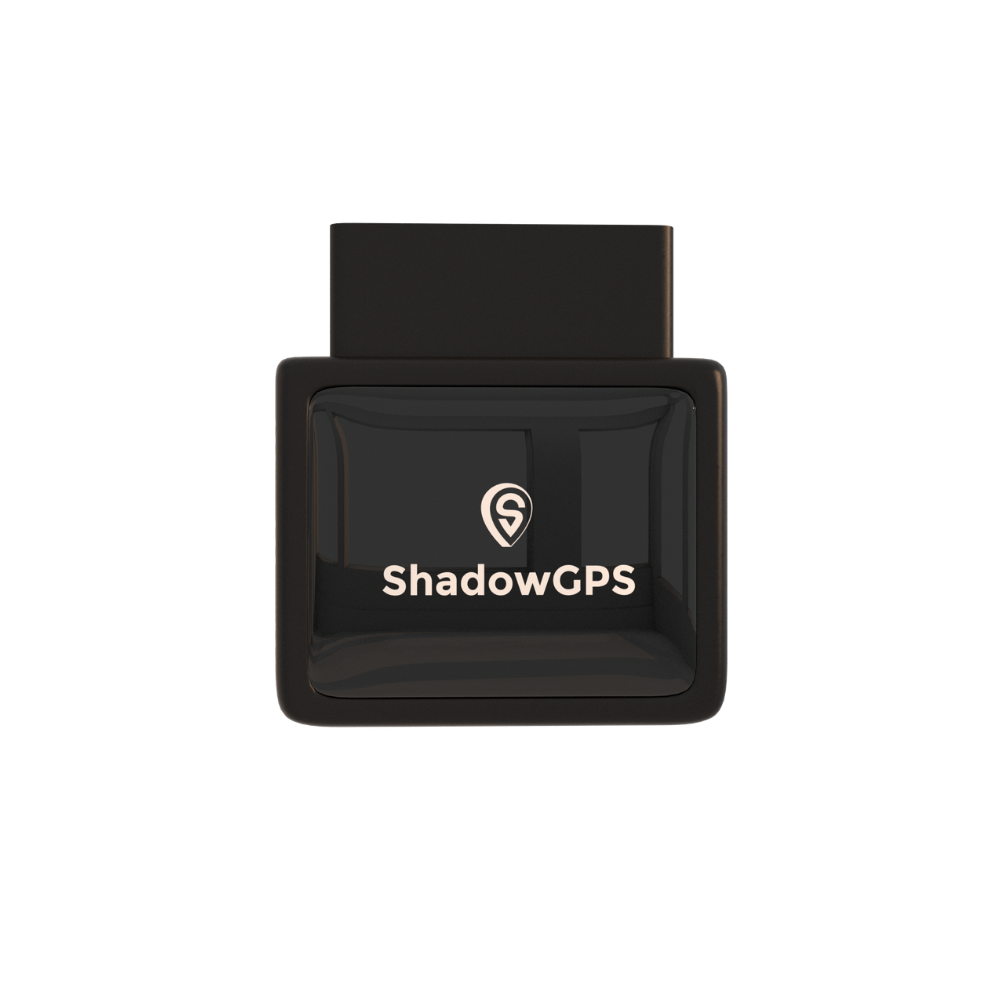
A second battery tracker on the trailer frame covers the case where a thief takes the trailer and leaves the boat, or hitches up and drops the boat somewhere down the road. For the tow vehicle, ShadowAuto is the simpler answer: it plugs straight into the OBD-II port under the dash in under two minutes, draws power from the truck so it never needs charging, and adds engine diagnostics on top of location.
ShadowAuto OBD-II GPS Tracker
- Plug it into the OBD-II port, under 2 minutes, no tools
- Vehicle-powered, so nothing to recharge
- Car Alarm and theft alerts straight to your phone
- Engine codes and vehicle health, read from the app
- Same app and account as your ShadowTrack on the boat
Which Setup Fits Your Boat?
Trailered runabout or bass boat
One battery tracker hidden under a deck hatch, a geofence around the driveway or storage lot, and ShadowAuto in the tow vehicle. This is the highest-theft-risk profile and the cheapest one to cover properly.
Slip-kept cruiser or center console
Battery tracker in a locker or behind the helm, tight geofence around the slip, movement and tamper alerts on. Add an anchor-drag alert if you overnight on the hook.
Offshore or blue-water boat
Run both. A cellular tracker hidden aboard for theft while she sits, plus a satellite communicator with SOS at the helm for when you are past coverage.
A tracker is not a distress beacon
Worth being clear about, because the search results blur these together. An Emergency Position Indicating Radiobeacon (EPIRB) is recommended offshore safety equipment and transmits a distress signal on a dedicated rescue frequency. AIS lets vessels exchange identity and position information so you can see and be seen by traffic. Some satellite devices carry a dedicated SOS button that routes a distress signal to emergency responders. A GPS tracker does none of that. It tells you where your boat is. If you go offshore, carry the safety equipment too.
What a Boat GPS Tracker Costs
Budget for two numbers, because almost every tracker in this category has both.
- Hardware: roughly $30 for a basic magnetic cellular tracker, $70 for a well-specified one, $100 or so for a satellite theft tracker, and $400 and up for a satellite communicator with messaging and SOS.
- Service: $12 to $25 a month for cellular, and $12 to $50 or more for satellite, usually billed annually.
Two things to check before you buy anything. First, whether the refresh rate you actually want is included or sits behind a premium tier, because several brands sell speed as an upgrade. Second, whether you are signing a term. A two-year prepay commitment gets quoted as a headline monthly rate all over this category.
ShadowTrack is $69.90 for the tracker and $12 to $15 a month for service, after a 14-day free trial. No contract. Month-to-month, or prepay and save, and the 5-second refresh is standard rather than an upsell. Full breakdown on our pricing page.
If Your Boat Goes Missing: the First 30 Minutes
Have this sequence ready before you need it. Speed is the whole game, per NICB's own recovery data.
- Open the app and confirm live position. Screenshot it with the timestamp visible.
- Call local police, not the marina office first. Give them the live coordinates and the direction of travel, and say you have active GPS tracking on the vessel.
- Share live location with the responding officer directly if your tracker supports it. A link they can watch beats you reading coordinates over a phone.
- Notify the marina or storage facility so they can pull gate camera footage before it rotates out.
- Call your insurer and open the claim the same day. Have your HIN, registration, and trailer VIN ready.
- Do not go after it yourself. Hand the position to law enforcement and let them work.
We wrote out the same drill for vehicles in immediate recovery steps for a stolen vehicle, and it maps almost one to one onto a boat and trailer.
Frequently Asked Questions
Is there a monthly fee for a boat GPS tracker?
Yes, for any tracker that reports live location. The tracker needs a cellular or satellite connection, and that connection is what the monthly fee pays for. Cellular runs roughly $12 to $25 a month and satellite runs $12 to $50 or more, often billed annually. ShadowTrack is $12 to $15 a month after a 14-day free trial, with no contract, month-to-month or prepay and save. Anything advertised with no fee at all is either a Bluetooth tag like an AirTag, which is not a real tracker, or has the first year of service bundled into the purchase price.
Does a boat GPS tracker need a SIM card?
Cellular trackers use a SIM, but on modern devices it is already inside and already activated. You do not buy one, insert one, or manage a phone plan for it. Your monthly fee covers the data. Satellite trackers do not use a SIM at all; they connect to a satellite network like Globalstar or Iridium instead. We answered this in full in our post on whether your GPS tracker needs a SIM card.
Do boat GPS trackers work offshore with no cell signal?
Cellular trackers do not. They keep logging position but cannot report it until they come back into coverage, so you see a gap and then a catch-up. Satellite trackers do work offshore: Globalstar covers more than 80% of the world's surface, and Iridium's 66 satellites cover the entire globe. If your boat regularly runs past cell range, you need satellite for that part of the job.
How long does a boat GPS tracker battery last?
Anywhere from four days to three years, entirely depending on how often it reports. Trackimo is rated up to 96 hours. ShadowTrack runs about 15 days per charge in normal use. LandAirSea claims up to 12 months in Energy Saver mode, and some self-contained trackers such as the Back2you claim three years. Battery life also varies with temperature, signal access, and how far the tracker has to reach for a tower or satellite, so treat every published figure as a best case rather than a promise.
Where is the best place to hide a GPS tracker on a boat?
Under a fiberglass deck hatch or inside the console is the best balance of concealment and signal, because fiberglass passes GPS and cellular signal easily. Storage lockers, the space behind the helm, and the engine cowling on an outboard also work. Avoid sealed metal boxes and the bottom of a wet bilge, since metal blocks signal and standing water finds every seam. Always test live location and a geofence alert from the spot you chose before you rely on it.
Can I set a geofence around my slip or marina?
Yes, and it is the single most useful setting on a boat tracker. You draw a virtual boundary around the marina, the dock, or the storage lot, and you get an alert the moment the boat crosses it. Set the radius wide enough that normal drift on a mooring does not trigger it, and tight enough that a trailer leaving the lot does. Pair it with a movement alert so you are covered even if the boat is lifted rather than driven out.
Will a GPS tracker lower my boat insurance?
Sometimes. Some marine carriers offer a premium reduction for a fixed, permanently mounted tracker, and a few ask about it at renewal. It is not universal and it is not usually large, so call your agent and ask specifically what qualifies before you buy hardware for that reason. Where a tracker reliably helps is on the claim itself: trip history and a documented last known position make the paperwork much easier.
Can I use a car GPS tracker on a boat?
A battery-powered one, yes, as long as it is properly sealed. That is exactly why the magnetic weatherproof format works so well on boats: no wiring, no OBD port needed, and it moves between the boat, the trailer, and the outboard. What you cannot use is an OBD-II plug-in tracker, because boats have no OBD-II port. Save that style for the tow vehicle.
Is an AirTag good enough for a boat?
No. An AirTag has no GPS chip and no cellular connection of its own. It reports position only when a stranger's iPhone passes close enough to relay it, which does not happen in an empty marina at 3 a.m., on a rural highway, or on open water. You also get no geofence, movement, or speed alerts and no live position. It is a good finder for keys and dock bags and the wrong tool for a vessel.
Can a thief find and remove the tracker?
Eventually, if they look hard enough. That is why placement and tamper alerts both matter. A tracker hidden somewhere non-obvious buys you the minutes that matter most, and a tamper or sabotage alert means that even a tracker being pulled off its mount sends you a notification rather than just going quiet. Some owners run two trackers on a higher-value boat for exactly this reason: one easy to find, one not.
How accurate is a boat GPS tracker?
Modern GPS and GNSS receivers put you within a few meters in open sky, which is more than enough to identify a slip, a boat ramp, or a truck on a highway. On the water, accuracy is usually better than on land because there is nothing overhead to block the signal. What actually varies is how fresh the position is: a tracker reporting every 5 seconds shows you a moving boat, while one reporting every 10 minutes shows you where it used to be.
Can I cancel the subscription in the off-season?
With ShadowGPS, yes: it is month-to-month with no contract, so you can cancel any time and start again in the spring. Worth noting that winter storage is when a lot of boats disappear, since nobody is checking on them for months, so many owners keep service running year-round for exactly that reason. Check the terms carefully with any brand advertising a low rate, because the best headline pricing in this category often requires a one or two year prepay.
The Bottom Line
Match the tracker to where your boat actually sits. If it lives on a trailer, on a lift, or in a slip within cell coverage, a battery-powered cellular tracker with a weatherproof magnetic case, real geofencing, and movement alerts is the right answer, and it is a fraction of the cost of a marine tracking system. If you run offshore, add satellite, and carry proper safety equipment alongside it.
Whatever you pick, the point is the same. You want the gap between "my boat is gone" and "I know exactly where it is" to be as close to zero as you can make it. That is what turns a 63% non-recovery statistic into a phone call to a deputy with live coordinates attached.
Know your boat is still there, without driving to the marina.
Mount it in under two minutes. Geofence your slip. Get an alert the second it moves. No contract, ever.
This guide reflects pricing, specifications, and theft data published as of August 2026. Theft and recovery figures are from the National Insurance Crime Bureau's 2025 recreational vehicle theft analysis, released August 3, 2026. Battery life, refresh rates, network coverage, and subscription pricing are subject to change by each manufacturer and vary with settings, temperature, and signal conditions. Amazon links are affiliate links; ShadowGPS may earn a commission at no extra cost to you. A GPS tracker is not a substitute for required marine safety equipment; consult the US Coast Guard and your state boating authority for current requirements.

