

Every school morning, millions of kids climb onto a bus and trust the driver, the route, and the vehicle to get them there safely. Most of the time that trust is well placed. School buses remain one of the safest ways to travel. But "most of the time" isn't good enough when it's your kids, your students, or your fleet on the line.
That's why a growing number of schools, daycares, churches, and small transportation operators are installing a gps tracker for bus fleets instead of relying on radio check-ins and guesswork. A modern school bus tracking system gives you the driver's exact location, the route history, and an instant alert if something goes wrong, all from a phone. Below, we break down how these systems work, what to look for, and which trackers actually make sense depending on how many buses you run.
Quick answer: the best gps tracker for bus fleets pairs real-time location updates (every few seconds, not minutes) with route history, geofence alerts, and a parent- or dispatcher-facing app. For districts running hundreds of buses, an enterprise platform like Zonar or Transfinder makes sense. For the far more common case, a private school, daycare, church, or charter operator running 1 to 10 buses or vans, a plug-and-play OBD-II tracker like ShadowAuto delivers the same real-time visibility without the district-sized price tag or install crew.
Why School Bus Safety Matters More Than Ever
Student transportation is massive: tens of millions of students ride a school bus every day, and the safety record is genuinely strong. But the exceptions are what make headlines, and what keep transportation managers up at night. In one widely reported case, 67 children were put at risk when a school bus driver was found operating under the influence, discovered only because the route was flagged as unusual.
Beyond the rare worst-case scenario, the everyday risks are more mundane: a bus running late with no way to tell parents why, a driver taking an unapproved shortcut, a vehicle breaking down with no one aware until a call comes in. A school bus tracking system closes that visibility gap before it becomes a real problem.
How a GPS Tracking System Works on a School Bus
Modern bus tracking has grown well past a moving dot on a map. A GPS tracker for the bus plugs into or is mounted on the vehicle, transmits location data over cellular networks, and feeds it into an app or dashboard in real time. From there, a complete bus tracking system typically covers:
- Real-time location: the bus's exact location updated every few seconds, not every few minutes.
- Route history and playback: a full log of every trip, useful for resolving parent questions or auditing a route.
- Geofencing: instant alerts if a bus leaves its approved route or enters/exits a set zone.
- Driver behavior reports: speeding, harsh braking, and idle time, so unsafe habits get coached before they cause an incident.
- Parent or dispatcher notifications: automatic alerts when a bus is running late or has arrived at a stop.
Enterprise School Bus Software vs. a Simple GPS Tracker for Bus Fleets
Most guides to school bus tracking are written for large public school districts choosing between platforms like Zonar, Transfinder, or Samsara, systems that bundle student ridership scanning, SIS integration, and dispatch software for a fleet of hundreds of buses. That's the right tool for that job, but it's overkill (and often several thousand dollars a year, plus a mandatory install) for the far more common situation: a private school, daycare, church van program, camp, or small charter operator running a handful of vehicles.
That's the gap a self-installed gps tracker for school bus fleets fills, the same real-time location, route history, and alerting, without a sales call, a multi-week onboarding, or per-bus platform fees.
| Factor | Enterprise district platforms | ShadowGPS (ShadowAuto/ShadowTrack) |
|---|---|---|
| Best fit | 50+ bus districts, SIS/RFID integration | 1–10 buses or vans, small operators |
| Installation | Professional install, often scheduled weeks out | Self-install in minutes |
| Pricing model | Custom quote, per-bus licensing | Flat device cost + simple monthly plan |
| Contract | Annual district contract typical | No long-term contract |
| Update frequency | Varies by vendor, often 30–60 sec | Real-time, few-second updates |
| Setup time to first alert | Weeks | Same day |
Best GPS Trackers for Bus and Small Fleet Owners
If you're not running a district-scale operation, these are the two ShadowGPS devices to choose between, depending on how your vehicle is set up and how it's used.
ShadowAuto: Plug-and-Play Real-Time GPS Tracker
ShadowAuto plugs into the OBD-II port that most diesel and gas buses and passenger vans already have, so there's no wiring and no installer to schedule. It's the right pick when a bus or van is on the road every school day and you want continuous, real-time visibility without touching a single wire.
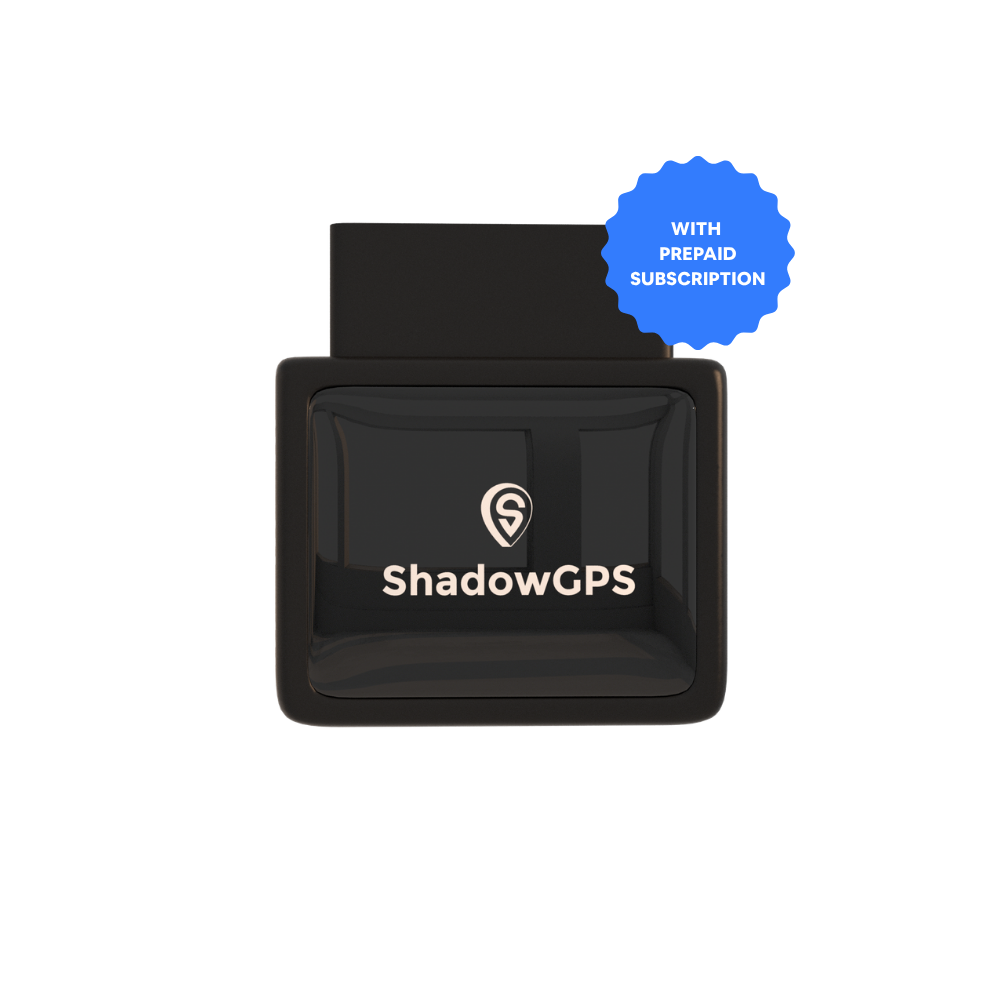
ShadowAuto
- No wiring, installs in under 5 minutes
- Live location updates every few seconds
- Full route history and speed/idle reports
- Moves between buses in minutes if a route changes


ShadowTrack: Portable, Battery-Powered GPS Tracker
ShadowTrack is a magnetic, battery-powered tracker built for vehicles you don't want to wire in, a backup bus, a rented van, or a spare vehicle that only runs occasionally. With 7–14 days of battery life, it's the pick for fleets that need flexible coverage across more vehicles than they have dedicated trackers for.
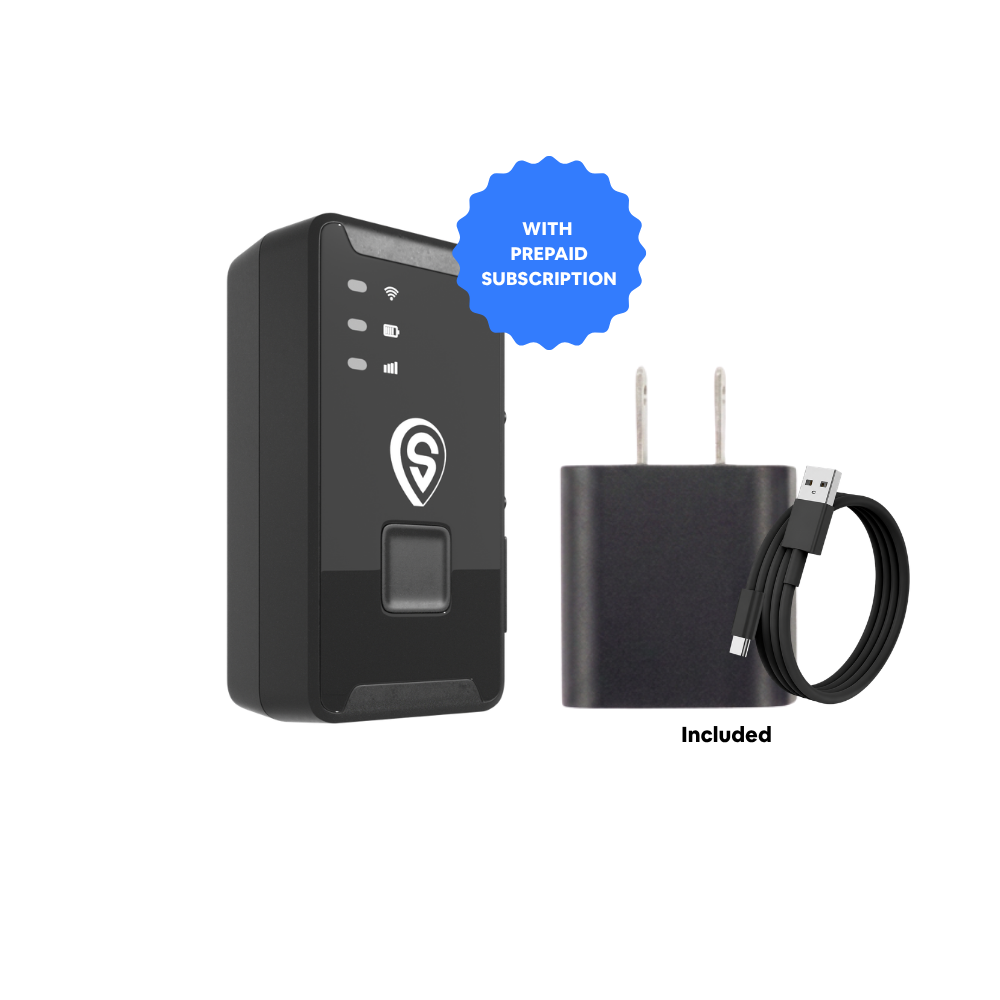
ShadowTrack
- No wiring, no OBD port needed
- Weatherproof, built for outdoor mounting
- Ideal for backup or supplementary buses
Features to Look For in a School Bus GPS Tracking System
Not every tracker is built for the daily reality of school transportation. Before you buy, check for:
- Truly real-time updates: a tracker refreshing every 5 minutes can't tell you a bus is running late until it already is.
- Geofence alerts for approved routes and school zones.
- Durability: a device that shrugs off vibration, dust, and temperature swings that buses see every day.
- A simple app: drivers and administrators shouldn't need training to read a dashboard.
- Transparent pricing: a flat, no-contract plan instead of a custom district quote.
Who Benefits From a Bus Tracking System
School administrators
Route optimization saves fuel and time, while automated logs replace manual paperwork for audits and reduce parent complaints.
Parents & families
Real-time updates on the bus's location and arrival time cut down on the anxiety of "is the bus almost here?"
Drivers & dispatchers
Smooth route guidance and instant location sharing mean help, or a schedule adjustment, gets exactly where it's needed.
How Much Does a GPS Tracker for a Bus Cost?
Enterprise district platforms are typically quoted per bus, per year, and can run into the thousands once installation and support are included. A self-installed gps tracker for the bus, like ShadowAuto or ShadowTrack, is a one-time device cost plus a flat monthly plan. See current pricing on our plans page. For an operator with 2–10 vehicles, that's usually a fraction of what a single enterprise district license costs. If you're weighing fleet size against tracker type more broadly, our guide on choosing GPS tracking for 3–10 vehicles walks through the tradeoffs in more detail.
FAQ: GPS Tracker for Bus
What is the best GPS system for school bus tracking?
It depends on fleet size. Large districts with hundreds of buses generally need an enterprise platform with SIS/RFID integration, such as Zonar or Transfinder. Smaller operators (private schools, daycares, churches, and charter fleets running 1–10 buses or vans, get the same real-time visibility from a self-installed tracker like ShadowAuto), without the district-level cost or install timeline.
Is there a way to track my kids' school bus?
Yes, if the bus is equipped with a GPS tracker connected to a parent-facing app. Many schools now offer this directly; if yours doesn't, our guide on GPS safety features that protect school children covers what to ask for.
How much does a GPS tracker for a bus cost?
Enterprise district contracts are typically custom-quoted per bus. A self-installed device like ShadowAuto or ShadowTrack is a flat device cost plus a simple monthly plan. See our pricing page for current rates.
Can I track a bus on Google Maps?
Google Maps can show live transit for some public transportation, but it doesn't track a specific privately owned school bus. For that, the bus needs its own GPS tracker feeding a dedicated app or dashboard.
Is there a GPS for bus drivers that also tracks driving behavior?
Yes. Trackers like ShadowAuto log speeding, harsh braking, and idle time alongside location, so administrators can coach drivers using real data instead of secondhand reports.
Give your fleet real-time visibility today.
Plug-and-play or portable: pick the tracker that fits your buses and vans.
Last updated September 2026. Pricing and product specs subject to change. Check current pricing on theshadowgps.com.

