

A work van earns money when it's on the road and loses money the second nobody can say where it is. A late arrival turns into an angry customer call. An unexplained detour turns into a fuel bill nobody can account for. A parked-overnight van turns into a theft report with no leads.
A GPS tracker for work vans fixes all three problems with one small device and a live map. Whether you're a solo operator with a single cargo van or you're running a crew of five trucks, the right gps fleet tracking solution turns guesswork into a dashboard you can actually trust.
This guide covers how gps tracking devices work, the features worth paying for, real accident and fuel-cost statistics from fleets that made the switch, and a side-by-side look at the best gps vehicle tracker options for 2026, from plug-in trackers for a single van to enterprise fleet tracking software for larger commercial fleets.
The best gps tracker for work vans depends on fleet size. For one van or a small crew of 2 to 10 vehicles, ShadowGPS's ShadowAuto plugs into the OBD-II port and updates location every 5 seconds, with plans at $12 to $15 a month, a 14-day free trial, and no contract, ever. For non-powered assets like trailers or equipment, ShadowTrack's battery-powered design does the same job without wiring.
Larger commercial fleets that need driver scorecards, dash cameras, and ELD compliance across dozens of trucks tend to look at enterprise fleet management systems like Samsara or Geotab instead.
Why Work Vans Need GPS Tracking

A work van is a moving branch office. It carries tools, inventory, and your company's reputation into a customer's driveway every day. When something goes wrong with that van, and you have no location data, every conversation with a customer, an insurer, or an employee turns into a guessing game.
Here's what a gps tracking solution actually solves for a work van fleet:
- Not knowing whether a driver is on site, between jobs, or off route entirely
- Customer disputes over arrival and departure times with no proof either way
- Rising fuel costs from inefficient routing or after-hours vehicle use
- Theft or an insurance claim with zero location evidence to point to
- Reactive jobs that are hard to schedule because nobody knows which van is closest
GPS tracking is common practice among fleet operators today, with roughly 80% reporting some form of fleet tracking already in place. For anyone still running vans on trust and a group chat, that gap is where the money is leaking out.
How a GPS Tracker for Work Vans Works
Every gps vehicle tracker relies on the same underlying technology: the Global Positioning System, a network of satellites that calculates a device's exact position on earth. The tracker in the van reads that position and sends it over cellular networks to a cloud platform, where it shows up on a live map, often built on top of Google Maps, inside a web dashboard or Android and iOS app.
Real-time tracking updates typically happen anywhere from every 1 to 30 seconds, though the range across tracking devices on the market is wide. ShadowGPS's own devices update every 5 seconds while a van is moving, on every plan, which is fast enough to watch a driver take a turn in something close to real time instead of watching a dot jump every minute.
Beyond location tracking, most modern gps tracking devices also log speed, direction, trip start and stop times, engine status, and driving behavior like harsh braking or hard acceleration. That trip history becomes an honest record of how each van in the fleet is actually being driven, not just where it ends up.
OBD-II, Hardwired, and Portable GPS Trackers: What's the Difference
GPS trackers for work vans generally fall into three categories, and picking the right one matters more than picking the right brand:
OBD-II (Plug and Play)
- Plugs into the vehicle's OBD-II port, standard on nearly every van built after 1996
- Plugs in in under 2 minutes, no tools or wiring
- Draws power from the van itself, so there's no battery to manage
Hardwired & Portable
- Hardwired GPS trackers connect straight to the van's battery and are usually hidden behind the dashboard, often needing professional installation
- Portable, battery-powered trackers move easily between vehicles or attach to equipment and trailers, with some models rated for battery life up to 140 days depending on ping frequency
- Best suited to non-powered assets rather than a daily-driven van
For a van you drive every day, an OBD-II tracker is almost always the simplest and most reliable choice. Save hardwired or portable devices for trailers, generators, and other equipment that doesn't have its own OBD-II port. For a closer look at that trade-off, see our guide to battery-powered vs. hardwired GPS trackers for commercial vehicles.
Key Features to Look for in a GPS Fleet Tracking Solution
Not every gps tracking software package is built the same. When comparing fleet tracking systems for work vans, these are the features that actually move the needle:
Real-Time GPS Tracking
Real time gps tracking is the foundation everything else is built on. It lets a dispatcher see vehicle locations at a glance, assign the closest driver to an urgent job, and give a customer an accurate ETA instead of a guess. Real-time tracking updates also mean a stolen van can be located and reported to police within minutes, not hours.
Geofencing Alerts
Geofencing lets you draw a virtual boundary around a job site, a depot, or an entire service area. The moment a van crosses that line, an automatic alert lands in the app. It's one of the simplest ways to confirm a crew actually arrived where they said they would, and to catch after-hours vehicle use before it becomes a habit.
Driver Behavior Monitoring
Driver behavior monitoring tracks speeding, harsh braking, and hard acceleration, then rolls it into a score you can act on. This is where fleet safety and fuel efficiency overlap: a driver who brakes hard and accelerates aggressively is both more likely to be in an accident and burning more fuel doing it.
Route Optimization and Route History
Route optimization suggests the most efficient path between jobs, cutting mileage and fitting more stops into a working day. Route history, or historical route playback, lets you replay any past trip stop by stop, which is invaluable for resolving a customer dispute or double-checking a mileage reimbursement claim.
Idle Time and Maintenance Alerts
Idle time reporting flags how long a van sits running but not moving, a quiet but steady drain on fuel costs. Maintenance alerts, often pulled from the same OBD-II port as the location data, flag issues before they turn into a breakdown on the side of the road, which keeps operational costs and unplanned downtime down at the same time.
The Best GPS Trackers for Work Vans in 2026
Here's how the leading options stack up, from a single work van to a commercial fleet running dozens of trucks.
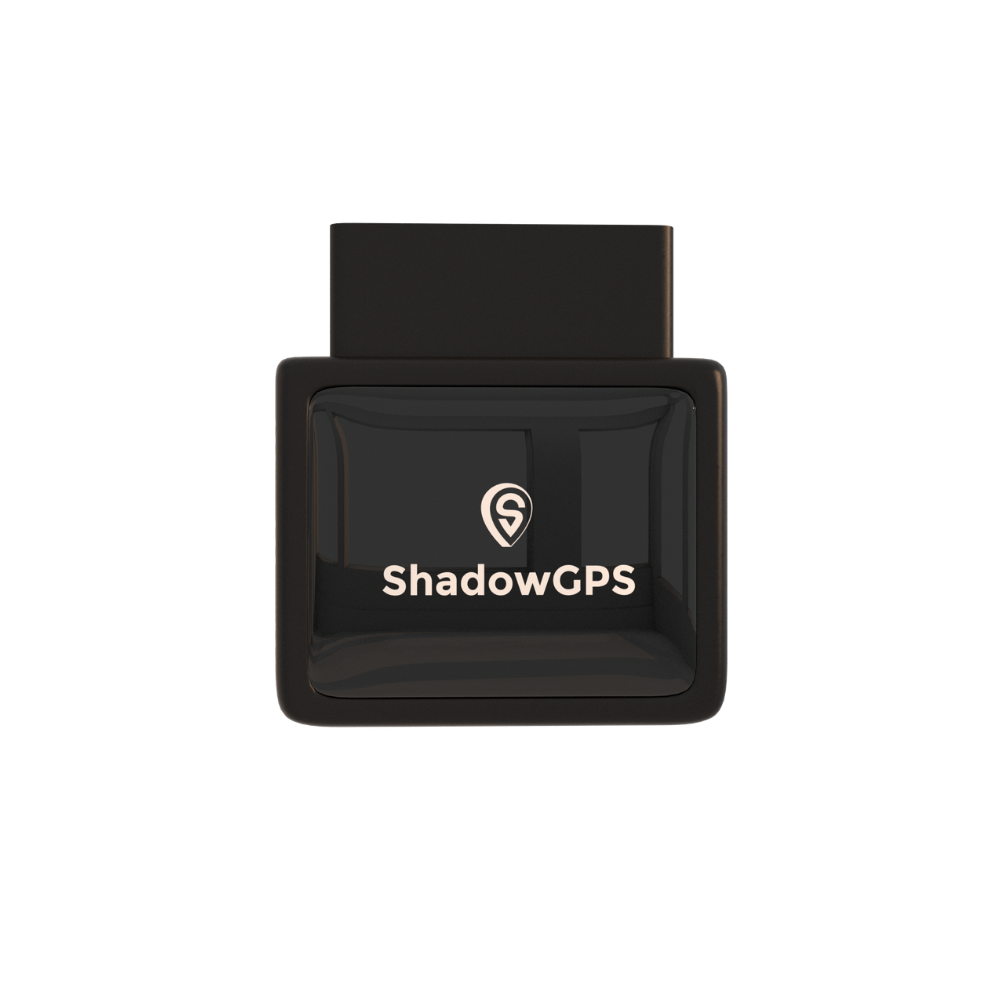
1. ShadowGPS ShadowAuto
ShadowAuto is an OBD-II gps vehicle tracker that plugs into your van's diagnostic port and starts reporting location within minutes, no wiring and no professional installation required. It updates every 5 seconds while the van is moving, which is noticeably faster than the 15 to 60 second refresh common on many gps trackers in this category.
Because it draws power directly from the vehicle, there's no battery to charge or replace, and because it reads the OBD-II port, it also surfaces engine diagnostics alongside location data. A full trip timeline, replayable route history, geofencing, and a Car Alarm that flags unexpected movement round out the feature set. There's no long-term contract on any plan.
ShadowAuto
- Plugs into the OBD-II port in under 2 minutes
- Trip timeline, route replay, and geofencing built in
- Car Alarm flags unexpected movement instantly
 Buy Now on Amazon
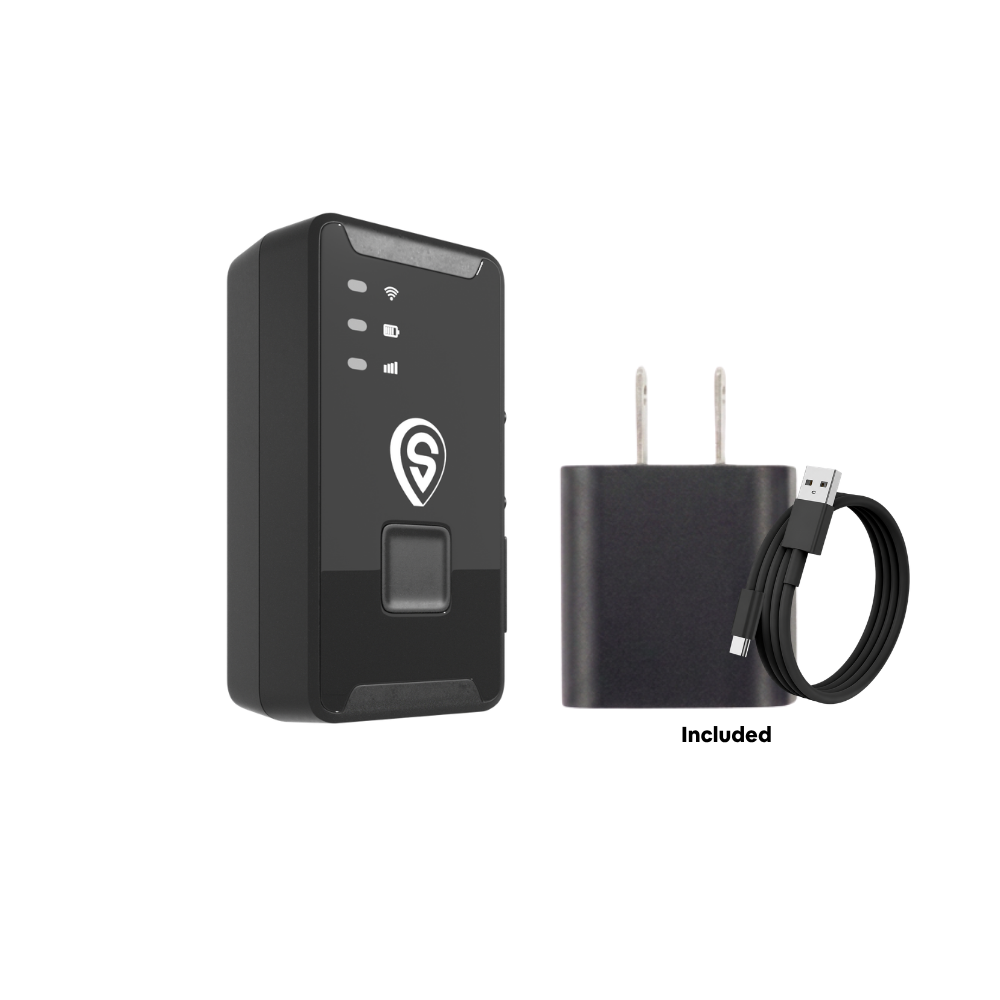
2. ShadowGPS ShadowTrack
Not every asset a work van business needs to track has an OBD-II port. Trailers, generators, and job-site equipment don't, which is where ShadowTrack comes in. It's a battery-powered gps tracker in a weatherproof, magnetic case that mounts anywhere in seconds and holds roughly 15 days per charge.
It shares the same 5-second refresh, live map, and trip history as ShadowAuto, just without needing a power connection, which makes it a practical asset tracking option for anything that moves between job sites but doesn't have a dashboard.
ShadowTrack
- Mounts in seconds, no wiring or OBD-II port needed
- Weatherproof magnetic case built for outdoor equipment
- Same 5-second refresh and route history as ShadowAuto
3. Samsara
Samsara is an enterprise fleet management system built for larger commercial fleets that need more than a live map. It's known for pairing GPS with AI-powered dash cameras, fleet safety scoring, and vehicle diagnostics in one platform.
Pros
- Deep diagnostics and AI dash cam integration
- Scales well across large, mixed commercial fleets
Cons
- Pricing requires a sales call, typically with a contract
- More platform than a 1 to 5 van operation typically needs
Best for: commercial fleets of 20+ vehicles that want AI dash cams and safety scoring alongside location tracking.
4. Geotab
Geotab is an open telematics platform that pairs GPS tracking with an extensive vehicle data feed and a large marketplace of third-party integrations, from fuel cards to maintenance software.
Pros
- Extensive vehicle data and a large integrations marketplace
- Good fit for businesses already running other fleet software
Cons
- Setup and reporting can feel complex for a small operation
- Typically sold through a reseller with contract terms
Best for: fleets that already run other business software and want a GPS tracking solution that plugs into that stack.
5. Verizon Connect
Verizon Connect is a long-standing fleet tracking software provider that's particularly strong in reporting, making it a common choice for fleet managers who need detailed logs across a large number of fleet vehicles.
Best for: larger fleets whose fleet managers need heavy reporting on top of live location data.
6. Bouncie
Bouncie is a plug-and-play OBD tracker aimed at individuals and small fleets that want basic location tracking and trip history at a lower monthly fee.
Pros
- Lower starting monthly fee
- Simple OBD-II plug-in setup
Cons
- Refresh rate of roughly 15 seconds, three times slower than ShadowAuto's 5-second refresh
- Fewer fleet-specific reporting tools

Best for: a single work van on a tight budget that doesn't need fast refresh rates or fleet reporting.
How the Top GPS Trackers for Work Vans Compare
| Tracker | Best For | Install Type | Refresh Rate | Contract | Starting Price |
|---|---|---|---|---|---|
| Samsara | 20+ vehicle commercial fleets | Hardwired / OBD | Real-time | Sales-quote contract | Quote-based |
| Geotab | Fleets needing integrations | OBD / hardwired | Real-time | Reseller contract | Quote-based |
| Verizon Connect | Heavy reporting, larger fleets | Hardwired / OBD | Real-time | Contract | Quote-based |
| Bouncie | Single van, budget-first | OBD-II plug-in | ~15 sec | No contract | $9.00–$9.65/mo |
| ShadowGPS ShadowTrack | Trailers & equipment | Battery / magnetic | 5 sec | No contract, ever | $10-$13/mo with 4+ devices |
| ShadowGPS ShadowAuto | 1 to 10 work vans | OBD-II plug-in | 5 sec | No contract, ever | $10-$13/mo with 4+ devices |
Real-Time GPS Tracking Statistics That Matter for Fleet Safety
The case for gps tracking isn't just anecdotal. Fleets that add real-time tracking and driver behavior monitoring tend to see measurable, consistent results:
- A 23% reduction in unsafe driving incidents after implementing real-time tracking
- A 30% reduction in speeding events once drivers know they're being monitored
- A 20% reduction in hard braking events
- A 38% reduction in accidents reported by fleets running GPS fleet tracking
Beyond safety, real-time gps tracking improves fuel efficiency by cutting idle time and helping route optimization, gives an accurate ETA to clients waiting on a service call, and enables a quick response the moment a van is reported stolen. It also feeds into maintenance: scheduling service based on real mileage and engine data, rather than a rough guess, helps prevent the kind of costly unexpected breakdown that takes a van off the road for days.
How Much Does a GPS Tracker for Work Vans Cost?
Most gps tracking devices are sold as hardware plus a monthly or annual data plan that covers cellular data, live tracking, alerts, and history reports. Entry-level subscription plans across the market start around $9 to $10 per month per vehicle, while more full-featured plans with longer history windows and driver scorecards run higher.
The good news for a small fleet: no long-term contracts are required with most direct-to-consumer and small-fleet providers. ShadowGPS, for example, runs $12 to $15 per month per vehicle with a 14-day free trial and no contract, ever. That's a different pricing model from the enterprise players, where 24 to 36 month contracts are still common. If you're weighing the full cost picture for a small crew, our breakdown on what GPS tracking actually costs for a small fleet walks through the math in more detail.
Featured Snippet Summary: Best GPS Tracker for Work Vans
For 1 to 10 work vans, an OBD-II plug-in tracker like ShadowGPS ShadowAuto is the best gps tracker for work vans: no wiring, no contract, and a 5-second refresh rate. For trailers or equipment without an OBD-II port, a battery-powered tracker like ShadowTrack is the better fit. Commercial fleets running 20 or more vehicles that need AI dash cams, driver scorecards, or ELD compliance are typically better served by enterprise fleet management systems such as Samsara, Geotab, or Verizon Connect.
Choosing the Right Tracker for Your Fleet Size
One van
An OBD-II tracker is the fastest way to get peace of mind: plug it in, see it move, cancel any time if it's not for you.
2 to 10 vans
The same plug-and-play tracker scales across every van under one account, with geofencing and trip history making dispatch and billing easier.
20+ vehicles
Enterprise fleet management systems add driver scorecards, dash cameras, and compliance tools, usually at the cost of a signed contract.
If you're right at the edge of that middle tier, see our dedicated guide on choosing the best fleet GPS tracking when you have 3 to 10 vehicles.
Building Driver Accountability Without Losing Trust
The most common worry business owners raise before adding GPS tracking is whether it will feel like surveillance to their drivers. In practice, it comes down to how the system is introduced.
Tell drivers what's being tracked and why before the trackers go in, and frame it as protection that works both ways. If a van is stolen, the tracker helps recover it. If a driver is in a collision that wasn't their fault, the trip data backs them up. If a customer claims a van never showed, the route history settles it in seconds. Businesses that lead with that transparency consistently report drivers accepting the system without friction.
Frequently Asked Questions
What is the best GPS tracker for work vans?
For most work van fleets of 1 to 10 vehicles, an OBD-II plug-in tracker like ShadowGPS's ShadowAuto is the best option: no wiring, no contract, and a 5-second location refresh. Larger commercial fleets often move to enterprise platforms like Samsara or Geotab for added reporting and diagnostics.
How much does GPS tracking cost per vehicle?
Subscription plans across the market start around $9 to $10 per month per vehicle. ShadowGPS's plans run $12 to $15 per month with a 14-day free trial and no long-term contract, while enterprise fleet software typically requires a quote and a signed contract.
Do GPS trackers for work vans need a SIM card?
Most cellular GPS trackers, including ShadowGPS devices, come with a built-in data connection over cellular networks, so there's no separate SIM card for you to buy or manage. The data plan is bundled into the monthly fee.
Is it legal to track company vans with GPS?
In the US, it's generally legal for a business to track company-owned vehicles, especially when drivers are informed the tracking is in place. Requirements vary by state, so check your state's specific employee-monitoring rules before rolling out a fleet-wide program.
Can a GPS tracker reduce fuel costs for a work van fleet?
Yes. GPS tracking reduces fuel costs by flagging excessive idle time, revealing inefficient routes, and discouraging after-hours or unauthorized use of company vehicles. Route optimization tools then help drivers take shorter, faster paths between jobs.
How long is trip history stored on a GPS tracking platform?
Storage windows vary by provider and plan. Many platforms keep trip history for a minimum of 30 days, with premium plans extending that to 12 months or longer.
Plug it in. See your van move. Cancel any time.
ShadowAuto plugs into any van's OBD-II port in under 2 minutes and updates location every 5 seconds. No contract, ever.
Pricing and specs current as of August 2026 and subject to change; confirm current plan pricing and battery specifications on each provider's site before purchasing. Amazon links are affiliate links; ShadowGPS may earn a commission at no extra cost to you. Safety and fuel-efficiency figures are published industry averages, not guarantees, and results vary by fleet. Legal guidance is general information, not legal advice; confirm the employee-monitoring and tracking laws in your state. Last updated August 2026.

