

You've been looking at GPS trackers for your small fleet, and you've seen monthly prices ranging from $8 to $45 per vehicle. Some companies advertise "no monthly fee," and others want you to sign a three-year contract before they'll even tell you the price. And you're sitting there thinking: what does this actually cost when I add it all up?
Fair question. The reason it's so hard to answer is that most GPS tracking companies are deliberately vague about total cost. They advertise the monthly subscription in big bold text and bury the hardware fees, activation charges, and contract penalties in the fine print.
This guide does the opposite. We'll lay out every cost involved in fleet GPS tracking systems cost for a small fleet of 3 to 10 vehicles, compare portable trackers against OBD and enterprise options with real annual numbers, and give you a formula to calculate your own cost, so you decide based on facts instead of marketing.
Fleet GPS tracking systems typically cost between $10 and $50 per vehicle per month, with most fleets landing at $25 to $45, plus a one-time hardware cost of $50 to $300 per vehicle. Your true total cost of ownership is four numbers added together: hardware + installation + monthly subscription + any data or hidden fees. Basic real-time location tracking sits at the low end; advanced analytics, driver behavior monitoring, and AI dashcams push it past $80 per vehicle monthly.
What Does Fleet GPS Tracking Actually Cost?
Across the market, GPS fleet tracking pricing ranges from about $14 to $250 per vehicle per month, and most providers average $25 to $45. Upfront hardware runs from $50 to over $300 per vehicle, and some providers rent the device to you instead for $10 to $25 per month. The GPS fleet tracking market is projected to reach $9.8 billion by 2030, which is exactly why so many providers are competing for your monthly fee.
That's the wide view. Here's how those numbers break down by what you're actually paying for.
| Cost component | Typical range | What it covers |
|---|---|---|
| Hardware (per vehicle) | $50 to $300+ | The GPS tracking device itself (some bundle it into the contract) |
| Installation (per vehicle) | $0 to $150 | Professional install for hardwired units; $0 for plug-and-play devices |
| Monthly subscription (per vehicle) | $10 to $50 | Cellular data, cloud storage, app access, alerts and reporting |
| Advanced tier / AI dashcam | $80+ | Driver-facing cameras, AI event detection, deep analytics |
| Hidden fees | Varies | Activation, SIM charges, shipping, cancellation penalties, feature paywalls |
The Three Cost Categories Nobody Combines for You
GPS tracking costs break down into three buckets, and you need all three to get an honest picture. Miss one and the "cheap" tracker quietly becomes the expensive one.
- Device hardware. The upfront price of the actual GPS tracker, from $0 (bundled with a contract) to about $300 per device. "Free hardware" always means you're paying for it through higher monthly fees or a locked-in contract. Nothing is free. Someone is paying for that device, and it's you.
- Monthly subscription. The recurring fee that covers cellular data, cloud storage, app access, and alert functionality. For small business trackers, this typically runs $10 to $45 per vehicle per month depending on the provider and plan tier. Ongoing data fees are usually bundled into this subscription.
- Hidden costs. The category most people forget: activation fees, SIM charges, shipping, cancellation penalties, professional installation for hardwired units ($50 to $150 per vehicle), and sometimes fees for features like geofencing or trip history that other companies include for free.
Combine all three and the total cost of GPS tracking for a small fleet can vary by thousands of dollars per year depending on which provider you choose. That's the number that matters, not the monthly fee in the ad.
How Cost Scales by Fleet Size
Per-vehicle pricing isn't fixed. It bends with the size of your fleet, because software rates drop as you add vehicles.
- Small fleets (10 vehicles or fewer). You'll pay closer to standard per-vehicle rates. The right move here is a no-contract plan where the advertised price is the real price, so you're not overpaying for enterprise features you'll never touch.
- Mid-sized fleets (11 to 99 vehicles). Providers start negotiating. You can often trade a longer commitment for a lower monthly software rate.
- Large fleets (100+ vehicles). This is where meaningful volume discounts kick in, reducing the per-vehicle software rate. If you're running four trucks, those discounts aren't written for you, so don't let an enterprise sales rep price you as if they are.
Two other levers move the number: contract length and hardware choice. Committing to a multi-year contract can lower the monthly software rate, while shorter terms often cost more per month. Plug-and-play devices skip the installation fee entirely; hardwired units usually need professional installation to stay secure and hidden.
Portable vs. OBD vs. Enterprise: The Real Annual Math
Let's stop talking in ranges and run actual numbers for a five-vehicle fleet, using real 2026 pricing. This is the table the big providers never show you.
| Option (5 vehicles) | Hardware | Annual subscription | Install | Contract | Year 1 total | Year 2 total |
|---|---|---|---|---|---|---|
| Portable (ShadowTrack) | $349.50 | $720 ($12/mo) | $0 | None | $1,069.50 | $720 |
| OBD plug-in (Bouncie) | ~$385 | ~$600 ($8–10/mo) | $0 | None | ~$985 | ~$600 |
| Enterprise platform (est.) | Bundled | ~$2,100 ($35/mo) | Possible | 24–36 mo | ~$2,100 | ~$2,100 |
The enterprise option costs more than double the portable or OBD option over two years and locks you into a contract. For a small service fleet that just needs to know where vehicles and equipment are, the math heavily favors the simpler solutions. Here's the detail behind each row.
Portable GPS Trackers: The Math for Small Service Fleets
Portable, battery-powered GPS trackers have become the most popular choice for small service businesses because they eliminate installation costs entirely. No mechanic visit, no wiring, no downtime. They also work on anything: trucks, trailers, and equipment that doesn't have an OBD port.
Take ShadowTrack from ShadowGPS as a real example, since the pricing is fully transparent on the website. The device is $69.90 each, including a built-in SIM and a 14-day free trial. After the trial, plans are $15 per month month-to-month, $13 per month quarterly, or $12 per month annually. Every plan includes all features. No paywalls, no tiered pricing, no contracts.
For five vehicles on the annual plan: hardware is 5 devices at $69.90, which is $349.50. Subscription is 5 vehicles at $12 per month, which is $720 per year. Activation, installation, and cancellation penalties are all $0. First-year total: $1,069.50. Second year: $720. Scale to ten vehicles and it's $699 in hardware plus $1,440 per year, which works out to $213.90 per vehicle in year one and $144 per vehicle every year after.
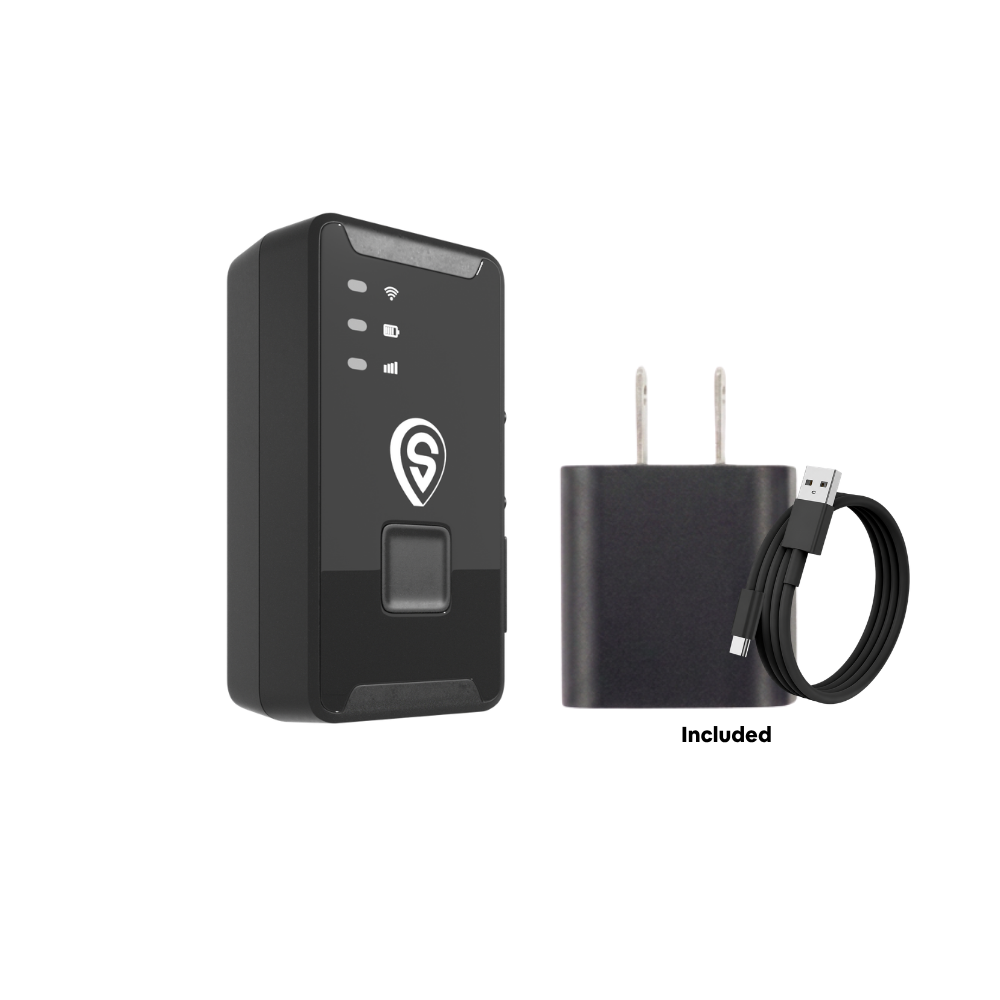
ShadowTrack
- Real-time tracking every 5 seconds while moving
- Every feature on every plan, no paywalls
- Weatherproof, magnet-mount in under 2 minutes
 Buy Now on Amazon
For a plumbing company, landscaping crew, or pest control operation watching every dollar, those numbers are significant. And the absence of a contract means if the product doesn't work for you, you walk away clean.
OBD Plug-In Trackers: Cheaper Per Month, But Read the Fine Print
OBD trackers plug into the diagnostic port under your vehicle's dashboard. They draw power from the vehicle, so you never have to charge them, and they can pull vehicle diagnostics like engine fault codes and engine hours straight from the port.
ShadowGPS makes an OBD option too, ShadowAuto, with the same 5-second refresh and all-features-included pricing as ShadowTrack. It's the right pick when your fleet is all newer cars and light trucks and you want a plug-in you never have to think about again.
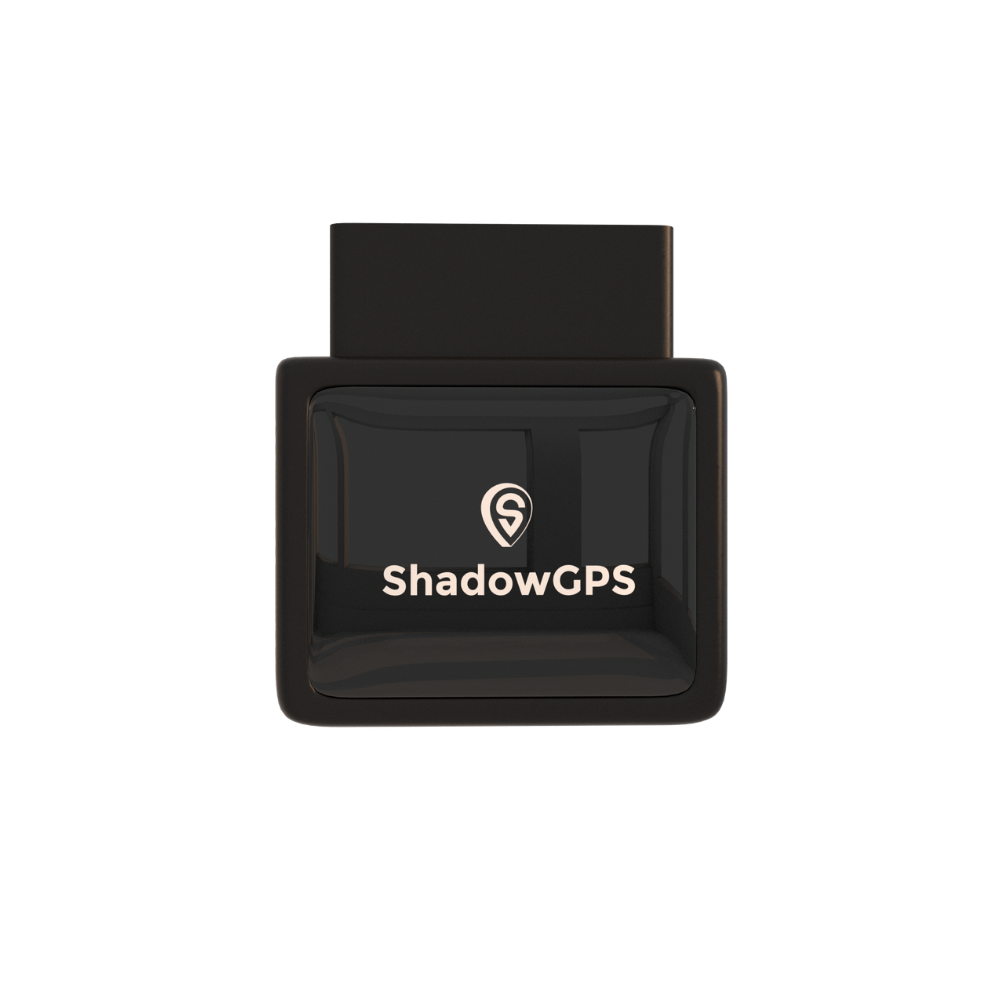
ShadowAuto OBD
- Real-time tracking every 5 seconds while moving
- Vehicle diagnostics & engine fault codes
- Plug in under 2 minutes, never charge it
Budget OBD options exist too. Bouncie, for example, charges about $77 for the device and $8 to $10 per month with no contract, which pencils out to roughly $985 in year one for five vehicles. Very competitive on paper, but there are trade-offs that matter for small businesses.
OBD trackers work well when
- Your fleet is all 1996-or-newer cars and light trucks
- You want zero charging and built-in diagnostics
- Discreet placement isn't a concern
Watch out when
- Your fleet includes trailers, equipment, or older trucks with no OBD port
- The device is visible and can be unplugged in seconds
- You'd need a second portable tracker for non-OBD assets anyway
For a mixed fleet with trailers, equipment, or older vehicles, a portable tracker gives you more flexibility at a comparable annual cost.
Enterprise Fleet Platforms: Where the Real Money Disappears
This is where small business owners get burned the most. Companies like Samsara, Verizon Connect, and Motive build powerful GPS fleet management and fleet tracking software designed for operations running 50 to 500 or more vehicles. They include electronic logging device (ELD) compliance, fuel card integration, dispatch routing, driver coaching dashboards, and often a dedicated account manager. Impressive technology, and completely unnecessary for a roofing contractor with four trucks.
According to a 2026 pricing comparison from Spytec GPS, enterprise platforms typically charge $25 to $45 per vehicle per month and require 12- to 36-month contracts. Many bundle the hardware into the contract, which sounds generous until you realize you're paying for it through inflated monthly fees and can't leave without a buyout penalty. At $35 per vehicle per month on a two-year contract, five vehicles is $2,100 per year, or $4,200 over the term. Decide it's overkill six months in, and you either keep paying or negotiate an early-termination fee that can run into the hundreds.
The Federal Motor Carrier Safety Administration confirms that ELD requirements primarily apply to commercial vehicles in interstate commerce. Most local service fleets operating vehicles under 10,001 pounds are exempt. So if you're paying for ELD compliance on a fleet of plumbing vans that never leave your metro area, you're paying for a feature that does nothing for you.
The "No Monthly Fee" Trap
You've probably seen GPS trackers on Amazon advertising "no monthly fee" in the title. Here's what that actually means.
Some of these devices use Bluetooth or the Apple Find My network instead of cellular GPS. They're cheaper because they don't pay for cellular data. The trade-off is that location updates depend on nearby smartphones with the right app installed. In a busy city, that works reasonably well. In a rural job site at 2 AM when your trailer gets stolen, there may not be a single compatible phone within range, so you get no location update at the exact moment you need it most.
Other "no monthly fee" trackers prepay one year of cellular service into the device price, typically $80 to $150. After that first year, you either pay a renewal fee or the tracker stops working. The marketing is technically accurate and genuinely misleading.
For real business use where you need real-time location data you can depend on, cellular GPS trackers with transparent monthly plans are the honest choice. The monthly fee pays for the cellular networks that keep your tracker connected. That's not a hidden cost. It's the actual cost of the service.
What Features Should Be Included, Not Paywalled
One of the most frustrating trends in GPS tracking is feature gating: a low advertised price, then half the features you need sit behind a higher tier. Before you choose any provider, confirm these come standard on the base plan.
- Real-time location tracking. This is the entire point. Good systems update every 1 to 30 seconds. If a provider charges extra for live updates, walk away.
- Geofencing alerts. Virtual boundaries around job sites, storage yards, and parking locations that alert you when a vehicle enters or exits. Essential for theft prevention. Some providers cap the number on the basic plan and charge for more.
- Trip history and activity replay. You need to review where vehicles have been, not just where they are now. Many systems limit replay to 90 days; ShadowGPS includes up to a year of trip history on every plan.
- Driver behavior alerts. Text and email alerts for speeding and harsh braking, plus driver scorecards, are standard safety and accountability features. They shouldn't cost extra.
- Maintenance and diagnostic alerts. Vehicle diagnostic reports and maintenance alerts let you plan service proactively instead of reacting to a breakdown.
- Multi-device management. Manage every tracker from a single app and account. Some providers charge per additional user, which adds up fast across an entire fleet.
With ShadowGPS, every plan includes all features. There's no premium tier and no paywall hiding geofencing behind a $5-per-month upgrade. That transparency matters when you're budgeting for a fleet, because the advertised monthly price is the actual monthly price.
What You Actually Save
Cost is only half the equation. The reason fleet GPS tracking pays for itself is that it cuts real expenses, and the industry data backs it up.
- Fuel costs. GPS tracking reduces fuel costs through route optimization and less idling, which directly cuts fuel waste. Industry studies report that monitoring excessive idling alone can trim fuel expenses by 10% to 20%, and around 16% of surveyed fleets credit GPS tracking with direct fuel savings.
- Maintenance costs. Proactive diagnostic and maintenance alerts help companies save roughly 16% on maintenance by fixing small issues before they become tow trucks.
- Insurance premiums. Many insurers offer discounts of 5% to 15% for fleets that use GPS tracking, because tracked vehicles are recoverable vehicles.
- Fewer accidents. Analyzing driving habits helps cut speeding and harsh braking. Companies report up to a 23% reduction in unsafe driving incidents, and driver behavior monitoring can lower accident-related costs by around 10%.
- Faster dispatching. Real-time tracking improves dispatching efficiency, reduces "where are you" calls, and speeds up response times, which helps customer retention.
How to Calculate Your Specific Cost
Every fleet is different, so here's a formula you can run in two minutes.
The total-cost-of-ownership formula
(Device cost × number of vehicles) + (monthly fee × number of vehicles × 12) + one-time fees = your true annual cost.
Count every vehicle and asset that needs tracking, including trailers and equipment. Multiply the device cost by that number. Multiply the monthly subscription by the number of devices and by 12. Then add any activation, installation, or accessory costs. For a transparent provider like ShadowGPS, that's the whole calculation, with no surprise invoices three months in. If you need a magnetic weatherproof case to mount a tracker under a vehicle, add that one-time cost per tracker.
Your pillar concern as a business owner should be total cost of ownership over one to two years, not the lowest advertised monthly price. An $8-per-month tracker that needs a $150 device, a $25 activation fee, and a 12-month contract is not actually cheaper than a $12-per-month tracker with a $69.90 device, no activation fee, and no contract. The math tells the full story.
In short
Fleet GPS tracking systems cost $10 to $50 per vehicle per month (most fleets pay $25 to $45), plus $50 to $300 in hardware per vehicle. Your true cost is hardware + installation + subscription + hidden fees. For a small fleet of 3 to 10 vehicles, a no-contract portable or OBD tracker runs well under $200 per vehicle per year, while enterprise platforms cost double and lock you into 24 to 36 months. Add it all up before you sign anything.
Frequently Asked Questions
How much does fleet GPS tracking cost per vehicle?
Fleet GPS tracking systems typically cost $10 to $50 per vehicle per month, with most fleets averaging $25 to $45, plus a one-time hardware cost of $50 to $300 per vehicle. Basic real-time location tracking sits at the low end; advanced analytics and AI dashcams can exceed $80 per vehicle monthly.
What is included in the total cost of a GPS tracking system?
Four things: hardware (the device), installation (0 for plug-and-play, $50 to $150 for hardwired units), the monthly subscription that covers cellular data and software, and hidden fees like activation, SIM charges, and cancellation penalties. Add all four for the real number.
Do GPS fleet trackers require a monthly fee?
Any tracker with dependable real-time cellular location needs a monthly fee, because that fee pays for the cellular network. "No monthly fee" trackers usually rely on Bluetooth or prepay a year of service into a higher device price. ShadowGPS plans run $12 to $15 per month with no contract.
Is there a contract for fleet GPS tracking?
It depends on the provider. Enterprise platforms usually require 12- to 36-month contracts, and a multi-year commitment can lower the monthly rate. Small-fleet trackers like ShadowGPS are month-to-month with no contract, so you can prepay to save or cancel any time.
How much can GPS tracking save my fleet?
Industry data points to roughly 16% lower maintenance costs, 10% to 20% less fuel from reduced idling, insurance discounts of 5% to 15%, and up to a 23% drop in unsafe driving incidents. For most small fleets, the savings outrun the subscription cost quickly.
Do I need ELD compliance for my small fleet?
Usually not. The FMCSA applies electronic logging device rules primarily to commercial vehicles in interstate commerce. Most local service fleets with vehicles under 10,001 pounds are exempt, so paying an enterprise platform for ELD features you don't need is wasted money.
What is the best GPS tracking system for a small fleet?
For 3 to 10 vehicles, the best value is a no-contract tracker with transparent pricing and all features included. Choose a portable tracker like ShadowTrack for mixed fleets with trailers and equipment, or an OBD plug-in like ShadowAuto if every vehicle is a newer car or light truck.
The Bottom Line
GPS tracking for a small fleet is one of the most cost-effective investments a service business can make. At under $200 per vehicle per year on most portable and OBD plans, you're spending less than a single day of lost productivity from one stolen trailer or one unaccounted detour.
The key is knowing the full cost before you commit. Add up the hardware. Add up the subscription. Check for hidden fees. Confirm there are no contracts. Then compare. The numbers don't lie, and for a small fleet, they're much friendlier than most people expect.
See the exact cost, with no surprises.
Every ShadowGPS plan lists what it includes and what it costs. All features on every plan, a 14-day free trial, and no contract. Plug it in, see it move, cancel any time.
Pricing and specs current as of August 2026 and subject to change; confirm current pricing on the product page before purchase. Amazon links are affiliate links; ShadowGPS may earn a commission at no extra cost to you. Cost ranges and savings figures (fuel, maintenance, insurance, and safety) are drawn from published industry sources including Motive, Geotab, and Spytec GPS pricing analyses and describe general findings, not results guaranteed for every fleet. ELD guidance per the Federal Motor Carrier Safety Administration; confirm your own compliance obligations.

