

Catalytic converter theft statistics tell a story with a twist. Insurance claims for stolen converters fell about 78% from the 2022 peak to 2024, dropping from 64,701 to 14,036, according to the National Insurance Crime Bureau (NICB). Then the price of rhodium, one of the precious metals inside every converter, more than doubled. Some cities are now seeing thefts climb again.
This guide pulls the latest numbers from NICB, State Farm, Carfax, and Consumer Reports into one place. It explains why those sources disagree, which states and vehicles are hit hardest, what a theft really costs, and what genuinely protects your car or truck. We'll also be straight about what a GPS tracker can and can't do here.
Catalytic converter theft statistics (latest): NICB recorded 14,036 theft claims in 2024, down 68% from 43,674 in 2023 and 78% below the 2022 peak of 64,701. Carfax, which counts replacements in repair records instead of insurance claims, estimates more than 137,000 converters were stolen in 2025. California produced nearly two-thirds of 2024 claims, the Ford F-150 was the most-targeted vehicle in 2025, and a typical replacement costs about $2,177 to $2,506.
How we built this page: every number below comes from a named, primary or near-primary source, and we flag where the data is incomplete instead of filling gaps with guesses.
Catalytic converter theft statistics at a glance
If you only have a minute, these are the numbers that matter most right now.
- Peak year: 2022, with 64,701 theft claims reported to NICB.
- Latest full-year NICB count: 14,036 claims in 2024, a 68% drop from 2023.
- Carfax estimate for 2025: more than 137,000 converters stolen, with thousands more in early 2026.
- Growth during the wave: claims jumped from 1,298 in 2018 to 64,701 in 2022, roughly a 50x increase in four years.
- Where: California accounted for nearly two-thirds of NICB-reported thefts in 2024, and 10 states made up 73% of thefts from 2022 to 2024.
- Most-targeted vehicle: the Ford F-150, followed by the Hyundai Tucson and Ford Explorer (Carfax, 2025).
- Cost to you: about $2,177 to $2,506 on average to replace, with some jobs over $3,300.
- Payout to the thief: often $50 to $250 from a recycler, and up to $800 for a hybrid converter (NICB).
- The driver behind it all: rhodium hit roughly $30,000 per ounce in 2021, fell under $5,000 by 2024, then climbed back to about $11,000 in March 2026.
Catalytic converter thefts by year (2018 to 2025)
Here is the full trend line, combining NICB's industry-wide claims with State Farm's own claims book. State Farm is the largest US auto insurer, so its numbers are a useful second opinion on the same trend.
| Year | NICB theft claims | State Farm claims | State Farm avg. claim | What was happening |
|---|---|---|---|---|
| 2018 | 1,298 | n/a | n/a | Pre-wave baseline |
| 2019 | 3,389 | n/a | n/a | Metal prices start rising |
| 2020 | 16,660* | ~10,000 | $2,100 | Pandemic supply shocks |
| 2021 | 52,206 | ~32,000 | $2,300 | Rhodium peaks near $30,000/oz |
| 2022 | 64,701 | ~45,000 | $2,500 | All-time peak; first national DOJ takedown |
| 2023 | 43,674 | ~21,200 | $2,900 | First decline; wave of new state laws |
| 2024 | 14,036 | 3,800+ (Jan to Jun) | $2,900 | Rhodium under ~$5,000/oz |
| 2025 | Not yet published | n/a | n/a | Carfax estimates 137,000+ stolen; rhodium doubles |
*NICB first reported 14,433 thefts for 2020, then revised its claims count to 16,660 in its 2023 report. Sources: NICB, State Farm newsroom, Carfax. "n/a" means no published figure we could verify.
Why the three main sources disagree
If you've seen wildly different catalytic converter theft numbers online, this is why. Each source counts something different, and none of them counts every theft.
- NICB counts insurance claims across many insurers. It misses every theft where the owner had no comprehensive coverage or didn't file because the deductible was too high.
- State Farm counts only its own customers' claims. It's a smaller slice, but it's consistent year to year, which makes it great for spotting trends.
- Carfax counts converter replacements in service records from tens of thousands of repair shops. That catches uninsured victims, which is why its estimates (about 153,000 in 2022 and 137,000+ in 2025) run more than double NICB's.
The takeaway: claims data almost certainly undercounts the real number. When a site quotes one figure without saying where it came from, treat it with care. Several stat roundups that rank for this topic cite numbers we could not trace to any original source, so we left those out.
Is catalytic converter theft going back up in 2026?
Nationally, the full answer isn't in yet. NICB had not published a 2025 national converter theft figure at the time we checked. But the early signals point up, not down.
Metal prices are the leading indicator
Converter theft tracks the price of the platinum, palladium, and rhodium inside the part. When rhodium crashed after 2021, theft followed it down. According to Carfax, rhodium more than doubled over the past year and reached about $11,000 per ounce in March 2026. That's still well below the 2021 peak, but it puts real money back in every stolen converter.
Researchers have studied this link directly. A December 2025 academic study using nine years of FBI crime data found that theft rises quickly when metal prices rise, and falls quickly when prices drop or new laws kick in.
Local spikes are already showing up
- St. Paul, Minnesota: thefts nearly tripled in 2025, from 172 to 504, even with a strict anti-theft law on the books (reported by MoneyGeek).
- Berkeley, California: police reported more than 300 converter thefts so far in 2026, up from 248 for all of 2025 (Patch, October 2026).
- Sykesville, Maryland: police confirmed new cases in spring 2026, one of several departments telling Carfax they've seen a resurgence.
Our read: the 2024 low was real, but it was a price low, not a permanent fix. If you park a truck, SUV, or hybrid outside overnight, 2026 is a good year to take simple precautions.
Which states have the most catalytic converter thefts?
Converter theft has always been concentrated, and it has gotten more concentrated as national numbers fell.
- California accounted for nearly two-thirds of NICB-reported thefts in 2024, per Consumer Reports. It also logged 24,102 theft claims from 2020 to 2022 alone.
- California and Texas together had more than 32,000 thefts in 2022, according to NICB.
- Just 10 states made up 73% of all thefts from 2022 to 2024.
Top states by State Farm claims
| State | Claims, Jan to Jun 2023 | Paid, Jan to Jun 2023 | Claims, Jan to Jun 2024 |
|---|---|---|---|
| California | 5,400+ | $17.8 million | 2,000+ |
| Texas | 1,450 | $5.1 million | Down (not itemized) |
| Illinois | ~1,300 | $2.9 million | 540 |
| New York | Top 10 | n/a | ~200 |
Source: State Farm claims data, first-half comparisons released September 2023 and September 2024.
Why California? It's a mix of sheer vehicle count, a high share of hybrids like the Prius, lots of street parking, and an established recycler network. It's also worth noting California has only about 13% of US registered cars but produced 55% of NICB's claims in the first nine months of 2023.
Which vehicles are most targeted for catalytic converter theft?
Carfax's June 2026 report ranked the vehicles most frequently targeted nationwide in 2025. Notice the pattern: pickups and SUVs dominate.
| Rank | Vehicle | Type | Why it's targeted |
|---|---|---|---|
| 1 | Ford F-150 | Pickup | High clearance, huge numbers on the road |
| 2 | Hyundai Tucson | Compact SUV | Easy underbody access |
| 3 | Ford Explorer | SUV | High clearance |
| 4 | Ram 2500 | Heavy-duty pickup | Large converter, room to work |
| 5 | Chevrolet Silverado | Pickup | High clearance |
| 6 | Chevrolet Traverse | SUV | Easy underbody access |
| 7 | Ram 3500 | Heavy-duty pickup | Large converter, room to work |
| 8 | Ford EcoSport | Small SUV | Easy underbody access |
| 9 | Ford Expedition | Full-size SUV | High clearance |
| 10 | Chevrolet Trax | Small SUV | Easy underbody access |
Source: Carfax, "Top 10 Vehicles Targeted by Recent Catalytic Converter Thefts," June 10, 2026.
Why trucks and SUVs top the list
It's mostly about ground clearance. A thief can slide under a pickup without a jack, cut the pipe on both sides of the converter, and be gone in minutes. Carfax's editor-in-chief pointed to exactly this: taller vehicles make it easier to get in and out.
Why hybrids are still a favorite
Hybrid converters run cooler and need more precious metal to work, so they wear out more slowly and keep more recoverable value. That's why the Toyota Prius remains the top target in western states even though no Toyota made Carfax's 2025 national top 10. A hybrid converter can bring a thief several times what a standard one does.
What about electric vehicles?
A fully electric car has no exhaust, so it has no catalytic converter to steal. Plug-in hybrids still have one, because they still have a gas engine.
How much does catalytic converter theft cost?
For thieves, a converter is a quick $50 to $250, or up to $800 for a hybrid, according to NICB. For you, the math is far worse.
- Replacement part plus labor: about $2,177 to $2,506 on average, per RepairPal's catalytic converter replacement cost estimator. Some vehicles run past $3,300.
- Average insurance claim: about $2,900 in 2023 and 2024, up from $2,100 in 2020 (State Farm).
- Collateral damage: rushed cuts can nick fuel lines, wiring, and oxygen sensors, which adds to the bill. Cars with two converters, like the Prius, cost more.
- Downtime: parts backorders can keep your car in the shop for days. NICB has noted that victims often need other transportation and may lose work time.
Will insurance cover a stolen catalytic converter?
Usually, but only if you carry comprehensive coverage, and you'll pay your deductible first. Here's a simple example:
- Repair bill: $2,300
- Your comprehensive deductible: $1,000
- You pay $1,000. Your insurer pays $1,300.
If your deductible is $1,500 or higher, filing may not be worth it. That's exactly why claims data undercounts real thefts. If you're planning repairs, you can compare fair local pricing with RepairPal before you book.
What it looks like for a small fleet
Consider an illustrative example: a landscaper parks three work trucks in an open lot, and all three lose converters in one night. At roughly $2,500 each, that's about $7,500 in repairs before deductibles. Add two or three days of downtime per truck, and the lost jobs can cost more than the parts. This is why converter theft hits owner-operators and small fleets hardest: the trucks are high off the ground, parked together, and often left in the same spot every night.
How thieves steal catalytic converters (and how fast)
Understanding the method explains which defenses work. Most thefts follow the same pattern:
- Pick a target with good clearance or a valuable hybrid converter, usually parked on a street, driveway, or unattended lot overnight.
- Slide underneath with a battery-powered reciprocating saw.
- Cut both sides of the converter. Experienced thieves can remove a Prius converter in about 90 seconds, and most jobs take only a few minutes.
- Sell it fast to a recycler or middleman who processes the metal.
Signs your catalytic converter was stolen
- A loud, rumbling roar the moment you start the engine
- A check engine light, often from the oxygen sensor readings going haywire
- Rough or sluggish acceleration and worse fuel economy
- Fresh cut marks or a gap in the exhaust pipe under the car
- A failed emissions inspection
Laws and crackdowns: what's changed
Lawmakers and police responded quickly once the numbers spiked, and that response is part of why theft fell.
- State laws: in 2022 alone, NICB tracked 163 converter-related bills across 37 states, with 31 enacted. Many require scrap buyers to collect a title or proof of ownership before buying a used converter.
- Federal takedown: in late 2022, the Department of Justice broke up a multistate theft and trafficking network in what it called the first national takedown of its kind. Converter theft dropped sharply afterward.
- Proposed federal law: the bipartisan Preventing Auto Recycling Theft (PART) Act, reintroduced as S. 2238 and H.R. 5221, would require traceable ID numbers on new converters and create federal penalties. It advanced in early 2026 with backing from law enforcement and dealer groups, but it was not law as of this writing.
How to protect your catalytic converter: a 4-layer framework
No single fix stops every thief. What works is stacking layers so your car or truck is slower, more visible, and harder to profit from than the one next to it. We call it Slow, Seen, Stamped, Spotted.
1. Slow: make the cut take longer
A steel shield or cable cage turns a 90-second job into several noisy minutes. Ask a trusted muffler or exhaust shop which option fits your model. Welding the converter bolts is another option on some vehicles.
2. Seen: make the thief visible
- Park in a locked garage when you can.
- Otherwise, choose well-lit spots with foot traffic, or park close to a building entrance.
- Add motion-sensor lights and a camera that covers your driveway.
- For trucks, park so the high side of the truck faces a wall or fence.
3. Stamped: make it hard to sell
Etch your VIN or license plate number onto the converter and add a coat of high-heat paint. Many police departments and NICB partners run free etching events. A marked converter is riskier for a recycler to buy, and it helps prosecutors connect the part to your car.
4. Spotted: know when something's wrong
An alarm with a tilt or vibration sensor can react while someone is under your car. A GPS tracker covers a different, bigger risk: the whole car or truck being taken. More on that below.
Prevention methods compared
| Method | What it protects against | Typical cost | Effort | Best for |
|---|---|---|---|---|
| Converter shield or cage | Slows the cut itself | A few hundred dollars plus shop labor | One shop visit | Trucks, SUVs, hybrids parked outside |
| VIN etching + paint | Makes resale riskier | Free to low cost | Under an hour | Every vehicle with a converter |
| Garage or lit parking | Exposes the thief | Free to varies | Habit change | Street and driveway parkers |
| Motion lights + camera | Deters and records | Varies | DIY afternoon | Homeowners |
| Alarm with tilt/vibration sensor | Alerts during the cut | Varies by system | Shop visit | High-risk models |
| Comprehensive insurance | Pays after the fact (minus deductible) | Varies by policy | One phone call | Everyone |
| ShadowAuto GPS tracker | Whole-car theft; overnight parking patterns; engine codes | $69.90 + monthly fee, no contract | Plug it in, under 2 minutes | Family cars, Turo hosts, small fleets |
Where a GPS tracker fits (and where it doesn't)
Let's be honest, because you deserve a straight answer: a GPS tracker won't stop someone with a saw. A thief working under your parked truck for two minutes doesn't move it, so location data alone won't flag a converter theft in progress.
So why talk about trackers in a converter theft article? Because the bigger loss is still the whole car. NICB counted 659,880 stolen vehicles in 2025, one every 48 seconds. Converter theft and car theft share the same conditions: night, open lots, and the same trucks and SUVs. A tracker covers the risk a shield can't.
Here's how a tracker earns its place alongside the four layers above:
- Know where every car sits overnight. For Turo hosts and small fleets, trip history shows exactly where each car or truck is parked each night. If a work truck keeps ending up on a dark street outside a jobsite, you can move it to a lit yard before it becomes a statistic.
- Get an alert if it moves. Car Alarm and geofence alerts tell you the moment your car leaves where you parked it, so you're not finding out the next morning.
- Catch the warning light early. A missing converter usually throws engine codes. ShadowAuto reads your car's diagnostic codes, so a sudden sensor fault shows up in the app, not just on the dash of a car you aren't driving.
- Recover faster if the whole car goes. Live location gives police something to act on right away.
ShadowAuto is the simplest way to cover a car or truck. It updates every 5 seconds while moving, so the dot on your phone is where your car actually is. It plugs into the OBD-II port under your dash in under 2 minutes, with no tools and no installer. And it gives you one thing you can't get from a shield: certainty about where your car is.
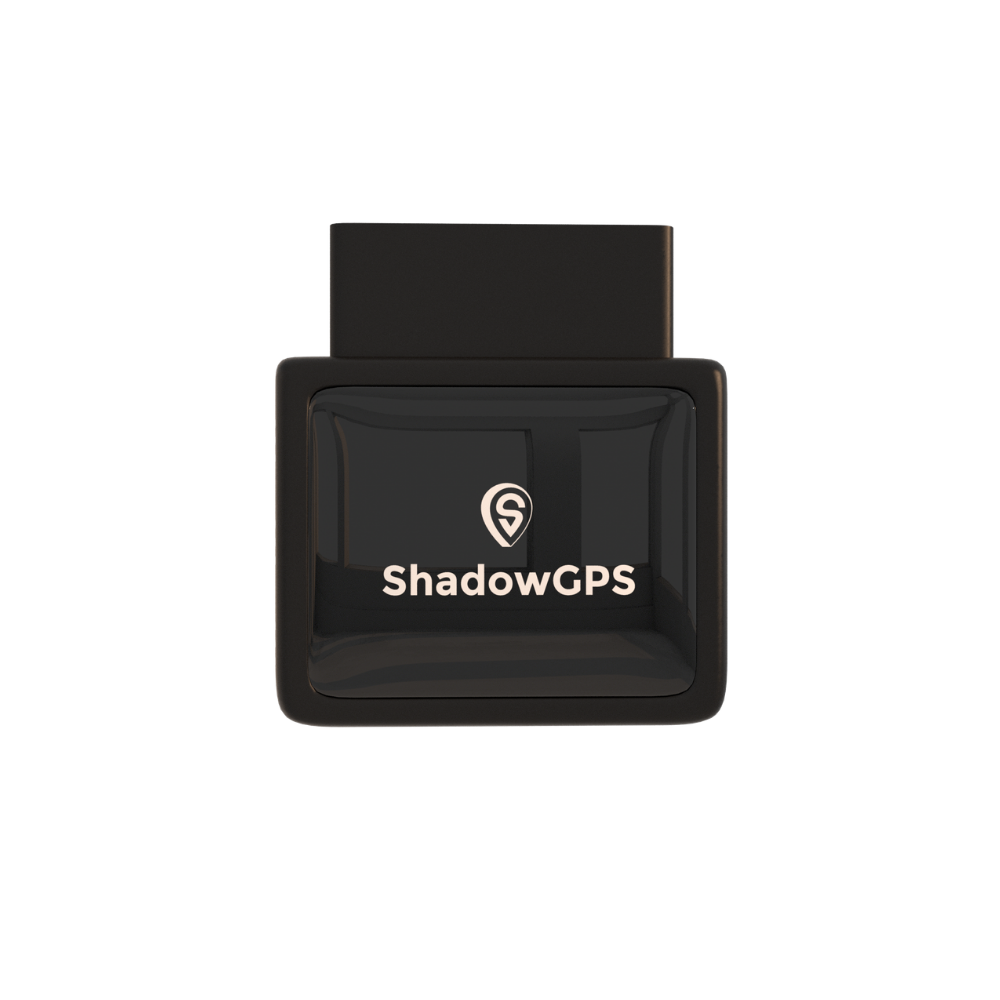
ShadowAuto
- Plug it in, no tools, no battery to charge
- Car Alarm, geofence alerts, and trip replay
- Reads engine codes from your car


Running a trailer, equipment, or an older truck without an OBD-II port? ShadowTrack does the same job on battery power, with a magnetic case you can tuck out of sight.
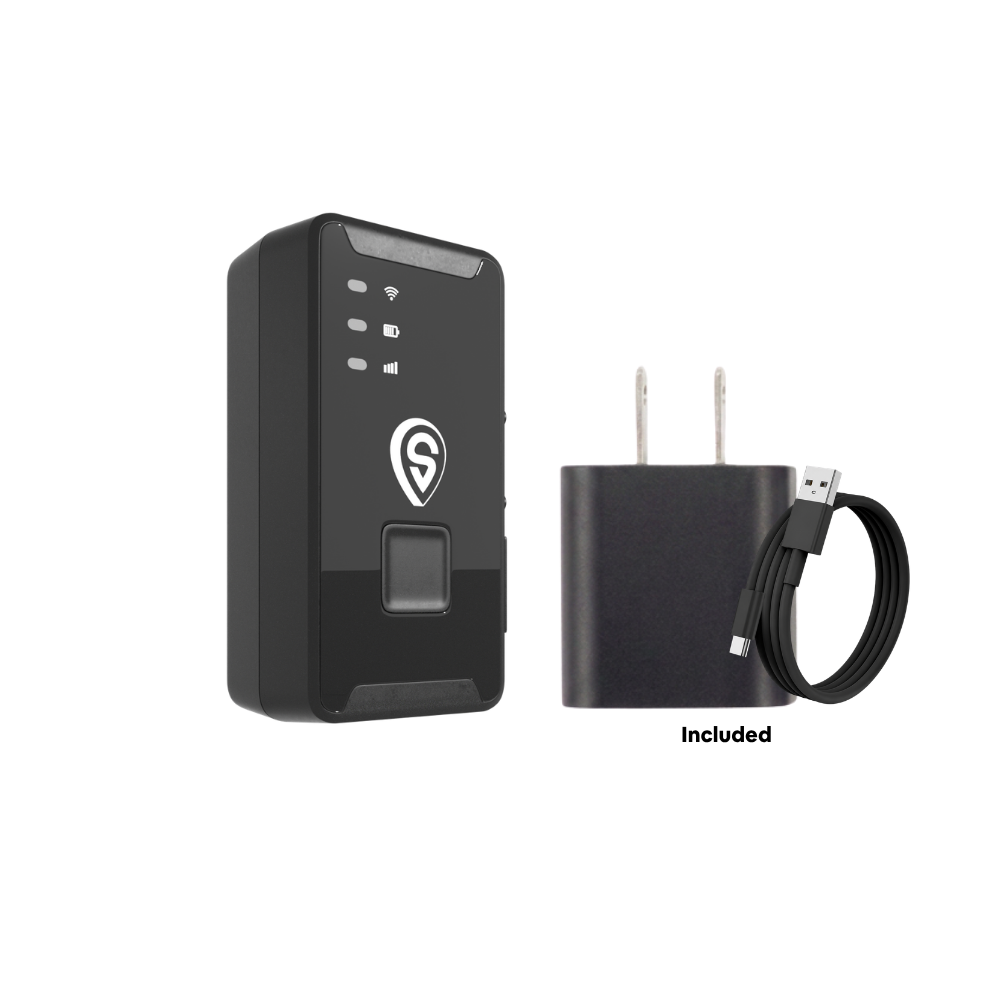
ShadowTrack
- Up to about 15 days per charge
- Weatherproof magnetic case, hides anywhere
- Live tracking and trip timeline in the same app
Best for: anyone who parks a truck, SUV, or hybrid outside and wants to know where it is every night, without a contract.
Who should pay closest attention to these numbers
The family car or truck
If your F-150, Explorer, or Prius lives in the driveway, add a shield and etching, and use alerts so you know right away if your car leaves where you parked it. See our guide to setting up geofence alerts for overnight theft.
Turo hosts
Your cars park wherever guests leave them. Trip history shows where each car spent the night, so you can spot risky habits and address them in your listing rules. More on GPS tracking for Turo hosts.
Small fleets (2 to 5+ trucks)
Work trucks are tall, parked together, and often left in the same lot. One bad night can take out several at once. Use location history to move overnight parking to lit, fenced yards.
What to do if your catalytic converter is stolen
If it happens, move quickly and in this order:
- Don't drive far. A missing converter makes your car loud and can send hot exhaust where it shouldn't go. Driving a short distance to a shop is usually okay; long trips are not.
- Take photos of the cut pipe and any damaged wires or lines.
- File a police report. You'll need the report number for insurance, and reports help lawmakers measure the problem.
- Call your insurer if you have comprehensive coverage, and compare the repair estimate to your deductible.
- Get a fair quote. Use a cost estimator like RepairPal to check that the price is reasonable for your model.
- Protect the new converter before you park outside again: shield, etch, and review where you park.
If the whole car is gone instead, our stolen car recovery steps walk you through the first hour.
Catalytic converter theft FAQs
How common is catalytic converter theft?
NICB recorded 14,036 catalytic converter theft claims in 2024, down from a peak of 64,701 in 2022. Carfax, which counts replacements in repair records, estimates more than 137,000 converters were stolen in 2025. The real number is likely higher than claims data shows, because many victims never file.
Is catalytic converter theft still a problem in 2026?
Yes, and it may be rising again. Rhodium prices more than doubled into early 2026, and cities like St. Paul and Berkeley have reported sharp local increases. National 2025 claims data from NICB had not been published when we checked.
What state has the most catalytic converter thefts?
California, by a wide margin. It produced nearly two-thirds of NICB-reported thefts in 2024. Texas, Illinois, and New York have also ranked near the top in State Farm's claims data.
What cars are most likely to have their catalytic converter stolen?
Carfax's 2025 list is led by the Ford F-150, Hyundai Tucson, Ford Explorer, Ram 2500, and Chevrolet Silverado. Trucks and SUVs are easy to get under, and hybrids like the Toyota Prius remain top targets in western states because their converters hold more precious metal.
How much does it cost to replace a stolen catalytic converter?
Most replacements average about $2,177 to $2,506 including labor, according to RepairPal, and some vehicles cost more than $3,300. NICB gives a wider range of $1,000 to $3,500 or more. Damage to nearby wiring or fuel lines adds to the bill.
Does car insurance cover catalytic converter theft?
Only if you carry comprehensive coverage, and you'll pay your deductible first. Liability-only policies don't cover it. With a high deductible, paying out of pocket can make more sense than filing.
How long does it take to steal a catalytic converter?
Often just a few minutes. Experienced thieves with a battery-powered saw can cut a converter off some cars, like the Prius, in about 90 seconds. Shields and cages work by making that take much longer.
Why do people steal catalytic converters?
For the platinum, palladium, and rhodium inside. A typical converter holds a few grams of each, and recyclers pay cash for them. When those metal prices rise, thefts rise with them.
Can a GPS tracker stop catalytic converter theft?
Not on its own, because your car doesn't move during a converter theft. Pair a shield and VIN etching with a GPS tracker: the tracker covers whole-car theft, shows where your cars park overnight, and can surface engine codes after a theft.
Is there a monthly fee for a ShadowGPS tracker?
Yes, and it's simple: $15 a month month-to-month, or prepay to bring it down to as little as $9 a month. No contract. Cancel any time. See all options on our pricing page.
Does a ShadowGPS tracker need a SIM card?
No. Connectivity is built in and included with your plan, so there's nothing to buy or set up. Plug it in, open the app, and see your car.
Know where your car is, every night
Plug it in, see it move, cancel any time.
Want the bigger picture on car theft? Read GPS trackers vs. car theft: real stats and our list of the most stolen vehicles of 2025.
Data sources: National Insurance Crime Bureau (NICB) claims reports; State Farm newsroom claims data (2023, 2024); Carfax press release, June 10, 2026; Consumer Reports, updated January 2026; RepairPal replacement cost estimator; local reporting from MoneyGeek and Patch. Figures checked October 2026 and may change as new data is published. Pricing current as of October 2026. Some links on this page are affiliate links, which means we may earn a commission at no extra cost to you. This article is general information, not legal or insurance advice.

