

A vehicle is stolen in the United States roughly every 48 seconds. That's actually the slowest pace in over a decade, after two straight years of record declines. But 659,880 cars, trucks, and SUVs were still reported stolen in 2025 alone, according to the National Insurance Crime Bureau.
If one of them is yours, the thing that gets it back isn't a steering wheel lock or a louder alarm. It's a live location you can hand straight to the police the moment you realize your car is gone, which is exactly what a GPS tracker for car theft is built to give you.
A GPS tracker doesn't stop a break-in, but it dramatically improves your odds of getting the car back. The tracker sends a live location the moment your car moves without you, so instead of a "my car is missing" police report, you're handing officers a "here's exactly where it is right now" call. Trackers like ShadowAuto and ShadowTrack update that location every 5 seconds while the vehicle is moving, plus alert you the instant it starts rolling on its own.
Vehicle Theft in 2026: What the Data Actually Shows
Vehicle theft in America is trending in the right direction, but it's still a big number. Here's where things actually stand, based on the NICB's most recent theft report:
- 659,880 vehicles were reported stolen in the U.S. in 2025, a 23% drop from 850,708 in 2024, and down from the pandemic-era peak of 1,020,729 in 2023.
- That works out to a vehicle stolen every 48 seconds, an improvement from the "every 36 seconds" figure you may have seen quoted from the 2023 peak.
- California had more vehicle thefts than any other state (136,988, over 20% of the national total), and the Los Angeles metro area alone accounted for 53,911 thefts.
- Hyundai and Kia's combined share of stolen vehicles fell from 21% in 2023 to 14% in 2025, after both manufacturers pushed anti-theft software updates, real, measurable proof that prevention technology works when it's actually deployed.
The takeaway: theft is down, but it hasn't gone away, and it's still concentrated in specific states, metros, and older vehicle models that lack modern anti-theft tech. For a closer look at which vehicles thieves target most right now, see our breakdown of the most-stolen vehicles of 2025.
Does a GPS Tracker Actually Prevent Car Theft?
Honestly, no single device stops a determined thief from breaking a window or hot-wiring a column. What a GPS tracker changes is everything that happens in the minutes and hours after that, which is where most stolen vehicles are actually won or lost.
Some owners do report that a visible tracker or window decal makes their car a less attractive target, since experienced thieves prefer vehicles they can strip or resell without a live location broadcasting from underneath the dash. But that's a deterrent side effect, not the main event. The main event is recovery.
The "90% Recovery Rate" You've Probably Seen, and What's Actually True
Where does the "90% recovery rate" stat actually come from?
You'll see "GPS trackers have a 90%+ recovery rate" repeated across a lot of car-security content. That specific figure traces back to LoJack, a proprietary radio-frequency system (not a standard GPS/cellular tracker) that's tied directly into dedicated police receivers in roughly half the states. It's a real, documented number for that specific system, but it isn't a universal statistic for every device labeled "GPS tracker," and independent researchers have noted they can't find primary sourcing for the 90%-plus figure as a blanket claim.
What's more defensible: recovery odds drop fast the longer a stolen vehicle sits unreported and unlocated, which is why speed matters more than any single percentage. A live, shareable GPS location compresses the time between "my car is missing" and "here's where it is," and that compression, not a marketing stat, is what actually helps police intercept a stolen vehicle before it's stripped, re-tagged, or driven across state lines.
How a GPS Tracker Actually Gets a Stolen Car Back
Here's what's happening under the hood once your tracker is plugged in or mounted:
- Real-time location: instead of relying on eyewitnesses or a license-plate lookout, you get your vehicle's actual coordinates, updated every 5 seconds while it's moving on ShadowAuto and ShadowTrack.
- Movement alerts: if your car starts moving when it shouldn't, at 2 a.m., without your phone nearby, you get a notification immediately instead of finding out hours later.
- Tamper alerts: a sudden disconnect, power loss, or attempt to remove the tracker triggers its own alert.
- Geofencing: set a boundary around your driveway, office, or neighborhood, and get pinged the moment your vehicle crosses it outside your normal routine.
- Share Location: generate a live tracking link you can hand directly to a responding officer, so they're working from your real-time data instead of a description and a plate number.
All of this happens quietly. There's no siren going off while you're working with police, which matters because the goal is recovery, not tipping off whoever is driving your car.
The family car or truck
One vehicle that matters, parked on the street or in a driveway overnight. A movement alert at 2 a.m. is your first warning.
Turo and rental hosts
You hand the keys to a stranger. Live location and geofencing tell you the moment a rental leaves the area you agreed on.
A small fleet, 2-5 vehicles
Work vans or trucks parked at a yard overnight. One dashboard shows all of them at once, so an out-of-hours move stands out immediately.
OBD-II vs. Hidden Battery Trackers: Which Stops Theft Better?
The honest answer is that they solve slightly different problems, which is why layering both is the strongest setup.
An OBD-II tracker plugs into your vehicle's diagnostic port and draws power from the car itself, so it's always on and never needs charging. That makes it the right first layer for the vehicle you drive every day. A hidden, battery-powered tracker mounts magnetically somewhere out of sight, which matters because a thief who spots and yanks an obvious OBD-II tracker won't necessarily know to look for a second one hidden in the wheel well or spare tire cavity. For more on how hidden placement changes the odds, see our guide on what makes hidden GPS tracking devices effective against theft.
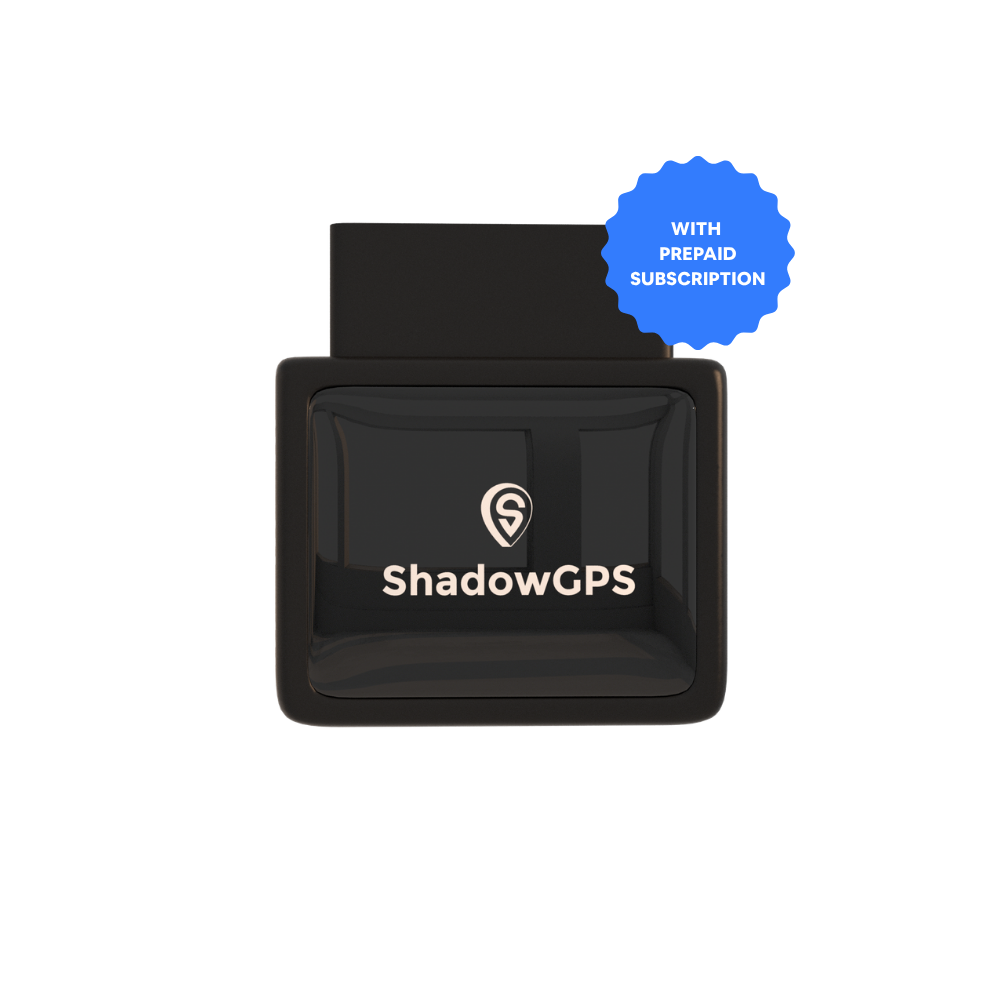
ShadowAuto
- Updates every 5 seconds while moving
- Car Alarm & tamper alerts
- Trip timeline, trip replay & engine diagnostics


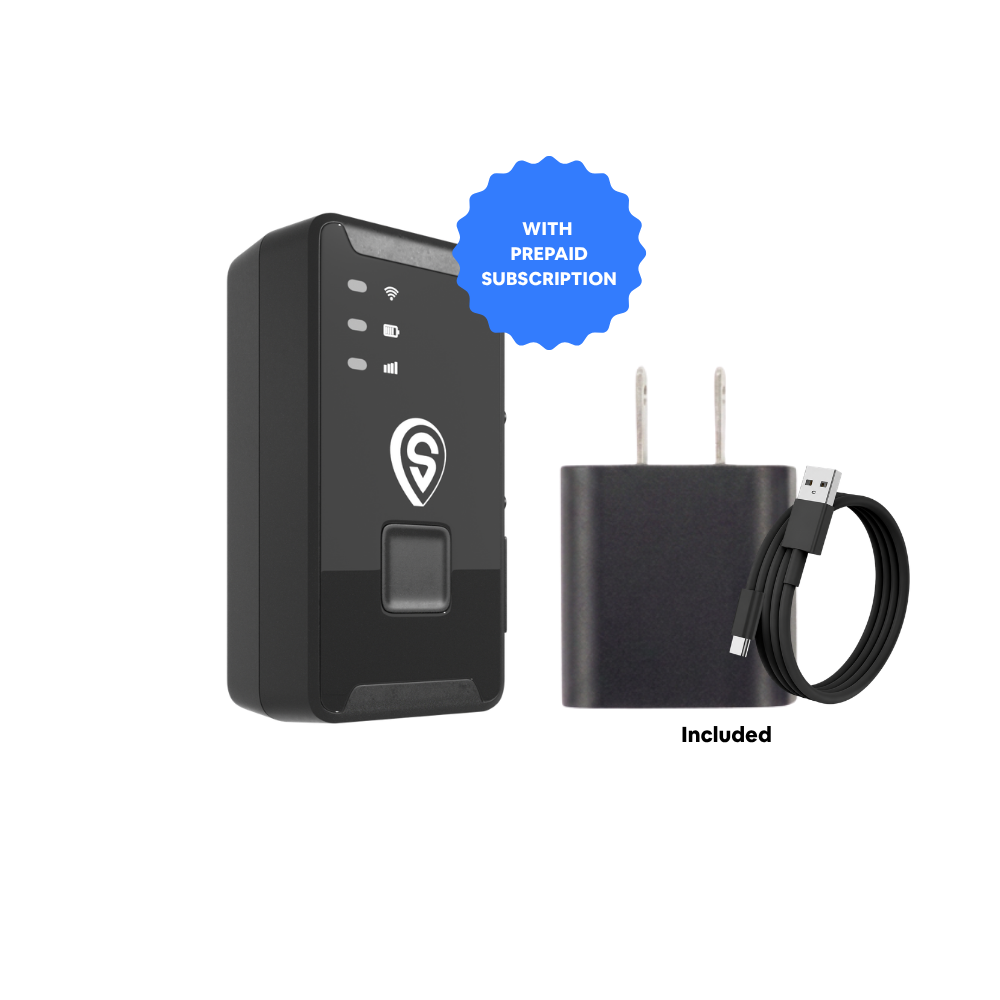
ShadowTrack
- Updates every 5 seconds while moving
- Weatherproof, magnetic mount for hidden placement
- Up to ~15 days per charge
GPS Tracker vs. Other Anti-Theft Tools
A GPS tracker isn't a replacement for basic security habits, it's the layer that catches everything else missing. Here's how it stacks up against the other tools people reach for:
| Tool | Stops entry? | Helps recovery? | Ongoing cost |
|---|---|---|---|
| Steering wheel lock | Slows it down | No | None |
| Car alarm (factory) | Deters some | No | None |
| VIN / window etching | No | Helps ID parts later | None |
| Dash cam | No | Evidence only, no live location | None |
| ShadowAuto (OBD-II tracker) | No | Live location, alerts, no wiring | $12-15/mo, no contract |
| ShadowTrack (hidden tracker) | No | Live location from a hidden second layer | $12-15/mo, no contract |
Where to Mount a GPS Tracker So It Actually Helps
Placement matters more than most people think. A few tactical notes:
- Don't stack it with the obvious stuff. A tracker sitting in the glovebox or center console is the first place a thief checks. Under the dash, in a wheel well, or inside the spare tire cavity are far less obvious.
- Use the magnet properly. A hidden tracker should sit against bare metal, not plastic trim, so the magnetic mount actually holds through hard driving.
- Keep the OBD-II tracker's cable tidy. A dangling cable is what draws attention, not the device itself.
Set Up Alerts Before You Need Them
A tracker only helps if the alerts are actually configured. Set a geofence around the places your vehicle normally sits overnight, home, work, a regular parking garage, so a boundary crossing outside your routine triggers a notification instead of getting buried in a feed you never check. Pair that with a movement alert for hours nobody should be driving, and a tamper alert in case someone tries to disconnect the device. Our guide to setting up geofence alerts that actually catch overnight theft walks through the exact settings.
What to Do the Moment You Realize Your Car Is Stolen
- Confirm it in the app first. Don't assume, check the last known location and movement history before calling anyone.
- Call the police, not the person you think has it. Report it stolen and give them the make, model, and plate.
- Share your live tracking link with the responding officer. This is the single biggest thing you can do to speed up recovery.
- Never go after the vehicle yourself. Recovering a stolen vehicle is a job for law enforcement, not a DIY project.
- Notify your insurer once a police report is filed.
For a full walkthrough of this process, see our immediate recovery steps for a stolen vehicle, and how GPS tracking data actually helps law enforcement once they're involved.
Will a GPS tracker lower my car insurance?
Some insurers offer a discount for anti-theft and tracking devices, though the amount and eligibility vary a lot by carrier and state. It's worth a call to your provider with your device's make and model before you assume a specific percentage. Either way, the monthly tracker fee is separate from your insurance bill, so factor both into the real cost.
Is it legal to put a GPS tracker on my own car?
Yes. In the United States, it's legal to place a GPS tracker on a vehicle you own. If it's a shared or employer-owned vehicle, rules around notification and consent get more specific, so it's worth checking your state's laws before tracking a vehicle you don't personally own.
No device prevents a break-in, but a live GPS location is what turns a stolen car into a recovered one. Skip the unsourced "90% recovery" claims, focus on speed: real-time location, movement and tamper alerts, and a share-location link ready for police the moment you need it.
Frequently Asked Questions
Do GPS trackers prevent car theft?
Not directly. A GPS tracker won't stop someone from breaking a window, but it gives you a live location the moment your car moves, so you can get that information to police immediately instead of relying on a description and a plate number.
Can a stolen car still be tracked if the thief finds the tracker?
If the tracker is disconnected, it stops reporting from that point, which is why a tamper alert matters, it tells you the moment that happens instead of you finding out hours later. Running a hidden second tracker alongside a visible OBD-II one is the strongest setup, since a thief who finds one may not know to look for the other.
Does a GPS tracker for a car need a SIM card?
No. ShadowAuto and ShadowTrack come with cellular connectivity built in as part of the monthly plan, so there's no separate SIM card to buy or manage.
Is there a monthly fee?
Yes, plans run $12-15 a month depending on features. There's no contract, ever, so you can go month-to-month or prepay to save.
Will a GPS tracker lower my insurance?
Some insurers offer a discount for a vehicle with an anti-theft or tracking device, but the amount and eligibility depend on your carrier and state. Call your insurer with the specific device to confirm before assuming a discount applies.
Is it legal to put a GPS tracker on my own car?
Yes. It's legal to track a vehicle you own in the United States. Tracking a vehicle you don't own, a shared car, a spouse's car, or an employee's vehicle, involves different rules around consent and notification that vary by state.
How fast does GPS tracking actually update?
ShadowAuto and ShadowTrack update location every 5 seconds while the vehicle is moving, standard on every plan, not an upsell tier.
What's the best car security setup against theft?
Layer your protection: park in well-lit areas, use a visible deterrent like a steering wheel lock, and back it up with a GPS tracker for real-time location and tamper alerts. The deterrent lowers the odds of a break-in; the tracker is what gets the car back if one happens anyway.
Know where it is. Every 5 seconds.
Plug it in, see it move, cancel any time. No contract, ever.
Theft statistics reflect the National Insurance Crime Bureau's 2025 Vehicle Theft Report as published in 2026. Pricing and specifications reflect what's published on theshadowgps.com as of September 2026 and are subject to change. This article is general information, not legal or insurance advice, check your own state's laws and your insurer's policy before relying on any of it.

