

Every patrol car in a modern police department shows up as a moving dot on a dispatcher's map, refreshing every few seconds. That one dot is how the closest officer gets sent to a 911 call, how backup finds an officer who can't reach the radio, and how a department proves where a car was when a complaint comes in.
But GPS tracking for police vehicles is only half the story. Law enforcement uses GPS in four different ways, each with its own rules, from pursuit tags launched onto fleeing cars to judge-approved trackers on a suspect's car. This guide explains all four in plain words, what the courts say about them, and what the police playbook means for the car or truck sitting in your driveway.
GPS tracking for police vehicles puts a tracker in each patrol car that sends its live location to dispatch, so the nearest officer gets sent first, backup can find an officer fast, and every trip is logged. Beyond their own cars, police use GPS pursuit tags on fleeing cars, bait cars, and trackers on suspects' cars. Since United States v. Jones (2012), placing a tracker on someone's car counts as a search, so police generally need a warrant.
What Is GPS Tracking for Police Vehicles?
GPS tracking for police vehicles is a system where a tracker in each patrol car reports its location to dispatchers and command staff in near real time. In public safety it's usually called AVL (automatic vehicle location), and it's typically tied into the department's computer-aided dispatch (CAD) software, so the live map and the call queue sit on the same screen.
The tracker is usually wired into the patrol car's electrical system by the fleet's upfitter, the shop that adds the light bar, radio, and laptop mount. Depending on the setup, it can also report speed, ignition status, idle time, and whether the emergency lights or siren are on.
Patrol-car GPS vs. investigative GPS
These two get mixed up all the time, so it helps to split them early.
- Patrol-car GPS tracks the department's own cars. No warrant is involved, because the agency owns the cars and sets the policy.
- Investigative GPS tracks a suspect's car. Since 2012, that generally requires a warrant from a judge. More on that below.
4 Ways Law Enforcement Uses GPS Tracking
When people search for GPS tracking for law enforcement, they're usually asking about one of these four jobs:
- Patrol fleet tracking: the live location of every patrol car, used for dispatch, backup, and accountability.
- Pursuit tagging: a GPS tag launched onto a fleeing car so officers can follow from a safe distance.
- Investigative tracking: a tracker placed on a specific suspect's car, generally with a warrant.
- Bait cars and tagged property: police-owned cars or items with hidden trackers, left where thieves strike.
A related fifth use is court-ordered location monitoring for people on probation, parole, or pretrial release. That's usually an ankle monitor, not a car tracker, so we'll stick to the four car-related uses here.
1. Patrol fleet tracking: sending the closest officer first
Before GPS, dispatchers leaned on radio check-ins and memory to guess who was nearest to a call. A live map replaces that guess with a fact.
Faster dispatch
When a 911 call lands, the dispatcher can see every available patrol car on one map and send the closest one. Some systems factor in traffic and road layout, so "closest" means fastest to arrive, not just shortest in a straight line.
Officer safety and backup
If an officer is hurt, in a foot chase, or can't key the radio, the patrol car's last known location gives backup a starting point instead of a search area. Some departments pair the tracker with an emergency button that flags the officer's position instantly.
Accountability and evidence
Every trip leaves a timestamped log. When a complaint or internal review asks where a patrol car was at 2:14 a.m., the department can answer with data instead of memory. That record protects good officers as much as it protects the public.
Fleet readiness
Patrol cars idle for hours to power radios, laptops, and lights. Tracking engine hours and idle time lets a fleet manager schedule service around real use instead of the calendar, which keeps more cars ready for the next shift.
2. GPS pursuit tags: following without the chase
Vehicle pursuits are one of the riskiest things police do. A 2025 study in JAMA Network Open analyzed federal crash data and counted 6,352 pursuit-related deaths from 2009 to 2023, an average of about 423 a year, with the death rate rising roughly 2% a year after adjusting for population and crash counts.
Smaller departments chase more often than big ones. The Bureau of Justice Statistics found that local police in the smallest jurisdictions ran about 15 pursuits per 100 officers in 2012, compared with about 4 per 100 in the largest.
That's the problem GPS pursuit tags were built to solve. The best-known system, StarChase, mounts a compressed-air launcher behind a patrol car's grille. It fires a sticky projectile with a GPS tracker inside onto the fleeing car, and officers then follow it on a map from a safe distance and a safe speed.
Does it work? An independent review for the National Institute of Justice, run by the Johns Hopkins University Applied Physics Laboratory, contacted 10 agencies using it and studied three closely. In two of the three, the data suggested a positive effect on apprehensions when the tool was deployed properly. Officers called it helpful but not a fix for every pursuit, and the researchers tied its results closely to each agency's pursuit policy.
Real-world example: in 2025, police in Pinole, California, tagged a stolen car that refused to stop. Officers tracked it into neighboring Hercules, where that city's officers used spike strips to stop it, and the suspects who ran were arrested, all without a high-speed chase.
3. Investigative trackers: the warrant rule
This is the use that raises the most questions, and the Supreme Court has drawn a clear line. In United States v. Jones (2012), the FBI attached a GPS tracker to a suspect's Jeep and followed it for about a month. The Court ruled unanimously that attaching the tracker and using it to follow the car is a "search" under the Fourth Amendment. In practice, that means police generally need a warrant backed by probable cause.
In 2018, Carpenter v. United States extended the warrant requirement to historical cell-site location records that police request from wireless carriers.
Here's what that looks like in a real department. In October 2026, the Phoenix City Council approved a contract change for the police department's GPS trackers after a council member pressed for safeguards. Officials explained that detectives must write an affidavit, get supervisory review, and obtain a judge's approval before attaching a tracker, and only for specific suspects in serious cases like homicides, robberies, and trafficking.
State laws can add stricter rules, and courts still debate edge cases like emergencies. If you have a question about a specific situation, a local attorney is the right call.
4. Bait cars and tagged property
Auto-theft task forces park a police-owned car with a hidden tracker, and often cameras, in a theft hot spot. When someone drives off in it, officers watch it on a map and choose a safe moment to stop it. The same idea works for tagged packages, tools, and equipment trailers left as bait.
Bait cars show the core lesson of all police GPS work: a live location beats a description every time.
How Often Do Police GPS Trackers Update?
Police AVL systems commonly report every 10 to 15 seconds while a patrol car is moving, and some public-safety platforms push even faster. Many consumer and commercial trackers, by comparison, default to updates every one to five minutes.
Here's why that gap matters. At 60 mph, a car covers about 88 feet every second:
- 2-minute updates: about 2 miles between dots. Plenty of exits and turns in between.
- 15-second updates: about a quarter mile between dots.
- 5-second updates: about 440 feet between dots, roughly one city block.
That same math applies to your own car. ShadowAuto and ShadowTrack update every 5 seconds while moving, which puts a family car on the same footing as the fastest police setups instead of the slow commercial default.
Can Police Track Your Car? What the Law Says
When police need a warrant
If police want to attach a tracker to a car they don't own and follow it, Jones says that's a search, so they generally need a warrant. If they want your phone's historical location records from your carrier, Carpenter says they generally need a warrant for that too. Courts recognize limited exceptions, such as true emergencies, and the details vary by state.
When your own tracker helps police
If your car is stolen and you share its live location with an officer, there's no warrant question at all. You own the car, you own the tracker, and you're choosing to share. That's the cleanest, fastest path to getting your car back.
Your tracking account is yours. Police don't log into it by default. Like any company, a tracking provider can be required to answer a valid legal request, so it's worth reading the privacy policy of any tracker you buy.
Can you put a GPS tracker on someone else's car?
No, not unless you own the car or have the owner's permission. Many states make it a crime to track a person with a hidden device without consent. California Penal Code 637.7, for example, bans using an electronic tracking device to find someone's location without consent, with an exception for the registered owner, lessee, or renter of the car. Stalking laws can apply too. Only track property you own or have a clear right to track. This is general information, not legal advice.
What Police GPS Tracking Means for Your Own Car or Truck
Start with the good news. The National Insurance Crime Bureau reports that U.S. vehicle thefts fell 23% in 2025 to 659,880, the lowest level in decades. Even so, that still works out to one vehicle stolen every 48 seconds, and NICB has long recommended layered protection that includes a tracking device.
The patrol-car lesson is simple. When you report a stolen car, police get a plate number and a description. When you report a stolen car with a live tracker, they get a location. That's the difference we cover in more depth in how GPS tracking devices help law enforcement catch vehicle thieves.
A plug-in tracker for your car or truck
ShadowAuto plugs into your car's OBD-II port, the same diagnostic port a mechanic uses, usually under the steering wheel. It takes under 2 minutes, with no tools and no installer, and it runs on your car's power, so there's nothing to charge. From then on, you can open the app and see where your car is right now, replay any trip, and get a Car Alarm alert if it moves when it shouldn't.
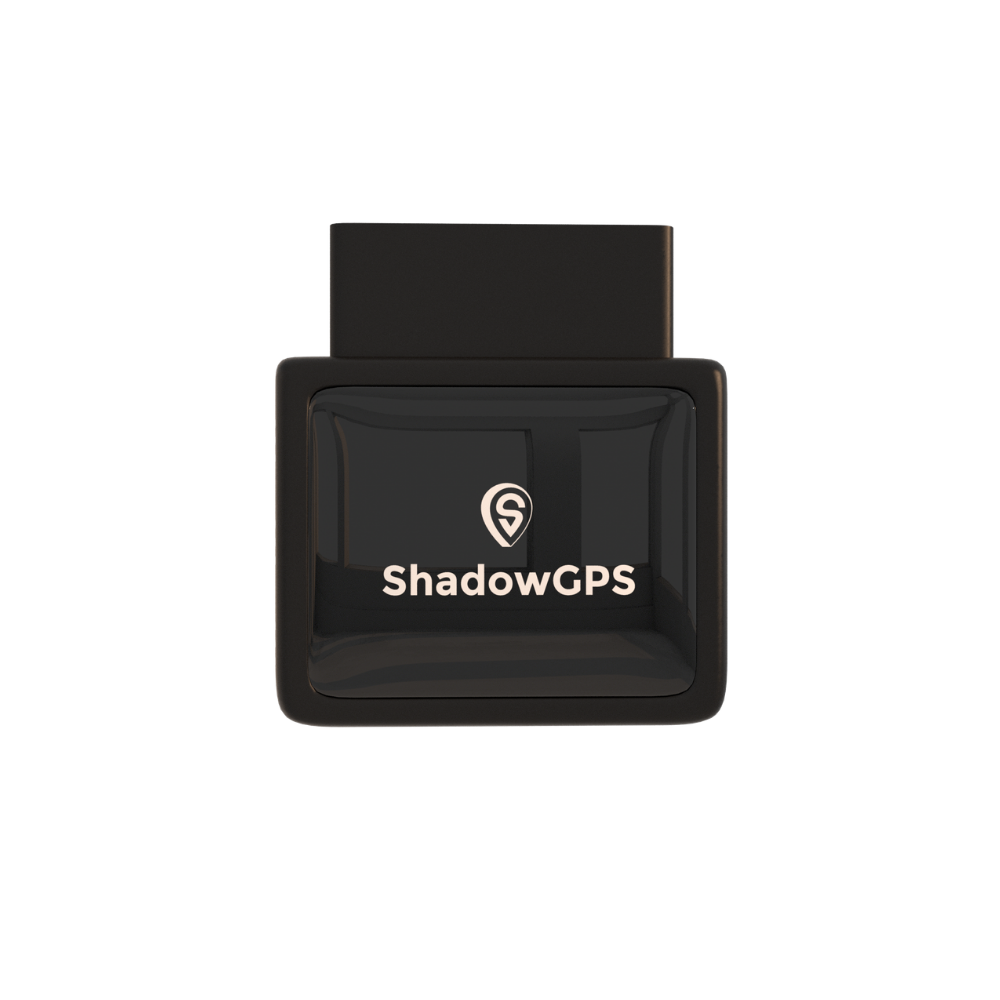
ShadowAuto
- Plugs in under 2 minutes, powered by your car
- Car Alarm and tamper alerts on your phone
- Trip timeline and replay you can share with police


If what you want to protect doesn't have an OBD-II port, like a trailer or a piece of equipment, or you'd rather the tracker stay out of sight, ShadowTrack does the same job on battery power.
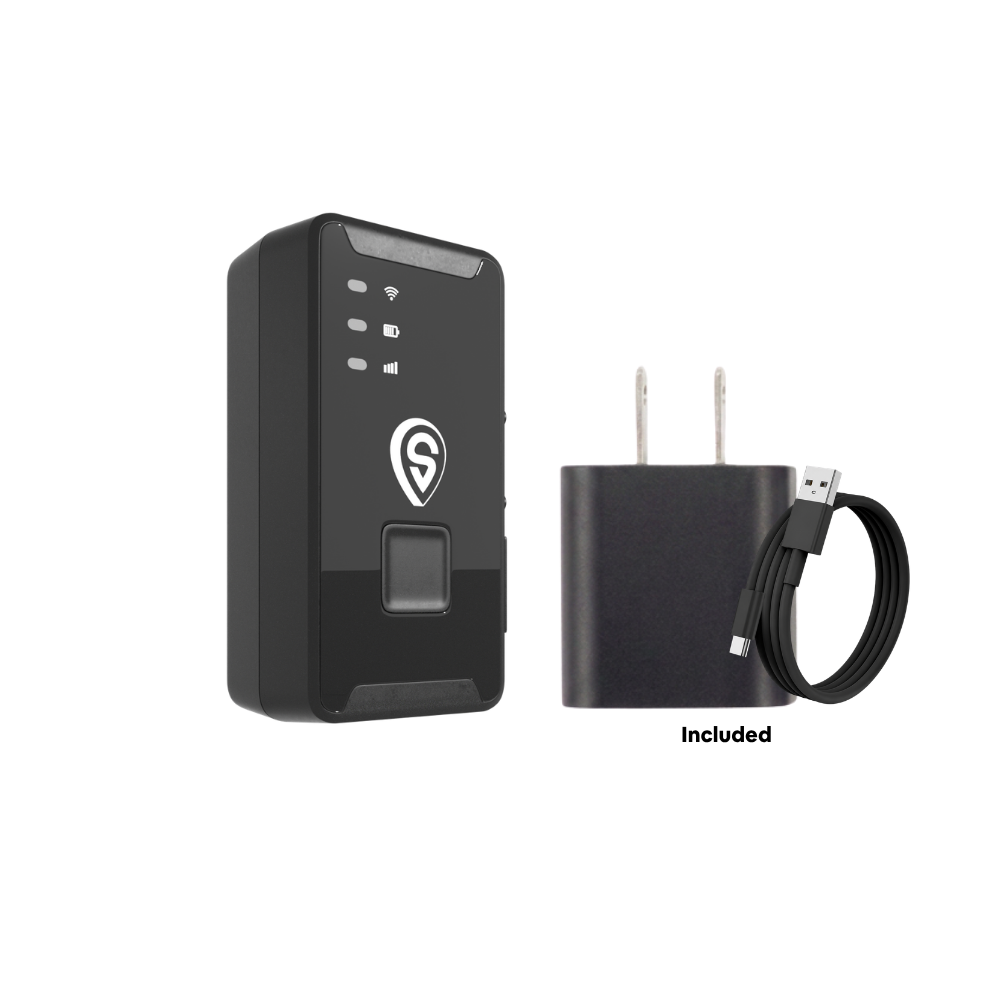
ShadowTrack
- Up to about 15 days per charge
- Weatherproof magnetic case for trailers and equipment
- Share Location link for a responding officer
Best for: ShadowAuto fits your daily car, a teen driver's car, or a Turo rental. ShadowTrack fits trailers, equipment, classic cars, or a hidden second tracker.
If your car is stolen: how to work with police
- Check the app first. Confirm the live location, and use the trip timeline to see exactly when your car left.
- Call 911 if it's happening now, or your local non-emergency line if it isn't. Give the plate, VIN, and description, and say it has a live GPS tracker.
- Share the live location with the responding officer using Share Location, so they can follow it on their own phone.
- Let police make the recovery. Don't go after your car yourself. A recovery is safer for everyone when officers handle it.
- Save the trip history for the police report and your insurance claim.
For a fuller checklist, see our immediate recovery steps for a stolen car and how GPS data helps build stronger cases against auto thieves.
Borrow the Patrol-Car Playbook: 5 Police Habits That Work for One Car
You don't need a dispatch center to use the same ideas a police fleet does. Here's the playbook, scaled down to the car or truck that matters to you.
- Keep a live map. Dispatch never guesses where a patrol car is. You shouldn't have to guess where your car is either.
- Draw a perimeter. Police use geofences around high-crime areas. You can draw one around your driveway, a parking lot, or a teen's school and get an alert when your car crosses it. Here's how to set up geofence alerts that catch overnight theft.
- Watch the quiet hours. Movement at 3 a.m. is a red flag for a patrol supervisor and for you. Car Alarm sends an alert when your parked car starts moving.
- Keep the record. Departments keep trip logs for evidence and accountability. Your trip timeline and replay do the same job for a police report, an insurance claim, or a Turo dispute.
- Know when it's tampered with. A tamper alert tells you if someone unplugs or moves the tracker, which is often the first sign something's wrong.
Parents of teen drivers
See where the car is, replay last night's drive, and get an alert when it leaves the neighborhood after curfew. Calm conversations start with facts.
Turo hosts
Know where each rental is during a trip, catch unauthorized moves, and keep trip history ready if a guest dispute ever needs a police report.
Small fleets (2-5+ vehicles)
One map for every truck, van, and trailer, so you can send the closest crew and check after-hours use the way a patrol sergeant would.
GPS Tracking for Small Departments, Security Patrols and Volunteer Fleets
Most police departments in the U.S. are small. According to the Bureau of Justice Statistics, 46% of local police departments employed fewer than 10 full-time-equivalent sworn officers in 2020.
Let's be straight about fit. If your agency needs the tracker wired into CAD, reading lights and siren inputs, and handling data under the FBI's Criminal Justice Information Services (CJIS) Security Policy, you need a dedicated public-safety AVL platform. A plug-in consumer tracker isn't built for that job.
Where a plug-in or battery tracker does fit well:
- Reserve and admin cars that sit in the lot until they're needed and still deserve theft protection.
- Equipment trailers, such as speed-sign trailers, light towers, and command trailers, which are easy to hook up and tow away.
- Private security patrol companies running 2 to 10 marked cars.
- Campus, church, and HOA security vehicles that need a live map, not a full dispatch system.
- Volunteer fire and EMS support trucks parked at stations or members' homes.
We cover this in more detail on our emergency services page and in our guide to choosing fleet GPS tracking for 3 to 10 vehicles. If your team drives the cars, tell them up front. Here's how to introduce trackers to your crew without losing their trust.
What to look for, using police criteria
- Update speed while moving. Seconds, not minutes. Check the speed on the base plan, not just the top tier.
- Coverage and uptime. Multi-carrier LTE-M service (ShadowGPS uses Verizon, AT&T, and T-Mobile) and a network uptime you can count on. ShadowGPS runs at 99.9%.
- Tamper and movement alerts. You want to know the moment something changes, not the next morning.
- Trip history you can replay and share. That's your evidence trail.
- Web and app access so more than one person can see the map.
- A clear monthly fee with no contract. Avoid 2-year lock-ins and surprise charges.
Police GPS Tracking Options Compared
Here's how the main types of law enforcement GPS tracking stack up against the trackers you can buy for your own car or truck.
| Option | Who uses it | How it's attached | Update speed | Legal basis | Best for |
|---|---|---|---|---|---|
| Patrol-car AVL | Police and sheriff's departments | Wired in by the fleet upfitter, linked to CAD | Commonly 10-15 sec while moving | Agency owns the car | Dispatch, officer safety |
| GPS pursuit tag (StarChase-style) | Agencies with pursuit programs | Launched from the grille, sticks to the fleeing car | Near real time | Department pursuit policy | Ending chases safely |
| Investigative tracker | Detectives | Magnet or hidden on a suspect's car | Varies by device and battery settings | Warrant (U.S. v. Jones) | Specific criminal cases |
| Bait car | Auto-theft task forces | Hidden in a police-owned car | Near real time | Agency owns the car | Catching car thieves |
| ShadowTrack (battery) | Owners of trailers, equipment, second cars | Magnet-mount or hide, under 2 min | Every 5 sec while moving | Your own property | Trailers, equipment, hidden backup |
| ShadowAuto (OBD-II) | Car owners, Turo hosts, small fleets | Plug into the OBD-II port, under 2 min | Every 5 sec while moving | Your own car or truck | Your car or truck, every day |
Police update speeds vary by agency configuration and vendor. ShadowGPS pricing and specs as of October 2026.
Key takeaways
- Police track their own patrol cars with AVL tied to dispatch, commonly every 10 to 15 seconds while moving.
- Pursuit tags like StarChase let officers follow a fleeing car on a map instead of chasing it.
- Putting a tracker on someone else's car is a Fourth Amendment search, so police generally need a warrant.
- For your own car, a live tracker turns a stolen-car report from a description into a location police can act on.
Frequently Asked Questions
Do police cars have GPS trackers?
Most do. Police departments commonly equip patrol cars with automatic vehicle location (AVL) trackers that feed a live map in computer-aided dispatch, so dispatchers can send the closest officer and find officers who need backup. Some smaller agencies still rely on radio check-ins.
What GPS tracker do police use?
It depends on the job. Patrol cars use hardwired AVL trackers from public-safety vendors that connect to dispatch software. Pursuit programs use launched GPS tags such as StarChase. Detectives use battery-powered magnetic trackers, placed under a warrant, on specific suspects' cars.
Do police need a warrant to put a GPS tracker on your car?
Generally, yes. In United States v. Jones (2012), the Supreme Court ruled that attaching a GPS tracker to a car and using it to follow the car is a search under the Fourth Amendment. Police typically need a warrant backed by probable cause, with narrow exceptions such as emergencies. State laws can add stricter rules.
What is a StarChase GPS tag?
StarChase is a pursuit-management system. A compressed-air launcher behind a patrol car's grille fires a sticky GPS tag onto a fleeing car, and officers track it on a map from a safe distance instead of chasing it at high speed. A National Institute of Justice review found positive results in two of three agencies studied when it was used properly.
How often do police GPS trackers update?
Police AVL commonly reports every 10 to 15 seconds while a patrol car is moving, and some systems update faster. Many consumer and commercial trackers default to one to five minutes, which can leave miles between location points at highway speed.
Will police help me recover my car if it has a GPS tracker?
Yes. Report the theft, tell the officer your car has a live GPS tracker, and share the live location. A real-time location gives officers something they can act on right away. Don't try to recover the car yourself; let police handle the stop.
Can I put a GPS tracker on someone else's car?
Not unless you own it or have the owner's permission. Many states, including California under Penal Code 637.7, make it illegal to track someone with a hidden device without consent, and stalking laws may also apply. Track only the cars and property you own.
Is there a monthly fee for a ShadowGPS tracker?
Yes, and there's no contract. Month-to-month, or prepay and save. For 1 to 3 trackers it's $15/mo month-to-month, $13/mo quarterly, $12/mo annually, or $9/mo on a 2-year prepay. For 4 to 10 trackers, plans run $8 to $13/mo. Cancel any time.
Does a GPS tracker need a SIM card?
Real-time trackers need a cellular connection to send their location, but with ShadowGPS that service is included in your plan. You don't buy, insert, or manage a SIM card yourself. Plug it in and it connects over multi-carrier LTE-M.
Can a small police department or security company use ShadowGPS?
Yes, for the right jobs: reserve and admin cars, equipment trailers, private security patrols, campus or church security, and volunteer fire or EMS support trucks. If you need CAD integration, lights and siren inputs, or CJIS-specific data handling, choose a dedicated public-safety AVL platform instead.
Know where your car is, the way dispatch does
Plug it in, see it move, cancel any time. No contract, ever.
Pricing and plan details as of October 2026; see our pricing page for current plans. Some links on this page are affiliate links, and we may earn a commission at no extra cost to you. This article is general information, not legal advice. Laws on GPS tracking vary by state, so check local rules or speak with an attorney about your situation.

