

In the last full national count, 11,574 pieces of construction and farm equipment were reported stolen in the United States in a single year. That works out to roughly one machine every 45 minutes, and only about 1 in 5 of them ever made it back to its owner.
Those construction equipment theft statistics are usually quoted to big contractors with 200-machine yards. But the data tells a different story: the most stolen machines are riding mowers, skid steers, compact tractors and utility vehicles. In other words, the exact gear a landscaper, a small builder, a farmer or a weekend property owner keeps on a trailer behind a pickup.
This guide pulls every number from its original source, labels the year it came from, and explains what each statistic actually means if you own one to five machines. No scare tactics, just the real data and a calm plan for using it.
About 11,500 to 11,600 pieces of heavy equipment are reported stolen in the U.S. each year, worth an estimated $300 million to $1 billion, and only around 21% are recovered. Riding mowers (41%) and loaders (18%, mostly skid steers) are stolen most. Texas leads every state, and most thefts happen from active jobsites in the warmer months. These figures come from the final National Equipment Register and NICB report (2016 data), which is still the most recent detailed national count.
Construction Equipment Theft Statistics at a Glance
Here is the short version. Every figure below is traced back to the report that published it, so you can cite it with confidence.
| Statistic | Figure | Source (data year) |
|---|---|---|
| Equipment thefts reported to NCIC | 11,574 | NER / NICB (2016) |
| Thefts per day | About 32 (one every 45 minutes) | Calculated from NER / NICB (2016) |
| Estimated annual value stolen | $300 million to $1 billion (most estimates near $400 million) | NER / NICB (2016) |
| Recovery rate | 21% (2,442 of 11,574) | NER / NICB (2016) |
| Recovery rate, single-item jobsite thefts | Under 7% | Shrestha & Osborne, FBI NIBRS study (2019) |
| Median time to recover heavy equipment | About 1 day | Shrestha & Osborne (2019) |
| Average value of a recovered stolen machine | $29,258 | NER / NICB (2016) |
| Most stolen equipment type | Riding mowers and garden tractors (41%) | NER / NICB (2016) |
| Most stolen brand | John Deere (2,420 thefts) | NCIC data via NER / NICB (2016) |
| State with the most thefts | Texas (2,375) | NER / NICB (2016) |
| Share of thefts in the top 5 states | 45% | NER / NICB (2016) |
| Stolen machines built in the last 5 years | 56% | NER / NICB (2016) |
| Specialized equipment recovered with NICB help | $77 million | NICB (2025) |
NCIC is the FBI's National Crime Information Center. NER (National Equipment Register) is part of Verisk; NICB is the National Insurance Crime Bureau.
How Much Construction Equipment Is Stolen Each Year?
Roughly 11,500 machines a year, based on every national report in the series. The count has been remarkably steady: 11,486 thefts in 2013, 11,625 in 2014, and 11,574 in 2016.
That consistency matters. It suggests equipment theft isn't a spike or a passing trend. It's a steady, background risk that shows up year after year.
Year-over-year equipment theft statistics
| Data year | Thefts reported | Recovery rate | Est. value stolen |
|---|---|---|---|
| 2013 | 11,486 | 21% | Nearly $300 million |
| 2014 | 11,625 (up 1.2%) | 23% | $300 million to $1 billion range |
| 2016 | 11,574 | 21% | Close to $300 million (range $300M to $1B) |
Per day, per hour
Divide 11,574 thefts across 2016 and you get about 32 machines a day, or one every 45 minutes or so. Texas alone accounted for 2,375 of them, about 20.5% of every theft reported nationally.
What the "$300 million to $1 billion" figure really covers
You'll see this range on almost every page about equipment theft. It's real, but it's narrower than most people assume.
- It covers machines only. Tools, building materials, copper and fuel are excluded.
- It excludes downtime. Rental replacements, project-delay penalties and wasted crew time aren't counted.
- It's an estimate, not a count. NER states plainly that no complete national loss database exists, so it builds the figure by extrapolating from fleets and regions that report reliably.
So the true cost to owners is higher than the headline, not lower. Keep that in mind when you read the cost section below.
Why the Newest Detailed Data Is From 2016
Here's something most "2026 statistics" pages skip: NER and NICB stopped publishing their detailed public equipment theft report after the 2016 edition. Many recent articles quoting "current" figures are actually quoting 2016 numbers without saying so.
We think you deserve to know that. Here's what we know about the data today.
No title system for heavy equipment
Your car has a VIN and a state title. Most construction equipment has a manufacturer serial (PIN) in inconsistent formats and no national titling requirement. NER lists this, along with machines being filed in the wrong NCIC database, as a key reason both reporting and recovery stay low.
Underreporting is built in
Many owners absorb a smaller loss rather than file a claim and risk a premium increase. One Builder magazine survey found 87% of respondents filed a police report after a jobsite theft, but three out of four never filed an insurance claim. Insurance-based totals miss a lot of real thefts.
The freshest national signal: NICB's 2025 recoveries
NICB still reports what it helps recover. In 2025, it helped return $77 million in specialized equipment to owners and insurers. It's not a theft count, but it confirms the problem is very much active today.
Is construction equipment theft going up or down?
Honestly, no current dataset can prove either direction. Overall U.S. property crime and car theft fell sharply in 2024 and 2025, per FBI and NICB data. But equipment theft is poorly captured in those totals, and equipment values have climbed since 2016, so the dollar cost of the same number of thefts is likely higher today. Be wary of any page that quotes a precise percentage increase without a named source.
What Is the Most Stolen Construction Equipment?
Riding mowers and garden tractors top the list at 41% of all equipment thefts, followed by loaders at 18%. Within the loader group, skid steers make up 70%. Small, valuable, trailer-friendly machines get stolen most, not giant excavators.
| Equipment type | Share of 2016 thefts | Why thieves pick it |
|---|---|---|
| Mowers, riding or garden tractors | 41% | Light, common, easy to resell |
| Loaders (skid steer 70%, backhoe 22%, wheel loader 8%) | 18% | Versatile, high resale, fits a standard trailer |
| Tractors (compact, utility, agricultural) | 14% | Steady demand from small farms and properties |
| Utility vehicles (UTVs) | 7% | Drive straight onto a trailer |
| Excavators (incl. mini) | 4% | Minis are portable; big ones rarely move |
| Forklifts | 3% | Often left on open sites |
| Bulldozers | 1% | Valuable but hard to move unnoticed |
| Generators, compressors, welders | 1% | Towable, often left unattended |
| Trenchers / rollers | 1% each | Compact and trailer-ready |
| All others (50+ types) | 9% | Graders, chippers, farm gear and more |
Source: NER / NICB 2016 Equipment Theft Report, based on 11,574 NCIC theft reports. The top five types made up 84% of all losses.
Why mobility beats value
NER's analysis is simple: thieves weigh value and mobility, and mobility wins whenever a machine won't fit on a small trailer. Large excavators are valuable but seldom stolen because they're hard to move without being noticed.
Supply matters too. Skid steers made up more than 36% of new construction equipment financed in the U.S. over the prior five years, so there are simply more of them sitting around.
Most stolen equipment brands
Brand rankings mostly mirror who makes the most compact, easy-to-move machines. They aren't a judgment on build quality.
- John Deere: 2,420 thefts
- Kubota: 1,315
- Bobcat: 882
- Caterpillar: 773
- Toro: 368
LoJack's separate 2016 recovery data ranked Bobcat, John Deere, Caterpillar and Case as its top four, with loaders first and "towables" (light towers, generators, welders) a close second.
The bigger picture: tools get stolen even more often
Heavy equipment is only part of jobsite theft. A study of 15,274 construction site thefts in FBI NIBRS data by researchers at East Tennessee State University found:
- Tools appeared in 39.8% of incidents.
- Heavy construction equipment appeared in 12.1%.
- Building materials appeared in 11.3%.
So while a skid steer is the biggest single loss, a truck bed full of cordless tools is the most common one.
Where Does Construction Equipment Theft Happen Most?
Texas leads by a wide margin, with 2,375 thefts in 2016, more than the next two states combined. The top five states made up 45% of all thefts, and the top ten made up 63%.
Top 10 states for construction equipment theft
| Rank | State | Thefts (2016) | Recoveries (2016) |
|---|---|---|---|
| 1 | Texas | 2,375 | 372 |
| 2 | North Carolina | 796 | 96 |
| 3 | Florida | 763 | 150 |
| 4 | California | 694 | 340 |
| 5 | Georgia | 577 | 99 |
| 6 | South Carolina | 512 | 80 |
| 7 | Tennessee | 449 | Not in top 10 |
| 8 | Oklahoma | 445 | 95 |
| 9 | Arkansas | 362 | 92 |
| 10 | Alabama | 338 | Not in top 10 |
Source: NER / NICB 2016. Notice California: 694 thefts but 340 recoveries. NER credits the state's mandatory equipment registration programs, which give police more chances to identify stolen machines.
Top cities for equipment theft
Houston led all U.S. cities with 287 thefts in 2016, followed by San Antonio (94), Conroe, TX (92), Miami (82) and Dallas (81). Oklahoma City, Fort Worth, Tampa, Orlando and Liberty City, TX rounded out the top ten. Every one of them sits in a top-ten state.
Small towns carry the highest theft rates
This is the statistic rural owners should notice. When NER measured thefts per 10,000 residents, none of the ten highest-rate areas had more than 100,000 people. Palestine, Texas led at 8.46 thefts per 10,000 residents, followed by Williston, North Dakota and Athens, Tennessee.
Quiet doesn't mean safe. It often just means fewer eyes on your gear overnight.
Jobsites, not fenced yards
Insurance data shows most equipment losses happen on work sites (what insurers call "other's premises") rather than at an owner's fenced compound. The difference is security: active jobsites are open, temporary and usually unlit after hours.
When Does Equipment Theft Happen?
Theft tracks the work season. When machines are busy, moving between sites and parked in new places, they're easier to take and slower to be missed.
- Spring and summer peak: In 2013, August topped every month with 1,305 thefts.
- Early-year spikes: LoJack's 2016 data showed May and January as the top two months. January thefts often go unnoticed for days on idle cold-weather sites.
- Long weekends and holidays: Sites sit empty for days, which widens the gap between theft and discovery.
Thieves prefer newer machines
Of the equipment stolen in 2016, 56% was built in the previous five years and 75% in the previous ten. That's the opposite of car theft, where older models get stolen more.
The reason? Cars gained modern anti-theft tech over the years. NER notes many heavy equipment makers fitted about as much security on 2016 models as on 1990 models, and many machines share common keys. A new machine is just as easy to take, and worth more.
Stolen Equipment Recovery Rate Statistics
Only about 21% of stolen construction equipment is recovered: 2,442 machines out of 11,574 reported in 2016. For small, single-item jobsite thefts, the FBI NIBRS study found recovery under 7%, with arrests in fewer than 5% of cases.
For comparison, NICB has reported that more than 85% of stolen passenger vehicles are recovered. The gap comes down to titles, serial numbers and how fast anyone notices.
The most useful statistic in this whole guide
Among recovered items in the NIBRS study, the median recovery time for heavy equipment was about one day. More than half of all single-item recoveries happened within 24 hours.
Read that alongside the low overall recovery rate, and a clear pattern appears: stolen equipment either comes back fast, or it usually doesn't come back at all. The first hours matter more than anything else.
Why recovery is so low
NER's 2016 report lists the main reasons:
- Thefts are discovered late, sometimes days after they happen.
- Owners don't have accurate records of serial numbers.
- Equipment ID formats are complex and inconsistent.
- Used-equipment buyers rarely screen for stolen machines.
- Few police resources are dedicated to equipment cases.
- Machines get entered into the wrong NCIC file.
Most stolen machines are recovered in the same state they were taken from. The longer a machine is gone, the more likely it is to move across state lines, where recovery odds drop.
Myth check: "GPS equipment is recovered 90% of the time"
You'll find claims online like "90% recovery with GPS" or "69% of recovered equipment had tracking." We looked for the original studies behind these and couldn't find primary, publicly available data to support them, so we don't repeat them here. What the verified data does show is that recovery is concentrated in the first 24 hours. Anything that tells you where your machine is during that window works with the statistics, not against them.
What Does a Stolen Machine Really Cost?
The average value of a stolen machine recovered with NICB and NER help was $29,258 in 2016. Across all jobsite thefts in the NIBRS study, the average loss was $5,865, pulled down by the high number of smaller tool thefts.
| What was stolen | Average loss per incident | Source |
|---|---|---|
| Trucks | $41,853 | Shrestha & Osborne, NIBRS (2019) |
| Other motor vehicles | $32,386 | Shrestha & Osborne (2019) |
| Machines recovered with NICB/NER help | $29,258 | NER / NICB (2016) |
| Heavy construction equipment | $15,571 | Shrestha & Osborne (2019) |
| All jobsite thefts (any property) | $5,865 | Shrestha & Osborne (2019) |
Notice that trucks top the list. For many small owners, the pickup that tows the trailer is worth more than the machine on it.
The hidden costs no report counts
None of these averages include what a theft does to your week. Researchers and NER both point to the same follow-on costs:
- Renting a replacement while you wait on insurance
- Idle crews and missed deadlines
- Your insurance deductible
- Higher premiums at renewal, or a cancelled policy
- Time spent on police reports and claims
A simple worksheet to estimate your own exposure
Plug your own numbers into this formula. It turns national statistics into something you can actually plan around.
- Replacement value of the machine (today's price, not what you paid)
- + Rental cost per day × days until a replacement arrives
- + Lost work per day × the same number of days
- + Your deductible
- × 0.79 if you want a rough "likely not recovered" view, based on the 21% national recovery rate
Example (hypothetical): a landscaper with a $28,000 zero-turn mower, a $250/day rental and two weeks to replace it is already past $31,000 before counting lost jobs or the deductible. That's the number worth protecting.
What These Statistics Mean If You Own 1 to 5 Machines
Most equipment theft content is written for large contractors with security budgets. But look at the most stolen list again: mowers, skid steers, compact tractors, UTVs and towables. That's small-owner territory.
Landscapers
Mowers are 41% of all thefts. A trailer of zero-turns parked at a client's home or overnight in your driveway is the single most targeted setup in the data.
Farms and ranches
Tractors (14%) and UTVs (7%) sit in open fields far from town, exactly the low-population areas with the highest theft rates per resident.
Small contractors
One skid steer, one trailer and one work truck. Loaders are 18% of thefts, and trucks carry the highest average loss of anything stolen from a jobsite.
The good news: the same data shows exactly where small owners can make the biggest difference. Thieves pick mobile, unwatched, newer machines, and recovery depends on speed. Each of those has a practical answer.
How to Use These Statistics to Protect Your Equipment
We boil it down to three layers: Lock, Log and Locate. Each one maps to a specific finding in the data.
1. Lock: make your machine slow to move
Thieves choose what's quick to load. NER's own recommendations:
- Use hydraulic cylinder locks, ignition or hydraulic lockouts, or simply disconnect the battery cables overnight.
- Park ("stage") machines so they block each other and can't be dragged onto a transport.
- Never leave equipment sitting on a loaded trailer. A loaded trailer is a theft that's already halfway done.
- Lock trailer hitches and use wheel locks on trailers you leave behind.
2. Log: make your machine easy to identify
Low recovery rates come largely from bad records. Fixing that costs almost nothing.
- Write down every serial/PIN number and keep photos of each machine, including any custom marks.
- Register your equipment with NER so police can identify it day or night.
- Add your own hidden marks (stamped or engraved) in places thieves won't think to grind off.
3. Locate: know where it is in the first 24 hours
The median recovery happens in about a day. The single biggest delay in the data is discovery: owners often don't know a machine is gone until Monday morning. A GPS tracker closes that gap.
- Geofence alerts tell you the moment a machine leaves a jobsite or your yard after hours. Here's how to set up geofence alerts that catch overnight theft.
- Live location gives police a current address instead of a description.
- Trip replay shows where a machine went, which helps if it was moved more than once.
Where ShadowTrack fits
Most compact equipment and trailers don't have an OBD-II port, so a battery-powered tracker is the practical fit. ShadowTrack sits in a weatherproof magnetic case, so you can tuck it inside a skid steer's frame, a mower deck housing, a toolbox or a trailer tongue in under two minutes. No wiring, no tools.
When your machine moves, it updates every 5 seconds, and you see it live in the ShadowGPS app or on the web. A charge lasts around 15 days, and it runs on a month-to-month plan with no contract.
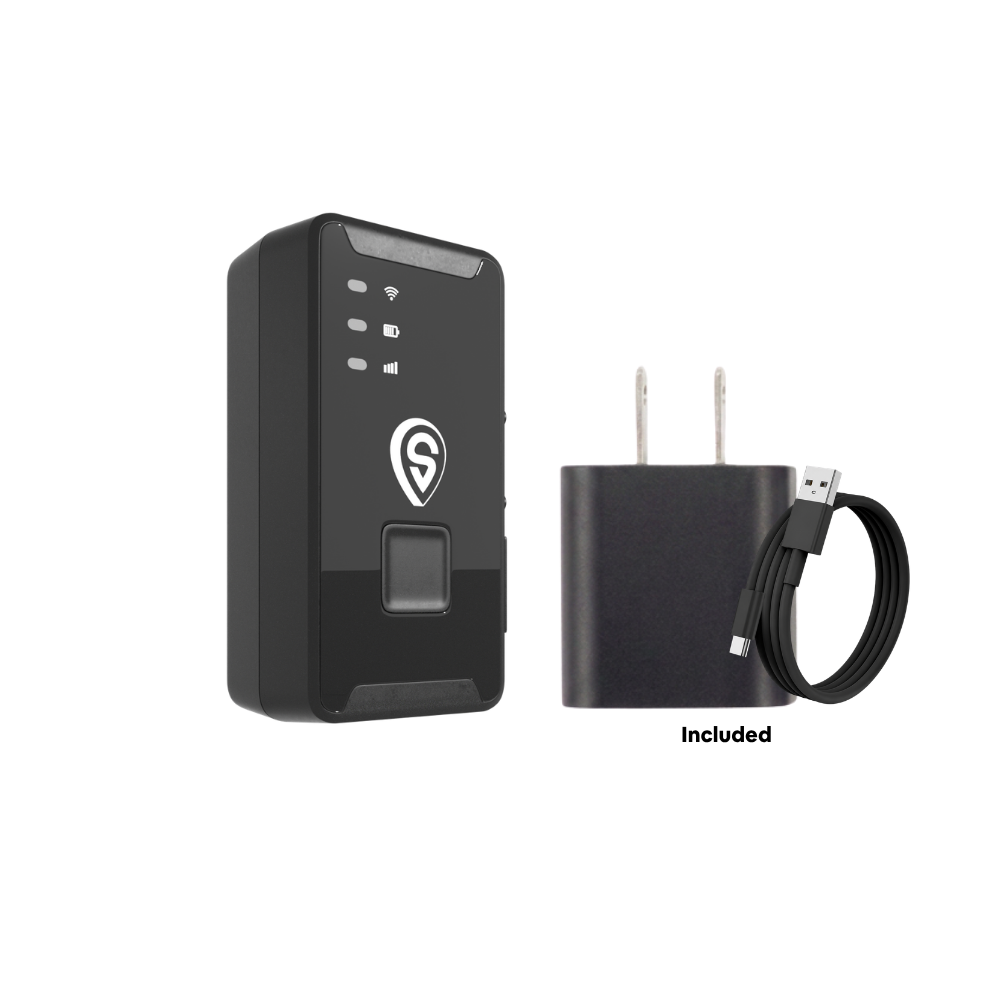
ShadowTrack
Battery-powered · Magnetic · For trailers, equipment & more
Plans from $15/mo month-to-month, or prepay and save (as low as $9/mo) · No contract, ever.
- Weatherproof magnetic case hides on frames, decks and trailers
- Geofence alerts when a machine leaves a site after hours
- Around 15 days per charge, set up in under 2 minutes


Don't forget the truck that tows it
Trucks had the highest average loss of anything stolen from a jobsite: $41,853 per incident. If your pickup or work truck pulls the trailer, ShadowAuto plugs into its OBD-II port in under two minutes and powers itself from your truck, so there's nothing to charge.
It adds a Car Alarm that alerts you if your truck moves when it shouldn't, plus engine code readouts. See our guide to trackers for work trucks and equipment for setups that cover both.
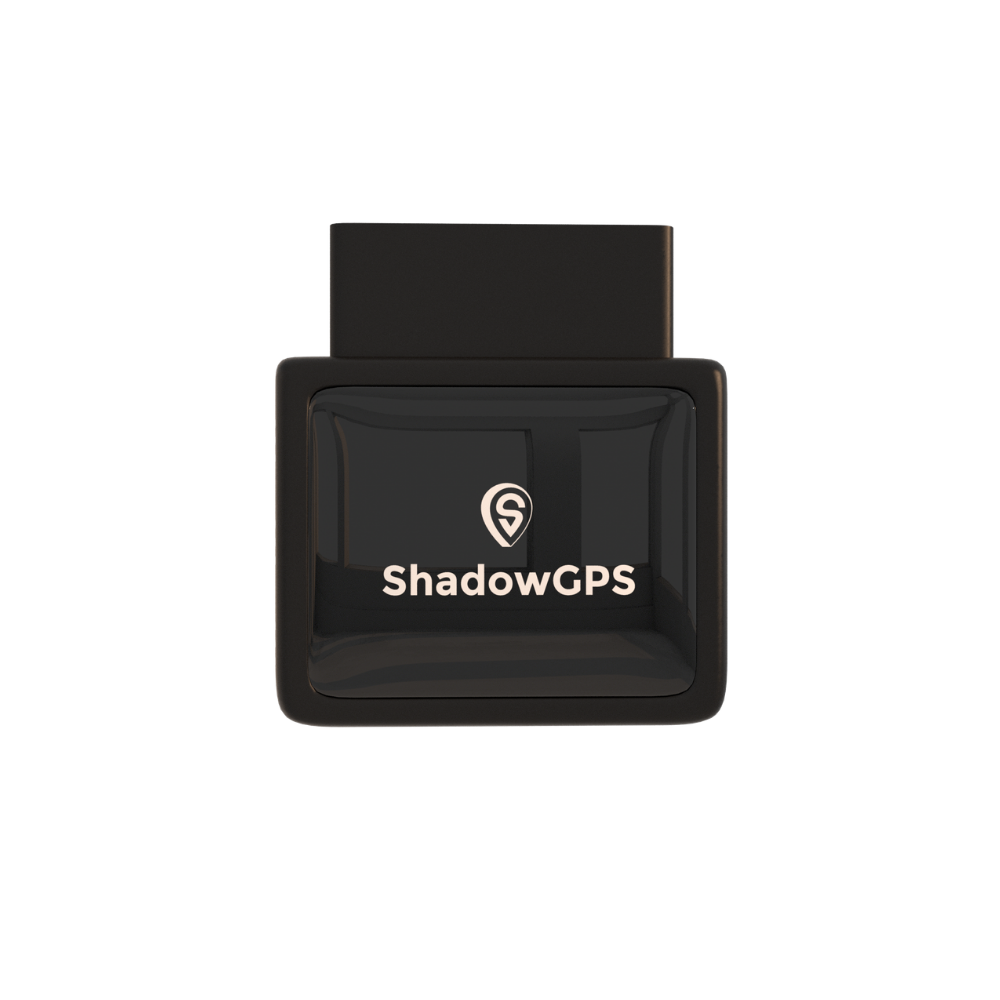
ShadowAuto
Plug-in · OBD-II · For cars & trucks
Plans from $15/mo month-to-month, or prepay and save (as low as $9/mo) · No contract, ever.
- Plug it in: powered by your truck, zero maintenance
- Car Alarm alerts if your truck moves unexpectedly
- Live tracking, trip timeline and trip replay
An honest look at what a GPS tracker can and can't do
What it does
- Cuts discovery time from days to minutes with alerts
- Gives police a live location inside the 24-hour window
- Shows trip history if a machine is moved more than once
- Works across mixed gear: trucks, trailers, mowers, skid steers
What it doesn't do
- It won't physically stop a theft; pair it with locks
- Needs cell coverage to report; very remote spots can lag
- Battery models need a recharge about every two weeks
- It doesn't replace serial records or NER registration
Equipment Theft Prevention Methods Compared
Each protection method answers a different statistic. The best setups for small owners combine one from each layer.
| Method | Statistic it targets | Stops the theft? | Helps recovery? | Effort for a small owner |
|---|---|---|---|---|
| Hydraulic locks / battery disconnect | Mobility drives target choice | Slows it down | No | Low, every night |
| Staging machines, unloaded trailers | Trailer-ready gear stolen most | Slows it down | No | Low |
| Lighting, fencing, cameras | Jobsites are the top theft location | Deters some | Evidence after the fact | Medium to high |
| Serial records + NER registration | Poor records cause low recovery | No | Yes, helps ID | Low, one time |
| Bluetooth tags (e.g. AirTag, Tile) | Discovery delay | No | Only near phones | Low, limited range |
| Factory-fitted machine tracking | Discovery delay | No | Yes | Varies by brand and plan |
| ShadowTrack / ShadowAuto GPS tracker | Median recovery is about 1 day | No, alerts you fast | Yes, live location | Low, under 2 min, no contract |
What should you do if your equipment is stolen?
Speed is everything, because most recoveries happen within a day. Call the police right away and give them the serial/PIN number, make, model, color and photos. Ask that it's entered into NCIC as equipment, not as an "article." If you have a tracker, share its live location with officers and let them handle the recovery; don't confront anyone yourself. Then notify your insurer and NER, and post the details with local equipment dealers. Our step-by-step recovery guide walks through it.
Related Reading
- Best GPS tracking solutions for construction equipment and heavy machinery
- GPS tracking for construction equipment: the complete guide
- GPS trackers vs. car theft: real stats and success tips
- How GPS tracking helps law enforcement catch vehicle thieves
- ShadowGPS for construction equipment
Construction Equipment Theft FAQs
How much construction equipment is stolen each year?
About 11,500 to 11,600 machines a year. The final NER and NICB report counted 11,574 equipment thefts reported to the FBI's NCIC in 2016, with annual losses estimated at $300 million to $1 billion. Earlier reports showed 11,486 (2013) and 11,625 (2014), so the count has stayed steady.
What percentage of stolen construction equipment is recovered?
About 21% nationally (2,442 of 11,574 in 2016). For single-item thefts from construction sites, an FBI NIBRS study found recovery below 7%. When recovery does happen, it's usually fast: the median for heavy equipment was about one day.
What is the most stolen construction equipment?
Riding mowers and garden tractors (41% of thefts), then loaders (18%), of which skid steers make up 70%. Tractors (14%) and utility vehicles (7%) follow. Thieves favor machines that fit on an ordinary trailer.
Which state has the most construction equipment theft?
Texas, with 2,375 thefts in 2016, about 20.5% of the national total and more than the next two states combined. North Carolina, Florida, California and Georgia round out the top five, which together account for 45% of all thefts.
What brand of equipment is stolen most?
John Deere (2,420 thefts in 2016), followed by Kubota (1,315), Bobcat (882), Caterpillar (773) and Toro (368). The ranking reflects how many compact, easy-to-move machines each brand has in use, not quality.
When does most equipment theft happen?
During the busy spring and summer season, when machines move between sites. August led 2013 with 1,305 thefts. Nights, long weekends and holidays are high-risk because empty sites delay discovery.
Why is stolen equipment so hard to recover?
Heavy equipment has no title system like cars, serial formats are inconsistent, owners often lack records, thefts are discovered late, and machines are sometimes filed incorrectly in police databases. Many machines also share common keys.
Is the "$1 billion a year" equipment theft figure accurate?
It's the top end of an estimate. NER puts annual losses at $300 million to $1 billion, with most estimates near $400 million. It covers machines only, not tools, materials or downtime, and it dates to 2016 data.
Does a GPS tracker help recover stolen equipment?
It helps with the biggest problem in the data: discovery time. Recoveries cluster in the first 24 hours, and a tracker with geofence alerts tells you a machine has moved right away and gives police a live location. It works best alongside locks and good serial records.
Is there a monthly fee for an equipment GPS tracker?
Yes, real-time cellular trackers need a plan. With ShadowGPS there's no contract: month-to-month from $15/mo, or prepay and save down to $9/mo. If you run 4 or more trackers, plans drop to $8 to $13/mo. Cancel any time.
Does an equipment tracker need a SIM card?
Not one you have to buy. ShadowTrack and ShadowAuto come with cellular connectivity built in and covered by your plan. You don't need to add a SIM, set up a phone line or pick a carrier.
How hard is it to set up a tracker on a skid steer or trailer?
About two minutes. ShadowTrack's magnetic case sticks to a metal frame, deck or trailer tongue, with no wiring or tools. For your truck, ShadowAuto simply plugs into the OBD-II port under the dash.
Know where your equipment is, tonight
Plug it in. See it move. Cancel any time. No contract, ever, and a 30-day money-back guarantee.
Sources
- National Equipment Register & NICB, 2016 Equipment Theft Report (final public edition)
- National Equipment Register & NICB, 2015 Equipment Theft Report
- Shrestha & Osborne, East Tennessee State University, analysis of construction site theft in FBI NIBRS data (2019)
- National Insurance Crime Bureau, 2025 recovery figures
- Equipment World, 2013 heavy equipment theft breakdown
- ConstructConnect, summary of LoJack's 2016 Construction Equipment Theft Recovery Report
Statistics reflect the most recent publicly available data at the time of writing (October 2026); the data year is labeled for every figure. Pricing current as of October 2026 and subject to change. This post contains affiliate links; ShadowGPS may earn a commission on qualifying Amazon purchases at no extra cost to you. Only track equipment and vehicles you own or have the right to track.

