

How Does GPS Tracking Work? A Real-Time Guide for Car Owners
You want to know where your car is right now, not where it was an hour ago. Maybe it's a teenager on their first solo trip, a truck a Turo renter has for the weekend, or a trailer you left at a job site overnight. The question underneath all of it is the same: how does a GPS tracker actually know where your vehicle is, and how does that show up on your phone in seconds?
The short version involves satellites orbiting 12,500 miles overhead, a small receiver in your car, and a cellular network doing the same job your phone does every time you send a text. None of it requires a computer science degree to understand, and none of it requires a mechanic to set up.
This guide walks through exactly how real-time GPS tracking works, what the specs on a product listing actually mean, and how to pick between a plug-in tracker and a portable one depending on what you're tracking.
A real-time GPS tracker calculates its position using signals from GPS satellites, then sends that location over a cellular network to a cloud server you can check from an app. The tracker itself does the math (a process called trilateration), a modem inside it does the sending, and the whole trip from satellite to your screen typically takes just a few seconds.
What Is a Real-Time GPS Tracker?
A real-time GPS tracker is a small device that uses satellite signals combined with a cellular data connection to report a vehicle's exact location on a regular, ongoing basis. That's different from a passive GPS logger, which stores location data internally and only shows it to you after you plug the device in and download it.
With a real-time tracker, there's no downloading and no waiting. You open the app, and the map shows your car's current location, refreshed on its own.
How GPS Tracking Works, Step by Step
Every GPS tracking system, whether it's watching one car or a fleet of vans, relies on three parts working together: the satellites in space, the tracker in your vehicle, and the cellular network carrying the data to your phone. Here's the sequence, start to finish.
- Satellites broadcast a signal. A constellation of GPS satellites, operated by the U.S. Space Force, orbits the Earth continuously. Each one broadcasts its exact position and a precise timestamp from an onboard atomic clock.
- The tracker calculates its position. The receiver inside your tracker picks up signals from at least four satellites and measures the tiny difference in arrival time for each one. This process, called trilateration, lets the device calculate its own latitude, longitude, speed, and heading.
- The tracker packages the data. That location gets bundled with a timestamp and, on some trackers, diagnostic data like speed or engine status, into a small data packet.
- A cellular modem sends it to the cloud. The tracker transmits that packet over a 4G LTE network, the same kind your phone uses, to a secure cloud server.
- Your app displays it. The app or web dashboard pulls the location from the cloud server and plots it on a map, refreshed as new data comes in.
On ShadowGPS devices, that entire loop updates every five seconds while your car is moving, so what you see on the map is close to what's actually happening on the road, not a stale snapshot from a minute ago.
The Three Segments of Any GPS System
Engineers describe GPS as three segments working in concert, and understanding them makes the specs on a tracker's product page much easier to read.
- Space segment: the satellite constellation broadcasting signals.
- Control segment: ground stations that monitor satellite orbits and correct timing.
- User segment: your tracker and every other GPS receiver reading those signals, including the one in your phone.
Per GPS.gov, commercial-grade GPS accuracy typically lands within a few meters under open sky, which is what makes address-level location reporting possible.
Key Specs Explained
Product listings throw around a handful of terms that actually matter a lot for day-to-day use. Here's what each one means in plain language.
| Spec | What it means | What to look for |
|---|---|---|
| Update frequency | How often the tracker reports a new location | 5 seconds is true real-time; 60 seconds is a battery-saving mode for slow-moving assets |
| Location accuracy | How close the reported point is to the real one | Address-level precision, typically within a few meters in open areas |
| Network coverage | Which cell carriers the tracker rides on | Multi-carrier support avoids dead zones in rural areas |
| Trip history | How far back you can scroll through past trips | 12 months with full route playback is the standard to expect |
| Alerts | Conditions that trigger an instant notification | Speed, geofence, motion, and curfew alerts cover most real-world needs |
OBD-II vs. Battery-Powered: Two Ways to Track a Vehicle
The first real decision isn't which brand to buy. It's which type of tracker fits what you're tracking: something with an engine, or something without one.
Plug-In Trackers (OBD-II Port)
Almost every car, truck, or SUV built after 1996 has an OBD-II port under the dashboard, originally meant for mechanics to read engine codes. A plug-in tracker uses that same port for power and data, so there's no wiring and no charging. Plug it in, and it's live in about ten seconds.
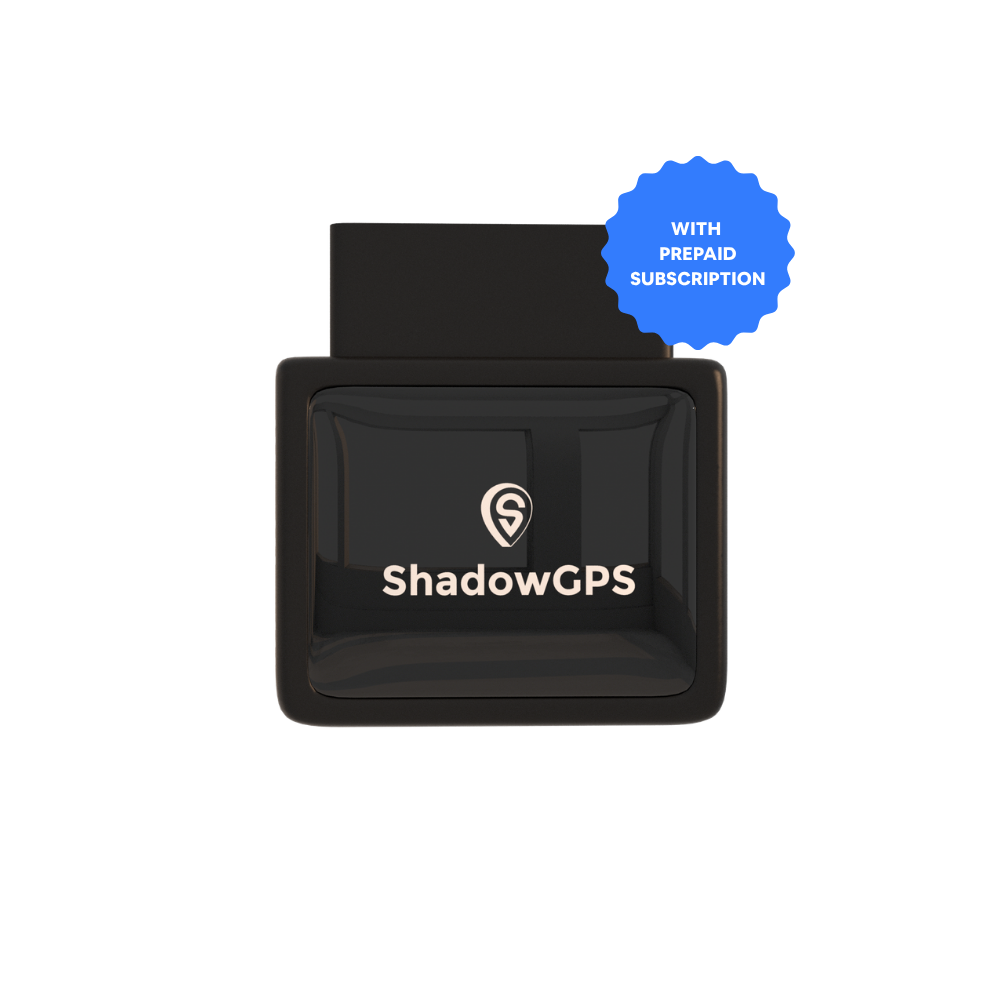
ShadowAuto
- Plugs in under 2 minutes, no tools
- Updates every 5 seconds while moving
- Reads engine codes, fuel level, and battery voltage


Battery-Powered Trackers (No Port Needed)
Trailers, boats, generators, ATVs, and equipment don't have an OBD-II port, so a self-contained tracker with its own rechargeable battery is the fit. It attaches with a magnet or a mounting clip and reports location on its own schedule, independent of anything it's attached to.
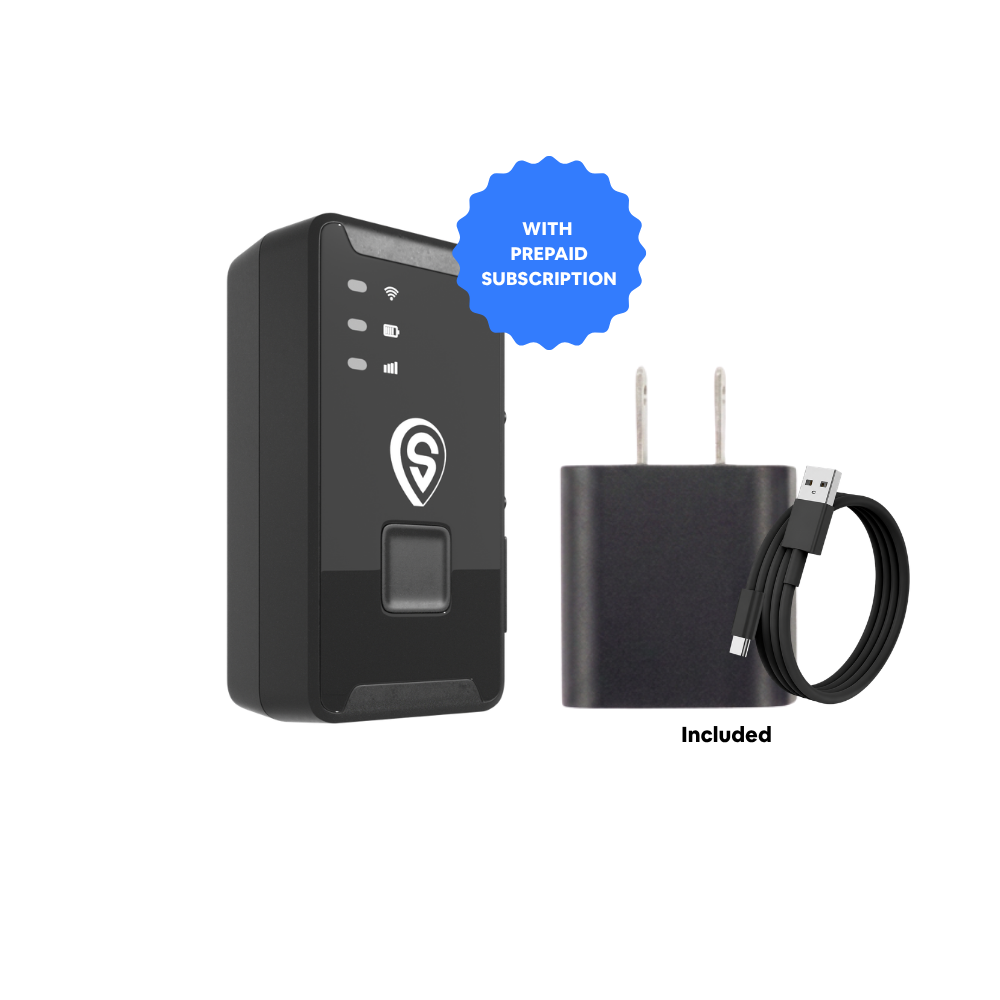
ShadowTrack
- No port or wiring required, works on any asset
- Adjustable update rate to stretch battery life
- Weatherproof magnetic case available
Side-by-Side Comparison
| Feature | ShadowAuto (OBD-II) | ShadowTrack (Battery) |
|---|---|---|
| Power source | Vehicle-powered, zero maintenance | Rechargeable, 5-15 days per charge |
| Setup | Plug into OBD-II port | Magnetic mount or hidden placement |
| Update rate | Every 5 seconds while moving | 5, 30, or 60 seconds, adjustable |
| Vehicle diagnostics | Yes, engine codes, fuel, battery | Not applicable |
| Best for | Cars, trucks, Turo rentals, teen drivers | Trailers, equipment, non-OBD assets |
| Trip history | 12 months with route playback | 12 months with route playback |
Real-Time vs. Passive GPS Tracking
Not every GPS tracker works the way this guide has described so far. Passive trackers store location data on an internal memory card and only reveal it after you physically retrieve the device and download the log. Real-time trackers skip that step entirely by streaming location straight to your phone as it happens.
If the goal is knowing where your car is right now, a passive logger won't do that job. Real-time is the difference between checking a map after the fact and checking it while your teen driver is still on the road.
What You Can Actually Do With a Real-Time Tracker
Teen driver visibility
See speed, location, and curfew compliance without a phone call, and get an alert if your teen leaves an approved area.
Theft recovery
If your car is stolen or towed, see its current location instantly and hand that to law enforcement instead of waiting.
Turo and shared vehicles
Know where a rental is at all times and confirm it's being driven where it's supposed to be.
Trailers and equipment
Get a motion alert if a trailer or generator left on a job site overnight starts moving without authorization.
A second household vehicle
Keep tabs on a car a family member drives less often, especially useful for older parents or a college student's car.
Small fleet visibility
Owner-operators running 2-5 vehicles get one map for every vehicle instead of a phone call to each driver.
Setting Up a GPS Tracker in Under 2 Minutes
What setup actually looks like
For ShadowAuto: find the OBD-II port under your dashboard, usually within reach of the steering wheel, and push the tracker in until it clicks. For ShadowTrack: charge it, then attach it with the magnetic mount or included clip. Either way, download the ShadowGPS app, scan the QR code on the device to pair it, and the map goes live. No tools, no appointment, and no separate installer.
Is GPS Tracking Legal?
Tracking a vehicle you own is legal in every U.S. state. That covers a parent tracking a family car their teen drives, a Turo host tracking their own rental, and a business owner tracking a company vehicle. The legal questions get more complicated when the vehicle belongs to someone else, including a spouse, so it's worth reading a state-by-state breakdown before tracking anything you don't personally own. See our full guide on GPS tracking laws for employee and personal vehicles for the details.
Common Questions Answered
Is there a monthly fee for GPS tracking?
Yes. The tracker itself is a one-time purchase, and the cellular data, cloud storage, and app access run on a monthly plan starting at $12/mo. There's no contract, ever, so you can cancel any time or prepay to save.
Does a GPS tracker need a SIM card?
No separate SIM card to buy or manage. The cellular connection is built into the device and covered by your monthly plan, the same way it would be on a prepaid phone you never have to touch again.
Does a GPS tracker drain my car's battery?
An OBD-II tracker draws a small amount of power while your engine is off and enters a low-power sleep mode to protect the battery. In practice, it uses less power than leaving an interior light on.
How accurate is real-time GPS tracking?
Commercial GPS accuracy is typically within a few meters under open sky, which is close enough to pinpoint an address, not just a general area. Accuracy can dip slightly near tall buildings, parking garages, or dense tree cover.
Can a GPS tracker work without cell service?
The GPS receiver itself doesn't need cell service to calculate a location, since that part relies only on satellites. Sending that location to your phone in real time does need a cellular connection, so coverage gaps mean a short delay until signal returns.
What's the difference between an OBD-II and a battery-powered GPS tracker?
An OBD-II tracker plugs into your vehicle's diagnostic port and runs on vehicle power, so it never needs charging but only works on vehicles with that port. A battery-powered tracker has its own rechargeable battery and can go on anything, including trailers or equipment with no port at all.
In short
Real-time GPS tracking works by having a receiver in your vehicle calculate its location from satellite signals, then send that location over a cellular network to an app on your phone, refreshed every few seconds. Pick an OBD-II tracker like ShadowAuto for a car or truck, or a battery-powered tracker like ShadowTrack for anything without a port, and you'll see it live within two minutes of setup.
Plug it in. See it move. Cancel any time.
No installer, no SIM card to manage, no contract. Just a live map of where your vehicle actually is.
Prices and plans reflect current ShadowGPS pricing at time of publication and are subject to change. GPS accuracy figures reference GPS.gov's published commercial accuracy standards.

