

Can a GPS tracker tell you what's wrong with your car? Yes. A vehicle health monitoring GPS tracker plugs into your car's OBD-II port, reads the same engine codes, battery voltage, and fuel data your mechanic's scanner sees, and sends it to your phone over a cellular connection, so you can check on your car or truck from anywhere.
That matters more than it used to. According to CarMD's 2026 Vehicle Health Index, the average check engine repair hit a record $554 in 2025, up 33% from the year before. Most of those bills start as small problems that sat unnoticed for weeks.
This guide walks you through how remote car diagnostics actually work, what each alert means, which codes need attention today versus next month, and how to set it up on a family car, a teen's first car, a Turo rental, or a small fleet of work trucks.
Vehicle health monitoring GPS combines live location tracking with on-board diagnostics. You plug a tracker into your car's OBD-II port (standard on cars sold in the US since 1996), it reads engine fault codes (DTCs), battery voltage, and fuel level from the car's computer, and it pushes alerts to an app on your phone. No mechanic, no cables, and you don't need to be near your car.
What Is Vehicle Health Monitoring GPS?
Every car built for the US market since 1996 has an on-board diagnostics computer (OBD-II) that constantly watches the engine, emissions system, and electrical system. When something drifts out of range, it stores a diagnostic trouble code and, for many faults, turns on the check engine light.
A regular OBD2 scanner reads that data only when you're sitting in the driver's seat. A GPS tracker with engine diagnostics does three things a scanner can't:
- It stays plugged in, so it catches a fault the moment it's stored, not days later.
- It has its own cellular connection, so the data reaches your phone whether your car is in the driveway, a college parking lot, or a Turo guest's hotel garage.
- It pairs health data with location, so when an alert fires you also know exactly where your car is and how far it is from a repair shop.
Think of it as the difference between checking your car's health once a year at an oil change and having a quiet heads-up on your phone the day something changes.
How Does a GPS Tracker Read Engine Diagnostics Remotely?
Remote car diagnostics come down to four steps. Here's what happens between the port under your dashboard and the alert on your phone.
Step 1: Plug the tracker into the OBD-II port
The port is a 16-pin, trapezoid-shaped socket, usually under the dashboard on the driver's side near the steering column. The tracker draws power from it, so there's nothing to charge and no wiring. If you can't spot it, our guide on where to find your OBD2 port shows the common spots by make.
Step 2: The tracker talks to your car's computer
Once your car is on, the tracker requests standard data from the engine control module (ECM): stored and pending trouble codes, battery voltage, fuel level, ignition status, and more. These are the same standardized parameters an OBD2 scanner reads, defined under federal emissions rules.
Step 3: Data travels over cellular to the cloud
The tracker pairs that data with its GPS position and sends it over a built-in LTE-M cellular connection. That's what makes it remote. A Bluetooth OBD2 dongle, by comparison, only works when your phone is within about 30 feet of the car.
Step 4: The app turns codes into alerts
The companion app translates a code like P0420 into plain language, sends a push notification, and logs it alongside the trip, time, and place it happened. That history becomes useful when you talk to a mechanic, because you can show exactly when a problem first appeared.
What Can You Monitor Remotely? The 6 Health Signals That Matter
Not every OBD GPS tracker reads the same data. These are the signals worth caring about as a car owner, ranked by how often they save you money or a stranded morning.
1. Check engine codes (DTCs)
A check engine code GPS tracker alerts you when the car's computer stores a fault, even if you're not the one driving. CarMD's latest survey found nearly half of drivers had a dashboard warning light on, and 20% had a check engine light on. Many of them simply didn't know what it meant.
2. Battery voltage
Dead batteries are among the top reasons drivers call AAA for roadside help. Battery level monitoring tells you when voltage is sliding, especially in cold weather. AAA notes that at 32°F a battery loses about 35% of its power while needing about 1.5 times as much power to start the engine.
3. Fuel level
Fuel tracking helps you spot a teen who always runs on empty, a rental returned short, or a work truck burning more than its route should. It's also an early clue for engine trouble, since a failing oxygen sensor can quietly cut fuel economy.
4. Ignition on/off
Ignition alerts tell you when your car starts and stops. For a parked family car, an ignition alert at 2 a.m. is a security signal as much as a health one.
5. Crash and hard-impact alerts
Some trackers detect sudden impacts and notify you with the location. For parents of new drivers, this is often the alert that matters most.
6. Trip and mileage history
Mileage logs make service intervals predictable. Instead of guessing when the next oil change is due, you can see miles driven since the last one, which is especially handy across two to five work trucks.
What OBD diagnostics can't see
Be realistic about the limits. OBD-II data won't tell you about tire tread, brake pad wear, wiper blades, a slow oil leak, or suspension noise. Remote diagnostics are an early-warning layer on top of regular maintenance, not a replacement for it.
How to Read a Check Engine Code From Your Phone
Every diagnostic trouble code follows the same five-character pattern. Once you know the structure, you can tell a lot about a problem before you ever open a search bar.
| Character | What it tells you | Example (P0420) |
|---|---|---|
| 1st: letter | System: P = powertrain (engine, transmission), B = body, C = chassis, U = network/communication | P = engine/emissions |
| 2nd: digit | 0 = generic code (same on every brand), 1 = manufacturer-specific | 0 = generic |
| 3rd: digit | Sub-system, such as fuel/air, ignition, emissions controls | 4 = emissions controls |
| 4th and 5th | The specific fault | 20 = catalyst efficiency below threshold |
Common check engine codes, explained
These are the codes owners see most often in the app, grouped by the part of your car they point to. The urgency column uses the same scale as the alert triage table below, so you can go straight from "what is it" to "what do I do."
Fuel and air mixture
| Code | What it means | Likely causes | Urgency |
|---|---|---|---|
| P0171 | System too lean (bank 1): the engine is getting too much air or too little fuel | Vacuum leak, dirty mass airflow sensor, weak fuel pump | Days, not weeks |
| P0174 | System too lean (bank 2): same as P0171, on the other side of a V6 or V8 | Vacuum leak, leaking intake gasket | Days, not weeks |
| P0172 | System too rich (bank 1): too much fuel for the amount of air | Leaking injector, faulty oxygen sensor or MAF, clogged air filter | Days, not weeks |
| P0101 | Mass airflow (MAF) sensor reading out of range | Dirty or failing MAF sensor, air leak after the sensor | Days, not weeks |
| P0113 | Intake air temperature sensor reading too high | Unplugged or failed sensor, damaged wiring | Weeks |
Ignition and misfires
| Code | What it means | Likely causes | Urgency |
|---|---|---|---|
| P0300 | Random or multiple cylinder misfire | Worn spark plugs, failing ignition coils, vacuum leak, low fuel pressure | Today |
| P0301 to P0308 | Misfire in one specific cylinder (the last digit is the cylinder number) | Spark plug, coil, or fuel injector on that cylinder. Ongoing misfires can damage the catalytic converter | Today |
| P0335 | Crankshaft position sensor circuit fault | Failed sensor or wiring; can cause stalling or a no-start | Today |
| P0340 | Camshaft position sensor circuit fault | Failed sensor, wiring, or a timing issue | Today |
| P0011 | Intake camshaft timing over-advanced (bank 1) | Low or dirty oil, sticking variable valve timing solenoid | Days, not weeks |
Emissions and fuel vapor (EVAP)
| Code | What it means | Likely causes | Urgency |
|---|---|---|---|
| P0455 / P0457 | EVAP large leak, or fuel cap loose or missing | Loose or worn gas cap. Tighten it, drive a few days, and see if it clears | Soon |
| P0442 / P0456 | EVAP small or very small leak | Worn gas cap seal, cracked vapor hose, faulty purge valve | Weeks |
| P0420 | Catalyst efficiency below threshold (bank 1) | Aging catalytic converter, oxygen sensor, or misfires left unchecked. Catalytic converter replacement consistently ranks among the costliest check engine repairs in CarMD's data | Weeks, but don't ignore it |
| P0430 | Catalyst efficiency below threshold (bank 2) | Same causes as P0420, on the other side of a V6 or V8 | Weeks, but don't ignore it |
| P0401 | Exhaust gas recirculation (EGR) flow too low | Carbon-clogged EGR valve or passages | Weeks |
Temperature and oxygen sensors
| Code | What it means | Likely causes | Urgency |
|---|---|---|---|
| P0217 | Engine overheating | Low coolant, failing water pump, broken radiator fan | Now: pull over safely and turn off the engine |
| P0128 | Coolant temperature below thermostat range | Thermostat stuck open; can hurt fuel economy and heater performance | Weeks |
| P0133 | Oxygen sensor slow to respond (bank 1, sensor 1) | Aging oxygen sensor, exhaust leak | Weeks |
| P0135 / P0141 | Oxygen sensor heater circuit fault (upstream / downstream sensor) | Failed heater element, blown fuse, damaged wiring | Weeks |
Electrical, idle, and transmission
| Code | What it means | Likely causes | Urgency |
|---|---|---|---|
| U0100 | Lost communication with the engine control module | Loose connector, damaged wiring, very low voltage, or a module fault | Today |
| P0562 | System voltage low | Weak battery, failing alternator, loose battery cable. Often shows up alongside a low-battery alert | Before next start |
| P0505 | Idle air control system fault | Dirty throttle body, failing idle control valve; causes rough or high idle | Days, not weeks |
| P0500 | Vehicle speed sensor fault | Failed sensor or wiring; can affect the speedometer, shifting, and cruise control | Days, not weeks |
| P0700 | Transmission control system fault | The transmission computer has stored its own code; a shop scan shows which one | Days, not weeks |
| P0741 | Torque converter clutch not engaging | Low or worn transmission fluid, faulty solenoid, worn torque converter | Days, not weeks |
Reading the fine print on a code
Bank 1 vs. bank 2: bank 1 is the side of the engine with cylinder 1. Four-cylinder engines only have bank 1; bank 2 codes show up on V6 and V8 engines.
Sensor 1 vs. sensor 2: sensor 1 sits before the catalytic converter, sensor 2 sits after it.
Codes starting with P1: these are manufacturer-specific, so the same code can mean different things on a Ford and a Toyota. Look them up for your exact make.
A flashing check engine light: treat any code as "today" if the light is flashing, since that usually signals an active misfire that can damage the catalytic converter.
An Alert Just Hit Your Phone. What Should You Do?
This is the part most guides skip. An alert is only useful if you know how to react to it. Here's a simple triage framework we recommend to owners.
| Alert | What it usually means | Urgency | What to do |
|---|---|---|---|
| Check engine code, light steady | A stored fault, often emissions-related | Days, not weeks | Look up the code, check the gas cap, book a diagnosis this week |
| Misfire code (P030X) while driving | Engine misfiring; a flashing check engine light often accompanies it | Today | Reduce driving, avoid hard acceleration, get it to a shop soon |
| Low battery voltage, car parked | Aging battery, a light left on, or a parasitic drain | Before next start | Plan a jump or charge; get the battery tested |
| Low fuel, teen or renter driving | Running close to empty | Soon | A quick text usually solves it |
| Ignition on at an unusual hour | Unexpected use of your car | Now | Check the live map and trip in progress |
| Crash or impact alert | Sudden force detected | Now | Call the driver, check the location, contact help if needed |
A quick battery voltage reference
If your app shows battery voltage, these are the general ranges for a standard 12-volt car battery, measured with the engine off and the car rested:
- About 12.6 V or higher: fully charged
- About 12.4 V: roughly 75%, fine for now
- About 12.2 V: roughly half charged, worth watching
- Below 12.0 V: discharged, a no-start risk
- 13.7 to 14.7 V with the engine running: the alternator is charging normally
AAA recommends testing your battery once it hits three years old and every year after that. A voltage trend in your app makes that conversation with your mechanic a lot easier.
ShadowAuto: GPS Tracking and Engine Diagnostics in One Plug-In Tracker
ShadowAuto is our OBD-II GPS tracker, built for people who own one car or truck that matters and want to know two things: where it is, and whether it's okay. You see your car move on the map with updates every 5 seconds, and the same app shows check engine codes, battery voltage, and fuel level as they change.
Setup takes under two minutes. Plug it into the OBD-II port, open the ShadowGPS app on iOS or Android, and pick which alerts you want: check engine codes, low battery, crashes, speeding, ignition, curfew, geofence, or the tracker being unplugged. Trip history goes back up to a year with animated route replay, and you can manage several vehicles from one account.
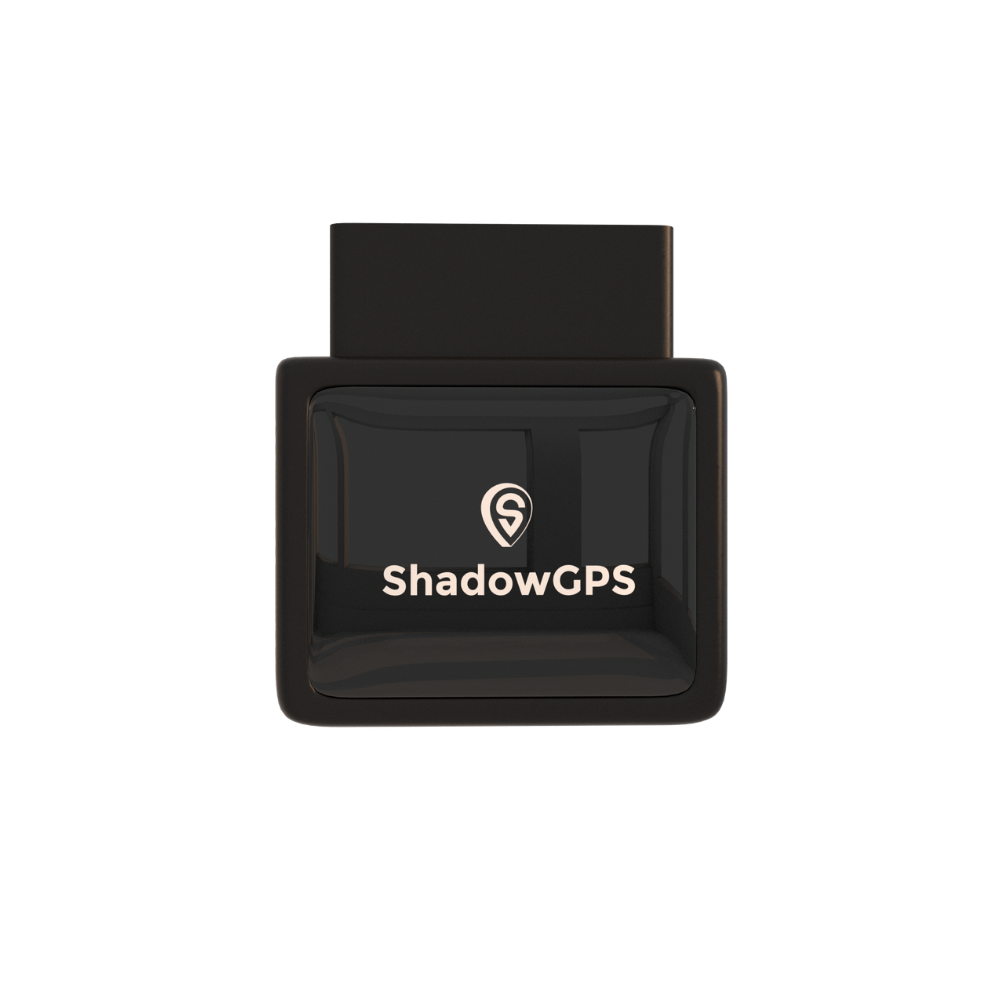
ShadowAuto
- Check engine codes, battery & fuel alerts
- Plugs in under 2 minutes, no tools
- Crash, ignition & unplug alerts


What owners like
- Location and engine health in one app, not two
- Powered by your car, so there's nothing to charge
- Month-to-month, cancel any time
Keep in mind
- Needs an OBD-II port (gas cars 1996+, most diesels)
- A monthly fee covers the cellular connection
- Reads codes; repairs still need a mechanic
Best for: a family car, a teen driver's first car, a Turo rental, or a small fleet of two to five work trucks where you want location and health alerts together. See how plans compare on our pricing page.
Who Gets the Most From Remote Car Diagnostics?
The technology is the same everywhere, but what you watch for changes with how your car is used.
Parents of teen drivers
A check engine or low-battery alert reaches you, not just your teen, who may not mention the light for weeks. Pair it with crash and curfew alerts for real peace of mind. More in our teen and family driver guide.
Turo and rental hosts
Guests rarely report a warning light. Fuel, battery, and code alerts between trips help you catch issues before the next booking, and the trip log documents condition at hand-off. See our Turo tracker guide.
Owner-operators with 2 to 5 trucks
One truck down for a day costs real money. Code alerts and mileage logs let you schedule service around jobs instead of after a breakdown. Read how to choose fleet tracking for 3 to 10 vehicles.
Example: how it plays out in real life
Picture a Turo host with a 2017 sedan. On a Tuesday afternoon, a P0455 code pops up during a guest's trip. The host checks the app, sees the car was just refueled, and texts the guest to make sure the gas cap clicked. Code clears two days later. No shop visit, no bad review, no surprise at the next booking.
Now picture the same host without alerts. The guest returns the car with the light on, the next guest notices it at pickup, and the host loses a day getting a diagnosis for a loose gas cap. Same problem, very different outcome.
Vehicle Health Monitoring Options Compared
There's more than one way to read your car's diagnostics. Here's how the common options stack up for someone who wants to check on their car from somewhere else.
| Option | Works away from your car | Live location | Engine codes | Location refresh | Ongoing cost |
|---|---|---|---|---|---|
| Mechanic's scan at the shop | No | No | Yes, on visit | N/A | Per visit |
| Bluetooth OBD2 scanner + app | No (phone must be nearby) | No | Yes | N/A | Device cost; some apps charge a subscription |
| Automaker connected-car app | Often | Often | Varies by brand and year | Varies | Often a subscription after a trial |
| Bouncie (OBD GPS tracker) | Yes | Yes | Yes | About 15 sec | About $9-$9.65/mo |
| ShadowAuto (OBD GPS tracker) | Yes | Yes | Yes, with battery & fuel alerts | 5 sec | $12-$15/mo, no contract |
Competitor details based on publicly listed information as of October 2026. Features and pricing change, so check each brand's current listing before you buy.
What If Your Vehicle Doesn't Have an OBD-II Port?
Classic cars built before 1996, trailers, boats, and equipment don't have a standard OBD-II port, so engine diagnostics aren't on the table. Location still is. For those, a battery-powered tracker is the better fit. It won't read engine codes, but it tells you where your trailer or project car is, and it hides almost anywhere. Not sure which form factor suits you? Our OBD2 vs battery-powered tracker comparison breaks it down.
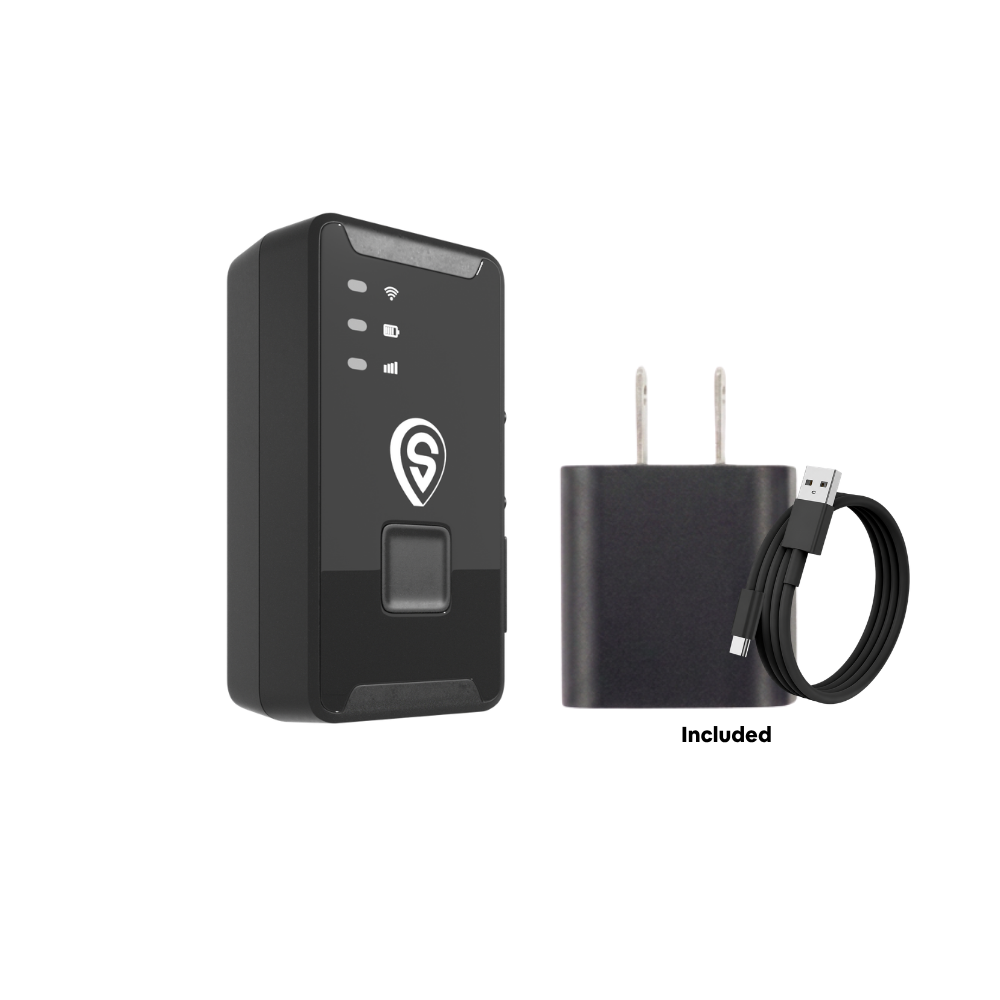
ShadowTrack
- Up to about 15 days per charge
- Weatherproof magnetic case option
- Works on assets with no OBD-II port
Best for: trailers, equipment, pre-1996 vehicles, or anything you want to locate without plugging into a port.
How to Set Up Vehicle Health Alerts in 5 Steps
- Find your OBD-II port. Look under the driver's side dash, near the steering column or above the pedals.
- Plug in the tracker. Push it in firmly with the car off. No tools, no wiring.
- Activate it in the app. Download the ShadowGPS app, create your account, and add your tracker.
- Choose your alerts. Turn on check engine codes and low battery first. Add crash, ignition, curfew, or geofence alerts based on who drives the car.
- Take a test drive. Watch your trip appear in the app and confirm notifications reach your phone.
Owner tip: if you share a car, add the second driver to the account so you both see engine alerts. Two people noticing a code is better than one person hoping the other did.
Common Myths About Vehicle Health Monitoring GPS
"It will drain my battery."
A well-designed OBD tracker draws very little power and drops into a low-power mode when your car is parked. If your battery is already weak, the battery alert is more likely to warn you about it than cause it. If a car will sit unused for several weeks, unplugging the tracker is a simple precaution.
"Plugging something into the port voids my warranty."
Under the federal Magnuson-Moss Warranty Act, a manufacturer can't void your warranty simply because you used an aftermarket part. They would need to show that part caused the damage. The FTC explains this in plain terms.
"It only works on new cars."
OBD-II has been required on cars and light trucks sold in the US since the 1996 model year, according to the EPA. A 2004 pickup works just as well as a 2024 SUV.
"You need to be a mechanic to understand it."
The app does the translation. You see "catalyst efficiency below threshold" instead of a raw code, and the code tables and triage table above cover what to do next.
Frequently Asked Questions
Is there a monthly fee for vehicle health monitoring GPS?
Yes, any tracker that sends data remotely needs a cellular connection, and that's what the monthly fee covers. ShadowAuto plans run $12 to $15 a month, or $10 to $13 a month with four or more trackers. No contract. Month-to-month, or prepay and save.
Does a GPS tracker with engine diagnostics need a SIM card?
Not one you have to buy. ShadowAuto has a built-in LTE-M cellular connection that's included in your plan, so there's no SIM card to purchase, insert, or activate separately.
Is it hard to set up an OBD-II GPS tracker?
No. You plug it into the OBD-II port under your dashboard and activate it in the app. Most owners are done in under two minutes, with no tools and no wiring.
Can a GPS tracker read check engine codes?
An OBD-II GPS tracker can. Because it plugs into the diagnostic port, it reads the same trouble codes as a scanner and sends them to your phone. Battery-powered trackers that aren't connected to the port can't read engine codes.
Can I check my car battery health remotely?
Yes. ShadowAuto reports battery voltage in the app and can alert you when it drops. A reading around 12.6 volts at rest is healthy; below about 12.0 volts means a no-start is likely.
Can I clear a check engine light from my phone?
ShadowAuto is built to read and alert on codes, not clear them. That's a good thing to understand anyway: clearing a code doesn't fix the problem, and the light will come back if the fault is still there. Fix the cause, and the code clears on its own or at the shop.
Will an OBD tracker drain my car battery?
Under normal daily driving, no. The draw is small and drops when your car is parked. For a car stored several weeks without driving, unplugging the tracker or using a battery maintainer is a sensible step.
Does vehicle health monitoring work on diesel, hybrid, or electric cars?
ShadowAuto works with gas cars and trucks from 1996 or newer and most diesel models. Hybrids and EVs report data differently, so check your exact model with our support team before you buy.
How is this different from a Bluetooth OBD2 scanner?
A Bluetooth scanner only works when your phone is near the car, and it doesn't track location. A GPS tracker with diagnostics has its own cellular connection, so you get code alerts and live location wherever your car is.
The Bottom Line
A check engine light rarely starts as a $554 problem. It gets there when nobody notices, or nobody says anything. Vehicle health monitoring GPS closes that gap by putting your car's engine codes, battery voltage, and fuel level on your phone, next to the map showing where it is right now.
Whether it's your daily driver, your teen's first car, a Turo listing, or a handful of work trucks, the setup is the same: plug it in, see it move, and cancel any time.
Know where your car is, and how it's doing
Plug it in, see it move, cancel any time. No contract, ever.
Pricing as of October 2026. Repair cost and warning light figures from the CarMD 2026 Vehicle Health Index; battery figures from AAA. Battery voltage ranges are general guidelines for standard 12-volt batteries. Engine code descriptions are general guidelines; exact meanings and causes can vary by make and model. This post contains affiliate links; if you buy through them, ShadowGPS may earn a commission at no extra cost to you. Always follow local laws and get consent where required when tracking a vehicle you don't solely own.

