

If you have wondered what a private investigator actually clips under a bumper, the answer is less cinematic than television suggests. It is usually a magnetic GPS tracker the size of a deck of cards, pinging a phone app every few seconds.
The hardware is not what makes it powerful. The paperwork behind it is. The same GPS tracking device produces court ready evidence in one case and a criminal charge in another, and the line between those two outcomes is a single question: who owns the car?
This guide covers the private investigator tracking devices used in real casework, the GPS tracking laws that decide whether a deployment is lawful, the specs that separate reliable GPS trackers from junk, and how to sweep your own car if you think a tracker is already on it.
Private investigator tracking devices are compact GPS tracking devices, usually magnetic and battery powered, that send real time location data to a phone app or web dashboard. They are lawful when the person deploying them owns the vehicle or holds documented consent from the owner.
Placing a hidden GPS tracker on someone's vehicle without permission is a crime in most states. For owner based tracking, ShadowTrack and ShadowAuto refresh every 5 seconds on plans of $12 to $15 a month, with a 14 day free trial and no contract.
What Are Private Investigator Tracking Devices?
They are ordinary GPS tracking devices used under professional rules. A GPS tracker reads satellite signals, works out its location, then pushes that location over a cellular network to software you log into.
What separates GPS devices built for private investigations from a bargain gadget is endurance and evidence quality: reliable tracking that survives tough conditions, a clean timestamped history, and accurate tracking fast enough to catch a stop rather than smooth over it.
The four GPS tracking devices used in private investigations
1. Real time GPS trackers
Battery powered and magnet mounted. These GPS trackers push real time location data to a dashboard every 3 to 60 seconds. This is the essential tool of modern surveillance work, and what most private investigators mean by a portable GPS tracker.
2. Passive GPS loggers
These GPS devices store location history internally and reveal nothing until physically retrieved. Cheap, useless for live response, and largely replaced by real time tracking in modern investigations.
3. OBD-II plug in trackers
These GPS tracking devices plug into the On-Board Diagnostics port and draw vehicle power, so nobody charges anything. They suit owned assets: a family car, a work truck, a Turo rental, a small fleet. They also read engine codes.
4. Radio frequency beacons
RF beacons use short range radio signals rather than satellites. They are legacy tools with a narrow use in investigations today, mostly close range asset protection where cellular coverage fails.
Are Private Investigators Allowed to Use GPS Tracking?
Sometimes, and it turns on the car's title far more than on the investigator's license. This is the most misunderstood part of GPS tracking for private investigations, so it is worth being precise about what the law allows investigators to do.
What federal law actually says
There is no federal standard governing GPS tracking by private investigators. The Fourth Amendment, which most people are half remembering, restrains government entities, not private citizens.
The Supreme Court ruled in United States v. Jones (2012) that attaching a GPS tracking device to a vehicle and monitoring it is a search, so police need a warrant. That reshaped the legal landscape, but it binds law enforcement. Private investigators do not share police authority, and a licensed private investigator cannot substitute probable cause for a court order.
State GPS tracking laws are where investigations are won and lost
GPS tracking laws vary sharply by state, and many jurisdictions now regulate the placement of electronic tracking devices directly. This is the legal landscape private investigators work inside in 2026.
| State posture | Examples | What it means for GPS tracking |
|---|---|---|
| Explicit consent statutes | California, Texas, Utah, Virginia, Minnesota | Placing a tracker on a vehicle owned or leased by another person is unlawful without permission. Texas Penal Code 16.06 and Utah Code 76-9-408 are typical. |
| Warrant or court order states | Nevada, Oregon, New Hampshire | GPS tracking generally needs a court order unless the person tracking owns the vehicle or holds consent. |
| Named investigator exemptions | Utah and a few others | Licensed private investigators, guardians, and law enforcement with a court order may be carved out. Read it narrowly. |
| Gray area states | Florida, New York, Georgia | No clean GPS statute. Legality turns on stalking, harassment, and privacy laws, which is a worse place to be than a clear rule. |
| Employer vehicle rules | California and most notice duty states | Company vehicles can be monitored, but written notice is expected, and GPS tracking beyond work hours invites claims. |
The consent test that decides everything
Private investigators must determine vehicle ownership and seek consent before deploying GPS tracking devices. Consent is the safest legal foundation for tracking, and the one that survives cross examination.
- Perfectly legal in all 50 states. Tracking a car titled in your own name: a teen driver's car you own, a Turo rental, a company truck.
- Lawful with documentation. A client tracking a jointly titled car, an employer monitoring company assets after written notice, or a guardian acting for a child's safety.
- Not lawful. Placing GPS tracking devices on a car you neither own nor lease. Reaching onto private property to attach one can also constitute trespassing.
- Not lawful. Tracking a separated spouse's car, or a partner's car you do not own, over suspected infidelity. This is where private citizens most often cross into stalking charges.
- Watch the spillover. Continuous GPS tracking captures the movements of innocent third parties riding in that car, which is its own exposure.
Two more things. GPS tracking on public roads is treated differently than tracking a car parked on private property. And associations governing private investigations enforce codes of conduct on top of the law, so informed consent and client vetting are ethical duties, not just legal compliance. Subjects can and do sue private investigators who violate privacy laws.
If you are the client, this is your legal trouble too
A client who asks private investigators to hide a tracker on a car the client does not own is commissioning the act. Legal consequences from unlawful GPS surveillance land on both parties, and the evidence is usually excluded anyway. Ask about vehicle ownership first.
What Separates a Field Grade GPS Tracker From a Toy

Once legal compliance is settled, the GPS tracker has to perform. These are the specs that decide whether your location data is usable, and the tools that survive real private investigations are strong on all of them.
Refresh rate changes the answer
A GPS tracker updating once a minute at 60 mph leaves a mile long gap between pings, and that gap is where a stop gets missed. Faster intervals give pinpoint accuracy instead of a line drawn between two guesses.
Battery life against real duty cycles
Portable GPS devices are rated in ideal conditions, so battery life claims mislead. Motion activation matters more: the device sleeps while parked and wakes on movement, turning a 5 day rating into two weeks of long term tracking. Plug in GPS trackers skip the problem entirely.
History retention and exportable logs
For building cases and gathering evidence, the trip timeline is the deliverable. Many GPS tracking devices store up to a year of history. Export it with timestamps, because an app screenshot is weak evidence and a clean log is strong.
Mounting, weatherproofing, and interference
Built in magnets and sealed housings let a device ride under a chassis through road salt and rain. Metal, underground parking, and downtown blocks cause signal interference, so look for GPS trackers that buffer points offline and backfill when they reconnect.
Coverage, alerts, and security
Multi carrier LTE matters more than raw satellite specs, since a fix is useless if the device cannot report it. Geofencing, speed alerts, and low battery warnings turn passive monitoring into security that reaches you before you think to look.
The Best GPS Trackers for Owner Based Tracking
ShadowGPS builds for people who own the asset they monitor, not for surveillance of other people. Both GPS trackers refresh at the same interval and cost the same, so the choice is power source and where the device lives.
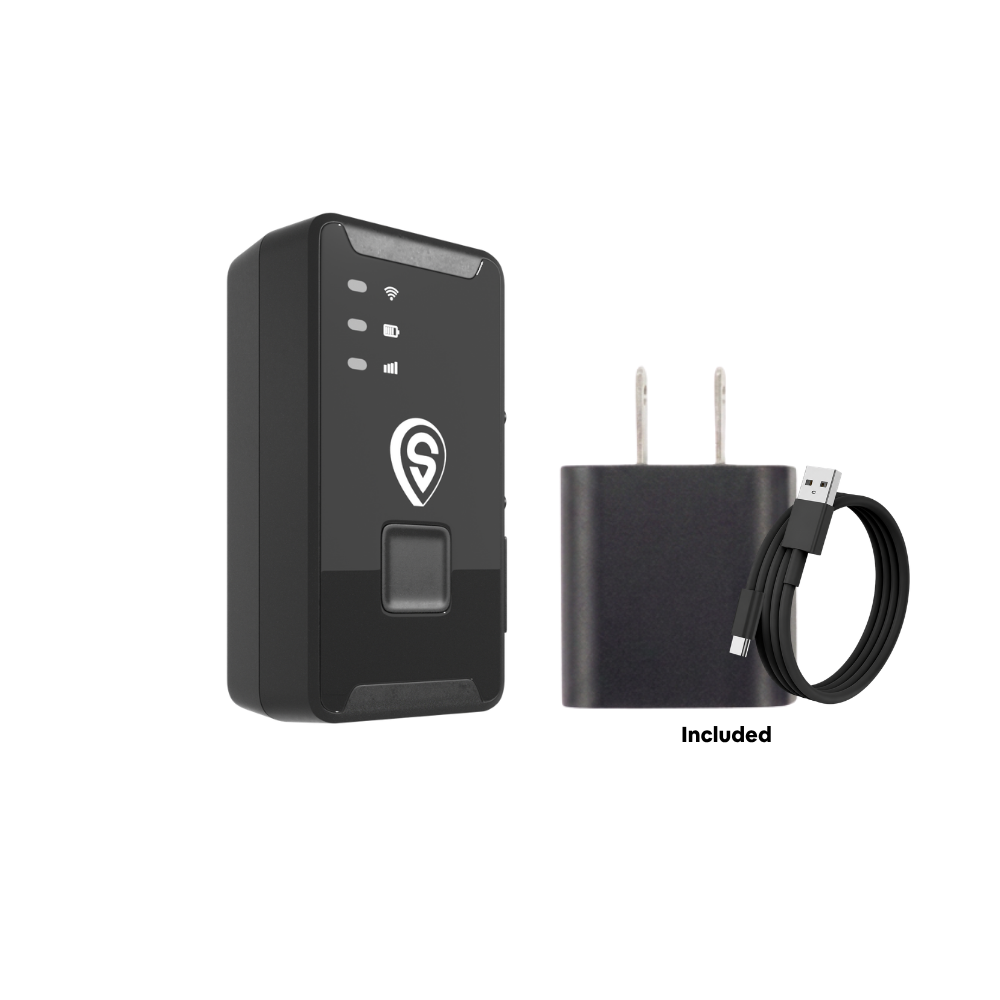
ShadowTrack: portable, magnetic, no OBD port needed
ShadowTrack is the battery model. It magnet mounts in seconds, survives weather, and runs roughly 15 days per charge, enough for long surveillance windows on trailers, equipment, and older cars with no diagnostics port. It is the closest thing in the lineup to the GPS trackers private investigators reach for in covert operations, and exactly as legal or illegal as the consent behind it.
ShadowTrack
- Updates every 5 seconds while moving
- Weatherproof, magnetic mount
- Up to ~15 days per charge
 Buy Now on Amazon
Pros
- Goes on assets with no power source
- Handles tough conditions outdoors
- Moves between assets in seconds
Cons
- Needs recharging on a schedule
- No engine diagnostics
Best for: trailers, equipment, second cars, and any asset without an OBD-II port.
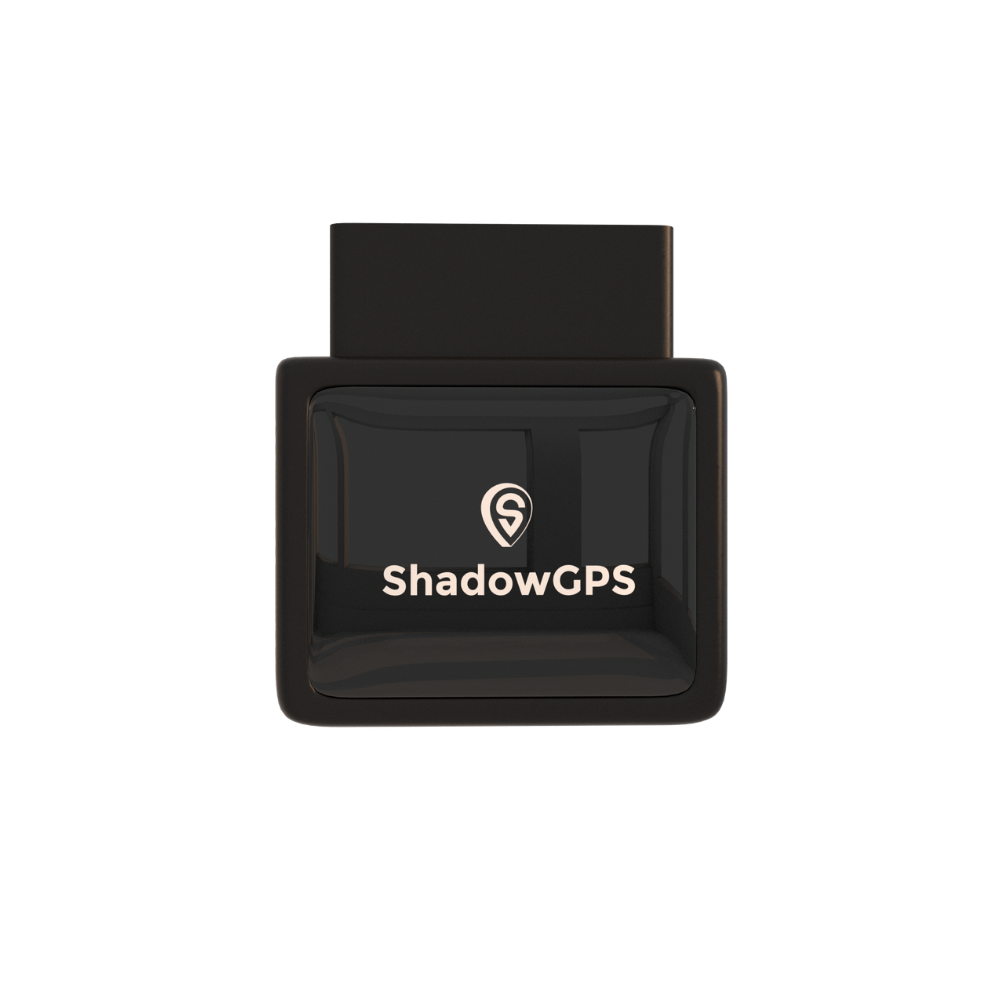
ShadowAuto: plug it in and forget it
ShadowAuto plugs into the OBD-II port and runs on vehicle power, so charging never enters the picture. For a parent monitoring a new driver, a Turo host protecting a listing, or an owner operator running a few trucks, this is the lower maintenance answer. It adds a car alarm and engine diagnostics the portable model does not carry.
ShadowAuto
- Updates every 5 seconds while moving
- Trip timeline and trip replay
- Car Alarm and vehicle diagnostics
Best for: a family car, a teen driver, a Turo listing, or 2 to 5 work trucks you own.
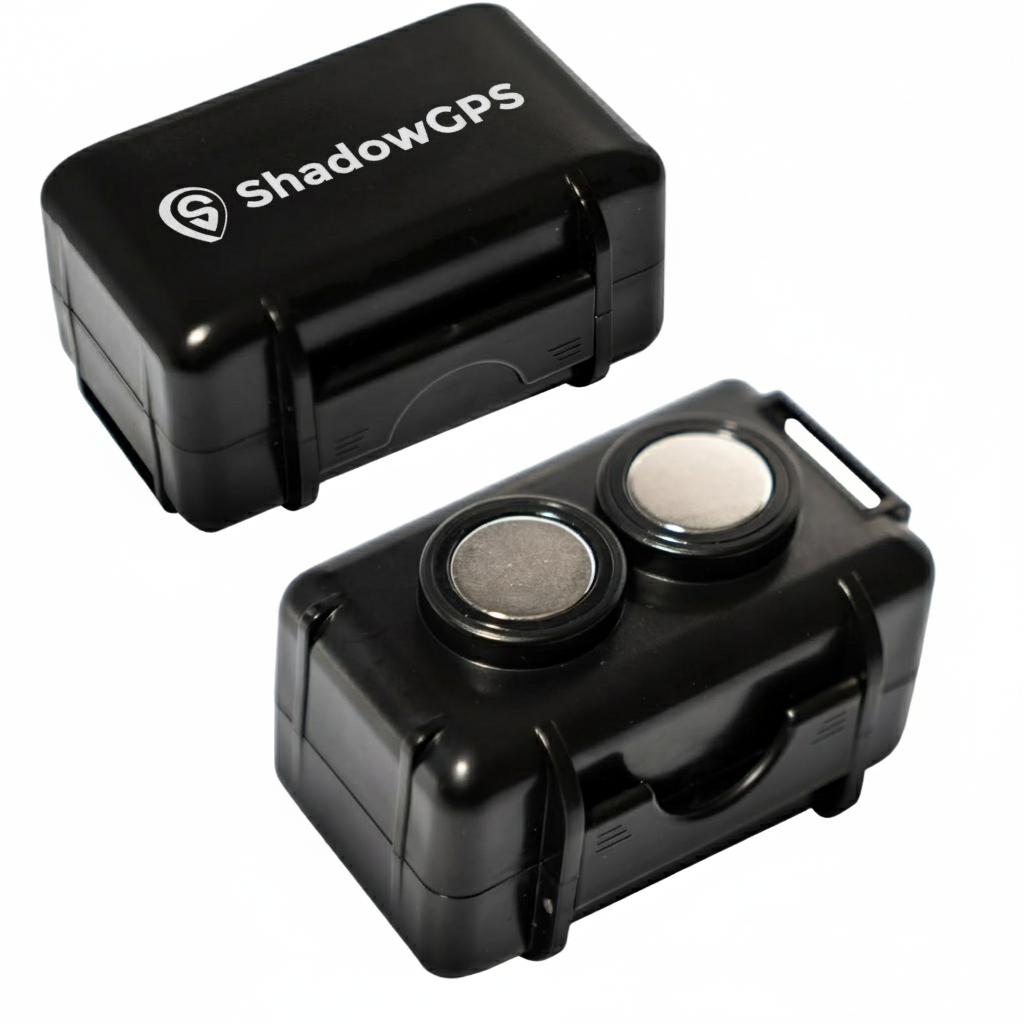
Magnetic Mount Weatherproof Case
If ShadowTrack rides outdoors on a trailer, the snap on case adds a stronger magnet and a second layer of weather protection. One time purchase, no subscription.
Magnetic Mount Weatherproof GPS Case & Key Holder
- Neodymium magnet mount
- Weatherproof housing
Side by side
| Device | Power | Refresh | Plan | Best use |
|---|---|---|---|---|
| ShadowTrack | Battery, ~15 days | 5 sec while moving | $10–$13/mo, no contract | Portable assets, no OBD port |
| ShadowAuto | Vehicle powered | 5 sec while moving | $10–$13/mo, no contract | Cars, trucks, Turo, small fleets |
| Passive logger | Battery | None, retrieve to read | No plan | After the fact review |
| Bluetooth tag | Coin cell | Crowd dependent | No plan | Keys, not vehicles |
| Prepaid year cellular | Battery | 1 to 5 min typical | Locked annual term | Low urgency assets |
How GPS Tracking Is Used in Professional Investigations

Traditional surveillance means two private investigators, two cars, and a long night. Used lawfully, GPS tracking gives private investigators continuous positioning data that maps a target's movements into patterns of life, which no stakeout reliably produces. It is surveillance augmentation for investigative work, not a replacement for judgment.
What GPS adds to traditional surveillance
Surveillance teams still do the watching. GPS tracking removes the guesswork between sightings: an investigator gets a continuous location trail instead of a gap, which is why the essential tools of modern private investigations are a camera, a notebook, and a tracker. Fewer investigators per case, fewer missed turns, fewer blown surveillance operations.
Verifying alibis
A timestamped trip log either confirms a subject's statement or it does not. Verifying alibis is the cleanest use of GPS tracking because the record is neutral.
Asset recovery
Real time tracking helps recover stolen property by showing where it went, and hands local law enforcement an address rather than a description.
Insurance and fraud
Location data that contradicts a claim is strong evidence, and gathering evidence this way removes the confrontation risk of physical surveillance.
Other scenarios deserve a straight answer. In child custody disputes, GPS tracking is appropriate when a court order authorizes it, or when the tracked car belongs to the person tracking it. Not otherwise. In missing person cases, a device already fitted to a car is an invaluable asset. GPS surveillance is one of various tools that save time and make several investigations manageable at once, but none of those benefits survive a suppression motion. Legal boundaries come first.
Where Tracking Devices Get Placed, and How to Check Your Own Car
On authorized vehicles, placement is unglamorous, and it is where private investigations most often go wrong. GPS tracking devices go in the OBD-II port under the dash, magnetically under a rear bumper or wheel well, or loose in a glove box. Those spots are chosen for signal, not secrecy, since metal overhead blocks the sky view.
If you suspect a hidden GPS tracker is on your car, that is a different and reasonable task. Walk the exterior with a flashlight: wheel wells, bumpers, frame rails. Check the OBD-II port for anything you did not plug in. Look through the glove box, under the seats, and in the trunk lining. RF detectors help, though GPS devices transmit in short bursts, so a clean sweep with consumer tools is not proof of nothing.
Our walkthrough goes deeper: how to find a tracker on your car. If you find a device you did not place and did not consent to, contact local law enforcement rather than removing and discarding it.
A Five Step Compliance Check Before Any Device Goes On
Run this before every deployment. Ten minutes here is the difference between accurate information and legal trouble, and it is the habit that separates professional investigations from amateur ones. The tools are the easy part.
- 1. Confirm the title: Who legally owns or leases the car? Get it in writing, not from a client's memory.
- 2. Document consent: A signed consent or notice record from the owner, dated before deployment.
- 3. Check every state on the route: Tracking that starts in a permissive state and crosses into a restrictive one inherits the stricter rule.
- 4. Avoid the trespass problem: Never reach onto a driveway, garage, or gated lot to place or retrieve a device.
- 5. Ask a lawyer once: One consultation in your state costs less than one civil suit, and the answer holds for years.
You Probably Do Not Need an Investigator
Most people searching for private investigator tracking devices are not private investigators, and they do not need gear built for professional investigations. They own a car and want to know where it is.
If that is you, the legal question collapses. You own the car, so you can track it. A parent monitoring a new driver, a Turo host watching a listing, and a contractor with three trucks are all on solid ground, and none of them need to hire anyone. More in our guides to hidden GPS trackers for cars and GPS tracking rules for employee vehicles.
Frequently Asked Questions
How do you know if a PI is tracking you?
You find the device. Check wheel wells, bumpers, frame rails, the OBD-II port, the glove box, under the seats, and the trunk lining. A magnetic GPS tracker is obvious once you are actually looking. RF detectors help but can miss a device that transmits in short bursts. Physical surveillance is separate and harder to confirm, since investigators following someone in public are doing something legal.
Can a private investigator legally track your phone?
No, not without your consent or a court order. Carriers will not release location data or call records to investigators, and installing tracking software on a phone you do not own is illegal. GPS functionality is built into both phones and cars, but access to it is what the law governs. A PI offering phone tracking as a service is describing something that can cost them their license.
Is it illegal to track someone with a tracking device?
It depends on ownership and consent. GPS tracking on a car you own is legal everywhere in the United States. Placing tracking devices on a car you do not own, without permission, is a crime in most states, prosecuted under stalking or electronic tracking statutes. There is no legal use case for secretly tracking another adult's private car.
Where do private investigators put tracking devices?
On authorized vehicles, investigators use the OBD-II port, a magnetic mount under a bumper or in a wheel well, or the glove box. Placement follows satellite reception, so anywhere with heavy metal overhead performs poorly. Those same spots are the ones to check when sweeping your own car.
Is there a monthly fee for a GPS tracker?
Yes, for any GPS tracker reporting in real time, because it uses a cellular network. ShadowGPS plans run $12 to $15 a month with a 14 day free trial. No contract, ever: month to month, or prepay and save. Anything advertised with no fee is a Bluetooth tag or a passive logger you retrieve by hand.
Does a GPS tracker need a SIM card?
It needs cellular service, but you do not supply it. ShadowGPS trackers ship ready to activate with connectivity included in the plan, so there is no SIM to buy, insert, or top up. Your monthly fee covers the network side.
Can GPS tracking data be used in court?
Lawfully collected location data is routinely admitted, and a clean exportable log with timestamps is the essential ingredient. Data collected by placing a device without ownership or consent tends to be excluded, and exposes investigators and their clients to legal action. Chain of custody matters as much as device accuracy.
Know where your car is, in five seconds.
Plug it in, see it move, cancel any time. 14 day free trial, no contract, ever.
Pricing and specs current as of August 2026 and subject to change; confirm current pricing and battery specifications on the product page before purchase. Amazon links are affiliate links; ShadowGPS may earn a commission at no extra cost to you. State law summaries reflect statutes in effect as of 2026 and change frequently. Legal guidance is general information, not legal advice; confirm the GPS tracking laws in your state or consult a licensed attorney before deploying any device.

