

You park the bike outside work, walk in, and then spend the next eight hours half-wondering whether it is still sitting where you left it. Every rider knows that feeling. It is not panic. It is just the gap between what you know and what you can actually see.
A GPS tracker for motorcycle security closes that gap. It will not stop somebody cutting a chain, and no honest brand should tell you otherwise. What a motorcycle GPS tracker does is turn "my bike is gone" into "my bike is two miles east on Grand, and it is still moving," which is the difference between a police report and a recovery.
This guide covers what actually matters: why most car trackers physically will not fit your bike, what battery life claims really mean, what motorcycle trackers cost over three years, where to hide the device, and when a competitor is the smarter buy than we are.
For most US riders, the best motorcycle GPS tracker is a small, battery-powered, magnet-mounted cellular device you can hide anywhere on the frame. Our pick is ShadowTrack at $69.90, with plans $12 to $15 a month, a 14-day free trial, and no contract, ever. It needs no OBD port, no wiring, and no tools, and it sends movement alerts and geofence alerts to your phone. If you would rather charge a GPS tracker once a year and only want an anti-theft alarm instead of live tracking, the Monimoto 9 at $169 plus $49 a year is the better fit. Both are covered in detail below.
Why a motorcycle GPS tracker is a different problem than a car tracker
Plenty of buying guides treat a bike like a small car. It is not. Three things make motorcycle tracking its own problem, and most guides skip the first one.
Most motorcycles do not have the port that plug-in car trackers use
The most common vehicle GPS tracker in the US is a plug-in device that sits in the 16-pin OBD-II port under a car's dashboard. Most motorcycles do not have that port, and there is no nationwide US rule requiring a 16-pin SAE J1962 connector on a bike.
What your motorcycle has instead depends on make and year. Many post-2020 models use the small red 6-pin connector defined by ISO 19689, which arrived with Euro 5 and was adopted by Honda, Yamaha and Kawasaki. Older bikes, and plenty of Harley and Suzuki models, use manufacturer-specific connectors. Even where a diagnostic port exists, it usually sits under the seat, the first place a thief looks.
The practical takeaway: unless you have physically confirmed a matching 16-pin port, skip plug-in car trackers. A battery-powered device sidesteps the question.
What US theft numbers actually say in 2026
Most articles on this topic quote 2022 figures or borrow generic car-theft data. Here is the current picture from the National Insurance Crime Bureau analysis released in August 2026.
- 44,564 motorcycles were reported stolen in the US in 2025. That is down sharply from 54,736 in 2022, so the trend is genuinely good news for motorcycle owners.
- Only about 41% came back. Motorcycles made up more than three quarters of all recreational vehicle thefts, and roughly 63% of stolen recreational vehicles were still unrecovered.
- Speed is the whole game. More than half of recreational vehicle recoveries happen within two weeks of the theft being reported, and the odds narrow every day after that.
That last point is the entire argument for real time tracking. A stolen bike reported in four minutes with a live location attached is a very different case from one reported next morning with a plate number.
A bike gives a tracker nowhere to hide
A car has door panels, a trunk liner and half a dozen cavities. A motorcycle has a frame, a tail section, a fairing if you are lucky, and not much else. On a naked bike, even less. Size and mounting flexibility matter more than any spec on the box, which is why a GPS tracker the size of a key fob beats a bigger device with better numbers.
The 7 things that actually matter in a motorcycle GPS tracker
Ignore long feature lists. We reviewed every motorcycle GPS tracker here against seven criteria, in the order they matter to a rider. Each device was reviewed against published US specs, pricing verified the week this review was written, and the useful features riders actually reach for day to day.
1. How fast it updates
During a theft in progress, a GPS tracker that refreshes every few seconds gives police a live location trail. One that reports every three minutes gives them a breadcrumb from where the bike used to be, and slow alerts are the difference. ShadowTrack and ShadowAuto both update every 5 seconds while moving, the one number worth checking first.
2. Power source and real battery life
A device with a rechargeable battery is simple to hide and simple to move between vehicles, but you have to charge it. Hardwired GPS trackers never need charging, but they wire into the bike's battery and can drain it on a motorcycle that sits for months. Read the battery life claim carefully: a "12 month" number almost always means the device sleeps until it detects movement, not that it is tracking for a year.
3. Size and where it can go
A small GPS tracker that is properly hidden beats a conspicuous device with more features. If a thief finds the tracker under the seat in thirty seconds, nothing else matters.
4. Weatherproofing
Your bike lives outside, in rain, road spray, heat and vibration. A water resistant device needs IP65 at minimum, and IP67 or IP68 if the GPS tracker sits somewhere exposed like a frame rail or under a fender.
5. The alerts it can send
Movement alerts and geofence alerts are the two that matter. Movement alerts tell you the motorcycle moved when it should not have. Geofence alerts fire when the motorcycle enters or leaves an area you drew, so a push notification lands on your phone the moment the bike leaves the garage at 3am, which is what motorcycle tracking is for. Low battery status alerts matter too, because a dead GPS tracker is worse than none: you think you are covered.
6. Total cost, not sticker price
Nearly every cellular GPS tracker has a subscription, because the device carries a SIM or eSIM and pays a carrier for data. Compare hardware plus three years of subscription fees, not the price on the box. The subscription math is further down.
7. Network coverage where you actually ride
A GPS tracker is only as good as the network it reports on, and location accuracy suffers wherever signal is thin. Multi-carrier LTE-M coverage, which ShadowGPS runs on Verizon, AT&T and T-Mobile, holds up better than a single-carrier device when alerts have to escape a parking garage. ShadowGPS runs 99.9% network uptime with roaming across 188 countries.
Our pick: ShadowTrack, the best GPS tracker for motorcycle owners who want live tracking
The best motorcycle GPS tracker for you depends on how you ride, but this is where most riders land. ShadowTrack is the ShadowGPS tracker built for anything without an OBD port, which describes almost every motorcycle on the road. It is a sealed, weatherproof device with a rechargeable battery and a magnetic mount. Charge it, hide it, and it reports real time location.
Setup takes under two minutes: no tools, no wiring, no professional installation. You are not cutting into a loom or tapping the bike's battery, so there is nothing to undo when you sell the motorcycle or move the GPS tracker to another vehicle.
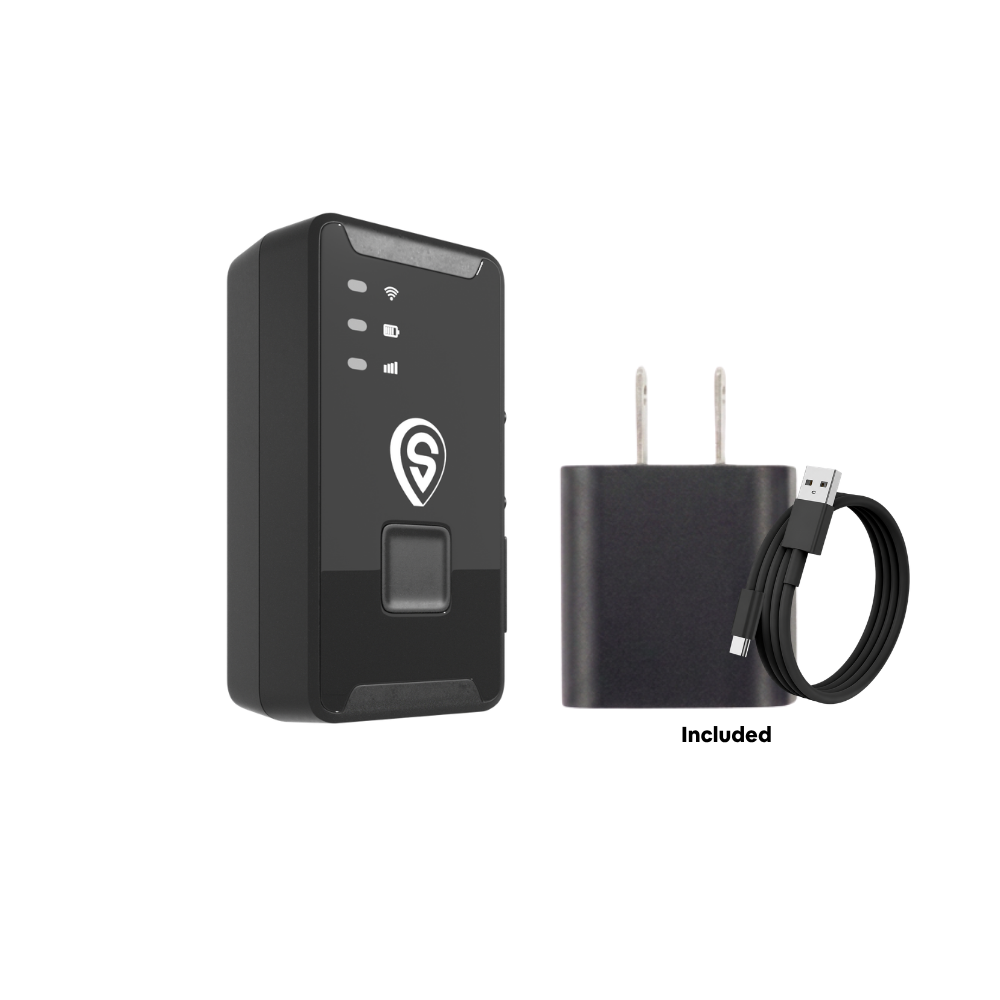
ShadowTrack
- Updates every 5 seconds while moving
- Weatherproof, magnetic mount
- Up to ~15 days per charge


Pros
- Live tracking, trip timeline and trip replay for every ride
- No OBD port, no wiring, no professional installation
- Movement alerts, geofence alerts and Car Alarm notifications
- Month to month, cancel any time, 30-day money-back guarantee
Cons
- Roughly 15 days per charge, so a stored bike needs a charging routine
- No key fob auto-arm, alerts are set in the app instead
- Cellular tracker, so it needs a monthly plan to report
- No monitoring team calling police on your behalf
Mounting it on the bike
The magnet holds well on flat steel, but a motorcycle vibrates far more than a car and has fewer flat steel surfaces. On a bike with a lot of aluminium and plastic, the Magnetic Mount Weatherproof GPS Case adds a stronger neodymium magnet and a sealed housing you can zip-tie or wedge in place.
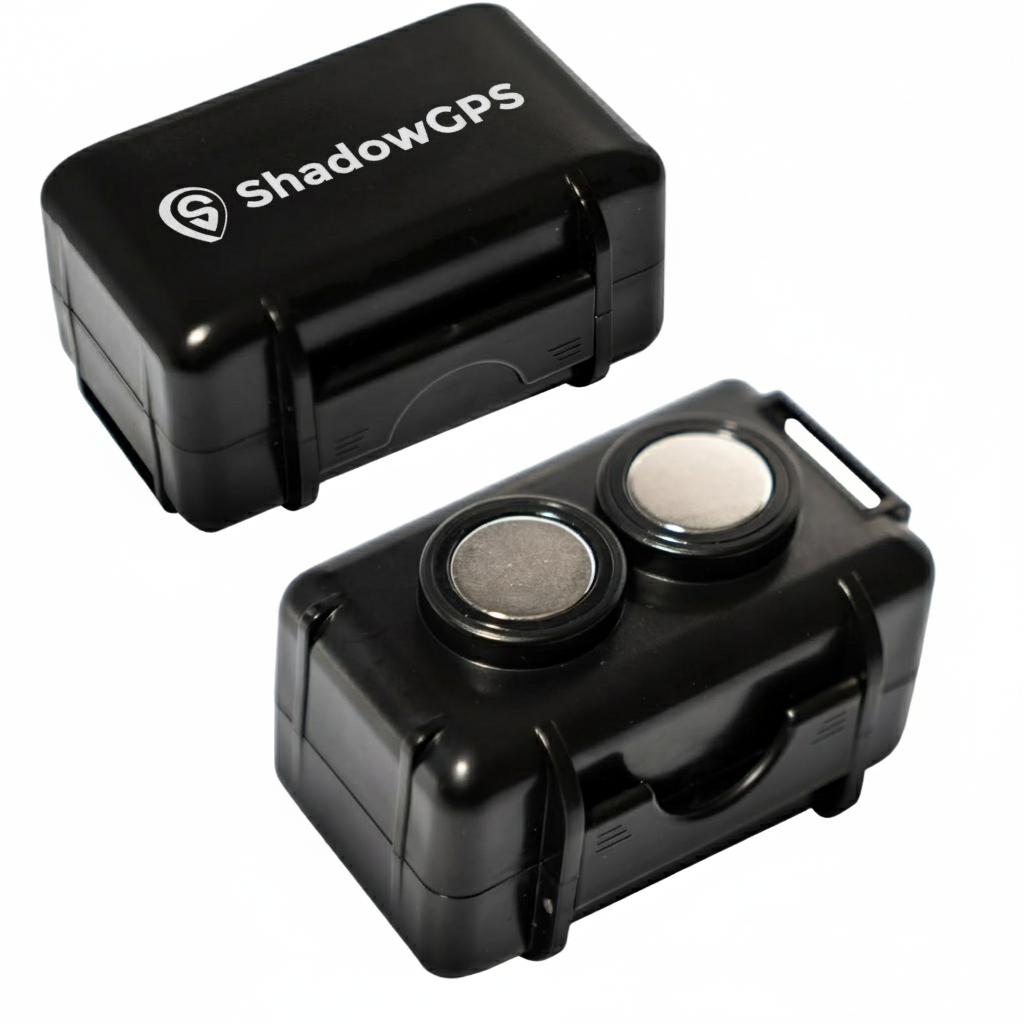
Magnetic Mount Weatherproof GPS Case & Key Holder
- Neodymium magnet mount that holds through vibration
- Weatherproof housing for road spray and rain
ShadowTrack vs Monimoto 9: an honest call
The Monimoto 9 is the best known motorcycle-specific GPS tracker in the US, and it deserves the reputation. We reviewed the Monimoto 9 against ShadowTrack on the criteria above, and it is worth being clear about where it beats us, because the two devices solve different problems with different features.
It works on a key fob model. You carry the key fob, and when the motorcycle moves without that key fob within about 100 feet, the device wakes up, calls your phone, and reports a location. Because it sleeps between events, Monimoto claims up to 12 months of battery life per charge on the Monimoto 9 and up to 24 months on the older Monimoto 7. It is IP68 rated and uses LTE-M with an embedded eSIM.
When the Monimoto 9 is the better buy
Buy the Monimoto 9 if you want a set-and-forget anti-theft alarm on the vehicle and do not care about watching your daily rides. It costs $169, with a $49 per year subscription plan after two free months. If your bike sits in a garage all winter, a GPS tracker you charge once a year is easier to live with than one you top up every fortnight.
Two honest caveats. The key fob only helps if you actually carry it, and riders forget. And because the Monimoto 9 is dormant between events, you get no continuous real time tracking, no location history and none of the trip features an always-on tracker gives you.
When ShadowTrack is the better buy
The Monimoto 9 answers one question well: has my bike moved? A live motorcycle GPS tracker answers a broader one: where is my bike right now, and where has it been?
Choose ShadowTrack if you want to open the app at any moment and see where the motorcycle is, not just get alerts after it moved. You get real time location, a trip timeline and trip replay for every ride, plus geofence alerts and movement alerts, with no key fob to carry or lose. Plans run $12 to $15 a month with a 14-day free trial and no contract, ever, and one subscription account covers a bike, a truck and a trailer.
If you also own a car or truck
Plenty of riders own the bike plus a daily driver, or a truck to haul it. For any vehicle with a standard 16-pin OBD-II port, ShadowAuto is simpler, because the device draws power from the vehicle and you never charge it. One subscription account can cover both vehicles.
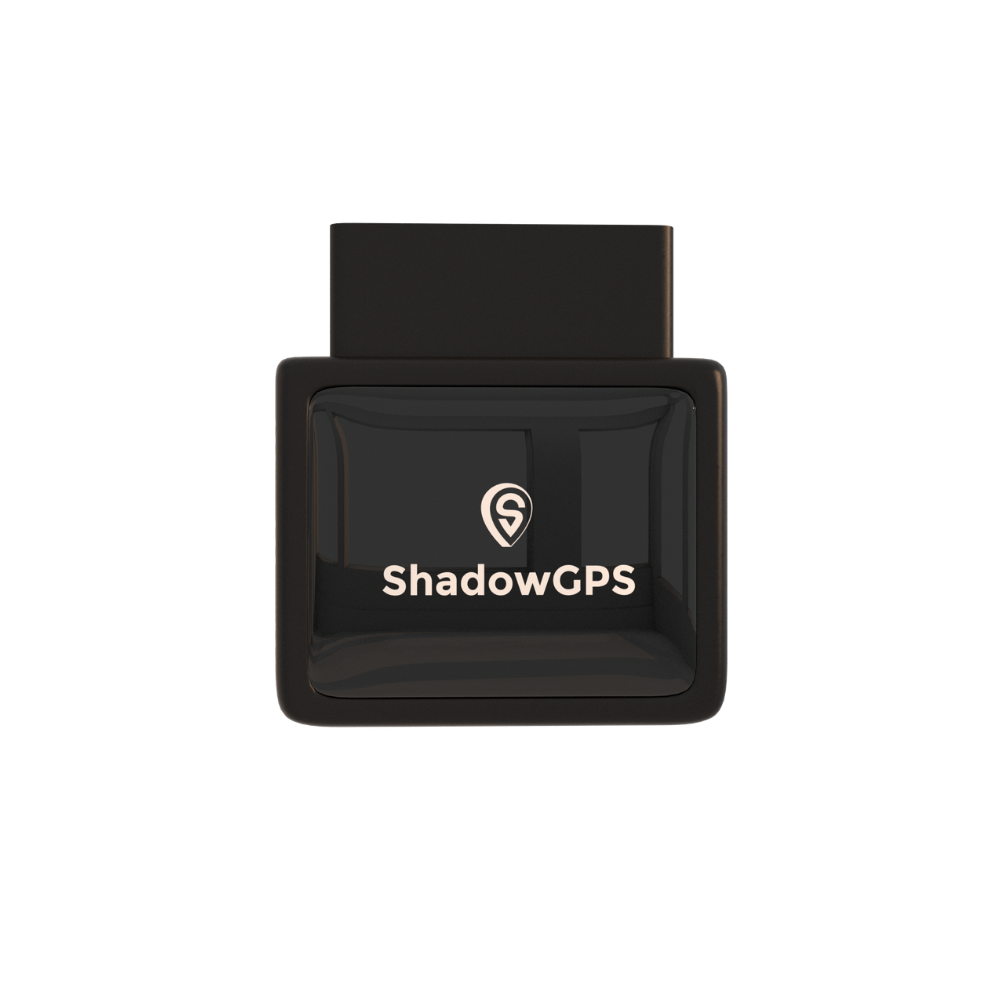
ShadowAuto
- Vehicle-powered, so there is nothing to charge
- Trip timeline and trip replay
- Car Alarm and engine diagnostics
Other motorcycle GPS trackers worth considering
The Monimoto 9 is the closest direct competitor, but it is not the only device riders end up comparing. These six come up most often, and each one wins on a different thing. None of them are wrong choices, they just answer different questions.
Monimoto 9
We covered the Monimoto 9 in detail above, so here is the short version. It sleeps until the motorcycle moves without the key fob in your pocket, then wakes up, calls your phone and sends a location. Because it does almost nothing in between, Monimoto claims up to 12 months per charge, and the older Monimoto 7 claims up to 24.
It is IP68 rated, uses LTE-M with an embedded eSIM, and costs $169 with a $49 per year plan after two free months. What you give up is everything an always-on tracker does between alerts: no live location on demand, no route history, no trip replay.

Pros
- Up to 12 months per charge, so there is no charging routine
- Key fob arming means no app fiddling before every ride
- IP68 rated and built specifically for motorcycles
Cons
- No continuous live tracking or route history between alerts
- The key fob only protects you if you actually carry it
- Highest hardware price on this list at $169
Best for: a bike stored for the winter, or a rider who wants an alarm rather than a map.
Tracki
Tracki is a small magnetic device with three physical buttons for emergency alerts, which is unusual at this price and makes it a common pick for riders who want the tracker to double as a personal alert on a long ride. It is portable enough to move between the bike, a tank bag and a trailer.
Plans run from about $9.95 to $30 a month depending on how often you want it to report, and the lowest rate needs a two-year commitment. The fastest tier, a 10-second refresh, still costs $30 a month and is slower than the 5 seconds ShadowTrack gives you as standard.

Pros
- Physical SOS buttons, rare at this price
- Small and magnetic, easy to hide or move between vehicles
- Update intervals adjustable from minutes down to seconds
Cons
- Rock-bottom rate locks you into a two-year plan
- Fastest tier is 10 seconds and still costs $30 a month
Best for: a rider who wants an SOS button on the bike as much as a tracker on it.
Spytec GL300
The Spytec GL300 is the closest thing on this list to ShadowTrack in shape and purpose: a small, battery-powered cellular device with a magnetic case that you hide on the frame rather than plug into anything. Spytec quotes 7 to 10 days per charge, so a bike ridden a few times a week needs topping up about as often as ShadowTrack does.
The catch is what the fast update speed costs. The quickest refresh sits behind the higher tiers, which run $25 to $45 a month, well above what most riders expect to pay for a single vehicle.

Pros
- Small enough to hide behind bodywork on most bikes
- Magnetic case, no wiring and no OBD port needed
- 7 to 10 days per charge with no key fob to carry
Cons
- Fast updates are paywalled at $25 to $45 a month
- No trip replay depth of an always-on tracker at the base tier
Best for: a rider who wants a portable tracker from an established US brand and does not mind paying more for the faster tiers.
LandAirSea 54
The LandAirSea 54 is a waterproof puck with a magnet strong enough to sit on a frame rail or under a fender without a bracket, which suits a motorcycle with nowhere obvious to tuck a device. It reports live location, keeps trip history and fires geofence alerts.
Plans start around $9.95 a month and climb to $49.95 depending on how fast you want it to report, and the lowest rate is tied to a two-year term. Read the renewal wording before you buy, because riders do report surprise charges when a term rolls over.

Pros
- Strong magnet holds on a frame rail without a bracket
- Waterproof case built for road spray and weather
- Trip history and geofence alerts included
Cons
- Cheapest rate needs a two-year commitment
- Base plan updates every few minutes, not every few seconds
Best for: a bike, trailer or quad where a hidden magnetic mount matters more than a five-second refresh.
BrickHouse Spark Nano 7
BrickHouse bundles up to 12 months of service with some Spark Nano 7 packages, which changes the first-year math even though the ongoing fee, $17.99 to $34.99 a month, sits above most of this list once that included year runs out.
It is a compact battery device, so it hides on a bike the same way ShadowTrack does. If you want longer runtime and can give up some of the size advantage, BrickHouse also sells the weatherproof EON Odyssey.

Pros
- Bundled service can cover the whole first year
- Compact enough to hide in a tail section
- Weatherproof options in the same range for longer runtime
Cons
- Monthly fee is one of the higher ones here once the bundle ends
- Update speed is tiered by plan rather than standard
Best for: riders who would rather pay for the first year up front than see a charge every month.
Apple AirTag
An AirTag costs about $29 once and has no subscription at all, which is why it comes up in every motorcycle security thread. It is worth being clear about what it does: it has no GPS chip and no cellular radio, so it only reports a position when somebody else's iPhone walks past it.
In a city that works more often than you would expect. In a garage, a rural lay-by or the back of a van, it goes quiet, which is exactly where a stolen bike ends up. Treat it as a way to find a bike you misplaced in a parking structure, not as theft recovery.

Pros
- No monthly fee, ever
- About a year on one coin cell
- Small enough to hide almost anywhere on a bike
Cons
- No live location once the bike leaves populated areas
- Depends entirely on other people's iPhones passing nearby
- iOS only, so Android riders get a weaker experience
Best for: finding a bike in a crowded parking garage, or as a cheap second device alongside a real tracker.
Motorcycle GPS tracker comparison
Compare behaviour and features, not marketing. This is how the main approaches to motorcycle tracking differ in practice.
First-year cost is hardware plus twelve months of service at each brand's published subscription rates.
| Option | Power | Update speed | Ongoing cost | First-year total | Best for |
|---|---|---|---|---|---|
| ShadowTrack | Rechargeable, ~15 days | 5 sec while moving | $12-$15/mo, no contract | $214 to $250 | Real time location and route history |
| ShadowAuto | Vehicle-powered | 5 sec while moving | $12-$15/mo, no contract | $214 to $250 | The car or truck in the same garage |
| Monimoto 9 (competitor) | Rechargeable, up to 12 mo | On movement, key fob armed | $49/year | About $218 | Set-and-forget theft alerts |
| Hardwired monitored tracker | Wired to the bike's battery | Varies by plan | $100+/year plus fitting | $400 and up | High-value bikes, insurer-approved fitting |
| Bluetooth tag (AirTag, Tile) | Coin cell, about a year | Only when a phone passes | None | $25 to $35 | Finding a bike in a parking garage, not theft recovery |
Is there a motorcycle tracker with no subscription?
Yes, but read the fine print, because "no subscription" means one of three very different things. Subscription-free motorcycle trackers do exist, and some riders are happy with one, but they are rarely the same product as a live cellular GPS tracker.
- Bluetooth tags. An Apple AirTag has no fee because it has no cellular radio and no GPS chip. It updates only when somebody else's phone passes by, which is fine in a mall parking lot and unreliable on a bike in a chop shop.
- Prepaid service dressed as "lifetime." Many trackers advertised as subscription-free include one to three years of data in the purchase price, then bill for renewal. That is a prepaid subscription, not a free one.
- Bring-your-own-SIM devices. These are genuinely fee-free from the vendor, but you still pay a carrier for the SIM card, and there is no support team to help if the tracker stops reporting.
The three-year cost math
Compare total cost over three years, roughly how long riders keep a GPS tracker on one bike. ShadowTrack lands around $500 to $610 including hardware, with month-to-month billing you can stop when the bike sells. The Monimoto 9 lands near $316, the strongest argument in its favor. A monitored system with professional installation runs past $650. A Bluetooth tag costs about $30 and does not do this job.
Any of those is a rounding error against a bike worth $8,000. Pick on how you want it to work, not on price, and never pay for a GPS tracker whose renewal terms you cannot find on the website.
The most common question we get
Is there a monthly fee? Yes, and we would rather say it plainly than bury it. ShadowGPS plans are $12 to $15 a month with a 14-day free trial. Month to month, or prepay and save. No contract, ever, and cancelling takes one click. If you want to see the plans first, they are all on our pricing page. If you are still working out whether cellular GPS tracking needs its own SIM card, we wrote a full explainer on whether your GPS tracker needs a SIM card.
Where to hide a GPS tracker on a motorcycle
Experienced thieves know to check for a GPS tracker, and the first thing many do is rip the seat off. Placement is not a detail, it is most of the value. Two rules: avoid the obvious spots, and give the GPS signal some sky rather than burying the device under solid metal, which wrecks location accuracy.
Spots that work
- Inside the tail section behind the rear fender liner: enclosed, but rarely stripped first.
- Behind a fairing panel on a sportbike or tourer, up near the front where nobody expects it.
- Inside a top box, tank bag or saddlebag that stays on the bike, which also works on a naked bike with nowhere else to go.
- Magnet-mounted to a frame rail behind bodywork, using the weatherproof case for grip and sealing.
Spots to avoid
- Under the seat. It is the single most checked spot on any motorcycle.
- Directly on the engine, exhaust or anywhere that gets very hot.
- Fully enclosed in metal, which weakens the GPS signal and the cell connection.
Once hidden, test it. Ride a block, park, and check that real time location and route history look right in the app. A GPS tracker you never tested is a guess. If overnight theft is your main worry, our guide to setting up geofence alerts that catch overnight theft walks through the settings.
The first five minutes after the bike is gone
Have this straight before you need it. Riders who recover a stolen bike with GPS tracking almost always do the same four things in the same order.
- Open the app on your phone and confirm the motorcycle is actually moving. Do not assume the alerts came from a neighbour bumping the bike.
- Call the police from your phone immediately and report it as in progress with a live location. Do not wait until morning. Recovery odds fall every hour.
- Use Share Location to send the live location feed to the responding officer. Have your VIN, plate and a current photo ready to hand over.
- Do not go and get it yourself. Bike theft is often organised, and a recovered motorcycle is not worth what could happen in that parking lot. Let officers work the live location.
Is it legal to track your own motorcycle?
- What you can do. GPS tracking of a motorcycle titled in your name is legal across the United States. It is your property and you can monitor where it is.
- What you cannot do. Putting a tracker on somebody else's motorcycle without their permission can violate privacy and stalking laws, and the penalties are serious.
- Disclose for shared or business use. If the bike is a company vehicle or a rental, tell the rider that GPS tracking is active and document that you did. Several states require disclosure on employee vehicles.
Three riders, three setups
The daily commuter
Bike parked on a city street every workday. Battery GPS tracker hidden in the tail, alerts set for when the motorcycle enters or leaves the block, charged every other Sunday.
The seasonal rider
Bike stored in the garage from November to March. Movement alerts on, charged monthly, or a key fob armed device if you would rather not think about it at all.
The multi-vehicle owner
Bike, truck and trailer on one account. ShadowTrack on the motorcycle and the trailer, ShadowAuto in the truck, one app for all three.
Frequently asked questions
What is the best GPS tracker to put on a motorcycle?
For most riders, a small battery-powered cellular GPS tracker you can hide on the frame. ShadowTrack is our pick at $69.90 with plans $12 to $15 a month and no contract, because it needs no OBD port and gives real time location, alerts and route history. If you want an anti-theft alarm you charge once a year instead of continuous GPS tracking, the Monimoto 9 is the better choice for that bike.
Is there a motorcycle tracker that does not require a subscription?
Bluetooth tags like the Apple AirTag have no fee, but no GPS chip, and they only update when somebody else's phone passes nearby, so they are unreliable for theft recovery. Some cellular GPS trackers let you supply your own SIM card, which removes the vendor fee but not the carrier bill. Anything sold as lifetime service usually has prepaid data that renews later, so check the terms before you pay.
Will a GPS tracker drain my motorcycle battery?
A battery-powered GPS tracker like ShadowTrack draws nothing from the bike's battery, because it runs on its own rechargeable battery. Hardwired motorcycle trackers draw a small current, usually harmless on a bike ridden weekly but enough to flatten a motorcycle stored for months. If your bike sits for a season, use a battery device or keep the motorcycle on a tender.
Do motorcycles have an OBD port for a plug-in GPS tracker?
Usually not the same one cars use. No US rule requires the 16-pin SAE J1962 port on a motorcycle. Many newer bikes use a 6-pin ISO 19689 connector and older ones use manufacturer-specific plugs, so a plug-in car GPS tracker will not fit most motorcycles. A battery-powered device avoids the issue.
How long does a motorcycle GPS tracker battery last?
It depends on how often the GPS tracker reports. ShadowTrack runs about 15 days per charge while reporting live location every 5 seconds during movement. A device that sleeps until it detects motion, like the Monimoto 9, can claim 12 months of GPS tracking because it does almost nothing in between. Neither number is wrong, they measure different behaviour.
Can a thief find or block a motorcycle GPS tracker?
A determined thief can find a badly hidden device, which is why placement matters and why the seat is the wrong spot. Signal jammers exist but are federally illegal in the US and rare in opportunistic theft. A GPS tracker paired with a disc lock and a 12mm chain is far harder to beat than any single anti-theft measure alone.
Does a GPS tracker lower my motorcycle insurance?
Sometimes. Some US carriers offer an anti-theft or recovery device discount, and some require a monitored system with professional installation to qualify. Call your carrier before you pay and ask what qualifies, because discounts vary and are never guaranteed.
Can I move the tracker between my bike and my truck?
Yes. ShadowTrack is portable by design, so you can move the device from the motorcycle to a trailer, a truck bed or equipment in seconds. To cover both vehicles at once, add a second GPS tracker to the same subscription account rather than swapping one back and forth.
The bottom line
A motorcycle GPS tracker is not insurance and it is not a lock. It will not stop a determined thief and no motorcycle GPS tracker should be sold as if it will. It reports the location of your bike, right now, while the answer still matters. Choose on behaviour: continuous real time tracking and route history if you want to open the app and see the motorcycle, or a key fob armed alarm with movement alerts if you would rather charge it once a year and forget it.
Whatever you pick, hide it properly, test it once, and review your renewal cost before you pay. For more on motorcycle tracking, see our guides on why GPS tracking is essential for motorcycle security and why AirTags fall short for vehicles.
Know where your motorcycle is, in five seconds.
Charge it, hide it, and see your bike move on the map. Month to month, cancel any time.
Pricing and specs current as of September 2026 and subject to change; confirm current pricing and battery specifications on the product page before purchase. Competitor pricing reflects published US list prices at the time of writing. Amazon links are affiliate links; ShadowGPS may earn a commission at no extra cost to you. Theft statistics reflect 2025 figures published by the National Insurance Crime Bureau in August 2026; insurance discounts and savings vary by carrier and are not guaranteed. Legal guidance is general information, not legal advice; confirm the tracking laws in your state.

