

You pull into a storage lot in October, tuck the travel trailer between two rows of RVs, and don't see it again until spring. That gap is exactly when most RV theft happens, and it's why a dedicated RV GPS tracker matters more than almost any other accessory you'll buy for the rig.
Not every GPS device is built for a 30-foot trailer that sits parked for months or a motorhome that only gets driven twice a season. Battery life, mounting method, and cellular coverage all work differently on an RV than they do on a daily-driver car.
Below, we break down the best GPS trackers for RVs and camper trailers in 2026, how to match a tracker to a motorized RV versus a trailer with no engine of its own, and the real theft numbers that make this decision worth thirty minutes of research.
The best RV GPS tracker depends on whether your RV is motorized or towed. For a motorhome, a plug-in OBD-II tracker like ShadowAuto pulls power straight from the vehicle and needs no charging. For a travel trailer, fifth wheel, or camper with no engine of its own, a hidden, battery-powered magnetic tracker like ShadowTrack or Outlaw GPS is the right call, since it works with no wiring and can sit in storage for months on a single charge.
Why RV Owners Need a Dedicated GPS Tracker
An RV or camper trailer sits alone for long stretches, at a storage yard, a campground, or a driveway while you're at work. That combination of high value and low supervision is exactly what makes RVs and trailers a target.
The numbers back this up. Roughly 30,000 RVs were reported stolen across the U.S. in 2023, and 82% of those thefts involved travel trailers rather than motorhomes, since a trailer can be hitched and towed away in minutes without keys, an engine, or an alarm to defeat.
The theft numbers every RV owner should know
- 82% of all stolen RVs are travel trailers, not motorhomes.
- 41% of RV theft incidents happen at storage facilities, not on the road.
- The average insurance claim for a stolen travel trailer runs about $28,000.
- Recovery odds drop sharply after the first 48 hours, which is why instant movement alerts matter more than a device you check once a week.
Figures reflect industry reporting on RV theft, including data tracked by the National Insurance Crime Bureau.
Beyond theft, real-time location tracking gives you a second, quieter benefit: some insurers offer a discount simply for having a tracking device installed on a covered RV or trailer, since it lowers their own recovery risk.
Theft prevention starts before anything ever goes missing. Geofence alerts and instant movement alerts mean you find out the moment a parked RV or trailer starts moving, rather than discovering an empty parking spot hours or days later. That early warning is the single biggest factor in stolen vehicle recovery, since police and insurers both confirm that recovery chances fall off fast once a rig has been gone for more than a couple of days.
For anyone protecting a family RV, a rental unit, or a small collection of trailers, this is also where an RV GPS tracker pulls double duty. A single tracker guards a family's most valuable travel asset, while a small business running several units, think an RV rental outfit or a handful of construction trailers, gets the same theft prevention at fleet scale, without needing full fleet management software built for hundreds of trucks.
How GPS Tracking Technology Actually Works on an RV
Every RV GPS tracker leans on the same underlying technology: GPS satellites calculate a location using trilateration, comparing signals from at least three satellites to pinpoint a precise spot on the map. That part works the same whether you're parked in a driveway or crossing three states.
The gps signal itself only tells the device where it is. To actually show that location on your phone, the tracker needs a second layer: a cellular connection that transmits the data to a cloud-based server, which is what your app or web dashboard is really reading from.
That's why reliable cellular coverage is just as important as the GPS chip inside the device. A tracker with a strong gps signal but no cellular signal at a remote campground can still fail to deliver a real time location update until it finds a signal again.
Good RV GPS trackers plan around this gap. Many battery-powered units store location data locally when cellular service is unavailable, then send a batch update once the trailer or RV rolls back into coverage, so you're not left with a total blackout in trailer tracking during a stretch of dead zone.
Dedicated RV GPS units also go a step further than a generic car tracker: several offer tailored routing based on your vehicle's dimensions, factoring in height, weight, and length to help avoid low bridges and weight-restricted roads, a detail a phone's default maps app usually misses. That's part of why gps tracking for an RV differs from ordinary vehicle gps tracking, and why so many RV owners end up shopping for gps trackers for RVs specifically instead of a generic car gps device.
Accurate tracking also depends on the antenna and chipset inside the device, not just the plan behind it. Two gps trackers running on the same cellular network can still report locations with noticeably different accuracy, so read reviews for accurate tracking claims before assuming every trailer gps tracker performs the same.
Motorized RV or Towable Trailer? Match the Tracker to Your Rig
The single biggest mistake RV owners make is buying whichever tracker ranks first in a generic search, instead of matching the device to how their RV is powered. A motorhome and a towable trailer need genuinely different hardware.
Class A, B, and C Motorhomes
A motorized RV has an engine, a battery, and an OBD-II diagnostic port, the same three-pin connection every car has under the dashboard. That makes an OBD-II GPS tracker the simplest option: it plugs directly into the port, draws power from the vehicle, and needs zero maintenance for as long as you own the rig.
Trailer tracking and rv tracking aren't quite the same job. RV tracking on a motorhome is really vehicle tracking with a bonus, since the tow vehicle and the RV are one and the same. Trailer tracking, on the other hand, means finding the right tracker for a towed unit that has its own frame, its own storage life, and no shared electrical system with anything else.
Travel Trailers, Fifth Wheels, and Camper Trailers
A towable trailer has no engine and, in most cases, no reliable 12-volt power source once it's disconnected from a tow vehicle. That's a non-powered asset in tracker terms, and it calls for a battery-powered GPS tracker with a magnetic mount that can hide against the trailer body and run for months between charges.
Some owners add an optional hardwire kit that taps the trailer's own battery bank for continuous power, but for most travel trailers and fifth wheels sitting in off-site storage, a long battery life beats a wired connection every time.
Our Top RV GPS Tracker Picks for 2026
We evaluated each tracker for RV owners on battery life, installation difficulty, update speed, cellular coverage, and whether the pricing is stated honestly up front.
1. ShadowAuto
ShadowAuto is our OBD-II GPS tracker built for any vehicle with a diagnostic port, which makes it a natural fit for a Class A, B, or C motorhome. Plug it in and it starts reporting your motorhome's live location, engine diagnostics, and trip history within seconds.
Because it draws power straight from the vehicle, there's no separate battery to charge or replace, and while the RV is moving, ShadowAuto refreshes its location every five seconds, faster than most competing OBD-II trackers on the market.
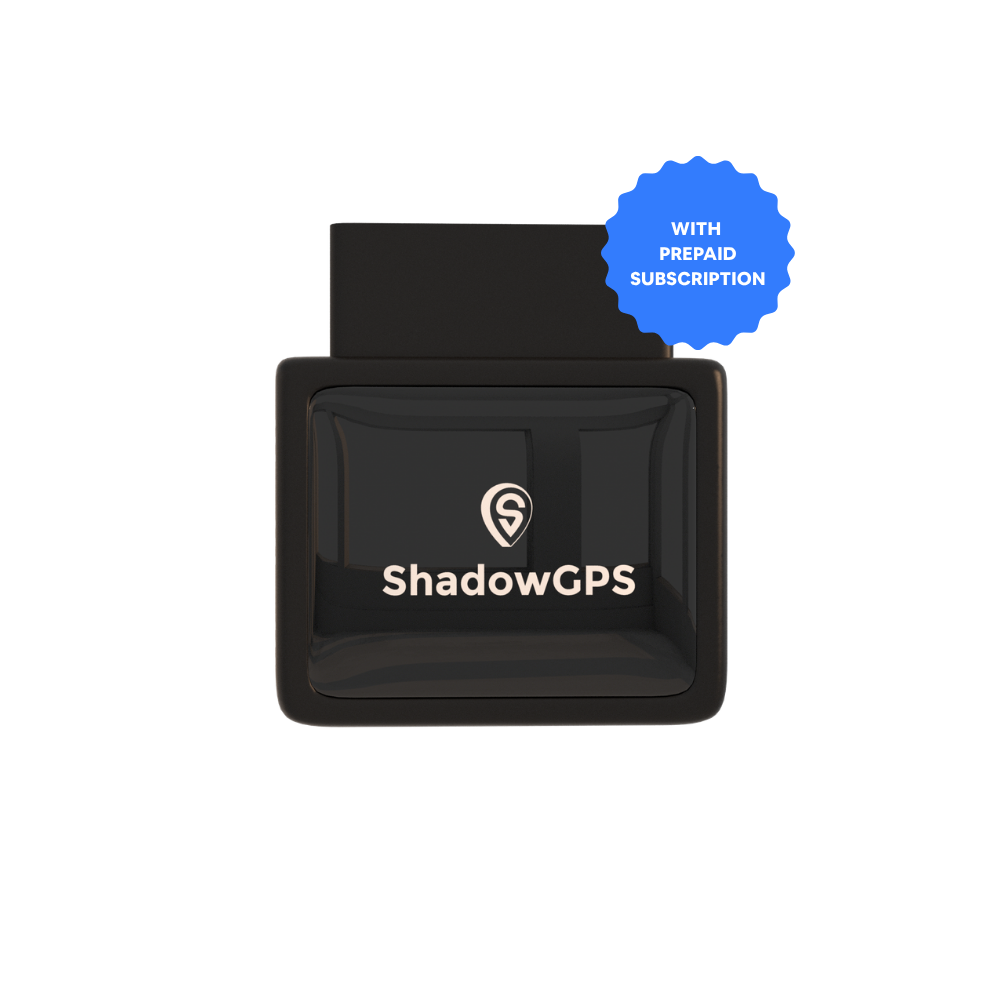
ShadowAuto
- Plugs into any OBD-II port in seconds, no tools
- Live tracking, trip timeline, and full trip replay
- Geofence and unauthorized movement alerts sent instantly

2. ShadowTrack
ShadowTrack is our battery-powered GPS tracker, built for exactly the problem a towable trailer creates: no engine, no guaranteed power, and long stretches sitting unattended in off-site storage.
Its weatherproof magnetic case mounts to the trailer frame or undercarriage in under two minutes, and a single charge covers roughly two weeks of active use, longer in low power mode while the trailer is parked. If you'd rather tap the trailer's own battery for continuous power, the optional hardwire kit works too.
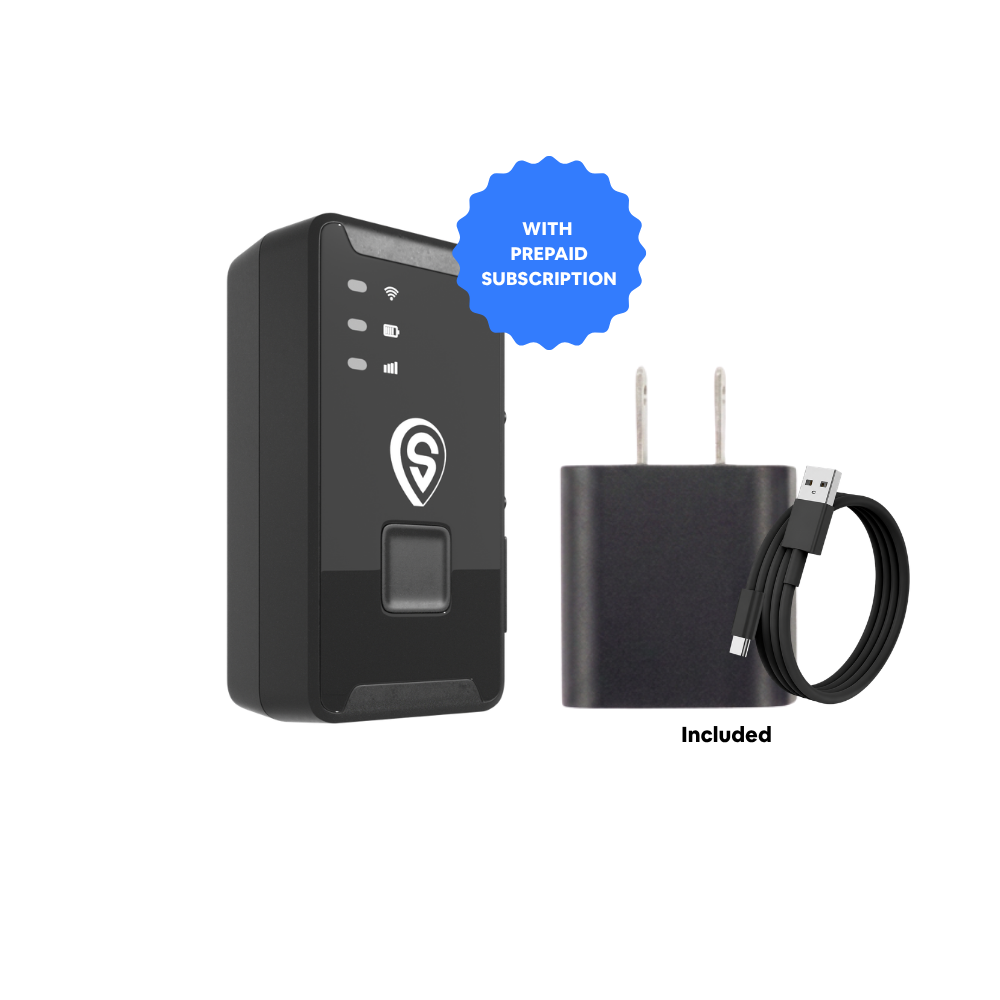
ShadowTrack
- Weatherproof magnetic mount for hidden trailer placement, tucked out of sight
- Roughly two weeks of battery life on a single charge
- Optional hardwire kit for continuous power
3. Outlaw GPS
Outlaw GPS is built specifically around the non-powered trailer problem, with a battery rated for 8 to 12 months in low power mode and an install that takes under two minutes with nothing but a magnet mount.
It's a straightforward, no-frills trailer tracker: geofence alerts, real-time location, and a battery long enough that you're not thinking about it between camping seasons.
Pros
- Installs in under two minutes
- 8 to 12 months of battery life in low power mode
Cons
- Built only for trailers, not motorhomes
- No engine diagnostics or vehicle health data


Best for: travel trailers and camper trailers with no power source of their own.
4. Trackhawk GPS
Trackhawk's standout claim is battery life measured in years, not months, on a single charge, thanks to an aggressive sleep mode between location pings. It also offers wired, magnetic, and hardwired mounting, so it flexes across motorhomes, trailers, and fifth wheels.
That long runtime comes with a tradeoff: update speed in sleep mode is slower than a plugged-in tracker, so it suits a trailer parked for extended periods more than a rig you drive daily.
Pros
- Battery life can exceed 7 years on one charge
- Multiple installation options, including hardwired
Cons
- Slower update speed in extended sleep mode
- Hardwired install may need a professional install

Best for: RV owners who want years between battery changes and don't need second-by-second updates.
5. Monimoto
Monimoto batteries can run up to 24 months between charges, the longest standby life on this list, which makes it a fit for an RV or trailer that spends most of the year in a storage lot rather than on the road.
Its built-in movement sensor triggers an alert the moment the trailer shifts, even before it fully rolls away, which is the kind of early warning that matters most in the first minutes of a theft attempt.
Pros
- Up to 24 months of battery life
- Movement sensor triggers instant alerts
Cons
- Refresh rate slows to protect battery life
- Best suited to parked assets, not daily driving

Best for: a trailer or motorhome parked in a storage lot for most of the year.
6. Fleet1st Solar GPS
Fleet1st Solar recharges off ambient sunlight, which solves the one real weakness of every battery-powered tracker on this list: eventually, someone has to remember to charge it.
For an RV or trailer parked off-site for months at a time with no outlet nearby, that self-recharging design means the tracker keeps reporting location without a maintenance visit.
Pros
- Solar recharging removes the battery-swap chore entirely
- Built for long-term outdoor storage lots
Cons
- Needs some sun exposure to stay charged indefinitely
- Bulkier than a pure magnetic puck tracker
Best for: an RV or trailer stored outdoors for months with no easy access to charge a device.
Also Worth Considering
A few more trailer gps tracker options come up often enough in RV forums that they're worth a mention, even though we didn't give them a full pick above.
- Trak4: a straightforward trailer gps tracker offering 12 to 18 months of battery life per charge, a solid middle ground between a short-life budget tracker and a multi-year unit.
- LandAirSea 54: a well-known budget gps device with a 100% waterproof magnet mount, though its standard battery life of 1 to 3 weeks means it suits shorter storage windows better than a full off-season.
- SpaceHawk: built around a small form factor for hidden placement deep inside a trailer's frame, trading a bit of signal strength for a device that's genuinely hard to spot.
- Logistimatics Protect Plus: up to 18 months of battery life and built with fleet managers in mind, a fit if you're watching several campers or trailers instead of just one.
RV GPS Tracker Comparison
Here's how the full lineup, including a couple of well-known trailer trackers, stacks up on the specs that matter most for RV owners.
| Tracker | Best for | Battery life | Install type | Recurring cost |
|---|---|---|---|---|
| Outlaw GPS | Non-powered trailers | 8 to 12 months | Magnet mount | Yes |
| Trak4 | Long-idle storage | 12 to 18 months | Magnetic | Yes |
| Trackhawk GPS | Multi-year, low-maintenance | Up to 7+ years | Magnetic or hardwired | Yes |
| Monimoto | Extended outdoor storage | Up to 24 months | Magnetic | Yes |
| Fleet1st Solar | Off-grid outdoor storage | Self-recharging | Solar mount | Yes |
| LandAirSea 54 | Budget, exposed mounting | 1 to 3 weeks | Magnetic | Yes |
| SpaceHawk | Compact hidden placement | Weeks to months | Concealed mount | Yes |
| Logistimatics Protect Plus | Multiple trailers, small fleets | Up to 18 months | Magnetic | Yes |
| ShadowAuto | Motorhomes (OBD-II) | Vehicle-powered, no charging | OBD-II plug-in | From $12/mo, no contract |
| ShadowTrack | Travel trailers, fifth wheels | ~2 weeks per charge | Magnetic or hardwire kit | From $15/mo, no contract |
Key Features to Look For in an RV GPS Tracker
Not every GPS device marketed for vehicles is actually built for the way an RV gets used. These are the features worth prioritizing.
- Real-time alerts: instant movement alerts and geofence alerts, not a location you have to remember to check.
- Update frequency: faster updates give a more accurate live picture, though they use more battery, which is exactly why plugged-in trackers can afford a five-second refresh while battery trackers slow down to preserve runtime.
- Location history and historical playback: useful for confirming exactly where your RV traveled on a trip, not just where it is right now.
- Cellular coverage: a GPS tracker is only as useful as the cellular network carrying its data, so check coverage at the storage lot or campgrounds you actually use.
- Mobile and web app access: you'll want to check your RV's location from a phone at a campground and from a desktop dashboard at home, with the same live location visible on both.
- Small form factor: a compact gps device is easier to hide well out of sight, and easier to move between an RV, a tow vehicle, and other valuable assets if you need to.
One more practical note on device price: the sticker price of the tracker itself is usually the smaller part of the total cost. The bigger factor over a year of ownership is the subscription cost or annual plan covering cellular data, so weigh both numbers together rather than comparing hardware price alone.
How RV GPS Trackers Get Installed
Installation is usually simpler than RV owners expect, and it splits into three categories depending on the device and the rig.
OBD-II plug-in
Plugs into the diagnostic port on any motorized RV. No tools, no wiring, done in seconds.
Magnetic mount
Sticks to a flat metal surface underneath. Ready in under two minutes, no professional setup needed.
Hardwired
Wires directly into the vehicle or trailer's power source for continuous, maintenance-free operation. May require professional installation.
Is there a GPS tracker for a trailer that doesn't require a monthly fee?
Almost every real-time GPS tracker on the market, including every device listed above, relies on a cellular connection to send location data, and that connection carries an ongoing plan cost of some kind. A one-time device price alone rarely covers the cellular data behind live tracking.
The honest way around a recurring bill is to prepay: ShadowAuto and ShadowTrack both offer prepaid plans covering 3, 12, or 36 months of service upfront, so there's no monthly charge showing up on a card during that term. It's not a truly free service, but it is a real way to avoid a monthly fee for as long as the term lasts.
Real-World RV Tracking Scenarios
Storage lot theft
Your trailer sits at an off-site storage lot for the winter. A movement alert fires the moment it's moved, giving you and law enforcement a live location instead of a cold trail.
Cross-country towing
Towing a fifth wheel across several states, you can watch its live location and speed the whole way, and pull up trip history afterward if anything went wrong on the route.
Seasonal storage
An RV parked at home for months between trips still needs eyes on it. A long battery life or vehicle-powered tracker keeps reporting without you doing anything.
The same setup scales down or up depending on who's watching. A single family checking on one travel trailer needs nothing more than the app on a phone, while a small business or fleet owner-operator managing several rental RVs or work trailers can watch every unit's real time location and location history from one web dashboard, without hiring separate fleet management software.
Choosing the Right Tracker for Your Rig
There's no single best tracker for every RV owner, but there is a correct match for your specific rig once you know how it's powered and how it's used. Motorhome owners should start with an OBD port and a wired tracker built for vehicle battery power. Trailer owners should start with battery life and a magnet mount.
A handful of practical notes worth keeping in mind as you shortlist gps trackers for RVs:
- Wired trackers and other hardwired trackers draw straight from the vehicle battery, so a low battery warning is rarely a concern once the connection is made.
- Battery-powered trailer trackers avoid frequent recharging by defaulting to a low power mode when the trailer sits still for extended periods, which is also what protects against a low battery mid-trip.
- Some trailer trackers switch into a recovery mode after a theft alert, sending real time alerts and a realtime location fix far more often than normal to help authorities move fast.
- Quick installation matters if you're outfitting more than one rig. A fleet owner-operator running several trailer trackers and one tracker for RV use on the tow vehicle can get a full range of units up and running in an afternoon.
For a single family protecting one tracker for RV use, theft recovery odds and peace of mind matter most. For small businesses and fleet owner-operators, the same theft recovery benefit applies across every trailer or non powered assets in the yard, plus the ability to see all of them, together, from one dashboard rather than checking each trailer tracker separately.
And for the family angle that started this guide: a tracker for RV use means family members always know where the rig is parked, whether that's a work trip, a weekend away, or a rig sitting off site while everyone waits for the next long trip. Key features like instant alerts, unauthorized movement warnings, and a low battery notice all add up to one thing: you find out about problems while there's still time to act, and you can recover a stolen vehicle fast instead of hoping it turns up. A stolen vehicle report moves faster with a live coordinate attached to it, which is the whole point of running a tracker for RV, camper trailer, or towable rig in the first place, and it's exactly what family members want to see resolved quickly.
Trailer owners weighing wired tracker options against battery trackers for their trailer trackers should remember the two aren't mutually exclusive: some owners run a wired tracker on the tow vehicle and a separate battery unit on the camper trailer itself, doubling up on both rv tracking and trailer tracking for one road trip. Non powered assets like a stored boat or utility trailer can use the same trailer trackers, and a second tracker for RV storage covers that asset too, so the investment often protects more than one rig at a time, and it's one more reason valuable assets deserve their own tracker rather than sharing a single device between them.
Frequently Asked Questions
What is the best GPS tracker for an RV trailer?
For a towable trailer with no engine or power source, a battery-powered magnetic tracker like ShadowTrack or Outlaw GPS is the right fit, since it needs no wiring and can hide out of sight for months at a time.
What are the best GPS devices for RVs?
The best RV GPS trackers split by power source: OBD-II devices like ShadowAuto for motorhomes, and battery-powered, magnetic-mount devices like ShadowTrack, Outlaw GPS, Trackhawk, and Monimoto for travel trailers and fifth wheels.
Is there a GPS tracker for a trailer that doesn't require a monthly fee?
Real-time tracking always carries some data plan cost, but you can avoid a recurring monthly charge by prepaying a plan upfront. ShadowAuto and ShadowTrack both offer 3, 12, and 36-month prepaid options with no monthly bill during the term.
What is the best GPS device for tracking a trailer?
A magnetic, battery-powered tracker built for non-powered assets is the standard choice for a trailer, since it doesn't depend on the trailer having its own electrical system.
What is the best GPS tracker for an RV?
For a motorized RV, an OBD-II tracker like ShadowAuto is the simplest option, since it plugs into the vehicle's existing diagnostic port and pulls power directly from the RV.
What is the best GPS for RVs?
It depends on whether the RV is motorized or towed. Match an OBD-II tracker to a motorhome and a battery-powered magnetic tracker to a trailer, rather than picking one device for both.
Does an RV GPS tracker need a SIM card?
No. ShadowAuto and ShadowTrack both come with cellular connectivity built in, so there's no separate SIM card to buy or activate.
Is installation difficult on a travel trailer?
No. A magnetic-mount tracker sticks to the trailer frame in under two minutes with no tools. Only hardwired setups may call for professional installation.
Plug it in. See it move. Cancel any time.
Whether your rig has an engine or gets towed, ShadowGPS has a tracker built for it, with no contract, ever.
Theft statistics reflect industry and National Insurance Crime Bureau reporting on RV theft. Pricing and availability for third-party products are subject to change; check each retailer for current details. Last updated 2026.

