

You're standing in the driveway with a GPS tracker in one hand and a question you can't quite answer: plug it in, or just drop it in the glovebox? The honest answer is that a wireless GPS tracker for vehicle use and a plug-in GPS tracker solve the same problem in two different ways, and the right one depends less on the tracker and more on your car, your budget, and how you plan to use it.
This guide breaks down exactly how each type works, where each one wins, and how to pick between them in under five minutes, no jargon required.
A plug-in GPS tracker connects to your car's OBD-II port and runs off your car's power, so it never needs charging. A wireless GPS tracker runs on its own rechargeable battery, so it can go anywhere, including a trailer, a rental car, or a vehicle with no OBD-II port at all. Both types can update your car's location every 5 seconds while it's moving. The difference is power and placement, not accuracy.
Before comparing the two, it helps to know what a GPS tracker is actually doing under the hood. Every tracker, wireless or plug-in, uses the same GPS satellite network to pinpoint your car's location, then sends that location to your phone over a cellular connection. The tracking itself isn't where these two types differ. What differs is how the tracker gets its power and how it gets into your car in the first place.
Plug-In GPS Tracker: How It Works
A plug-in GPS tracker plugs directly into your car's OBD-II port, the same port a mechanic uses to read engine codes. Nearly every car and truck built after 1996 has one, usually tucked under the dashboard near the steering column. Once it's plugged in, the tracker draws power from your car and starts reporting location right away.
Because it's wired into your car's electrical system, a plug-in tracker never needs to be charged. It just works, for as long as your car has a battery. That also means it can pull extra data most wireless trackers can't touch: engine diagnostic codes, ignition status, and trip history straight from your car's onboard computer.
Pros
- Never needs charging, runs off your car
- Plugs in under 2 minutes, no tools
- Reads engine codes and trip data
- Great for a car, truck, or Turo rental you own
Cons
- Only works in a vehicle with an OBD-II port
- Not the right fit for a trailer or non-powered asset
Best for: a car or truck you own and plan to track for the long haul, without ever thinking about a charger again.
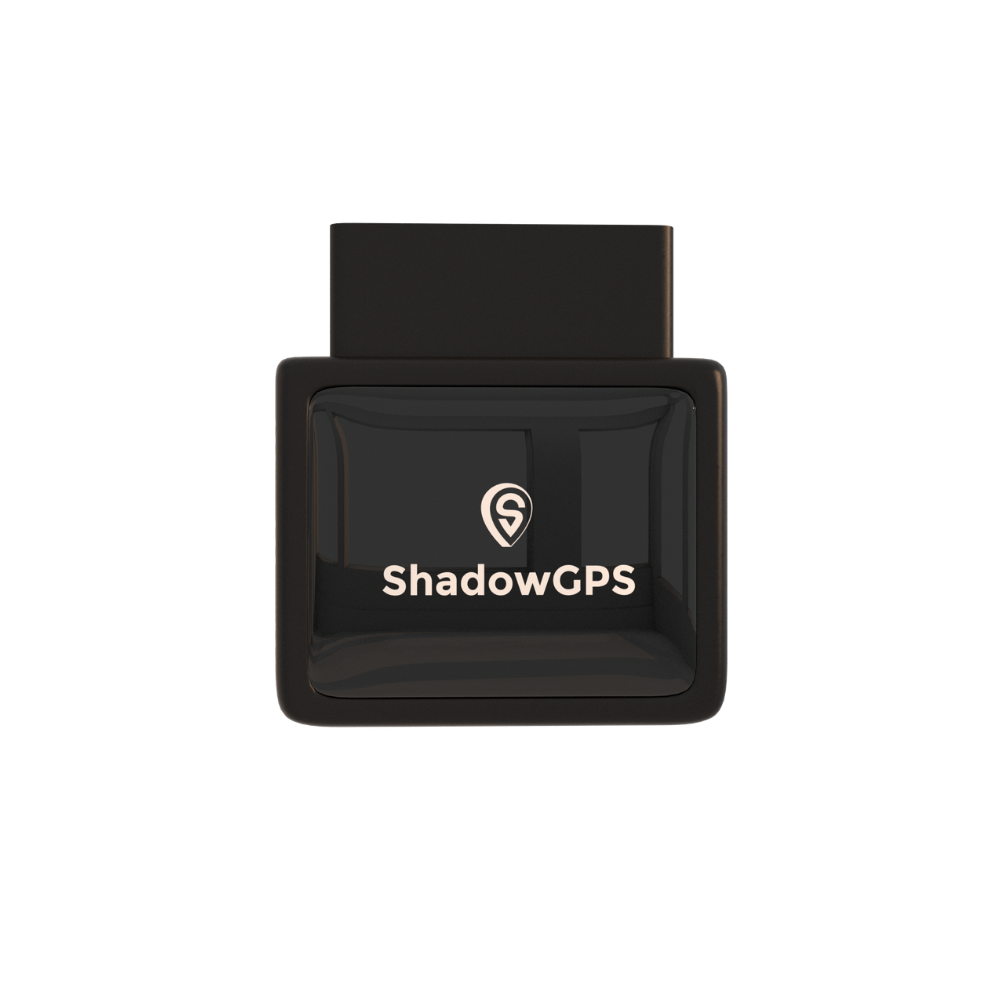
ShadowAuto
- Updates every 5 seconds while moving
- Trip timeline & trip replay
- Car Alarm & vehicle diagnostics


Wireless GPS Tracker for Vehicle Use: How It Works
A wireless GPS tracker for vehicle tracking runs on its own rechargeable battery instead of your car's electrical system. That's what makes it wireless: nothing to plug in, nothing wired into the dashboard. You charge it, place it, and it starts reporting.
Most wireless trackers are compact and magnetic, so you can mount one inside a wheel well, a trunk, or a hitch, or simply drop it in the console. Because it isn't tied to a single vehicle, a wireless tracker can move between cars, follow a trailer, ride along in a rental, or sit hidden somewhere a plug-in tracker could never reach, like a boat, an ATV, or a storage unit.
Pros
- Works on anything, powered or not
- Magnet-mount or hide it, under 2 minutes
- Move it between cars, trailers, or equipment
- No wiring, no warranty concerns on a leased car
Cons
- Needs a charge on a schedule
- Won't read engine codes or diagnostics
Best for: a trailer, a piece of equipment, a rental, or any vehicle where you want the option to move the tracker later.
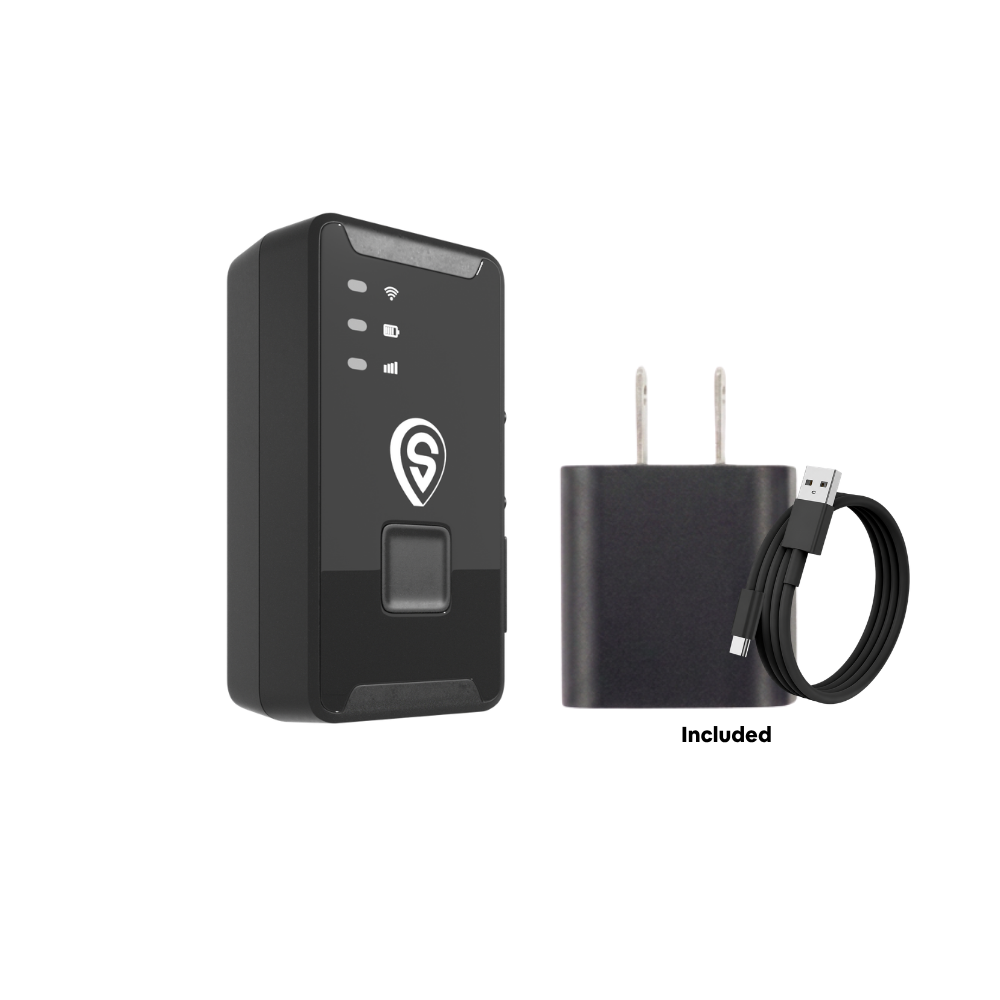
ShadowTrack
- Updates every 5 seconds while moving
- Weatherproof, magnetic mount
- Up to ~15 days per charge
If you're mounting ShadowTrack somewhere exposed to the weather, like a wheel well, a hitch, or the underside of a trailer, pair it with the magnetic weatherproof case. It snaps on with no tools and keeps the tracker sealed against rain, road spray, and grime.
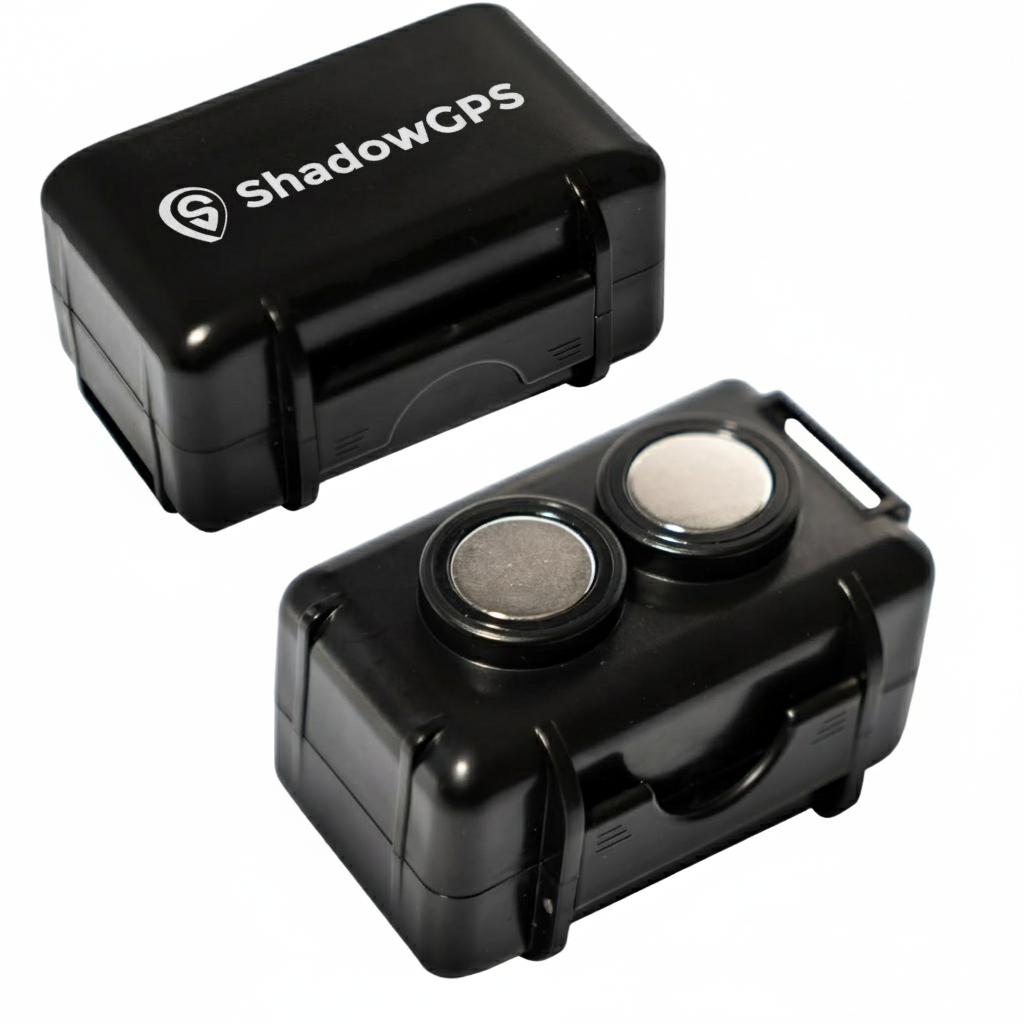
Magnetic Mount Weatherproof GPS Case
- Neodymium magnet mount
- Weatherproof housing
Wireless vs. Plug-In: Side-by-Side Comparison
Here's the full breakdown, side by side, so you can match the tracker to the way you'll actually use it.
| Factor | Wireless (ShadowTrack) | Plug-in (ShadowAuto) |
|---|---|---|
| Power source | Rechargeable battery, ~15 days/charge | Your car's power, never charges |
| Setup time | Under 2 minutes, magnet-mount or hide it | Under 2 minutes, plug into OBD-II |
| Refresh rate | Every 5 seconds while moving | Every 5 seconds while moving |
| Works without an OBD-II port | Yes, trailers, equipment, any asset | No, needs an OBD-II port (1996+) |
| Engine diagnostics & codes | No | Yes |
| Move it between vehicles | Yes, anytime | Yes, just unplug and re-plug |
| Monthly fee | $12–$15/mo, no contract, ever | $12–$15/mo, no contract, ever |
| Typical competitor refresh | 15 sec–5 min on most other brands | 15 sec–5 min on most other brands |
Is there a monthly fee either way?
Yes, both wireless and plug-in trackers need a data plan to send location over cellular networks, and that's true no matter which brand you buy. What changes is whether you're locked in. ShadowGPS runs month-to-month, or you can prepay and save, with no contract, ever. Some competitors lock in a lower rate for a 2-year commitment instead. Read the fine print before you buy, not after.
How to Choose: Match the Tracker to the Job
The fastest way to decide is to ask what you're tracking and where it sits. If it has an engine and you own it, plug in. If it doesn't have an OBD-II port, or you want the option to move it later, go wireless.
Family car or truck
A plug-in tracker like ShadowAuto is the simplest choice. Plug it in once and forget about it. No charging, no re-mounting.
Teen driver
Plug-in wins here too. It stays powered the whole time your teen has the keys, so you're never checking a battery level instead of a location pin.
Turo host or rental fleet
Plug-in for permanent cars in your fleet; wireless for a rental that changes hands often or where you want to pull the tracker between bookings.
Trailer, boat, or equipment
Wireless is the only option. ShadowTrack's magnetic case hides in a wheel well or toolbox with no power source needed.
Small fleet, 2–5 vehicles
Most owner-operators run plug-in trackers on the powered vehicles and a wireless tracker or two for trailers and non-powered assets.
Leased or warrantied vehicle
Either type is fine. Neither ShadowAuto nor ShadowTrack requires cutting into wiring, so there's nothing for a dealer to flag.
What Actually Matters More Than the Power Source
Here's what most comparison guides skip: the power source decides where the tracker goes, but it doesn't decide how useful the tracker is once it's in place. That comes down to three things, in this order.
How fast it updates. A tracker that refreshes every few minutes tells you where your car was. A tracker that refreshes every 5 seconds tells you where it is. ShadowAuto and ShadowTrack both update every 5 seconds while your car is moving, standard on every plan, no upsell required.
How simple it is to run. Plug it in or magnet-mount it, no professional install, no manual. If a tracker needs a technician, that's a sign you're buying more complexity than you need.
Whether you know where your car is, right now. That's the whole point. Live tracking, trip timeline, and trip replay are the features owners use every single day, not the specs on the box.
Signs You Might Need Both
If you're a Turo host or you run a small fleet of 2–5 vehicles, don't treat this as an either-or decision. Plug a ShadowAuto into every car or truck you own long-term, and keep a ShadowTrack on hand for trailers, loaner vehicles, or anything without an OBD-II port. Both trackers show up in the same app and web dashboard, so you're checking one screen for your whole operation, not two logins.
FAQ: Wireless vs. Plug-In GPS Trackers
Is there a monthly fee for a wireless or plug-in GPS tracker?
Yes, both types need a data plan to send location over cellular. ShadowGPS runs $12–$15/mo, month-to-month or prepay and save, with no contract, ever.
Does a wireless GPS tracker for vehicle use need a SIM card?
No separate SIM to buy or activate. ShadowTrack and ShadowAuto both ship with cellular connectivity built in and included in the monthly fee, so there's nothing extra to set up.
Is a plug-in GPS tracker hard to install?
No. A plug-in tracker connects to your car's OBD-II port, the same port under the dashboard a mechanic plugs into. It takes under 2 minutes and needs no tools, no wiring, and no technician.
Can I cancel my GPS tracker subscription anytime?
Yes. ShadowGPS plans are month-to-month with no contract, so you can cancel any time. Prepay plans (3-month, 1-year, or 3-year) trade a lower rate for paying ahead, but neither type locks you into a long-term commitment.
How fast do these trackers update your car's location?
Both ShadowAuto and ShadowTrack update every 5 seconds while your car is moving, standard on every plan. Many other trackers on the market refresh anywhere from 15 seconds to 5 minutes unless you pay for a faster tier.
Which is more accurate, wireless or plug-in?
Neither has an edge on accuracy. Both use the same GPS satellite network and the same 5-second refresh rate. The only real difference is power source and where the tracker can physically go.
Can I move a plug-in tracker to a different car?
Yes. Unplug it from one car's OBD-II port and plug it into another. It takes under a minute, though for a car you switch often, a wireless tracker you can magnet-mount may be simpler.
How long does a wireless GPS tracker's battery last?
ShadowTrack runs up to roughly 15 days on a single charge, depending on how often the vehicle moves and how frequently it reports. A quick recharge and you're back to full battery life.
The Bottom Line
A wireless GPS tracker for vehicle use and a plug-in tracker aren't competing products, they're two tools built for two different jobs. Plug in when you own the car and want to forget about it. Go wireless when the thing you're tracking doesn't have an OBD-II port, or when you want the freedom to move the tracker later. Either way, look past the power source and check the number that actually matters: how often it updates, and whether the company behind it is honest about the monthly fee before you buy, not after.
Know where it is. Every 5 seconds.
Plug it in, see it move, cancel any time. No contract, ever.
This guide reflects pricing, specifications, and competitor information published as of September 2026. Subscription pricing and features are subject to change by each manufacturer.

