

If you run a small business with trucks, vans, trailers, or equipment, you already know the question that eats your day: where is it right now? Asset tracking GPS answers that question in seconds, and a good fleet tracking app puts every vehicle and every piece of equipment on one map on your phone.
This guide is for owner-operators running roughly 2 to 10 vehicles plus the trailers and gear that go with them. We'll cover what asset tracking GPS actually does, where small businesses lose money without it, which kind of tracker fits each asset, and how to roll it out without making your crew feel watched.
Asset tracking GPS uses small cellular trackers to show the live location of your vehicles, trailers, and equipment in one fleet tracking app. For a small business, the payoff is fewer "where's the truck?" calls, faster alerts when something moves after hours, and a clear record of every trip. Plug-in trackers cover your vehicles. Battery trackers cover everything without an engine.
What is asset tracking GPS?
Asset tracking GPS is a small tracker attached to something you own (a work truck, a trailer, a mower, a generator) that reports its location over the cellular network. You see that location, plus alerts and trip history, in an app on your phone or a web dashboard.
People often use "asset tracking" and "fleet tracking" as if they're different products. For a small business, they're really two halves of the same job:
- Fleet tracking covers anything with an engine and a driver: vans, pickups, box trucks, service vehicles.
- Asset tracking covers things without their own power or driver: trailers, compact equipment, mowers, generators, tool trailers.
The smart setup puts both in a single fleet tracking app, so you're not juggling one login for the trucks and another for the trailers.
What "flying blind" really costs a small business
Most of the money you lose without tracking doesn't show up as one big bill. It leaks out in small, hard-to-see ways.
Equipment theft, and how slowly it gets noticed
Theft is the loss everyone thinks of first, and the numbers back it up. In its annual heavy equipment theft report, the National Insurance Crime Bureau and the National Equipment Register counted 11,625 pieces of equipment stolen in a single year, with only about 23% recovered. They estimated equipment theft costs between $300 million and $1 billion a year. Mowers and landscaping gear made up a big share of that total, not just bulldozers.
One of the main reasons the report gives for that low recovery rate is a delay in discovering the theft. If a trailer disappears Saturday night and nobody notices until Monday morning, it's long gone. A tracker that alerts you the moment something moves after hours changes that timeline completely.
The "where are you?" tax
Every call to a driver asking where they are, every text asking when they'll reach the next job, and every guess you make when a customer asks for an arrival time costs time. Multiply that by every vehicle, every day, and it adds up to hours a week you spend coordinating instead of running the business.
Wasted miles and after-hours use
Without trip history, you can't tell whether a truck took a sensible route, sat idling for an hour, or got used for personal errands over the weekend. You're just paying for the fuel and the wear. Our guide on how GPS tracking helps stop unauthorized vehicle use covers this in more detail.
Repairs that could have been caught early
Repair costs keep climbing. In its 2026 cost report, the American Transportation Research Institute found repair and maintenance costs for heavy trucks rose 8.6% in 2025, as reported by FleetOwner. Your vans and pickups aren't Class 8 rigs, but the lesson holds: a check-engine code you see on your phone today costs far less than a breakdown at a job site next week.
How asset tracking GPS works
There are only three moving parts, and you don't need any technical background to set them up.
- The tracker. A plug-in tracker goes into the OBD-II port under a vehicle's dashboard and runs on its power. A battery tracker goes on or inside a trailer or piece of equipment.
- The connection. The tracker finds its position with GPS satellites, then sends it over the cellular network. Connectivity is built in, so there's no SIM card to buy. More on that in whether a GPS tracker needs a SIM card.
- The fleet tracking app. You see every tracker on one map, with alerts, trip history, and reports, on your phone or in a web browser.
5 reasons small businesses add asset tracking GPS
1. Know right away when something moves that shouldn't
Draw a geofence around your yard, a job site, or a storage lot. If a trailer or truck leaves that zone, especially overnight or on a weekend, you get an alert on your phone. Ignition alerts and power-disconnection alerts add another layer: you'll know if a vehicle starts after hours or if someone pulls a plug-in tracker.
2. Answer "where's my crew?" without picking up the phone
A live map shows where every vehicle is, so you can send the closest truck to an urgent call and give customers an honest arrival time. ShadowGPS trackers update every 5 seconds while moving, so the map reflects where your trucks are now, not where they were a few minutes ago.
3. See exactly how each vehicle gets used
Trip history and trip replay show every route, stop, and idle period. That makes it easy to spot a truck that's taking the long way, sitting idle, or making unplanned weekend trips. Speeding alerts help you coach safer driving before it turns into an accident or a ticket.
4. Catch maintenance problems before they become breakdowns
Plug-in trackers can read your vehicle's diagnostics, so engine codes and battery status show up in the app. Read more in our guide to reading engine diagnostics remotely.
5. Keep a clean record for customers and disputes
When a customer questions how long a crew was on site, or a claim comes in about where a truck was, trip history gives you a timestamped record instead of a "he said, she said." Downloadable reports make it easy to back up invoices and timesheets.
Choosing the right tracker for each asset
You don't need a complicated system. Most small businesses need just two kinds of tracker, both managed in the same ShadowGPS app.
For vans, pickups, and box trucks: ShadowAuto
ShadowAuto plugs into the OBD-II port that every car and light truck sold in the U.S. since 1996 has. It takes under two minutes, needs no tools, and runs on the truck's own power, so there's nothing to charge. You get live tracking, trip replay, diagnostics, and alerts for each vehicle.
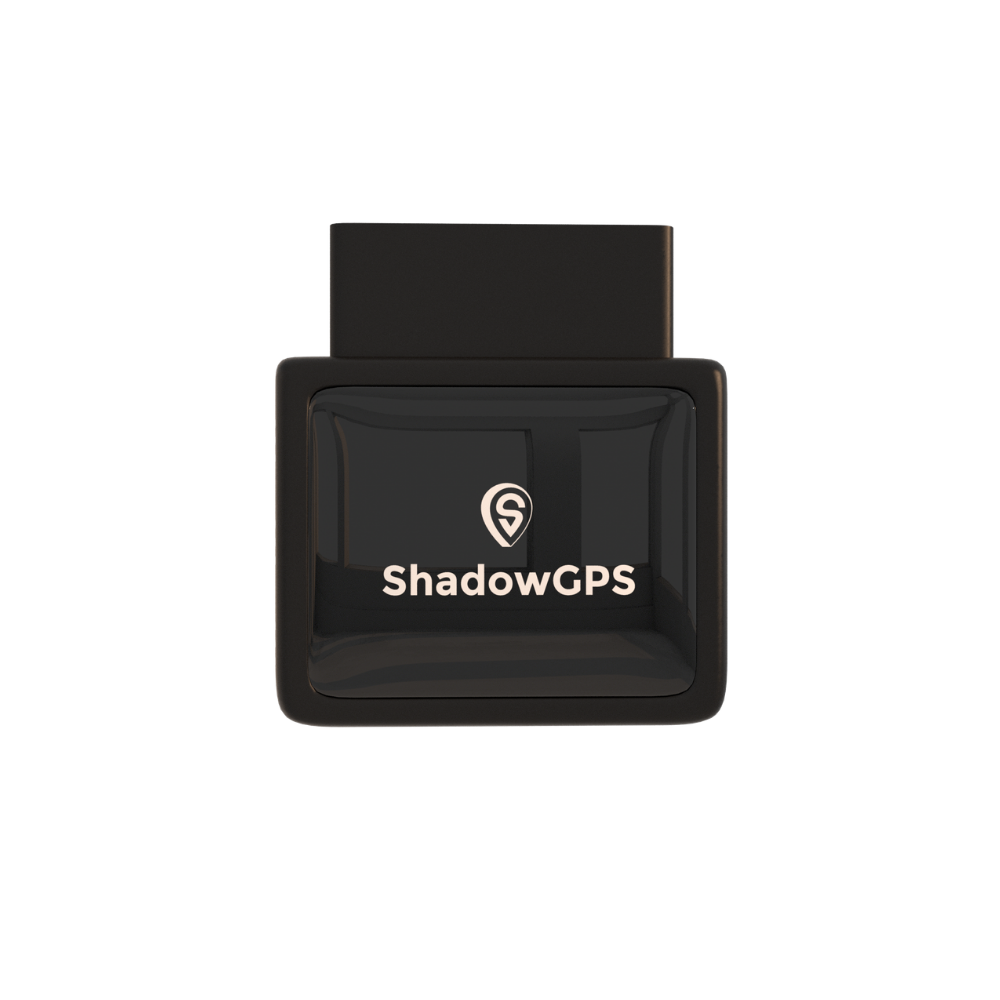
ShadowAuto
- Plug it in under the dash in under 2 minutes
- Runs on your truck's power, never needs charging
- Engine codes, battery status, and trip replay in the app


For trailers, equipment, and anything without an engine: ShadowTrack
ShadowTrack is a battery-powered tracker that runs up to about 15 days per charge. Put it inside a toolbox, a mower compartment, or an enclosed trailer, or mount it to steel with a magnetic case. It's also the right pick for older vehicles without an OBD-II port.
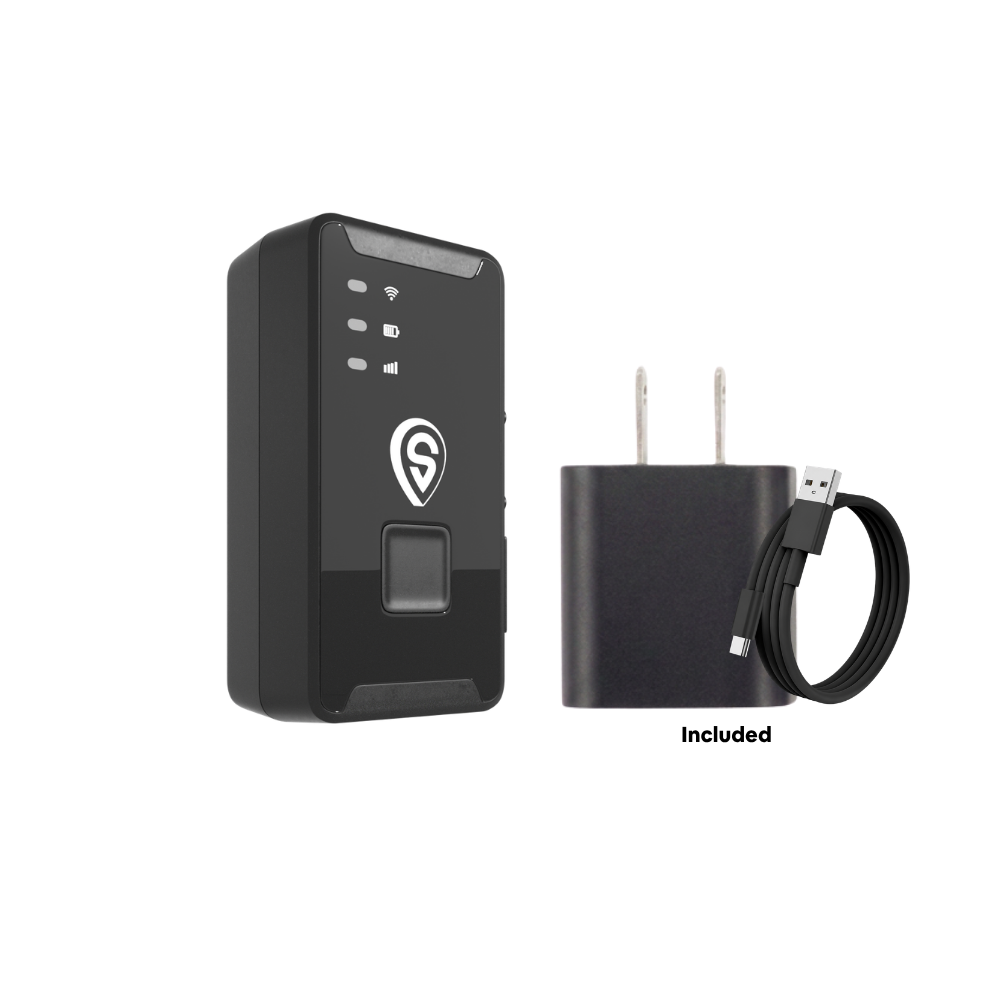
ShadowTrack
- Up to ~15 days per charge
- No wiring and no OBD-II port needed
- Move it between trailers and equipment as jobs change
For trailers and equipment that live outside, pair ShadowTrack with our weatherproof magnetic case. It keeps rain, dust, and road spray off the tracker and holds tight to any steel surface.
Weatherproof Magnetic Case
- Protects your tracker from rain, dust, and road spray
- Strong magnet holds to trailers and equipment frames
- Pops off in seconds when it's time to charge
Quick match: which tracker for which asset?
| Asset | Best tracker | Power | Why it fits |
|---|---|---|---|
| Service van or pickup | ShadowAuto | Truck's OBD-II port | Never needs charging, adds diagnostics |
| Box truck or delivery vehicle | ShadowAuto | Truck's OBD-II port | Live dispatch view and trip records |
| Enclosed or utility trailer | ShadowTrack + magnetic case | Rechargeable battery | No power source on the trailer |
| Mowers and compact equipment | ShadowTrack | Rechargeable battery | Hides inside, alerts if it leaves the lot |
| Generators, compressors, tool trailers | ShadowTrack | Rechargeable battery | Easy to move between job sites |
| Mixed fleet (vehicles + gear) | ShadowAuto + ShadowTrack | Both | Everything on one map in one app |
How ShadowGPS compares to other options
Small businesses usually end up weighing three paths. Here's how they compare on the things that matter for a lean operation.
| Option | Live location | Covers equipment | Setup | Contract | Best for |
|---|---|---|---|---|---|
| Bluetooth tags (AirTag, Tile) | Only near phones | Yes, loosely | Drop it in | None | Finding misplaced tools nearby |
| Enterprise fleet platforms | Yes | Often an add-on | Often a sales process | Multi-year terms are common | Large fleets with ELD needs |
| Hardwired trackers | Yes | Vehicles only | Wired in by a pro | Varies | Older vehicles |
| ShadowGPS (ShadowAuto + ShadowTrack) | Yes, live | Yes, same app | Plug in or place, under 2 min | None, ever | Owner-operators with 2-10 vehicles plus gear |
Contract terms for other providers vary by plan and change over time. Check each provider's current terms before you buy.
Who uses asset tracking GPS?
Landscaping crews
Trucks, trailers, and mowers all move between properties daily. See every one on one map. More on our landscaping page.
HVAC, plumbing, and electrical
Send the closest van to an emergency call and show customers an honest arrival time.
Construction subcontractors
Get an alert when compact equipment or a tool trailer leaves the job site after hours.
Turo hosts with several cars
Track every car in your lineup from one app, with geofences and trip history for each booking.
Equipment rental
Confirm rented gear is where the customer said it would be, and know when it's back.
Local delivery and moving
Live locations and trip records help with dispatch, customer updates, and billing questions.
Tracking without losing your crew's trust
The biggest worry owners have isn't the technology. It's how their team will react. Handled well, tracking protects your crew as much as your equipment.
- Tell people before you start. Explain what you're tracking (company vehicles and equipment), why (theft, dispatch, safety), and who can see the data.
- Put it in writing. A short vehicle-use policy that employees sign removes guesswork for everyone.
- Use the data to help, not to nitpick. Faster help after a breakdown, proof for a disputed invoice, and recognition for safe drivers build trust quickly.
- Track company-owned assets. Personal vehicles are a different matter and need clear consent.
For a script and rollout plan, see how to tell your crew about GPS trackers without losing their trust.
Is it legal to track company vehicles and equipment?
Generally yes, when your business owns the trucks and equipment. Several states add notice or consent requirements for tracking employees, so a written policy is the safe move. Our guide on whether GPS tracking is legal for employee vehicles breaks down the rules. This isn't legal advice, so check with a local attorney if you're unsure.
Is asset tracking GPS worth it for a small business? Do the math
Add up what you're protecting: the replacement cost of your trailers, mowers, and equipment, plus a realistic value for your vans. Then compare it to tracking every one of them. With 5 trackers on an annual plan at $10 each per month, that's $600 a year for your whole lineup. If tracking helps you recover one stolen trailer, or prevents one breakdown at a job site, it has likely covered itself. And with no contract, you can cancel any time if it doesn't earn its place.
How to get started in 3 steps
- List what you need to track. Write down every vehicle, trailer, and piece of equipment, and mark which ones have an OBD-II port.
- Match each asset to a tracker. ShadowAuto for vehicles, ShadowTrack for trailers and equipment. Use the table above.
- Plug in and set your alerts. Add each tracker to the ShadowGPS app, draw geofences around your yard and regular job sites, and turn on after-hours movement and ignition alerts. Add managers as extra users so they see the same map.
Want to compare plans and costs for your size? Read how much GPS tracking costs for a small fleet and how to choose fleet tracking for 3 to 10 vehicles.
Frequently asked questions
Is there a monthly fee for asset tracking GPS?
Yes. Live cellular tracking needs a data plan. With ShadowGPS, 1 to 3 trackers run $12-$15 a month each, and 4 or more drop to $8-$13 a month each, depending on whether you pay monthly or prepay. No contract: go month-to-month, or prepay and save, and cancel any time.
Do I need a SIM card for each tracker?
No. ShadowAuto and ShadowTrack have cellular connectivity built in. You activate each tracker in the app and pick a plan.
Is it hard to set up trackers on a whole fleet?
No. Each ShadowAuto plugs into a vehicle's OBD-II port, and each ShadowTrack goes in or on the asset. Each one takes under two minutes, with no tools or mechanic needed.
Can I see vehicles and equipment in the same fleet tracking app?
Yes. ShadowAuto and ShadowTrack both show up on one map in the ShadowGPS app and web dashboard, and you can add other users, like a manager or office lead, to the same account.
How do I track a trailer or equipment that has no power?
Use a battery-powered tracker like ShadowTrack. It runs up to about 15 days per charge. Place it inside the equipment or mount it with a weatherproof magnetic case, and set a geofence so you get an alert if it leaves the yard or job site.
Are AirTags good enough for tracking business equipment?
AirTags are fine for finding a tool bag you left nearby, but they only update when an iPhone passes close by. They can't give you live location or instant alerts when a trailer leaves your lot at night. For theft protection, use a cellular GPS tracker.
Does ShadowGPS work as an ELD for hours-of-service compliance?
No. ShadowGPS is built for location, alerts, trip history, and diagnostics, not hours-of-service logging. If your drivers are required to use an ELD, you'll need a certified ELD for that. Many small service businesses with vans and pickups aren't subject to ELD rules.
Is it legal to track employees with GPS?
Tracking company-owned vehicles and equipment is generally legal, but some states require notice or consent. Tell your team up front and use a written vehicle-use policy. See our employee GPS tracking legal guide for details.
Put your whole operation on one map
Plug it in. See it move. Cancel any time. No contract, ever.
Prices and plans reflect ShadowGPS pricing as of October 2026 and may change. Battery life is typical in normal use and varies with temperature and usage. ShadowGPS may earn a commission on Amazon and Best Buy purchases made through links in this article. Track only vehicles and equipment you own or have permission to track.
