

Your driver texts at 2 p.m. saying the last job ran long. Your work van never actually made it to that address. You have no way to know which story is true until the invoice doesn't show up, or worse, until it does and something's wrong.
A GPS tracker for a commercial vehicle closes that gap in the time it takes to plug one in. Instead of guessing where a truck, van, or rental is right now, you open an app and see it, updated in real time, whether you're running one work truck or five.
This guide covers what actually makes a tracker "commercial vehicle" ready, the real difference between an OBD-II plug-in and a hardwired install, honest 2026 pricing, how legal it is to track a company vehicle, and side-by-side picks for owner-operators, small fleets, and Turo hosts, not the big DOT-regulated carriers most guides quietly assume you're running.
The best GPS tracker for commercial vehicles depends on how many vehicles you're running and how they're powered. For 1 to 5 work trucks, vans, or rental cars, a plug-in OBD-II tracker like ShadowAuto gives you real-time location, engine diagnostics, and no contract for around $12 to $15 a month per vehicle. For trailers, equipment, or any asset without a power source, a battery tracker like ShadowTrack fills the gap. Large DOT-regulated carriers that need ELD and Hours of Service compliance should look at enterprise fleet platforms instead, since that's a different job than simple location tracking.
What Makes a GPS Tracker "Commercial Vehicle" Ready
Any GPS tracker can report a location. A commercial vehicle tracker needs to survive being plugged into a work truck that runs eight hours a day, sit through weather if it's mounted outside, and give you more than a dot on a map.
At a minimum, a commercial-grade tracker should give you:
- Real-time location updates, not a location that's 5 or 10 minutes stale
- Trip history and replay, so you can answer "where was this vehicle at 3 p.m. yesterday"
- Geofencing, so you get an alert if a vehicle leaves a job site or your service area
- Tamper or power-loss alerts, since a commercial vehicle is more likely to be unattended
- A way to view more than one vehicle at a time, once you're past a single truck
The trap most buyers fall into is picking a tracker built for one job and using it for another: a personal car app that has no multi-vehicle view, or an enterprise fleet platform built for a 200-truck DOT carrier when you're running three vans. Matching the tracker to your actual fleet size is most of the decision.
OBD-II vs. Hardwired vs. Battery-Powered: Which One Fits Your Vehicle
Every GPS tracker for a commercial vehicle falls into one of three install types. Each one trades off install time, tamper resistance, and what it can plug into.
| Install type | Install time | Best for | Tamper resistance | Power source |
|---|---|---|---|---|
| OBD-II plug-in | Under 2 minutes | Owner-operator trucks, vans, rental cars, cars and light-duty vehicles built after 1996 | Moderate, visible but movable between vehicles | Vehicle-powered, zero maintenance |
| Hardwired | 30 to 60 minutes, usually a pro install | Permanent fleet vehicles, high-value trucks, vehicles you never want a driver to unplug | High, hidden and wired into the electrical system | Vehicle-powered, zero maintenance |
| Battery-powered | Under 2 minutes, magnet-mount | Trailers, equipment, containers, any asset with no OBD-II port or ignition power | High if hidden well, portable by design | Rechargeable battery, lasts days to weeks per charge |
For a full breakdown of when hardwired makes sense over OBD-II, see our battery-powered vs. hardwired comparison.
Do You Need a Simple Vehicle Tracker or Full Fleet Management Software?
This is the question most "best commercial GPS tracker" lists skip, and it's the one that actually determines what to buy.
Commercial vehicles over 10,001 pounds GVWR operating in interstate commerce generally fall under FMCSA rules and need an Electronic Logging Device (ELD) to track Hours of Service. If that's your fleet, you need an ELD-compliant platform like Motive, Samsara, or Verizon Connect, not a simple GPS tracker, since HOS logging is a different job entirely.
If you're running work trucks, service vans, delivery cars, or Turo rentals under that threshold, an ELD isn't required. What you actually need is location, trip history, and an alert if something moves when it shouldn't, and that's exactly what a plug-in OBD-II or battery tracker delivers, without the sales calls, hardware install crews, or multi-year contracts that come with enterprise fleet software.
The gap most guides miss
Most "commercial GPS tracker" content either targets families tracking a teen driver or 100-plus vehicle DOT carriers. The 1 to 5 vehicle owner-operator, service business, or Turo host running vehicles for income sits in between, and doesn't need either extreme. A tracker for a small commercial fleet doesn't need ELD, but it does need to handle more than one vehicle, a monthly fee that scales, and driver-facing alerts.
If you're right on that line between 3 and 10 vehicles, our guide to choosing fleet GPS tracking for 3 to 10 vehicles walks through the decision in more detail.
Best GPS Trackers for Commercial Vehicles in 2026

We compared install type, update speed, contract terms, and how each device actually holds up on a work vehicle that runs daily, not a car that sits in a driveway.
1. ShadowAuto
ShadowAuto plugs into any vehicle's OBD-II port and updates its location every 5 seconds while the vehicle is moving. For a work truck, delivery van, or Turo rental, that means you see it move in near real time instead of watching a stale dot.
It's built for the 1 to 5 vehicle owner who wants certainty without a contract: plug it in, watch it update, and cancel any time if the job changes. It also reads engine diagnostic codes, so a check engine light on a work truck doesn't have to wait until the next shop visit to get diagnosed.
Pros
- 5-second updates while moving
- Plug in under 2 minutes, no installer
- No contract, month-to-month or prepay and save
- Engine diagnostics and trip replay built in
Cons
- Visible in the OBD-II port, so it's not a hidden install
- No ELD or Hours of Service logging, not built for DOT-regulated carriers
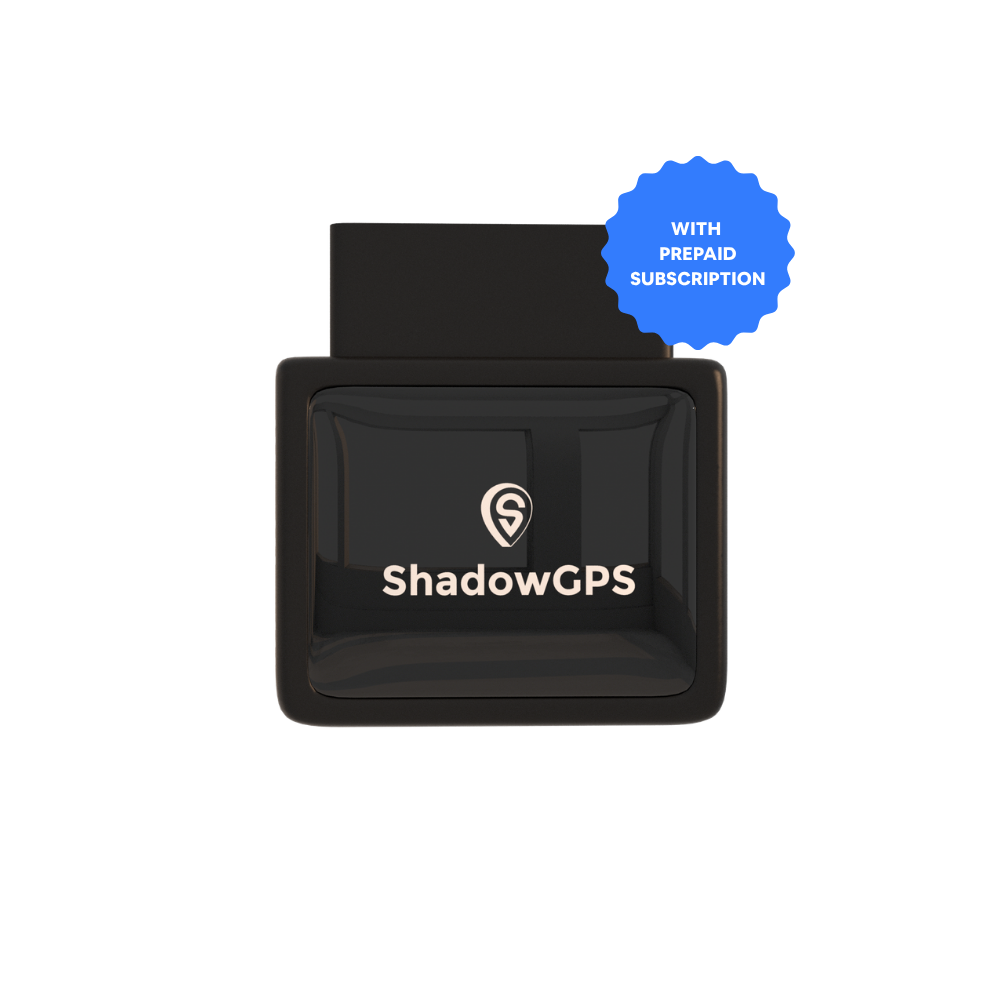
ShadowAuto
- Live tracking with trip timeline
- Car alarm and theft alerts

2. ShadowTrack
Not every commercial asset has an OBD-II port or a battery of its own. Trailers, generators, storage containers, and equipment left on a job site overnight all need location tracking too, and that's where ShadowTrack fits.
It's a battery-powered tracker in a weatherproof magnetic case, so it mounts to anything metal in under 2 minutes and updates every 5 seconds while moving, the same speed as ShadowAuto, just without needing a power source to plug into.
Pros
- Weatherproof magnetic mount, no wiring
- Works on trailers, equipment, and anything without an OBD-II port
- No contract, ever
Cons
- Needs recharging roughly every 15 days depending on movement
- No engine diagnostics, since it's not wired into the vehicle
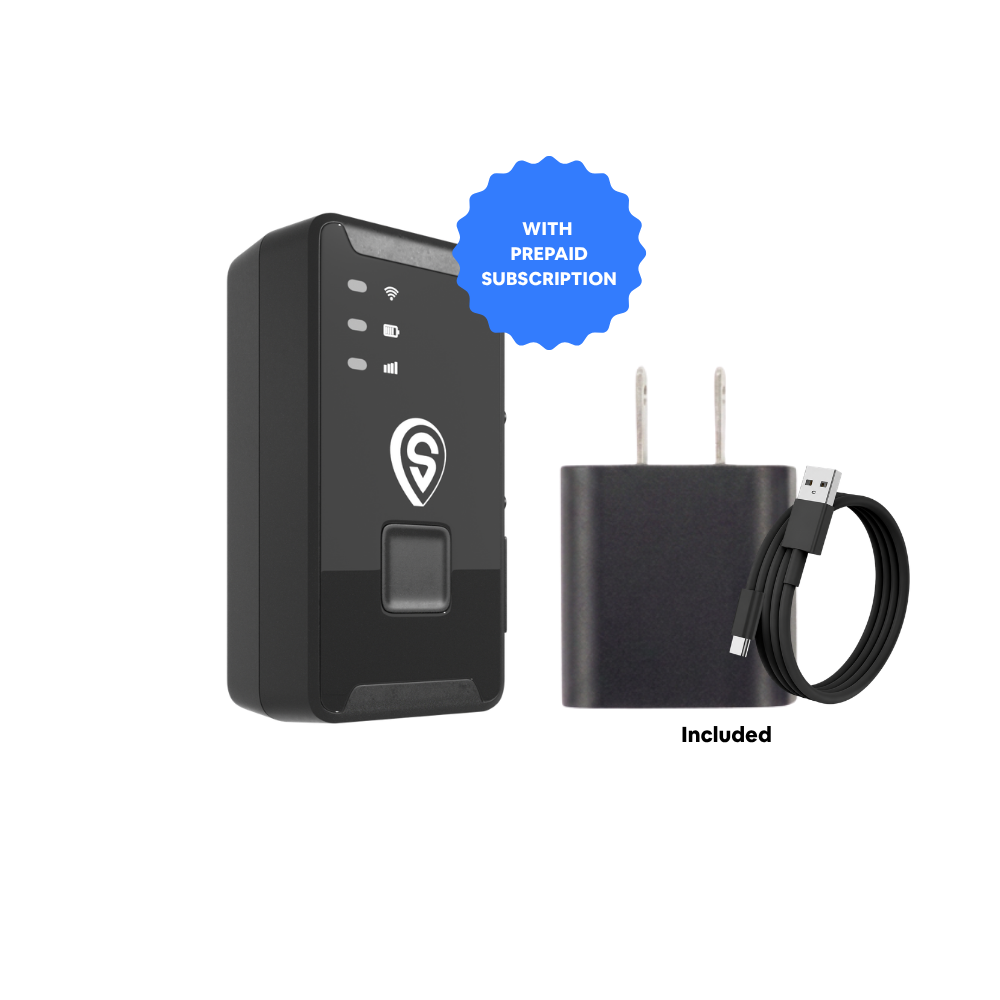
ShadowTrack
- Weatherproof magnetic case
- Geofence and speed alerts
3. Bouncie
Bouncie is another OBD-II plug-in tracker, and it's a fair pick if a lower monthly fee matters more than update speed. It reports location and vehicle health data on a longer refresh interval than a 5-second tracker.
It's a solid budget option for one or two vehicles where near-instant updates aren't the priority.


Best for: single vehicles or two-vehicle households where price per month matters most and slower updates are acceptable.
4. LandAirSea OBD
LandAirSea has been in the vehicle tracking space for years, and its OBD-II plug-in tracker is a familiar name for anyone shopping this category. It covers the basics: location, trip history, and speed alerts.
Confirm current monthly pricing on LandAirSea's site before buying, since plans change more often than the hardware does.

Best for: buyers who want a well-established brand name and don't need the fastest possible refresh rate.
5. BrickHouse OBD
BrickHouse Security's OBD-II tracker targets both personal and small commercial use, with a dashboard built to handle more than one vehicle. It's a reasonable middle-ground pick if you want a brand with a longer track record in fleet-adjacent tracking.

Best for: small fleets that want a multi-vehicle dashboard and don't mind a slower update interval than a 5-second tracker.
6. MOTOsafety OBD
MOTOsafety started as a teen-driver tracker and expanded into small fleet use. It plugs into the OBD-II port and adds driver behavior scoring on top of basic location tracking, which some small service businesses use to coach driving habits.

Best for: small service fleets that want driver behavior scoring alongside location tracking.
Commercial Vehicle GPS Tracker Comparison
| Tracker | Install type | Update speed | Contract | Best fleet size |
|---|---|---|---|---|
| Bouncie | OBD-II plug-in | Slower interval | No contract | 1 to 2 vehicles |
| LandAirSea OBD | OBD-II plug-in | Slower interval | Varies by plan | 1 to 2 vehicles |
| BrickHouse OBD | OBD-II plug-in | Slower interval | Varies by plan | 1 to 5 vehicles |
| MOTOsafety OBD | OBD-II plug-in | Slower interval | Varies by plan | 1 to 5 vehicles |
| ShadowAuto | OBD-II plug-in | 5 seconds while moving | No contract, ever | 1 to 5+ vehicles |
| ShadowTrack | Battery, magnet-mount | 5 seconds while moving | No contract, ever | Trailers and equipment, any fleet size |
Key Features That Actually Matter for Commercial Vehicle Tracking
Feature lists on most product pages blur together. Here's what actually changes how useful a commercial tracker is day to day.
- Update speed. A tracker that refreshes every 60 seconds shows you where a vehicle was a minute ago. One that refreshes every 5 seconds shows you where it is.
- Geofencing. Set a boundary around a job site or your service area and get an alert the moment a vehicle crosses it.
- Engine diagnostics. OBD-II trackers can read check-engine codes, useful for catching a maintenance issue before it strands a truck mid-route.
- Tamper and power-loss alerts. A commercial vehicle spends more time unattended than a personal car. Knowing if a tracker's been unplugged matters.
- Trip history and replay. Being able to pull up exactly where a vehicle went on a given day settles billing disputes and customer questions fast.
- Web and app access. You'll check location from your phone most of the time, but a web dashboard matters once you're watching more than one or two vehicles.
How Much Does a GPS Tracker for a Commercial Vehicle Cost in 2026
Pricing on a commercial GPS tracker has two parts: the device itself and the monthly fee that pays for cellular data and the app or dashboard.
| Tracker type | Typical device cost | Typical monthly fee | Contract |
|---|---|---|---|
| Budget OBD-II | $20 to $90 | Around $9 to $10/vehicle | Usually no contract |
| Mid-range OBD-II | $30 to $90 | $20 to $30/vehicle, confirm current pricing | Varies by provider |
| ShadowAuto / ShadowTrack | Device price varies by promotion | $12 to $15/vehicle | No contract, ever |
| Enterprise fleet platform (Samsara, Motive, Verizon Connect) | Often bundled or quote-based | $30 to $50+/vehicle | Typically multi-year contract |
ShadowAuto and ShadowTrack run a little higher than the cheapest OBD-II trackers on the market, but that's the tradeoff for 5-second updates and never being locked into a contract. If the monthly fee is your only concern, see our full cost breakdown for what GPS tracking actually costs for a small fleet in 2026.
Is It Legal to Put a GPS Tracker on a Commercial Vehicle?
The short answer
Yes, for vehicles your business owns. Tracking a company-owned vehicle is legal nationwide since the business owns the property being tracked. Some states, including California and Connecticut, require written notice to employees before tracking a vehicle they drive for work, even if the business owns it. If you're supplying a vehicle to a contractor or renting it out on Turo, check your state's specific consent rules before installing a tracker, since those requirements vary.
For a full state-by-state breakdown, read our guide on whether GPS tracking employee vehicles is legal.
Who Actually Needs a Commercial Vehicle GPS Tracker
Owner-operators and contractors
One or two work trucks running service calls all day, where knowing a vehicle's exact location settles customer disputes and confirms a job actually happened on time.
Small delivery and service fleets
2 to 5 vans or trucks where a shared dashboard replaces group texts and guesswork about who's where. See our GPS tracker guide for work vans for more on this exact setup.
Turo and rental hosts
A vehicle that leaves your hands the moment someone rents it, where real-time location and geofence alerts are the difference between peace of mind and a stressful guessing game.
Pest control, landscaping, HVAC, and other route-based service businesses fall into this same bucket. If that's your operation, our GPS tracking for pest control and service businesses page covers the setup in more detail.
Frequently Asked Questions
Is there a monthly fee for a commercial GPS tracker?
Yes, nearly every GPS tracker for a commercial vehicle runs on a monthly fee that covers cellular data and app access, typically $9 to $30 per vehicle depending on the brand and update speed. ShadowAuto and ShadowTrack run $12 to $15/mo per vehicle, no contract, month-to-month or prepay and save.
Does a commercial GPS tracker need a SIM card?
Most GPS trackers, including ShadowAuto and ShadowTrack, have a built-in SIM already activated on a cellular network. You don't buy or insert one yourself. The monthly fee covers that data connection.
Is installation difficult for a work truck or van?
An OBD-II tracker like ShadowAuto plugs into the OBD-II port under the dashboard in under 2 minutes, no tools or installer needed. Hardwired trackers take longer and usually need a professional install. Battery trackers like ShadowTrack just magnet-mount, also under 2 minutes.
What's the difference between OBD-II and hardwired GPS trackers?
An OBD-II tracker plugs into a port under the dashboard and can be moved between vehicles in minutes. A hardwired tracker is wired directly into the vehicle's electrical system by an installer, which makes it harder to remove but takes longer to set up.
Do commercial GPS trackers need ELD compliance?
Only if your vehicles are subject to FMCSA Hours of Service rules, which generally applies to vehicles over 10,001 pounds GVWR in interstate commerce. Most work trucks, service vans, and passenger vehicles under that threshold don't need an ELD, just a standard GPS tracker for location.
Can employees tell if a company vehicle has a GPS tracker?
An OBD-II tracker is visible if someone looks under the dashboard, and several states legally require you to tell an employee it's there. A hardwired tracker is hidden but still typically requires disclosure in states with consent laws. Check your state's specific rules before installing one.
How accurate is a GPS tracker for a commercial vehicle?
Most modern GPS trackers are accurate to within a few meters under open sky, using the same satellite positioning as your phone's map app. Accuracy drops slightly in dense cities or parking garages, but real-time cellular trackers still narrow the location down to a specific street or lot.
Plug it in. See it move. Cancel any time.
ShadowAuto for work trucks, vans, and rentals. ShadowTrack for trailers and equipment. No contract, ever.
Pricing and specs current as of publish date. Competitor pricing changes frequently, confirm current rates on each provider's site before buying.

