

Your eight-year-old was supposed to be off the school bus twelve minutes ago. You call the neighbour, you check the window, and the whole time one question is running on a loop: where is she right now? A good GPS tracker for kids answers that question in seconds instead of leaving you guessing.
The problem is that the phrase "kids GPS trackers" now covers four completely different products. A $29 Bluetooth tag, a $300 LTE smartwatch, a $229 medical-grade wearable, and a plug-in car tracker are all sold under the same search term, and only one of them is right for your child.
This guide sorts the best gps tracker options by the age and the situation they actually fit, with current 2026 pricing, real battery life numbers, and an honest note about which picks we do not sell. We have spent the last three years building and supporting real-time tracking hardware, so we also tell you where our own products are the wrong answer.
Match the tracker to the job: a portable GPS tracker for the bike, the backpack and the gear, a wearable with an SOS button for the child, and a plug-in car tracker once they start driving. ShadowTrack is our pick for the portable slot, with about 15 days of battery per charge, live updates every 5 seconds while moving, and no contract, ever. AngelSense is the strongest wearable for a child who wanders, with location updates as fast as every 10 seconds in an emergency. The Garmin Bounce 2 is the best kids smartwatch for ages 6 to 12 at $299.99 plus a $9.99 monthly fee, and TickTalk 5 is the best value at around $159.99. For a teen driver, ShadowAuto plugs into the car in under two minutes.
How We Chose These Kids GPS Trackers
We did not rank these kids gps trackers on feature count. A tracking device with forty settings your child will never touch is worse than a simple device that reports an accurate location every time you open the app.
Five things decided the order. First, real time location tracking that refreshes fast enough to be useful during an actual emergency, not a last-known pin from twenty minutes ago. Second, battery life measured in days of ordinary use, not a lab number. Third, whether the child can reach you: an SOS button and two-way communication change what the device is for.
Fourth, whether the parent app does the boring work well, meaning safe zones that fire reliably, readable location history, and alerts you can act on. Fifth, honest pricing and honest handling of location data. Several popular kids gps trackers advertise one number on the box and bill another after the free device promotion ends, and very few explain how long they keep your child's location data.
We also read the fine print on contracts. That matters more than most roundups admit, because the cheapest monthly fee in this category is usually attached to the longest lock-in.
The Age Test: Match the Tracker to the Child, Not the Spec Sheet
This is the step most buying guides skip, and it is the reason so many parents return their first kids tracker. The right gps tracker for a four-year-old is close to useless for a fifteen-year-old, and the reverse is also true.
Run your child through this quick test before you look at a single price.
Ages 3 to 7
They cannot be trusted to keep a watch charged or to keep it on. You want a screenless gps tracker for kids that rides on a belt clip, slips into a pocket, or attaches to their clothing, with proactive alerts and a caregiver-locked attachment. Communication features matter less than the device staying put.
Ages 8 to 12
The sweet spot for a kids smartwatch. They can charge it, they want to feel grown up, and two-way calling replaces the "can I borrow your phone" negotiation. Look for school mode, safe zones, real time tracking, and pre approved contacts only.
Ages 13 to 15
Most already have a phone, so a second tracking device usually gets left in a drawer. Phone-based location sharing plus a clear family agreement does more here than hardware. A small portable gps tracker on a bike, a key ring, or a backpack covers the gaps.
Ages 16 and up: the tracker moves from the wrist to the car
Once your teenager has keys, the honest answer changes. No wearable tells you they took the highway at 80, or that your car is sitting two towns over at midnight. This is the one part of the kids GPS tracker conversation where a plug-in car tracker is genuinely the better tool, and we cover it in its own section below.
Best GPS Trackers for Kids in 2026
Nine kids gps trackers, ordered by the situation they solve rather than by price. Each entry says plainly who it is for and who should skip it.
Best portable GPS tracker1. ShadowTrack
ShadowTrack is the tracker we build for everything that moves with your child but is not your child. The bike they ride to practice. The backpack that goes on the team bus. The trailer with the sports gear. The second family car that is older than the OBD-II standard.
It is the size of a small bar of soap, it magnet-mounts or drops into a bag, and the battery lasts about 15 days per charge, which is roughly ten times what any kids smartwatch manages. Nothing to plug in and no wall charger habit to build. Safe zones work exactly as they do on a wearable: draw a boundary around home, school, or the field, and get an alert when the child arrives or leaves with it.
Two things make it the portable pick over Tracki and the Bluetooth tags. It reports live rather than waiting for a stranger's phone to pass by, and it is weatherproof, so a bike frame in a rainstorm is a normal Tuesday rather than a failure. It also shares one app with ShadowAuto, so a family running a bike and a teen driver's car sees everything on one map.
Be clear on what it is not. There is no SOS button and no two-way voice, so it is a location device, not a way for your child to call for help. For a young child, pair it with, or choose instead, one of the wearables below. $69.90 for the device, plans $12 to $15 a month, 14-day free trial, no contract, ever.
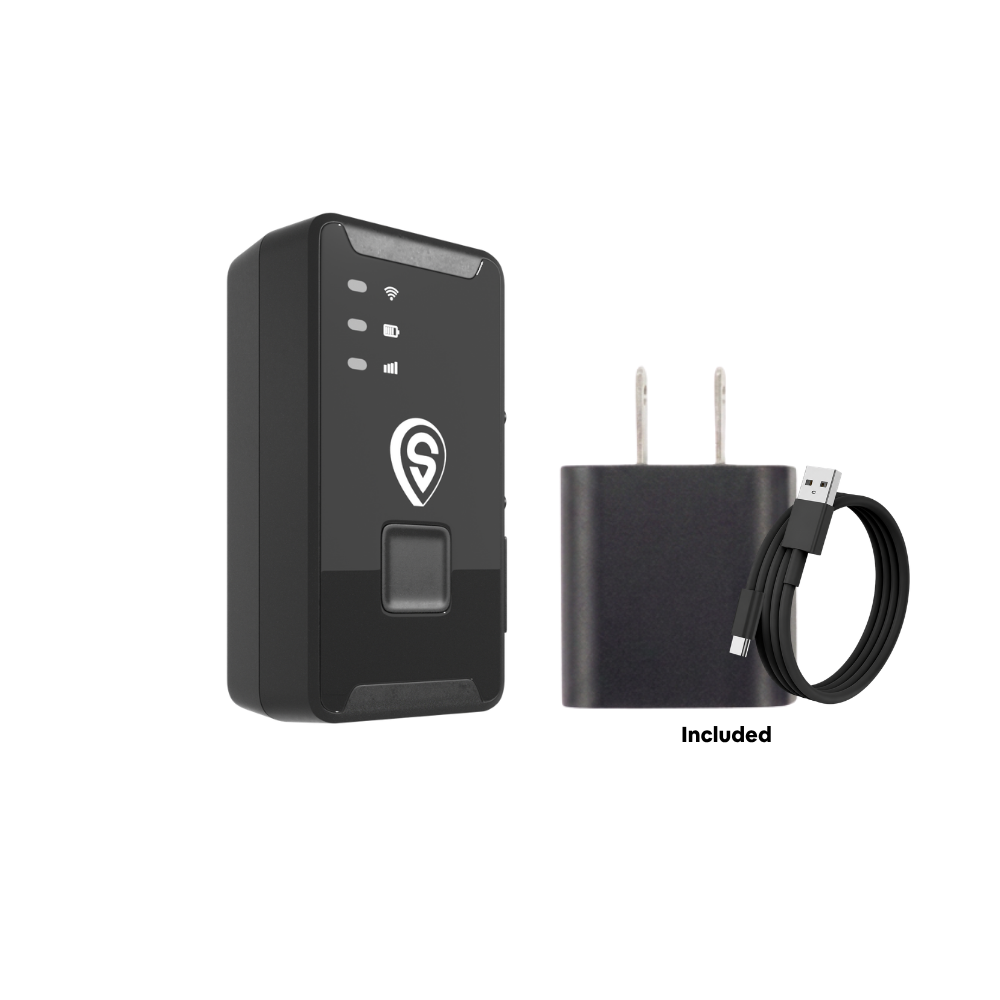
ShadowTrack Battery GPS Tracker
- Updates every 5 seconds while moving
- Weatherproof, magnetic mount
- Up to ~15 days per charge
 Buy Now on Amazon
Best for: bikes, backpacks, sports gear, trailers, and any car or truck without a usable OBD-II port. Best paired with a wearable if your child is under about ten.
Pair it with: Magnetic Mount Weatherproof GPS Case & Key Holder
If ShadowTrack is going on a bike frame, a key ring, or under a trailer, the case is the part that keeps it there through rain and road spray. A neodymium magnet holds it in place and the weatherproof housing does the rest. It is a one-time purchase with no subscription attached.
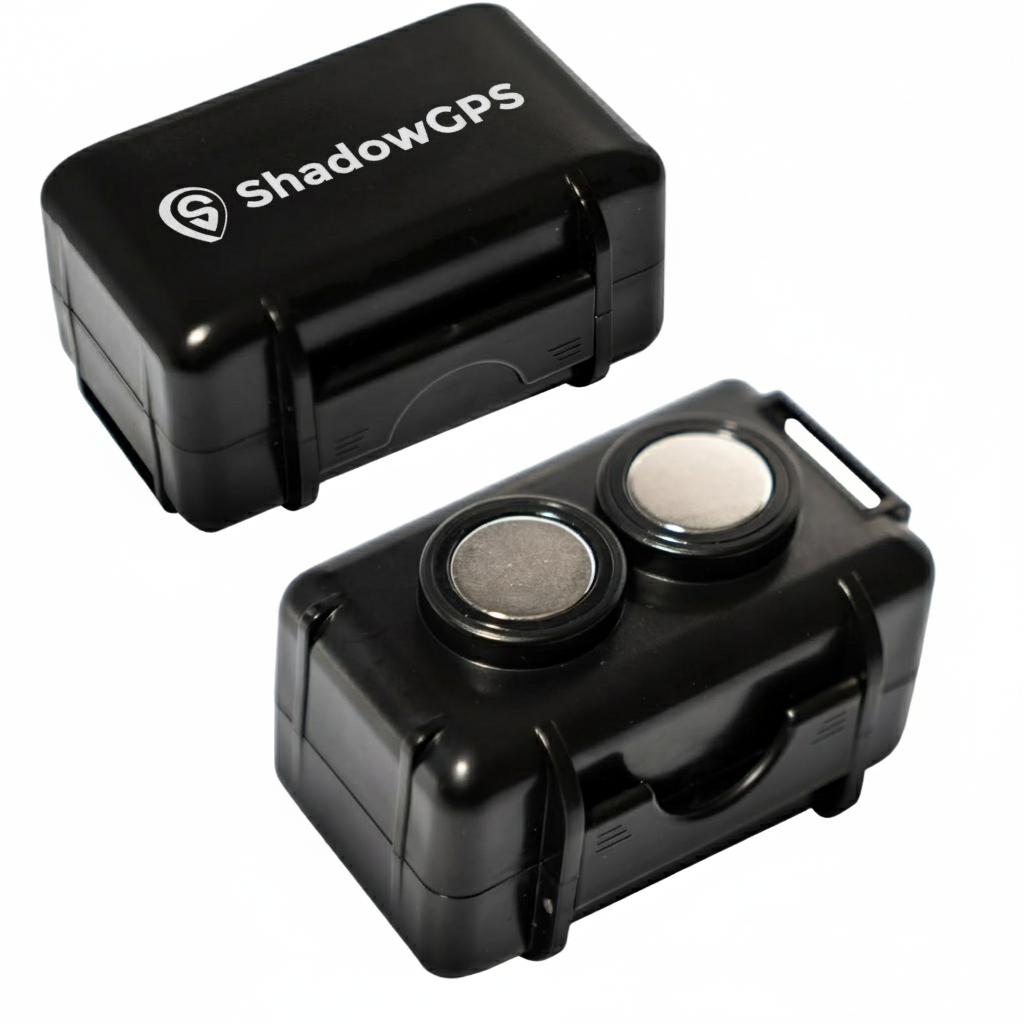
Magnetic Mount Weatherproof GPS Case & Key Holder
- Neodymium magnet mount
- Weatherproof housing
2. AngelSense
AngelSense is the only device on this list built from the ground up for tracking children who elope, wander, or cannot reliably ask for help. It is a screenless GPS tracker that attaches to your child's clothes with a magnetic sleeve and a caregiver key, so it stays on through school, therapy, and play.
The AngelSense GPS tracker updates location every 10 seconds during an emergency, which is the number that matters when a child leaves a safe zone and you are trying to catch up on foot or by car. Most other GPS trackers refresh on a one to five minute cycle, and in a live search that difference is enormous.
It also does things no kids smartwatch does. Two way communication runs through an assistive speakerphone that auto-answers, so a nonverbal child never has to press anything to let you listen in. Proactive alerts learn the daily routine and flag an early departure or an unexpected place. There is an SOS button, a first responder alert list, optional fall detection, and detailed location history for every day.
Pros
- Location updates every 10 seconds in emergency mode
- Sensory-friendly, caregiver-locked wearing options
- Two-way voice, listen-in, SOS button, first responder alerts
- Built in SIM card, unlimited data, no phone required
Cons
- Easily the highest monthly fee in the category
- Published pricing varies by plan tier and promotion
- Free device offers are tied to a 12-month contract
- Overkill for a typical, neurotypical 10-year-old

Best for: children with autism, ADHD, Down syndrome, or any child at risk of wandering. Also strong for a child who cannot be relied on to press a button when something goes wrong.
Pricing note: AngelSense publishes a $229 Guardian Kit plus $39.99 a month in the US, while third-party review tables list plan tiers running roughly $44.99 to $64.99 a month depending on billing term. Confirm your exact tier on their pricing page before you commit, and check what the activation fee is on a month to month plan.
3. Garmin Bounce 2
If your child is old enough to want a watch and young enough that you are not ready for a phone, the Garmin Bounce 2 is the strongest all-round kids smartwatch on sale right now. It pairs real time tracking in the Garmin Jr. app with two-way calling, texting, and voice messages that transcribe automatically for parents. On accurate location alone it is a great device.
The practical wins are the boring ones. Safe zones fire an alert when your child leaves or arrives at a boundary you drew. School mode locks distracting features during school hours so teachers do not confiscate it. There is an assistance feature that sends your child's location and calls family contacts, which functions as the SOS button here.
Two things to know before you buy. The battery lasts about 1.5 to 2 days in normal use, and heavy LTE or music playback shortens that, so this is a nightly-charge device. And Garmin doubled the price from the original Bounce: it is $299.99 now, plus $9.99 a month for the LTE plan that powers location updates and calling.
Pros
- Fast GPS lock and dependable real time tracking
- Two way communication by call, text, and voice message
- School mode, chores, and fun features kids actually use
- Swim-friendly 5 ATM rating and a bright AMOLED screen
Cons
- $299.99 is double the first-generation Bounce price
- Battery lasts under two days, so charging is a nightly habit
- Amazon Music only, no Spotify
- Device requires an active LTE plan for every safety feature

Best for: active elementary and middle school kids, families already in the Garmin ecosystem, and parents who want fitness and chore tracking bundled with a kids GPS tracker.
4. TickTalk 5
The TickTalk 5 does roughly 90 percent of what the Bounce 2 does for around $159.99, and its $9.99 monthly fee comes with no activation fee and no contract. For a lot of families that combination makes it the smarter buy.
Its real advantage is battery life. TickTalk rates it at about 48 hours, which in practice means a child arrives home on Tuesday with charge left instead of a dead wrist. It also runs on both AT&T and T-Mobile, so you can pick whichever cellular networks are stronger where you live rather than being locked to one carrier.
Parents get over 40 parental controls, HD video calling, School Mode, and unknown-number blocking so only pre approved contacts can reach the watch. Real time location tracking includes safe zones and full route history, so you can pull up the exact location of a child arriving at practice. For the money it is a great device.
Pros
- About 48 hours of battery life, the best of the watches here
- $9.99 a month with no activation fee and no contract
- Carrier choice between AT&T and T-Mobile
- HD video calling and 40+ parental controls
Cons
- Build quality feels a step below Garmin or Apple
- SIM card must be activated through TickTalk, not a carrier store
- Free music streaming can become its own distraction

Best for: families who want a full-featured kids tracker and smartwatch without a $300 device price, and anyone who hates being locked to one cellular plan.
5. Bark Watch
The Bark Watch is the only kids smartwatch here that reads what your child is actually sending and receiving. Its AI scans texts, photos, and videos across dozens of categories and alerts you to problematic messages, cyberbullying, or contact that looks predatory.
Everything else is deliberately stripped out. No games, no app store, no browser. It includes real time GPS tracking with several tracking modes, safe zone alerts, an SOS button, and unlimited contacts, at around $169 plus roughly $15 a month that also bundles Bark Premium for the rest of the family's devices.
The trade-off is coverage. Bark runs its own wireless service, so if the signal is weak where you live there is no alternative carrier to switch to. Check coverage before you order.
Pros
- Content scanning no other kids smartwatch offers
- Real-time GPS tracking plus scheduled check-in modes
- Distraction-free by design, which teachers appreciate
- Bark Premium included covers the whole family
Cons
- Single carrier, no fallback if coverage is poor
- Basic step tracking and few fun features
- Monitoring this deep can feel like constant surveillance to an older child

Best for: parents of older kids, roughly 9 to 12, whose main worry is who is messaging their child rather than where the child is standing.
6. Gabb Watch 3e
Gabb takes the opposite approach to Bark. Instead of scanning everything, it removes almost everything: no internet, no social media, no app store, and a short list of pre approved contacts. What is left is calling, texting, safe zone alerts, and location tracking, which for a lot of small children is exactly the right amount.
At around $149.99 the device is the least expensive of the watches here. The catch is the plan, and the device requires it to do anything useful. Gabb runs on Verizon only, charges roughly $17.99 a month with a $30 activation fee, and ties the best rates to a 12 to 24 month contract. Read the early termination terms before you sign.
Pros
- Lowest device price among the kids smartwatches
- Genuinely simple device, very little to misuse
- Gabb Go rewards make younger kids want to wear it
Cons
- Highest monthly fee of the mainstream watches, plus activation
- Verizon only, and contract-term plans carry an early termination fee
- No video calling and fewer customization options

Best for: younger kids getting their first wearable, in families who want the simplest possible device and are comfortable with a contract.
7. Apple Watch SE with Family Setup
Family Setup lets you run an Apple Watch for a child who has no iPhone of their own, managed from your phone. You get real time location tracking in Find My, safe zone arrival and departure notifications, calling and messaging to approved contacts, Emergency SOS, and Schooltime, which is Apple's version of school mode.
The appeal is that it grows with the child. A ten-year-old uses it as a kids tracker, a fourteen-year-old uses it as a watch. It also unlocks Apple's fall detection and crash detection, which no dedicated kids GPS tracker offers.
One correction to a claim you will see repeated across other roundups: an Apple Watch is not subscription free for tracking. You need the cellular model and an active cellular plan line from your carrier, typically around $10 a month, or the watch only reports location while it is near your child's paired apple devices or known wi fi.
Pros
- No separate tracker app, everything lives in the same app you already use
- Emergency SOS, fall detection, and crash detection built in
- Excellent resale value and a device older kids will not refuse to wear
Cons
- Requires an iPhone-owning parent, so Android families are out
- Needs a cellular plan line, so it is not free to run
- Daily charging, and no caregiver lock to stop a child removing it

Best for: iPhone households with older kids who would be embarrassed by an obvious kids smartwatch.
8. Tracki
Tracki is the small, screenless puck a lot of parents drop into a backpack. It is not a kids-specific device, and it has no SOS button or two way communication, but it does the one job well and it does it almost anywhere: Tracki works in roughly 190 countries worldwide, which makes it the obvious choice for international travel.
Read the plan structure carefully. The advertised low rate is tied to a two-year commitment, and running the tracker at its fastest update interval cuts battery life down to a few days. At slower intervals the battery lasts considerably longer.

Best for: travel, luggage, and as a backup tracker in a bag. Not a replacement for a wearable with an SOS button.
What's Better Than an AirTag for Kids? Almost Anything
This deserves its own section because it is one of the most searched questions in the category, and the honest answer surprises people.
Bluetooth trackers like AirTag and Tile are not GPS trackers. They have no GPS chip, no SIM card, and no cellular connection. An AirTag reports an approximate location only when a phone on Apple's Find My network happens to pass nearby, so in a quiet street or a rural area it is effectively offline. There is no live tracking, no safe zone alerts, and no way for your child to call you.
The bigger problem is by design. After AirTag was misused for stalking, Apple engineered it to announce itself. A separated tracker plays a sound when it detects motion, and unwanted-tracking notifications reach iPhone, iPad, and since May 2024 Android 6.0 and later under a specification Apple and Google published jointly. So an AirTag riding in your child's pocket can alert a teacher, a bus driver, or a stranger on a train. Apple's own position is that these devices are for locating belongings, not for tracking people.
Use a Bluetooth tag for the backpack itself so you can find the bag when it is left at practice. Do not use one as your child's location tracking device.
Apple AirTag & Tile
Fine for luggage, keys, and the bag your child keeps leaving behind. Not a kids GPS tracker, no matter how they are marketed in gift guides.


Best for: belongings only. Bags, instrument cases, sports kit, and the water bottle that never comes home.
One more thing worth knowing before you shop
Jiobit appears near the top of almost every kids GPS tracker roundup published this year. As of this update, Life360 lists the current Jiobit line as out of stock while saying it remains committed to the category. Existing subscriptions are still being serviced. If a guide recommends it without mentioning that, the guide has not been checked recently.
The Teen Driver Gap Almost Every Kids GPS Tracker Guide Misses
Here is where nearly every roundup stops short. They list wearables for small children, then trail off around age thirteen and never address the moment that actually keeps parents awake.
That moment is the first solo drive. Motor vehicle crashes are the leading cause of death for US teens, and drivers aged 16 to 19 have a fatal crash rate roughly three times that of drivers 20 and older per mile driven, according to the CDC. A National Institutes of Health study found teens are about eight times more likely to be in a collision or near miss in the first three months of solo driving than in the previous three months on a learner's permit.
A watch on their wrist tells you none of that. It shows a dot moving down a road. It does not tell you the car is still parked at a friend's house at 1am, or where your car ended up after a fender bender, or that it left the driveway when nobody was supposed to be driving.
So at this stage the tracking device moves from your child to your car. That is a different product category, and it is the one we build.
Where our two trackers fit
ShadowTrack, our number one pick above, covers the bike, the bag and the gear. ShadowAuto covers the car. Neither is a wearable with an SOS button, so for a young child we will always tell you to add one of the wearables above rather than swap it out. For a teenager with keys, though, the car tracker is the device that actually answers the question.
9. ShadowAuto: Best GPS Tracker for a Teen Driver
ShadowAuto plugs into your car's OBD-II port, the same port a mechanic uses, usually found under the dashboard on the driver's side. It takes under two minutes and needs no tools and no installer. Once it is in, it draws power from the car, so there is nothing to charge and nothing your teenager needs to remember.
What you get is certainty about where your car is. Live tracking on the map, a trip timeline that lists every drive with start and end points, and trip replay so you can walk back through a route rather than guessing from a single pin. Safe zones work the same way they do on a kids tracker: draw a boundary around home, school, or a friend's neighbourhood and get an alert when the car arrives or leaves.
Car Alarm is the feature parents underuse. It watches for movement when the car should be sitting still, which covers both theft and the drive that was not supposed to happen. Vehicle diagnostics read engine codes, so a check engine light on a car your teen drives stops being a mystery.
Plans run $12 to $15 a month with a 14-day free trial. No contract, ever. Month to month, or prepay and save.
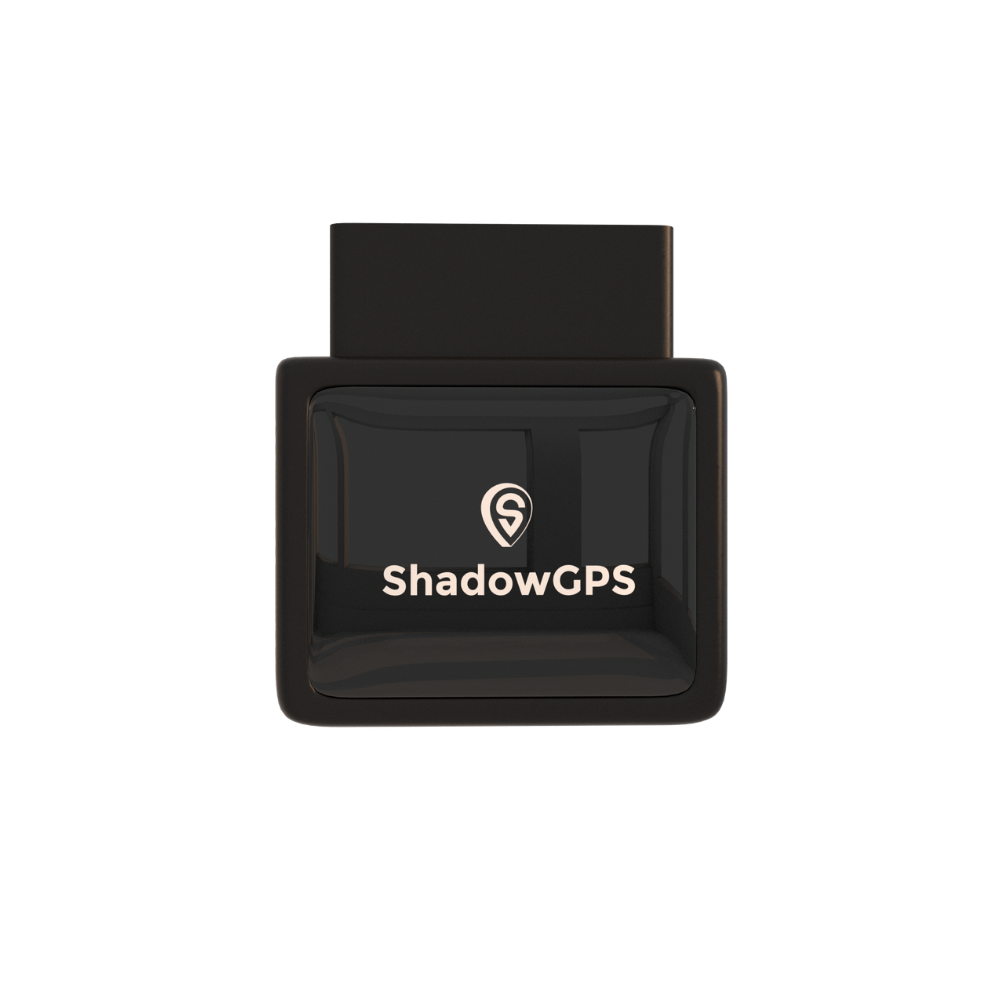
ShadowAuto OBD-II GPS Tracker
- Updates every 5 seconds while moving
- Trip timeline & trip replay
- Car Alarm & vehicle diagnostics
Best for: a newly licensed teenager driving a car titled in your name, and for the first year of solo driving in particular.
Kids GPS Trackers Compared
Device prices and monthly fees checked August 2026. Battery figures are real-world ranges, not best-case lab numbers.
| Tracker | Device | Monthly fee | Battery life | SOS + voice | Best for |
|---|---|---|---|---|---|
| ShadowTrack (battery) | $69.90 | $10-$13/mo with 4+ devices | ~15 days per charge | Not applicable | Bikes, bags, gear, older cars |
| ShadowAuto (OBD-II) | $69.90 | $10-$13/mo with 4+ devices | Powered by your car | Not applicable | Teen driver's car |
| AngelSense | ~$229 kit | ~$40–$65, contract on lower tiers | ~1–2 days | Yes, both | Wandering, special needs |
| Garmin Bounce 2 | $299.99 | $9.99, no contract | ~1.5–2 days | Assistance + calling | Ages 6 to 12 |
| TickTalk 5 | ~$159.99 | $9.99, no contract | ~48 hours | Yes, both | Best value |
| Bark Watch | ~$169 | ~$15 | ~1–2 days | Yes, both | Message monitoring |
| Gabb Watch 3e | ~$149.99 | ~$17.99 + $30 activation, contract | ~1–2 days | Voice only | Simple first watch |
| Apple Watch SE | From ~$249 | Carrier line, ~$10 | ~1 day | Emergency SOS | iPhone families |
| Tracki | ~$29–$50 | ~$10–$30, best rate on 2-yr | 2 days to weeks by interval | No | Travel, luggage |
| Apple AirTag / Tile | ~$25–$35 | None | ~1 year | No | Belongings only |
What to Look For in a GPS Tracker for Kids
Seven things separate a great device from one that ends up in a drawer. Use this as your shortlist when you compare any two kids gps trackers.
1. Real-time location updates, not last-known pins
Accurate location tracking needs GPS plus cellular or wi fi positioning working together. GPS alone struggles indoors and in dense city blocks. Ask how often the gps tracking device reports while moving. Many gps trackers refresh every one to five minutes, which is fine for a routine check and useless in a live search. Real time gps tracking is the difference between finding your child in the next aisle and searching the whole store.
2. Battery life you can live with
Aim for at least 24 to 48 hours, and treat two to three days as the comfortable target. Watches with bright screens and LTE sit at the bottom of that range. Screenless trackers and portable pucks with long battery lives sit at the top. If the battery lasts less than a school day, the device will fail you on the day it matters.
3. An SOS button your child can actually reach
One long press should alert every caregiver on the account with the child's location. Test it on day one, then test it again a month later. A child who has never pressed the SOS button will not think to press it under stress.
4. Two-way communication
Voice calling or text messaging turns a tracking device into a safety device. It also cuts down on panic: most of the time you do not need to find your child, you just need to hear them say they are fine. Devices with an auto-answer speakerphone are the strongest option for a child who cannot operate a phone.
5. Geofencing and safe zones that actually fire
Geofencing lets you draw virtual boundaries and sends alerts automatically. Set safe zones for home, school, the bus stop, and grandma's house. Good implementations tell you when a child arrives as well as when a child leaves, and they let you set different rules for school hours.
6. Durability and water resistance
Look for an IP65 rating or better, and 5 ATM if your child swims. Kids drop things, sit on things, and forget to take a watch off in the bath. A device that dies in a rain shower is not a safety device.
7. Readable location history and clean parental controls
Location history should read like a timeline, not a spreadsheet. You want to see that your child arrived at school at 8:12 and left at 3:04. Parental controls should include school mode, a contact list you approve, and per-caregiver access so both parents and a grandparent can see the same app.
How Much Does a Kids GPS Tracker Really Cost?
Almost every mobile gps tracker requires a monthly cellular subscription, because the device needs its own data connection to report a child's location when no phone is nearby.
That is the single biggest difference between a real gps tracking device and a Bluetooth tag, and it is where most of the ongoing cost sits. Budget for the plan, not just the hardware.
Rough all-in cost for the first year, using the prices in the table above:
- Budget path. TickTalk 5 or Gabb, roughly $150 to $160 up front plus $120 to $216 a year in monthly fees.
- Premium path. Garmin Bounce 2 at $299.99 plus about $120 a year, or an Apple Watch SE plus a carrier line.
- Specialist path. AngelSense, the highest running cost here, justified when elopement is a real and present risk.
- Watch for this. A free device offer usually means a 12-month contract, and the cheapest advertised monthly fee is often a two-year rate. Check what happens if you cancel in month three.
Our own terms sit in the middle of that range and stay the same whichever product you pick: $12 to $15 a month, 14-day free trial, no contract, ever. You can see the full breakdown on our pricing page.
Is It Legal to Track Your Own Child?
In the United States, a parent or legal guardian can generally track their own minor child, and can track a car titled in their own name. The complications start at the edges, and they are worth understanding before you buy.
- What you can do. A legal guardian can use a GPS tracker on their own child under 18, and can track a car registered in their name that a teenager drives.
- What you cannot do. Placing a tracker on a car you do not own, or on another adult, without permission may violate state privacy and stalking laws. A shared custody arrangement can complicate who counts as the guardian for this purpose.
- Check the school first. Many districts restrict wearables during school hours. A tracker with school mode is usually acceptable where a phone is not.
- Read the privacy policy. The FTC advises parents to understand what location data a service collects, how long it keeps it, and who it shares it with. Any device that tracks children is holding sensitive information about your family.
Tracking Without Breaking Trust
Legal and wise are not the same thing. A GPS tracker works best when your child knows it exists and understands why, and it backfires when it is discovered.
The American Academy of Pediatrics notes that GPS devices can offer a useful safeguard for children, and equally that no device replaces supervision, teaching, and conversation. A tracker is a seatbelt, not a driver.
Four habits that keep this healthy:
- Tell your child the device is there and show them the app. Secret tracking, once discovered, costs more trust than it buys safety.
- Frame it as a two-way tool. They can reach you with the SOS button, not just the other way around.
- Trade tracking for freedom. Older kids accept a check-in system far more readily when it comes with permission to ride further from home.
- Loosen the rules as they earn it. Constant surveillance of a fifteen-year-old teaches evasion, not judgement.
We wrote more about this balance in our guide to what every parent should know before handing over the keys, and in our roundup of GPS safety features that protect school children.
Setup Checklist for Day One
Whichever device you choose, do these six things before your child leaves the house with it.
Test the SOS
Press it yourself, confirm all family members on the account get the alert with an accurate location, then have your child press it once.
Draw your safe zones
Home, school, the bus stop, and any regular after-school spot. Turn on both arrival and departure alerts for the first two weeks.
Set school mode
Match the hours to the actual timetable. This is what keeps the device in your child's pocket instead of a teacher's drawer.
Lock the contact list
Only pre approved contacts should be able to call or message. Block unknown numbers before the first day, not after the first problem.
Add a charging habit
Pick a spot and a time. Most kids trackers need charging nightly or every other night, and a flat battery is the most common failure in this category.
Have a low-tech backup
A written card in the bag with two phone numbers. Every device fails eventually, and a seven-year-old should not be relying only on electronics.
Frequently Asked Questions
What is the most accurate GPS tracker for kids?
AngelSense is the most accurate for live searches, because it refreshes location every 10 seconds in emergency mode while most kids GPS trackers update on a one to five minute cycle. Accuracy depends on two things: how often the gps tracker reports, and whether it combines GPS with cellular and wi fi positioning to hold a fix indoors. A tracker with a great chip and a slow reporting interval will still show you where your child was, not where they are.
What is the best GPS tracking device for children?
It depends on age. For children under 7 or any child who wanders, AngelSense. For ages 6 to 12, the Garmin Bounce 2, or the TickTalk 5 if you want the same core features for around half the device price. For iPhone households with older kids, an Apple Watch SE on Family Setup. Once a child is driving, the right tracking device goes in the car rather than on the child.
What is the best safe GPS tracker for kids?
Safe means two things: the device itself is secure, and it does not expose your child. Look for a tracker with encrypted access, per-caregiver logins, a clear data retention policy, and a contact list limited to pre approved contacts. Devices that broadcast their presence, like Bluetooth tags, are the weakest choice on this measure. AngelSense, Garmin, and Apple all publish policies worth reading before you buy.
What's better than an AirTag for kids?
Any cellular gps tracker for kids with a built in SIM card. An AirTag has no GPS and no cellular connection, so it leans on Apple's Find My network and only reports an approximate location when another Apple device passes nearby, and Apple's anti-stalking design makes it announce itself to people around your child. TickTalk 5 at around $159.99 or a screenless tracker like AngelSense both give you live tracking, safe zone alerts, and an SOS button that an AirTag simply does not have.
What is the best GPS tracker for a child?
For most families, the best gps tracker for kids is a smartwatch with two way communication, safe zones, and an SOS button. The TickTalk 5 is the best all-round value, and the Garmin Bounce 2 is the best built. Choose a screenless device instead if your child is likely to remove a watch, and choose a plug-in car tracker once they start driving.
What is the best live GPS tracker for kids?
AngelSense is the best gps tracker for live tracking, on the strength of its 10-second emergency updates and continuous monitoring. Among kids smartwatches, the Garmin Bounce 2 and TickTalk 5 both offer genuine live tracking rather than periodic check-ins. Watch out for devices marketed as live that actually report on a scheduled interval to save battery.
Does a GPS tracker for kids need a SIM card?
Yes, in almost every case, though you usually never see it. Most kids GPS trackers ship with a built in SIM card and the data is bundled into the monthly fee. A few, like the TickTalk 5, need the SIM card activated through the manufacturer rather than at a carrier store. Bluetooth tags have no SIM card at all, which is exactly why they cannot report a location on their own.
Is there a monthly fee, and can I cancel?
Every cellular tracker has a monthly fee, ranging from about $10 to $65 depending on the device. What varies is the lock-in. Free device promotions typically require a 12-month contract, and the lowest advertised rates are often two-year prices. Our own plans run $12 to $15 a month with a 14-day free trial and no contract, ever. Month to month, or prepay and save.
How long should the battery last on a kids tracker?
At minimum 24 to 48 hours, and ideally two to three days. LTE smartwatches cluster around 1.5 to 2 days, the TickTalk 5 reaches about 48 hours, and screenless portable trackers can stretch to weeks at slower location update intervals. Anything that cannot survive a full school day plus the trip home is not reliable enough.
What is the best GPS tracker for a teenager who drives?
A plug-in OBD-II tracker in the car, not a wearable. ShadowAuto plugs into the OBD-II port in under two minutes, draws power from the car so it never needs charging, and gives you live tracking, a trip timeline, trip replay, safe zone alerts, and a Car Alarm that flags movement when the car should be parked. It also reads engine codes, which is useful on a first car.
Can a GPS tracker work without wi fi or a phone signal?
The GPS chip gets a position from satellites anywhere with a view of the sky, but the device still needs cellular networks to send that accurate location to the parent's phone. In a dead zone it will store points and upload them when coverage returns, so you get location history but not live updates. This is why carrier choice matters, and why single-carrier devices are riskier in rural areas.
Should I tell my child they are being tracked?
Yes. Open communication about tracking builds independence rather than resentment, and a device your child understands is a device they will keep charged and keep wearing. Show them the app, explain the safe zones, and teach them to use the SOS button. Tracking a child without their knowledge tends to cost more in trust than it gains in safety, especially with older kids.
The Bottom Line
There is no single best gps tracker for kids. Buy for the child in front of you, not for the longest feature list. A screenless gps tracker with a caregiver lock for a small child. A kids smartwatch with two way communication and long battery life for an eight to twelve-year-old. Phone-based location sharing and a clear agreement for a young teenager.
And when the keys come out, move the tracker from the wrist to the car, where it can tell you something a watch never will.
Your teen has the keys. You should still know where your car is.
Plug it in, see it move, cancel any time. 14-day free trial, and no contract, ever.
Pricing, plan terms and battery specifications are current as of August 2026 and subject to change; confirm current pricing and specifications on each product page before purchase. Competitor pricing is drawn from published manufacturer and retailer listings and varies by promotion, plan tier and billing term. Amazon links are affiliate links; ShadowGPS may earn a commission at no extra cost to you. Teen driver crash figures are from the US Centers for Disease Control and Prevention and a National Institutes of Health study of newly licensed drivers. Insurance discounts for teen driver monitoring vary by carrier and are not guaranteed. Legal guidance here is general information, not legal advice; confirm the tracking and consent laws in your state, and check your school district's device policy.

