

You triple-checked the zipper, got to the airport early, and still ended up staring at an empty carousel while your suitcase went somewhere else entirely. Lost luggage feels impossible until it happens to you, and the numbers say it happens a lot: the US Department of Transportation reported that 0.55% of checked bags were mishandled by American carriers across 2024, and with 5.3 billion passengers flying that year, even a small rate adds up to millions of disrupted trips.
A luggage tracker turns that helpless wait into a live answer. Instead of trusting the airline app stuck on "in transit," you open your phone and see where your bag actually is. This guide ranks the best luggage trackers for 2026, explains GPS versus Bluetooth in plain terms, covers the TSA and airline rules, and helps you pick the right tracker for how you travel.
What is the best luggage tracker? It depends on your phone and your route. iPhone users should start with an Apple AirTag, Android users with a Tile Mate or Samsung Galaxy SmartTag2, and anyone who needs independent, real-time location (checked bags, international flights, high-value gear) should choose a cellular GPS tracker like ShadowTrack. Bluetooth tags are cheap with no monthly fee but rely on nearby phones; a GPS tracker for luggage gives you continuous live location for a small monthly fee, with no crowd required.
Why you need a luggage tracker
Once your bag disappears behind the check-in counter, it is completely out of your hands. The airline may not know exactly where it went either. According to SITA's baggage data, the large majority of mishandled bags are simply delayed, missing a tight connection or sitting in a transfer queue, which means they usually exist and can be found fast if you can see them.
That is the whole point of a luggage tracker. When a bag goes missing, it gives you the one thing the airline often cannot: the current location of your belongings, so you can act instead of wait. For anyone worried about loss or theft of high-value items, that peace of mind is why luggage trackers have become a travel essential.
How luggage trackers work: GPS vs Bluetooth
Before you buy, understand the single most important difference. Luggage trackers use either Bluetooth or GPS, and they work very differently. That gap decides what your tracker can do when your suitcase is out of range, and while many luggage trackers blend technologies, most fall clearly into one camp.
Bluetooth trackers (crowd-sourced finding)
Bluetooth trackers like the Apple AirTag and Tile do not have GPS or a cellular radio. They broadcast a short-range Bluetooth signal, and other people's phones and Apple devices relay that signal to the internet. AirTag uses Apple's Find My network of more than a billion Apple devices; Tile Mate relies on the Tile app community. Bluetooth range is only about 33 feet (10 meters) in practice, so these tags report a location whenever a compatible phone passes nearby.
The catch is the cargo hold. A sealed hold has almost no phones in it, so during a flight a Bluetooth tag usually shows your suitcase frozen at the departure airport. Once the plane lands and your luggage reaches a phone-dense terminal, it re-acquires a location, often 15 to 30 minutes later. That lag is normal. These devices are most useful on the ground at each end of the trip, which is exactly where bags get lost.
GPS trackers (cellular, real-time)
A true GPS tracker uses satellite signals for location and a cellular network to report it, so it does not depend on nearby phones. Drop one in your suitcase and watch your luggage move toward the carousel on a live map. These GPS trackers give continuous updates rather than the occasional pings of Bluetooth trackers, which is what you want when checked luggage passes through three airports before it reaches you.
The tradeoffs are honest ones: a GPS tracker is larger than a coin-sized tag, its rechargeable battery lasts weeks rather than years, and cellular tracking requires a subscription for the data plan and SIM. Some devices combine GPS, cellular, and Bluetooth for accuracy. For international travel and high-value luggage, that independence is worth it.
Which is right for you?
Match the tracker to how you travel, not to whichever one has the best marketing:
- Just want to confirm your luggage reached the airport? A Bluetooth smart tag is usually enough, with no monthly fee.
- Fly internationally or check valuable gear? A cellular GPS tracker gives independent, real-time location with fewer dependencies.
- Want the safest coverage? Use two trackers, a Bluetooth tag plus a GPS tracker, so each covers the other's blind spot.
The best luggage trackers of 2026
Here are our top picks, ranked by how you travel and which phone you carry. This roundup draws on manufacturer specifications and traveler-reported testing, and we cross-checked each claim against primary sources. Test any luggage tracker before your trip, then test it again after landing, to confirm it works with your setup.
ShadowTrack, best for real-time GPS tracking
If you want to see your bag move on a live map instead of waiting for a crowd of phones to find it, ShadowTrack is the pick. It is a standalone cellular GPS tracker, so it reports its own location over LTE anywhere it has signal, no nearby iPhone required. Drop it in checked luggage, a camera case, or a trunk of gear, and it updates every 5 seconds while moving, then settles into a battery-friendly interval when the bag is still.
ShadowTrack is weatherproof with a magnetic case, so it fits a suitcase, a golf bag, or a shipped equipment case. It runs on multi-carrier LTE with roaming across 188 countries, which is exactly what you want on international routes. And unlike most GPS trackers that lock you into a plan, ShadowTrack has no contract, ever, with a 14-day free trial. Honest tradeoffs: it is bigger than an AirTag, and you charge it every couple of weeks and pay a small monthly fee for real-time data.
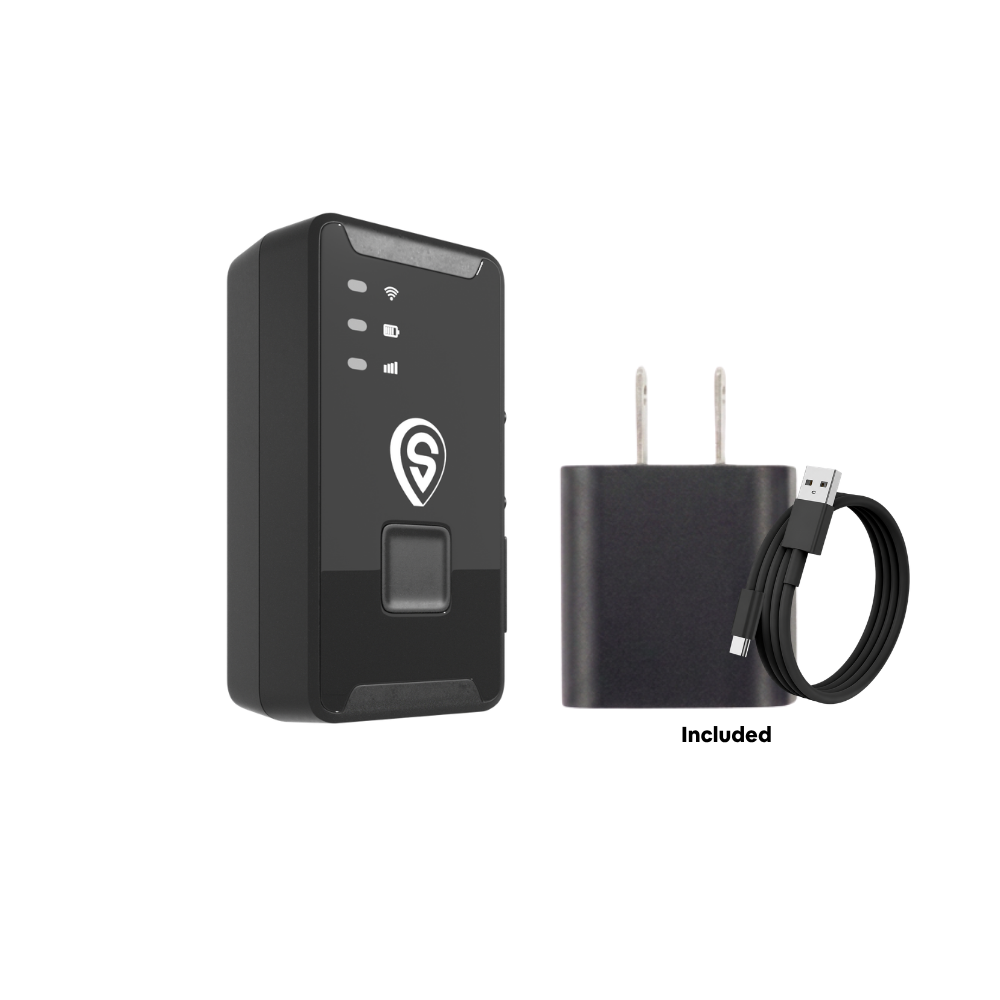
ShadowTrack
- Live location every 5 seconds while moving, worldwide
- Rechargeable battery, weatherproof magnetic case
- Geofence & motion alerts, tracks bags, cars & gear
 Buy Now on Amazon
Apple AirTag (2nd gen): Best for iPhone users
For iPhone owners, the Apple AirTag is the easiest luggage tracker to live with. Setup takes seconds: hold the tag near your iPhone, name it, and it drops into the Find My app. The second-generation AirTag, announced in January 2026 at about $29, adds a newer Ultra Wideband chip so Precision Finding works from up to 50 percent farther away, which helps you home in on a suitcase in a busy terminal.
Its advantage is Apple's Find My network, the largest of its kind, so in busy airports your luggage re-appears quickly. There is no subscription, and it uses a replaceable CR2032 battery that lasts about a year. Just remember it is a Bluetooth tag: no GPS, no live feed in the cargo hold. It is best for confirming your bag reached the same airport, not moment-to-moment tracking.

Tile Mate: Best for Android and cross-platform
Tile Mate is the go-to Bluetooth tracker for Android users and mixed-ecosystem households, because it works across both iOS and Android rather than locking you to one phone. At around $25 it is affordable, includes a built-in hole so you can attach it to a zipper or keys without a separate holder, and its sealed battery lasts about three years. Tile reports your suitcase whenever another Tile or partner-network device passes nearby.

Tile Pro: Best Bluetooth range
If you want the longest Bluetooth reach in a tag, Tile Pro is the step up. It connects to Tile's network of over 70 million devices and offers a longer range than most trackers, useful for pinpointing a bag across a wide terminal or hotel lobby. It uses a replaceable battery and, like every Bluetooth tracker, depends on nearby phones for location updates when your bag is far from you.

Samsung Galaxy SmartTag2: Best for Samsung users
Samsung owners should look at the Galaxy SmartTag2, which uses the SmartThings Find network of Galaxy devices. On a Galaxy phone it behaves much like an AirTag does on an iPhone: fast setup, strong network density in busy areas, a long-life replaceable battery, and no subscription. It is the natural match if your household runs on Samsung rather than Apple.

Luggage tracker comparison
Eight travel styles, one decision. Here is how the best luggage trackers stack up on the specs that matter: technology, phone fit, whether they offer real-time location, battery, and cost.
| Tracker | Technology | Best phone | Real-time? | Battery | Cost |
|---|---|---|---|---|---|
| ShadowTrack | GPS + LTE cellular | iPhone & Android | Yes, every 5 sec | Rechargeable | $69.90 + $12–15/mo, no contract |
| Apple AirTag (2nd gen) | Bluetooth (Find My) | iPhone | No | CR2032, ~1 yr | ~$29, no fee |
| Tile Mate | Bluetooth (Tile) | iPhone & Android | No | Sealed, ~3 yr | ~$25, no fee |
| Tile Pro | Bluetooth (Tile) | iPhone & Android | No | Replaceable | ~$35, no fee |
| Galaxy SmartTag2 | Bluetooth (SmartThings) | Samsung Galaxy | No | Replaceable, long life | ~$30, no fee |
The lesson: a Bluetooth tag tells you your luggage is "somewhere near a phone," while a real-time GPS tracker tells you exactly where your suitcase is right now, anywhere there is signal. Bluetooth tags win on price and battery life; GPS wins on independence and live location. Many travelers pack two luggage trackers, one of each.
Are luggage trackers allowed on planes? TSA and airline rules
Yes. As of 2026, the TSA, the FAA, and every major airline allow both Bluetooth and GPS trackers in checked and carry-on bags. The TSA treats them as ordinary personal electronic devices, so you do not need to declare an AirTag or turn it off. These devices do not interfere with aircraft systems, and the rules that actually matter are about batteries, not tracking.
- Lithium batteries have limits. The small CR2032 batteries in a smart tag and the lithium-ion batteries in a GPS tracker are generally fine in checked luggage, but limits and paperwork vary by carrier and country.
- Keep spares in your carry-on. Many airlines require spare lithium batteries and charging cables to travel in the cabin, not in checked luggage.
- Check your airline for cellular GPS. Bluetooth tags are cleared everywhere. For a cellular GPS tracker that actively transmits, confirm your airline's policy and follow its battery rules, especially on international legs.
How to use luggage trackers
Getting the most from a tracker is about smart placement and a quick pre-trip test:
- Pack it in a zipped interior pocket inside your suitcase, tucked among clothes so it is not obvious and cannot fall out. A tracker backs up a traditional luggage tag or QR code; it does not replace it.
- Check the batteries and test it before you travel. Confirm the tracker shows up in the app, then walk a short distance to test that the location updates.
- Set up alerts and Lost Mode. Turn on separation or motion alerts, and add contact details or a QR code so an honest finder can reach you, which also deters casual theft.
- Use more than one tracker for important trips, test each one, and consider one per suitcase if you check several.
Battery life and what to expect
Battery life is where Bluetooth and GPS trackers split most clearly. Bluetooth tags sip power, so their batteries last a long time on a single cell. Most luggage trackers use CR2032 coin batteries that run one to three years: the Apple AirTag uses a replaceable CR2032, while the Tile Mate ships with a sealed battery rated around three years. When a battery runs low, the app alerts you, and you can test and check remaining battery life in the tracking app before every trip.
GPS trackers work harder, powering a satellite receiver and a cellular radio, so they use a rechargeable battery that lasts weeks rather than years. A travel-friendly interval, updating every few minutes while the bag sits, easily gets you through a week-long trip, even a long-haul flight, on one charge. Charge the batteries before you fly, and most trackers warn you when they run low. For weatherproofing, look for an IP68 rating, meaning dust-tight and water resistant.
How much do luggage trackers cost?
Prices for luggage trackers range from about $15 to well over $100. Bluetooth smart tags like AirTag, Tile, and SmartTag sit around $25 to $35 with no monthly fee, which is their biggest advantage. A GPS tracker for luggage costs more up front and adds a subscription for the cellular data that makes real-time tracking possible.
That fee is not a downside so much as the price of independence: it lets a GPS tracker report from a foreign airport with no reliance on a stranger's phone. ShadowTrack keeps it transparent at $12 to $15 a month with no contract, cancel any time. For one big trip or a high-value suitcase, that convenience is easy to justify.
In short
The best luggage tracker is the one that fits how you travel. iPhone users should get an Apple AirTag; Android and mixed households should get a Tile Mate; Samsung users the Galaxy SmartTag2; and travelers who need independent, real-time location on checked or international bags should choose a cellular GPS tracker like ShadowTrack. Bluetooth tags are cheap with no fee but rely on nearby phones, while a GPS tracker gives continuous live location for a small monthly fee.
Frequently Asked Questions
Are you allowed to put a tracker in your luggage?
Yes. The TSA and FAA allow Bluetooth and GPS luggage trackers in both checked and carry-on bags, and every major airline permits them in 2026. You do not need to declare an AirTag or turn it off. Just follow lithium-battery rules and keep spare batteries in your carry-on.
What is the best tracker to use for luggage?
For iPhone users, the Apple AirTag; for Android or mixed households, the Tile Mate; for Samsung users, the Galaxy SmartTag2. If you need real-time location on checked or international bags, choose a cellular GPS tracker like ShadowTrack instead of a Bluetooth tag.
Are luggage trackers a good idea?
Yes. Millions of bags are mishandled every year, and most are simply delayed rather than gone. A tracker lets you see where your suitcase is and explain the situation to the airline, which turns a stressful wait into a solvable problem. For frequent flyers and valuable bags, it is well worth it.
Is a GPS tracker better than an AirTag?
They do different jobs. An AirTag is smaller, cheaper, and has no monthly fee, but it only reports when Apple devices are nearby, so it goes silent in a cargo hold. A GPS tracker gives independent, real-time location anywhere it has cellular signal, at the cost of size, charging, and a subscription. For international and checked bags, GPS is stronger; for quick airport confirmation, an AirTag is plenty.
What's the best GPS tracker for luggage?
Look for true cellular GPS, real-time updates, worldwide roaming, and clear pricing. ShadowTrack fits that brief: live location over LTE with roaming across 188 countries, a weatherproof magnetic case, and no contract with a 14-day free trial, so you are not locked into a plan you no longer need after the trip.
What is the best way to track my luggage?
Pick a tracker that matches your phone and route, pack it in a zipped interior pocket, and test it before you leave. For the most reliable coverage, use two trackers per important trip: a Bluetooth tag for quick airport finding and a GPS tracker for live location while the bag is out of your hands.
See your bags, your car, and your gear, live.
ShadowTrack gives you real-time GPS anywhere in the world, with a weatherproof magnetic case, a 14-day free trial, and no contract. Cancel any time.
Pricing, specs, and network figures are current as of August 2026 and subject to change; confirm details on each product page before purchase. Competitor prices (Apple AirTag, Tile, Samsung) are approximate and vary by retailer. Amazon links are affiliate links; ShadowGPS may earn a commission at no extra cost to you, and all picks are independently selected. TSA, FAA, and airline rules can change and vary by carrier and country, so always confirm current battery and device policies for your specific trip. This is general information, not travel or legal advice.

