

Your check engine light just came on. Before you panic or ignore it, you need two answers: how serious is this, and what's the code? You can get both in about five minutes, often without leaving the driver's seat.
This guide is the "light is on right now" playbook. It covers what solid and flashing mean, what to do in the first five minutes, three ways to read the code on your phone, the gas cap test, what to say at the shop, and what the most common fixes cost in 2026.
A check engine light means your car's computer has stored a fault code. A solid light means get the code read within a few days. A flashing light means an active misfire, so slow down and stop driving as soon as it's safe. To read the code on your phone, plug an OBD-II reader into the port under your dash and open its app. You'll see a code like P0420 and what it means.
What Does the Check Engine Light Mean?
The check engine light (officially the malfunction indicator lamp, or MIL) means your car's engine computer has detected a fault and stored a diagnostic trouble code. It's tied to the engine and emissions systems, not to things like brakes or tire pressure, which have their own lights.
The light can't tell you how serious the fault is. How it behaves, and what else is on the dash, can:
| What you see | What it usually means | Urgency | What to do |
|---|---|---|---|
| Solid light, car drives normally | A stored fault. Often emissions, a sensor, or the fuel cap. | Days, not weeks | Read the code and book a repair this week. |
| Flashing light | An active misfire that can overheat the catalytic converter. | Today | Slow down, avoid hard acceleration, stop as soon as it's safe. |
| Light plus a red oil or temperature warning | A problem that can damage the engine quickly. | Now | Pull over and shut the engine off. |
| Came on right after filling up | Often a loose fuel cap (an EVAP leak). | Soon | Do the gas cap test below. |
| Comes on, then goes off on its own | An intermittent fault the computer saw, then stopped seeing. | Weeks, but don't ignore it | Read the stored code. It's often still there. |
AAA's advice matches: if the light is flashing, the car feels wrong, or you notice smoke or strange smells, pull over and shut the engine off.
Check Engine Light Just Came On? Do This in the First 5 Minutes
- Look at the light. Solid means schedule it. Flashing means ease off and plan to stop.
- Scan the rest of the dash. Red oil pressure, temperature, or battery warnings turn this into "pull over now."
- Notice how the car feels. Shaking, stumbling, or a loss of power usually points to a misfire.
- Think about the last fill-up. If it was today or yesterday, the fuel cap jumps to the top of the list.
- Read the code before you call anyone. Knowing it changes the conversation, and often the estimate.
How to Read Check Engine Codes on Your Phone: 3 Ways
All three methods read the same standardized codes from the same OBD-II port, standard on cars and light trucks sold in the US since 1996. The difference is when you get the code and who has to be in the car.
Option 1: A Bluetooth OBD2 Scanner and an App
The most common route. A small Bluetooth or Wi-Fi adapter plugs into the port, and a scanner app on your phone reads the codes while you sit in the car.
Steps
- Find the OBD-II port, usually under the dash on the driver's side. Our guide on where to find your OBD2 port covers the hard-to-spot ones.
- Plug the adapter in and turn the key to "On" without starting the engine.
- Pair it in your phone's Bluetooth settings, or join its Wi-Fi network if it's a Wi-Fi model.
- Open the app, select your car, and tap "Read codes."
- Screenshot everything: the code, pending codes, and the freeze frame data. You'll want it at the shop.
Good for: owners who drive their own car and want to read a code once in a while. The catch: someone has to be in the car with the adapter plugged in.
Option 2: An OBD-II GPS Tracker That Sends the Code to You
If someone else is often behind the wheel, a scanner doesn't help much. A new driver or a rental guest may not mention the light for weeks. An OBD-II GPS tracker stays plugged in, has its own cellular connection, and sends the code to your phone the day the car stores it.
ShadowAuto is ShadowGPS's version. It plugs in yourself in under two minutes and runs on your car's power. The same app shows where your car is right now. We cover the full setup, battery and fuel alerts, and how to react to each alert in our vehicle health monitoring guide.
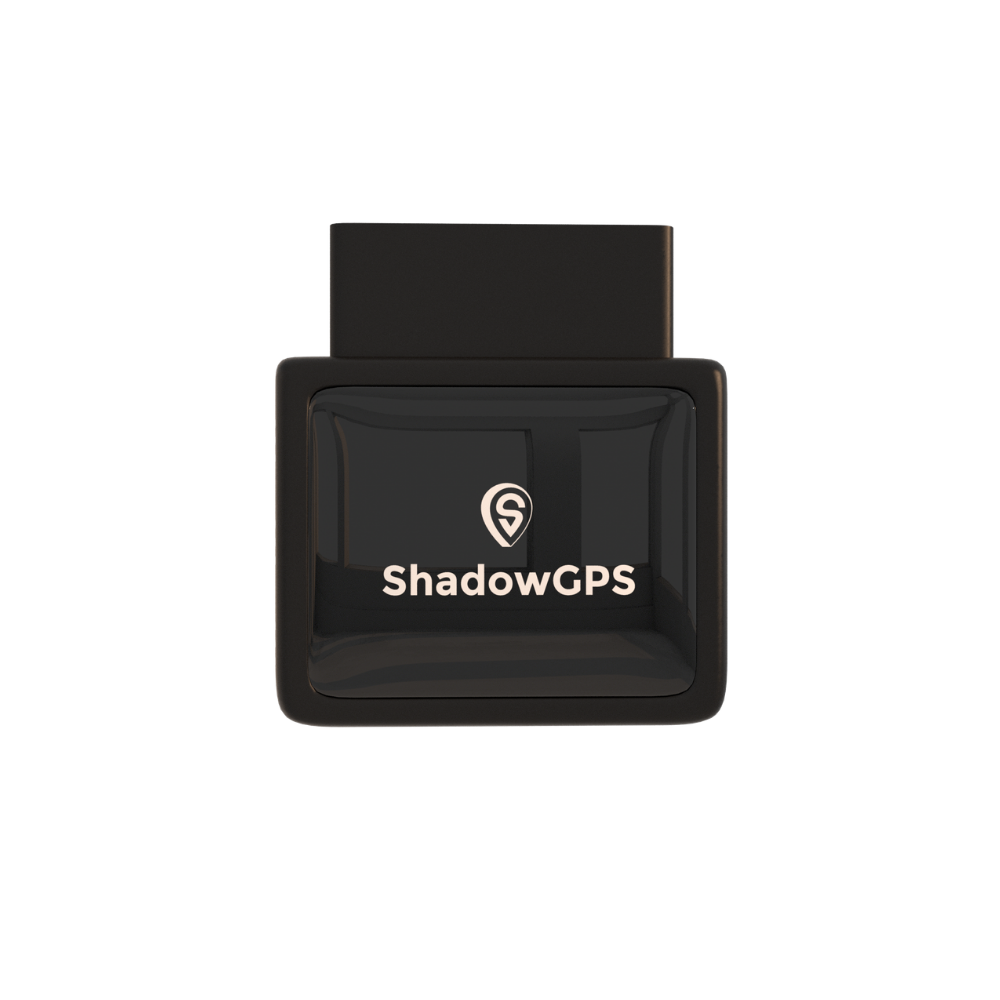
ShadowAuto
- Check engine codes sent to your phone, wherever you are
- Live location that updates every 5 seconds while moving
- Plug it in, no tools, nothing to charge


Good for: parents of new drivers, Turo hosts, and anyone running a few work trucks, where the person who sees the light isn't the person who pays for the repair.
Option 3: A Free Parts-Store Scan or a Shop Diagnosis
Many auto parts stores will read your code for free in the parking lot. It's a solid choice if the car drives normally and a store is nearby.
A shop diagnosis goes further: a technician confirms the actual cause instead of just reading the code. RepairPal's estimates put a typical check engine light diagnosis at $122 to $179, depending on your car and local labor rates.
Which Way Should You Read the Code? Pick by Situation
| Your situation right now | Best way to get the code |
|---|---|
| You're in the car, it drives fine | Bluetooth scanner, or a free parts-store scan on the way home |
| The light is flashing or the car runs rough | Stop driving. Read the code where you are, then call a shop or tow |
| Someone else drives the car (teen, guest, employee) | An OBD-II GPS tracker that sends the code to your phone |
| The car won't start | Most readers still work with the key on. If not, it's a shop diagnosis |
| You need to pass an emissions inspection soon | Read the code now and get the repair done first. Don't just clear it |
What Your Code Is Telling You
Every code has five characters. The first letter names the system (P is powertrain, which covers most check engine codes). A 0 in the second spot means a generic code that means the same thing on every make. The last three digits narrow down the system and the specific fault.
So P0420 reads as: powertrain, generic, emissions system, catalyst efficiency below threshold. One honest warning: a code points to a system, not always a part. RepairPal's P0420 page explains that it's set by comparing the front and rear oxygen sensors, so a tired sensor can trigger it on a healthy converter.
For a full table of the codes owners see most, grouped by system and urgency, see our check engine code guide.
The Gas Cap Test: Rule Out the Easiest Fix First
A loose, cracked, or missing fuel cap lets fuel vapor escape. Your car's evaporative emissions (EVAP) system notices, stores a code like P0455 or P0457, and turns the light on. It's one of the few check engine causes you can fix in the parking lot.
- Check the code first. An EVAP leak code makes the cap a strong suspect. A misfire or oxygen sensor code means the cap isn't your problem.
- Remove and reseat the cap. Look for a cracked seal, then tighten it until it clicks.
- Drive normally for a few days. The EVAP system only rechecks itself under certain conditions, so the light may take several drives to go off.
- Still on after a week? Replace the cap if the seal looks worn. If the light stays on, the leak is somewhere else, like a hose or purge valve.
What to Tell Your Mechanic (and What to Ask)
Walking in with the code puts you in a much better spot than "my light is on." Here's what to bring and what to ask:
- Bring: the code(s), any pending codes, the freeze frame screenshot, and when the light first came on.
- Describe: how the car felt. Rough idle, hesitation, a smell, worse fuel economy.
- Ask: "Will you confirm the cause before replacing parts?" A code alone isn't a diagnosis.
- Ask: "Is this related to any other code?" Fixing a misfire first can make a converter code disappear.
- Ask: "Can I see the old part?" A reasonable request at any shop.
- Check: whether a catalytic converter repair is covered by your emissions warranty. Federal rules require long coverage on major emissions parts on newer cars.
Got the code? Get a fair price before you book
Look up your code and compare repair estimates for your car and zip code on RepairPal, a ShadowGPS partner. Showing up with the code and a fair price range makes the shop conversation a lot shorter.
What Check Engine Repairs Cost in 2026
Fixing a check engine light cost an average of $554 in 2025, a record high and 33% more than the year before, according to the 2026 CarMD Vehicle Health Index. CarMD points to labor costs up 51%, parts up 23%, and an average vehicle age of 12.8 years.
These are the ten most common check engine repairs from that report, with average parts and labor:
| Rank | Repair | Avg. cost (parts + labor) |
|---|---|---|
| 1 | Catalytic converter | $1,511 |
| 2 | Oxygen (O2) sensor | $287 |
| 3 | Ignition coil and spark plug(s) | $480 |
| 4 | Mass air flow (MAF) sensor | $346 |
| 5 | Ignition coil | $256 |
| 6 | EVAP purge control valve | $172 |
| 7 | Fuel injector(s) | $572 |
| 8 | ABS wheel speed sensor | $314 |
| 9 | Thermostat | $324 |
| 10 | Spark plug(s) | $299 |
Source: CarMD 2026 Vehicle Health Index, based on more than 39 million US vehicles in calendar year 2025.
Why Waiting Costs More: The Repair Cascade
The priciest item on that list is often the last link in a chain. CarMD notes that unresolved misfires and failing oxygen sensors can eventually damage the catalytic converter. A bad O2 sensor can also cut fuel economy by as much as 40% while the car seems to drive fine.
- Stage 1: a worn spark plug or coil sets a misfire code. Roughly $256 to $480.
- Stage 2: unburned fuel and bad readings stress the O2 sensors. Around $287 more.
- Stage 3: the converter overheats and fails. About $1,511.
Reading the code on day one is how you stop at stage 1.
4 Mistakes That Make a Check Engine Light Worse
- Clearing the code to make the light go away. The fault is still there, and clearing resets your car's readiness monitors, which can fail you at inspection.
- Disconnecting the battery as a "reset." On many cars it clears codes the same way, plus your radio presets and learned idle settings. Same problems, more hassle.
- Buying the part the code names. P0420 doesn't always mean a new converter. Confirm the cause first.
- Driving on a flashing light. An active misfire can damage the converter quickly, turning a few-hundred-dollar fix into the most expensive one on the list.
Frequently Asked Questions
Is it safe to drive with the check engine light on?
With a solid light and a car that drives normally, short trips to a shop are usually fine. With a flashing light, red warning lights, smoke, or rough running, stop as soon as it's safe. Read the code either way so you know what you're dealing with.
How long can I drive with a solid check engine light?
There's no safe number of miles, because it depends on the code. A loose fuel cap can wait a few days. A misfire or oxygen sensor fault gets more expensive the longer you drive on it. Read the code, then decide.
Can I read check engine codes with just my phone?
Not by itself. Your phone needs something plugged into the OBD-II port to talk to the engine computer: a Bluetooth or Wi-Fi adapter, or an OBD-II GPS tracker with its own cellular connection. Once that's in place, the app shows the code and what it means.
How much does it cost to diagnose a check engine light?
RepairPal estimates a typical check engine light diagnosis at $122 to $179, depending on your car and local labor rates. Many parts stores read codes for free, and reading them yourself costs nothing beyond your reader.
Will the check engine light turn off by itself?
Sometimes. If the fault goes away, like after tightening a fuel cap, the light can turn off after several drives. The code usually stays in memory, though, and a light that keeps coming back means the root problem is still there.
Can I pass inspection with the check engine light on?
In states that test emissions through the OBD-II port, a lit check engine light is usually an automatic fail. Clearing the code right before the test doesn't help either, because the readiness monitors won't be complete. Fix the fault, drive normally for several days, then test.
Does disconnecting the battery reset the check engine light?
On many cars, yes, but it's a bad idea. It wipes the code your mechanic needs, resets the readiness monitors, and clears settings like radio presets. If the fault is still there, the light comes back anyway.
Is there a monthly fee for ShadowAuto?
Yes. The tracker is $69.90 once, then $12 to $15 a month depending on how you pay, or as low as $9 a month on a 2-year prepay. No contract, ever. Month-to-month, or prepay and save. The SIM card is already inside, and our vehicle health monitoring guide answers the rest of the setup questions.
Know the code before you get to the shop
Plug it in, see your car move and its engine codes on your phone, and cancel any time.
Pricing current as of October 2026. Sources: CarMD 2026 Vehicle Health Index (via Forbes, April 2026); RepairPal check engine light diagnosis estimates and OBD-II code P0420 reference; AAA Automotive check engine light guidance. Code definitions are generic SAE descriptions; always confirm a diagnosis with a qualified technician. Some links are affiliate links, and ShadowGPS may earn a commission at no cost to you. RepairPal is a ShadowGPS partner. This article is general information, not mechanical advice.

