

Scan tool in one hand, phone in the other, a dashboard with no plug in sight. Every driver who has tried to find this port knows the feeling.
On any 1996 or newer vehicle sold in the US, the OBD-II port is not hidden. Federal rules keep it in one small zone, reachable without tools.
This article covers where to find the OBD2 port, how to identify it, and what to plug in.
Look low under the driver's side dashboard, left or right of the steering column. Most vehicles put the OBD-II port there: a 16-pin trapezoid within 2 feet of the steering wheel. Sit in the driver's seat, drop to knee height, sweep with a flashlight. Cannot find the OBD2 port? Check the fuse panel edge, the low console, and any cover marked "Diagnostics".
Quick overview: what the OBD-II port does
On Board Diagnostics II is the diagnostics standard every vehicle sold in the US has carried since 1996. The OBD-II port is your access point.
Behind those pins, a network of control modules watches the engine, emissions and dozens of sensors. When a reading drifts, a module stores diagnostic trouble codes and lights the check engine lamp.
Plug in to access live information, pull error codes, and confirm your vehicle passes emissions. Since 2008 US vehicles communicate over the CAN network (ISO 15765), so one set of scan tools, and remote engine diagnostics, work on nearly every brand.
Where is my OBD2 port? Five places to check
Work the list in order. The image below marks the same zones on a typical vehicle.
- Under the steering column, low on the driver's side. The default OBD-II port location, angled toward the ground.
- Left of the column, by the fuse panel or kick panel.
- Right of the column, above the accelerator or behind knee trim.
- Low in the center console, near an ashtray. Common on Honda, Chrysler and older Ford vehicles.
- Located behind a snap-off cover marked OBD or Diagnostics, common on German and Korean vehicles.
The tip most users miss: kneel on the ground outside the open door and look up. These connectors face down, so you rarely find an OBD2 port while seated.
How to identify the OBD-II port and its pins
On Board Diagnostics II connectors are trapezoids: 16 pins, two rows of eight. Type A serves 12V vehicles, Type B 24V commercial chassis.
Three pins are always wired: pin 16 for battery power, pin 4 chassis ground, pin 5 signal ground. The rest depend on how your vehicle communicates.
Not all 16-pin connectors under a dashboard communicate with diagnostics scan tools. No trapezoid, no OBD-II port: find yours on the pinout image below.
Car OBD port location by brand and model

Placement of these connectors shifts by vehicle model year and trim, depending on what you drive. Compare with the image above, then locate yours below.
| Vehicle brand | Where to find the OBD-II port |
|---|---|
| Ford (F-150, Explorer) | Under dashboard, left of column |
| Chevrolet / GMC | Driver footwell, above pedals |
| Ram / Jeep / Chrysler | Under dashboard, by knee bolster |
| Toyota / Lexus | Right of column, above accelerator |
| Honda / Acura | Low at driver's edge of console |
| Nissan / Infiniti | Left of column support, recessed |
| Hyundai / Kia | Lower dashboard, near fuse panel |
| BMW / Mini | Lower left dashboard, behind cover |
| Mercedes-Benz | Under dashboard, behind trim |
| Volkswagen / Audi | Driver footwell or dash center |
Brand not in this article? The five zones above cover most vehicles.
Find your OBD-II port in 30 seconds
Ignition off, flashlight on:
- 0 to 5 seconds: Seat back, head below the wheel.
- 5 to 15 seconds: Sweep low under the dashboard, both sides of the steering column.
- 15 to 22 seconds: Run a hand along the underside; fingers locate recessed connectors faster than eyes.
- 22 to 30 seconds: Check the fuse panel edge; pop any cover marked Diagnostics.
Most users find it that fast. Still stuck? Refer to your owner's manual, or find your make and model in a free OBD port finder database such as the Equipment and Tool Institute's, then locate your OBD2 port.
Why can't I find my OBD2 port?
Five reasons users cannot find the OBD2 port on their vehicle:
- Located behind a cover. Panels pop off by hand; no tool is required to access it.
- Wrong height. You will not find it up by the radio; the OBD-II port sits low, near knee level.
- A pre-1996 vehicle. Older models use OBD-I connectors, often under the hood.
- You drive an EV. Tesla's service documentation notes that some Model 3 and Model Y vehicles shipped with no OBD connector, since it was not mandatory on electric vehicles until 2024.
- Wrong plug. Automakers kept proprietary diagnostics connectors alongside the standard OBD-II port, depending on the brand.
What to plug into the OBD-II port
Once you find the port on your vehicle, two devices are worth plugging in. Chasing a warning light? A handheld diagnostics reader turns stored codes into plain English.
Want to know where your truck is right now? The same OBD-II port powers a GPS tracker. ShadowAuto reports position every 5 seconds while moving: line up the trapezoid, push until it clicks, two minutes, no tools. Your phone shows live location, trip timeline and trip replay, and Car Alarm pings you if your vehicle moves.
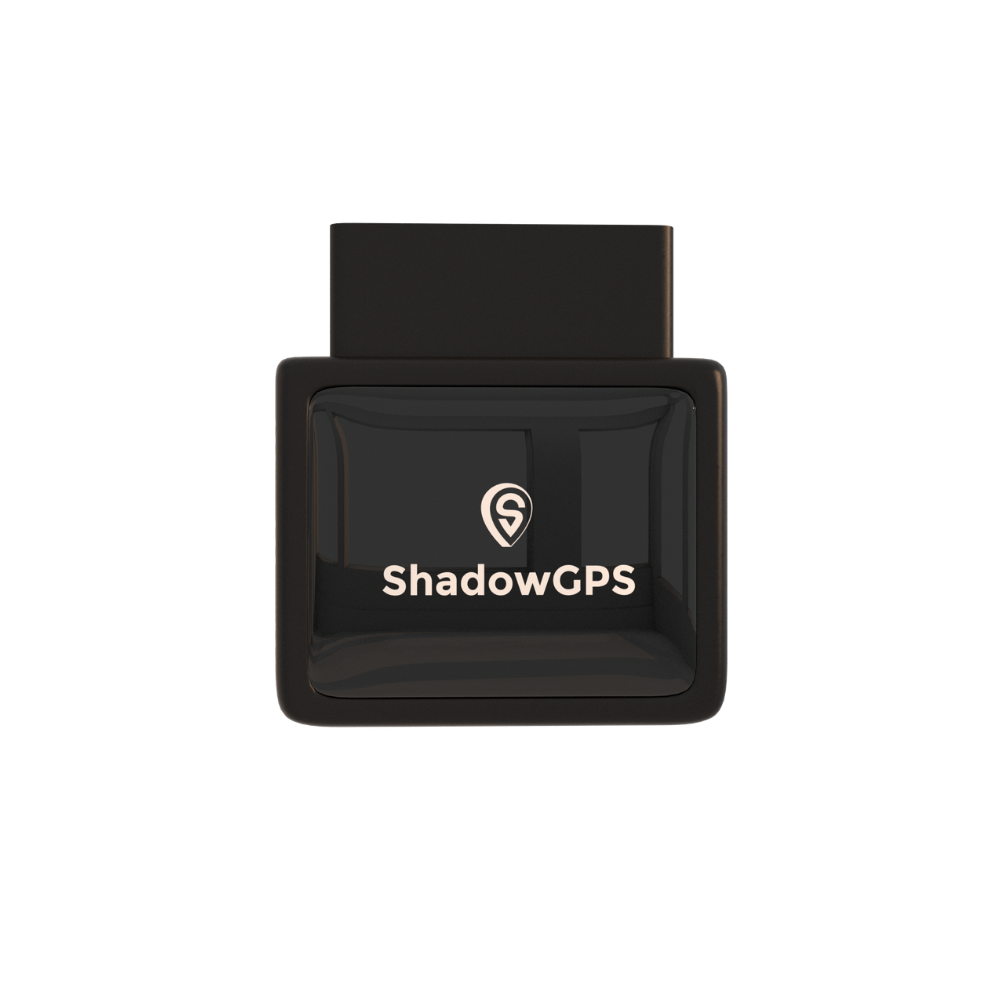
ShadowAuto OBD-II GPS Tracker
- Updates every 5 seconds while moving
- Trip timeline and trip replay
- Car Alarm plus vehicle diagnostics
 Buy Now on Amazon
No OBD-II port on your vehicle? ShadowTrack runs on battery and hides anywhere: an EV with no OBD connectors, a trailer, towed equipment. Our OBD2 versus battery comparison weighs both.
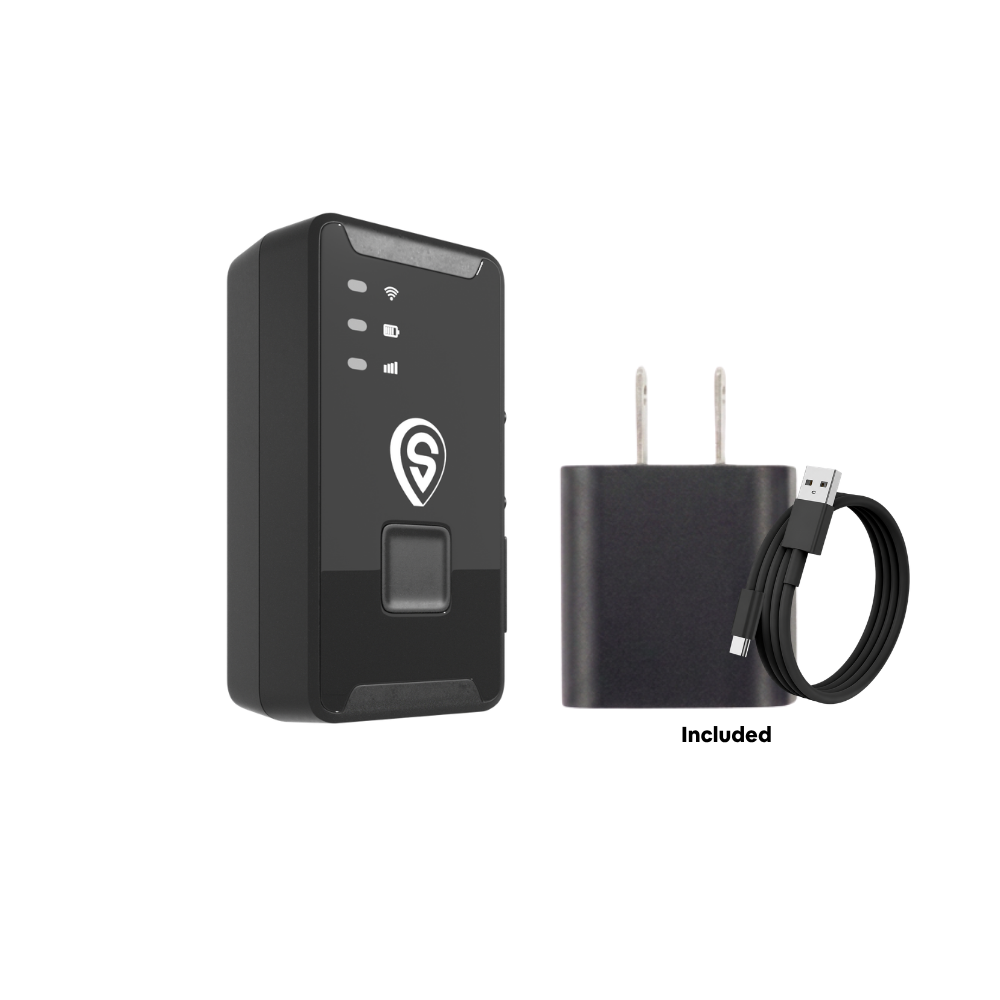
ShadowTrack Battery GPS Tracker
- Weatherproof magnetic mount
- About 15 days per charge
- For vehicles without an OBD-II port
Which device fits which job
| Device | Uses the OBD-II port | Live location | Monthly fee |
|---|---|---|---|
| ShadowAuto | Yes, any 1996+ vehicle | 5 seconds, moving | $10-$13/mo with 4+ devices |
| ShadowTrack | No, battery powered | 5 seconds, moving | $10-$13/mo with 4+ devices |
| Handheld scan tools | Yes, while plugged in | No | None |
| Insurance dongle | Yes, permanently | Limited | Varies |
Two questions come up first: does a tracker need a SIM card, and how plug-in setup works.
OBD-II port location at a glance
Every US vehicle from 1996 onward has one, located inside your vehicle's cabin on the driver's side, within 2 feet of the steering wheel and accessible by hand. Look low to find the 16-pin trapezoid.
Frequently asked questions
Where is the OBD port located in my car?
You will find it located under the driver's side dashboard, within 2 feet of the steering wheel, depending on your vehicle. SAE J1962 requires the OBD-II port to sit inside the cabin, easy to access.
Which cars have an OBD2 port?
Effectively every gasoline vehicle sold in the US since 1996 carries On Board Diagnostics II, plus diesels from 2008. Some EVs and hybrids use a different network, so identify yours first.
Is the OBD port always on?
Yes. Pin 16 carries battery power, so the OBD2 port stays live with the ignition off. That is how a plug-in tracker keeps reporting while your vehicle is parked.
Can I drive with OBD2 plugged in?
Yes. The OBD-II port is designed to hold a device while your vehicle is moving. Keep it clear of your knees and the pedals.
Can I drive a car with OBD plugged in every day?
Yes. That is how OBD trackers and insurance dongles are used: in the port full time, with no effect on how your vehicle drives.
Is there an app that can help me find my OBD port?
Yes. Apps such as "Where is my OBD2 port? Find it" hold location information for a thousand-plus models, and users keep adding vehicles. A web-based OBD port finder helps you find yours.
Find the port, plug it in, and stop wondering where your car is.
Plug it in, see your vehicle move, cancel any time. 14-day free trial, 30-day money-back guarantee, no contract, ever.
Pricing and specs current as of August 2026, subject to change; confirm on the product page before purchase. Amazon links are affiliate links; ShadowGPS may earn a commission at no extra cost to you. OBD port locations vary by model year and trim; refer to your owner's manual. General information only, not repair or legal advice.

