

You plug a GPS tracker into your car, park it for the weekend, and a little voice asks: will it still start on Monday? It's a fair question. Your car's battery is the one part you can't afford to have quietly emptying in the background.
Here's the straight answer. A quality GPS tracker does not drain a healthy car battery under normal use. It sips a few milliamps when your car is parked, which is a small slice of what your car's own clock, alarm and computers already draw. But "never" isn't honest either, so this guide shows the real numbers, the handful of situations where a tracker can tip a battery over, and exactly how to check and prevent it for every type of tracker.
No, a quality GPS tracker won't drain a healthy car battery. Plug-in OBD-II and hardwired trackers draw roughly 1 to 10 milliamps while parked, well under the 50 mA most mechanics treat as a normal total for a parked car. Battery-powered trackers draw zero from your car. Drain only becomes a real risk with an old battery, a car parked for weeks, or a no-name tracker without a sleep mode.
Does a GPS tracker drain your car battery? The short answer by tracker type
How much a GPS tracker uses depends almost entirely on where it gets its power. Here's the quick version before we dig into numbers.
- OBD-II plug-in trackers: draw a small amount from your car, even when it's off, because the OBD-II port stays powered in most cars. A good one drops into sleep mode and is a non-issue for a car you drive regularly.
- Hardwired trackers: similar tiny draw when wired correctly to constant and ignition power. Wired wrong, they can stay awake and become a real drain.
- Battery-powered trackers: zero draw on your car. They run on their own rechargeable battery, so the only battery you manage is the tracker's.
- Bluetooth tags like AirTag or Tile: zero draw on your car. They run on a small coin cell or their own battery.
How much power does a GPS tracker actually use?
Trackers are measured in milliamps (mA), which is one thousandth of an amp. That's the number worth knowing, because it's how mechanics measure "parasitic draw," the small current your car pulls from the battery while it's switched off.
Driving vs. parked: two very different numbers
While you drive, a tracker is fully awake: its GPS receiver finds your position and its cellular modem sends updates. That draw is higher, but it doesn't matter, because your alternator is running and recharging the battery the whole time.
Parked is the number that counts. That's when your battery is on its own, and that's when sleep mode does its job.
What sleep mode really does
Sleep mode is the single feature that separates a tracker you never think about from one that leaves you needing a jump. When your car stops moving, a well-built tracker powers down its GPS and cellular radios and keeps only a tiny motion sensor (an accelerometer) listening. Movement or ignition wakes it back up.
Manufacturers publish parked draw figures in this range:
- About 1 to 2 mA for a hardwired tracker in sleep mode, according to Logistimatics.
- Under 10 mA at idle for most commercial trackers, according to fleet provider GPS Insight.
- Tens of milliamps for low-quality trackers with weak or no power management, which is where real drain stories come from.
How that compares to the rest of your car
Your car is never truly "off." The clock, radio memory, alarm, keyless entry receiver and a dozen computer modules all sip power around the clock. Auto technicians generally treat 50 mA as the upper limit of normal parasitic draw once a car has gone to sleep, as Vehicle Service Pros and YourMechanic both note. Battery maker NOCO puts newer, gadget-heavy cars at 50 to 85 mA.
So a quality tracker sleeping at a few milliamps adds a small fraction on top of what your car already uses. It's rarely the cause of a dead battery. More often it's one small load stacked on a battery that was already tired.
The battery math: how long before a tracker could actually matter?
This is the part most articles skip, and it's the part that actually answers the worry. You can check it yourself with simple multiplication.
A typical car battery holds around 40 to 70 amp-hours (Ah). We'll use 50 Ah. Multiply a draw in milliamps by 24 hours to get what it uses per day, then by 30 for a month parked.
| What's drawing power while parked | Draw | Used per day | Used in 30 days | Share of a 50 Ah battery |
|---|---|---|---|---|
| Quality tracker, deep sleep | 2 mA | 0.05 Ah | 1.4 Ah | About 3% |
| Quality tracker, typical sleep | 5 mA | 0.12 Ah | 3.6 Ah | About 7% |
| Tracker at the high end of normal | 10 mA | 0.24 Ah | 7.2 Ah | About 14% |
| No-name tracker that never sleeps | 30 mA | 0.72 Ah | 21.6 Ah | About 43% |
| Your car's own normal parked draw | 40 mA | 0.96 Ah | 28.8 Ah | About 58% |
Theoretical figures on a fully charged, healthy 50 Ah battery. Real batteries lose capacity with age and cold, and self-discharge a little on their own.
Two things jump out. First, your car's own electronics use far more than a quality tracker does. Second, you never get to use the whole battery: a starter battery usually struggles to crank long before it's empty, and sooner in cold weather.
That's why the honest rule of thumb is this. A car driven a few times a week will never notice a good tracker. A car parked for a month or more can run its battery down with or without a tracker, and the tracker just adds a little to the pile.
Worked example: a Turo host's car between bookings
Say your rental sits for 10 days between trips with a quality OBD-II tracker sleeping at 5 mA. That's about 1.2 Ah, roughly 2% of a 50 Ah battery. The car's own electronics will use around eight times that over the same stretch. The tracker isn't the risk here. A three-year-old battery that never gets a long drive is.
Does it depend on the type of GPS tracker? Yes. Here's every type
The answer to "does a GPS tracker drain car battery" changes with how the tracker is powered. Here's how each one behaves.
OBD-II plug-in trackers
These plug into the diagnostic port under your dashboard, the same one a mechanic uses to read engine codes. The port stays powered in most cars even with the key out, so the tracker always has a trickle of power. That's what keeps it reporting if your car is moved while parked.
A quality OBD-II tracker sleeps when parked and won't trouble a healthy battery. The real risk is a low-cost, no-name dongle without proper sleep mode, or one that keeps "talking" to your car's computer and stops the car from going to sleep itself. If you're not sure where your port is, here's how to find your OBD2 port in 30 seconds.
Hardwired trackers
Hardwired trackers connect to your car's fuse box or wiring, usually with a constant power wire, a ground and an ignition wire. That ignition wire is what tells the tracker your car is off so it can sleep.
Wired correctly, a hardwired tracker draws as little as an OBD-II one. Wired wrong, for example with the ignition wire on a constant-power circuit, it never knows the car is off and stays fully awake. If you're comparing the two, our guide on wireless vs. hardwired GPS trackers covers the trade-offs.
Battery-powered (portable) GPS trackers
These have their own rechargeable battery and never touch your car's electrical system, so they draw 0 mA from your car battery. You can drop one in the glovebox, under a seat, or in a magnetic case under the frame.
The trade-off is that you charge the tracker instead. Battery life depends on how often it reports and how much your car moves. For a full side-by-side, see OBD2 vs. battery-powered GPS trackers.
Bluetooth tags (AirTag, Tile, SmartTag)
Bluetooth tags run on a coin cell or small built-in battery and draw nothing from your car. They also aren't true GPS trackers: they rely on nearby phones to report their location, so they can't give you live tracking or trip history the way a cellular GPS tracker can.
Satellite trackers
Satellite trackers report through satellite networks instead of cell towers, which helps in remote areas with no coverage. Most run on their own batteries, so their effect on your car battery is zero, or follows the same rules as a hardwired tracker if wired in.
Dash cams with parking mode and built-in connected-car apps
Two common devices get blamed on trackers. A dash cam recording in parking mode is powering a camera, so it usually draws much more than a tracker. Most quality hardwire kits include a low-voltage cutoff for this reason. Your car's factory connected-car features (remote start apps, built-in location) also draw a little power while parked.
GPS tracker battery drain compared: every type side by side
| Tracker type | Powered by | Draw on your car while parked | Real drain risk | Best for |
|---|---|---|---|---|
| OBD-II plug-in (quality, with sleep mode) | Your car's OBD-II port | A few mA | Low on a healthy battery | Daily drivers, teen drivers, Turo cars |
| OBD-II plug-in (no-name, no sleep mode) | Your car's OBD-II port | Can reach tens of mA | Moderate to high if parked for weeks | Not recommended |
| Hardwired | Fuse box or wiring | About 1 to 5 mA when wired right | Low if wired right, high if not | Permanent, out-of-sight setups |
| Battery-powered portable | Its own rechargeable battery | 0 mA | None to your car | Stored cars, trailers, equipment |
| Bluetooth tag (AirTag, Tile) | Coin cell or built-in battery | 0 mA | None to your car | Keys and bags, not live car tracking |
| Satellite tracker | Own battery (some wired) | 0 mA on battery | None to low | Areas without cell coverage |
| Dash cam parking mode | Hardwire kit | Usually far more than a tracker | Moderate without a voltage cutoff | Recording while parked |
| ShadowAuto (OBD-II) | Your car's OBD-II port | Small, meant to stay plugged in | Low on a healthy battery, and it shows your battery voltage in the app | Your everyday car or truck |
| ShadowTrack (battery) | Its own rechargeable battery | 0 mA | None to your car | Stored cars, trailers, equipment |
Draw ranges are drawn from manufacturer and industry sources cited above. Always check your specific tracker's spec sheet for its parked current.
When a GPS tracker CAN drain your battery: 7 real situations
Here's the honest list. If none of these apply to you, you can stop worrying. If one does, it's an easy fix.
- Your battery is already old or weak. AAA says car batteries typically last 3 to 5 years. A tired battery shows drain from loads a healthy one would shrug off, so the tracker gets blamed for what is really an aging battery.
- Your car sits for three weeks or more. Even with no tracker, a modern car parked for a month can struggle to start. A tracker adds a little to that.
- The tracker has no real sleep mode. No-name dongles sometimes stay awake, keeping GPS and cellular radios running all night.
- The tracker keeps your car awake. Some OBD-II devices that constantly ask your car's computer for data can stop the car's own modules from going to sleep. That can drain a battery far faster than the tracker's own draw would suggest.
- A hardwired tracker is wired to the wrong circuit. If the ignition wire sees constant power, the tracker thinks your car is always running.
- Short trips only, or extreme weather. Five-minute drives don't give the alternator time to refill what starting the engine used. Cold cuts available capacity, and heat shortens battery life over time.
- The tracker is set to report constantly while parked. Frequent parked check-ins mean more wake-ups. On battery trackers this drains the tracker's own battery, not your car's.
Is it the tracker or something else? How to check in 15 minutes
If your car has been slow to start since you added a tracker, don't guess. Here's a simple test you can do in your driveway.
Step 1: Check your battery's resting voltage
Let your car sit for a few hours with everything off, then read the battery with an inexpensive multimeter (or check the battery voltage reading in your tracker's app if it has one).
| Resting voltage | Approximate charge | What it means |
|---|---|---|
| 12.6 V or higher | About 100% | Healthy and fully charged |
| 12.4 V | About 75% | Fine, could use a longer drive |
| 12.2 V | About 50% | Getting low, charge it soon |
| 12.0 V or lower | About 25% or less | Discharged, may not start in the cold |
Step 2: The unplug test (OBD-II trackers)
Fully charge your battery, then unplug the tracker and leave your car parked for the same number of days that caused trouble before. If the battery is still weak, the tracker wasn't the problem. If the problem disappears, look at your tracker's sleep settings or contact its support team.
Step 3: Measure parasitic draw with a multimeter
For a precise answer, set a multimeter to read amps and connect it in series between the negative battery post and the negative cable. Close the doors, then wait 30 to 45 minutes so your car's modules can go to sleep. A reading under 50 mA is normal for most cars. Unplug the tracker and watch how much the number drops: that's the tracker's real draw.
Step 4: Rule out the usual suspects
- A glovebox, trunk or vanity light that stays on
- An aftermarket alarm, remote starter or stereo amp
- Phone chargers or dash cams left plugged in
- A weak alternator or corroded battery terminals
- A battery older than three years that hasn't been tested
A quick safety note
If you're not comfortable working at the battery, any auto parts store or shop can load-test your battery and charging system, often for free. AAA recommends testing your battery at three years old and every year after.
How to keep a GPS tracker from draining your battery
- Pick a tracker from a brand that supports it. Look for a real sleep mode, a published parked draw, and an app that shows your battery voltage.
- Know your battery's age. If it's past three years, get it tested before you blame anything plugged into it.
- Drive at least 20 to 30 minutes once a week. That gives your alternator time to top the battery back up.
- Use a battery maintainer for storage. A smart trickle charger keeps a stored car or seasonal truck topped up with any tracker plugged in.
- Switch to a battery-powered tracker for long parking. For a car parked a month or more, a tracker with its own battery takes your car's battery out of the equation entirely.
- Have hardwired trackers wired by a pro. Correct ignition sensing is what makes sleep mode work.
What to do in your situation
The family or teen driver's car
Driven most days, so the alternator keeps the battery topped up. A plug-in OBD-II tracker is the easy fit, and a battery-voltage reading in the app gives you an early heads-up on an aging battery.
The Turo host's rental
Gaps of a week or two between bookings are fine with a quality OBD-II tracker on a healthy battery. For longer quiet stretches, add a battery maintainer or keep a battery-powered tracker as backup.
The second car, classic or seasonal truck
Parked for weeks or a whole season? Use a battery-powered tracker, or pair an OBD-II tracker with a smart maintainer. Either way you still know where it is.
Running 2 to 5+ vehicles? Small fleets get the most from mixing both. Daily-use trucks and vans run fine on plug-in trackers, while seasonal equipment, trailers and spare vehicles do better on battery-powered trackers. Our breakdown of battery-powered vs. hardwired trackers for commercial vehicles goes deeper.
What about EVs and hybrids?
Electric cars and hybrids still have a small 12-volt battery that runs the electronics, locks and computers, and it's usually smaller than a gas car's. That makes parked draw matter a bit more. Some plug-in OBD-II trackers aren't built for EVs at all, so check compatibility first. A battery-powered tracker is the simplest choice for an EV, since it never touches the 12-volt system.
Which ShadowGPS tracker fits your battery worry?
We make two trackers, one for each side of this question. Both are built around the same idea: plug it in, and know where your car is.
For the car you drive every week: ShadowAuto
ShadowAuto plugs into your OBD-II port in under two minutes, no tools, no wiring. It's powered by your car, so there's nothing to charge, and it doubles as a battery check: the ShadowGPS app shows your car's battery voltage and engine codes, so you see a weak battery coming before it leaves you stuck. If someone unplugs it, a small backup battery keeps it reporting for a short time and you get an alert.
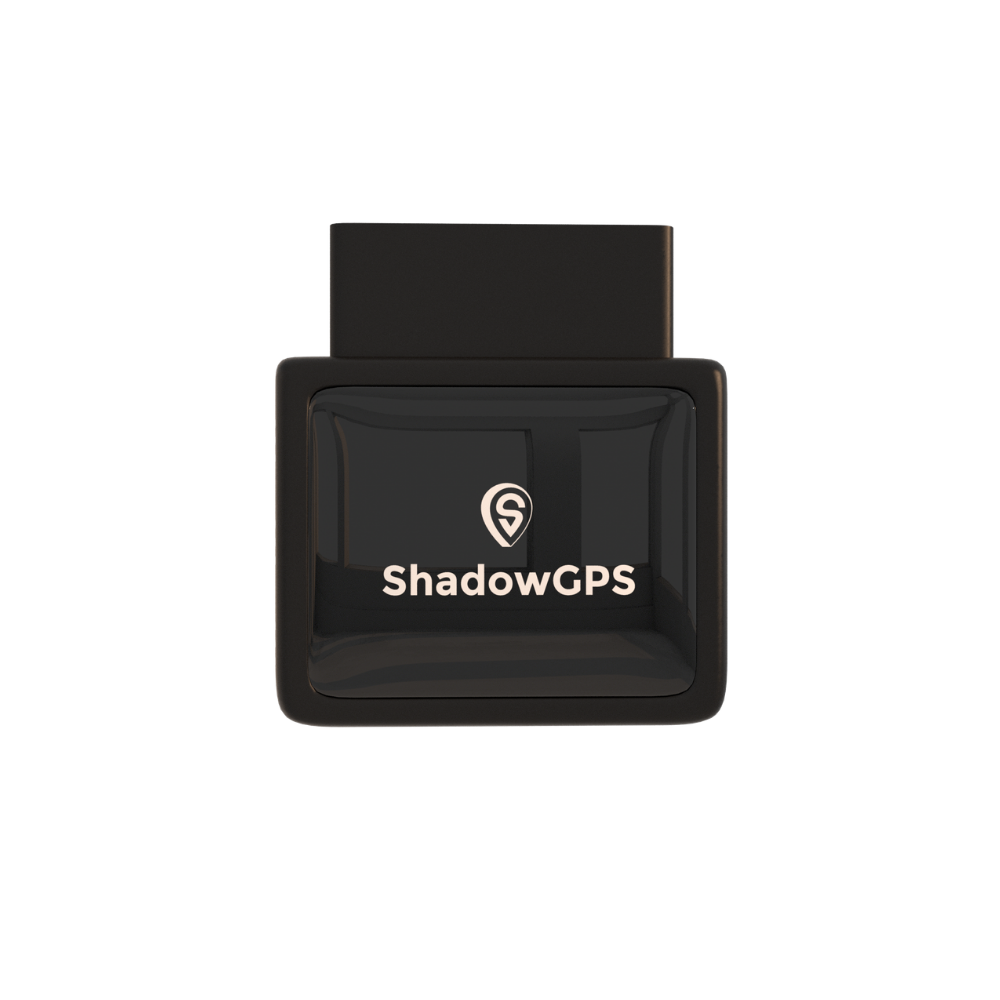
ShadowAuto
- Live location every 5 seconds while your car moves
- Plug it in, under 2 minutes, nothing to charge
- Battery voltage and engine codes in the app


Best for: a family car, a teen driver's car, a Turo rental or a work truck that gets driven regularly.
For zero draw on your car: ShadowTrack
If you'd rather your car's battery never enters the conversation, ShadowTrack runs on its own rechargeable battery. It lasts up to about two weeks per charge depending on how much it moves, and you choose how often it updates in the app. Drop it in the glovebox, or use the weatherproof magnetic case to place it on a truck, trailer or piece of equipment.
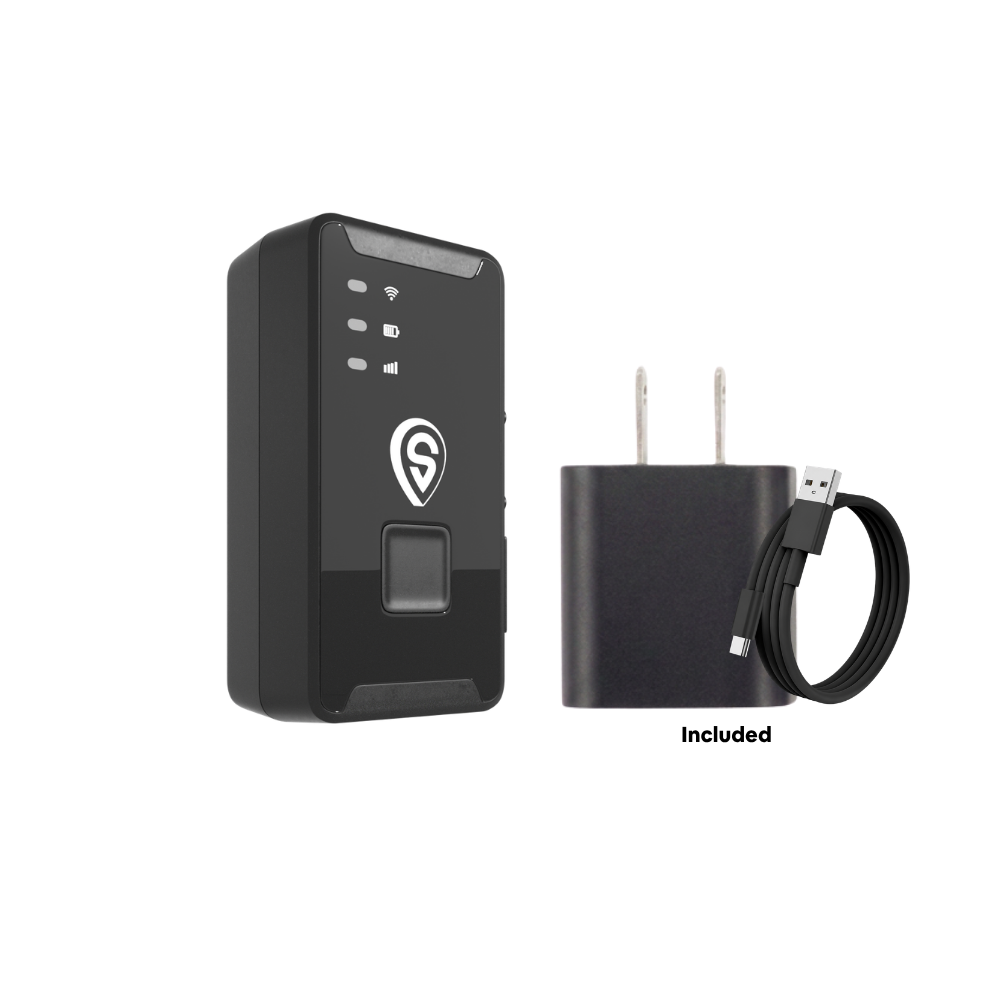
ShadowTrack
- Zero draw on your car's battery
- Up to about 2 weeks per charge, adjustable updates
- Weatherproof magnetic case option
Best for: a stored or seasonal car, an EV, a trailer, equipment, or anywhere you want the tracker out of sight.
Wondering about the plan? Every live GPS tracker needs a cellular connection, and ShadowGPS keeps it simple: no contract, ever, and you can cancel any time. See the full pricing page, or read does your GPS tracker need a SIM card?
GPS tracker battery drain: frequently asked questions
Will a GPS tracker drain my car battery overnight?
No. A quality tracker in sleep mode draws a few milliamps, which uses well under 1% of a healthy battery overnight. If your car won't start after one night, look at the battery itself, a light left on, or another accessory first.
How many milliamps does a GPS tracker draw?
Most quality plug-in and hardwired trackers draw roughly 1 to 10 mA while parked and asleep. Low-quality trackers without real sleep mode can draw tens of milliamps. Battery-powered trackers draw 0 mA from your car.
How long can my car sit with a GPS tracker plugged in?
With a healthy battery and a quality tracker, a couple of weeks is no problem. Past three or four weeks, your car's own electronics become the bigger risk, so use a battery maintainer or a battery-powered tracker for long storage.
Should I unplug my OBD tracker if I'm parking for a long time?
You can, but then you lose tracking exactly when your car is most exposed. A better option is a smart battery maintainer, which keeps the battery full while the tracker keeps watching. Or swap in a battery-powered tracker for the season.
Do battery-powered GPS trackers drain the car battery?
No. They run on their own rechargeable battery and never connect to your car's electrical system. The only battery you need to think about is the tracker's, which you recharge every week or two depending on use.
Does an AirTag drain a car battery?
No. An AirTag runs on its own coin cell battery. Keep in mind it's a Bluetooth tag, not a GPS tracker, so it depends on nearby Apple devices to report its location and can't give you live tracking.
Does cold weather make GPS tracker drain worse?
The tracker doesn't draw more in the cold, but your battery delivers less. A battery that's slightly low on charge in winter has less margin, so every small load, tracker included, matters a little more. Keep up with weekly drives or a maintainer in winter.
Can a GPS tracker damage my car battery?
A quality tracker won't. What does wear a lead-acid battery is being run flat repeatedly, from any cause. That's why avoiding long parking without a maintainer protects your battery more than unplugging a tracker would.
Could a tracker I didn't put there be draining my battery?
It's unlikely. Most hidden trackers are battery-powered and draw nothing from your car. If you're worried one is there, this guide on how to find a tracker on your car walks through where to look.
Is there a monthly fee for a ShadowGPS tracker?
Yes, like every live GPS tracker that reports over a cellular network. Plans run $15/mo month-to-month for 1 to 3 trackers, or as low as $9/mo when you prepay. No contract, ever. Month-to-month, or prepay and save.
Know where your car is, without worrying about the battery
Plug it in, see it move, and cancel any time. Pick ShadowAuto for your everyday car or ShadowTrack for zero draw on your battery.
Pricing current as of November 2026. Power-draw figures are typical ranges from manufacturer and industry sources and vary by tracker model, settings, vehicle and battery condition. This article is general information, not a substitute for a battery and charging-system test by a qualified technician. Some links on this page are affiliate links, which means ShadowGPS may earn a commission at no extra cost to you.

