

Fifty hours sounds easy until you are three weeks into your teen's learner's permit, standing in the driveway, trying to remember whether Tuesday's drive to practice was 35 minutes or 50, and whether it was dark yet.
That is exactly what a driving log is for. Below you will find a free printable teen driving log (three pages, no email required), a state-by-state look at how many supervised driving hours you actually need, a simple practice plan that turns those hours into real skill, and an easier way to keep an honest record of every trip without relying on memory.
A driving log is a written record of a permit driver's supervised practice drives. Each entry lists the date, start and end time, total minutes, day or night, road and weather conditions, and the supervising adult's initials. Most US states require about 50 hours of supervised driving, usually with 10 at night, and a parent or guardian must sign the log before the road test.
Download the free printable teen driving log (PDF)
Three letter-size pages: a cover sheet with a progress tracker (shade one box per hour, with a separate row for night hours), a 20-drive log sheet you can copy as often as you need, and a skills checklist with a parent sign-off block.
What is a driving log, and why does your state want one?
A driving log (also called a supervised driving log, practice driving log, or driving hours log) is how you prove to the DMV that your teen got real behind-the-wheel experience during the learner stage of graduated driver licensing (GDL).
States ask for it because experience is the single biggest safety factor for new drivers. According to the CDC, drivers ages 16 to 19 have a fatal crash rate almost three times as high as drivers 20 and older per mile driven, and crash risk is particularly high in the first months after licensure. Logged practice hours are the state's way of making sure some of that learning curve happens with an adult in the passenger seat.
What a teen driving log records
- Date, start time, and end time of every practice drive.
- Total time, usually in minutes, split into day and night.
- Conditions: weather, road type (residential, highway, rural), and traffic.
- Skills practiced, like left turns, merging, or parallel parking.
- Supervising driver's initials on each line, plus a final parent or guardian signature.
Teen driving log vs. a commercial driver's log
Search "driving log" and you will also see trucker logbooks and mileage logs. Those are different documents. Commercial driver logs track hours of service and rest breaks for work, and mileage logs track business miles for taxes. A teen driving log only tracks supervised practice toward a license. If you are a parent with a permit driver, this page is the one you want.
What's inside our free printable driving log
We built this driving log printable around the questions parents actually get stuck on: "How many hours do we have left?", "Have we done enough night driving?", and "Has my teen ever driven in the rain?"
Page 1: Progress tracker
Driver and supervisor details, a shade-in grid for total hours (up to 76) and a separate row for night hours, plus seven rules for keeping an accurate log.
Page 2: Log sheet
Twenty rows for date, start, end, minutes, day or night, weather, road type, skills, and initials. Sheet totals carry forward so the math stays simple.
Page 3: Skills and sign-off
A six-stage skills checklist, from empty parking lot to rush hour, and a certification block for the grand totals and parent signature.
One honest caution: some states only accept their own official form. Minnesota, Colorado, and Indiana are examples. In those states, use our log as your day-to-day record and copy the totals onto the state form at the end.
How many supervised driving hours does your state require?
Most states land at 50 hours with 10 at night, but the range runs from about 30 to 65, and a few states add special rules for bad weather or weekly limits. Here is how several large states compare.
| State | Total hours | Night hours | Worth knowing |
|---|---|---|---|
| California | 50 | 10 | Supervisor must be a California-licensed driver 25 or older |
| Colorado | 50 | 10 | Form DR 2324 is the accepted log; 6-hour driver's ed behind-the-wheel can count |
| Florida | 50 | 10 | Learner's license must be held 12 months or until age 18 |
| Illinois | 50 | 10 | Hours are in addition to time with a driving instructor |
| Indiana | 50 | 10 | State Form 54706 is required at license application |
| Maryland | 60 | 10 | Applies to all applicants under 25 |
| Michigan | 50 | 10 | 30 hours (2 at night) must be logged before Segment 2 driver's ed |
| Minnesota | 50, or 40 with parent class | 15 | Must use the state's own log template |
| New York | 50 | 15 after sunset | Form MV-262; certified driver's ed hours count toward the 50 |
| North Carolina | 60 | 10 | No more than 10 hours per week can count |
| Pennsylvania | 65 | 10 | Plus 5 hours in bad weather; parent certifies on DL-180C |
| Texas | 30 | 10 | Lower total, so quality of practice matters even more |
| Utah | 40 | 10 | Up to 5 hours may come from a driving simulator |
Requirements change. Always confirm with your state DMV or the GHSA teen driver law table and the IIHS graduated licensing table before your road test.
What counts as night driving?
Most logs treat night as the time between sunset and sunrise. New York's form, for example, asks for 15 hours "after sunset." Driving at 6 p.m. in December counts as night in most places, while 8 p.m. in June may not. When in doubt, check your state handbook and log conservatively.
Who can supervise practice drives?
Rules vary. Many states require a licensed driver who is at least 21, and Illinois adds that the supervisor must have been licensed for at least a year. California requires a licensed driver 25 or older. Michigan allows a parent, guardian, or a licensed adult 21 or older that the parent designates.
Do driver's ed hours count toward the total?
Sometimes. New York counts hours from a certified driver education course toward its 50. Illinois says the opposite: the 50 hours are in addition to instructor time. Colorado allows the 6-hour behind-the-wheel training to count. Read the fine print on your state's form before you subtract anything.
How to fill out a driving log, step by step
- Fill in the header once. Teen's name, permit number, issue date, and the main supervising driver's license number.
- Write the start time before you pull out. It takes a moment and removes all the guesswork later.
- Write the end time when you park. Then calculate total minutes right away, not at the end of the week.
- Mark day or night. If a drive crosses sunset, split it into two lines.
- Add conditions and skills. "Rain, highway, merging" is plenty. This is what shows you the gaps.
- Initial every line. The adult who was in the car initials it, in blue or black ink.
- Total each sheet and carry it forward. Day minutes, night minutes, and a running total in hours.
- Sign the certification at the end. Then copy the totals to your state's official form if it has one.
Example: three filled-in entries
| Date | Start | End | Minutes | Day / Night | Conditions | Skills | Initials |
|---|---|---|---|---|---|---|---|
| 03/02 | 4:10 pm | 4:55 pm | 45 | Day | Dry, residential | Full stops, right turns | JM |
| 03/04 | 6:20 pm | 7:15 pm | 55 | Night | Dry, suburban | Headlights, left turns | JM |
| 03/07 | 10:00 am | 11:30 am | 90 | Day | Light rain, highway | Merging, following distance | KM |
The minutes math
Logging in minutes keeps totals accurate. 60 minutes equals 1 hour, so 50 hours is 3,000 minutes and 10 night hours is 600 minutes. If your state has a weekly cap, like North Carolina's 10 hours per week, add a quick weekly subtotal so nothing you drive is wasted.
A practice plan that turns 50 hours into real skill
Hours alone do not make a safe driver. Variety does. Teen driving safety guidance shared through the CDC's Parents Are the Key campaign recommends at least 65 hours of supervised practice over at least six months, across different roads, times of day, and weather. Here is a simple framework that maps onto the skills checklist in our printable.
| Stage | Where | Suggested hours | Move on when your teen can... |
|---|---|---|---|
| 1. Basics | Empty parking lot | 3 to 5 | Start, stop, turn, and back up smoothly without coaching |
| 2. Quiet streets | Residential roads | 8 to 10 | Handle stop signs, right-of-way, and parking calmly |
| 3. Busier roads | Multi-lane local roads | 10 to 12 | Make left turns across traffic and change lanes safely |
| 4. Highway | Interstate or expressway | 8 to 10 | Merge, exit, and hold a steady speed with confidence |
| 5. Hard conditions | Night, rain, snow if local | 10 to 15 | Drive at night and in the wet without tensing up |
| 6. Real life | Errands, rush hour, new routes | Remaining hours | Plan a route, fuel up, and handle surprises on their own |
Spread night driving across the whole permit period instead of cramming it into the last two weeks. The CDC notes that the teen fatal crash rate at night is about three times the rate for adult drivers per mile, so those hours matter more than any others in the log.
Paper log vs. driving log app vs. GPS tracker
There are three practical ways to keep a practice driving log. Paper works everywhere. Apps like RoadReady, which several states including Michigan and Pennsylvania point parents to, use your phone to record drives and export a PDF. A GPS tracker in your car records every trip automatically, whether anyone remembers to press start or not.
| Method | Records trips automatically | Accepted by the DMV | Useful after the license | Cost |
|---|---|---|---|---|
| Official state form | No | Yes, always | No | Free |
| Printable driving log (ours) | No | In most states; copy totals to the official form where required | No | Free |
| Driving log app | Only when the phone is set up and running | Varies by state | Limited | Free to paid |
| ShadowAuto GPS tracker | Yes, every trip, from your car itself | Use it to fill in your log accurately | Yes: live location, trip history, alerts | Device plus monthly fee, no contract |
The easier way to track driving hours: let your car keep the record
Here is the part most driving log guides skip. The hardest thing about a 50-hour log is not the math. It is remembering. Phones get left at home, apps do not get started, and a week of drives turns into a fuzzy guess.
A plug-in GPS tracker solves that by recording from your car, not from someone's phone. ShadowAuto plugs into the OBD-II port under your dashboard in under two minutes, with no tools and no appointment. From then on, every drive shows up in the ShadowGPS app's trip timeline with start time, end time, and route. Location updates every 5 seconds while your car is moving, so the record is detailed enough to settle "was that 35 minutes or 50?" in one glance.
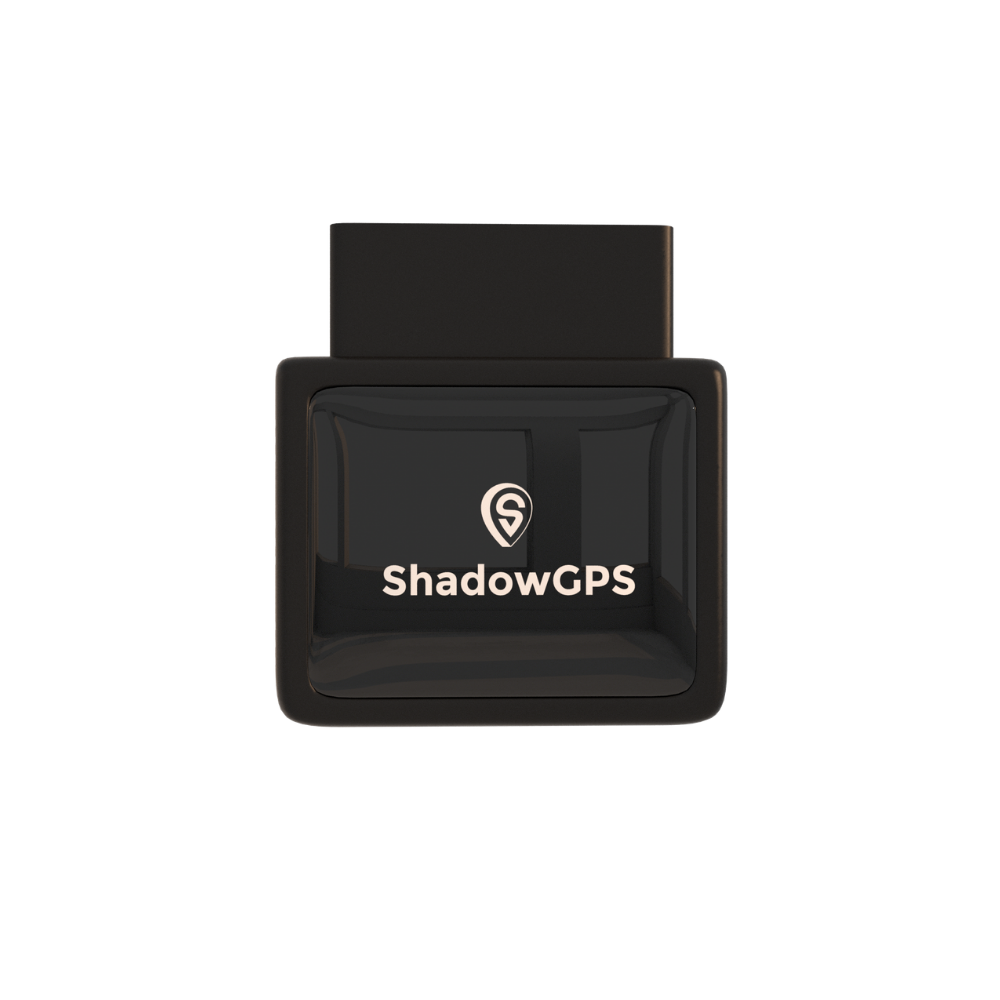
ShadowAuto
Plug-in · OBD-II · For cars & trucks
Plans $12-$15/mo, or less when you prepay · No contract, ever.
- Trip timeline with start, end, and route for every drive
- Trip replay for post-drive coaching conversations
- Powered by your car, nothing to charge


How parents use a tracker alongside the driving log
Fill the log in seconds
Open the trip timeline once a week, copy the start and end times onto your printable log, and initial each line you supervised.
Spot the gaps
Trip routes show at a glance whether your teen has done highway miles yet, or only the same loop to school.
Coach with replay
Replay a drive together that evening and talk through the tricky left turn while it is still fresh.
What a tracker can and cannot do for your log
A tracker records when and where your car moved. It cannot prove who was sitting in the passenger seat, and no state accepts a tracker report as its official log. Your signature is still the certification. Think of the tracker as the honest memory behind the log, not a replacement for it.
If you would rather track a second family car, or a car where the OBD-II port is hard to reach, ShadowTrack is the battery-powered option. It mounts magnetically, lasts up to about 15 days per charge, and moves between cars when you need it to.
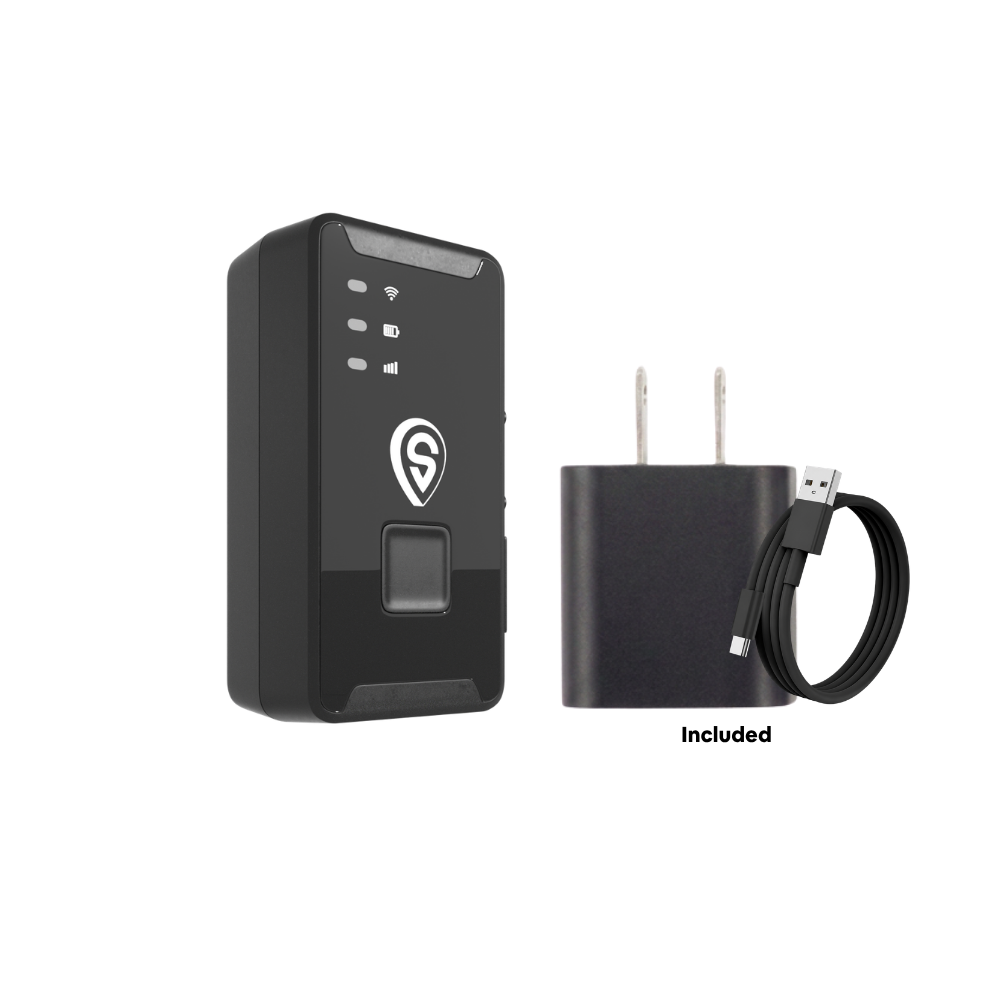
ShadowTrack
Battery · Magnetic · Moves between cars
Plans $12-$15/mo, or less when you prepay · No contract, ever.
- Up to about 15 days per charge
- Same trip timeline and replay in the app
- Weatherproof magnetic case
Best for: parents who want an accurate driving hours log during the permit stage and peace of mind after the license, from the same plug-in tracker. Not sure where your port is? Our guide on where to find your OBD-II port takes about 30 seconds.
After the permit: the first year of solo driving
The driving log ends at the road test, but the riskiest stretch is just starting. The CDC notes that crash risk for teen drivers increases with each additional teen or young adult passenger, and most states add night and passenger limits during the intermediate license stage for that reason.
This is where the same tracker keeps paying off. Live location answers "did they get there?" without a text while your teen is driving. Geofence alerts tell you when your car arrives at school or practice. Share Location lets you send a live trip link to the other parent on a late drive home. Our guide to GPS trackers for teen drivers covers how to set this up as a safety agreement, not a secret.
Talk about it first
Tracking a car you own is generally legal in the US, but the best results come from telling your teen up front. Frame it the way the driving log is framed: a shared record that builds trust, with clear rules for when the check-ins relax. This is general information, not legal advice.
Common driving log mistakes that cause problems at the DMV
- Backfilling from memory. North Carolina's log warns that if the DMV believes a log was falsified, the teen must complete a new log and cannot get the provisional license for six months.
- Using the wrong form. Minnesota states that logs completed on any other document will not be accepted. Check before your teen's test day, not on it.
- Cramming night hours. Ten night hours in the final week checks the box but skips the learning.
- Forgetting special categories. Pennsylvania wants 5 bad-weather hours on top of 10 night hours.
- Missing initials or the final signature. An unsigned log is just a list.
- Ignoring weekly caps. Hours beyond a state limit, like North Carolina's 10 per week, do not count.
Driving log FAQ
What is a driving log for a learner's permit?
It is a record of every supervised practice drive a permit holder completes, including date, time, total minutes, day or night, conditions, and the supervising adult's initials. A parent or guardian signs it to certify the hours before the road test.
How many hours do you need on a teen driving log?
Most states require 50 hours with 10 at night. Some ask for less (Texas asks for 30) and some ask for more (Maryland and North Carolina ask for 60, Pennsylvania asks for 65 plus 5 in bad weather). Check your state DMV for the current number.
Can I use a printable driving log instead of the state form?
In many states, yes. Some states, including Minnesota, Colorado, and Indiana, require their own official form. In those states, keep your daily record on a printable log and transfer the final totals to the official form.
Is there a supervised driving log PDF I can fill out on my phone?
Our driving log PDF is designed to print, since most DMVs want ink signatures. If you prefer digital, a driving log app can record drives on your phone, and a plug-in GPS tracker records trips from the car itself so you can fill in the paper log accurately.
What counts as night driving on a driving hours log?
Most states count driving between sunset and sunrise. If a drive starts in daylight and ends after sunset, split it into two lines so day and night minutes stay separate.
Do driver's ed hours count toward the practice driving log?
It depends on the state. New York counts certified driver's ed hours toward its 50, Colorado lets the 6-hour behind-the-wheel training count, and Illinois requires the 50 hours in addition to instructor time.
What happens if you fake hours on a driving log?
Penalties vary, but they can be serious. In North Carolina, a log the DMV believes was falsified means starting a new log and a six-month wait for the provisional license. Beyond the rules, skipped hours are skipped experience.
Can a GPS tracker replace my teen's driving log?
No. A tracker records when and where your car moved, but the DMV still wants a signed log or form. What a tracker does is make that log accurate: copy the trip times from the app instead of guessing.
Is there a monthly fee for a ShadowGPS tracker?
Yes. Plans run $12 to $15 a month, with lower rates when you prepay. There is no contract: go month-to-month, or prepay and save, and cancel any time. Many families keep it through the permit stage and the first year of solo driving.
Does a GPS tracker need a SIM card?
Not one you buy. ShadowAuto and ShadowTrack come ready to connect on multi-carrier LTE-M coverage, and the monthly fee includes the data. Plug it in, open the app, and you will see your car on the map.
Print the log. Let your car remember the trips.
Plug it in, see it move, cancel any time. ShadowAuto keeps an honest record of every practice drive and gives you peace of mind once your teen drives solo.
State requirements summarized from official DMV forms (NY MV-262, NC DL-4A, CO DR 2324, IN State Form 54706, MN Supervised Driving Log, IL DSD X 152, MI Supervised Driving Log), PennDOT, FLHSMV, GHSA, and IIHS, as of November 2026. Teen crash data from the CDC. Pricing current as of November 2026. ShadowGPS may earn a commission from Amazon and Best Buy links. This article is general information, not legal advice; confirm your state's rules with your DMV.

