

If your business owns even one vehicle, that vehicle is a target: for theft, for a driver taking it somewhere it shouldn't go, for a fender-bender nobody will admit to. A gps tracker for company vehicles plugs that gap in minutes. Plug it in, watch it show up on a live map within seconds, and you know where your car, truck, or work van actually is, all day, every day.
This guide covers everything you need to buy the right one: how these trackers work, the real differences between plug-in, hardwired, and battery-powered devices, whether tracking a company vehicle is even legal, and a side-by-side look at the best options for a single work truck or a small crew of 2-10 vehicles. If you're renting out a car on Turo or running just a couple of company vehicles, the picks below are built with you in mind, not a 500-truck logistics operation.
What Is a GPS Tracker for Company Vehicles?
Quick answer: A GPS tracker for company vehicles is a small device, plugged into the vehicle's OBD-II port, wired into its electrical system, or hidden as a battery-powered magnetic unit, that uses GPS and cellular signal to send the vehicle's real-time location, trip history, and driving data to an app or web dashboard. It lets an owner or manager see exactly where a business vehicle is, where it's been, and how it's being driven, from a phone.
The device itself does the same basic job whether you own one company car or ten: it finds its position using GPS satellites, then sends that position over a cellular network to a central server, which pushes it to your app in near real time. Good trackers, like ShadowAuto and ShadowTrack, refresh that location every five seconds while the vehicle is moving, so what you're looking at on the map is where the vehicle is right now, not where it was ten minutes ago.
Beyond the live dot on the map, most company vehicle trackers also log trip history, flag hard braking or speeding, alert you when a vehicle enters or leaves a set area (geofencing), and, for some devices, pull engine diagnostic codes straight from the OBD-II port.
Is It Legal to Put a GPS Tracker on a Company Vehicle?
Yes, on a vehicle your business owns
Since the vehicle is company property, you generally have the right to track its location and usage for security, efficiency, and fleet management purposes, the same way you're allowed to know where any other business asset is. That's true whether it's one work truck or a crew of ten.
Where it gets more careful is disclosure. A number of states either require or strongly recommend telling employees a company vehicle carries a tracker, and putting that notice in a written policy or employment agreement protects you if it's ever questioned. As a rule, tell your drivers, be upfront about why (safety, theft recovery, insurance), and you're on solid ground almost everywhere in the U.S. Tracking a vehicle that belongs to someone else, or that an employee uses purely for personal reasons outside of company business, is a different legal picture, so keep tracking scoped to company-owned, company-use vehicles.
How a Company Vehicle GPS Tracker Works
Every real-time company vehicle tracker follows the same basic loop, no matter the brand:
- The tracker receives satellite signals and calculates its exact position.
- It sends that position over a built-in cellular connection, no separate SIM card to buy.
- Your app shows the vehicle's live spot on a map, its last stop, trip history, and speed.
- Set a geofence around a job site, yard, or service area, and the app pings you the moment a vehicle enters or leaves it.
Where devices differ is power source and install method, and that's really the whole decision tree for choosing one. If you're stuck between the two main types, our battery-powered vs. OBD tracker comparison breaks it down further.
Types of GPS Trackers for Company Vehicles
Plug-and-Play (OBD-II) Trackers
These plug straight into the OBD-II diagnostic port, almost always tucked under the dashboard, no tools required. They pull power from the vehicle itself, so there's never a battery to charge, and they can read engine data (fault codes, ignition on/off, idle time) that a standalone battery tracker can't see. This is the right pick for a company car, work truck, or van you plan to track long-term.
Hardwired Trackers
Wired directly into the vehicle's electrical system rather than the OBD-II port, hardwired trackers sit fully out of sight and never need a charge. They take a bit more work to place, usually behind the dashboard, which makes them a better fit for fleet vehicles where a professional installer is already doing other setup work.
Battery-Powered / Magnetic Trackers
Portable and rechargeable, these attach with a magnet under the vehicle, inside a wheel well, or in a trailer with no OBD port and no wiring at all. That makes them the only real option for tracking a trailer, a piece of equipment, or a rental vehicle where you can't or don't want to plug into the dashboard. ShadowTrack runs roughly 15 days per charge in this category.
SIM-Based / Cellular Trackers
Nearly every modern tracker, plug-in or battery-powered, communicates over a cellular network. The good news for a small business owner: a quality device like ShadowAuto or ShadowTrack has that cellular connection built in already, so "SIM-based" isn't a separate category you need to shop for, it's a checkbox to confirm the device you're buying doesn't leave you hunting down a SIM card yourself.
Must-Have Features in a Company Vehicle Tracker
Not every GPS tracker on Amazon is built for a business vehicle. Before you buy, check for these:
Real-time location
Updates every 5 to 30 seconds while moving, not a stale ping from 10 minutes ago. Faster refresh means you actually know where the vehicle is right now.
Geofencing
Instant alerts when a vehicle leaves a job site, yard, or approved service area, so unauthorized use gets caught the moment it happens.
Trip history & replay
A full log of stops and routes you can pull up later, useful for payroll, customer disputes, and insurance claims alike.
Driver behavior alerts
Speeding, hard braking, and rapid acceleration flags that support safer driving and can help lower your insurance premium.
Maintenance reminders
Mileage or engine-hour based alerts that catch small issues before they become an expensive breakdown.
No-contract billing
A month-to-month plan you can cancel any time, instead of being locked into a multi-year agreement for a vehicle you might sell next year.
What Does GPS Fleet Tracking Cost Across the Industry?
Pricing for gps fleet tracking spans a wide range depending on hardware and contract terms. A few publicly listed examples give a useful sense of the market:
- BrickHouse GPS tracking starts around $9.95 per vehicle per month.
- One Step GPS runs about $13.95 per month, with no separate equipment fee.
- US Fleet Tracking's plans start around $10 per month on top of hardware priced $75-$199 depending on the device.
- ShadowAuto and ShadowTrack sit at $12/mo, no contract, with a one-time $69.90 device cost.
The number that matters more than the sticker price, though, is refresh rate. A $9-10/mo tracker that only updates every 30-60 seconds is showing you where a vehicle used to be, not where it is. That gap is exactly why ShadowGPS built around a 5-second refresh instead of chasing the lowest possible monthly fee. Price is never the whole story with fleet tracking software, so weigh the refresh rate and install type just as heavily as the number on the invoice.
Top GPS Trackers for Company Vehicles in 2026
We tested and compared these against the criteria above, weighing install type, refresh speed, price, and how well each fits a business running one to ten vehicles rather than a 500-truck logistics operation.
1. ShadowAuto
ShadowAuto is a plug-in OBD-II tracker built for exactly this job: one car or truck that matters to your business, tracked in real time with zero installation hassle. Plug it in, and it updates your vehicle's position on the map every 5 seconds while it's moving, about three times faster than most competing OBD trackers.
Because it pulls power straight from the vehicle, there's no battery to manage, and because it reads OBD-II data, you also get ignition on/off alerts and basic engine diagnostics alongside the live map.
Pros
- 5-second real-time updates
- Plugs in under 2 minutes, no tools
- No contract, cancel any time
- 1-year trip history and animated trip replay
Cons
- Requires an accessible OBD-II port
- Not hidden the way a magnetic tracker is
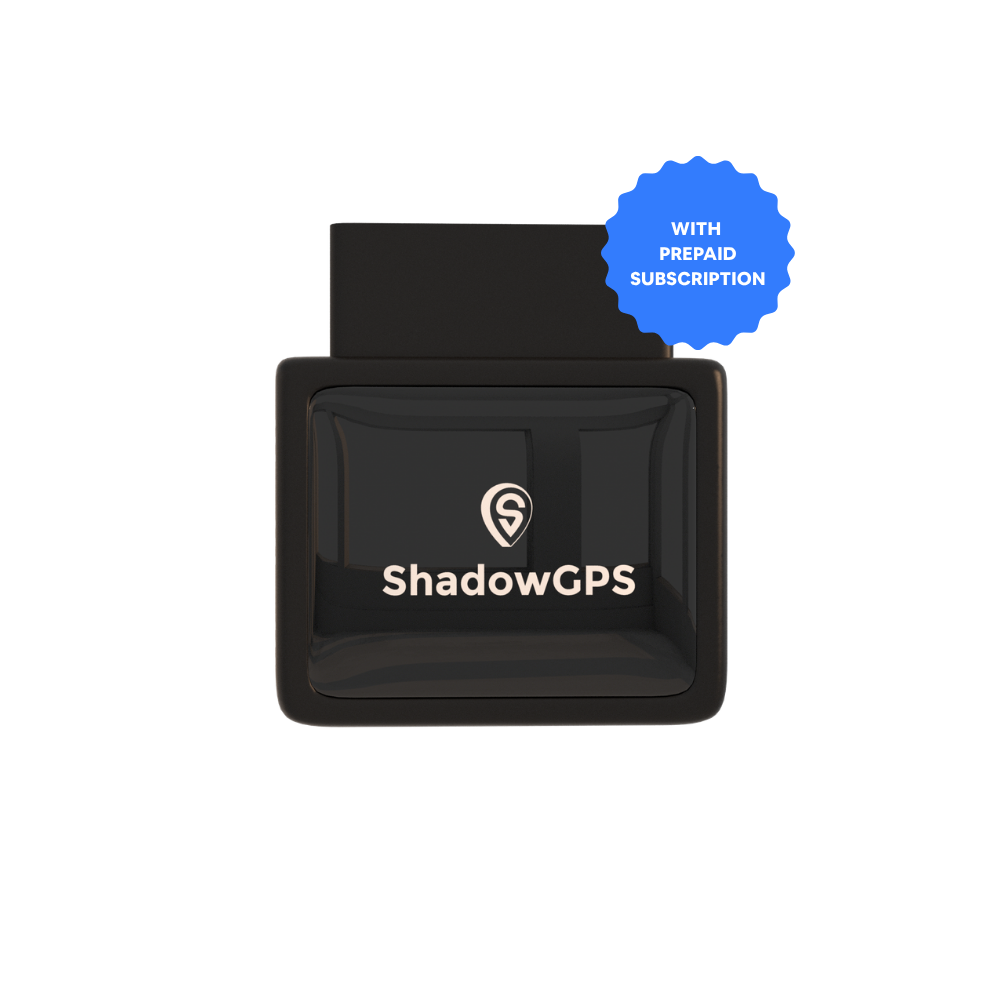
ShadowAuto
- 5-second live updates
- Geofencing and driver behavior score
- Multi-vehicle support on one app

Best for: a single company car or truck, or the first vehicle you add to a small business fleet.
2. ShadowTrack
ShadowTrack is a battery-powered, magnetic-mount tracker for anything without an OBD-II port, trailers, generators, a piece of job-site equipment, or a rental vehicle you don't want to alter. It shares the same 5-second refresh and app as ShadowAuto, so a business running a mix of vehicles and trailers can watch everything on one map.
The rechargeable battery runs about 15 days on a charge, and the weatherproof magnetic case is built to sit outside, hidden, without a fuss.
Pros
- No OBD port or wiring needed
- Weatherproof, fully hidden placement
- Same 5-second refresh as ShadowAuto
Cons
- Needs a recharge roughly every 15 days
- No engine diagnostic data (no OBD connection)
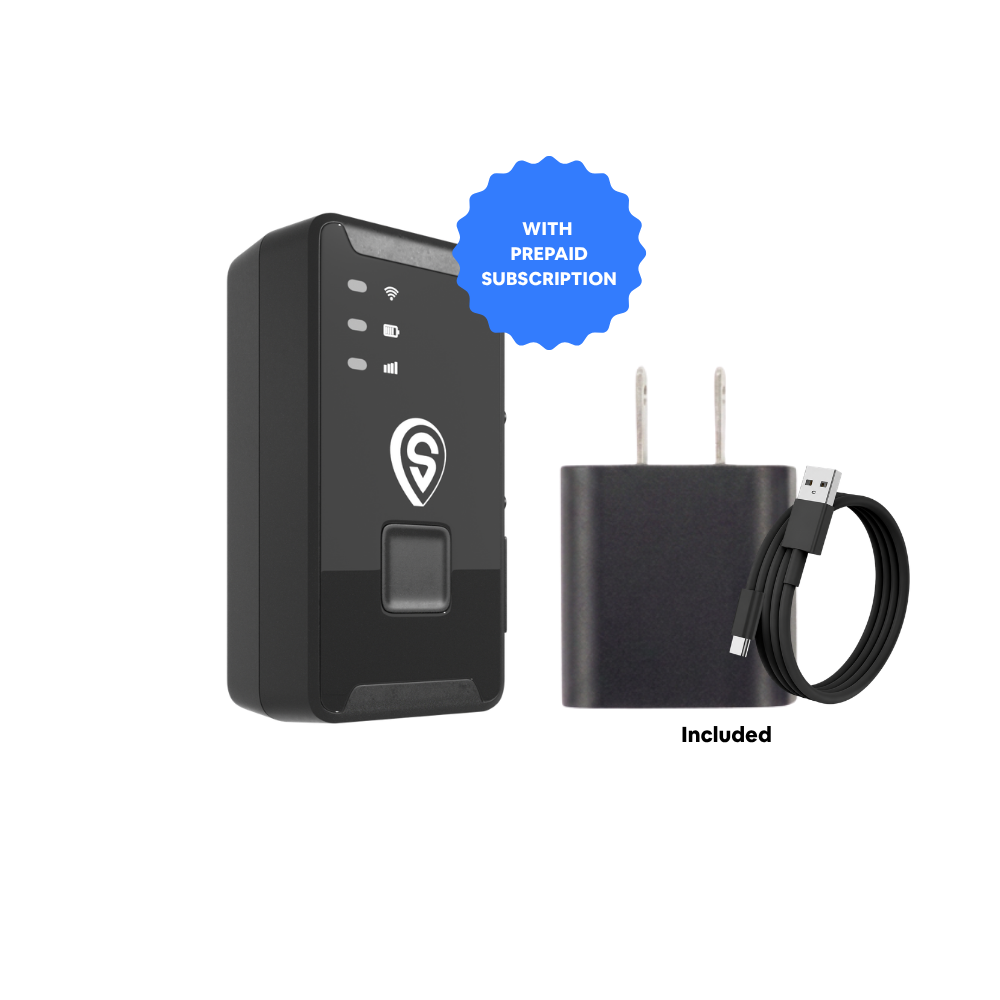
ShadowTrack
- Magnetic, weatherproof case
- Geofencing and location sharing
- Works alongside ShadowAuto on one app
Best for: trailers, equipment, or any company asset without an OBD-II port to plug into.
3. Bouncie
Bouncie is another OBD-II plug-in tracker, well known for its driver-behavior scoring and its lower monthly price. Refresh rate runs around 15 seconds, noticeably slower than ShadowAuto's 5-second updates, but for a business more focused on coaching driving habits over minute-by-minute tracking, it's a reasonable option.


Best for: a business prioritizing driver coaching scores over the fastest possible refresh rate.
4. MOTOsafety
MOTOsafety is built specifically with small fleets in mind, with a plug-in OBD-II model and fleet-oriented reporting features. It's a solid choice if you're already comparing dedicated small-fleet platforms, though it carries a higher starting price than a plug-in tracker aimed at an individual vehicle owner.

Best for: a business that wants a fleet-branded platform and doesn't mind paying more for it.
5. Spytec GL300
Spytec's GL300 is a battery-powered, magnetic tracker in the same category as ShadowTrack, useful for a trailer or asset without an OBD port. Battery life runs shorter than ShadowTrack's roughly 15 days, so expect to recharge it more often if you're tracking something that moves daily.

Best for: occasional or short-term tracking of a trailer or piece of equipment.
Quick comparison
| Tracker | Install type | Refresh rate | Starting price | Best for |
|---|---|---|---|---|
| ShadowAuto | OBD-II plug-in | 5 sec | $12/mo, no contract | One company car or truck |
| ShadowTrack | Battery, magnetic | 5 sec | $12/mo, no contract | Trailers & equipment |
| Bouncie | OBD-II plug-in | ~15 sec | $9.65/mo | Driver behavior coaching |
| MOTOsafety | OBD-II plug-in | ~30 sec | ~$25/mo | Fleet-branded reporting |
| Spytec GL300 | Battery, magnetic | ~15-60 sec | ~$25/mo | Short-term asset tracking |
How to Choose the Right Tracker for Your Business Size
One company vehicle
A single OBD-II tracker like ShadowAuto covers you fully, real-time location, trip history, and theft alerts, without paying for fleet reporting features you won't use.
2-5 vehicles
Mix and match ShadowAuto for cars and trucks with ShadowTrack for anything without an OBD port, all managed from one app so you're not juggling logins. See our full guide to tracking 3-10 vehicles for more.
6-10+ vehicles
Still workable with plug-in trackers vehicle by vehicle. At this size it's worth comparing per-vehicle pricing closely, since even a $2-3/mo difference adds up. Here's a breakdown of what GPS tracking actually costs for a small fleet.
How to Install a GPS Tracker on a Company Vehicle
Installing a company vehicle tracker takes a few minutes and no special tools:
- Pick the right device. OBD-II plug-in for a car or truck, battery-powered magnetic for a trailer or asset without a port.
- Find the OBD-II port. Usually under the dashboard, near the steering column, on most cars and trucks built after 1996.
- Plug it in. It clicks into place, no wiring, no tools.
- Download the app. Create an account and add your vehicle in a couple of taps.
- Confirm the live signal. Watch the map update, and you're tracking.
For a battery-powered tracker, swap steps 2-3 for finding a hidden, metal, magnet-friendly spot, under the frame, inside a wheel well, or in a trailer's steel housing.
How GPS Tracking Enhances Fleet Management and Security
Beyond just "where is my vehicle," a company vehicle tracker earns its keep in a few concrete ways.
Security and theft recovery
If a company vehicle is stolen, a live location beats a police report every time. Geofencing also flags unauthorized use the moment it happens, a vehicle leaving the yard at 2 a.m., for instance, well before it becomes a bigger problem.
Lower operating costs
Route history and idle-time tracking make it easy to spot wasted fuel and inefficient routes. Businesses commonly report fuel savings in the 10-15% range within about 90 days of adding real-time tracking, simply from tightening up routes and cutting excessive idling.
Example: A three-truck landscaping company plugs an OBD-II tracker into each vehicle. Within the first month, the owner notices one truck idling for over 40 minutes a day at a single job site, a pattern invisible without a live location and idle-time log. Adjusting that one route saves several gallons of fuel a week, a small change that only became visible because the vehicle was tracked.
Driver accountability
Knowing a vehicle is tracked changes behavior on its own. Speeding and harsh-braking alerts give you a fair, factual way to coach a driver, and many insurers offer a discount, often in the 5-15% range, for fleets using GPS tracking.
Legal and insurance protection
A full trip history is real evidence. If a company vehicle is involved in an accident, GPS data can back up your driver's account, or flag a claim that doesn't match the actual route. That record has real value the one time you need it.
Frequently Asked Questions
Is there a monthly fee for a company vehicle GPS tracker?
Most real-time trackers, including ShadowAuto and ShadowTrack, run on a monthly plan starting around $12-15 per vehicle. There's no contract, so you can cancel any time, or prepay a few months at once if you'd rather not think about it monthly.
Does it need a SIM card?
No. ShadowAuto and ShadowTrack both come with cellular connectivity built in, so there's no separate SIM card to buy, activate, or swap.
Is installation difficult?
No. A plug-in OBD-II tracker clicks into the diagnostic port under the dashboard in under two minutes, no tools required. A battery-powered tracker just needs a hidden, magnet-friendly spot.
How does the subscription work?
You buy the device once, then pay a monthly plan for the live tracking service. Add or remove vehicles from the same app account as your fleet changes size, and cancel a vehicle's plan any time you sell it or stop using it.
How fast does it update the vehicle's location?
ShadowAuto and ShadowTrack update every 5 seconds while the vehicle is moving. Most competing trackers update every 15-60 seconds, which can mean the map is showing you a spot the vehicle already left.
Is it legal to put a tracker on a company vehicle?
Yes. Since the vehicle is company property, you can generally track it for security and business purposes. Many states recommend or require telling employees the vehicle is tracked, so put that in writing and you're covered.
How can I tell if a company vehicle already has a tracker on it?
Check the OBD-II port under the dashboard for anything plugged in that isn't a standard connector, and look under the vehicle, in wheel wells, and inside the glove box or trunk for a small magnetic device. If your company issued the vehicle, the simplest step is just asking your employer or checking the vehicle-use policy.
What's the best GPS tracker for a small business with just one or two vehicles?
A plug-in OBD-II tracker like ShadowAuto is the simplest fit: no wiring, no fleet-software learning curve, and a monthly plan that scales down to exactly one vehicle instead of a minimum fleet size.
A company vehicle tracker isn't just an operations tool, it's peace of mind you can check from your phone. Whether it's one work truck you'd hate to lose or a small crew of vehicles on the road every day, plugging in a real-time tracker is one of the fastest, cheapest ways to protect it.
Plug it in. See it move. Cancel any time.
ShadowAuto for cars and trucks, ShadowTrack for trailers and equipment, both with 5-second live updates and no contract.
Prices and features current as of publication and subject to change. Competitor pricing and specs are gathered from publicly listed sources and may vary by retailer.

