

Most people plug in a tracker for an ordinary reason. You want to know the truck made it to the job site. You want to see that your daughter got to campus. Ninety-nine days out of a hundred, that is the whole job.
Then there is the other day. You walk out, the spot is empty, and the question changes from where is my car to what happens now. Recovery is the first answer. The second one is quieter and takes longer: the trip history sitting in your app is a record, and records are what detectives, prosecutors and insurance adjusters actually work from.
This guide covers what GPS tracker evidence is worth in a US courtroom, what a court needs before it accepts it, exactly what to do in the first hour so you do not weaken it by accident, and what this kind of data honestly cannot prove.
Yes. GPS data from a tracker you own, on a car titled in your name, is generally admissible in US criminal and civil courts. It is not automatic. The record has to be authenticated, meaning you can show it came from your device on your car and has not been edited. Courts now treat GPS accuracy itself as largely settled, so most challenges are about how the data was handed over rather than whether satellites work. Your job is simple: report fast, export the original history, change nothing, and give police live access instead of a description.
Why your own tracker data carries so much weight
Auto theft investigations are stacked against the owner, and the numbers are blunt about it. Only about 8.2% of US auto thefts were cleared by arrest in 2023, according to FBI Uniform Crime Reporting data. That is the lowest clearance rate the FBI has recorded for any crime type in a single year.
Volume is falling, which helps. The National Insurance Crime Bureau reported more than 642,000 vehicles stolen in the United States in 2025, a second consecutive annual decline, with roughly 21% never recovered. NICB also makes the point that recovery odds narrow quickly as time passes, which is why the first hour matters more than the first week.
Set those two facts next to each other and the picture is clear. Most stolen cars come back. Very few thefts end in an arrest. The gap between those two outcomes is almost entirely an evidence problem, and a tracker you already own is the one piece of evidence that exists before the crime does. If you want the numbers in full, we cover them in our breakdown of GPS trackers versus car theft.
What the data replaces
Traditional theft cases lean on witness statements, fingerprints and circumstantial inference. Witnesses misremember times. Prints get smudged or belong to a passenger from last summer. Circumstantial chains break under cross-examination.
A timestamped location log does something none of those do. It produces a continuous, machine-generated record with no memory, no motive and no bad night's sleep. That is why prosecutors like it and why defense attorneys attack the handling of it rather than the technology.
What courts require before GPS data becomes evidence
Authentication: proving it is your device on your car
Under Federal Rule of Evidence 901, evidence has to be shown to be what its proponent claims it is. For tracker data, that means connecting four things: the device serial or ID, the account it reports to, the car it was in, and the records themselves.
Practically, that is your order confirmation, your account under your name, the VIN on the title, and an export that carries device identifiers with it. Rules 902(13) and 902(14) also allow certain records generated by an electronic process to be self-authenticating with a proper certification, and Rule 803(6) covers records kept in the ordinary course of business. Many states mirror these rules, though the wording varies.
Integrity: chain of custody, and why you never edit the file
This is where owners lose cases they should win. Chain of custody is simply an unbroken account of who touched the data and when. Every screenshot you crop, every spreadsheet you tidy up, every trip you delete because it looked irrelevant creates an opening for the other side to argue the record was altered.
The rule is unglamorous and absolute: preserve the original, hand over the original, and keep your own copy alongside it. Provider-side records held on secure servers are usually stronger than anything sitting on your phone, because they were not in your control at any point.
Reliability: courts have largely stopped arguing about accuracy
Federal and state courts have increasingly treated the reliability of GPS positioning as established rather than something a party has to prove from scratch each time. Some courts have taken judicial notice of it outright. In practice that means you rarely need an expert to explain how satellites work, which lowers the cost and the friction of using the data at all.
The privacy line: police placement versus your own tracker
There is a large body of case law about GPS and the Fourth Amendment, and almost none of it is about you. In United States v. Jones (2012) the Supreme Court held that police attaching a tracker to a suspect's car and monitoring it was a search requiring a warrant. Carpenter v. United States (2018) extended similar protection to historical cell-site location records.
Those decisions restrain the government. They do not restrain a private owner tracking property they hold title to, and they do not stop you from voluntarily handing your own records to a detective. The important distinction is who placed the device and whose property it was on. Your car, your tracker, your data, your choice to share it.
Every data type your tracker records, and what it proves
Not all tracker data carries the same evidentiary weight. This is roughly how the pieces get used once a file lands on a detective's desk.
| What your tracker records | What it shows | Why it matters to a case |
|---|---|---|
| First movement or geofence exit alert | The exact minute your car left where you parked it | Fixes the time of the taking, which anchors every other timeline in the file |
| Route history and trip replay | The path driven, point by point | Lines up with traffic cameras, toll gantries, doorbell footage and other reported incidents |
| Dwell time at each stop | How long your car sat at a given address | Distinguishes a joyride from a stop at a storage lot, a buyer or a stripping location |
| Ignition and engine events | When the engine started and stopped | Corroborates method of entry and separates towing from driving |
| Speed and harsh driving data | How your car was being driven | Driving inconsistent with the owner's normal pattern supports intent and identification |
| Tamper or power-loss event | The moment the tracker was pulled or the power was cut | Evidence of concealment, and it brackets the last known location precisely |
| Diagnostic trouble codes | Damage or faults recorded during the theft | Supports the repair portion of an insurance claim and any restitution figure |
Refresh rate feeds directly into that table. A tracker reporting a position every few minutes leaves gaps a defense attorney can drive through. ShadowGPS trackers update every 5 seconds while moving, which turns a scatter of dots into a continuous path. If you want alerts that fire the moment something moves overnight, we walk through the setup in our guide to geofence alerts that actually catch overnight theft.
The first hour: your evidence playbook
What you do in the first sixty minutes decides how useful your data will be six months later. This is the short version. For the full recovery sequence, see our post on immediate recovery steps for a stolen car.
- Call police first, and say you have a live tracker. Lead with that sentence. Many departments have a specific procedure for tracker-equipped stolen cars and it changes how fast they move.
- Share live access, do not read coordinates aloud. Use the Share Location feature so the officer watches the same screen you do. Transcription errors over the phone are a real problem.
- Export the full history immediately. Pull the raw trip history covering the last 48 hours, not just the theft window. Context before the theft establishes your normal pattern.
- Write down the police report number and the officer's name. Note the exact time you handed over data and by what method. That note is your chain of custody.
- Send your insurer the same untouched export. Two identical records given to two parties on the same day is far harder to challenge than two versions that differ slightly.
- Do not go get it yourself. This is the one that gets people hurt. Recovering property is not worth walking into a stranger's driveway at 2am, and it can complicate the case.
- Do not edit, crop, annotate or delete anything. No cleaned-up spreadsheets, no highlighted screenshots as your only copy. Keep originals, add commentary separately if you want.
- Do not post the live location publicly. Social media tip-offs alert the person holding your car and can undermine an active investigation.
Which ShadowGPS tracker fits which evidence job
The two ShadowGPS trackers solve the same problem from different angles. Which one you want depends on where it needs to sit and how you want it powered.
ShadowAuto: the continuous record
ShadowAuto plugs into the OBD-II port under your dash. Two minutes, no tools, no appointment. Because it draws power from your car, it never needs charging and never goes quiet at the worst possible moment, which is exactly the property you want in something meant to keep an unbroken log.
Its evidentiary edge is the extra layer: alongside location it reads ignition events and engine diagnostics. That means the record shows not just where your truck went but when it was actually started, and what faults were thrown along the way. Plans run $12 to $15 a month with a 14-day free trial and no contract, ever.
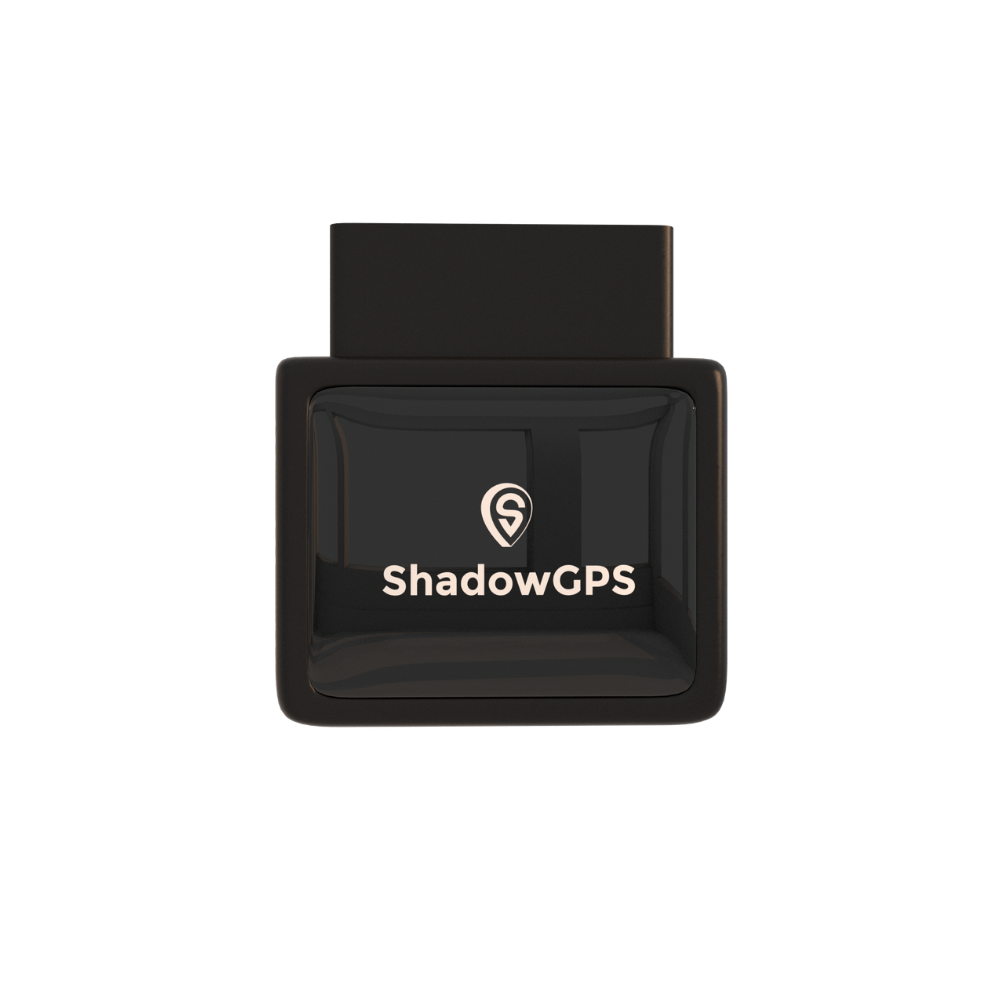
ShadowAuto OBD Tracker
- Updates every 5 seconds while moving
- Trip timeline and trip replay you can export
- Car Alarm plus ignition and engine diagnostics


ShadowTrack: the one that keeps reporting
ShadowTrack runs on its own rechargeable battery, roughly 15 days per charge, and needs no OBD-II port at all. It magnet-mounts wherever you want it, which makes it the right answer for a trailer, a piece of equipment, a boat, or a second placement in a car that already has a plug-in tracker.
The evidentiary value here is redundancy. A tracker in the OBD-II port is the first thing an experienced thief checks. A second one out of sight keeps the record running after the obvious one is pulled, and the gap between the two timestamps becomes its own piece of evidence. Same price and same plan as ShadowAuto: $69.90 with plans at $12 to $15 a month, 14-day free trial, and no contract, ever. We compare placements in our guide to hidden GPS trackers for cars.
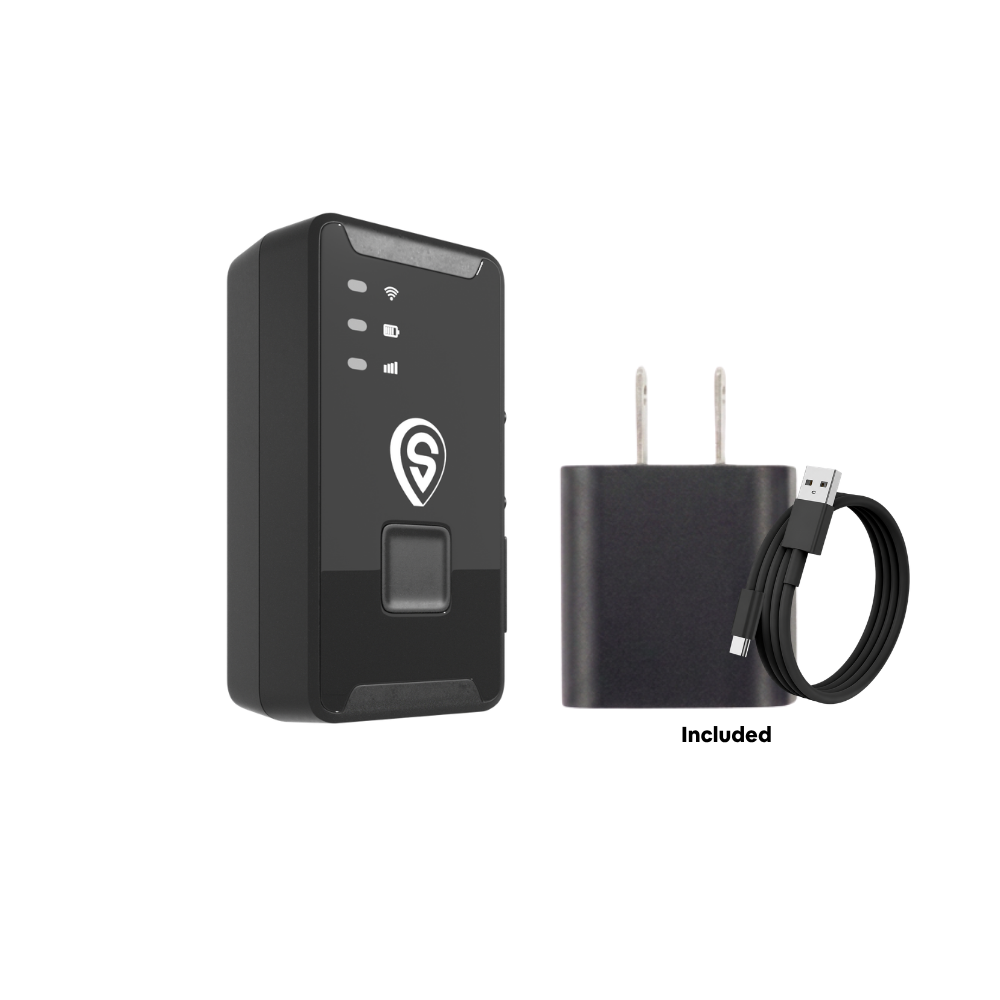
ShadowTrack
- Updates every 5 seconds while moving
- Weatherproof, magnetic mount, goes anywhere
- Up to about 15 days per charge
Magnetic Mount Weatherproof Case & Key Holder
If ShadowTrack is going under a wheel well, in a trailer tongue box or anywhere weather reaches it, the magnetic case is what keeps it reporting through rain, road salt and a winter. A tracker that stopped working in February produces no record in March.
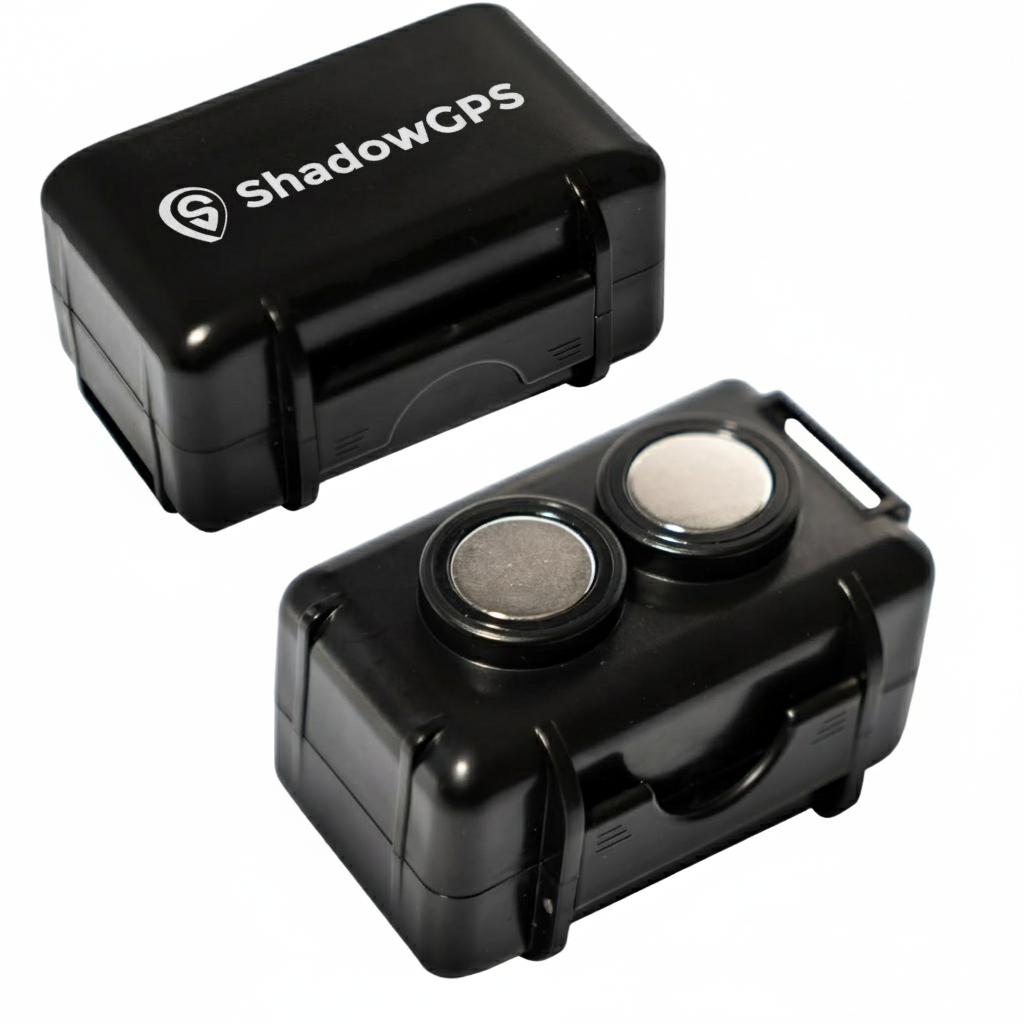
Magnetic Mount Weatherproof GPS Case & Key Holder
- Neodymium magnet mount holds through vibration
- Weatherproof housing for outdoor placement
| Tracker type | Power | Where it goes | Evidence it produces | Plan |
|---|---|---|---|---|
| ShadowAuto (OBD-II) | Powered by your car, never charge it | OBD-II port, out of sight under the dash | Unbroken location log, ignition events, speed, engine codes | $10–$13/mo, no contract |
| ShadowTrack (battery) | Rechargeable, about 15 days per charge | Magnet-mounted anywhere, no port needed | Location log, motion and geofence alerts, works on trailers and equipment | $10–$13/mo, no contract |
| Bluetooth tag | Coin cell, months | Glovebox or trunk | Only pings when a stranger's phone passes nearby, so the timeline has large holes | No plan |
| Prepaid-year cellular tracker | Battery, varies by model | Anywhere | Location log, but slow refresh tiers leave minutes between points | Prepaid year, locked in |
Is it legal to track your own car?
- What you can do. Tracking a car titled in your name is legal across the United States. That includes a family car your teen drives and a truck your business owns.
- Turo hosts and rentals. Disclose tracking in your listing and terms. Platform rules and state law both expect it, and disclosure strengthens rather than weakens your position if a car goes missing.
- Company trucks. Many states require you to tell employees that company vehicles are tracked. Put it in writing and keep the signed acknowledgment.
- What you cannot do. Putting a tracker on a car you do not own or co-own, without the owner's permission, may violate privacy and stalking statutes. Several states, California among them, have specific criminal provisions on this.
- Do not track an ex-partner or another adult. A shared last name is not shared title. If your name is not on the registration, do not put a tracker on it.
What GPS evidence will not do
Vendors tend to skip this part. It is the part that keeps you from being surprised in a deposition.
Four honest limits
1. It places your car, not a person. Location data shows where your truck went. It does not show who had the wheel. Identification still comes from cameras, prints, phone records or a confession, and your data is what points investigators toward those.
2. It does not guarantee charges. Prosecutors weigh caseload, priors, jurisdiction and provable value. Strong data improves the odds and shortens the work. It does not make the decision for them.
3. Coverage has physical limits. Underground garages, steel shipping containers and dense structures degrade satellite and cellular signal. Expect gaps and do not present a gap as a lie.
4. This is general information, not legal advice. Evidence rules differ by state, and a local attorney is the right person to tell you how yours apply.
Working with police, prosecutors and your insurer
With police
Say "I have a live tracker" in your first sentence. Offer screen access rather than dictated coordinates, hand over the untouched export, and note the report number, the officer's name and the time of handover.
With a prosecutor
You may be asked to testify to simple things: that the tracker is yours, that it was in your car, and that you did not alter the records. Keep your purchase receipt, account details and setup date somewhere you can find them.
With your insurer
Adjusters use the same export to confirm the time and place of loss, which usually speeds settlement. Diagnostic codes captured during the theft support the repair side of the claim.
Police departments increasingly have a defined path for tracker-equipped stolen cars, and we cover how that works in practice in our post on how tracker data assists law enforcement.
Frequently asked questions
Is GPS tracking data admissible in court?
Generally yes. Data from a tracker you own, on a car titled in your name, is admissible once it is authenticated. You show the records came from your device on your car and have not been altered. Courts increasingly treat GPS accuracy itself as settled, so most disputes are about handling rather than technology.
Can police use my tracker data without a warrant?
If you give it to them voluntarily, yes. Warrant requirements from cases like United States v. Jones apply to law enforcement placing a tracker on someone else's car. Sharing your own records about your own property is your decision to make.
Does a tracker prove who was driving my stolen car?
No. It proves where your car was and when. Identification comes from other sources, but tracker data is usually what tells investigators which cameras to pull and which addresses to look at, so it is the thing that makes the rest possible.
What should I do with the data the moment I notice my car is gone?
Call police and tell them you have a live tracker. Share live access rather than reading coordinates. Export the last 48 hours of history untouched. Write down the report number, the officer's name and the time you handed anything over. Do not go after your car yourself.
Can GPS evidence be thrown out?
It can be excluded if it cannot be authenticated, if the chain of custody is broken, or if it appears to have been altered. That is why edited screenshots and tidied-up spreadsheets are a bad idea. Hand over the original export and keep an identical copy.
Will my insurance company accept tracker data as proof of theft?
Adjusters generally welcome it, because it documents the time and place of loss and removes the disputes that slow claims down. Some carriers also offer discounts for tracker-equipped cars, though this varies by carrier and is never guaranteed.
Is there a monthly fee, and what happens if I cancel?
Yes, plans run $12 to $15 a month after a 14-day free trial. No contract, ever. Month-to-month, or prepay and save. Cancel any time and the device is still yours. There is also a 30-day money-back guarantee on the hardware.
Does a ShadowGPS tracker need a SIM card?
Nothing for you to buy or fit. The cellular connection is part of the plan, so the tracker reports over the mobile network from the moment you activate it. Roaming coverage reaches 188 countries and the network runs at 99.9% uptime.
Can a thief find and disable the tracker?
An experienced thief will check the OBD-II port. That is exactly why a second, battery-powered ShadowTrack out of sight is worth it, and why a tamper or power-loss event is itself useful: it brackets the last known location and shows deliberate concealment.
The short version
Evidence checklist
Before anything happens: keep your receipt, your account email and the date you plugged it in. Test the alerts twice a year. Consider a second placement.
The hour it happens: police first, live access second, untouched export third, written note of who got what and when, fourth.
Afterwards: change nothing, delete nothing, and give your insurer the same file you gave the detective.
You are not buying a court exhibit. You are buying the ability to answer one question quickly, and the record it leaves behind happens to be the thing that makes the rest of it possible.
Know where your car is, in five seconds, starting today.
Plug it in, see it move, cancel any time. 14-day free trial, no contract, ever.
Pricing and specs current as of August 2026 and subject to change; confirm current pricing and battery specifications on the product page before purchase. Amazon links are affiliate links; ShadowGPS may earn a commission at no extra cost to you. Clearance-rate figures reflect FBI Uniform Crime Reporting data for 2023; theft and recovery figures reflect National Insurance Crime Bureau reporting for 2025. Insurance discounts and savings vary by carrier and are not guaranteed. Legal guidance here is general information, not legal advice; confirm the tracking and evidence rules in your state.

