

GPS tracking for sales reps usually means one of two things: an app on the rep's phone, or a tracker in the car they drive. For real estate agents and small field sales teams, the car tracker tends to do more of the work, because the car is where the miles, the client visits, and the risk actually live.
A plug-in tracker gives you a dated trip history for mileage, a live location you can share during a showing, and an alert if the car moves when it shouldn't. It does that whether or not anyone remembers to open an app.
This guide covers how agents and sales teams use GPS tracking, what it costs, how to roll it out without making your team feel watched, and where phone apps still make more sense.
GPS tracking for sales reps and real estate agents is best done on the car, not the person. A plug-in OBD-II tracker records every business trip for mileage logs, shares live location during showings, and alerts you if the car is moved. Expect about $70 for the tracker and $10 to $15 a month per car, with no contract.
What GPS tracking for sales reps actually means
Most articles on this topic are written by software companies that sell phone apps for managers. That's one valid approach, but it isn't the only one, and for many small teams it isn't the best one.
There are three main ways to track field sales activity:
- Field sales apps like SPOTIO, Badger Maps or Salesforce Maps. They log check-ins and route plans from the rep's phone, usually pinging location while the app is open.
- Mileage apps like Everlance or MileIQ. They use the phone's sensors to detect drives for tax and reimbursement records.
- Vehicle GPS trackers like ShadowAuto. They plug into the car and report its location and trips on their own, with no phone, battery or app habit required.
The big difference: phone apps follow a person everywhere, including evenings and weekends. A car tracker follows the car. That makes it easier to separate business data from someone's private life, which matters for trust as much as for the law.
Who uses vehicle GPS tracking in sales and real estate
We hear from three kinds of buyers in this space most often.
The solo agent
An independent agent driving their own car between listings, showings and closings. They want a mileage record, a way to share location on showings, and theft protection.
The small brokerage or team
A broker with a few agents who wants a simple safety check-in process and accurate trip records, without buying enterprise software.
The field sales team
A company with 2 to 10 reps in company cars. They need visit records, fair mileage reimbursement, and protection for cars that carry samples or demo gear.
Benefit 1: a mileage record you don't have to remember
For agents and outside reps, driving is a big part of the job, and the miles add up to real money. The IRS business standard mileage rate is 72.5 cents per mile for January through June 2026, and the IRS raised it to 76 cents per mile for miles driven from July 1 through December 31, 2026.
That mid-year change makes 2026 a two-rate year. You can't multiply your total miles by one number. You need to know when each business trip happened, which is exactly the kind of record people struggle to rebuild from a calendar in April.
What that's worth: a quick example
Say an agent drives 15,000 business miles in 2026, split evenly across the year:
- 7,500 miles x $0.725 (Jan to Jun) = $5,437.50
- 7,500 miles x $0.76 (Jul to Dec) = $5,700.00
- Total standard mileage deduction: $11,137.50
Miss 10% of those trips and you leave more than $1,100 of deductions on the table. A year of GPS tracking costs about a fifth of that.
How a car tracker helps
Every trip your car takes shows up in the trip timeline with its date, start and end times, and route, and you can download reports to Excel. You tag which trips were business, and you have a dated record to build your mileage log from.
One honest limitation: a tracker records the car, not the purpose of the trip. You still need to note who you met or why, which the IRS expects in a mileage log. Export your history regularly, since app trip history covers roughly the last six months.
Employee or independent contractor?
Most real estate agents are independent contractors who claim mileage on Schedule C. W-2 sales reps generally can't deduct unreimbursed mileage, so accurate records matter for getting reimbursed by the employer instead. Either way, ask your tax professional how to use your trip data, and whether the tracker itself counts as a business expense.
Benefit 2: safer showings and solo client visits
Most showings go fine. Still, meeting strangers alone at an empty property is part of the job, and agents know it.
According to the National Association of REALTORS® 2024 Member Safety Residential Report, 22% of residential members had feared for their personal safety on the job, and 86% had shown a property alone in the past year. Open houses (34%) and showings (31%) were the most common settings where members felt unsafe.
A car tracker isn't a personal alarm, and it shouldn't replace your brokerage's safety protocol. What it does well is answer the question someone back at the office will ask first: where is she right now?
A simple showing check-in routine
- Share your live location with your broker, partner or a teammate before you leave for a showing with a new client.
- Set a geofence around the listing address, so your check-in contact gets an alert when your car arrives and when it leaves.
- Agree on a check-in window. If your car hasn't left the geofence by then and you haven't texted, your contact calls.
- Turn on collision alerts, so an SMS goes out automatically if your car is in an accident on the way.
- Stop sharing when you're done. Your location is yours.
Speed matters here. A live map that refreshes every 5 seconds shows where your car actually is, not where it was a few minutes ago. For more ideas, read our guide to GPS tracking for personal security.
Benefit 3: protecting the car and what's in it
A sales rep's car is often a mobile office: laptop, samples, demo equipment, lockbox keys, signage. Losing it can mean losing a week of work.
Car theft is down nationally, which is good news. The National Insurance Crime Bureau counted 659,880 vehicle thefts in 2025, a 23.2% drop from 2024. That's still about one every 48 seconds.
With a tracker plugged in, Car Alarm and ignition alerts let you know the moment your car starts or moves when it shouldn't, and you can share its live location with police. Pair that with geofence alerts around your office or home for overnight peace of mind.
Benefit 4: for sales managers, records instead of guesswork
If your company owns the cars, a tracker gives you facts in the places where teams usually argue:
- Client visits. Trip history shows which accounts a car visited and for how long, without asking reps to remember to check in.
- Fair mileage reimbursement. Reimburse from actual trips instead of estimates, which protects both the company and the rep.
- Route planning. Spot territories where reps spend more time driving than selling.
- Car health. Engine codes and battery alerts help you catch problems before a rep is stuck on the way to a meeting.
- Customer service. Give clients an accurate arrival time when a rep is running late.
The goal is fewer surprises, not micromanagement. Teams that use trip data to coach and reimburse fairly tend to get buy-in. Teams that use it to nitpick every stop tend to lose good reps.
The tracker we'd use: ShadowAuto (and ShadowTrack)
ShadowAuto: plug it in, keep a record of every trip
ShadowAuto plugs into your car's OBD-II port in under two minutes. No tools, no wiring, and no charging, since it runs off your car's power. Every trip lands in the ShadowGPS app on your phone and on the web, with live location sharing, geofences, speed and ignition alerts, collision SOS, and Excel reports.
It's $69.90 for the tracker and $12 to $15 a month, or $10 to $13 a month per tracker when you run four or more. No contract. Month-to-month, or prepay and save.
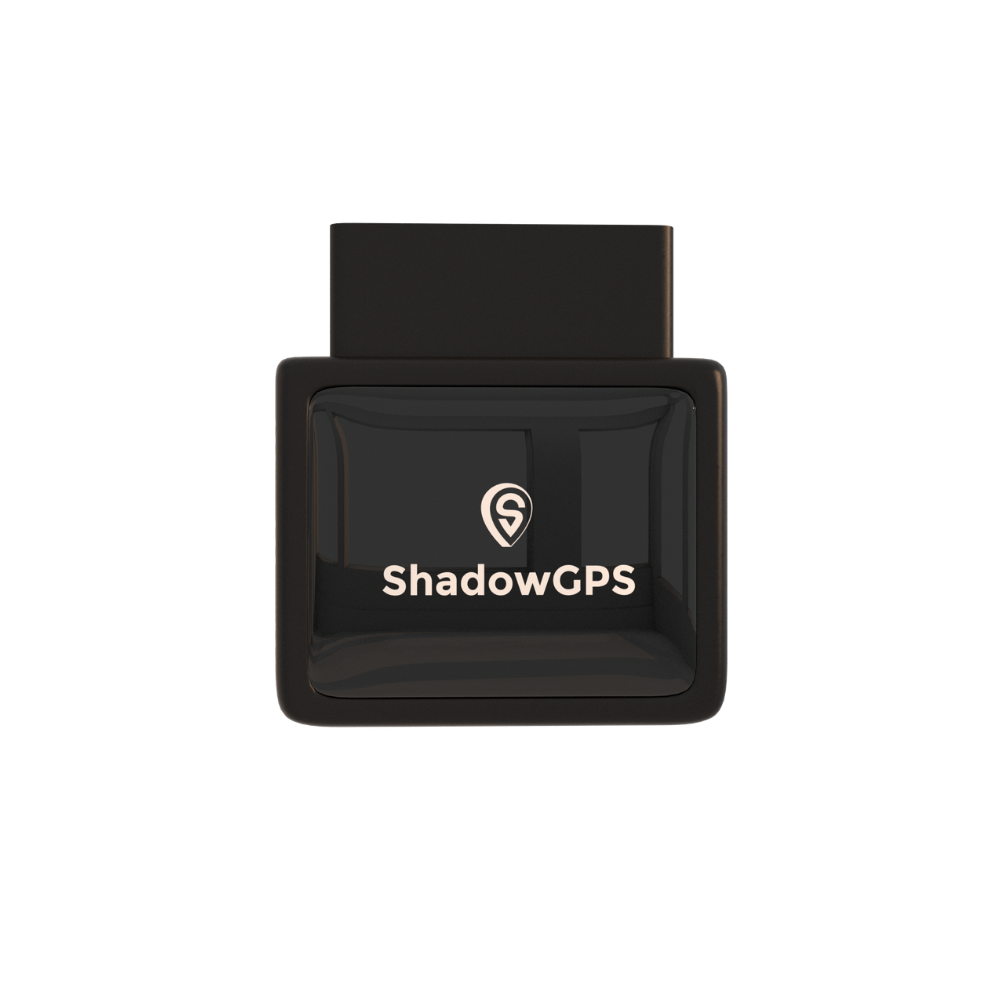
ShadowAuto
Plug-in · OBD-II · For cars & trucks
Plans $10-$13/mo (4+ trackers) or $12-$15/mo · No contract, ever.
- Plugs into your OBD-II port in under 2 minutes
- Trip timeline and Excel reports for mileage records
- Share live location, geofences and collision SOS


ShadowTrack is the battery-powered option. It's useful if you switch between cars, take a rental to a market you're working, or want to protect a sign trailer or demo equipment. It sits in a weatherproof magnetic case and lasts up to about 15 days per charge.
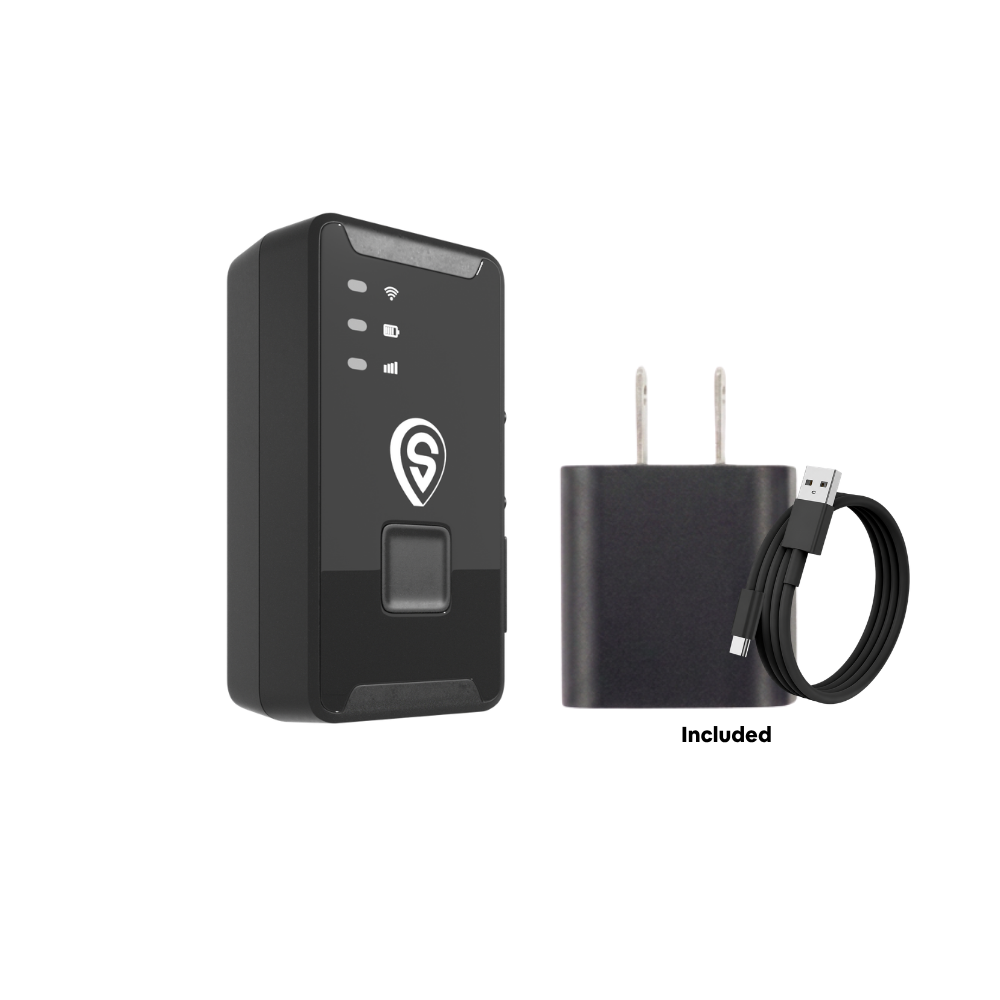
ShadowTrack
Battery · Magnetic · Moves with you
Plans $10-$13/mo (4+ trackers) or $12-$15/mo · No contract, ever.
- Moves between cars, rentals and trailers
- Weatherproof magnetic case
- Up to about 15 days per charge
Best for: solo agents in their own car (ShadowAuto), and small sales teams that want every company car on one map. Multi-user access lets a broker or manager see the cars they're responsible for. Learn more on our GPS tracking for business page.
Phone apps vs. vehicle GPS trackers for sales teams
Phone apps and car trackers solve different problems. Many teams end up using a CRM app for notes and pipeline, and a car tracker for trips, safety and theft. Here's how the options compare.
| Option | What it tracks | Works if phone is off | Off-hours privacy | Theft alerts | Best for |
|---|---|---|---|---|---|
| Field sales app (SPOTIO, Badger Maps) | Rep's phone, check-ins | No | Depends on settings | No | Pipeline, route plans, CRM notes |
| Mileage app (Everlance, MileIQ) | Drives detected by phone | No | Depends on settings | No | Tax and reimbursement logs |
| Employee time app (Timeero) | Rep's phone, clock-ins | No | Clock-in based | No | Hourly field staff |
| Bluetooth tag (Apple AirTag) | Tag near Apple devices | Yes | Yes | No | Keys and bags |
| ShadowTrack | The car, trailer or gear | Yes | Tracks property, not the person | Yes | Rentals, trailers, demo equipment |
| ShadowAuto | The car, every trip | Yes | Tracks the car, not the person | Yes, plus Car Alarm | Agents' cars, company cars |
Feature summaries based on each product's public descriptions, checked Oct 2026. Phone app features vary by plan and settings.
If you've wondered whether an AirTag can do the job, it can't reliably: it only reports when a nearby iPhone passes by. Our breakdown of why AirTags fail for cars explains the gap.
How to roll out GPS tracking without making your team feel watched
The fastest way to lose trust is to plug in trackers quietly. The fastest way to earn it is to explain what you're doing and why, before day one.
- Start with the why. Lead with safety, accurate reimbursement, and protecting the car. Those benefits help the rep, not just the company.
- Write a short policy. Cover what's tracked, who can see it, how long it's kept, and what it will and won't be used for.
- Get written acknowledgment from every driver, even where the law doesn't require it.
- Respect personal cars. If reps drive their own cars, let them own the tracker account and share business trip reports, rather than giving the company a live view of their weekends.
- Share the data with reps. Let them use their own trip history for mileage and route planning, so it works for them too.
- Review after 60 days. Ask what's helping and what feels like overreach, then adjust.
We go deeper in how to introduce GPS tracking to employees without creating resentment and our employee vehicle tracking best practices.
Is it legal to track sales reps' cars?
Generally, tracking a car your company owns for business purposes is legal in the US, especially with written notice. Tracking an employee's personal car is a different matter. California Penal Code 637.7, for example, bars using an electronic tracking device to determine a person's location without the registered owner's consent. Several states, including New York, Connecticut and Delaware, require employers to give written notice of electronic monitoring.
The safe path: track company-owned cars with a written policy, get consent for anything else, and check your state's rules. This is general information, not legal advice. Our guide on whether GPS tracking is legal for employee vehicles covers the details.
What GPS tracking for sales reps costs
Field sales apps usually charge per user, per month, and often bundle CRM features you may already have. A car tracker charges per car. For a small team, the math is simple:
| Setup | Trackers | Upfront | Monthly | Year 1 total |
|---|---|---|---|---|
| Solo agent, own car | 1 ShadowAuto | $69.90 | $12 to $15 | $213.90 to $249.90 |
| Agent with a sign trailer | 1 ShadowAuto + 1 ShadowTrack | $139.80 | $24 to $30 | $427.80 to $499.80 |
| Brokerage, 4 agents | 4 ShadowAuto | $279.60 | $40 to $52 | $759.60 to $903.60 |
| Sales team, 8 company cars | 8 ShadowAuto | $559.20 | $80 to $104 | $1,519.20 to $1,807.20 |
ShadowGPS pricing as of Oct 2026. Four or more trackers qualify for the $10 to $13 per tracker rate. No contract, cancel any time.
Prepaid bundles lower the effective monthly rate further if you know you'll keep the trackers for a year or more. See all options on our pricing page, or our guide to choosing fleet GPS tracking for 3 to 10 vehicles.
GPS tracking for sales reps: FAQs
Is there a monthly fee for a sales rep GPS tracker?
Yes. Real-time trackers use a cellular connection, so there's a monthly fee. ShadowGPS plans are $12 to $15 a month, or $10 to $13 per tracker for four or more. No contract. Month-to-month, or prepay and save.
Does the tracker need a SIM card or the rep's phone?
No. ShadowAuto and ShadowTrack have a SIM built in and report on their own. The rep's phone can be off, dead or left at the office, and the car still shows up on the map.
Is it hard to set up in a company car?
No. You plug ShadowAuto into the OBD-II port under the dashboard, which takes under two minutes and no tools. Here's how to find your OBD2 port.
Can a GPS tracker replace my mileage log?
It gives you the dated trips and routes a mileage log is built from, and you can export reports to Excel. You still need to record the business purpose of each trip. Ask your tax professional how to use the data for your return.
What is the 2026 IRS mileage rate?
72.5 cents per business mile for January 1 through June 30, 2026, and 76 cents per mile from July 1 through December 31, 2026, after a mid-year increase. Keep trip dates so you apply the right rate.
How does GPS tracking help real estate agent safety?
You can share your car's live location with a broker or teammate during a showing, set a geofence that alerts them when you arrive and leave, and turn on collision alerts. It works alongside your brokerage's safety plan, not instead of it.
Is it legal to track my sales team's cars?
Tracking company-owned cars for business use is generally legal, especially with written notice. Tracking personal cars without the owner's consent can break state laws. Use a written policy and check your state's rules.
Should I use a phone app or a car tracker?
Use a phone app for CRM notes, pipeline and route planning. Use a car tracker for trips, mileage, safety and theft alerts, since it works without the phone and tracks the car instead of the person. Many teams use both.
Can managers see where reps are after hours?
A car tracker shows where the car is, so set clear rules in your policy. For personal cars, the cleanest approach is letting the rep own the account and share business trip reports only.
What happens if I cancel?
Billing stops and you keep the tracker. There's no contract and no cancellation fee, and new orders come with a 30-day money-back guarantee.
Know where your car is, every trip of the day.
Plug it in, see it move, cancel any time. $69.90 for the tracker, $12 to $15 a month, no contract, ever.
Pricing checked October 2026. IRS mileage rates from IRS Notice 2026-10 and Announcement 2026-11; safety data from NAR's 2024 Member Safety Residential Report; theft data from NICB's 2025 Vehicle Theft Report. ShadowGPS makes ShadowAuto and ShadowTrack. Some links are affiliate links, and we may earn a commission at no extra cost to you. This article is general information, not tax or legal advice. Only track cars and property you own or have permission to track.

