

You saw "ELD" in a trucking forum, on an insurance form, or in a listing for a used pickup, and now you're wondering if it applies to you. Here's the short version: an ELD is a federally required logbook device for commercial truck drivers, and most people who own one car, one pickup, or a couple of work vans never need one.
So what is an ELD, exactly, and how do you know for sure whether the rule covers you? This guide walks through what the device records, who the ELD mandate applies to, the exemptions that let many small operators off the hook, and what to use instead when what you really want is to know where your car or truck is right now.
An ELD (Electronic Logging Device) is a device that connects to a commercial truck's engine and automatically records a driver's hours of service: driving time, on-duty time, and off-duty time. Since December 18, 2017, most drivers of commercial motor vehicles who must keep records of duty status have been required to use one. If you drive a personal car, a teen's car, a Turo rental, or a work vehicle under 10,001 lbs, you don't need an ELD. A GPS tracker is the better fit.
What Is an ELD?
An Electronic Logging Device (ELD) is a small piece of hardware, usually paired with a phone or tablet app, that plugs into a truck's diagnostic port and talks directly to its engine. Its one legal job is to replace the paper logbook truck drivers used to fill out by hand.
Because the ELD reads the engine itself, it knows when the truck is moving. The driver can't simply write down a different number. That's the whole point: accurate, tamper-resistant hours-of-service (HOS) records that a roadside inspector can review in minutes.
What does ELD stand for?
ELD stands for Electronic Logging Device. You'll also hear it called an e-log, electronic log, or electronic logbook. Its older cousin, the AOBRD (Automatic On-Board Recording Device), was phased out at the end of 2019.
What an ELD records
The federal rule spells out exactly what an ELD has to capture. It doesn't change what drivers log, only how they log it.
- Date and time of every duty status change
- Duty status: driving, on duty (not driving), off duty, or sleeper berth
- Engine hours and vehicle miles, pulled straight from the engine
- General location at each status change and at intervals while driving
- Driver, motor carrier, and vehicle identification
- Malfunction and data diagnostic events, plus any edits and annotations
How an ELD works, step by step
- It connects to the engine. The ELD plugs into the truck's diagnostic port (a 9-pin or 6-pin connector on most heavy trucks, an OBD-II port on many lighter ones) and syncs with the engine control module.
- The driver logs in. Each driver signs in on the ELD app so hours are tied to the right person.
- It detects driving automatically. Once the truck reaches about 5 mph, the ELD switches to driving status on its own.
- The driver sets non-driving statuses. On duty, off duty, and sleeper berth are selected manually.
- Logs are certified daily. The driver reviews and certifies each 24-hour record.
- Data is shared at inspection. During a roadside stop, the driver hands over logs by display, by wireless transfer, or by a local connection like Bluetooth or USB.
Can ELD records be edited?
Limited edits are allowed to fix mistakes, but the original record is always preserved alongside the change, and automatically recorded driving time can't be shortened. The driver has to approve any edit a carrier proposes.
ELD at a glance
- What it is: an engine-connected device that records commercial driving hours
- Who regulates it: the Federal Motor Carrier Safety Administration (FMCSA)
- Legal basis: 49 CFR Part 395, the hours-of-service regulations
- Required since: December 18, 2017 (AOBRDs allowed until December 16, 2019)
- Who needs one: most CMV drivers in interstate commerce who must keep logs
- Who doesn't: personal car and pickup owners, Turo hosts, light work vans, and drivers who qualify for an exemption
The ELD Mandate in Plain English
The "ELD mandate" (officially the ELD rule) is the regulation that made these devices required. Congress ordered it in the 2012 highway bill known as MAP-21, and the FMCSA wrote the details.
The goal was safety. When the final rule was announced, the agency estimated that ELDs would help prevent 1,844 crashes and save 26 lives every year, while affecting roughly 3 million commercial drivers and saving more than $1 billion a year in paperwork.
ELD mandate timeline
| Date | What happened |
|---|---|
| July 2012 | MAP-21 directs FMCSA to require electronic logging devices |
| December 16, 2015 | Final ELD rule published in the Federal Register |
| December 18, 2017 | ELD compliance deadline; paper logs no longer allowed for most covered drivers |
| December 16, 2019 | Grandfather period for older AOBRDs ends; full ELD compliance required |
| September 2020 | Short-haul exception expands to 150 air miles and a 14-hour duty period |
| Early 2026 | Tighter enforcement: drivers using a revoked or unregistered ELD risk being placed out of service |
| July 22, 2026 | Paper ELD operator's manual no longer required in the cab |
The hours-of-service rules an ELD keeps track of
The ELD is just the recorder. The limits it tracks come from the federal hours-of-service rules for property-carrying drivers:
- 11-hour driving limit after 10 consecutive hours off duty
- 14-hour window: no driving after the 14th hour since coming on duty
- 30-minute break after 8 cumulative hours of driving
- 60/70-hour limit over 7 or 8 consecutive days, which a 34-hour restart can reset
What changed in 2026
There's no brand-new ELD law this year, but enforcement got noticeably stricter. FMCSA has pulled multiple waves of devices off its registry in 2026 after finding they didn't meet technical standards, and operating with a revoked or never-certified ELD can now put a driver out of service.
One rule got easier. A final rule published June 22, 2026 removed the requirement to keep a printed ELD operator's manual in the cab, effective July 22, 2026. Drivers still need to know how to use inspection mode and transfer their logs.
Do You Need an ELD? The 4-Question Test
You need an ELD only if you can answer yes to all four of these questions. A single "no" means the federal ELD rule doesn't apply to you.
- Are you driving for business? Hauling property or passengers as part of commerce, not personal errands or a family road trip.
- Is it a commercial motor vehicle? A GVWR or GCWR of 10,001 lbs or more, built to carry 9 to 15 passengers for pay or 16 or more total, or hauling placarded hazmat.
- Is it interstate commerce? Crossing state lines, or carrying cargo that's part of an interstate trip. Many states apply similar rules to in-state carriers too.
- Are you required to keep logs, with no exemption? If you qualify for the short-haul exception or another exemption below, you don't need an ELD.
Question 1: Are you driving for business?
This is where most ShadowGPS customers drop out. A parent checking on a teen driver, a family protecting a second car, or someone driving a personal pickup to the lake isn't operating in commerce. The ELD rule doesn't touch them.
Question 2: Does your setup weigh 10,001 lbs or more?
Weight is where pickups get tricky. A heavy-duty pickup on its own usually sits below the line, but add a loaded gooseneck or flatbed trailer and the combined rating can blow past 10,001 lbs. Check the door-jamb sticker for GVWR and add your trailer's rating to estimate GCWR. The official CMV definition lives in 49 CFR 390.5.
Question 3: Are you crossing state lines?
The federal ELD rule covers interstate commerce. If your business stays inside one state, your state's own rules decide, and many states mirror the federal standard. Check with your state DOT before assuming you're in the clear.
Question 4: Do you qualify for an ELD exemption?
Plenty of small operators who pass the first three questions still don't need an ELD, because the rule carves out several exceptions:
- Short-haul exception: you stay within 150 air miles of your normal work reporting location and are released from duty within 14 hours. You keep a simple time record instead of logs.
- The 8-in-30 rule: drivers who only need logs on 8 or fewer days in any 30-day period can use paper logs.
- Pre-2000 engines: trucks with an engine model year older than 2000 are exempt. This goes by the engine, not the truck's body or title.
- Driveaway-towaway operations: when the truck being driven is itself the delivery, like moving a new truck from the factory to a dealer.
- Agricultural exemptions: certain farm hauls within 150 air miles of the source, especially during state-designated planting and harvest seasons.
- FMCSA-granted waivers: temporary or industry-specific exemptions the agency issues from time to time.
A key detail: break the short-haul limits more than 8 days in a 30-day period and you need an ELD for the rest of that period. The exact wording is in 49 CFR Part 395.
Real-World Scenarios: Who Needs an ELD?
Rules are easier to apply with examples. Here's how the test plays out for the kinds of drivers who usually land on this page.
| Who you are | Your setup | Need an ELD? | Better fit |
|---|---|---|---|
| Parent of a new teen driver | Family sedan, personal use | No | GPS tracker |
| Turo host | 2 SUVs rented on Turo | No | GPS tracker |
| Weekend camper | Personal pickup towing an RV trailer | No (not commerce) | GPS tracker for truck and trailer |
| Local plumber | 3 cargo vans under 10,001 lbs | No | GPS tracker |
| Landscaper crossing a state line | Pickup plus loaded trailer over 10,001 lbs, home every night | Usually no (short-haul timecards) | GPS tracker plus timecards |
| Hotshot owner-operator | Dually plus gooseneck, interstate loads | Yes, unless exempt | Registered ELD, plus a GPS tracker for theft protection |
| Long-haul trucker | Class 8 tractor-trailer, multi-day runs | Yes | Registered ELD |
| Classic truck hauler | Truck with a 1998 engine | No (pre-2000 engine) | Paper logs, plus a GPS tracker |
Scenarios are simplified examples for education, not legal advice. Your answer depends on your exact weight ratings, cargo, routes, and state rules.
Parents of teen drivers
No ELD needed. What you want is a live map of where the car is, a trip timeline when they get home, and an alert if it leaves a set area.
Turo and rental hosts
No ELD needed. A plug-in GPS tracker shows where each car is between trips and helps you act fast if one doesn't come back.
Owners of 2 to 5 work vehicles
Often no ELD needed. A GPS tracker shows where every van and truck is, without the logbook rules built for long-haul trucking.
What an ELD Can't Do (and Why That Matters)
Here's something most ELD guides skip: an ELD is not a great GPS tracker. It was built to prove compliance to an inspector, not to help you find your truck.
To protect driver privacy, the federal spec only requires location at each duty status change and at roughly 60-minute intervals while driving, and only to about a 1-mile radius (about 10 miles during authorized personal use). That's useful for a logbook. It's not much help when your pickup is missing at 2 a.m.
- No real-time map: many ELDs don't show live location at all without an added fleet subscription.
- No theft focus: compliance devices aren't designed for tamper alerts, car alarms, or recovery.
- Tied to the driver: ELDs track hours worked, which is the wrong tool for a family car or a rental.
- Heavier commitment: many ELD plans are built for carriers, with fleet dashboards and contracts a single owner doesn't need.
If you're asking "what is an ELD" because you really want to know where your car or truck is, you're looking for a different tool.
ELD vs. GPS Tracker: What's the Difference?
Both plug into a port and both use GPS, so people mix them up all the time. The difference is the job each one is built to do.
| Feature | Electronic Logging Device (ELD) | Paper logbook | ShadowGPS tracker |
|---|---|---|---|
| Main job | Prove hours-of-service compliance | Record hours by hand | Show where your car or truck is |
| Legally required? | Yes, for most interstate CMV drivers who keep logs | Only allowed for exempt drivers | No, optional peace of mind |
| Who it's for | Truckers and regulated carriers | Exempt and occasional drivers | Car and truck owners, Turo hosts, small fleets |
| Location detail | About 1-mile radius, roughly hourly | Written city and state | Live map, trip timeline, trip replay |
| Theft protection | Not designed for it | None | Car Alarm, tamper alerts, geofence alerts |
| Setup | Connects to diagnostic port, driver login, carrier account | Pen and logbook | Plug it in, under 2 minutes |
| FMCSA registered? | Must be | Not applicable | No, not an ELD |
| Best for | Staying legal on the road | Exempt drivers | Knowing where your car or truck is, right now |
ShadowGPS trackers are not electronic logging devices and are not on the FMCSA registry. They can't be used for hours-of-service compliance.
Don't Need an ELD? Here's What Actually Helps: A GPS Tracker
ShadowGPS: GPS tracking without the ELD paperwork
If you've worked through the test above and landed on "no ELD needed," you still have the original worry: where's my car or truck right now? That's what ShadowGPS is built for. It's a modern tracker for people who own their car or truck, with a live map that refreshes every 5 seconds while it's moving, so you're seeing where it is, not where it was.
It's also simple. ShadowAuto plugs into the OBD-II port found on almost every car, pickup, and van built since 1996. No tools, no wiring, no driver login, no hours to certify.
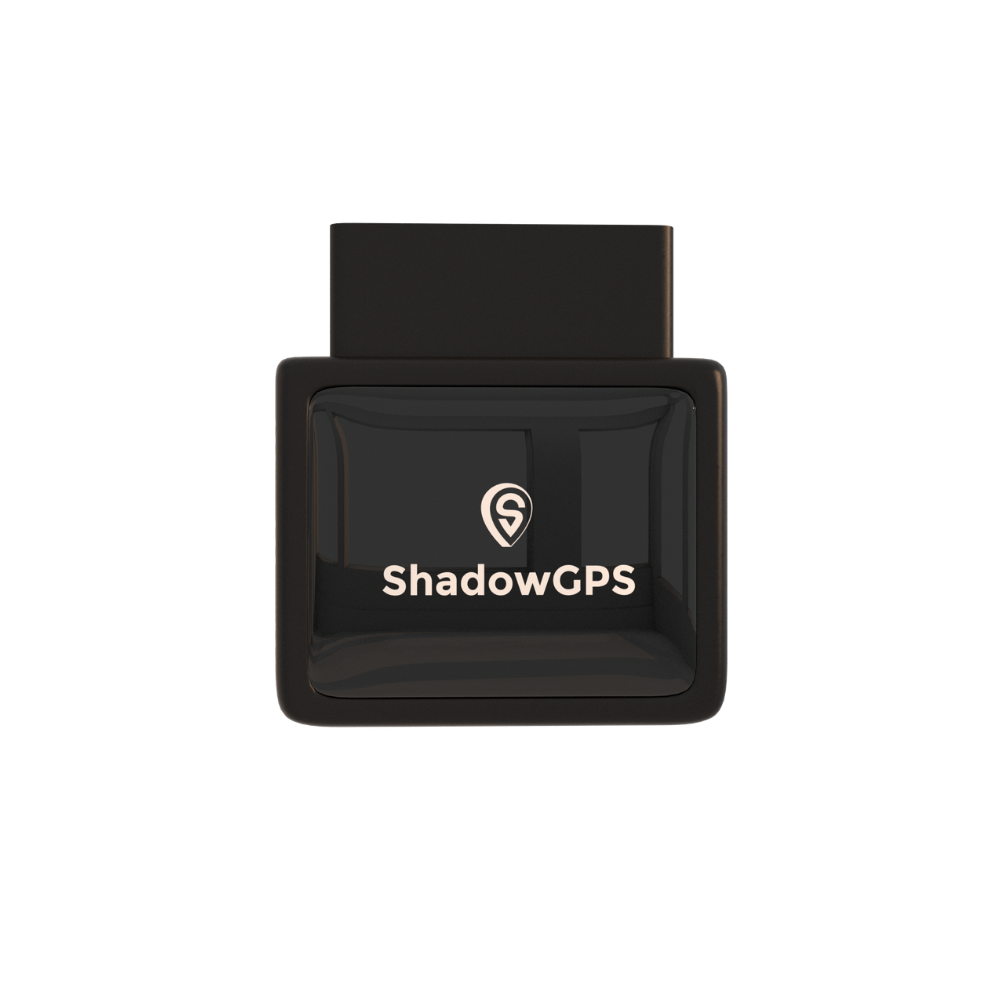
ShadowAuto
- Plugs into your OBD-II port in under 2 minutes
- Live tracking, trip timeline and trip replay
- Car Alarm, geofence alerts and engine codes


Not everything you own has an OBD-II port. Trailers, equipment, and many heavy trucks use a different diagnostic connector, and if you run an ELD, it may already be sitting in the port. That's where ShadowTrack comes in: a battery tracker in a weatherproof magnetic case that works without any port at all.
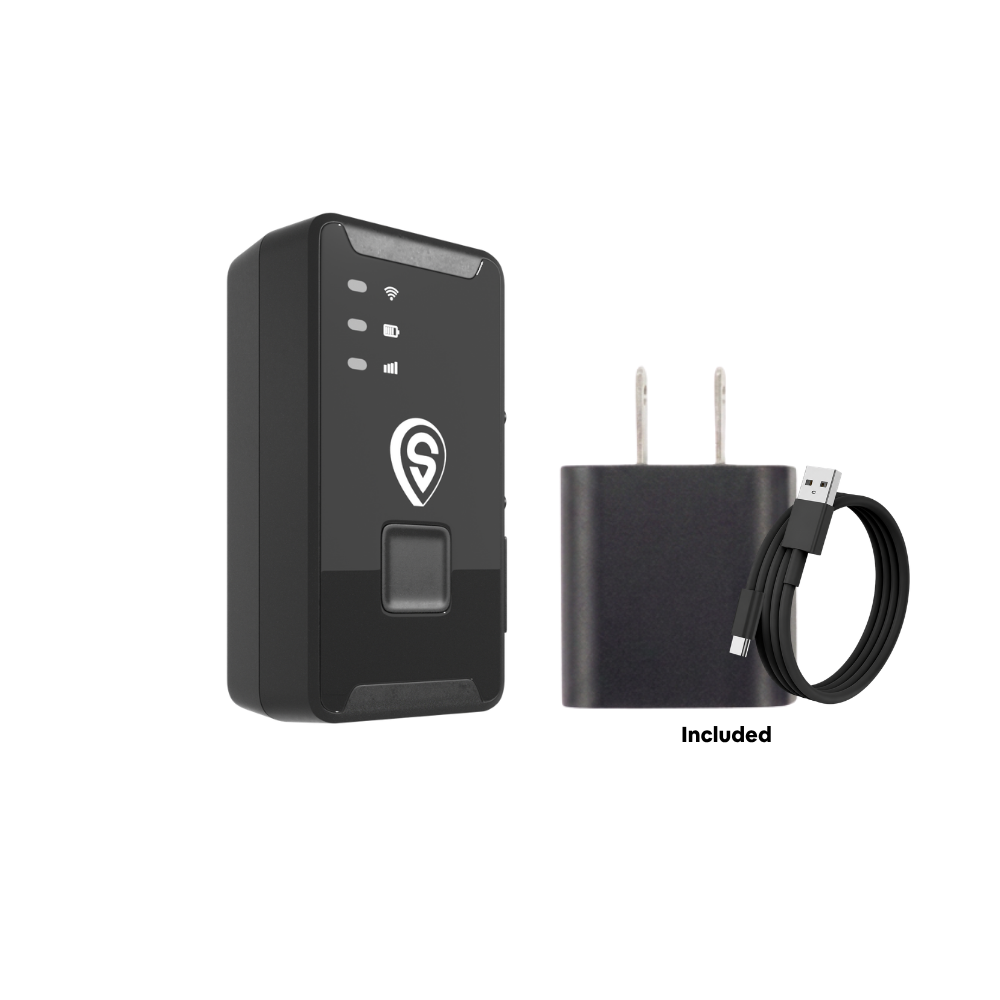
ShadowTrack
- No port needed, works alongside an ELD
- Weatherproof magnetic case, hides anywhere
- Up to about 15 days per charge
Best for: ShadowAuto for any car, pickup, or van you want to see on a map from your phone. ShadowTrack for trailers, equipment, heavy trucks, and any vehicle where the diagnostic port is already taken.
Wondering about the monthly fee? Yes, there is one, and we'd rather say it up front: $12 to $15 a month, no contract, ever. Month-to-month, or prepay and save. The SIM and cellular service are built in, so there's nothing extra to buy. Here's how GPS trackers handle SIM cards if you're curious.
For Small Fleets: Running an ELD and a GPS Tracker Together
If you run 2 to 5 trucks and some of them do need ELDs, you don't have to choose. Plenty of owner-operators use a registered ELD for compliance and a separate GPS tracker for security and day-to-day visibility.
Why use both?
- Different jobs: the ELD keeps you legal, the tracker tells you where every truck and trailer is.
- Trailers don't have engines: an ELD lives in the tractor. Your trailer and the equipment on it need their own tracker.
- Mixed fleets: your ELD-required truck and your light pickups and vans can all show up on one map.
- Theft response: if a truck or trailer goes missing overnight, live location and alerts matter more than hourly log points.
What if the ELD is already in the port?
Many ELDs occupy the truck's diagnostic connector. In that case, the simplest move is ShadowTrack, which mounts magnetically and runs on its own battery. On lighter vehicles with an OBD-II port and no ELD, ShadowAuto just plugs in. Not sure where your port is? Here's how to find your OBD2 port in 30 seconds.
A quick framework for small operators
- List every vehicle and trailer with its GVWR, engine year, and typical routes.
- Run each one through the 4-question test to see which truly need an ELD.
- Put a registered ELD only where it's required. Don't pay for compliance on vehicles that don't need it.
- Put a GPS tracker on everything you'd hate to lose, including trailers and equipment.
- Recheck twice a year or whenever you add a trailer, take interstate work, or change routes.
For more on sizing tracking to a small operation, see choosing fleet GPS tracking when you have 3 to 10 vehicles and what GPS tracking really costs a small fleet in 2026.
How Much Does an ELD Cost?
Most ELD setups combine hardware with a monthly software plan. Industry guides put a typical setup at around $100 for the device plus $20 to $40 a month per truck, with full fleet platforms running higher.
Watch for multi-year contracts, cable and setup fees, and tablet costs. If you're exempt, those dollars are better spent elsewhere.
If You Do Need an ELD: How to Choose One
ShadowGPS doesn't make ELDs, so here's a neutral checklist to use while you shop.
- It's on the FMCSA registry. Confirm the exact model on the official FMCSA registered ELD list, and check that it isn't on the revoked list.
- It fits your truck's connector. Heavy trucks often use 9-pin or 6-pin connectors, while many pickups and medium-duty trucks use OBD-II.
- Inspection transfer is easy. Look for simple wireless transfer and a clear inspection mode.
- The app is easy for your drivers. If logging status changes is a chore, mistakes follow.
- Contract terms are clear. Know the length, cancellation rules, and hardware ownership before you sign.
- Support answers the phone. A malfunction at a scale house is the wrong time to find out support is email-only.
The FMCSA's ELD site and its hours-of-service page are the best sources for anything compliance-related.
A quick note on tracking and the law
Tracking a car or truck you own is generally legal. Tracking a vehicle used by employees usually requires that you own it and tell them, and rules vary by state. Tracking a vehicle you don't own, or tracking another adult without consent, can break state law. Read our guide to GPS tracking laws for employee vehicles before you set up a work fleet.
Frequently Asked Questions About ELDs
What is an ELD and how does it work?
An ELD, or Electronic Logging Device, connects to a commercial truck's engine through its diagnostic port. It automatically records when the truck is driving and lets the driver log on-duty, off-duty, and sleeper berth time, creating hours-of-service records that inspectors can review at the roadside.
Who is required to have an ELD?
Most drivers of commercial motor vehicles in interstate commerce who must keep records of duty status. That generally means vehicles of 10,001 lbs or more, certain passenger vehicles, or placarded hazmat haulers, unless the driver qualifies for an exemption like the short-haul exception.
Do I need an ELD for a pickup truck?
Only if you use it for business in interstate commerce and your truck, or truck plus trailer, is rated at 10,001 lbs or more, and you don't qualify for an exemption. A personal pickup used for errands, camping, or towing your own boat doesn't need an ELD.
Do vehicles under 10,000 lbs need an ELD?
Generally no. Vehicles rated under 10,001 lbs aren't commercial motor vehicles under the weight test, so most cars, light pickups, and cargo vans don't need an ELD. The exceptions are vehicles built to carry passengers for pay above certain seat counts and vehicles hauling placarded hazardous materials.
Can a GPS tracker be used as an ELD?
No. Only devices listed on the FMCSA's registered ELD list count for compliance. A GPS tracker like ShadowGPS shows where your car or truck is in real time, but it doesn't record hours of service and isn't an ELD.
Can I use my phone as an ELD?
Only as part of a registered ELD system. Many ELDs use a phone or tablet app as the screen, but the app must be paired with hardware that connects to the engine. A phone app on its own doesn't meet the rule.
What happens if you don't have an ELD when you need one?
Drivers can be cited and placed out of service at a roadside inspection, and carriers can face fines and a hit to their safety record. As of 2026, using a revoked or unregistered device can also lead to an out-of-service order.
Do ELDs track your location?
Yes, but loosely. The ELD rule requires location at each duty status change and at intervals while driving, to about a 1-mile radius. Some ELD providers add live fleet tracking on top, but compliance location data isn't designed for real-time tracking.
Do RVs or personal vehicles need an ELD?
No. The ELD rule covers commercial operations. A personal RV, a family car, or a Turo rental isn't being driven by a commercial driver keeping hours-of-service logs, so no ELD is needed.
Is there a monthly fee for a ShadowGPS tracker?
Yes, plans run $12 to $15 a month, or $10 to $13 a month with 4 or more trackers. No contract, ever. Month-to-month, or prepay and save, and you can cancel any time.
Does a ShadowGPS tracker need a SIM card?
You don't need to buy one. Cellular service is built in and included with your plan, so you just plug it in, open the app, and see your car or truck on the map.
No ELD needed? Know where your car or truck is anyway.
Now you know what an ELD is and whether you need one. If you don't, plug it in, see it move, cancel any time. ShadowGPS gives you a live map, trip history, and theft alerts without logbooks or contracts.
This guide reflects FMCSA rules and ShadowGPS pricing as of October 2026. It is general information, not legal advice; confirm your obligations with the FMCSA or your state DOT. ShadowGPS trackers are not electronic logging devices and cannot be used for hours-of-service compliance. Some links are affiliate links, which means we may earn a commission at no extra cost to you.
