

You just bought your second work truck. Or you hooked a trailer to the pickup and started taking paid jobs one state over. Somewhere in there, without a letter or a phone call, you may have become a commercial motor vehicle operator, and a federal clock started running the moment you went on duty.
Here is hours of service explained in one line: HOS rules cap how long a commercial driver can drive in a day (11 hours), how long the workday can stretch (14 hours), and how much work fits in a week (60 or 70 hours), with required rest in between. This guide walks you through every rule in plain English, the exceptions small fleets actually use, when you need an ELD, what violations cost in 2026, and a simple system to stay on the right side of all of it.
Hours of Service (HOS) are FMCSA rules (49 CFR Part 395) that limit driving and work time for commercial motor vehicle drivers. Property-carrying drivers may drive up to 11 hours within a 14-hour window after 10 consecutive hours off duty, must take a 30-minute break after 8 cumulative hours of driving, and cannot drive after 60 hours in 7 days or 70 hours in 8 days. Taking 34 consecutive hours off resets the weekly clock.
What Is Hours of Service (HOS)?

Hours of Service are federal safety rules set by the Federal Motor Carrier Safety Administration (FMCSA), part of the U.S. Department of Transportation. They live in Part 395 of the Federal Motor Carrier Safety Regulations and apply to drivers of commercial motor vehicles (CMVs).
The goal is simple: keep tired drivers off the road. Fatigue is a real factor in serious truck crashes. FMCSA's Large Truck Crash Causation Study found that about 13% of commercial drivers involved in serious crashes were considered fatigued at the time.
HOS is enforced at roadside inspections, weigh stations, and during FMCSA audits. Violations land on your company's safety record, and they can put a driver out of service on the spot.
Does HOS Apply to You? The 60-Second Test
This is the question most new fleet owners skip, and it is the one that matters most. HOS applies when two things are true at once: you are driving a CMV, and you are doing it for business in interstate commerce.
Step 1: Is it a commercial motor vehicle?
Under federal rules, a vehicle used for business is a CMV if any of these are true:
- It weighs or is rated at 10,001 pounds or more (gross vehicle weight rating, GVWR, or gross combination weight rating, GCWR, whichever is higher, including the actual weight).
- It is designed or used to carry 9 or more passengers (including the driver) for pay.
- It is designed or used to carry 16 or more passengers (including the driver), not for pay.
- It carries hazardous materials in an amount that requires placards.
Notice what is missing: a CDL. You do not need a commercial driver's license to be covered by HOS. Plenty of landscapers, plumbers, and hotshot haulers run non-CDL trucks that still count as CMVs.
Step 2: Is it interstate commerce?
Interstate commerce means the trip, or the cargo's overall journey, crosses state lines. If you drive only inside one state with cargo that never left that state, you are in intrastate commerce, and your state's HOS rules apply instead.
Most states mirror the federal rules for intrastate drivers, often with small tweaks. Texas, for example, allows intrastate drivers up to 12 hours of driving. Always check your state DOT before assuming the federal numbers.
The pickup and trailer trap
This is the most common surprise we see. A heavy-duty pickup with a 10,000 lb GVWR is under the line on its own. Hook up a 7,000 lb equipment trailer for a paid job, and the combination is rated well over 10,001 pounds. If that job crosses a state line, the driver is now under federal HOS.
Who HOS does not apply to
If you landed here as a parent, a Turo host, or someone protecting a family car or truck, here is the good news: federal HOS almost certainly does not apply to you.
Teen driver in the family car
Personal, non-business driving in a passenger car is not covered. No logs, no clocks.
Turo host with 1 to 3 cars
Standard passenger cars under 10,001 lbs rented for a guest's personal trips are not CMVs. HOS does not apply.
Weekend camper or boat towing
Recreational towing, even with a heavy combination, is not commerce. HOS does not apply.
Landscaper with truck and trailer
Combined rating of 10,001 lbs or more, paid work, crossing state lines: HOS applies.
Hotshot hauler
Pickup plus gooseneck hauling freight for pay almost always triggers HOS and, in most cases, ELD rules.
Church or school van
16+ passenger capacity, or 9+ for pay, can make it a CMV under passenger-carrying rules.
The owner counts too
In HOS terms, a "driver" is anyone who operates a CMV, not just people with that job title. If you own the business and jump behind the wheel of the box truck on a busy Friday, your hours count, and you need a record like anyone else.
The Core HOS Rules for Property-Carrying Drivers
Most small fleets haul property: tools, equipment, materials, freight. These are the six rules that govern your day and your week, straight from the FMCSA summary of HOS regulations.
1. The 10-hour off-duty reset
Every new workday starts after 10 consecutive hours off duty. This break resets both the 11-hour driving clock and the 14-hour window. Nine and a half hours does not count. It has to be 10 in a row (or a qualifying sleeper berth split, covered below).
2. The 11-hour driving limit
After 10 hours off, a driver can be behind the wheel for a maximum of 11 hours. This counts only time actually driving. Loading, waiting, and fueling do not eat into the 11, but they do eat into the next rule.
3. The 14-hour duty window
Once a driver starts any work, a 14-hour window opens. After the 14th hour, no more driving until the next 10-hour break. This is the rule that catches people, because the window does not pause. Lunch, a 30-minute break, or two hours waiting at a job site all keep the clock running.
Drivers can still do paperwork or other non-driving work after hour 14. They just cannot drive a CMV.
4. The 30-minute break rule
A driver must take a 30-minute break after 8 cumulative hours of driving without a 30-minute interruption. Since the 2020 update, the break can be off duty, in the sleeper berth, or on duty not driving (like a 30-minute unload). Any combination works as long as it is 30 consecutive minutes away from the wheel.
5. The 60/70-hour weekly limit
A driver cannot drive after being on duty 60 hours in 7 consecutive days or 70 hours in 8 consecutive days. Which one applies depends on your business:
- 60/7: if your company does not operate vehicles every day of the week.
- 70/8: if your company operates vehicles every day of the week.
This is a rolling total, not a calendar week. Each new day, the oldest day drops off the count.
6. The 34-hour restart
Taking 34 or more consecutive hours off duty resets the 60/70 clock to zero. It is optional. A normal Friday-evening-to-Monday-morning weekend usually qualifies on its own. Older guides mention 1 a.m. to 5 a.m. requirements and a once-per-week limit for the restart, but those restrictions are not enforced today.
| HOS rule | The limit | What resets it | Plain English |
|---|---|---|---|
| Off-duty reset | 10 consecutive hours | n/a | Your shift starts fresh after 10 hours off. |
| Driving limit | 11 hours | 10 hours off | No more than 11 hours behind the wheel per shift. |
| Duty window | 14 hours | 10 hours off | Stop driving 14 hours after you start work. Breaks do not pause it. |
| Rest break | 30 min after 8 hrs driving | Any 30-min non-driving period | Step away from the wheel for 30 minutes before hour 8 of driving. |
| Weekly limit | 60 hrs / 7 days or 70 hrs / 8 days | 34 hours off, or rolling days | Cap on total work across a rolling week. |
| 34-hour restart | 34 consecutive hours off | n/a | A long weekend that zeroes your weekly clock. |
Passenger-Carrying Drivers Follow Different Numbers
If you run a shuttle van, a church bus, or a small tour operation, the rules are tighter because people are on board. The structure is similar, but the numbers change.
| Rule | Property-carrying | Passenger-carrying |
|---|---|---|
| Off duty before driving | 10 consecutive hours | 8 consecutive hours |
| Max driving | 11 hours | 10 hours |
| Duty limit | 14-hour window (off-duty time counts) | 15 hours on duty (off-duty time does not count) |
| 30-minute break | Required after 8 hrs driving | Not required |
| Weekly limit | 60/7 or 70/8 | 60/7 or 70/8 |
| Sleeper berth split | 7/3 or 8/2 (pairs total 10+) | 8 hours, splittable into two periods of 2+ hours |
| Adverse conditions | +2 hours on the 11 and 14 | +2 hours on the 10 and 15 |
The Four Duty Statuses (and Why "On Duty Not Driving" Trips People Up)
Every minute of a driver's day falls into one of four buckets. Getting these right is the difference between a clean log and a violation.
- Off duty: free of all work and responsibility for the truck. Lunch at home, sleeping at a hotel, a day off.
- Sleeper berth: resting in a sleeper compartment that meets FMCSA specs. Most small fleets never use this one.
- Driving: at the controls of a CMV in operation.
- On duty, not driving: working, but not driving. This is the big one.
On duty not driving includes pre-trip and post-trip inspections, loading and unloading, fueling, waiting at a shipper or job site while still responsible for the truck, doing repairs, and even riding as a passenger in a moving CMV (with some sleeper exceptions). All of it burns the 14-hour window and counts toward the 60/70 limit.
Personal conveyance and yard moves
Personal conveyance lets a driver use the truck for personal reasons while off duty, like driving from a job site to a nearby motel for rest. Yard moves cover short repositioning inside a private yard and count as on duty not driving. Both are useful, both are often misused, and both get scrutinized at inspections. Use them only for what they are meant for.
Worked Example: One Day on the HOS Clock
Let's run a real-world day for Dan, a driver for a small property-carrying fleet on the 70/8 schedule. This is the kind of breakdown most competing guides skip, and it is where the rules click.
| Time | Activity | Status | Clock check |
|---|---|---|---|
| 6:00 AM | Pre-trip inspection, load trailer | On duty not driving | 14-hour window opens. Must stop driving by 8:00 PM. |
| 7:00 AM | Drive to first job | Driving | 4 hours driven by 11:00 AM. |
| 11:00 AM | Unload at job site (1 hour) | On duty not driving | Counts as the 30-minute break. 8-hour break count resets. |
| 12:00 PM | Drive to second job | Driving | 8 hours driven total by 4:00 PM. |
| 4:00 PM | Drive back to the yard | Driving | 11 hours driven by 7:00 PM. Driving limit reached. |
| 7:00 PM | Park, go home | Off duty | 13 hours on duty. Next shift no earlier than 5:00 AM. |
Dan is compliant. But change one detail: if the unload took only 25 minutes, it would not count as a break. Dan would hit 8 cumulative hours of driving around 3:25 PM and would need to stop for 30 minutes before driving again.
And if a two-hour wait at the second job pushed everything back, Dan's 14-hour window would still close at 8:00 PM, even with driving hours left. The window is a wall, not a suggestion.
The weekly view
Say Dan's company runs Monday to Friday only, so he is on the 60/7 schedule. He works 12, 13, 11, 12, and 10 hours. That is 58 hours by Friday night, leaving just 2 hours on his weekly clock. Then he takes Saturday and Sunday off. That is well over 34 consecutive hours, so Monday morning starts at zero.
HOS Exceptions Small Fleets Actually Use
The exceptions are where small, local fleets win back flexibility. Most competitors list them in a paragraph. Here is what each one really means for you.
Short-haul exception (CDL drivers)
Under §395.1(e)(1), drivers who start and end the day at the same work reporting location, stay within a 150 air-mile radius, and are released within 14 consecutive hours do not need a full log or an ELD. The carrier keeps a simple time record instead. These drivers are also exempt from the 30-minute break, but the 11-hour, 10-hour off, and 60/70 limits still apply.
Quick math: an air mile is a nautical mile, about 1.15 statute miles. So 150 air miles is roughly 172 road-map miles in a straight line from your yard.
Non-CDL short-haul exception
Drivers of CMVs that do not require a CDL get a similar deal under §395.1(e)(2). They must stay within 150 air miles and return to the reporting location, and they can stretch the day to 14 hours on 5 days and 16 hours on 2 days of any 7 consecutive days. This one fits a lot of landscaping, plumbing, and HVAC crews.
16-hour short-haul exception
Property-carrying drivers who report to and are released from the same location every day for the past 5 duty tours can extend the 14-hour window to 16 hours once every 7 days (or once after a 34-hour restart). The 11-hour driving limit does not change. It just buys extra workday for a long job.
Adverse driving conditions exception
If unexpected snow, fog, a road closure, or a crash shows up that a driver could not have known about at dispatch, they can extend both the 11-hour driving limit and the 14-hour window by up to 2 hours. Rush-hour traffic you see every day does not qualify.
Other exceptions worth knowing
- Agricultural: drivers hauling ag commodities within 150 air miles of the source during state-defined planting and harvest seasons are exempt from HOS.
- Emergency declarations: FMCSA issues temporary relief during disasters. Check its active declarations list before relying on one.
- Utility service vehicles, ready-mix, and oilfield operations: each has its own narrow carve-outs. Read the rule text before applying it to your trucks.
| Exception | Who it fits | Radius | Day length | Logs or ELD? |
|---|---|---|---|---|
| CDL short-haul | Local CDL drivers, same start and end point | 150 air miles | 14 hours | Time record only |
| Non-CDL short-haul | Non-CDL CMV drivers (trades, service crews) | 150 air miles | 14 hrs (5 days), 16 hrs (2 days) per 7 | Time record only |
| 16-hour short-haul | Drivers released at the same location daily | None set | 16 hours, once per 7 days | Normal logs or ELD |
| Adverse conditions | Any driver hit by unexpected conditions | Any | +2 hours | Normal logs or ELD |
| Agricultural | Ag haulers in planting or harvest season | 150 air miles from source | Exempt from HOS | Not required in zone |
Logs, ELDs, and Record-Keeping
HOS rules only work if hours are recorded. Here is how record-keeping breaks down for a small fleet.
Records of duty status (RODS)
A RODS is the driver's daily log of all four duty statuses over 24 hours. Drivers who do not qualify for a short-haul exception must keep one every day they drive a CMV.
Who needs an ELD
Since December 16, 2019, drivers who must keep RODS generally have to use an electronic logging device (ELD) that is registered on FMCSA's ELD list. An ELD connects to the engine and records driving time automatically. Exceptions include:
- Short-haul drivers using either 150 air-mile exception, who keep time records instead.
- The 8-in-30 rule: drivers who need RODS on no more than 8 days in any rolling 30-day period can use paper logs. Go past 8, and an ELD is required for the rest of that window.
- Pre-2000 engines: trucks with an engine model year before 2000 (the engine, not the VIN).
- Driveaway-towaway: when the truck being driven is itself the cargo.
What a short-haul time record must show
If you use a short-haul exception, the carrier's time record needs, for each driver and each day: the time they reported for duty, the time they were released, and total hours on duty. For new or intermittent drivers, you also need their total on-duty time for the previous 7 days.
Keep all records of duty status, time records, and supporting documents for at least 6 months.
Is a GPS tracker the same as an ELD?
No. An ELD is a federally registered device that records duty status and meets specific technical standards. A GPS tracker shows where your truck is and where it has been. A tracker cannot replace an ELD when one is required. What it can do is give you an independent view of when trucks actually moved, which helps you double-check time records and catch problems early. More on that below.
HOS Violations: What They Cost in 2026
HOS violations hit in three ways: fines, out-of-service orders, and your safety record.
Fines
FMCSA did not publish a new inflation adjustment for 2026, so the 2025 maximums still apply. Under 49 CFR Part 386, Appendix B:
| Violation type | Maximum civil penalty |
|---|---|
| Recordkeeping (false, missing, or incomplete logs) | $1,584 per day, up to $15,846 per violation |
| Non-recordkeeping violation by a carrier | Up to $19,246 per violation |
| Non-recordkeeping violation by a driver | Up to $4,812 per violation |
Driving more than 3 hours past a limit is treated as an egregious violation, which lets FMCSA go to the statutory maximum. Penalties stack per violation and per day, so one audit can add up fast.
Out-of-service orders
If an inspector finds a driver over the 11- or 14-hour limit, the driver can be placed out of service on the spot, typically for 10 hours. Over the 60/70 limit means sitting until enough hours fall off the rolling total. For a small fleet, a parked truck and a missed job often cost more than the fine.
Your safety record
HOS violations feed into FMCSA's Compliance, Safety, Accountability (CSA) program under the "HOS Compliance" category. Poor scores raise the odds of audits and can push your insurance premiums up at renewal.
What's Changing: The 2026 HOS Pilot Programs
The core rules above have not changed in 2026. What is new is that FMCSA is testing more flexibility through two pilot programs first announced in September 2025:
- Flexible Sleeper Berth: lets participating drivers split the 10-hour rest in any combination, as long as one block is at least 5 consecutive hours in the sleeper berth. Think 6/4 or 5/5 splits instead of only 8/2 or 7/3.
- Split Duty Period: lets participating drivers pause the 14-hour window for up to 3 hours a day during qualifying non-driving time, like waiting at a pickup or delivery.
As of early October 2026, FreightWaves reports FMCSA is still moving the sleeper berth pilot toward launch and recruiting up to 256 volunteer drivers. These are studies, not law. Unless your drivers are enrolled with an FMCSA waiver, the standard rules still apply.
A Simple HOS System for a 1 to 5 Vehicle Fleet
Big carriers have compliance departments. You have a phone and a busy week. This seven-step framework is built for that reality.
- Classify every vehicle. Check the GVWR sticker on each driver's door jamb and the trailer's VIN plate. Write down which combinations reach 10,001 lbs. That is your CMV list.
- Map your radius. Draw a 150 air-mile circle around your yard. If nearly all your work sits inside it, a short-haul exception may save you from logs and ELDs.
- Pick your schedule. Operate every day? You are on 70/8. Closed some days? 60/7. Write it down.
- Choose your record method per driver. Short-haul time record, paper RODS under the 8-in-30 rule, or a registered ELD. Mixed fleets often need more than one.
- Train everyone who drives, including you. Walk through the four duty statuses and the 14-hour wall with real examples from your own jobs.
- Audit weekly. Spend 15 minutes comparing time records against when your trucks actually moved. Look for long days, radius drift, and drives nobody logged.
- File and keep for 6 months. One folder or one cloud drive per month. Done.
Where a GPS Tracker Fits (and Where It Doesn't)
Let's be straight about this, because trust matters more than a sale. ShadowAuto is a GPS tracker, not an ELD. It does not log duty status and it cannot satisfy the ELD rule. If your drivers need an ELD, get an FMCSA-registered one.
What a tracker gives a small fleet owner is certainty about where every truck is and where it has been. That turns step 6 of the system above from guesswork into a quick check. Here is how owners actually use it alongside HOS:
- Verify short-haul time records. The trip timeline shows when a truck first moved and when it parked for the night. If a time record says 7 a.m. to 5 p.m. and the truck was rolling at 8:30 p.m., you know before an auditor does.
- Catch radius drift. Set a geofence around your 150 air-mile zone and get an alert when a truck leaves it. Leaving the radius can break the short-haul exception for that day.
- Spot unassigned driving. Trip replay shows drives that nobody wrote down.
- Cover the vehicles HOS ignores. Your pickups, service vans, and the family car are not under HOS, but you still want to know where they are.
Before rolling trackers out to a crew, it is worth reading up on GPS tracking laws for employee vehicles and how to tell your crew without losing their trust.
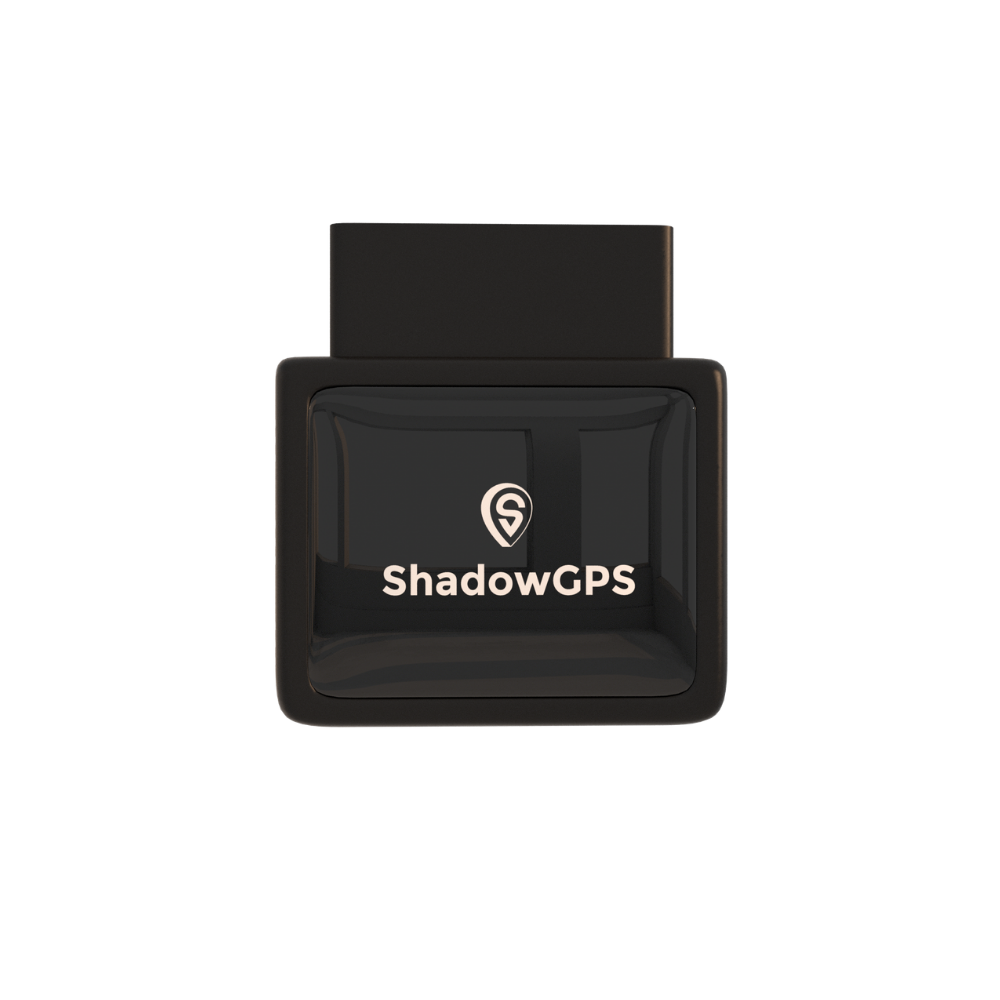
ShadowAuto
- Updates every 5 seconds while your truck is moving
- Plugs into the OBD-II port in under 2 minutes, no tools
- Trip timeline, trip replay, and geofence alerts in one app


Trailers and equipment are the other half of a small fleet, and they have no OBD-II port. For those, a battery-powered tracker hides on the trailer frame or inside a toolbox. If you are weighing the two, our battery vs. OBD tracker guide breaks it down.
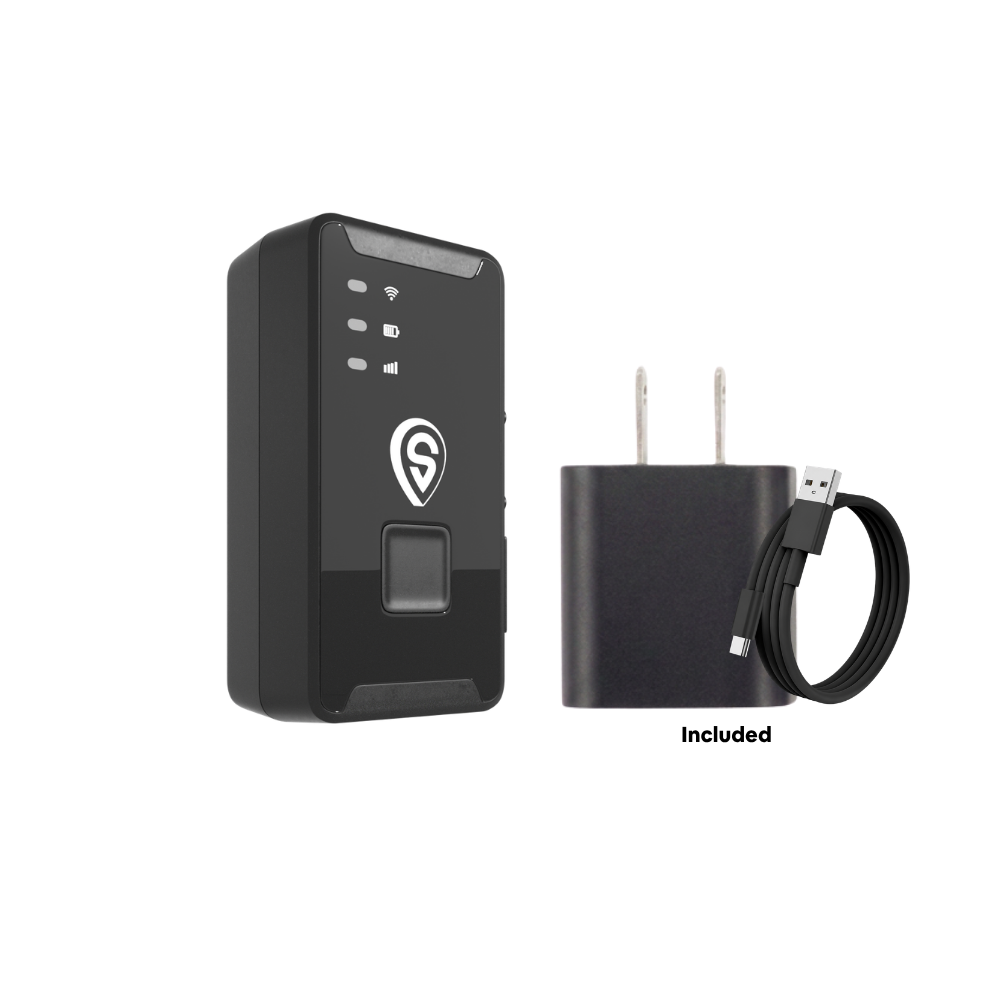
ShadowTrack
- Up to about 15 days per charge
- Magnet-mount or hide it in under 2 minutes
- Weatherproof case for trailers, mowers, and job site gear
Best for: owner-operators running 1 to 5 trucks who want to see when and where every vehicle moved, and anyone protecting a family car, truck, or trailer that HOS never touches.
Paper log vs. ELD vs. GPS tracker: what each one does
| Tool | Counts as an HOS record? | Live location | Trip history | Setup | Best for |
|---|---|---|---|---|---|
| Paper time record or RODS | Yes, when an exception allows it | No | Only what is written | Pen and form | Short-haul drivers, 8-in-30 drivers, pre-2000 engines |
| FMCSA-registered ELD | Yes | Varies by provider | Duty status history | Connects to engine, driver app | Drivers who must keep RODS |
| Enterprise fleet platform | Yes, if it includes a registered ELD | Yes | Yes | Often contracts, onboarding | Large, ELD-regulated fleets |
| ShadowAuto GPS tracker | No, not an ELD | Yes | Trip timeline and replay | Plug in, under 2 minutes | Verifying time records, non-HOS vehicles, peace of mind |
ShadowAuto is shown for comparison of capabilities only. It is not an electronic logging device and does not replace one where FMCSA requires it.
HOS Glossary: Terms You Will See on Every Form
- Air mile: a nautical mile, about 1.15 statute miles. Used for short-haul radius rules.
- CMV (commercial motor vehicle): a business vehicle of 10,001+ lbs, certain passenger vehicles, or placarded hazmat carriers.
- GVWR / GCWR: the manufacturer's maximum rated weight for a single vehicle, or a vehicle plus trailer combination.
- RODS: record of duty status, the driver's daily log.
- ELD: electronic logging device that records driving time automatically and is registered with FMCSA.
- Duty cycle: your 60-hour/7-day or 70-hour/8-day weekly limit.
- Recap: the daily recalculation of hours available on the rolling weekly clock.
- Out of service (OOS): an order that stops a driver or truck from operating until the issue is fixed.
- CSA: Compliance, Safety, Accountability, FMCSA's safety scoring program.
Frequently Asked Questions About Hours of Service
What are the basic hours of service rules?
For property-carrying drivers: up to 11 hours of driving after 10 consecutive hours off, no driving after the 14th hour on duty, a 30-minute break after 8 cumulative hours of driving, and no driving after 60 hours in 7 days or 70 hours in 8 days. A 34-hour break resets the weekly limit.
Does HOS apply to non-CDL drivers?
Yes, if they drive a commercial motor vehicle in interstate commerce. A non-CDL truck or truck-and-trailer combination rated at 10,001 lbs or more, used for business across state lines, falls under HOS. Many non-CDL drivers qualify for the 150 air-mile short-haul exception and keep simple time records instead of logs.
Does the 30-minute break stop the 14-hour clock?
No. The 14-hour window keeps running through breaks, lunch, and waiting time. The only ways to stop or extend it are a qualifying sleeper berth split, the 16-hour short-haul exception, or the adverse driving conditions exception.
Can I pull a trailer with my pickup for work without logging hours?
It depends on the combined weight rating and where you drive. If the truck and trailer together are rated at 10,001 lbs or more and the work crosses state lines, HOS applies. If you stay within 150 air miles of your yard and meet the short-haul conditions, you can keep a time record instead of a full log.
Does HOS apply to personal vehicles or teen drivers?
No. Personal, non-business driving in a family car or truck is not covered by federal HOS, no matter how many hours you drive. Recreational towing, like a camper or boat, is not covered either.
Do Turo hosts have to follow hours of service?
Generally no. Standard passenger cars under 10,001 lbs rented to guests for personal use are not commercial motor vehicles under HOS. The exception would be a heavy truck or large passenger van used in a way that meets the CMV definition, so check the weight rating and passenger capacity.
How does the 34-hour restart work?
Take 34 or more consecutive hours off duty and your 60-hour or 70-hour weekly total goes back to zero. It is optional. A typical weekend off usually qualifies without any special planning.
What is the 150 air-mile rule?
It is the short-haul exception. Drivers who stay within 150 air miles (about 172 statute miles) of their normal work reporting location and return there within the allowed hours can skip full logs and ELDs. The carrier keeps a time record of start time, end time, and total hours instead.
What happens if I break HOS rules?
The driver can be placed out of service at the roadside, and the company can face civil penalties. In 2026, recordkeeping violations can reach $1,584 per day up to $15,846, carrier violations up to $19,246 each, and driver violations up to $4,812 each. Violations also count against your CSA safety record.
Is a GPS tracker the same as an ELD?
No. An ELD is a registered device that records duty status for HOS compliance. A GPS tracker like ShadowAuto shows where your truck is and where it has been. It is useful for checking time records and keeping tabs on vehicles HOS does not cover, but it does not replace a required ELD.
Is there a monthly fee for ShadowGPS trackers?
Yes. Plans run $12 to $15 a month, or $10 to $13 a month per tracker with 4 or more. No contract. Month-to-month, or prepay and save, and you can cancel any time.
The Bottom Line
Hours of service explained comes down to four numbers: 10 hours off, 11 hours driving, a 14-hour window, and a 60 or 70-hour week. Add the 30-minute break and the 34-hour restart, and you know the core of HOS. The rest is figuring out whether your trucks are CMVs, whether a short-haul exception fits your routes, and which record method each driver needs.
Start with the 60-second test, classify your vehicles this week, and set up the seven-step system before your first roadside inspection does it for you. Then give yourself a simple way to see when and where your trucks actually moved.
For more on running a small fleet well, see our guides on fleet tracking for 3 to 10 vehicles and what GPS tracking really costs a small fleet.
Know where every truck is. Every day.
Plug it in, see it move, cancel any time. No contract, ever.
Pricing current as of October 2026. Some links on this page are affiliate links, and we may earn a commission at no extra cost to you. This article is general information based on FMCSA regulations in 49 CFR Part 395 and is not legal advice. HOS rules have exceptions not covered here, and state intrastate rules vary. Confirm your situation with FMCSA or your state DOT.

