

You bought a pickup or a van for weekend projects, a side gig, or a small crew, and now someone at the parts counter says you need an ELD. Do you?
For most owners, no. An electronic logging device is required only when your truck or van counts as a commercial motor vehicle, it is used for business in interstate commerce, and no exemption applies. This guide walks you through the exact test the Federal Motor Carrier Safety Administration (FMCSA) uses, the trailer math that catches a lot of pickup owners off guard, every ELD exemption that fits pickups and vans, and what to use instead if all you really want is to know where your truck is.
Usually not. A pickup or van needs an ELD only if all four are true: (1) it weighs or is rated at 10,001 pounds or more, counting any trailer, or it carries 9+ people for pay, or hauls placarded hazmat; (2) it is used for business in interstate commerce; (3) the driver must keep records of duty status; and (4) no exemption applies, such as personal use, the 150 air-mile short-haul exception, logging 8 days or fewer in 30, or an engine older than model year 2000.
Do You Need an ELD for a Pickup? The 4-Question Test
Every question about an ELD for pickup trucks and vans comes down to the same four checks, in this order. Stop at the first "no" and you do not need an ELD under federal rules.
- Is it a commercial motor vehicle (CMV)? 10,001+ pounds GVWR, GCWR or actual weight (whichever is greater), or 9+ passengers for pay, or 16+ passengers, or placarded hazardous materials.
- Is it used in business, in interstate commerce? Personal, non-business driving is outside the federal rules.
- Must the driver keep records of duty status (RODS)? Drivers covered by the short-haul exception keep time records instead.
- Does an ELD exception apply? Logging 8 days or fewer in 30, a pre-2000 engine, or a driveaway-towaway operation all remove the ELD requirement.
Only a "yes, yes, yes, no" answer means you need a registered ELD. The rest of this guide explains each step in plain words, with the exact rule behind it.
Step 1: Is Your Pickup or Van a Commercial Motor Vehicle?
The ELD rule lives inside the hours-of-service rules, and those only apply to commercial motor vehicles. FMCSA defines a CMV in 49 CFR 390.5 as a vehicle used on a highway in interstate commerce that meets any one of these:
- A gross vehicle weight rating (GVWR), gross combination weight rating (GCWR), or actual gross weight of 10,001 pounds or more, whichever is greater
- Designed or used to carry more than 8 passengers, including the driver, for compensation
- Designed or used to carry more than 15 passengers, including the driver, even without pay
- Hauling hazardous materials in an amount that requires placards
Notice what is missing: there is no mention of a CDL. The CDL threshold is 26,001 pounds, which is why so many pickup owners assume they are in the clear when they are not.
The 10,001-pound line, explained
GVWR is the maximum loaded weight your truck is rated for by the manufacturer. It is not what your truck weighs empty, and it is not the towing capacity.
As a rough guide, half-ton pickups like an F-150, Silverado 1500 or Ram 1500 sit well under 10,001 pounds on their own. Three-quarter-ton and one-ton trucks often land right at or above the line, so the exact number on your sticker matters.
How to find your GVWR in 30 seconds
- Open the driver's door and look at the sticker on the door jamb (the Federal Motor Vehicle Safety Standards label).
- Find "GVWR" and note the pounds figure.
- If you tow for business, find the GVWR on the trailer's own VIN plate, usually on the tongue or front frame rail.
- Add the two together. That total is what FMCSA uses for your combination.
The trailer trap: why GCWR changes everything
This is the part most pickup owners miss. FMCSA's own guidance says that when a truck under 10,001 pounds tows a trailer under 10,001 pounds, you add the two GVWRs together, and if the sum is 10,001 or more, the driver and truck are covered by the safety regulations.
It does not matter whether the trailer is loaded. The rating is what counts, and the rule takes the higher of the rating or the actual weight.
Worked example: the landscaper's pickup
A half-ton pickup with a 7,000-pound GVWR tows a utility trailer rated at 3,500 pounds. Neither is heavy on its own, but 7,000 + 3,500 = 10,500 pounds. Used for a paying landscaping job across a state line, that combination is a commercial motor vehicle, even with an empty trailer.
Unhook the trailer and drive the same pickup to a client's house, and it drops back under the line.
Passenger vans: the 9-person and 16-person rules
Vans add a second way to become a CMV: headcount. A van designed or used to carry 9 or more people, driver included, for pay is a CMV regardless of weight. Without pay, the line is 16 or more people, driver included.
That means a shuttle, tour or paid airport van with 10 seats can need hours-of-service records, while a family's 12-passenger van on a road trip does not.
Hazardous materials
Any pickup or van hauling hazmat in a quantity that requires placards is a CMV at any weight. Small amounts of fuel or common supplies for your own use usually do not trigger placarding, but check the rules for anything you haul for a business.
Step 2: Business Use vs Personal Use
A heavy truck is not automatically a commercial one. FMCSA's rules apply to transportation in commerce, and the agency has said plainly that its regulations do not apply to non-business transportation of your own property, including hauling animals or vehicles to shows, even when prize money is on the table.
So a one-ton pickup towing your camper to a lake in another state, or your horses to a weekend show, does not need an ELD. There is a catch, though.
- Taxes count. The personal-use exception assumes the costs are not deducted as a business expense and any prize money is reported as ordinary income.
- Sponsorship counts. Corporate sponsorship can turn a hobby haul into a commercial one.
- Your state can differ. Licensing rules for heavy personal trucks are set by your state of licensure.
Interstate commerce is also broader than it sounds. Hauling goods that are part of a cross-state journey can count even if your own leg stays inside one state.
Step 3 and 4: ELD Exemption Pickup Rules, Every Exception That Applies
If your pickup or van is a CMV used for business, you are not automatically on the hook for an ELD. FMCSA lists four main exceptions to the ELD mandate, and a few more situations sit outside it entirely.
1. The short-haul exception (150 air miles, 14 hours)
This is the big one for local contractors, landscapers, plumbers and delivery crews. Since the 2020 hours-of-service update, you qualify on any day you:
- Stay within 150 air miles (about 172.6 road miles) of your normal work reporting location
- Return to that location and are released within 14 consecutive hours
- Get at least 10 consecutive hours off duty between shifts (8 for passenger carriers)
Short-haul drivers do not keep logs or use ELDs. The employer keeps time records showing start time, end time and total hours, and holds them for six months.
2. The 8-days-in-30 rule
Drivers who must keep records of duty status for 8 days or fewer in any rolling 30-day period can use paper logs instead of an ELD. This fits the short-haul crew that takes an occasional long job.
Day 9 changes everything. Once you need logs on more than 8 days in 30, the ELD requirement kicks in.
3. Engines older than model year 2000
Trucks with an engine built before model year 2000 are exempt, because older engines lack the electronic control module an ELD connects to. The exemption follows the engine, not the title. A newer engine in an older body loses the exemption, and an older engine in a newer chassis can keep it.
Exempt drivers still follow hours-of-service limits and keep paper logs.
4. Driveaway-towaway operations
If the truck or van you are driving is itself the cargo being delivered, such as moving a new van from a dealer to a buyer, the ELD rule does not apply. The same goes for delivering a motorhome or recreational trailer.
5. Agricultural and covered farm vehicles
Farm pickups and trucks have their own agricultural exceptions, including relief from hours-of-service rules for certain commodities within a 150 air-mile radius during planting and harvest seasons set by each state.
6. Short-term rental trucks
FMCSA has granted the truck rental industry relief from the ELD rule for property-carrying CMVs rented for 8 days or less. Hours-of-service limits still apply, and you should confirm the current status with your rental company before you rely on it.
7. Intrastate-only operations
If you never operate in interstate commerce, federal ELD rules do not apply, but your state's rules do. Many states mirror the 10,001-pound federal line for intrastate work, while others use completely different thresholds. Check with your state's DOT or highway patrol before you assume you are exempt.
Do You Need an ELD? Pickup and Van Cheat Sheet
Here is how the rules play out for the most common setups. "Likely" means the answer depends on your exact weights, routes and records.
| Your truck or van and how you use it | CMV? | ELD needed? | Why |
|---|---|---|---|
| Half-ton pickup, personal use, no trailer | No | No | Under 10,001 lbs and no business use |
| Any pickup towing your own camper, boat or horses, non-business | No | No | FMCSA non-business exception |
| Half-ton pickup for work, no trailer | No | No | Under 10,001 lbs |
| Pickup + work trailer (combined 10,001+ lbs), local jobs, home daily within 14 hrs | Yes | No | 150 air-mile short-haul exception |
| Pickup + trailer (10,001+ lbs), out-of-area jobs on 9+ days in 30 | Yes | Yes | Short-haul and 8-in-30 no longer apply |
| Hotshot one-ton + gooseneck, interstate loads | Yes | Yes, usually | Over 10,001 lbs, outside short-haul |
| Cargo van under 10,001 lbs GVWR, local deliveries | No | No | Under 10,001 lbs |
| Passenger van carrying 9+ people for pay, long trips | Yes | Likely | Passenger CMV rule, unless an exception fits |
| Any truck with a pre-2000 engine | Maybe | No | Pre-2000 engine exemption (paper logs still apply) |
| Your pickup or van, any of the "No" rows above | No | No | A GPS tracker like ShadowAuto is all you need to know where it is |
Federal rules only. Intrastate operations follow state rules, which can use different weight thresholds.
6 Real-World Scenarios
These examples show how the four-question test works in real driveways and job sites.
The weekend boat tow
An F-150 pulling a family boat from Ohio to a lake in Michigan. Heavy combination, but personal use with no business deduction. No ELD.
The Turo host
A Ram 1500 rented to guests through Turo. Under 10,001 pounds and driven by renters for their own trips. No ELD, though most hosts want to know where it is.
The local landscaper
An F-250 and equipment trailer over 10,001 pounds combined, working jobs 40 miles out and home every evening. Short-haul exception. Time records, no ELD.
The hotshot hauler
A one-ton dually and gooseneck running loads from Texas to Colorado. CMV, interstate, outside short-haul. ELD required.
The cargo van courier
A mid-roof cargo van with a GVWR under 10,001 pounds doing same-day deliveries. Not a CMV under federal rules. No ELD.
The paid shuttle
A 12-passenger van running paid airport trips across state lines. Passenger CMV. Short-haul may cover local routes, otherwise an ELD applies.
Exempt From the ELD Rule Does Not Mean Exempt From Everything
An ELD exemption only removes the device. If your pickup or van is a CMV used in interstate commerce, other safety rules usually still apply, including:
- Hours-of-service limits: 11 hours of driving inside a 14-hour window for property carriers.
- Records: paper logs (8-in-30 and pre-2000 drivers) or time records (short-haul drivers).
- A USDOT number for interstate operations.
- A DOT medical card and a driver qualification file.
- Vehicle inspection and maintenance records.
An exemption you cannot prove at a roadside inspection is the same as having no exemption. Keep your GVWR numbers, time records and route notes somewhere you can find them fast.
7 Mistakes Pickup and Van Owners Make With the ELD Rule
- Checking only the truck's GVWR. The trailer's rating gets added in.
- Assuming "no CDL" means "no ELD." The CDL line is 26,001 pounds. The ELD line is 10,001.
- Thinking an empty trailer does not count. FMCSA uses the rating, not just what is on the trailer.
- Claiming personal use while deducting the truck as a business expense. The tax return tells the real story.
- Losing count of the 8 days. It is any rolling 30-day period, not a calendar month.
- Swapping in a newer engine. A post-2000 engine ends the pre-2000 exemption.
- Treating a GPS tracker or phone app as an ELD. Only devices on the FMCSA ELD registry count.
ELD vs GPS Tracker: What Is the Difference?
An ELD and a GPS tracker both plug into your truck and both know where it is, so it is easy to mix them up. They solve different problems.
An ELD is a compliance tool. It records engine hours and driving time and produces hours-of-service logs an officer can inspect. A GPS tracker is a peace-of-mind tool. It shows you where your truck is right now, where it has been, and alerts you when it moves without you.
| Option | Records hours of service | FMCSA-registered | Live location | Theft alerts | Typical cost | Best for |
|---|---|---|---|---|---|---|
| Paper logbook | Yes, by hand | Not applicable | No | No | A few dollars | 8-in-30 and pre-2000 engine drivers |
| Time records | On and off duty only | Not applicable | No | No | Free | Short-haul drivers |
| Registered ELD | Yes, automatic | Yes | Often | Varies | About $20 to $50/mo plus $150 to $500 hardware | Interstate CMV drivers who must log |
| Phone mileage app | No | No | Usually no | No | Varies | Tracking business miles for taxes |
| ShadowAuto / ShadowTrack | No | No, not an ELD | Yes | Yes, car alarm and geofences | $69.90 + $12 to $15/mo, no contract | Owners who do not need an ELD |
ELD price range per FreightWaves' 2026 hotshot ELD guide. ShadowGPS trackers are not ELDs. If you are required to keep hours-of-service records, use a device on the FMCSA ELD registry.
Don't Need an ELD? Here Is What Actually Helps
If the four-question test just told you that you do not need an ELD, the question usually changes. It stops being "what does the government need from my truck?" and becomes "how do I know my truck is OK?"
That is where a plug-in GPS tracker fits. You get peace of mind about where your pickup or van is, security when it moves without you, and the convenience of trip history for jobs, mileage or a teen driver's evening out, without paying for compliance features you are not required to use.
ShadowAuto: for your pickup or van
ShadowAuto plugs into the OBD-II port under your dash. There is no mechanic, no wiring and no tools, and it takes under 2 minutes. Your truck's location refreshes every 5 seconds while it moves, so the dot on your phone matches the road, not where your truck was a minute ago. Not sure where your port is? Here is how to find your OBD2 port in 30 seconds.
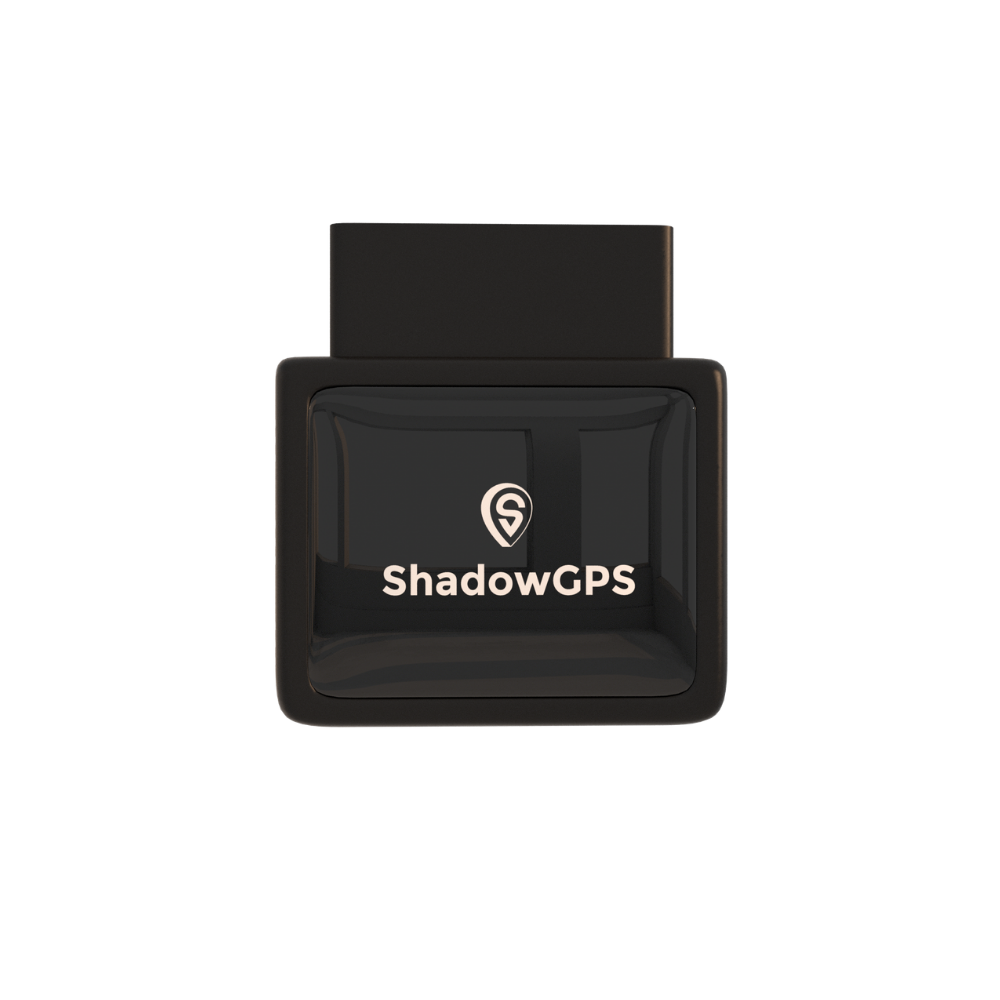
ShadowAuto
- Plugs into your OBD-II port in under 2 minutes, no tools
- Live tracking, trip timeline and trip replay in the app
- Car alarm, geofence alerts and engine codes on your phone


Towing a work trailer, or keeping tabs on a mower, generator or toolbox that has no OBD-II port? That is a job for ShadowTrack, a battery-powered tracker with a weatherproof magnetic case. Both show up in the same app.
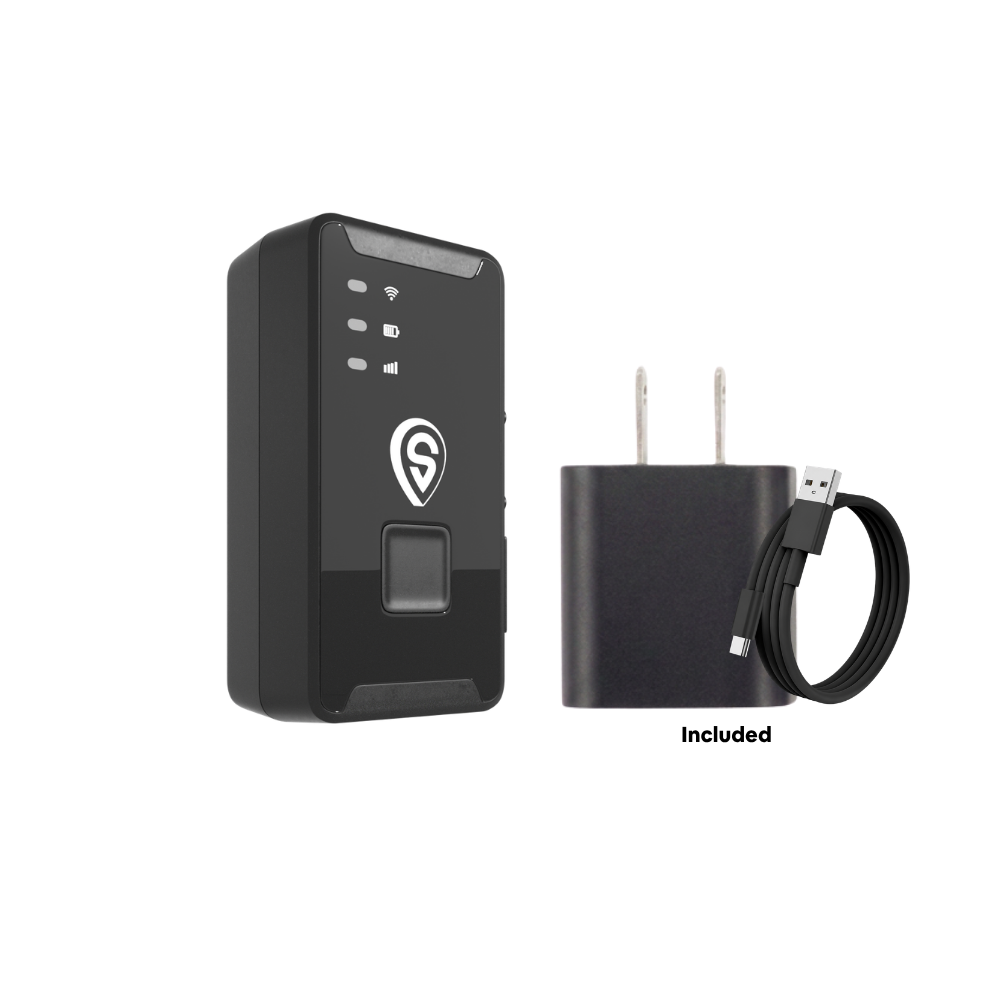
ShadowTrack
- Magnet-mount or tuck it away in under 2 minutes
- Up to about 15 days per charge
- Weatherproof magnetic case for trailers, toolboxes and gear
Best for: pickup and van owners who are not required to run an ELD, including parents of teen drivers, Turo hosts, weekend haulers, and small crews running 2 to 5+ trucks under the short-haul exception. Still choosing? Compare them in OBD2 vs battery-powered GPS tracker.
What a tracker gives you that an ELD does not
- Live tracking of your truck from the ShadowGPS app on iPhone, Android or the web.
- Trip timeline and trip replay to see every drive, stop and route after the fact.
- Car alarm and geofence alerts when your truck moves overnight or leaves a job site.
- Share Location so a family member or crew lead can see the truck too.
- Engine codes and diagnostics from ShadowAuto, so a check engine light is not a mystery.
What about the monthly fee?
Yes, there is one, and we say it up front. ShadowAuto and ShadowTrack are $69.90 each, with plans from $12 to $15 a month, or $10 to $13 a month once you run 4 or more trackers. No contract. Month-to-month, or prepay and save, and cancel any time. See the full breakdown on our pricing page.
And no, you do not need to buy a SIM card. The connection is built in. Here is why a GPS tracker does not need a SIM card.
Running a few work trucks?
Small crews under the short-haul exception still keep time records for six months. A tracker's trip history does not replace those records, but it makes them easier to check when a start time or job address is in question. For more, see why businesses are switching from manual logs to GPS and GPS tracking for work vans. If you plan to track employees' trucks, read is GPS tracking legal for employee vehicles first.
Key takeaways
- Most pickups and vans do not need an ELD, because they are under 10,001 pounds or used for personal driving.
- Towing for business is the trap: FMCSA adds the truck's GVWR and the trailer's GVWR together.
- Local work trucks that return home within 14 hours and stay inside 150 air miles use time records, not ELDs.
- Logging 8 days or fewer in 30, a pre-2000 engine, and driveaway-towaway work also remove the ELD requirement.
- A GPS tracker is not an ELD, but it is the right tool when you just want to know where your truck is.
A quick note on the rules
This guide summarizes federal FMCSA regulations as of October 2026 for general information. It is not legal advice. State rules for intrastate operations vary, and FMCSA guidance can change. If your situation is close to a line, check the hours-of-service rules in 49 CFR 395.1, call your state DOT, or email FMCSA's ELD team at ELD@dot.gov.
Frequently Asked Questions
Do pickup trucks need an ELD?
Most pickups do not. A pickup needs an ELD only when it is a commercial motor vehicle (a GVWR, GCWR or actual weight of 10,001 pounds or more, counting any trailer), it is used in business in interstate commerce, the driver must keep records of duty status, and no exemption applies. A half-ton pickup used for personal driving almost never meets that test.
Does a pickup with a trailer need an ELD?
It can. FMCSA adds the truck's GVWR to the trailer's GVWR, so a pickup that is under 10,001 pounds on its own can become a commercial motor vehicle the moment it hooks up a trailer for business. If that combination is used in interstate commerce and no exemption such as the 150 air-mile short-haul exception applies, the driver needs an ELD.
Do cargo vans need an ELD?
Most cargo vans do not, because their GVWR sits under 10,001 pounds and they are not towing. Heavier van configurations, vans towing a trailer, vans hauling placarded hazardous materials, and vans carrying 9 or more people for pay can all be commercial motor vehicles. Check the GVWR on the driver's door jamb sticker first.
Do I need an ELD if I use my truck for personal use only?
No. FMCSA's rules do not apply to the occasional, non-business transportation of your own property, such as towing your boat, camper or horses to an event, as long as you are not paid for the hauling and you do not deduct the trip costs as a business expense. Your state can still have its own licensing rules.
What is the 150 air-mile short-haul exemption?
It is the rule that lets local drivers skip logbooks and ELDs. You qualify on a given day if you stay within 150 air miles (about 172.6 road miles) of your normal work reporting location, return there and are released within 14 hours, and have at least 10 hours off before your next shift. Your employer keeps time records instead.
Do I need an ELD if I am under 10,001 pounds?
Under federal rules, no. If your truck or van, including any trailer, stays under 10,001 pounds by rating and actual weight, carries fewer than 9 passengers for pay, and does not haul placarded hazardous materials, it is not a commercial motor vehicle, so hours-of-service logs and ELDs do not apply. Intrastate rules vary by state.
Do hotshot drivers need an ELD?
Most do. A one-ton pickup pulling a loaded gooseneck or flatbed is almost always over 10,001 pounds combined, and long hotshot runs usually fall outside the short-haul exception. Unless the engine is older than model year 2000 or the driver logs 8 days or fewer in any 30-day period, plan on a registered ELD.
Do I need an ELD if my truck is older than 2000?
Not if the engine is older than model year 2000. The exemption follows the engine, not the body or title year, so a newer engine in an older truck loses the exemption. Drivers who use it still keep paper logs and follow hours-of-service limits.
Is a GPS tracker the same as an ELD?
No. An ELD is an FMCSA-registered device that records driving time from your engine and produces hours-of-service logs for roadside inspections. A GPS tracker like ShadowAuto shows where your truck is, records trips and sends theft alerts, but it is not an ELD and does not satisfy the ELD rule. If you need an ELD, choose one from the FMCSA registry.
Is there a monthly fee for ShadowGPS?
Yes. ShadowAuto and ShadowTrack are $69.90 each, with plans from $12 to $15 a month, or $10 to $13 a month when you run 4 or more trackers. There is no contract, ever. Go month-to-month or prepay and save, and cancel any time.
Does a ShadowGPS tracker need a SIM card?
No. The cellular connection is built in and covered by your plan, so there is no SIM card to buy or insert. Plug it in, open the app, and your truck shows up on the map.
No ELD needed? Know where your truck is.
Plug it in, see it move, cancel any time. ShadowAuto for your pickup or van, ShadowTrack for the trailer behind it.
Pricing current as of October 2026. Some links are affiliate links, and ShadowGPS may earn a commission at no extra cost to you. ShadowGPS trackers are not electronic logging devices and do not satisfy the FMCSA ELD rule. Always use GPS tracking in line with federal, state and local law.

