

How accurate are GPS trackers? Under open sky, a good GPS tracker places your car within about 3 to 5 meters (10 to 16 feet), which is roughly one parking space. Near tall buildings, under heavy trees, or inside a parking garage, that can stretch to 10 meters or more, and underground the tracker may lose satellites entirely until your car comes back out.
But meters are only half the story. A dot that is perfectly accurate and three minutes old can still be a mile from where your car really is. Below, we break down real-world accuracy by location, the "freshness" number most guides skip, what throws a tracker off, and how to place yours so the dot lands where your car or truck actually sits.
Most consumer GPS trackers are accurate to within about 3 to 5 meters (10 to 16 feet) outdoors with a clear view of the sky. Accuracy drops to roughly 5 to 15 meters around tall buildings and trees, and GPS can cut out in garages and tunnels. How often the tracker updates matters just as much, because a slow update shows where your car was, not where it is.
What this guide covers:
GPS Tracker Accuracy at a Glance
Here's what to expect on the map in the places your car or truck actually goes. These are typical ranges, not guarantees, and the same tracker can move between rows in a single trip.
| Where your car is | Typical accuracy | What you'll see on the map |
|---|---|---|
| Open highway, rural road, open lot | About 1 to 5 m (3 to 16 ft) | The right lane and the right parking space |
| Suburbs, light tree cover | About 3 to 8 m (10 to 26 ft) | The right driveway or curb spot |
| Downtown, between high-rises | About 5 to 15 m or more (16 to 50+ ft) | The right block; the dot may hop across the street |
| Covered or underground parking | GPS weak or lost; rougher Wi-Fi or cell estimate | The right building, sometimes the last fix at the entrance |
| Tunnels | No GPS fix inside | Last known point, then a fresh fix on exit |
Ranges reflect typical consumer-grade receivers. Results vary with placement, satellite geometry, and receiver design.
For a benchmark, GPS.gov notes that GPS-enabled smartphones are typically accurate to within a 4.9 m (16 ft) radius under open sky, and that accuracy gets worse near buildings, bridges and trees. A dedicated tracker built for one job lands in that same neighborhood.
Accuracy vs. Freshness: The Number Most Guides Skip
Position accuracy tells you how close the dot is to the truth at the moment it was recorded. Freshness tells you how old that moment is. For a moving car, freshness usually matters more.
At 60 mph, a car covers 88 feet every second. So the time between updates turns directly into distance:
| Update interval | Distance traveled at 60 mph between updates | What that feels like |
|---|---|---|
| 3 minutes | About 3 miles | You know the town, not the street |
| 1 minute | About 1 mile | You know the neighborhood |
| 15 seconds | About 1,320 ft (a quarter mile) | You know the road |
| 5 seconds (ShadowGPS, every plan) | About 440 ft | You watch the turn happen |
That's why a tracker with a slow update can feel "inaccurate" even when its GPS is spot on. Many trackers slow down on their lower-tier plans to save data or battery. ShadowGPS trackers update every 5 seconds while your car is moving, on every plan, so the dot on your phone keeps up with the real thing.
How a GPS Tracker Pinpoints Your Car
A GPS tracker does two separate jobs, and each one affects accuracy differently.
- It figures out where it is. The GPS receiver listens to timing signals from satellites. With signals from at least four satellites, it calculates its position through a process called trilateration. More satellites, spread wide across the sky, means a tighter fix.
- It tells you where it is. A cellular chip and SIM card send that position to your app. A weak GPS signal makes the position drift. A weak cell signal leaves the position accurate but delayed.
For a deeper walkthrough, read how real-time GPS tracking works and whether a GPS tracker needs a SIM card.
8 Things That Affect GPS Tracker Accuracy
1. How much sky the tracker can see
This is the biggest one, and it's the one you control. Satellite signals pass easily through plastic, glass and fabric. They struggle through solid metal. A tracker buried inside a steel box or pressed flat against a steel panel will see less sky and drift more.
2. Tall buildings and signal bounce
Downtown, satellite signals bounce off glass and concrete before reaching the tracker. GPS.gov calls this "multipath." The tracker measures the longer bounced path and the dot can jump to the wrong side of the street for a moment.
3. Trees, bridges and overpasses
Dense tree cover and overhead structures block part of the sky. Accuracy usually recovers within seconds once your car is back in the open.
4. Garages, tunnels and indoor parking
GPS signals don't travel well through concrete floors. In a multi-level garage, the tracker may lose its fix and fall back to a rougher Wi-Fi or cell estimate, or show the last good point near the entrance.
5. Satellite geometry
When the satellites in view are spread across the sky, the fix is tighter. When they're bunched in one area, small timing errors grow into bigger position errors. Satellites move constantly, so this shifts throughout the day on its own.
6. Receiver and antenna quality
Not every tracker hears the sky equally well. A sensitive receiver and a well-placed internal antenna hold a lock longer in tough spots. This is where no-name trackers often fall short.
7. Cellular coverage
Your position can be perfect and still show up late if the cell signal is weak. Trackers that switch between carriers on their own keep reporting when one network drops out.
8. The map, not the GPS
Sometimes the dot is right and the label is wrong. GPS.gov points out that faulty mapping software, such as incorrectly drawn maps or estimated street addresses, often misleads users even when the GPS hardware works fine. Switch your app to satellite view and trust the picture over the address text.
What about weather? Everyday rain, snow and clouds have very little effect on GPS. The rare exceptions are things like major solar storms. If your tracker drifts in the rain, look at placement or tree cover first.
Is a GPS Tracker More Accurate Than Your Phone or an AirTag?
Each one finds location a different way, and that changes what "accurate" means.
| Device | How it finds location | Typical accuracy outdoors | How fresh the location is |
|---|---|---|---|
| Smartphone | GPS plus Wi-Fi and cell assist | About 4.9 m (16 ft) under open sky | Live, but only when the phone is with your car |
| Bluetooth tag (AirTag, Tile) | Borrows the location of a nearby phone | As good as the passing phone's GPS | Only when a compatible phone walks by |
| Cellular GPS tracker | Its own GPS receiver and SIM | About 3 to 5 m (10 to 16 ft) | Live, on its own, wherever there's cell coverage |
| ShadowAuto / ShadowTrack | Own GPS + multi-carrier SIM (ShadowTrack adds Wi-Fi and Bluetooth assist) | About 3 to 5 m (10 to 16 ft) | Every 5 sec while moving |
A Bluetooth tag has no GPS of its own. Its location is only as good as the last phone that happened to pass by, which is why it can work well in a busy mall lot and go quiet on a rural road. We cover that difference in why AirTags fall short for cars.
Accuracy by Tracker Type: Plug-In vs Battery
Both ShadowGPS trackers use the same GPS and cellular approach. The difference is where they sit in your car, and placement drives accuracy.
ShadowAuto: always in a good spot
ShadowAuto plugs into the OBD-II port under your dash, which sits behind plastic trim with the windshield above it. That's a naturally good view of the sky, and you don't have to think about placement at all. It runs on your car's power, so it never drops to a slower update to save battery.
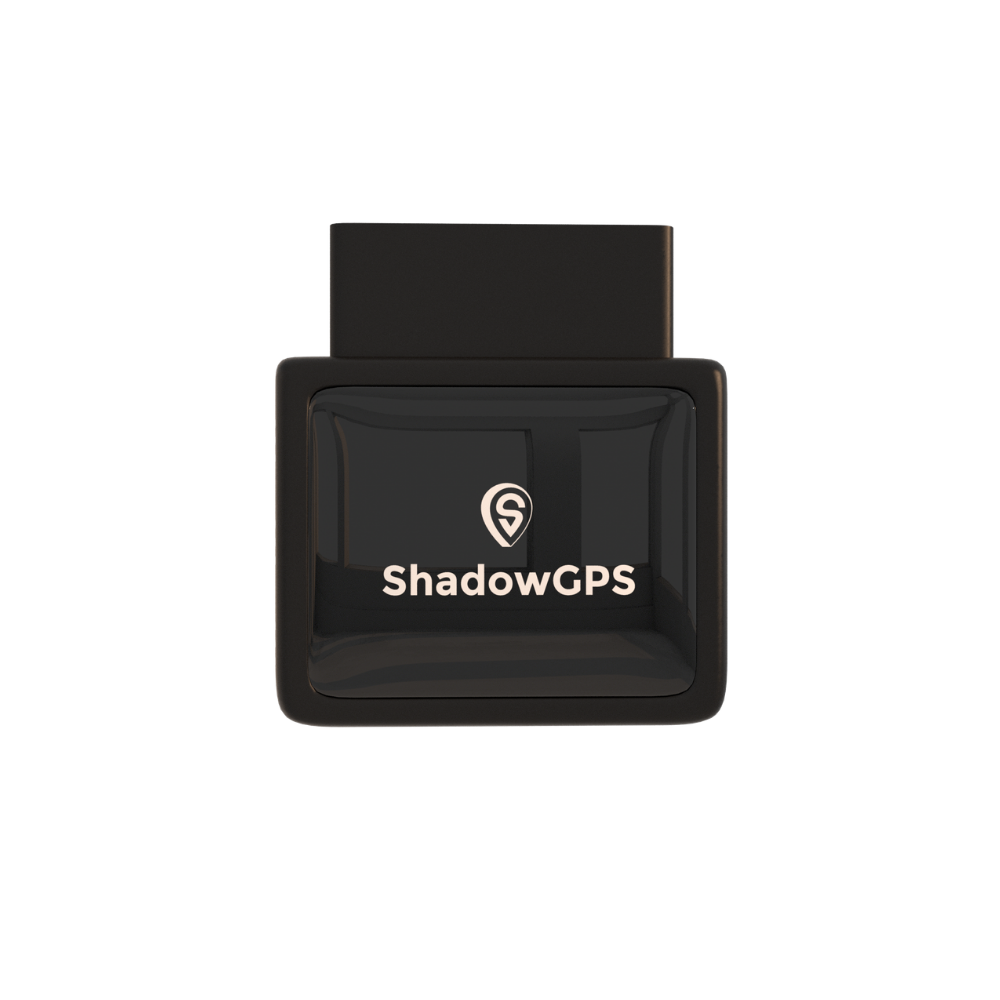
ShadowAuto
- Plug in under 2 minutes, no tools
- Live map, trip replay and a year of history
- Car Alarm and an alert if it's unplugged


Best for: a teen driver's car, the family SUV, Turo listings, and work pickups and vans.
ShadowTrack: accurate when you place it right
ShadowTrack runs on its own battery, so you choose where it goes. That freedom is also the accuracy rule: give it a path to the sky. Under a plastic bumper cover, inside a frame rail with an opening, or in the weatherproof magnetic case under a trailer all work well. Sealed inside a steel toolbox does not.
It also adds Wi-Fi and Bluetooth assist, which helps it keep reporting indoors where GPS alone struggles. Up close, Precision Finding narrows the area to the exact spot, and the built-in speaker lets you find it by sound.
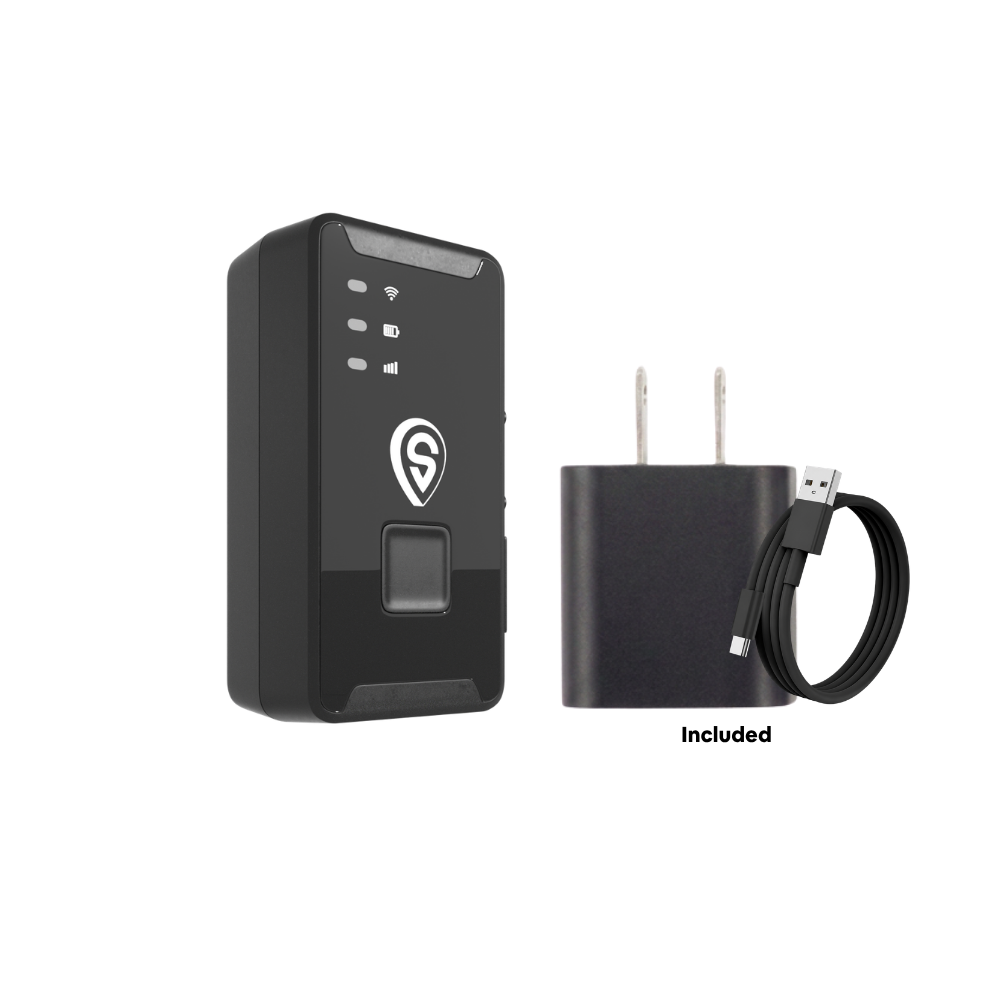
ShadowTrack
- Wi-Fi and Bluetooth assist for indoor spots
- Up to 15 days per charge on standard settings
- Precision Finding and a built-in speaker
Best for: trailers, equipment, stored vehicles, and anything without an OBD-II port.
How to Get the Most Accurate Location From Your Tracker
Seven habits that keep the dot where your car really is:
- Give it sky. Place it behind plastic, glass or fabric, never sealed inside solid metal.
- Keep it still. A tracker rattling around a glove box or cargo bed is fine for location, but a fixed spot gives steadier readings.
- Check the signal right after setup. Drive around the block and watch the trip line. If it zigzags off the road, move the tracker.
- Use satellite view. Trust the photo over the street address, which can be estimated.
- Use trip replay. If one point looks off, the points before and after usually show the real path.
- In garages, look at the last good fix. The entrance point plus the time tells you which level to search first.
- Get close, then switch tools. Once you're within a building or a lot, use Precision Finding or the speaker on ShadowTrack.
What "Accurate Enough" Looks Like in Real Life
These are typical situations based on questions owners bring to our support team, not specific customer stories.
A teen driver
You want to know they made it to school, not which parking space they chose. A few meters of accuracy and a fresh update every few seconds answer that, plus speed and curfew alerts.
A Turo host
A guest returns your car to a multi-level garage. The last good fix at the entrance and the time stamp tell you where to start. See our Turo host page.
A trailer on a job site
A geofence around the yard only needs to know in or out. Even downtown drift is far smaller than a typical yard boundary.
And if your car is ever taken
A fix within a few meters is enough to tell police which lot, which block, or which side of a building. Vehicle theft hit a multi-decade low in 2025, yet the National Insurance Crime Bureau still counted 659,880 thefts, about one every 48 seconds. Share the live location with officers and let them make the recovery. For the steps, read what to do right after your car is stolen.
A quick word on tracking legally
Track what you own or are responsible for: your car, your truck, your trailer, or a car your teen drives that you own. Don't track another adult's vehicle without their knowledge. Laws vary by state, and this isn't legal advice, so check local law or an attorney if you're unsure.
Frequently Asked Questions
How accurate are GPS trackers?
Most consumer GPS trackers are accurate to within about 3 to 5 meters (10 to 16 feet) outdoors with a clear view of the sky. Around tall buildings and heavy trees, expect roughly 5 to 15 meters, and GPS may cut out in garages and tunnels until your car comes back out.
Does a more accurate tracker cost more each month?
With many brands, faster updates sit on pricier plans. With ShadowGPS, every plan gets the same 5-second updates while moving. The tracker is $69.90 once and plans run $9–$15/mo. No contract, ever. Month-to-month, or prepay and save.
Why does my GPS tracker sometimes show the wrong place?
The usual causes are signals blocked by buildings, bridges or trees, signals bouncing off buildings, indoor or underground parking, and a tracker placed inside solid metal. Sometimes the GPS is right and the map's street address is estimated, so check satellite view.
Do GPS trackers work in parking garages?
Partly. Concrete blocks GPS, so deep inside a garage a tracker may show its last good fix near the entrance or a rougher Wi-Fi or cell estimate. ShadowTrack adds Wi-Fi and Bluetooth assist to keep reporting indoors, and a fresh GPS fix returns as soon as your car drives out.
What is the difference between GPS accuracy and precision?
Accuracy is how close a reading is to your car's true location. Precision is how close repeated readings are to each other. A tracker can be precise but not accurate if it keeps reporting the same wrong spot, which often points to a placement problem.
Does weather affect GPS tracker accuracy?
Very little. Everyday rain, snow and clouds barely change GPS accuracy. Rare events like major solar storms can have an effect. If your location drifts in bad weather, check placement and tree cover first.
Is a GPS tracker more accurate than an AirTag?
For a car, usually yes. An AirTag has no GPS or cellular chip of its own, so its location only updates when a nearby Apple device passes by. A cellular GPS tracker finds and reports its own location live, wherever there's cell coverage.
Does a GPS tracker need a SIM card?
A live tracker needs one to send its location to your phone. ShadowAuto and ShadowTrack come with a SIM already inside and active, and they switch between major networks on their own, so there's nothing to buy or set up.
Plug it in. See it move. Cancel any time.
A location you can trust, fresh enough to act on. No contract, ever, and a 30-day money-back guarantee.
Pricing current as of October 2026. Plans for 1–3 trackers: $15/mo monthly, $13/mo quarterly, $12/mo annual, $9/mo on a 2-year prepay; lower rates for 4+ trackers. Accuracy ranges are typical for consumer-grade receivers and vary with placement and surroundings. This post contains affiliate links; we may earn a commission at no extra cost to you. Sources: GPS.gov (GPS Accuracy); National Insurance Crime Bureau 2025 Vehicle Theft Report. Tracking laws vary by state; this article is not legal advice.

