

Ten years ago, a "real-time" GPS tracker could show your car a few minutes late, drift half a block off, and quietly stop working when its cell network shut down. Today, a tracker the size of a key fob can show your car or truck moving down the right street, almost as it happens, from a phone in your pocket.
So what actually changed? It isn't one breakthrough. It's four layers of GPS tracking technology getting better at the same time: the satellites, the chip that listens to them, the cell network that carries the location to you, and the app that turns a dot into something useful.
This guide walks through each innovation in plain English, separates the real upgrades from the hype, and shows you what to look for so the tracker you buy this year is still working years from now.
Next-gen GPS tracking technology combines modernized GPS satellites, multi-constellation receiver chips, low-power LTE-M cellular networks, and fast-refresh apps. Together they give everyday trackers location fixes within about 16 feet in open sky, updates every few seconds while your car is moving, and alerts that reach your phone right away.
What "next-gen" GPS tracking technology actually means
A GPS tracker is really a small team of technologies working together. When people say a tracker is "more accurate" or "more real-time," they're usually describing an improvement in one of four layers.
Here's the simple framework we use when we look at any tracker, ours included. We call it the 4-layer tracker stack.
| Layer | What it does | What changed | What you notice |
|---|---|---|---|
| 1. Satellites | Broadcast timing signals from orbit | Newer GPS III satellites, new civil signals | Stronger, more resilient signals over time |
| 2. Receiver chip | Turns those signals into a position | Multi-constellation and dual-frequency chips | Fewer "jumps" near tall buildings and trees |
| 3. Cellular network | Sends the position from your car to the cloud | 3G retired, LTE-M built for low-power trackers | Trackers keep working, batteries last longer |
| 4. App and alerts | Shows the location and tells you what matters | Faster refresh, geofences, trip replay, theft alerts | You see your car move, not where it was |
Most marketing only talks about layer one. In real life, layers three and four decide whether the tracker feels "live" when you open the app at 11 p.m. wondering where your teen is.
How accurate is GPS tracking today?
According to the U.S. government's official GPS site, GPS-enabled smartphones are typically accurate to within a 4.9 meter (16 foot) radius under open sky. Dedicated trackers use the same satellite system, so a well-designed tracker lands in a similar range when it has a clear view of the sky.
That accuracy gets worse near tall buildings, bridges, and heavy tree cover, because signals bounce before they reach the receiver. Inside a deep parking garage, satellite signals can disappear entirely.
For a full breakdown of what affects precision, see our guide to how accurate GPS trackers really are.
Accuracy vs. freshness: the part most articles miss
Here's the honest truth: for a moving car, how recent the location is matters as much as how precise it is. A fix that's accurate to 10 feet but two minutes old can put a car traveling at highway speed roughly two miles from where it actually is.
That's why update speed (also called refresh rate or ping rate) is the most underrated spec in real-time GPS tracking for vehicles. When you compare trackers, ask both questions: how close is the dot, and how old is it?
Does consumer GPS give "centimeter-level" accuracy?
Not usually. Centimeter-level results come from Real-Time Kinematic (RTK) correction systems and survey-grade dual-frequency receivers used in surveying, farming equipment, and self-driving research. GPS.gov notes that high-end users boost accuracy with dual-frequency receivers and augmentation systems. A consumer car tracker is built for reliable, fast, street-level location, which is exactly what you need to find your car.
The 6 innovations changing GPS vehicle tracking
These are the upgrades that actually reach everyday drivers, small business owners, and Turo hosts, ranked roughly from "happening in orbit" to "happening on your phone."
1. Modernized GPS satellites and new civil signals
The U.S. Space Force has finished launching its ten GPS III satellites, a series designed to improve positioning accuracy, signal reliability, and resistance to interference. They're more powerful and harder to jam than the satellites they replace.
They also broadcast the newer civil signal called L5. Here's the catch: L5 still isn't officially "healthy" for everyday use. It needs at least 24 satellites broadcasting it, and as of the latest updates, 21 spacecraft carry the signal, with more coming from the next GPS IIIF generation.
What it means for you: satellite upgrades improve the foundation slowly, over years. They're good news, but no tracker should sell itself on L5 alone yet.
2. Multi-constellation (multi-GNSS) and dual-frequency chips
GPS is just one Global Navigation Satellite System (GNSS). Europe runs Galileo, Russia runs GLONASS, and China runs BeiDou. Modern receiver chips can listen to several of them at once.
More satellites in view means a faster first fix and fewer gaps in "urban canyons" between tall buildings. Dual-frequency chips go further by comparing two signals to cancel out distortion from the atmosphere, which also helps filter out bounced signals.
What it means for you: steadier dots in cities and fewer weird jumps across the map. Dual-frequency chips are spreading from high-end phones into dedicated trackers, but not every tracker has one yet.
3. Correction services (SBAS and RTK)
Correction services send extra data that fixes small timing and atmospheric errors. Free satellite-based augmentation (SBAS, like the FAA's WAAS in North America) improves everyday accuracy. RTK goes all the way to centimeters, but needs special equipment and a nearby base station.
What it means for you: RTK is the tech behind lane-level self-driving cars and precision farming. For finding your car in a parking lot or watching your truck head to a job site, street-level accuracy is plenty.
4. LTE-M networks and the end of 3G
This is the innovation that quietly broke a lot of older trackers. In 2022, America's major carriers shut down their 3G networks. The FCC warned that vehicle SOS services, home security systems, and other connected products using 3G would be affected, and thousands of old GPS trackers went dark overnight.
Modern trackers moved to LTE-M, a slice of 4G LTE built specifically for small, low-power connected devices. It uses less battery, reaches deeper into buildings than older networks, and runs on the same nationwide towers your phone uses.
What it means for you: if a tracker doesn't clearly say "4G LTE" or "LTE-M," skip it. An older listing running on retired network tech is a tracker that may never connect.
5. Faster refresh rates
For years, "real-time" meant an update every one to five minutes, often with faster speeds locked behind a pricier plan. Better chips, efficient LTE-M radios, and smarter power management made fast updates practical for everyday trackers.
ShadowAuto and ShadowTrack, for example, update every 5 seconds while your car is moving, and that speed is standard on every plan rather than a paid upgrade. At 30 mph, that means the dot on your screen is never more than about 220 feet behind your car.
What it means for you: you watch your car move instead of guessing where it went. That's the difference between "it was near the mall" and "it's turning onto Main Street right now."
6. Smarter apps and alerts
The biggest change you'll actually feel happens on your phone. Modern tracking apps turn raw location into answers:
- Trip timeline and trip replay: see every drive, where it stopped, and how fast it went.
- Geofences: get notified when your car enters or leaves home, school, or a job site. Here's how to set up geofence alerts that catch overnight theft.
- Car Alarm and movement alerts: a notification the moment your car moves when it shouldn't.
- Share Location: send a live link to a family member or a renter's emergency contact.
- Engine codes: OBD-II trackers can read check-engine codes so a small problem doesn't become a tow.
You'll also see "AI" in a lot of 2026 tracker marketing. Some of it is genuinely useful, like learning a car's normal routine so unusual movement stands out. Some of it is a buzzword. Judge any AI feature by one question: does it send you fewer, better alerts?
Old-school trackers vs. next-gen trackers
If you're replacing an older device or comparing a Bluetooth tag with a true GPS tracker, this table shows where each technology stands today.
| Tracker type | How it locates | How it reports | Typical update speed | Best for |
|---|---|---|---|---|
| Bluetooth tag (AirTag, Tile) | Nearby phones in a crowd network | Only when a compatible phone passes by | Unpredictable | Keys, bags, luggage |
| Legacy 2G/3G GPS tracker | Older single-constellation GPS | Retired 2G/3G networks | Minutes, if it connects at all | Nothing today; replace it |
| Satellite communicator | GPS/GNSS | Satellite messaging network | Minutes, plan-dependent | Backcountry trips beyond cell coverage |
| Basic 4G tracker | GPS/GNSS | 4G LTE | 15 sec to several minutes, often tiered | Occasional location checks |
| ShadowAuto / ShadowTrack | GPS satellites | LTE-M on major U.S. carriers | 5 sec while moving, every plan | Your car, truck, trailer, or Turo rental |
Bluetooth tags are great for keys, but they weren't designed to follow a moving car. We explain why in GPS tracker vs. Apple AirTag: why AirTags fail for cars.
How fast do popular GPS trackers update?
Refresh rate is the easiest spec to compare and the one most brands bury in plan details. Here's how standard update speeds line up across well-known trackers.
| Tracker | Update speed | Fastest speed on base plan? | Contract |
|---|---|---|---|
| Bouncie | 15 seconds | Yes | None |
| Tracki | 10 seconds to 1 hour, by plan | No | 2-year for best rate |
| Spytec | 60 seconds down to 5 seconds, by plan | No | None |
| LandAirSea | 3 minutes down to 3 seconds, by plan | No | 2-year for best rate |
| ShadowGPS (ShadowAuto / ShadowTrack) | 5 seconds while moving | Yes, on every plan | None, ever |
Competitor update speeds are based on publicly listed plans and can change. Check each brand's current plan page before buying.
What next-gen tracking looks like in real life
Technology only matters if it changes your evening. Here are three everyday situations where the newer stack makes a real difference.
Parent of a teen driver
Your daughter texts "leaving now." You open the app and watch her car move toward home instead of refreshing a dot that's three minutes stale. A geofence pings you when she pulls into the driveway.
Turo host
A rental is due back at 6 p.m. Trip replay shows the route and stops, and a movement alert at 2 a.m. after the trip ends tells you something's off while there's still time to act.
Owner of the family truck
Your truck sits in an apartment lot overnight. Car Alarm notifies you the moment it moves, and live tracking shows exactly where it's headed so you can share it with police.
Running 2 to 5 vehicles? The same stack scales cleanly. A landscaper or contractor can see every truck on one map, replay a disputed job-site visit, and get alerts when a trailer leaves the yard after hours. If you're budgeting for a few trucks, our small fleet GPS tracking cost guide breaks down the real numbers.
ShadowAuto and ShadowTrack: next-gen tracking without the complexity
We built ShadowGPS around a simple idea: the newest tracking tech should feel easier, not harder. Both trackers use modern GPS positioning and LTE-M cellular, update fast while your car is moving, and show everything in one clean app on iPhone, Android, or the web.
ShadowAuto is the set-it-and-forget-it option. You plug it into your car's OBD-II port, usually under the dashboard near the steering wheel, and it runs on your car's power with no charging. Not sure where your port is? Find your OBD2 port in 30 seconds.
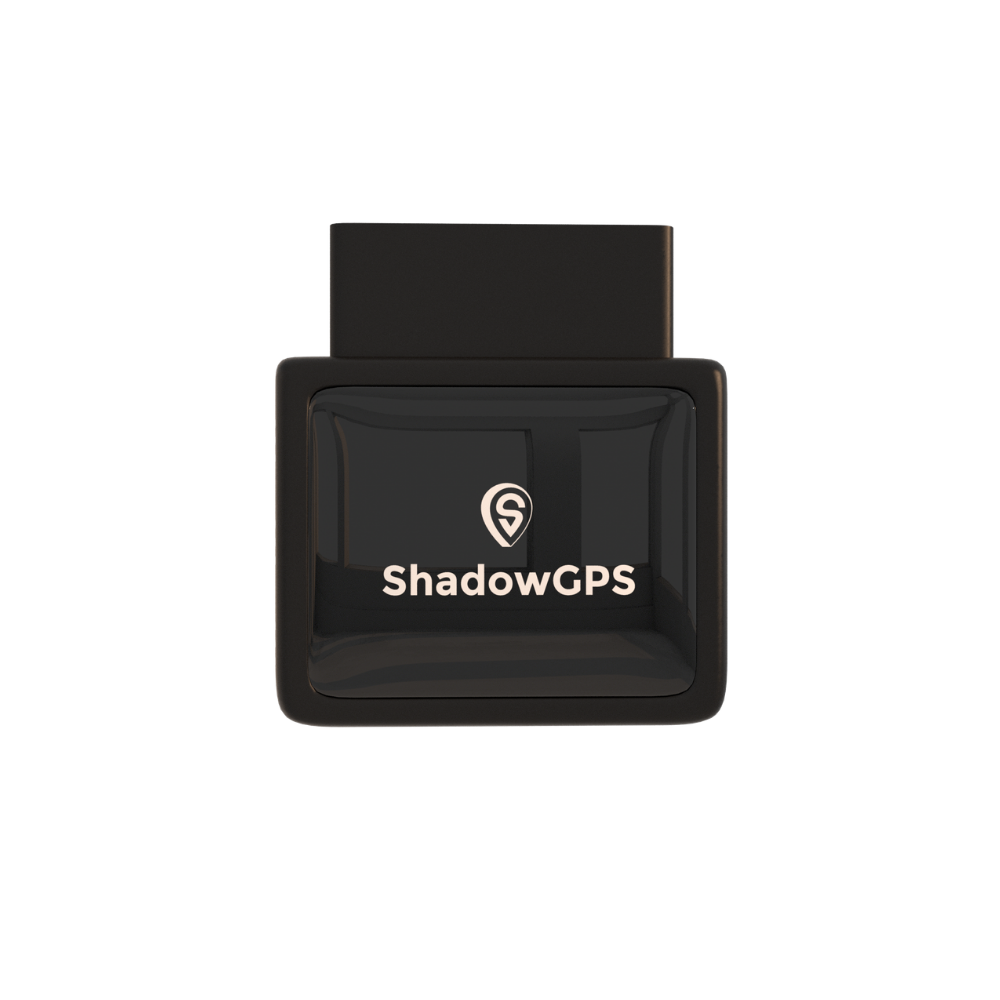
ShadowAuto
- Plugs into your OBD-II port in about two minutes, no tools
- Powered by your car, nothing to charge
- Car Alarm alerts, trip replay, and engine codes


ShadowTrack is the portable option for anything without an OBD-II port, or anywhere you'd rather keep the tracker out of sight. It runs on a rechargeable battery that lasts up to about 15 days per charge depending on how often it reports, and pairs with a weatherproof magnetic case for trailers, equipment, and older cars.
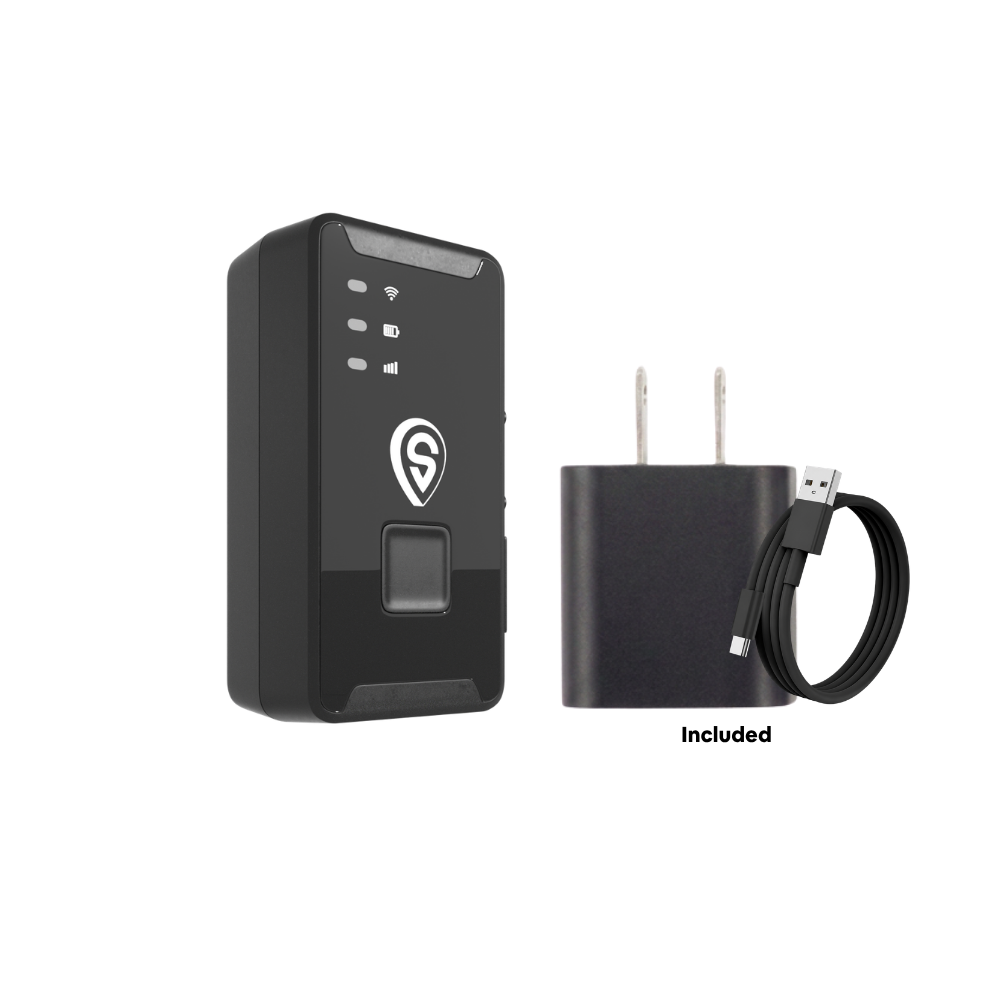
ShadowTrack
- Up to about 15 days per charge
- No wiring, ready in about two minutes
- Works with the weatherproof magnetic case
Want the weatherproof ShadowGPS Magnetic Case for ShadowTrack? It's sold separately and keeps the tracker dry and firmly attached under a trailer or bumper.
Behind both trackers sits 99.9% network uptime, a 30-day money-back guarantee, and an average rating of 4.3 to 4.6 out of 5 across 199 verified reviews on our site. Not sure which one fits? Our OBD2 vs. battery-powered GPS tracker guide walks through the choice.
Best for: ShadowAuto for the car or truck you drive every day, a teen's car, or a Turo rental. ShadowTrack for trailers, equipment, classic cars, and anything without an OBD-II port.
How to choose a modern GPS tracker: 6 questions to ask
Shopping for real-time GPS tracking for vehicles? Use this checklist before you buy any tracker. It follows the questions real buyers ask us most, in the order they ask them.
- Is there a monthly fee? Nearly every real-time GPS tracker has one, because it pays for the cellular data. The better question is whether there's a contract. Look for month-to-month plans with clear cancellation.
- Does it need a SIM card? Most modern trackers have the cellular connection built in, so you never buy or insert a SIM. More detail in does your GPS tracker need a SIM card?
- How hard is setup? Plug-in OBD-II and magnetic battery trackers take minutes. Hardwired trackers usually need a pro.
- How does the subscription work? Check whether faster updates, history, or alerts cost extra, and whether prepaying lowers the monthly fee.
- How fast does it update? Ask for the update speed while moving on the plan you'll actually buy, not the top tier.
- What network does it use? Look for 4G LTE or LTE-M. Avoid anything that mentions 2G or 3G.
What's next: GPS tracking trends to watch
Plenty of "future of GPS" articles promise augmented reality dashboards and blockchain location data. Here's a more grounded view of what's actually likely to reach your car in the next few years.
- L5 goes live: once enough GPS IIIF satellites join the constellation, the L5 signal can be declared healthy. Dual-frequency trackers will benefit most.
- Dual-frequency chips get cheaper: what's in flagship phones today tends to reach dedicated trackers a few years later.
- Hybrid positioning: combining GPS with Wi-Fi, cell towers, and motion sensors to fill gaps in garages and tunnels.
- Smarter, quieter alerts: apps that learn your car's normal routine and only ping you when something is truly unusual.
- Next-generation cellular for IoT: 5G variants designed for low-power devices will arrive gradually. LTE-M remains the workhorse for trackers today.
The practical takeaway: buy a tracker on today's networks (LTE-M), with a fast standard refresh and no contract, and you're not locked into anything if a better option arrives later.
Is it legal to put a GPS tracker on a car?
In the U.S., tracking a car or truck you own is generally legal, and that includes a family car your teen drives or a vehicle you rent out on Turo (Turo requires hosts to disclose tracking devices). Tracking a car you don't own, or a person without consent, can break state law. Business owners tracking company vehicles should read our guide to GPS tracking laws for employee vehicles. When in doubt, check your state's rules.
Frequently asked questions
Is there a monthly fee for a real-time GPS tracker?
Yes, almost always. A real-time tracker sends location data over a cellular network, and the monthly fee covers that data plus the app. ShadowGPS plans start at $15/mo month-to-month, or you can prepay and pay as little as $9/mo. No contract, ever. See current plans on our pricing page.
Does a GPS tracker need a SIM card?
Most modern trackers have cellular connectivity built in, so there's no SIM card for you to buy or insert. With ShadowAuto and ShadowTrack, the connection is included and covered by your monthly fee.
How accurate is GPS tracking for cars?
Consumer GPS is typically accurate to about 16 feet (4.9 meters) under open sky, according to GPS.gov. Accuracy drops near tall buildings, under heavy trees, and inside parking garages. For a moving car, update speed matters just as much, because an old location can be far from where your car is now.
What is the latest GPS tracking technology?
The latest GPS tracking technology combines GPS III satellites, multi-constellation and dual-frequency receiver chips, LTE-M cellular connectivity, and apps with fast refresh rates, geofences, trip replay, and theft alerts. The newest civil signal, L5, is broadcasting but not yet declared fully operational.
What's the difference between GPS and GNSS?
GNSS (Global Navigation Satellite System) is the umbrella term for every satellite positioning system. GPS is the U.S. system. Others include Galileo (Europe), GLONASS (Russia), and BeiDou (China). A multi-GNSS receiver can use several systems at once for faster, steadier fixes.
Does a GPS tracker work without cell service?
The GPS chip can still find its position, but a cellular tracker needs a signal to send that location to your phone. In a dead zone, most trackers store positions and upload them once they reconnect. For backcountry areas with no coverage at all, a satellite communicator is the right tool.
How often does a real-time GPS tracker update?
It depends on the brand and plan. Update speeds range from every few seconds to every few minutes, and many brands charge more for faster updates. ShadowAuto and ShadowTrack update every few seconds while moving on every plan.
Will 5G make my GPS tracker obsolete?
Not anytime soon. 3G trackers stopped working when carriers shut those networks down in 2022, but LTE-M is a 4G technology built for low-power devices and runs on today's networks. Choosing a no-contract tracker also means you're never locked in if you want to upgrade later.
Can a GPS tracker work in a parking garage?
Partly. Satellite signals weaken or disappear underground, so a tracker usually shows the last position it recorded before entering, often the garage entrance. Location updates resume as soon as your car drives back out under open sky.
How do I know if my old tracker still works?
Check its specs or packaging for the network type. If it says 2G, 3G, GSM, or CDMA without LTE, it has likely lost service. Also check when the app last received a location. If the last update is days or weeks old, it's time to replace it.
Know where your car is, right now
Plug it in, see it move, cancel any time. Modern GPS tracking for your car, your truck, or the trailer out back, with no contract, ever.
Pricing and plan details current as of October 2026 and may change; see theshadowgps.com/pages/pricing for current plans. Some links on this page are affiliate links, and ShadowGPS may earn a commission at no extra cost to you. Tracking laws vary by state; this article is general information, not legal advice. Sources: GPS.gov, FCC, U.S. Space Force program updates via MeriTalk and Air & Space Forces Magazine.

