

OBD2 or battery-powered GPS tracker: which one do you actually need? If you want a tracker you plug in once and never charge, with engine codes on top of location, pick OBD2. If you need to hide it, move it between vehicles, or track something without an OBD-II port, like a trailer or a classic car, pick battery-powered.
That's the short version. The longer version matters, because the two types fail in different ways. An OBD2 tracker sits in a port that anyone can find. A low-quality battery tracker can go quiet the day you forget to charge it.
Below, we compare both on the seven things that decide real-world results: power, update speed, setup, hiding, data, car battery drain and fit. Then we match each type to the situations we see most, from a parent with a new driver to a Turo host with three cars.
OBD2 vs. battery GPS tracker in one line each:
- OBD2 tracker: plugs into your car's diagnostic port, runs on the car's power, never needs charging, can read engine codes. Easy to find and unplug.
- Battery tracker: runs on its own rechargeable battery, hides almost anywhere, works on trailers, equipment and older vehicles. Needs charging.
For one daily-driven car, start with OBD2. For theft protection on a car you'd hate to lose, add a hidden battery tracker as backup.
This guide is written for:
OBD2 vs. battery GPS tracker at a glance
Here's how the two types compare in general. Individual brands vary, so we call out where ShadowGPS differs further down.
| Factor | OBD2 GPS tracker | Battery-powered GPS tracker |
|---|---|---|
| Power | Your car's OBD-II port | Internal rechargeable battery |
| Charging | Never | Every few days to few weeks, depending on model and use |
| Setup | Plug in, under 2 minutes | Place, hide or magnet-mount, under 2 minutes |
| Update speed | Usually fast while driving | Often slower to save battery (varies a lot by brand) |
| Engine codes / diagnostics | Yes, on most models | No |
| How easy to find | Easy: the port is under the dash | Hard: can be hidden almost anywhere |
| Works if someone unplugs it | No, it loses power | Yes, it has its own battery |
| Fits | Cars and light trucks with an OBD-II port (1996+ in the U.S.) | Anything: cars, trailers, boats, equipment, classics |
| Move between vehicles | Yes, unplug and replug | Yes, easiest of all |
| Best for | Daily drivers, teen drivers, Turo, work trucks | Theft backup, trailers, equipment, older vehicles |
What is an OBD2 GPS tracker?
An OBD2 GPS tracker is a small tracker that plugs into your car's On-Board Diagnostics (OBD-II) port. Every car and light truck sold in the U.S. since the 1996 model year has one, usually under the dashboard near the steering column.
The port supplies constant power, so the tracker never needs charging. It also connects to your car's computer, which is why many OBD2 trackers can read engine codes and report on the vehicle's health, not just its location.
Think of it as the set-and-forget option. You plug it in once and it keeps working every time the car moves.
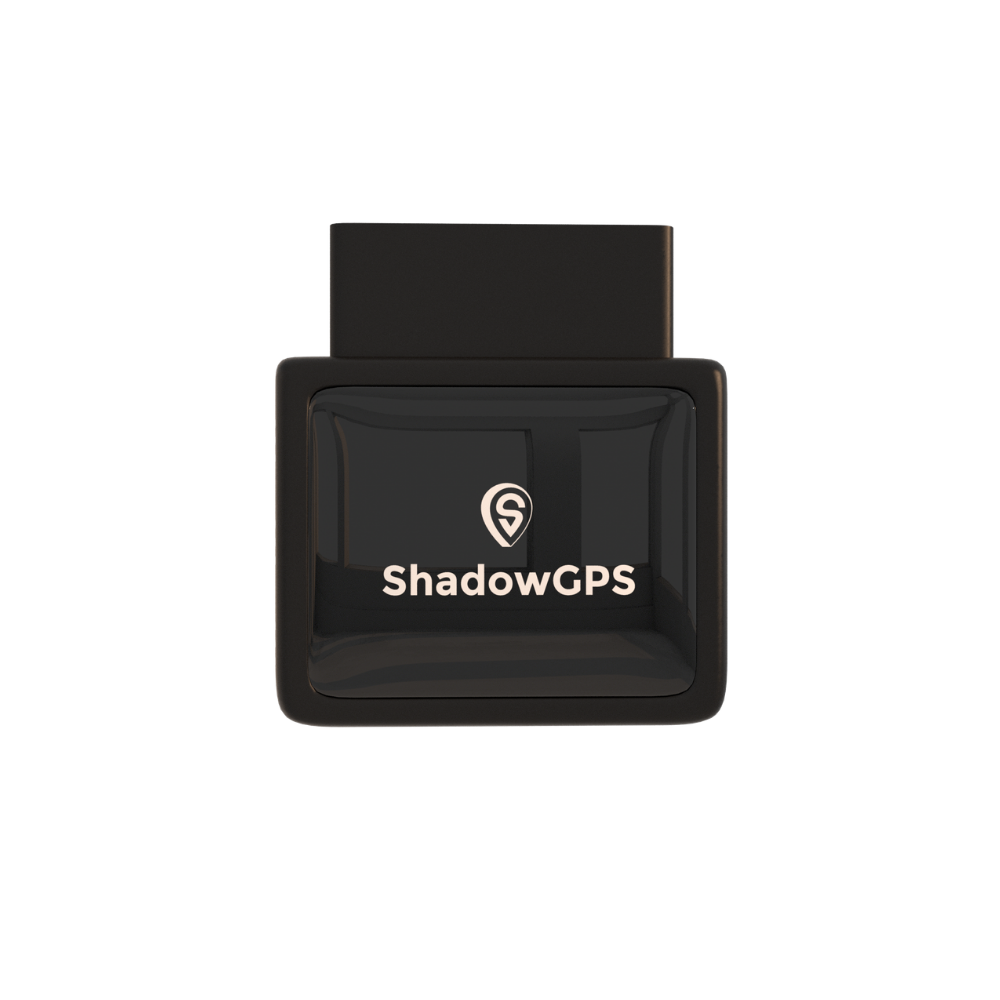
ShadowAuto
- Plugs in under 2 minutes, never needs charging
- Live tracking, trip timeline and trip replay
- Car Alarm alerts and engine code diagnostics


Best for: daily-driven cars and trucks, teen drivers, Turo listings and work vehicles you want on the map every time they move.
What is a battery-powered GPS tracker?
A battery-powered GPS tracker runs on its own rechargeable battery and doesn't connect to your car at all. You can put it in a glovebox, under a seat, in a toolbox, or on a metal surface with a magnetic case.
Because it doesn't need a port or wiring, it works on anything you own: trailers, boats, ATVs, equipment, motorcycles and older cars without an OBD-II port. And because it can be hidden, it's much harder for a thief to find and remove.
The trade-off is charging. A battery tracker only works while it has power, so you need a simple routine to keep it topped up.
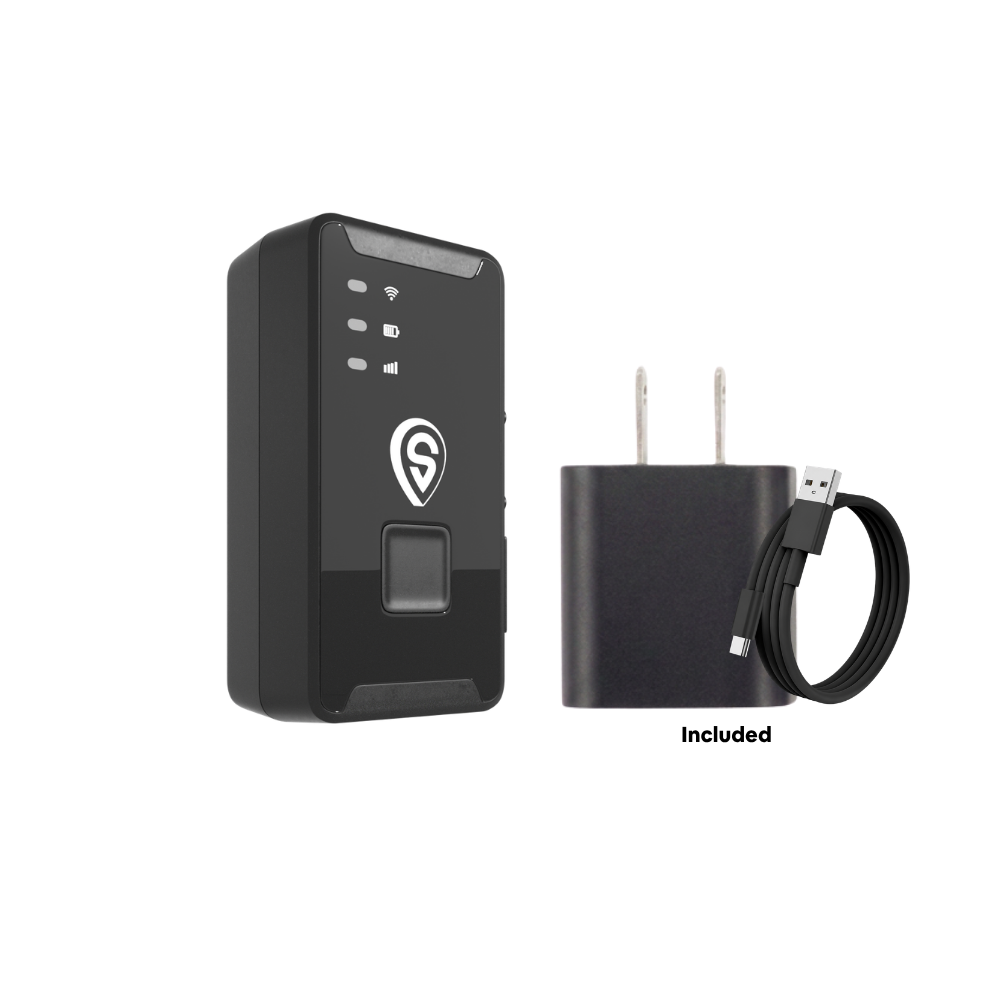
ShadowTrack
- Up to about 15 days per charge, depending on use
- Weatherproof magnetic case, hides almost anywhere
- Same live tracking and app as ShadowAuto
Best for: trailers, boats, equipment, classic cars, and a hidden theft backup in the car you care about most.
The 7 differences that actually matter
1. Power and charging
This is the core difference, and everything else follows from it. An OBD2 tracker draws a small amount of power from your car through the port, so there's nothing to charge, ever.
A battery tracker needs recharging. How often depends on the model, how often it reports and how much the vehicle moves. Cold weather shortens battery life too. Some budget trackers need charging every few days at fast settings; ShadowTrack runs up to about 15 days per charge, depending on use.
The practical fix: tie charging to something you already do, like the first of the month or every other fill-up, and turn on low-battery alerts in the app.
2. How often it updates your location
Here's where most comparisons get it backwards. They assume battery means slow. With many brands it does: to stretch battery life, they "sleep" between check-ins and may only report every few minutes.
That's a brand choice, not a law of physics. Both ShadowGPS trackers update every 5 seconds while moving, the battery model included. When the vehicle is parked, there's nothing new to report, which is how a battery tracker saves power without going slow when it counts.
What to check before you buy: the update rate on the base plan while the vehicle is moving. Some brands only offer fast updates on a pricier tier.
3. Setup: plug in vs. place it
Both are simple. With OBD2, you find the port under the dash and plug the tracker in. No tools, no wiring, no installer.
With a battery tracker, you charge it, then pick a spot: glovebox, under a seat, inside a trailer toolbox, or on a metal surface in a magnetic case. The only real "skill" is choosing a spot with a decent view of the sky. Thick metal all around the tracker can weaken GPS and cellular signal, so test the spot in the app before you leave it.
4. How easy it is to find and remove
Be honest with yourself here. The OBD-II port is in a standard spot, and a thief who knows trackers can find and unplug one in seconds. That doesn't make OBD2 useless for theft. Most thefts aren't that sophisticated, and ShadowAuto's Car Alarm alerts you the moment your car moves when it shouldn't, which is often all the head start you need.
A battery tracker wins on concealment. It can sit anywhere, it has no cable to pull, and it keeps reporting even if the OBD tracker is gone. That's why owners who are serious about theft often run both. Our post on GPS trackers vs. car theft covers the numbers.
5. What data you get beyond location
Because an OBD2 tracker connects to your car's computer, it can read engine trouble codes. When the check engine light comes on, you can see what it means before you call the shop.
A battery tracker only knows where it is and whether it's moving. For a trailer or a boat, that's exactly what you need. For a daily driver, engine codes are a real bonus.
Both give you the features owners use most: live tracking, trip timeline, trip replay and geofence alerts.
6. Will it drain your car battery?
This is the top worry with OBD2 trackers, and it's a fair question. The port stays powered even when the car is off.
A well-made OBD2 tracker goes into a low-power sleep mode when the car is parked and wakes when it moves. On a healthy battery in a car you drive regularly, that draw isn't something you'll notice. Problems usually come from low-quality trackers with poor power management, from an already weak battery, or from a car that sits for weeks.
- Daily driver: not a concern with a quality tracker.
- Car parked for a month or more: unplug the OBD2 tracker or use a battery tracker instead, which never touches your car's battery.
- Old battery or cold winters: get the battery tested; that's good advice with or without a tracker.
7. Which vehicles it fits
OBD2 trackers need an OBD-II port. That covers nearly every car, SUV, pickup and van built since 1996 in the U.S. It doesn't cover trailers, boats, most motorcycles, equipment or older classics.
Battery trackers fit anything. If it can hold a small box or a magnet, it can be tracked. Our guide on battery vs. OBD trackers for fleets goes deeper on mixed work fleets.
Which one should you choose? Match it to your situation
Skip the spec sheets for a second. Here's what we recommend for the setups we see most often.
Parent of a new driver
OBD2. No charging, live trips, curfew and geofence alerts, plus engine codes when the light comes on. See our teen driver guide.
Turo or rental host
OBD2 in every car, battery in your highest-value one. Trip history settles disputes; the hidden tracker covers theft. See our Turo page.
Car you'd hate to lose
Both. OBD2 for daily tracking and Car Alarm, battery tracker hidden elsewhere as a backup that keeps reporting.
Trailer, boat or equipment
Battery. No OBD-II port, no problem. Magnet-mount it in a weatherproof case.
Classic or stored car
Battery. Works without a port and never touches the car's battery while it sits for months.
Small work fleet (2-5 trucks)
OBD2 in each truck, battery on trailers. One app, one map. See fleet tracking for 3-10 vehicles.
Why many owners end up using both
OBD2 and battery trackers aren't really rivals. They cover each other's weak spots.
- The OBD2 tracker is your everyday layer: always powered, always on the map, with engine codes and Car Alarm.
- The battery tracker is your backup layer: hidden where nobody looks, still reporting if the OBD2 tracker gets pulled.
With ShadowGPS, both show up in the same app on the same map, with the same plan pricing. Our host story, managing 6 vehicles across Turo, family and work, shows what that looks like in practice.
What do OBD2 and battery trackers cost?
Almost every real-time GPS tracker, OBD2 or battery, has a monthly fee. The tracker needs a cellular connection to send its location to your phone, and that connection isn't free for anyone.
The bigger differences are the contract and what the base plan includes:
- Watch for lock-ins. Some brands only offer their best monthly rate on a 2-year commitment.
- Watch for slow base plans. Some charge extra for faster updates.
- Check that the price is the same for OBD2 and battery. With ShadowGPS it is: $15/mo month-to-month for 1-3 trackers, down to $9/mo if you prepay for two years, and $8-$13/mo with 4 or more. No contract. Month-to-month, or prepay and save.
For a full breakdown, see what GPS tracking actually costs.
5 mistakes people make choosing between them
- Assuming battery always means slow updates. Check the moving update rate, not the category.
- Hiding a battery tracker inside a metal box. Test the signal in the app before you leave it.
- Leaving a low-quality OBD2 tracker in a car that sits for weeks. Use a quality tracker with sleep mode, or a battery tracker for stored vehicles.
- Relying only on an OBD2 tracker for a high-theft car. Add a hidden backup.
- Ignoring the contract. A low monthly price on a 2-year lock-in isn't the deal it looks like.
Is it legal to put a GPS tracker on a car?
In the U.S., you can generally track a car or asset you own. If someone else drives it, like a teen, an employee or a rental guest, tell them, and check your state's rules and your rental platform's policies. Tracking a vehicle you don't own or have rights to can break stalking laws in many states, whichever type of tracker you use.
See our guide to GPS tracking laws. This isn't legal advice; check with a local attorney if you're unsure.
How we put this comparison together
This guide is written by the ShadowGPS team. We make both an OBD2 tracker (ShadowAuto) and a battery tracker (ShadowTrack), and we help owners choose between them every day, so we've tried to be straight about where each one falls short. Product details reflect our current specs and pricing as of October 2026.
Frequently asked questions
Which is better, an OBD2 or a battery-powered GPS tracker?
Neither is better for everything. An OBD2 tracker is better for a daily-driven car because it never needs charging and can read engine codes. A battery tracker is better for hiding, for trailers and equipment, and for cars without an OBD-II port. For the best theft protection, use both.
Is there a monthly fee for OBD2 and battery GPS trackers?
Yes, almost every real-time tracker has one, because it uses a cellular connection. ShadowGPS plans cost the same for both types: $9 to $15 a month for 1 to 3 trackers and $8 to $13 for 4 or more, depending on how you pay. No contract. Month-to-month, or prepay and save.
Do OBD2 GPS trackers need a SIM card?
Not with ShadowAuto or ShadowTrack. The cellular connection is built in and included in your plan, so there's no SIM card to buy or insert.
Will an OBD2 GPS tracker drain my car battery?
Not in normal use. A quality OBD2 tracker sleeps when the car is parked and uses very little power. If a car will sit for weeks, or the battery is old, unplug the tracker or use a battery-powered tracker instead.
How long does a battery GPS tracker last on one charge?
It depends on the model, how often it reports and how much the vehicle moves. Some last a few days at fast settings. ShadowTrack runs up to about 15 days per charge, depending on use. Cold weather shortens battery life for any tracker.
Can a thief find an OBD2 tracker?
Yes, if they know where to look, because the OBD-II port is in a standard spot under the dash. That's why a hidden battery tracker makes a strong backup for any car you're worried about. Car Alarm alerts on ShadowAuto also tell you the moment your car moves unexpectedly.
Can I move a GPS tracker between cars?
Yes. An OBD2 tracker unplugs and replugs in seconds, and a battery tracker can go anywhere. Just rename the tracker in the app so your trip history stays clear.
Can I put a battery GPS tracker under my car?
Only in a weatherproof magnetic case, like the one ShadowTrack uses. Pick a flat metal spot away from the exhaust and moving parts, and check the signal in the app first, since heavy metal around the tracker can weaken it.
Does my car have an OBD-II port?
If it's a car, SUV, pickup or van sold in the U.S. from the 1996 model year on, almost certainly yes. Look under the dashboard on the driver's side, near the steering column. Older vehicles, trailers and most motorcycles need a battery tracker instead.
Plug it in, or hide it. Either way, know where it is.
Plug it in, see it move, cancel any time. Same app, same plans, no contract, ever.
Pricing and specs current as of October 2026. Battery life varies with use, update activity and temperature. Some links on this page are affiliate links; ShadowGPS may earn a commission on qualifying purchases at no extra cost to you. Legal information is general and not legal advice.

