

Your customer doesn't care how many trucks you own. They care whether your tech shows up when you said, whether you pick up the phone, and whether the bill makes sense. On those three things, a three-van plumbing company can beat a national chain every single day.
The catch is that the big players have one advantage that's easy to copy: they always know where their vehicles are. That's what lets them promise a 30-minute window instead of "sometime between noon and four."
Small business vehicle tracking closes that gap. This guide shows exactly how owners with 2 to 10 vehicles use it to win jobs from bigger competitors, what it costs, how to roll it out without upsetting your crew, and where enterprise fleet software is overkill.
How does vehicle tracking help a small business compete? A GPS tracker in each work vehicle shows you where every truck is in real time. That lets you give customers accurate arrival times, send the closest tech to urgent calls, prove when and where work happened, protect trucks and equipment from theft, catch engine problems early, and keep clean mileage records. Those are the service advantages customers use to choose between you and a bigger company.
Why Small Businesses Can Win on Service, Not Size
Big companies win on brand recognition and marketing budgets. Small businesses win on responsiveness and trust. The problem is that trust breaks fast when you're late.
In a Software Advice survey of US field service customers, 67% said they would rule out hiring a company again if the technician showed up more than an hour late. In a related Software Advice study, 58% said technician tracking would make them more likely to hire a company. Customers have learned to expect a live dot on a map from food delivery and rideshare apps. They now expect it from the person fixing their AC.
Here's the good news: you don't need a dispatch center to deliver that. You need to know where your trucks are, right now, and a simple way to share it.
What Small Business Vehicle Tracking Actually Is
Vehicle tracking for a small business is simpler than the enterprise systems you see advertised. It's a GPS tracker in each vehicle, a phone app, and a web dashboard that shows every truck on one map. The tracker uses GPS satellites to find its position and a cellular connection to send it to your phone.
What it is not: a big fleet compliance system with electronic logbooks, a multi-year contract, and a sales rep. If you run long-haul trucks that need ELD compliance, you need a different kind of product. If you run service vans, crew trucks, or delivery cars around one metro area, you don't.
Plug-in trackers for your everyday work vehicles
Most small businesses start here. A plug-in tracker goes into the OBD-II port under the dashboard, which every car and light truck sold in the US since 1996 has. Your truck powers it, so nobody on your team has to remember to charge anything. Not sure where the port is? Here's how to find your OBD-II port in 30 seconds.
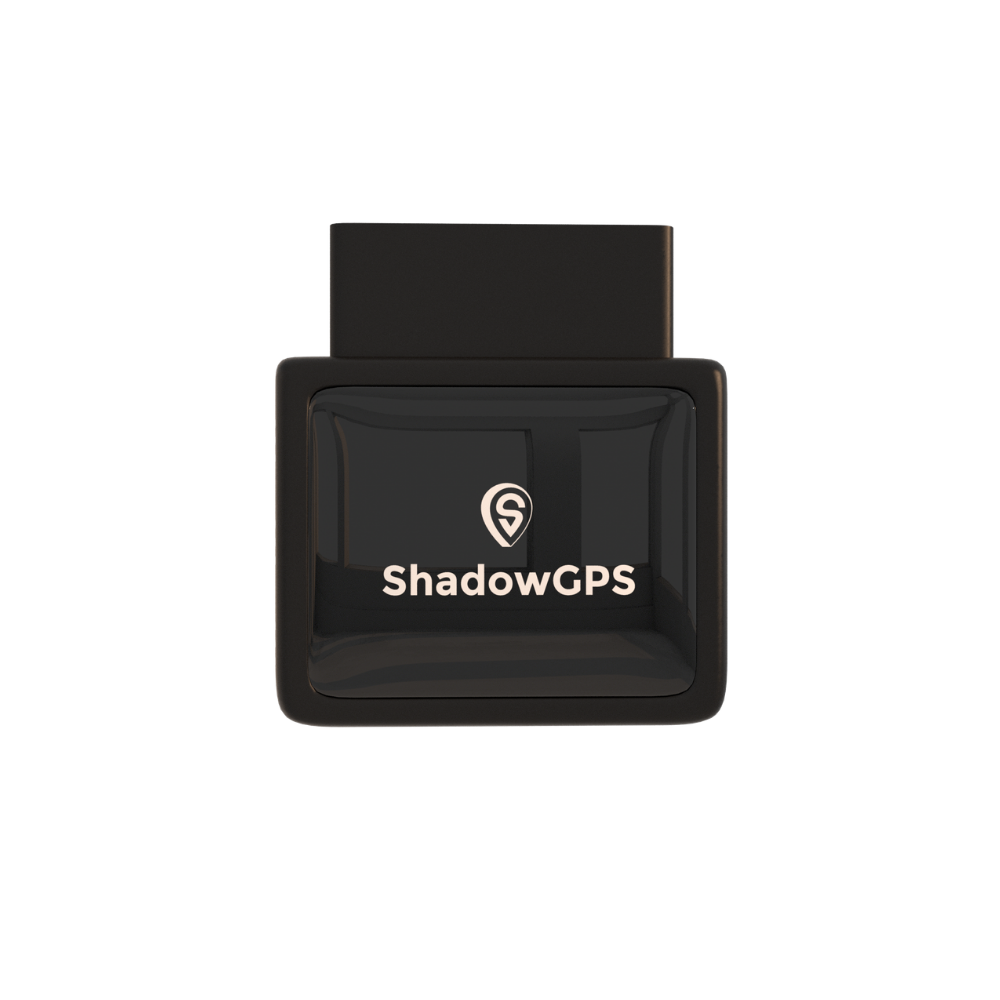
ShadowAuto
- Plug it in, no tools, under 2 minutes per vehicle
- Every truck on one map, phone or web
- Trip replay, Car Alarm and engine codes


Battery trackers for trailers, equipment and older vehicles
Trailers, mowers, generators and older vehicles without an OBD-II port need a tracker with its own battery. These go in a toolbox, under a seat, or in a weatherproof magnetic case on a trailer frame, and they can move between assets as jobs change.
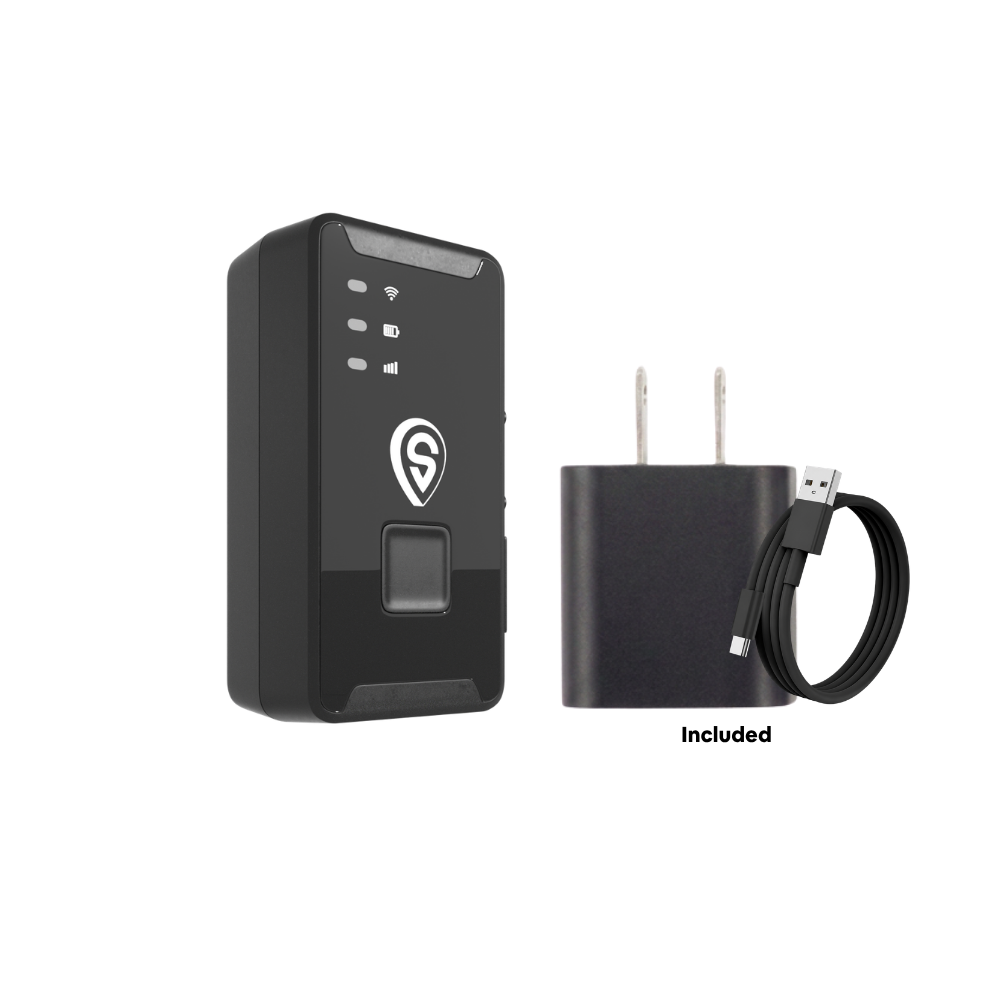
ShadowTrack
- Up to about 15 days per charge
- No port needed, moves between assets
- Shows up in the same app as your trucks
Best for: ShadowAuto in every van, car and pickup you drive daily. ShadowTrack for trailers, equipment, and any vehicle without an OBD-II port. Most small businesses end up with a mix of both, all on one account.
Both update every 5 seconds while moving, so the map you're looking at when a customer calls is where your trucks are now, not a minute ago. For a deeper side-by-side, see battery-powered vs. OBD trackers for small fleets.
7 Ways Vehicle Tracking Helps a Small Business Compete
1. Give customers a real arrival time, not a four-hour window
This is the single biggest service gap between small and large companies, and it's the easiest to close. When a customer calls asking "where's my tech?", you open the app, see the van is 12 minutes out, and tell them so.
Want to go a step further? Share Location lets you send a customer a live link to your van's position, so they can watch it arrive. That's the "Uber experience" big companies spend millions building, delivered with a text message.
2. Send the closest truck when an urgent call comes in
Emergency calls are where small businesses make their best margins and earn their best reviews. A burst pipe or a dead AC in July goes to whoever can get there first.
With every vehicle on one live map, you can see which tech is closest and finishing up, instead of calling around. Getting there 40 minutes faster than the competitor the customer called first is how you win that job, and the next one.
3. Prove when and where the work happened
Disputes cost small businesses more than they cost big ones, because you don't have a legal team to absorb them. A trip timeline gives you a dated record of when a truck arrived at a job site and how long it stayed.
That record helps you:
- Back up invoices when a customer questions billed hours.
- Answer "nobody showed up" claims with an arrival time and address.
- Build trust with commercial clients who want proof of scheduled service visits.
- Spot after-hours use of company vehicles. Here's more on detecting unauthorized vehicle use.
4. Protect your trucks, trailers and tools
For a small business, one stolen truck isn't a line item. It's a week of canceled jobs, a deductible, and every tool in the bed gone with it. The National Insurance Crime Bureau counted 659,880 vehicles stolen in the US in 2025. That's a 23% drop from 2024, but still about one every 48 seconds, and the Chevrolet Silverado 1500 was the fourth most stolen model in the country.
Car Alarm sends an alert to your phone if a parked vehicle starts moving when it shouldn't, and tamper alerts tell you if someone pulls the tracker. If something is taken, share the live location with police and let them handle the recovery. Never try to get it back yourself.
5. Keep vehicles on the road, not in the shop
When one of three vans is down, you've lost a third of your capacity. Big companies have spare vehicles; you probably don't. ShadowAuto reads engine trouble codes and shows them in the app, so a check engine light becomes "loose gas cap, keep going" or "book the shop this week" instead of a guess.
Catching a problem early is almost always cheaper than a breakdown on the way to a job. More on why vehicle downtime costs more than you think.
6. Get your mileage records right at tax time
Business miles are worth more than ever. The IRS set the 2026 business standard mileage rate at 72.5 cents per mile, then raised it to 76 cents per mile for driving from July 1, 2026 (IRS Announcement 2026-11).
A trip timeline gives you the date, route and distance of every drive. Add the business purpose for each trip, which IRS Publication 463 requires, and you have most of what your accountant needs. Talk to your tax professional about whether the standard rate or actual expenses works better for your business.
7. Know where trailers and equipment are at the end of the day
Landscapers, contractors and event companies lose money to equipment left at the wrong site as much as to theft. A battery tracker on each trailer or high-value machine means you can check what's where before the morning crew rolls out. See how this works for landscaping businesses and pest control companies.
What This Looks Like in Real Small Businesses
These are typical setups for the kinds of businesses that get the most from tracking. Your mix will depend on your vehicles and jobs.
HVAC or plumbing, 3 vans
ShadowAuto in each van. Live map for emergency dispatch, Share Location links for customers, engine codes to avoid surprise breakdowns.
Landscaping, 2 trucks and 2 trailers
ShadowAuto in the trucks, ShadowTrack on each trailer. Trip timelines back up commercial contract visits and trailers stay accounted for overnight.
Local delivery or courier, 4 to 6 cars
ShadowAuto in every car. Accurate ETAs for business clients, proof of delivery times, and clean mileage records.
Small Business Tracking vs. Enterprise Fleet Platforms
A lot of "fleet management" content is written for companies running hundreds of trucks. Here's how the options actually compare for a business with 2 to 10 vehicles.
| Option | Best fit | Setup | Contract | Pricing model | Tracks the truck itself |
|---|---|---|---|---|---|
| Enterprise fleet platforms (e.g., Samsara, Motive, Verizon Connect) | Large fleets, ELD compliance, heavy trucks | Often scheduled with a technician or in-house fleet team | Commonly annual or multi-year | Usually quote-based per vehicle | Yes |
| Phone tracking apps on employee phones | Very small teams, low budget | App download | Varies | Per user | No, tracks the phone, which can be switched off or left behind |
| No tracking (calls and texts) | One-vehicle owner-operators | None | None | Free | No |
| ShadowGPS (ShadowAuto / ShadowTrack) | 1 to 10+ vehicles, plus trailers and equipment | Plug it in, under 2 minutes | None, ever | $13/mo per tracker for 4 to 10, or less with prepay | Yes |
Enterprise platform terms vary by provider and contract, so check current details directly. ShadowGPS pricing as of October 2026.
The honest take: if you run a regulated long-haul fleet, an enterprise platform is the right tool. If you run service vans and crew trucks, you're paying for features you won't use and signing a contract you may not want. Our guide on choosing fleet GPS tracking for 3 to 10 vehicles goes deeper.
How to Roll Out Tracking Without Losing Your Crew's Trust
The fastest way to make tracking fail is to surprise your team with it. The best way to make it work is to frame it around what it does for them: proof they were on time, fewer "where are you?" calls, and faster help if a truck breaks down.
- Tell them before the trackers go in. Explain what you'll see (vehicle location, trips) and why.
- Put it in writing. A one-page vehicle policy that covers work hours, personal use and who can see the data.
- Use it to back your people up. The first time a trip record proves your tech was on time, the team will see the point.
- Don't micromanage every stop. Look at patterns, not every coffee break.
Our guide on telling your crew about GPS trackers includes talking points you can use.
Know the rules for company vehicles
In the US, businesses can generally track vehicles they own. Some states have specific notice or consent rules for tracking employees, and tracking a personal vehicle an employee owns is a different matter. Tell your team, put it in your policy, and check your state's rules. Read our guide to GPS tracking laws for employee vehicles. This is general information, not legal advice.
Your First 30 Days: A Simple Rollout Plan
- Week 1: Plug in and name every vehicle. Use names your team uses, like "Van 2" or "Mike's truck," so the map makes sense at a glance.
- Week 1: Set geofences for your shop and top job sites. You'll see arrivals and departures without checking the map all day.
- Week 2: Turn on Car Alarm and tamper alerts for every vehicle that's parked overnight.
- Week 2: Start sharing live location with customers on time-sensitive jobs and watch how they respond.
- Week 4: Review trip timelines once. Look for patterns: wasted drive time, jobs that run long, vehicles that sit unused. Make one change based on what you see.
What It Costs, and How to Tell It's Paying Off
For 4 to 10 trackers, ShadowGPS is $13 per tracker per month on a month-to-month plan, or less if you prepay quarterly, annually or for two years (down to $8). For 1 to 3 trackers it's $15 per month, or as low as $9 with prepay. No contract, ever, and you can cancel any time. Full details are on our pricing page, and this breakdown of what GPS tracking costs a small fleet in 2026 compares the options.
Don't measure it against a vague promise of "efficiency." Measure it against things you can count:
- Repeat customers: are fewer customers complaining about late arrivals?
- Emergency calls won: are you getting to urgent jobs before the competition?
- Billing disputes: are they ending faster when you can show a trip record?
- Mileage deduction: is your log more complete than last year's?
- Downtime: are you catching engine issues before they strand a van?
If a single retained commercial client or one avoided breakdown covers the year's plan, you'll know quickly. And if it doesn't earn its keep, you're not locked in. ShadowGPS also offers a 30-day money-back guarantee.
Frequently Asked Questions
Is there a monthly fee for small business vehicle tracking?
Yes. Live tracking needs a cellular connection, which has an ongoing cost. ShadowGPS is $13 per tracker per month for 4 to 10 trackers ($15 for 1 to 3), or less with prepay. No contract, ever, and you can cancel any time.
Do the trackers need a SIM card?
Not one you buy. ShadowAuto and ShadowTrack have cellular connectivity built in and covered by your plan, so you don't add SIM cards or phone lines for each vehicle.
Is it hard to set up trackers across several vehicles?
No. ShadowAuto plugs into each vehicle's OBD-II port in under 2 minutes, with no tools, wiring or appointments. Most owners have a small fleet running in one afternoon.
Is it legal to track my employees' work vehicles?
Generally yes for vehicles your business owns, but some states have notice or consent rules for employees, and personal vehicles are treated differently. Tell your team, put it in a written policy, and check your state's rules.
Can my customers see where my tech is?
Yes, when you choose to share it. Share Location sends a live link to a vehicle's position, so a customer can watch the van arrive instead of waiting on a time window.
How many vehicles do I need before tracking is worth it?
Even one. Owner-operators use a single tracker for theft protection, mileage records and customer ETAs. The dispatch benefits grow once you have two or more vehicles and can't see every truck from the shop.
Can I track trailers and equipment in the same app?
Yes. ShadowTrack runs on its own battery, so it works on trailers, mowers and equipment without an OBD-II port, and it shows up on the same map as your trucks.
What happens if I sell a vehicle or cancel?
Plans are month-to-month with no contract. You can unplug a tracker and move it to another vehicle, or cancel a tracker's plan and stop being billed for it.
Give your customers the big-company experience
Plug it in, see every truck move, and cancel any time. No contract, ever.
Pricing accurate as of October 2026 for US plans; see the pricing page for current rates. Some links on this page are affiliate links, and ShadowGPS may earn a commission from qualifying purchases. Tax and legal information here is general and not professional advice. Sources: Software Advice field service customer surveys, NICB 2025 Vehicle Theft Report, IRS IR-2025-128 and Announcement 2026-11, IRS Publication 463.

