

You lock your bike, walk away for twenty minutes, and come back to an empty rack. Bike theft happens to a bike every 30 seconds in the US, and most stolen bikes are never seen again.
A lock stops a thief for a minute or two. It does nothing once the cable is cut. A GPS tracker for bikes is the one thing that keeps working after the lock has already failed, sending you a real location the moment your bike starts moving without you.
Below is a side-by-side look at the six best gps bike trackers actually worth mounting on a bike in 2026, how bike gps trackers work, where to hide one, what a monthly fee really buys you, and what to do in the first ten minutes after a bike theft.
The best gps bike tracker overall is the Invoxia Cellular GPS Tracker, because it gives true real-time location on cellular networks with no phone nearby required. For a no-subscription option, the Apple AirTag (iPhone) or a Tile (Android and iPhone) rides on the Find My or Tile networks for around $29. For dedicated theft protection, the Knog Scout bike alarm pairs a loud 85dB alarm with Bluetooth-based tracking, making it one of the best gps tracker for bike picks for anyone who locks up in a shared rack.
What Makes a Good GPS Tracker for Bikes?

Not every tracking device belongs on a bike. Most GPS trackers built for cars assume a big battery, constant power, and a bolted-down mount. A bike gives you none of that, so a good bike GPS tracker has to solve a different set of problems.
Here's what actually separates a great bike tracker from a bad one:
- Battery life that survives real life: A tracker that needs charging every two days will be dead the one week you actually need it. Look for a replaceable battery or a rechargeable one rated in months, not days.
- Real GPS tracking, not just Bluetooth connectivity: Bluetooth technology only works when another phone on the same wireless network passes within range. A global navigation satellite system paired with cellular networks gives you a real, continuous location, even in isolated areas far from foot traffic.
- Water resistance: A tracker mounted outdoors takes rain, road spray, and mud. IP-rated water resistance isn't optional.
- A way to stay hidden: A visible tracker gets removed in seconds. The best bike gps trackers mount inside a frame, under a bottle cage, or inside a sealed housing that doesn't scream "tracking device."
- A subscription you actually understand: Some rely on a wireless network you already have (Apple's or Google's Find My networks) with no monthly fees. Others need a SIM card and monthly fees for true global tracking. Neither is wrong, but you should know which one you're buying before checkout.
This May Help You: GPS Tracker for Electric Bikes & Scooters
The 6 Best GPS Trackers for Bikes in 2026
We compared bike GPS trackers on real-time tracking accuracy, battery life, waterproofing, mounting options, and whether a subscription is required. Here are the six worth your money.
1. Knog Scout
The Knog Scout bike alarm is built specifically for bikes, not repurposed from luggage tracking or pet tracking. It weighs just 25g and is USB-C rechargeable, so it slots into the same charging habit as your bike lights or computer.
Its standout feature is an 85dB audible alarm that triggers on unexpected movement, loud enough to interrupt bike theft in progress in a rack or parking garage before a thief gets the lock off. It's paired to your phone over Bluetooth, and the Knog app also shows nearby Apple devices that can help relay a last-known location through the Find My network if your bike moves out of direct Bluetooth range.
Pros
- 85dB audible alarm deters theft before it happens
- Lightweight at 25g, barely noticeable on the bike's frame
- Anti-tamper screws for secure, discreet mounting
- USB-C rechargeable, no proprietary charger
Cons
- Battery life of only 2-6 months per charge
- Relies on Bluetooth connectivity and nearby Apple devices for long-range recovery


Best for: riders who want an audible deterrent, not just a silent tracker, and who lock up in shared racks or garages where an alarm actually gets heard.
2. Apple AirTag
The Apple AirTag costs around $29 and has a battery life of up to one year, making it the cheapest way to add a tracker to a bike with zero monthly fees. It works through Apple's Find My network, which includes hundreds of millions of Apple devices around the world quietly relaying location data in the background.
For iPhone users, that global coverage is the appeal: as long as another iPhone passes near your bike, you get an updated location, no SIM card and no monthly subscription costs required. The tradeoff is that an AirTag alone has no case, so it needs a separate bike mount to hide it inside the frame or under a bottle cage.
Pros
- Battery life of up to one year
- Zero monthly fees, backed by Apple's find my network of hundreds of millions of devices
- Around $29, the cheapest entry point on this list
Cons
- No true real time tracking, only pings when an Apple device is nearby
- Needs a separate bike mount, and thieves increasingly know to check for one
- Useless for Android users without a modified workaround

Best for: iPhone users who want basic bike security without adding another subscription costs line to their budget.
3. Tile
Tile devices run on their own Bluetooth range of 250 to 400 feet and the Tile app's community-find network, making them the closest equivalent to an AirTag for Android users. The Tile Sticker is priced at £24.99 and carries a three-year battery, so there's no recharging cycle to remember for the life of the device.
Tile trackers come in various sizes, from the credit-card-thin Slim to the compact Sticker, giving flexible bike placement options depending on where you want it hidden: taped inside a frame tube, tucked under a saddle, or fixed near the bottle cage mounts.
Pros
- Works for both Android users and iPhone users through the Tile app
- Tile Sticker's 3-year battery needs no charging at all
- No monthly fees on the standard tier
Cons
- Tile's community network is smaller than Apple's, so rural recovery odds drop
- No secure log in with two-factor verification on the free tier

Best for: Android users who want the same no-subscription simplicity iPhone users get from an AirTag.
4. Invoxia Cellular GPS Tracker
The Invoxia is the only tracker on this list built around true real time tracking rather than a community Bluetooth connection. It runs on its own SIM card and cellular networks for global coverage, and you choose the update frequency yourself: every 2, 5, 10, or 30 minutes, trading battery life for tighter location data whenever you need it.
Most GPS trackers on the market ask you to pay full subscription costs from day one. Invoxia includes a free one-year subscription with purchase, and it will send movement alerts straight to your phone the moment the bike moves outside a set zone, no waiting for another phone to happen to walk by.
Pros
- True global tracking over cellular networks, not dependent on nearby phones
- Adjustable update frequency of 2, 5, 10, or 30 minutes
- Free one-year subscription included with the device
- Movement alerts for suspicious activity, sent instantly
Cons
- Monthly fees apply once the free year ends
- Costs more upfront than a Bluetooth-only tag

Best for: anyone who wants real, continuous gps location data on a stolen or misplaced bike instead of waiting for a lucky Bluetooth ping.
5. Cycloop
The Cycloop closes the biggest gap of cellular GPS tracking devices: battery anxiety. Its rechargeable battery lasts up to 12 months on a single charge while still delivering live cellular tracking, not just Bluetooth pings, putting it closer to a "set it and forget it" tracker than most SIM-based competitors.
That combination, real time tracking plus a battery life measured in months instead of days, makes it a strong pick for e bikes and electric bikes that already sit outside for long stretches between rides.
Pros
- Up to 12 months of battery life on cellular GPS tracking
- Replaceable, rechargeable battery instead of a sealed cell
- Well suited to electric bikes left outdoors between charges
Cons
- Still requires a monthly fee for cellular service
- Less brand recognition and support history than Invoxia or LandAirSea

Best for: e-bike and electric bikes owners who want real-time tracking without a monthly charging chore.
6. LandAirSea 54
The LandAirSea 54 wasn't designed as a dedicated bike tracker, but its small, waterproof, magnetic housing makes it one of the most versatile trackers on this list. It weighs 82g and is fully waterproof, built to survive being mounted outdoors in any weather without a separate case.
Because it's magnetic, it clips onto any steel part of a bike's frame, a rear rack, or a metal fender in seconds, with no special tools, no drilling, and no permanent mount required.
Pros
- Fully waterproof housing built for outdoor mounting
- Magnetic mount means easy installation with no special tools
- Also doubles as a tracker for other gear, not just the bike
Cons
- At 82g, it's noticeably heavier than dedicated bike trackers
- Magnetic mount only grips steel; won't hold to a full carbon or aluminum frame
- Monthly fees required for live gps tracking

Best for: riders with a steel-frame commuter or cargo bike who want a rugged tracker they can move between the bike, a trailer, or a truck.
GPS Tracker for Bikes: Full Comparison Table
| Tracker | Tracking type | Battery life | Waterproof | Monthly fee | Best for |
|---|---|---|---|---|---|
| Knog Scout | Bluetooth + alarm | 2-6 months | Yes | No | Loud theft deterrent |
| Apple AirTag | Bluetooth (Find My) | Up to 1 year | Splash-resistant | No | iPhone users, budget |
| Tile | Bluetooth (Tile network) | Up to 3 years | Splash-resistant | No | Android users, budget |
| Invoxia | Real-time cellular GPS | Weeks (charge-dependent) | Yes | Yes, after free year | True real-time tracking |
| Cycloop | Real-time cellular GPS | Up to 12 months | Yes | Yes | E-bikes left outdoors |
| LandAirSea 54 | Real-time cellular GPS | Weeks (charge-dependent) | Yes | Yes | Steel-frame, magnetic mount |
Do I need a monthly subscription for a bike GPS tracker?
Only if you want true real-time tracking. Bluetooth-based trackers like the Apple AirTag and Tile ride on a free crowd-sourced network (Apple's Find My or the Tile app's community), so there are no monthly fees at all, but you're relying on another nearby phone to relay a location. Cellular trackers like the Invoxia, Cycloop, and LandAirSea 54 need a SIM card and a data plan for global coverage, which is where subscription costs come in. Most run $5 to $15 a month depending on the update frequency you choose.
Bluetooth vs. Cellular GPS: Which Is Actually Better for a Bike?
This is the real decision behind "which gps tracker is best for a bike," more than any single brand name. Bluetooth trackers are cheaper and need no subscription, but their gps data only refreshes when a stranger's phone happens to pass by. In a busy city, that can feel close to live tracking. On a quiet trail, in a storage unit, or across state lines, it can mean silence for hours.
Cellular GPS trackers use gps technology combined with a cellular connection for genuine location data, on demand, anywhere there's signal. That's the difference between "hoping someone walks by" and actually knowing where your bike is right now. If your bike lives somewhere well-trafficked, a Bluetooth tag is a reasonable, no-fee option. If it's a genuinely valuable e-bike, a touring bike, or something you'd hate to lose the trail on, a cellular tracker earns its monthly fee.
Where to Hide or Mount a GPS Tracker on a Bike
A tracker only works if a thief doesn't find it first. A few placement options that hold up in practice:
- Under the bottle cage. Many trackers, including thin models like the Tile Sticker, mount flush behind a bottle cage bolt, hidden in plain sight.
- Inside the frame. Some trackers can be hidden inside bike frames through the seat tube or down tube, completely out of sight and protected from the elements. This takes a bit more effort but is close to undetectable.
- A dedicated bike mount. The Apple AirTag can be hidden using a bike mount built specifically to slot it under a saddle rail or inside a headset cap.
- Magnetic attachment. The LandAirSea 54 and similar trackers snap onto any steel part of the frame or rack with no tools at all, and can be moved between bikes in seconds.
- Anti-tamper hardware. The Knog Scout uses anti-tamper screws so the tracker itself can't be popped off without a specific tool, adding a real barrier even if it's spotted.
Whichever mount you choose, avoid anything obviously bolted to the outside of the frame. The goal is a tracker a thief has already stolen the bike before noticing.
Best GPS Tracker for Bikes by Use Case
Daily commuter or campus rider
An Apple AirTag or Tile covers you at no monthly cost, since campuses and city blocks have plenty of nearby devices to relay a location.
E-bike or electric bikes owner
Go cellular. A Cycloop or Invoxia gives real-time location on a bike that's genuinely expensive to lose, without depending on foot traffic.
Garage or storage-unit bike
A Knog Scout's audible alarm catches movement the second someone touches the bike, before it's even out the door.
What to Do If Your Bike Is Stolen
Bike theft remains one of the most common property crimes in the US, and most bike gps trackers exist for exactly this moment. Even with a tracker installed, the first ten minutes matter. Here's the order that actually helps:
- Open the app immediately and check the bike's location. GPS trackers can provide real-time location updates for stolen bikes, so don't wait for a follow-up alert.
- Screenshot the map with a timestamp before the trail goes cold or the tracker is found and disabled.
- File a police report with the serial number, photos, and the tracker's last known coordinates. Real-time location data gives officers something concrete to act on instead of a vague description.
- Don't confront the thief yourself. Share the location with police, or with a private recovery service if your tracker's provider offers one.
- Watch resale listings in your area for the following days using your bike's photos and serial number as a reference.
GPS trackers can help recover stolen bikes quickly precisely because they remove the guesswork. Real-time tracking is what turns "my bike is gone" into "my bike is at this exact address right now."
Can I put a GPS tracker on my bicycle even if it wasn't built for bikes?
Yes. Any small, water-resistant tracker with a magnetic or adhesive mount can go on a bicycle, which is why general-purpose trackers like the LandAirSea 54 show up on bike-specific lists. The main things to check are weight (anything under 100g rides fine on most frames), water resistance, and whether the mount will actually survive road vibration.
Can You Use a Vehicle GPS Tracker Like ShadowTrack on a Bike?
If you already own or ride an e-bike, moped, or anything closer to a small vehicle than a pedal bike, it's worth knowing that ShadowGPS's own battery-powered tracker can do double duty here.
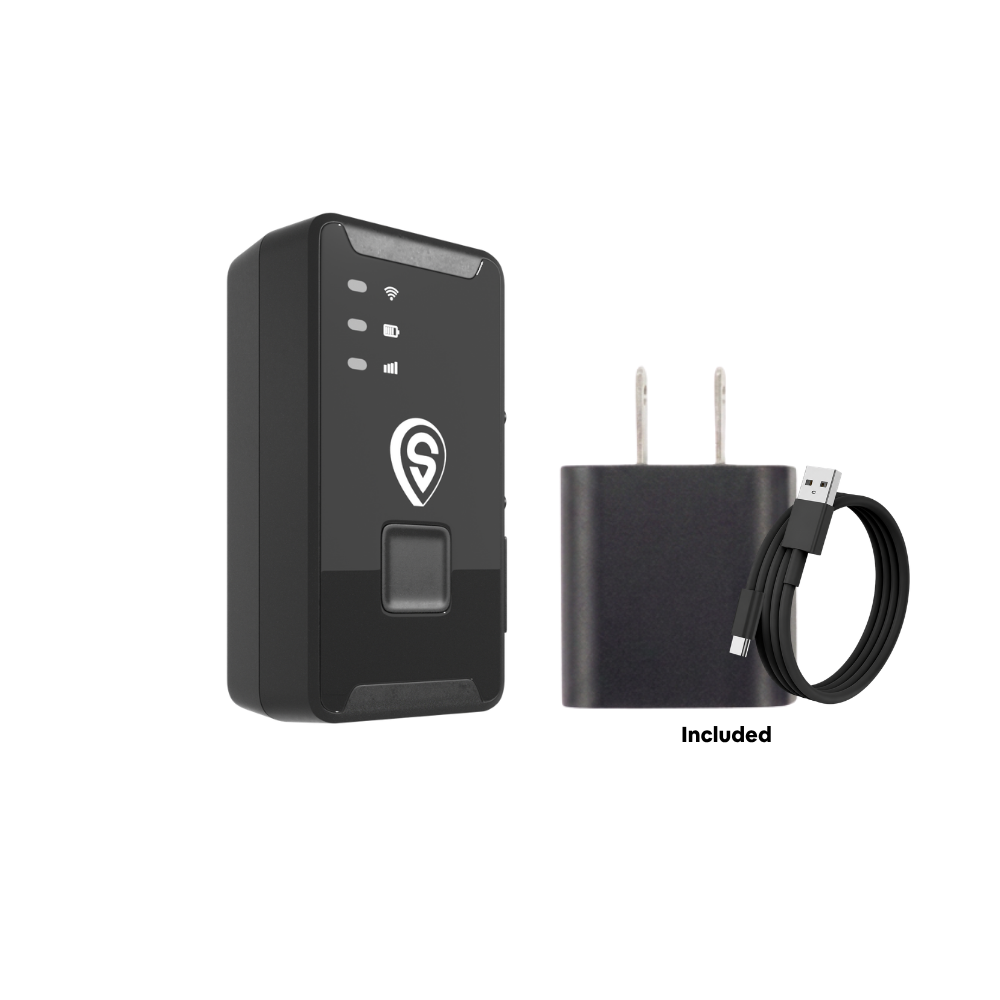
ShadowTrack updates every 5 seconds while moving, which is faster than any dedicated bike tracker on this list, and its magnetic, weatherproof mount snaps onto any metal frame in under 2 minutes with no tools. It won't hold to a full carbon frame the way it grips a steel or aluminum one, so it's a better fit for an e-bike, a motorcycle, or a cargo trike than a lightweight road bike, but for those heavier, higher-value rides it brings real vehicle-grade tracking to a category most bike-specific trackers weren't built to handle.
ShadowTrack
- Updates every 5 seconds while moving
- Weatherproof, magnetic mount
- Up to ~15 days per charge

Frequently Asked Questions
Which GPS tracker is best for a bike?
For most riders, the Invoxia Cellular GPS Tracker is the best overall pick because it gives real-time location over cellular networks instead of waiting on a nearby phone. If you want zero monthly fees, an Apple AirTag (iPhone) or Tile (Android) is the better fit.
What is the best GPS tracker without a subscription?
The Apple AirTag and Tile both skip monthly fees entirely, relying on Apple's Find My network or the Tile app's community network instead of a SIM card. The tradeoff is that neither offers true real-time tracking; both only update when another compatible device happens to pass nearby.
Can I put a GPS tracker on my bicycle?
Yes. Bike-specific trackers like the Knog Scout mount with anti-tamper screws, while general-purpose trackers like the AirTag, Tile, or LandAirSea 54 can be hidden under a bottle cage, inside the frame, or attached with a magnetic mount.
Does a GPS tracker for bikes need a SIM card?
Only cellular trackers need one. Invoxia, Cycloop, and LandAirSea 54 all use a SIM card for global tracking and cellular networks, which is what makes real-time updates and monthly fees necessary. Bluetooth trackers like the AirTag and Tile need no SIM card at all.
How long does a bike GPS tracker's battery last?
It varies widely by tracking type. Bluetooth trackers last the longest: the Apple AirTag runs up to a year and the Tile Sticker up to three years. Cellular trackers trade battery life for real-time updates; the Knog Scout runs 2-6 months per charge, while the Cycloop stretches that to about 12 months.
Can GPS trackers actually help recover a stolen bike?
Yes. Real-time location data from a GPS tracker gives police a concrete address to act on instead of a vague description, and several manufacturers, including Invoxia, work directly with private recovery services when a bike goes missing.
Riding something bigger than a bike?
If it's an e-bike, a moped, or a car or truck you actually drive, ShadowGPS gives you real-time tracking with no contract, ever.
This guide reflects pricing, specifications, and battery life figures published as of August 2026. Subscription pricing and features are subject to change by each manufacturer. ShadowGPS is not affiliated with Knog, Apple, Tile, Invoxia, Cycloop, or LandAirSea; product mentions reflect independent research.

