

You pat your back pocket at the checkout counter and there is nothing there. For about four seconds you stay calm. Then you start counting what was inside: two credit cards, your license, the cash you pulled out on Friday, the gym card, the parking pass you finally remembered to buy.
That gap between "my wallet is gone" and "I know exactly where it is" is the worst part of losing anything. Closing that gap is the entire job of a wallet tracker, and a good one closes it in about thirty seconds.
Here is the part most guides bury. There is no true GPS tracker for wallet use that is thin enough to live in a card slot. What actually works is a card style tracker riding on Apple's Find My network or the Android Find Hub network. This guide covers which wallet trackers are worth carrying in 2026, how far they really work, and the one situation where you genuinely need a real GPS tracker instead.
No wallet tracker sold today uses GPS. Every credit card shaped tracker uses a Bluetooth connection plus a crowdsourced network. For Apple users, the Apple AirTag (2nd generation) in a card holder is the strongest pick, because the Precision Finding feature walks you to the exact spot so you can quickly locate a misplaced wallet without tearing the house apart. For a true card slot fit, the Pebblebee Card 5 at 1.8 mm and the rechargeable Chipolo CARD are the two best wallet trackers. Android users on Galaxy phones should look at the Samsung SmartTag2, which connects up to 387 feet away. A real GPS tracker only makes sense once you move up from a wallet to a bag, a trailer, or your car.
The honest answer: a GPS tracker for a wallet does not exist
Search "gps tracker for wallet" and you will get a hundred product pages promising real time GPS in a card. Almost none of them are telling you the truth.
A real GPS tracker needs three things: a satellite receiver, a cellular modem to send that location somewhere, and a battery big enough to feed both. Stack those together and the smallest honest result is about the size of a matchbox, roughly 38 x 38 x 7 mm at the low end. A wallet tracker needs to be under 2 to 3 mm thick to sit in a card slot without ruining your leather.
The physics do not work. That is why every card style tracker you can actually buy uses Bluetooth instead, and why the listings that say "GPS" are usually describing the map pin in the app rather than the hardware inside the card.
For context on how often this comes up, one widely cited US survey found that Americans lose around five items a month and spend close to 17 hours a year in search of lost items. Wallets, keys, and phones sit near the top of that list every single time.
The good news is that this barely matters for a misplaced wallet. Ninety percent of the time your wallet is in the house, in the car, in a backpack, or at the restaurant you just left, and you just need to locate it fast. Bluetooth plus a crowdsourced network handles all three of those better than a GPS tracker would, and with no monthly fee attached.
How wallet trackers work
A wallet tracker is a small Bluetooth device with a radio that shouts its ID a few times per second. Your smartphone listens for it. When your smartphone hears the device, you can make it ring and locate it by sound, and the app shows you a live distance.
When you walk out of Bluetooth range, the tracker does not go dark. It keeps shouting, and any stranger's phone, tablet, or other devices that pass nearby will pick up that shout and quietly report the location back to you. Nobody sees your data, and nobody knows they helped.
This is called crowd-sourced tracking, and the size of the crowd is the single most important spec on any tracker. Apple's Find My network includes over a billion Apple devices worldwide. Android Find Hub taps the global pool of Android phones. Samsung's SmartThings Find runs on its own network of roughly 300 million devices, which is smaller but very dense in Galaxy heavy regions.
So the practical answer to "how do these trackers work" is that they borrow other people's phones. In a downtown or an airport, that means a location refresh every few minutes. On an empty rural road at 3 a.m., it can mean nothing at all until someone drives by.
GPS, Bluetooth, cellular, and satellite compared
These four technologies get lumped together as "GPS trackers" in product titles, and they behave nothing alike. Here is the difference in plain terms.
| Technology | How it finds your stuff | Real world range | Monthly fee | Fits a wallet |
|---|---|---|---|---|
| Bluetooth tracker card | Direct Bluetooth connection, then nearby phones relay the location | 30 to 500 ft direct, unlimited via the network | None | Yes, 1.8 to 2.5 mm |
| Bluetooth tag (AirTag style) | Same, plus ultra wideband for the Precision Finding feature | About 100 ft direct Bluetooth range | None | Only in a card holder |
| Cellular GPS tracker | Satellite fix sent over an LTE connection, independent of other phones | Unlimited anywhere with cell coverage | Yes | No, too thick |
| Satellite tracker | Satellite fix sent over a satellite uplink | Global, including off grid | Yes | No |
If you want the longer version of that comparison for vehicles specifically, we broke it down in GPS Tracker vs AirTag.
How we picked these wallet trackers

ShadowGPS builds real time GPS trackers for cars and trucks. We do not sell wallet trackers and we do not make one, so we have no reason to steer you toward a particular card. That also means we spend a lot of time answering emails from people who bought the wrong thing for the job, which is where most of this guide comes from.
We ranked the best bluetooth trackers for wallets on six features: thickness in a real bifold and money clip, network size, battery life on a single charge or sealed cell, speaker volume, separation alert features, and water resistance. Price mattered least, because every one of these sits between $25 and $40 and none of them charge a monthly fee.
Anything that needed a special sleeve, damaged a leather lining, or forced you to carry a proprietary charging cable got marked down.
The 6 best wallet trackers in 2026
1. Apple AirTag (2nd generation)
The Apple AirTag is not a tracker card. It is a 8 mm thick disc, and dropping one loose into a bifold creates a permanent bulge. Put it in a slim card holder and it becomes the most capable wallet tracker you can buy on Apple devices.
The reason is the Precision Finding feature. Once you are close, ultra wideband gives your iPhone an arrow, a distance in feet, and a haptic pulse that gets stronger as you close in. Many trackers can only ring and leave the rest to you. The AirTag can walk you to the couch cushion.
Apple refreshed it in January 2026 with a second generation ultra wideband chip. Precision Finding now works from up to 50 percent farther away, the speaker is up to 50 percent louder, and Precision Finding runs natively on Apple Watch Series 9 and Ultra 2 or newer. The price stayed at $29 and the user replaceable CR2032 still lasts about a year.
Pros
- Only wallet option with true Precision Finding
- Largest network of any tracker, over a billion Apple devices
- User replaceable battery, IP67 water resistance
Cons
- Far too thick for a slim wallet without a holder
- No Android support at all
- Bluetooth range of about 100 feet is mid pack


Best for: iPhone users who want the fastest possible recovery of a misplaced wallet inside a house, office, or restaurant, and who do not mind a card holder.
2. Pebblebee Card 5
At 1.8 mm the Card 5 is the thinnest wallet tracker on the market, roughly two credit cards stacked. In a bifold you genuinely forget it is in there, which is the whole point of card style trackers.
It is also the most flexible. You pick either Apple's Find My or Android Find Hub at setup, so it fits apple or android users equally well, though it cannot run on both networks at the same time. Bluetooth range reaches up to 500 feet in open air, a longer range than any of the other trackers on this list.
The battery lasts up to 18 months per single charge and tops up on any Qi pad, so there is no proprietary cable to lose. That is a real advantage over sealed trackers you have to throw away and repurchase every two or three years.
Pros
- 1.8 mm, thinner than every major rival
- Up to 18 months of long battery life, Qi rechargeable
- Works with Apple's Find My or Android Find Hub
Cons
- No ultra wideband, so no precision finding
- You must pick one network, not both
- Splash resistant only, do not put it through the wash

Best for: anyone carrying a slim wallet or money clip where every half millimetre shows, and anyone who might switch between platforms later.
3. Chipolo CARD
Chipolo has been building bluetooth tracker hardware since 2013, and the CARD is the most polished tracker card of the current generation. It recharges wirelessly on any Qi, Qi2, or MagSafe pad, which means the same pad your phone already sits on.
Battery life runs about six months per charge, shorter than the Pebblebee but still a twice a year job you can attach to a calendar reminder. The Chipolo Card carries an IP67 rating against dust and water, the best water resistance of any card here.
Bluetooth range stretches up to 400 feet, and the speaker is loud enough to hear through a couch. If you want the sealed and forget it version instead, the older CARD Spot for Apple devices runs about two years before it needs recycling.
Pros
- Qi, Qi2, and MagSafe charging with no cable to lose
- IP67 rated, the most durable card on this list
- Loud speaker and reliable separation alerts
Cons
- Six months per charge, shorter than rivals
- Model naming across CARD, CARD Spot, and CARD Point is confusing
- Costs a little more than a Tile Slim

Best for: people who already drop their phone on a wireless pad every night and want the tracker to top up in the same spot.
4. Tile Slim
Tile trackers were the original wallet trackers, and the Slim is still the easiest one to hand to a household where some people carry android phones and some carry iPhones. Tile runs its own network and its own app, so the same features work identically for apple or android users.
The current Slim measures 3.36 by 2.12 by 0.09 inches, carries an IP68 rating, and runs three years on a sealed battery. There is nothing to charge and nothing to swap until it simply expires.
The trade off is that Tile's network is smaller than Apple's or Google's, and some of the more useful extras like smart alerts sit behind a subscription. Tile Mate, the keyring version, has a Bluetooth range of 133 feet if you want to attach one to your keys as well, so a wallet, keys, and a laptop bag all live in one app.
Pros
- Identical experience on iPhone and android devices
- Three year sealed battery, zero maintenance
- IP68 rating, the toughest card here
Cons
- Smaller network than Apple's Find My or Find Hub
- Some features are gated behind a paid plan
- Not rechargeable, so it becomes e-waste at year three

Best for: mixed households, and anyone who wants one app covering a wallet, keys, luggage, and a backpack without thinking about which phone is which.
5. Samsung SmartTag2
If your household runs on Galaxy phones, the SmartTag2 is the obvious answer. It connects up to 387 feet away, the longest direct Bluetooth range of any mainstream tag, and it leans on Samsung's SmartThings Find network of around 300 million devices.
It is a tag rather than a card, so it needs a holder or a slot in a bag rather than a card slot. Battery life is excellent and the app's location history features are strong, showing everywhere the device has been rather than only where it is now.
One thing to know before you buy: the SmartTag2 does not work with Android Find Hub. It only works inside Samsung's own ecosystem, so it is the wrong pick for a Pixel or a Motorola.
Pros
- Longest direct Bluetooth range at 387 feet
- Strong location history and geofence style alerts
- Very long battery life on a replaceable cell
Cons
- Samsung phones only, no Pixel or iPhone support
- Tag shape, not a tracker card
- Smaller network than Apple's or Google's

Best for: Galaxy owners who want the longest Bluetooth connection and detailed location history in an app they already have.
6. UAG Metropolis Dual Tracker Card and Innway Card
Two niche cards solve specific problems better than the mainstream picks.
The UAG Metropolis Dual Tracker Card has a 95 decibel speaker, which is louder than anything else in this category and genuinely useful if you lose stuff inside a noisy house or a car with the engine running. It maintains a Bluetooth connection up to 65 feet, which is short, and lasts five to six months between charges.
The Innway Card Find My is rechargeable via Qi or MagSafe and is one of the slimmest options for people who want a plain, no fuss card on Apple's Find My. Neither of these gets recommended over the top five, but both are reasonable if a loud alarm or a specific thickness is your deciding factor.

Best for: a loud speaker above all else, or a minimal Apple only card at the thinnest possible profile.
Wallet tracker comparison chart
Every one of the best bluetooth trackers below runs with no monthly fee. Prices move around a lot, so it is worth watching for deals in the run up to the holidays. The ShadowGPS rows are cellular trackers, included so you can see exactly where the two categories separate.
| Tracker | Type | Direct range | Battery | Network | Ongoing cost |
|---|---|---|---|---|---|
| Apple AirTag (2nd gen) | Bluetooth + UWB tag | About 100 ft | ~1 yr, replaceable CR2032 | Apple's Find My | None |
| Pebblebee Card 5 | Bluetooth tracker card | Up to 500 ft | Up to 18 months, Qi | Find My or Find Hub | None |
| Chipolo CARD | Bluetooth tracker card | Up to 400 ft | ~6 months, Qi/MagSafe | Find My or Find Hub | None |
| Tile Slim | Bluetooth tracker card | ~250 ft | 3 yrs, sealed | Tile network | Optional plan |
| Samsung SmartTag2 | Bluetooth tag | Up to 387 ft | ~1 yr, replaceable | SmartThings Find | None |
| ShadowTrack | 4G LTE GPS tracker | Unlimited with coverage | ~15 days per charge | Cellular, no crowd needed | $12–$15/mo, no contract |
| ShadowAuto | 4G LTE OBD-II GPS tracker | Unlimited with coverage | Vehicle powered | Cellular, no crowd needed | $12–$15/mo, no contract |
When a wallet tracker is not enough
A tracker card is perfect for a misplaced wallet. It is the wrong tool the moment the thing you are looking for is moving and you are not near it.
The difference is who does the reporting. Bluetooth trackers work only when a stranger's phone walks past. A cellular GPS tracker reports its own position, on its own schedule, from anywhere with coverage. If your car is being driven away, "wait for a passerby" is not a plan.
That is the line where ShadowGPS starts. We do not make wallet trackers, and we would not tell you to buy a vehicle tracker for a bifold. But if what you actually want to protect is your car, your work truck, a trailer, or a bag full of tools, the answer is different.
ShadowTrack, for bags, luggage, and gear that moves
ShadowTrack is a battery powered tracker you can drop into a backpack, a duffel, a piece of luggage, or a tool case. There is no OBD port needed, so it goes wherever the asset goes. You place the device, it reports, you know. That is the peace of mind people are really buying.
It updates every 5 seconds while moving, which is the part that changes how it feels to use. You are not refreshing a map hoping a stranger walks by. You are watching it move. The battery runs about 15 days on a single charge.
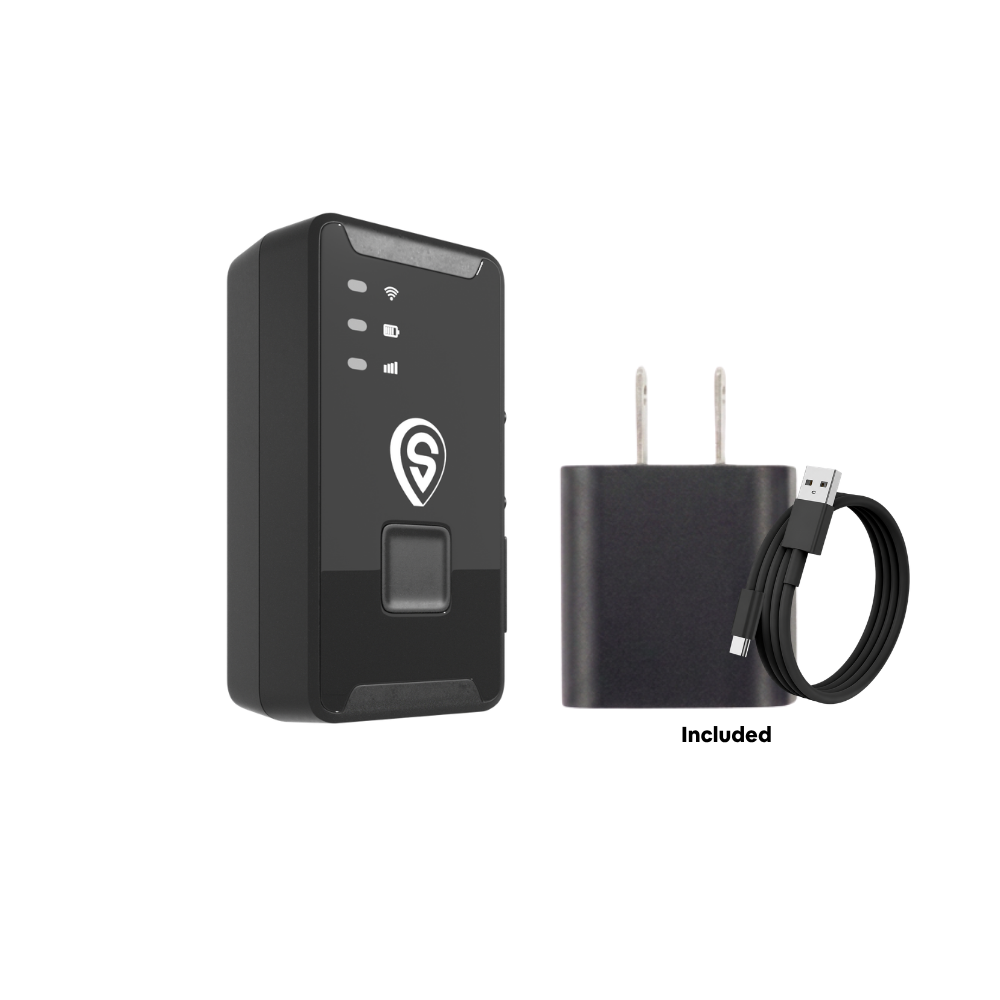
ShadowTrack
- Updates every 5 seconds while moving
- Weatherproof, magnetic mount
- Up to ~15 days per charge

ShadowAuto, for the car the wallet was probably left in
More often than people admit, a lost wallet is sitting in a car that is somewhere else. A parked car at a friend's house, a car a teenager took, a car handed to a Turo guest.
ShadowAuto plugs into the OBD-II port under your dash. It takes under two minutes, no tools and nobody to book. From then on you get live location, a trip timeline, trip replay, a Car Alarm for unexpected movement, and engine diagnostics.
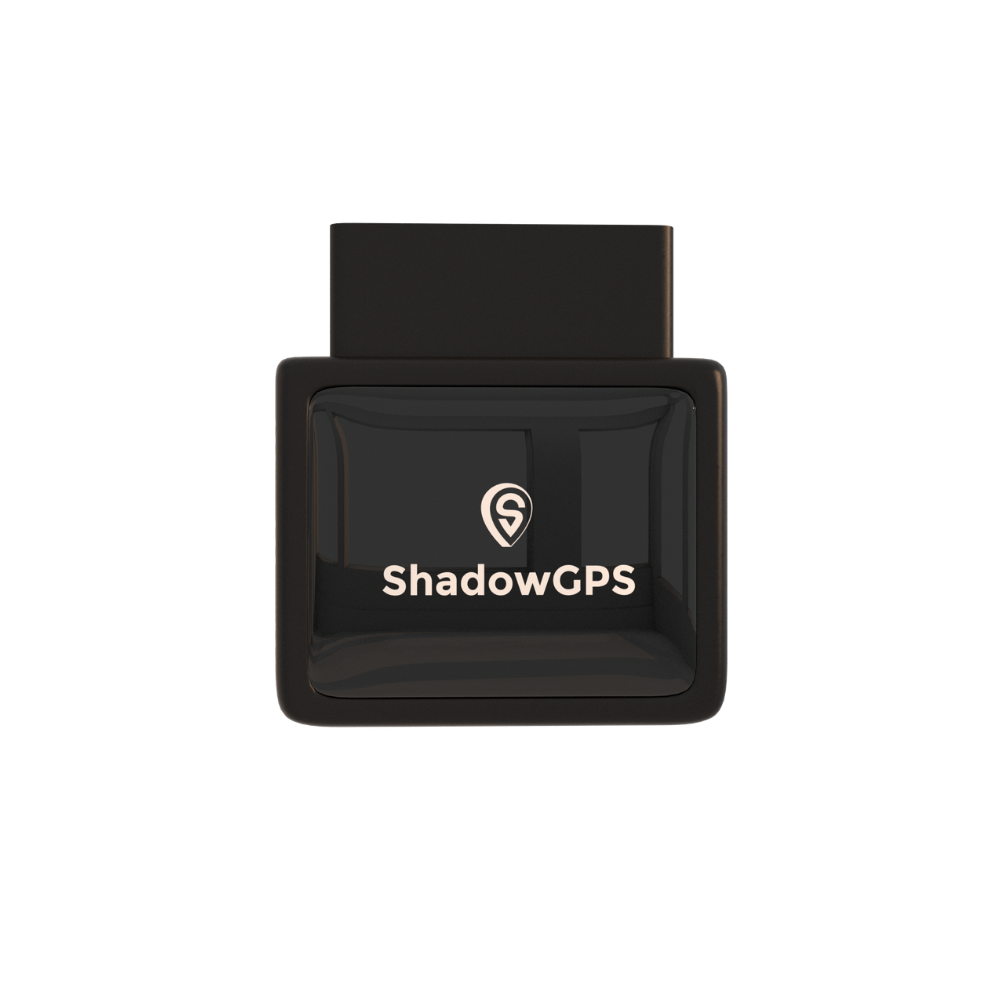
ShadowAuto
- Live tracking, trip timeline and trip replay
- Car Alarm and vehicle diagnostics
- Plug it in, under two minutes, no tools
Both plans run $12 to $15 a month with a 14-day free trial, and there is no contract, ever. You can see the full breakdown on our pricing page.
The magnetic case, for attaching a tracker to something that is not a car
If you want to clip a tracker onto a bag, a trailer hitch, or a toolbox, the Magnetic Mount Weatherproof GPS Case gives ShadowTrack a hard shell and a strong magnet. It is a one time purchase with nothing recurring attached.
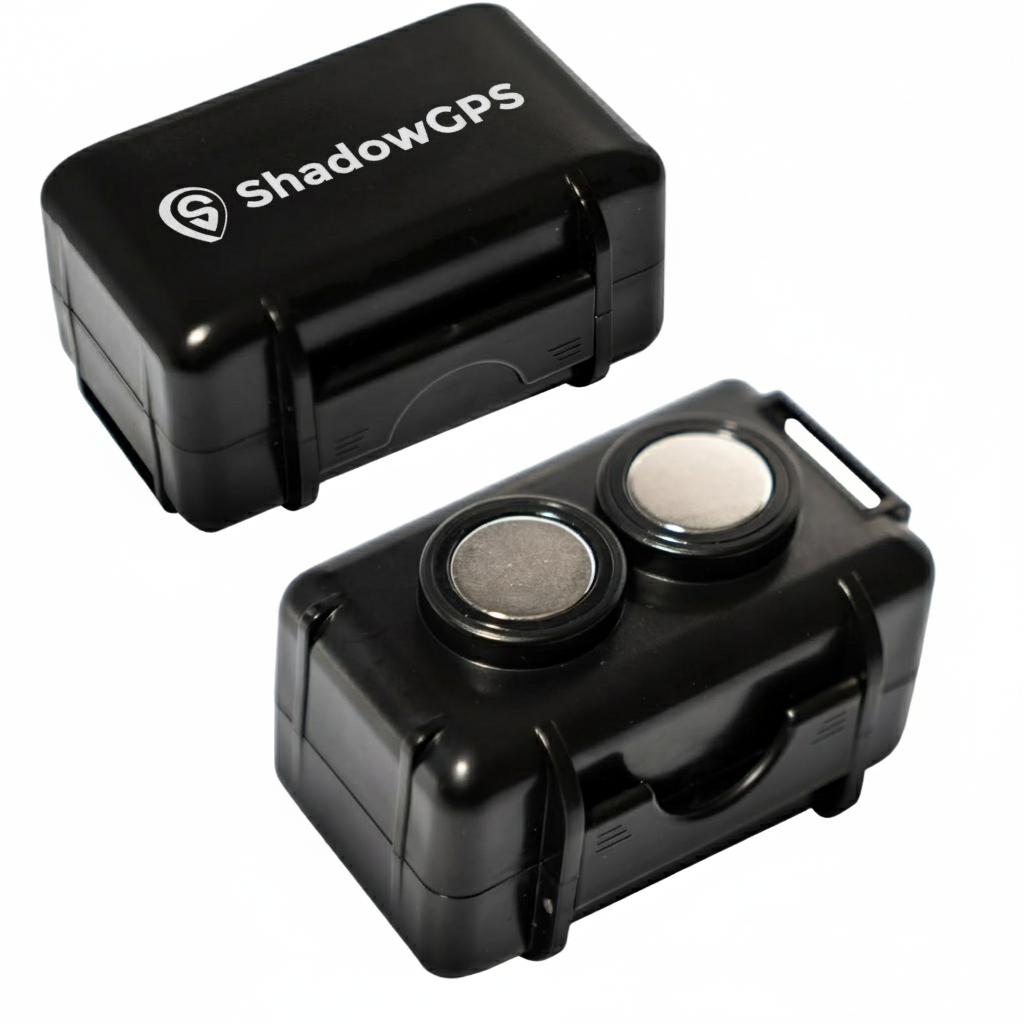
Magnetic Mount Weatherproof GPS Case & Key Holder
- Neodymium magnet mount
- Weatherproof housing
How to choose a wallet tracker: a 7 point checklist
Run any tracker card through these seven questions about size, network, and features before you buy. If the device fails two or more, keep looking.
- Is it under 3 mm and credit card shaped? Anything thicker bends the cards around it and stretches the slot permanently.
- Does it use a native phone network? Apple's Find My and Android Find Hub are the two that matter. A tracker on a small proprietary network is a tracker with a small crowd behind it.
- How loud is the speaker? The difference between 90 and 105 decibels is the difference between finding your wallet under a car seat and not.
- Rechargeable or sealed? Rechargeable cards avoid buying a replacement every two or three years. Sealed cards avoid ever thinking about it.
- Does it have separation alert features? A tracker that pings you when you walk away from the table is worth more than a device that only helps after you already lose the wallet.
- What is the water resistance? IP67 or IP68 survives a coffee spill and a rainy walk to the car. IPX5 does not survive a washing machine.
- Does it demand a monthly fee? No wallet tracker should. If a card style tracker asks for a subscription just to show you a location, walk away.
Setting up a wallet tracker in five minutes
Every card in this guide sets up roughly the same way. The whole thing takes less time than making coffee.
- Charge it first. Rechargeable cards ship partly charged. Give it an hour on the pad before you rely on it.
- Pair it. On Apple devices, hold it near your unlocked iPhone and the Find My prompt appears. On android phones, open Find Hub and add a device. Some cards need a double press of the button to enter pairing mode.
- Name it something obvious. "Wallet" beats "Item 1" when you are panicking in a parking lot and trying to locate the right card in a list of keys, bags, and earbuds.
- Turn on separation alerts and mark your house as a safe zone. Otherwise your phone nags you every time you leave the wallet on the kitchen counter on purpose.
- Test it before you need it. Leave the wallet in a drawer, walk to the end of the street, and try to locate it. Confirm the Bluetooth connection drops and picks back up the way you expect, and that the device rings loudly enough to hear from the next room.
The first fifteen minutes after you lose your wallet
This is the part nobody rehearses. Having a sequence saves you from doing five things badly at once.
- Open the app and check "last seen" before you move. The last known location and its timestamp tell you whether this is a house problem or a city problem.
- Ring it. If you can hear it, you can locate it, and you are done. This ends the search in the large majority of cases.
- If you are close and on a compatible iPhone, use precision finding. Follow the arrow. The Precision Finding feature is much faster at locating lost items than sound alone in a cluttered room, especially where other devices and clutter muffle the speaker.
- If it shows a location across town, do not drive there yet. Mark it as lost in the app first. Lost Mode locks it to your account and lets a finder tap it with their phone to see your contact note.
- Freeze the cards. Most banking apps have a freeze switch that is reversible in one tap. Freeze first, cancel later, once you know the wallet is truly gone.
- Check location history. A trail of pings tells you whether your wallet is sitting still in a restaurant or moving down a bus route.
- Call the last place you were. Roughly forty percent of lost items turn up in public places like restaurants, airports, and transit, and most of the people who find them try to hand them in.
The one thing to do today
Write your phone number on a slip of paper and put it in the cash pocket. A tracker tells you where your wallet is. A phone number tells a stranger how to give it back to you. Together they recover far more lost wallets than either does alone.
Privacy, anti stalking features, and the law
Tracking technology cuts both ways, and both Apple and Google have built anti stalking features into their networks. It is worth knowing how they work, whether you are protecting your own stuff or worried about someone else's tag.
- What you can do. Tracking your own wallet, keys, luggage, bags, or a vehicle titled in your name is legal across the United States.
- Unknown tracker alerts are on by default. Both iPhone and Android phones warn you if an unfamiliar tag appears to be travelling with you, and Android's alerts cover Find Hub tags and Apple AirTag together.
- What you cannot do. Slipping a tracker into someone else's bag or onto a car you do not own may violate privacy and stalking laws, whatever your reason.
- Do not rely on a tracker to confront a thief. If a tracker shows your wallet or your car at an address you do not recognise, that is information for the police, not a reason to knock on a door.
Google publishes step by step guidance on finding and disabling unknown trackers, and Apple documents the current AirTag hardware on its tech specs page.
Five mistakes people make with wallet trackers
Buying a listing that says GPS. If the price is under $40 and there is no monthly fee, it is not a GPS tracker. It is a bluetooth tracker with a map screen.
Choosing the wrong network for your phone. A Samsung tag on a Pixel is useless. Match the tracker to the network your phone actually belongs to before anything else.
Ignoring separation alerts. Most people set up the device and never turn on the one set of features that stops you losing the wallet in the first place.
Letting the battery die quietly. A tracker with a dead cell is a piece of plastic. Rechargeable cards should get a charge on the same day you change your smoke alarm batteries.
Expecting a wallet tracker to protect a car. This is the single most common mistake we see, and we wrote a whole piece on why AirTags fail for cars.
Which tracker fits your situation
You lose your wallet around the house
A tracker card with a loud speaker is all you need. Ring it from your smartphone, follow the sound, and get on with your day. That is cheap peace of mind with no monthly fee.
You travel and check bags
Put a card in the wallet and a tag in your bags. Both networks work worldwide, and Find Hub can share a luggage tag's location with an airline, which is real peace of mind at a baggage carousel.
You are protecting a vehicle
Bluetooth stops being enough. A cellular tracker reports on its own, so you are not waiting on a stranger's phone to walk past your car.
The same logic applies well beyond a wallet. A tag is right when the item is probably nearby and stationary. A cellular tracker is right when the item is moving and you are not. That is also why pet owners use cellular collars rather than tags when a dog wanders past the yard, and why a tracker card is fine for a set of keys in the house.
Frequently asked questions
What is the best GPS tracker for a wallet?
There is no true GPS tracker thin enough for a wallet. The best wallet tracker for iPhone users is the Apple AirTag (2nd generation) in a card holder, because of its Precision Finding feature. For a genuine card slot fit, the Pebblebee Card 5 at 1.8 mm and the Chipolo CARD are the strongest picks, and both work with Apple's Find My or Android Find Hub.
How far does a wallet tracker work?
Direct Bluetooth range runs from about 65 feet on short range cards up to 500 feet in open air on the best ones. Beyond that there is no hard limit, because the tracker switches to the crowdsourced network and any nearby phone can report its location back to you. Range in practice depends far more on how many phones are around than on the tracker's own radio.
Do wallet tracker cards really work?
Yes, for the thing they are designed to do. In a house, an office, a restaurant, or a car park, a tracker card will find a misplaced wallet quickly and reliably. They are far weaker in empty rural areas where no other phones pass by, and they are not a theft recovery tool.
What is the thinnest wallet tracker?
The Pebblebee Card 5 at 1.8 mm is the thinnest widely available wallet tracker in 2026. The Chipolo CARD Spot and Tile Slim sit around 2.3 to 2.4 mm, which is roughly two stacked credit cards and still comfortable in most wallets.
What is the smallest GPS tracker you can buy?
The smallest real time GPS trackers are roughly matchbox sized, because the device has to hold a satellite receiver, a cellular modem, and a battery. No device at that size fits a card slot. If you need something small enough to hide in a bag or a glovebox rather than a wallet, that is the category to shop in.
Is there a tracker you can put in your wallet?
Yes. Card style trackers are built specifically to sit in a standard credit card slot. Pebblebee, Chipolo, and Tile all make one, and they are the same shape and roughly the same thickness as a couple of bank cards.
Is a GPS tracker better than an AirTag?
They solve different problems. An AirTag is better for locating lost items near you, because it is free to run and has Precision Finding. A cellular GPS tracker is better for anything moving, because it reports its own position every few seconds instead of waiting for a stranger's phone to pass by. For a wallet, the AirTag wins. For a car, it does not.
Do wallet trackers need a monthly fee?
No. Bluetooth wallet trackers have no monthly fee because they do not use cellular data. Only Tile puts some features behind a paid plan. Cellular GPS trackers do carry a monthly fee, since they need their own connection. ShadowGPS plans run $12 to $15 a month with a 14-day free trial and no contract, ever.
Does a wallet tracker need a SIM card?
No. A bluetooth tracker has no SIM and no cellular radio at all, which is exactly why it can be so thin and why it costs nothing to run. Cellular GPS trackers do need one, though it usually ships already installed and activated. We covered this in detail in our guide to whether a GPS tracker needs a SIM card.
Can I use a wallet tracker on Wi-Fi instead of Bluetooth?
Not directly. Wallet trackers connect over Bluetooth only. Wi-Fi and cell data come into it on the phone side, since the phone that spots your tracker needs an internet connection to report the location. That is why a tracker still works in a mall or an airport where you personally have no signal.
Will a wallet tracker survive the washing machine?
Probably not. IP67 and IP68 cards handle rain and spills, and the Tile Slim's IP68 rating is the toughest here, but a full wash cycle combines water, heat, and mechanical stress. Treat water resistance as spill protection rather than a guarantee.
What is the best tracker device for wallets if I keep switching phones?
Tile Slim, because the app and the network are the same on both platforms so nothing changes when you switch. The Pebblebee Card 5 is the other good answer, since you can move it between Apple's Find My and Find Hub, though you have to reset it to change networks rather than running both at once.
For more on picking small trackers for the things that matter, see our guide to the best mini GPS trackers, and our explainer on whether a GPS tracker needs a SIM card.
The bottom line
Buy a tracker card for your wallet. All five of the wallet trackers above will locate a misplaced wallet faster than you can retrace your morning, whichever features matter most to you, and none of them charge a monthly fee. The next time you lose it, knowing it is on the kitchen counter is worth thirty dollars on its own.
Just do not ask that card to do a job it was never built for. The moment what you are protecting has wheels, the answer changes from "wait for a passerby" to "watch it move."
Your wallet needs a card. Your car needs a tracker.
Plug it in, see it move, cancel any time. 14-day free trial, and no contract, ever.
Pricing and specs current as of August 2026 and subject to change; confirm current pricing, thickness, and battery specifications on each product page before purchase. Third party wallet tracker specifications are taken from manufacturer documentation and independent reviews published between 2024 and 2026. Amazon links are affiliate links; ShadowGPS may earn a commission at no extra cost to you. ShadowGPS does not manufacture or sell wallet trackers, and the wallet tracker picks above reflect editorial judgement rather than a product we have a financial stake in. Lost item statistics reflect published survey figures from 2023 to 2024. Legal guidance is general information, not legal advice; confirm the tracking laws in your state.

