

A car that goes missing, even for an hour, has a way of putting everything else on hold. Maybe it's a teenager who took the car out an hour ago and isn't answering texts. Maybe it's a truck that didn't show up where it was supposed to. Maybe it's a Turo rental that's three hours late for its return.
In every one of those moments, the question is the same: where is it, right now?
That's the gap a good GPS tracker for car use is built to close - not with a gadget or a feature list, but with a straight answer, fast. We compared the trackers people actually search for in 2026 on the things that matter when you're staring at your phone waiting for an answer: how quickly the location updates, whether there's a monthly fee hiding behind the price tag, how hard it is to get running, and whether it's built to last.
The best GPS tracker for car use in 2026 is ShadowGPS. Both of its trackers - ShadowAuto (plugs into the OBD-II port) and ShadowTrack (battery-powered, magnetic mount) - update your car's location every 5 seconds while it's moving, on every plan, with no contract, ever. Bouncie is the better call if you want the lowest possible monthly fee. Life360 fits families who'd rather track a phone than a car.
How We Evaluated the Best GPS Trackers for Cars
Every tracker on this list was checked against the same five things, because these are the questions that actually decide whether a tracker earns its spot in your glovebox or gets returned in two weeks:
We pulled specs from manufacturer documentation, verified on-site and third-party reviews, and pricing pages as published in 2026. Where a brand's pricing is tiered by update speed, we've noted the range so you're comparing real numbers, not headline prices.
Best GPS Tracker for Car: Our Top Picks for 2026
1. ShadowGPS ShadowAuto
ShadowAuto plugs into your car's OBD-II port - the same port a mechanic uses to pull diagnostics - and takes under 2 minutes, no tools, no appointment. Once it's in, it draws power from your car, so there's no battery to charge or replace, ever.
From there, it updates your car's location every 5 seconds while it's moving - the fastest refresh rate standard on any plan in this category. Beyond location, it reads engine diagnostics, keeps a full trip timeline you can replay stop by stop, and includes Car Alarm, which flags movement or a disconnect attempt the moment it happens.
Pros
- 5-second refresh, standard on every plan
- No contract, ever - cancel any time
- Zero maintenance - vehicle-powered, never charges
- Vehicle diagnostics plus Car Alarm
Cons
- Needs an OBD-II port (most cars 1996+)
- Costs more per month than bare-bones budget trackers
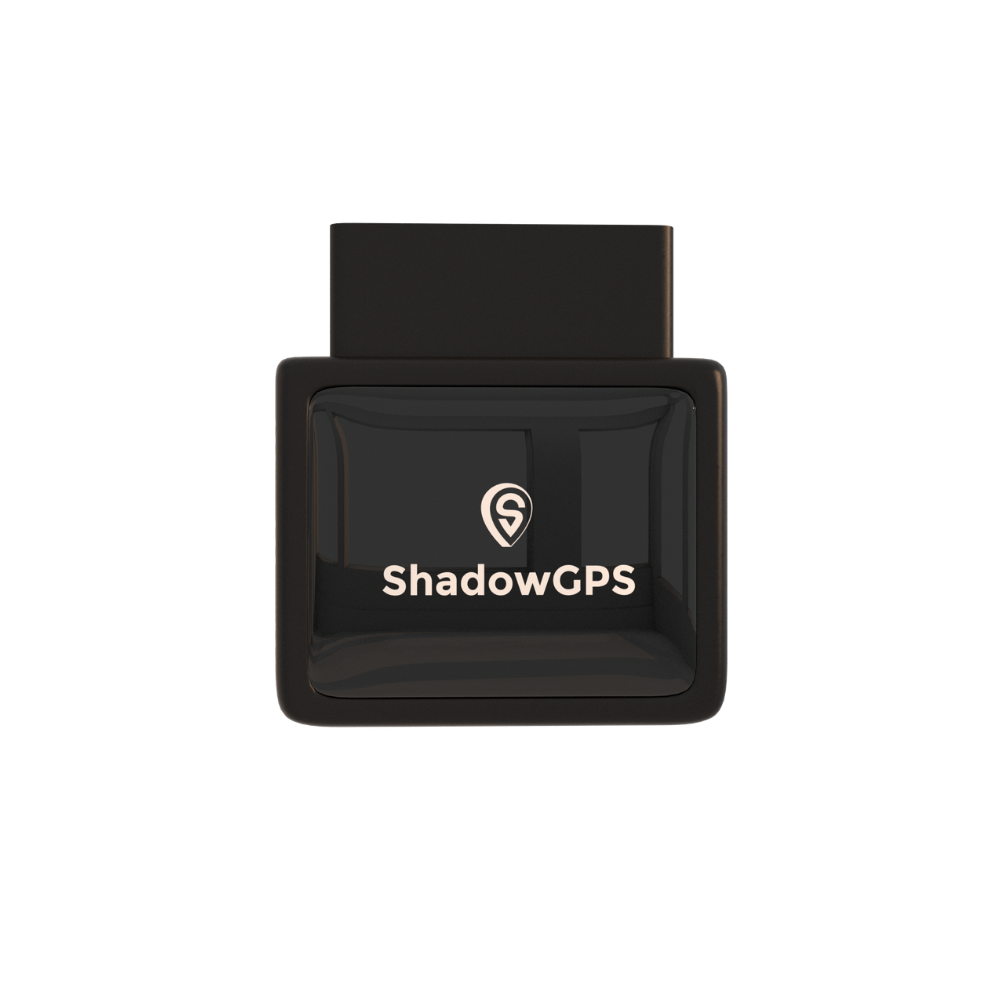
ShadowAuto
- Updates every 5 seconds while moving
- Trip timeline & trip replay
- Car Alarm & vehicle diagnostics

Best for: everyday drivers, parents of a new teen driver, and Turo hosts who want a permanent tracker that doubles as theft protection.
2. ShadowGPS ShadowTrack
Not every vehicle has an OBD-II port worth using - trailers, equipment, and older vehicles don't. ShadowTrack solves that with a magnet-mount, weatherproof case you can hide almost anywhere in under 2 minutes, no wiring required.
It runs on a rechargeable battery good for around 15 days per charge, and it updates on the same 5-second refresh as ShadowAuto while moving.
Pros
- Same 5-second refresh as ShadowAuto
- Goes anywhere - no wiring, no OBD port needed
- Weatherproof, magnetic, under 2 minutes to place
- No contract, ever
Cons
- Battery needs recharging roughly every 15 days
- Costs more than basic magnetic-only trackers
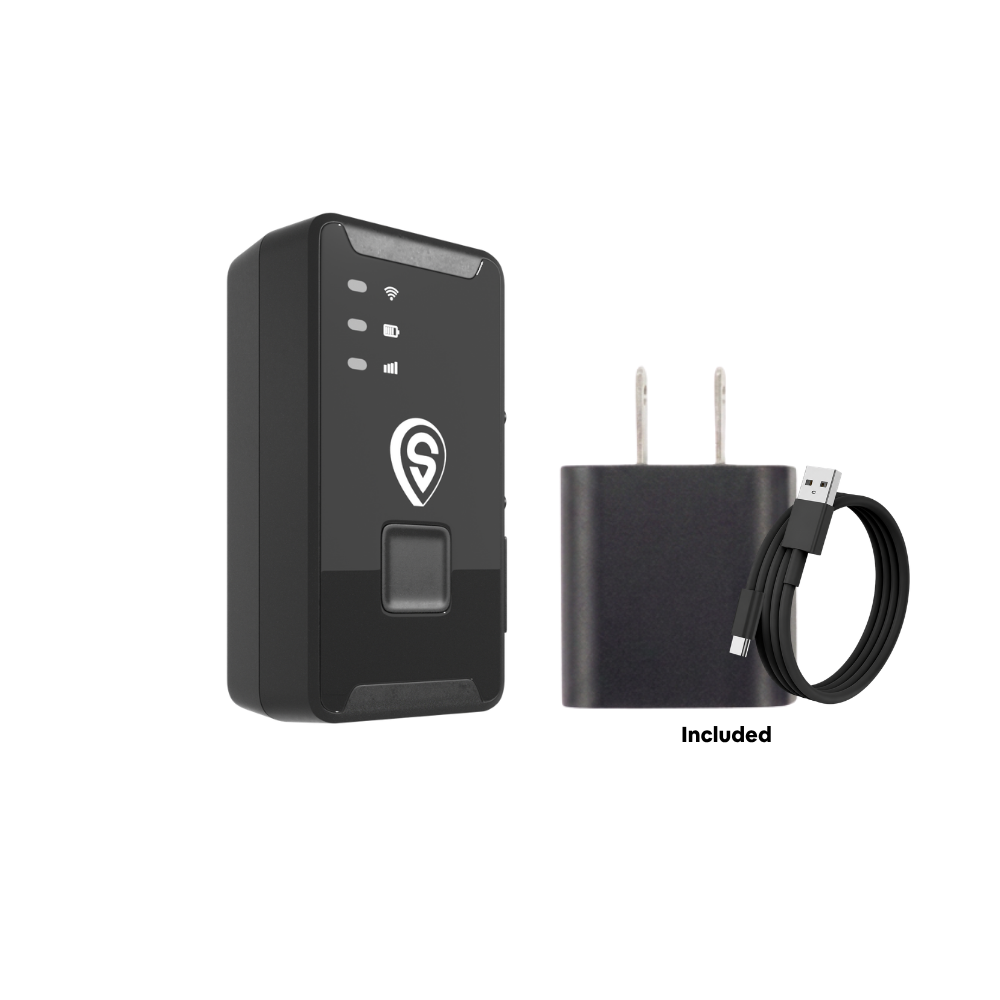
ShadowTrack
- Updates every 5 seconds while moving
- Weatherproof, magnetic mount
- Up to ~15 days per charge
Best for: trailers, equipment, seasonal vehicles, or anyone who wants a tracker that isn't permanently wired in.
3. Bouncie: Best Budget-Friendly OBD Tracker
Bouncie is a legitimate pick if the monthly fee is your first and only concern. At $9.00–$9.65 a month, it undercuts almost everything else on this list, and it plugs into the OBD-II port just as easily as ShadowAuto.
The tradeoff is speed and durability: Bouncie updates roughly every 15 seconds, about three times slower than ShadowGPS's standard rate, and because it's OBD-only, it stops reporting entirely the moment it's unplugged.
Pros
- Lowest monthly fee on this list
- Easy OBD plug-in, no tools
- Strong app-store ratings
Cons
- 15-second refresh, 3x slower than ShadowGPS
- Stops reporting the moment it's unplugged
- Trustpilot shows a billing/support satisfaction gap


Best for: budget-first buyers who only need one OBD tracker and don't need a backup form factor.
4. Tracki: Best for Multi-Purpose Tracking
Tracki isn't built vehicle-first, it's a universal tracker also marketed for pets, luggage, and people, which shows up in its tiered update speeds (10 seconds to 1 hour depending on plan) and worldwide cellular coverage.
Its cheapest rate requires a 2-year commitment, and its fastest paid tier (10 seconds) still runs slower than ShadowGPS's standard 5-second rate at less than half the price.
Pros
- One tracker covers vehicles, pets, people, luggage
- Worldwide cellular coverage
Cons
- Cheapest rate requires a 2-year commitment
- Battery drops to 2–5 days on fast settings
- Reports of billing/cancellation issues

Best for: households that want one tracker to cover a vehicle and other belongings, and don't mind a longer commitment for the lowest rate.
5. Spytec: Best for Brand Recognition in Discreet Tracking
Spytec has built a name for itself in the discreet, magnetic-tracker niche, and its hardware reflects that focus: small, easy to hide, and simple to set up.
The catch is pricing. Its base plan updates only every 60 seconds, the 5-second refresh ShadowGPS includes standard is a $45/month upsell on Spytec's Elite tier.
Pros
- Established name in discreet tracking
- Small, easy to place
Cons
- Base plan only updates every 60 seconds
- 5-second speed costs $45/mo
- Cancellation requires email approval

Best for: buyers who specifically want Spytec's brand and don't mind paying a premium for fast updates.
6. LandAirSea 54: Best Heritage, Made-in-USA Pick
LandAirSea has been in the tracking business longer than most competitors, and its 54 model leans on that heritage along with a magnetic, waterproof case that holds up well outdoors.
Its base plan is slow, location updates every 3 minutes, and matching ShadowGPS's 5-second refresh requires stepping up to its top $49.95/month tier.
Pros
- Long-running, well-known US brand
- Waterproof magnetic case
Cons
- Base plan updates only every 3 minutes
- 5-second parity costs $49.95/mo
- Reviewers report surprise monthly charges after a prepay promo ends

Best for: buyers loyal to a long-running American brand who are comfortable with a base plan that updates in minutes, not seconds.
7. Life360: Best for Family Location Sharing
Life360 isn't a vehicle tracker at all, it tracks the phone in the car, not the car itself. For families who mainly want to see where everyone is on a shared map, that distinction may not matter much day to day.
The limitation shows up the moment the phone is left behind, turned off, or out of battery, the car's location and the phone's location stop being the same thing.
Pros
- Great for sharing locations across a family group
- No contract
Cons
- Tracks the phone, not the vehicle
- Breaks down if the phone is dead or left behind
Best for: families who want a shared map of people, not a dedicated tracker on a specific vehicle.
8. BrickHouse: Best for Small Commercial Fleets
BrickHouse leans commercial, with tiered plans built around personnel and fleet use rather than a single family car. Pricing climbs quickly once you're covering more than a couple of vehicles.
Pros
- Built for commercial and personnel fleets
- Tiered enterprise-style features
Cons
- Cost compounds quickly per vehicle
- Signal drop-outs reported in weak-coverage areas
- Overkill for a single vehicle
Best for: larger commercial or personnel-tracking fleets, not single-vehicle owners.
Comparison Table: Best GPS Trackers for Car, Side by Side
| Tracker | Best For | Refresh Rate | Monthly Fee | Contract |
|---|---|---|---|---|
| ShadowGPS ShadowAuto | Best overall / theft protection | 5 sec (standard) |
Plans $10-$13/mo (4+ trackers) or $12-$15/mo |
None, ever |
| ShadowGPS ShadowTrack | Hidden or portable placement | 5 sec (standard) |
Plans $10-$13/mo (4+ trackers) or $12-$15/mo |
None, ever |
| Bouncie | Lowest monthly fee | ~15 sec | $9.00–$9.65 | None |
| Tracki | Multi-purpose tracking | 10 sec–1 hr (tiered) | $9.95–$30 | 2-yr for best rate |
| Spytec | Discreet tracking, brand recognition | 60 sec–5 sec (paywalled) | $25–$45 | None |
| LandAirSea 54 | Heritage, Made-in-USA | 3 min–3 sec (tiered) | $9.95–$49.95 | 2-yr for best rate |
| Life360 | Family location sharing | Real-time (phone-based) | $14.99–$24.99 | None |
| BrickHouse | Small commercial fleets | Tiered by plan | $17.99–$34.99 | None |
GPS Tracker for Car: Key Features That Actually Matter
Refresh Rate: The Difference Between "Where It Was" and "Where It Is"
A tracker that updates every 60 seconds or 3 minutes is showing you history, not a live location. In the time between updates, a car can turn a corner, leave a parking lot, or get well down the highway. A 5-second refresh is close enough to real time that the map on your phone matches what's actually happening.
OBD-II vs. Battery-Powered: Which Form Factor Fits Your Vehicle
An OBD-II tracker plugs into the same port under your dashboard that a mechanic uses, draws power from your car, and never needs charging. The tradeoff is that it stops reporting the moment it's unplugged. A battery-powered, magnetic tracker can go almost anywhere, including trailers and equipment without an OBD port, but needs a recharge every couple of weeks depending on the model.
Monthly Fee vs. Contract Length
Almost every real-time GPS tracker for car use comes with a monthly fee, that's what pays for the cellular data connection sending the location to your phone. The real question isn't whether there's a fee; it's whether you're locked into a 12- or 24-month contract to get a fair rate, or free to cancel whenever the need ends.
Geofencing, Tamper Alerts, and Car Alarm
Geofencing sends an alert the moment your car crosses a boundary you set, leaving a neighborhood, a job site, or a state line. Tamper alerts do the same for the tracker itself, flagging an attempted disconnect before it succeeds. Together, these two features turn a tracker from "nice to have" into a real first line of defense against theft.
Read This Article: Guide to GPS Vehicle Tracking: Features and Benefits
GPS Tracker for Car vs. Built-In Manufacturer Tracking
Many newer cars ship with some form of built-in connectivity, which raises a fair question: why add a separate tracker at all?
Built-in systems are usually free for a trial period, then locked behind a manufacturer subscription that can cost as much as a dedicated tracker's fee, sometimes more, and often with less transparency about what happens when a warranty or trial ends. A dedicated GPS tracker for car use stays yours regardless of what the manufacturer decides to do with its own service down the line.
How Much Does a GPS Tracker for a Car Cost in 2026?
A GPS tracker for car use typically costs $50–$90 upfront for the hardware and $9–$45 a month for the data plan, depending on the brand and how fast it updates. The fastest standard refresh rates (5 seconds) usually run $12–$15/month with no contract; slower base plans can dip below $10/month but often require a multi-year commitment or a paywalled upgrade to get real-time speed.
The number that matters most isn't the sticker price, it's whether that price is locked to a contract. ShadowGPS runs $12–$15/month for 5-second tracking, with a 14-day free trial and no contract, ever, month-to-month, or prepay and save.
Is It Legal to Put a GPS Tracker on Your Own Car?
Yes. Placing a GPS tracker on a vehicle you own is legal in every U.S. state, whether you're tracking it yourself, monitoring a teenager who drives it, or keeping tabs on a rental you own, like a Turo car. The legal line appears only when someone places a tracker on a vehicle they don't own, without the owner's knowledge or consent, that crosses into stalking law in a majority of states.
Employers can also legally track company-owned vehicles, provided employees are informed.
Choosing the Right Tracker for Your Situation
Parents Tracking a Teen Driver
A permanent, OBD-II tracker like ShadowAuto stays in the car full time, needs no charging, and pairs live location with Car Alarm so you'll know immediately if the car moves somewhere it shouldn't.
Turo Hosts & Rental Owners
A 5-second refresh with trip replay gives you a clear record of exactly where a rental went, which matters if a dispute ever comes up.
Small Fleet & Owner-Operators
The same ShadowAuto or ShadowTrack tracker on each vehicle, with Share Location letting you hand a live link to a driver or client without giving them full account access.
Frequently Asked Questions
Is there a monthly fee for a GPS tracker for car?
Yes, almost every real-time GPS tracker for car use requires a monthly fee to cover the cellular connection that sends location data to your phone. With ShadowGPS, that's $12–$15/month after a 14-day free trial, no contract, ever, month-to-month, or prepay and save.
Does a GPS tracker for car need a SIM card?
No, not one you have to manage yourself. ShadowGPS trackers include built-in cellular connectivity across major U.S. networks, so there's no SIM card to buy, activate, or swap, it works as soon as you plug it in or mount it.
Is installation hard, or can I plug it in myself?
You can plug it in yourself in under 2 minutes. ShadowAuto connects to your car's OBD-II port with no tools and no appointment; ShadowTrack just needs a magnet-mount spot. Neither requires a mechanic or an installer visit.
How does the subscription work if I want to cancel?
With ShadowGPS, you can cancel any time, there's never a contract to break. Go month-to-month, or prepay for a longer stretch to save on the rate. Plug it in, see it move, cancel any time.
How fast do GPS trackers for cars update location?
It ranges widely, from every 3 minutes on slow base plans up to every 5 seconds on the fastest standard plans. ShadowGPS updates every 5 seconds while your car is moving, on every plan, with no speed-based upsell.
Is it legal to put a GPS tracker on my own car?
Yes, in every U.S. state. Tracking a vehicle you own, including one your teenager drives, or a car you rent out on Turo, is legal. Placing a tracker on someone else's vehicle without consent is not.
Can someone tell if there's a tracker on their car?
A hidden, magnetic tracker like ShadowTrack is built to stay out of sight, and a permanent OBD-II tracker like ShadowAuto sits tucked under the dashboard. Tamper alerts also notify you if someone attempts to disconnect either device.
Do GPS trackers drain the car battery?
An OBD-II tracker like ShadowAuto draws a small, continuous amount of power from your car, similar to a clock radio, not enough to drain a healthy battery even over weeks parked. A battery-powered tracker like ShadowTrack runs on its own rechargeable battery and doesn't touch your car's power at all.
Final Verdict: The Best GPS Tracker for Car in 2026
Car theft in the U.S. has actually been falling, the National Insurance Crime Bureau reported about 659,880 vehicles stolen in 2025, down 23% from the year before. That's real progress, but NICB's own numbers still put a vehicle theft happening roughly every 48 seconds nationwide. Progress doesn't mean the risk is gone; it means the tools that close the gap between "missing" and "found" still matter.
For most car and truck owners, that tool is ShadowGPS. Bouncie is the right call if the lowest monthly fee is your only priority. Life360 fits if you're really tracking people, not a vehicle. But for the person who owns one car or truck that matters to them, and just wants to know where it is: plug it in, see it move, cancel any time.
Know where it is. Every 5 seconds.
Plug it in, see it move, cancel any time. No contract, ever.
This guide reflects pricing, specifications, and legal information published as of August 2026. Subscription pricing and features are subject to change by each manufacturer; confirm current plan pricing on each provider's site before purchasing. Amazon links are affiliate links; ShadowGPS may earn a commission at no extra cost to you. Theft figures reflect published 2025 NICB data. Legal guidance is general information, not legal advice; confirm the tracking laws in your state.

