

How long until a GPS tracker pays for itself? For most small fleets, the honest answer is somewhere between a few weeks and a few months. In Verizon Connect's 2025 Fleet Technology Trends Report, 47% of fleets saw a positive GPS fleet tracking ROI in under a year, and about a third got there in under six months.
But you probably don't run a 200-truck operation. You might have two cars on Turo, three work trucks, or one car your 16-year-old just started driving. Most ROI guides skip you entirely, and many of them promise 2,000%+ returns built on numbers no small owner will ever see.
This guide does the math the honest way. You'll get the real year-one cost, a simple formula, three worked examples sized for 1 to 5 vehicles, and a month-by-month look at where the payback actually comes from.
GPS fleet tracking ROI = (savings and recovered money − tracking cost) ÷ tracking cost × 100. A small fleet of 1 to 5 vehicles usually covers its tracker cost within 1 to 3 months, mostly from fewer off-the-clock miles, accurate job times, and less idling. Across the industry, 47% of fleets report positive ROI within 12 months (Verizon Connect, 2025). For a single family car, the return is mostly certainty: knowing where your car is, and a far better shot at getting it back if it's taken.
What Is GPS Fleet Tracking ROI?
Fleet tracking ROI is the return you get from a GPS tracker compared with what it costs you. It's measured in dollars saved (fuel, labor, mileage, insurance), dollars recovered (a stolen truck found fast), and dollars earned (more jobs finished per day).
There's also a return that doesn't fit in a spreadsheet. A parent who can see their teen got to school, or a Turo host who can see the car is parked where the guest said it would be, gets something real even if no money changes hands.
So we'll look at both. The "hard" ROI that shows up on your bank statement, and the "certainty" ROI that shows up as fewer 2 a.m. worries.
The GPS tracking ROI formula
ROI (%) = (Total benefit − Total cost) ÷ Total cost × 100
Payback period (months) = Total year-one cost ÷ average monthly benefit.
Total cost = device price + monthly fee × 12. Total benefit = fuel saved + labor recovered + miles avoided + insurance savings + losses prevented.
Run this with your own fuel receipts and timesheets, not a vendor's best-case calculator. Vendor calculators are built to show the top of every range.
What GPS Tracking Really Costs in Year One
You can't measure a return without knowing the investment. Here's what tracking actually costs, with no hidden line items.
Device cost
Most plug-in and battery trackers run a one-time device price. Big enterprise platforms often roll hardware into a multi-year contract instead, so the device looks "free" but you're locked in for 36 months.
ShadowAuto and ShadowTrack are each $69.90 for the device. You own it.
Monthly fee
Industry pricing for business tracking usually lands around $20 to $50 per vehicle per month. ShadowGPS plans run $9 to $15 a month for 1 to 3 trackers and $8 to $13 a month for 4 to 10 trackers, depending on whether you pay monthly or prepay. No contract. Month-to-month, or prepay and save.
Setup time
Hardwired systems can need a pro to wire them in, often $100 to $300 per vehicle. A plug-in tracker skips that. You plug ShadowAuto into the OBD-II port under your dash, and it's live in under 2 minutes. ShadowTrack mounts with a magnet or tucks out of sight, same timeline.
Year-one investment at a glance
| Setup | Devices | Monthly fee × 12 | Year-one total |
|---|---|---|---|
| 1 car (month-to-month, $15) | $69.90 | $180 | $249.90 |
| 1 car (annual prepay, $12/mo) | $69.90 | $144 | $213.90 |
| 2 Turo cars (month-to-month) | $139.80 | $360 | $499.80 |
| 3 work trucks (month-to-month) | $209.70 | $540 | $749.70 |
| 5 vehicles (month-to-month, $13) | $349.50 | $780 | $1,129.50 |
Pricing as of October 2026 in USD. Prepaying quarterly, annually, or for 2 years lowers the monthly fee. See current ShadowGPS pricing. For a deeper breakdown, read how much GPS tracking costs for a small fleet in 2026.
Where the Return Comes From: 7 ROI Drivers
Not every driver applies to every owner. A three-truck plumbing crew lives on drivers 1 to 4. A Turo host lives on 5 and 6. A parent mostly lives on 6 and 7.
1. Fewer off-the-clock miles
When a work truck runs personal errands or weekend side jobs, you pay for the gas, the wear, and the mileage. Once drivers know trips show up on a trip timeline, most of that stops on its own. Here's how to spot and stop unauthorized vehicle use.
2. Accurate job and arrival times
Timesheets drift. Ten padded minutes a day per driver sounds small, but it adds up to roughly 40 paid hours a year per person. Trip history with arrival and departure times settles it without an argument. More on protecting your business from time theft.
3. Less idling
The U.S. Department of Energy estimates that more than 6 billion gallons of fuel are burned by idling vehicles every year. Argonne National Laboratory puts a car's idle burn at about 0.3 gallons per hour and a big truck's near 1 gallon per hour. Long stops on a trip timeline are where that waste hides.
4. Smarter routes and dispatch
Seeing every truck on one live map lets you send the closest one, not the one you guessed. Across the industry, fleets in the Verizon Connect 2025 report credited GPS tracking with an average 16% fuel savings, up from 8% in 2021.
5. Theft protection and fast recovery
According to the National Insurance Crime Bureau, 659,880 vehicles were stolen in the U.S. in 2025, about one every 48 seconds. One recovered truck or rental car can outweigh years of monthly fees. Real-time location and a Car Alarm alert give you and police a live location instead of a cold trail.
6. Proof when something goes wrong
Trip replay shows exactly where your car went and when. That's documentation for an extra-mileage dispute with a renter, a late return, a customer complaint, or a fender-bender claim.
7. Insurance savings (ask, don't assume)
Some commercial insurers discount GPS-equipped vehicles, and fleets in the Verizon Connect report reported accident cost savings averaging 22%. But discounts vary a lot by carrier and state. Call your agent before you count this one.
Worked Examples: ROI for 1 to 5 Vehicles
Here's where most ROI guides fall apart. They model a 10-truck fleet with $50,000 a month in payroll, then call the result "conservative." Below are three owners who look like actual ShadowGPS customers, with every assumption shown so you can swap in your own numbers.
Example 1: Three-truck service crew
A landscaping or plumbing owner-operator with three half-ton pickups, three drivers, and 250 workdays a year. Year-one cost: $749.70 (3 ShadowAuto devices, month-to-month).
| ROI driver | Assumption | Year-one value |
|---|---|---|
| Less idling | 45 fewer idle minutes/day per truck at 0.5 gal/hr, $3.25/gal | $914 |
| Fewer personal miles | 1,000 fewer off-the-clock miles per truck at $0.60/mile operating cost | $1,800 |
| Accurate time | 10 recovered minutes/day per driver at $25/hr | $3,125 |
| Total benefit | Net of $749.70 cost: $5,089 | $5,839 |
That's an ROI of about 679% with a payback period of roughly 7 weeks. We didn't count insurance, a prevented theft, or extra jobs from better dispatch. Those are upside, not the base case.
Example 2: Turo host with two cars
Year-one cost: $499.80. For a host, the cleaner way to think about ROI is a break-even test: what does the tracker need to catch to pay for itself?
- One documented extra-mileage or late-return dispute can cover a big chunk of the year, because you have trip replay instead of "he said, she said."
- One car not lost. A rental that's gone for good means lost bookings on top of the car itself. Live location turns that from a loss into a phone call.
- Fewer surprise check-ins. You can see the car is parked, so you stop texting guests and get better reviews.
If the tracker helps you recover about $42 a month across both cars, you've broken even. Most hosts clear that with the first dispute. See how ShadowGPS works for Turo hosts.
Example 3: Parent with a teen driver
Year-one cost: $249.90, or about $21 a month (less with annual prepay). The dollar ROI here is real but occasional: catching a theft early, or having trip history after a minor accident.
The everyday ROI is certainty. You see your teen got to practice, made it home, and didn't take the highway you asked them to skip. Talk about it with them up front. Parents who explain the tracker as a safety tool, not a trap, get better buy-in. More in our guide to GPS tracking for teen drivers and elderly parents.
Service crew (3 trucks)
Hard ROI from miles, time, and fuel. Payback in weeks.
Turo host (2 cars)
Break-even from one documented dispute or one recovered car.
Family car (1 car)
Certainty first. Dollar ROI shows up when something goes wrong.
Your First Year, Month by Month
Returns don't arrive all at once. Here's a realistic timeline for a 1 to 5 vehicle owner.
Month 1: Plug it in and set a baseline
Before you plug anything in, write down last quarter's fuel spend, total miles, overtime hours, maintenance bills, and insurance premium. Without a baseline, you can't prove ROI later.
Then plug in, tell your drivers (or your teen), and set up geofences around your shop, home, or rental lot. The "people know it's there" effect shows up in the first few weeks: personal trips and padded stops drop fast.
Months 2 to 3: The quick wins
This is where most small fleets break even. Review the trip timeline weekly. Look for after-hours trips, long stops, and arrival times that don't match timesheets. One 15-minute review a week is enough.
Call your insurance agent now, too. If a discount exists, it starts paying from here.
Months 4 to 6: Operational gains
Now you're using the data, not just watching it. Dispatch the closest truck. Bundle jobs by area. Use engine codes from ShadowAuto to catch a check-engine issue before it turns into a tow.
This lines up with the industry data: about one-third of GPS tracking users report positive ROI in under six months.
Months 7 to 12: Compounding returns
By now tracking is just how you run things. The savings keep coming without much effort, and the "insurance policy" value is always on: if a truck or rental car disappears, you see where it is right away.
At month 12, rerun the ROI formula against your baseline. That's your real number, and it's the one to trust.
How Tracking Options Compare on Year-One Value
ROI depends on cost and on what you actually get. Here's how common options stack up for a small owner. Refresh rate matters more than it looks: a slow tracker shows where your truck was a few minutes ago, not where it is.
| Option | Monthly fee | Location refresh | Contract | Best fit |
|---|---|---|---|---|
| Enterprise fleet platforms | About $20 to $50 per vehicle | Varies by plan | Often multi-year | Large, regulated fleets |
| Bouncie (Amazon) | $9.00 to $9.65 | 15 sec | None | Lowest-cost OBD-only tracking |
| LandAirSea (Amazon) | $9.95 to $49.95 | 3 minutes to 3 seconds by tier | 2 years for best rate | Budget buyers fine with slow base updates |
| Tracki (Amazon) | $9.95 to $30 | 10 seconds to 1 hour by tier | 2 years for best rate | One tracker for luggage, pets, and more |
| ShadowAuto / ShadowTrack | $8 to $15 | 5 seconds while moving, every plan | None, ever | Owners of 1 to 10 cars, trucks, or rentals |
Competitor pricing and refresh rates are from public plan pages and change often. Check each provider before you buy.
ShadowGPS: Built for a Fast, Honest Payback
The fastest ROI comes from a tracker you actually set up the same day and actually check. That's the whole design idea behind ShadowGPS. Your car or truck refreshes faster than most options in the table above, so the map shows where it is now, not where it was a few minutes ago.
It's simple too. No pro needed, no tools, no long contract to lock in your costs. And it gives you certainty: live tracking, trip timeline, trip replay, geofence alerts, and a Car Alarm that tells you when something's off.
ShadowAuto: for cars, trucks, and rentals you drive every day
ShadowAuto plugs into the OBD-II port and runs off your car's power, so there's nothing to charge. It also reads engine codes, which helps you catch maintenance issues early. It's the pick for work trucks, Turo cars, and the family car.
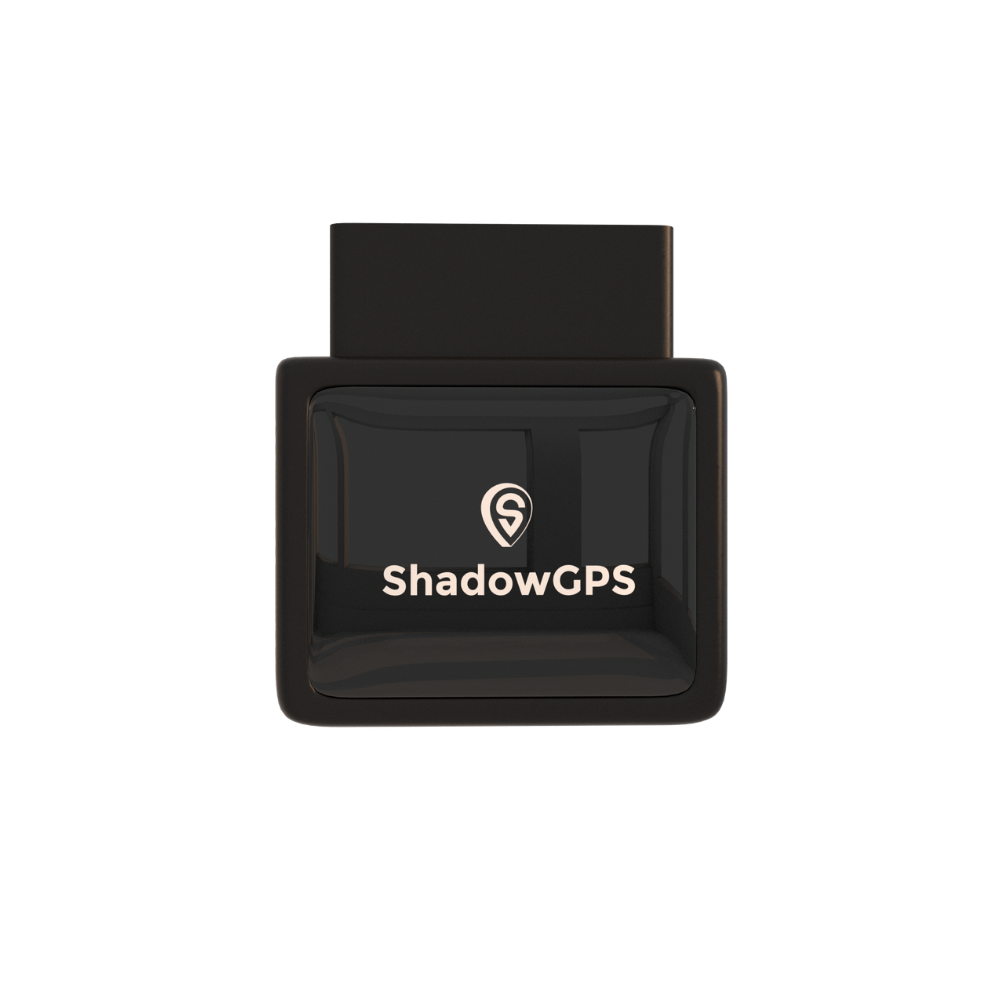
ShadowAuto
- Plug it in, live in under 2 minutes
- Trip timeline, trip replay, and engine codes
- Car Alarm and theft alerts


ShadowTrack: for trailers, equipment, and anything without an OBD port
ShadowTrack is battery-powered, rechargeable, and lasts up to about 15 days per charge. Pair it with the weatherproof magnetic case and it hides on a trailer frame, a mower, or a generator. If equipment walks off a job site, that one recovery can pay for every tracker you own. Not sure which fits? Compare battery-powered vs. OBD GPS trackers.
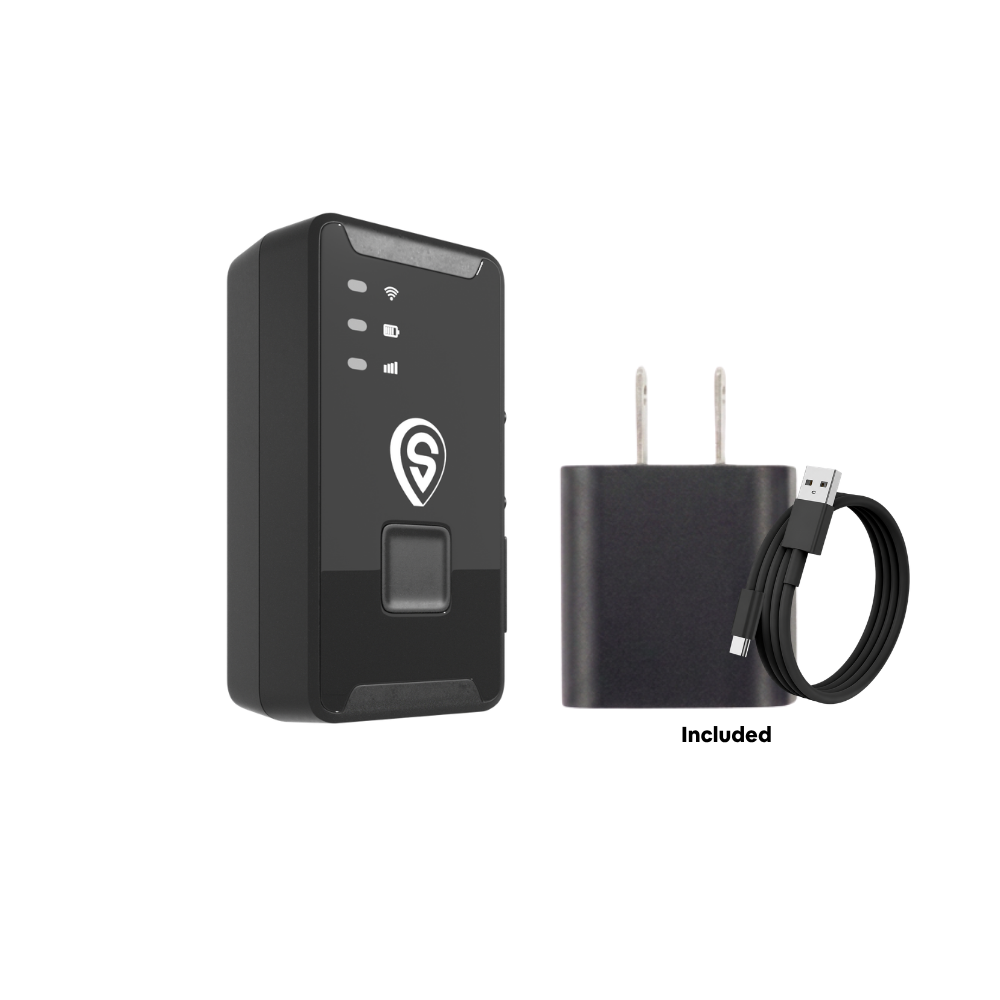
ShadowTrack
- Magnet-mount or hide it, no tools
- Up to about 15 days per charge
- Works on assets with no OBD-II port
Best for: ShadowAuto for any car or truck you drive daily. ShadowTrack for trailers, equipment, and assets without a port. Many small fleets run both on one app.
5 Mistakes That Quietly Kill Your ROI
- Not telling drivers. If people find the tracker on their own, they get suspicious and look for workarounds. Explain it first, as safety and fairness. Check the rules in our guide to tracking employee vehicles legally.
- Never opening the app. A tracker you don't check only pays off when something goes wrong. Fifteen minutes a week is the difference.
- Skipping the baseline. Without "before" numbers, you can't prove "after."
- Paying for enterprise features you'll never use. A five-truck crew doesn't need a platform built for 500. Unused features are pure cost.
- Locking into a long contract. If your needs change, a 36-month term turns a good investment into a sunk cost. Month-to-month keeps the math honest.
A quick note on tracking legally
Track cars and trucks you own or lease. For company vehicles, tell employees in writing. For a teen driving a car you own, you're generally on solid ground, but talking about it builds trust. Laws vary by state, so check yours before you plug in.
Frequently Asked Questions
Is there a monthly fee for ShadowGPS?
Yes. Plans run $9 to $15 a month for 1 to 3 trackers and $8 to $13 a month for 4 to 10, depending on how you pay. No contract. Month-to-month, or prepay and save. The device is a one-time $69.90.
How long does GPS fleet tracking take to pay for itself?
Industry-wide, 47% of fleets report positive ROI within a year and about a third within six months (Verizon Connect, 2025). Small fleets with low-cost, no-contract trackers often break even in 1 to 3 months, mainly from fewer personal miles and accurate job times.
How do you calculate GPS tracking ROI?
Subtract your total year-one tracking cost from your total benefit, divide by the cost, and multiply by 100. Benefits include fuel, labor, miles, insurance, and prevented losses. Payback period is the year-one cost divided by average monthly benefit.
Is a GPS tracker worth it for just one car?
For most single-car owners, the return is certainty: knowing where your car is and who's driving it. The dollar ROI shows up when something goes wrong, like a theft or an accident where trip history matters. For about $21 a month in year one, many parents and car owners find that worth it.
Does GPS tracking lower insurance premiums?
Sometimes. Some commercial insurers discount GPS-equipped vehicles, and some ask for tracking data each year. Personal auto discounts are less common. Call your agent and ask directly before counting it in your ROI.
Does a GPS tracker need a SIM card?
You don't need to buy or insert one for ShadowGPS. ShadowAuto and ShadowTrack connect over multi-carrier LTE-M networks, and the data is covered by your monthly plan.
What is a good ROI for fleet tracking?
Any positive ROI in year one is good, since the tracker keeps paying in year two without the device cost. For a small service fleet, a realistic year-one range is a few hundred percent. Be wary of guides promising 2,000% or more; those usually assume large payrolls.
Can GPS tracking reduce fuel costs?
Yes. Fleets in the Verizon Connect 2025 report averaged 16% fuel savings with GPS tracking. Most of it comes from fewer personal miles, less idling, and sending the closest vehicle to each job.
What happens if I cancel?
You can cancel any time. There's no contract and no early termination fee. ShadowGPS also offers a 30-day money-back guarantee.
The Bottom Line on GPS Fleet Tracking ROI
GPS fleet tracking ROI is real, but it's not 2,870%. For a small crew, it's a payback measured in weeks and a few hundred percent in year one. For a Turo host, it's one dispute or one recovered car. For a parent, it's knowing where your car is.
Set a baseline, tell your drivers, check the app weekly, and skip long contracts. Do that, and the tracker pays for itself on your own numbers, not a vendor's.
Plug it in. See it move. Cancel any time.
ShadowAuto for your car or truck, ShadowTrack for everything else. No contract, ever, and a 30-day money-back guarantee.
Pricing current as of October 2026 in USD and subject to change. Worked examples use stated assumptions for illustration; your results depend on your vehicles, fuel prices, and how you use the data. Industry statistics: Verizon Connect 2025 Fleet Technology Trends Report; U.S. DOE Alternative Fuels Data Center and Argonne National Laboratory; National Insurance Crime Bureau. Some links are affiliate links; we may earn a commission at no cost to you. Always follow your state's laws on vehicle tracking.

