

A skid steer goes missing from a job site over the weekend, and by Monday morning it's already stripped for parts or halfway to another state. That's the reality behind construction equipment theft, and it's why more contractors and small equipment owners are putting a GPS tracker on every machine they own.
GPS tracking for construction equipment used to mean an expensive telematics contract built for national fleets with a full-time equipment manager. If you're running one excavator, a couple of skid steers, and a trailer full of tools, that setup is overkill, and the multi-year contract is the part that stings most.
This guide covers how GPS tracking for construction equipment actually works, what a real GPS tracker for construction equipment should do for you, what it costs, and how a small crew or owner-operator can get job-site visibility without signing up for enterprise software they'll never fully use.
The best GPS tracking for construction equipment combines real-time location, geofencing alerts, and long battery life in a tracker you can hide or mount in under 15 minutes, with no long-term contract. Battery-powered trackers like ShadowTrack work on equipment without an OBD port or ignition wiring, running weeks per charge, while hardwired systems suit powered machines that need engine-hour and diagnostic data.
Either way, the right system should pay for itself the first time it helps you recover a stolen machine or spot a piece of equipment sitting idle on a job site.
What Is GPS Tracking for Construction Equipment?

GPS tracking for construction equipment is the use of GPS trackers, cellular connectivity, and mapping software to show the real-time location of heavy equipment, trailers, generators, and tools across one or more job sites. A small GPS tracking device is mounted or hidden on the asset, and it reports its position, and often engine hours or movement, to an app or web dashboard.
Unlike vehicle GPS tracking, which usually plugs into a car or truck's OBD-II port, equipment GPS tracking has to work on assets that don't have an ignition at all, like a generator, a light tower, or a stack of trailers. That's why most equipment GPS trackers are battery-powered, rugged, and built to be hidden inside a machine rather than visibly bolted on.
Powered equipment
Excavators, skid steers, and dozers can use either a hardwired tracker for engine hours and fault codes, or a magnetic battery tracker hidden in a compartment.
Unpowered assets
Trailers, generators, compressors, and light towers have no ignition, so a battery-powered GPS tracking device is the only practical option.
Mixed fleets
Most small construction businesses own a blend of both, and want one dashboard that shows every asset's location on a single map.
Why Equipment Theft Makes GPS Tracking Non-Negotiable
Construction equipment theft costs the US industry an estimated $300 million to nearly $1 billion every year, according to the National Equipment Register and National Insurance Crime Bureau. Job sites are attractive targets because equipment sits outside, often unattended overnight or over a weekend, and heavy machinery has no license plate or title in most states, which makes stolen assets easy to resell.
The recovery numbers are worse than most owners expect. Less than 21% of stolen construction equipment is ever recovered, and that figure drops below 7% for smaller tools and generators once they leave a site. GPS tracking is the single most effective factor in changing that outcome. Equipment with active GPS tracking is recovered at meaningfully higher rates than untracked equipment, because a tracked machine gives police a live location instead of a police report and a guess.
The theft math, in plain numbers
Average loss per stolen machine runs roughly $6,000 to $30,000, and that's before counting the rental replacement, the delayed project, and the insurance claim that follows it. A GPS tracker and a $12 to $15 monthly fee is a small price next to a $30,000 hole in your budget and a stalled job.
How GPS Trackers for Construction Equipment Actually Work
A GPS tracking device uses the global positioning system to calculate its position, then sends that location over a cellular network to an app or dashboard. Modern GPS trackers offer location accuracy within a few meters, which is precise enough to tell a supervisor exactly where a skid steer sits on a multi-acre site, not just which town it's in.
Battery-powered vs. hardwired GPS trackers
There are two main approaches to equipment GPS tracking, and the right one depends on what you're tracking:
- Battery-powered trackers mount with a magnet or hide inside a compartment, run for days to weeks on a single charge, and need no wiring at all. This is the right call for trailers, generators, and any equipment without an ignition.
- Hardwired or CAN-bus trackers connect to a powered machine's electrical system and can pull engine hours, fault codes, and fuel consumption data alongside location. These fit excavators, loaders, and other diesel-powered equipment.
One detail that surprises a lot of owners: GPS tracking devices can be installed on older construction equipment just as easily as new machines. There's no minimum model year, and a battery-powered tracker doesn't care whether the equipment has any onboard electronics at all.
Installation takes about 15 minutes per asset
Installation of GPS trackers typically takes around 15 minutes per asset for a battery-powered unit. There's no shop visit, no technician, and no downtime. You mount it, pair it to the app, and it starts reporting. That's a meaningful difference from enterprise telematics systems, which often require a professional install appointment for every machine in the fleet.
Key Features to Look For in a Construction Equipment Tracking System
Not every GPS tracking solution is built the same way. Before you buy, run any equipment GPS tracker through this checklist.
Must-have features
- Real-time GPS tracking with a few meters of accuracy
- Geofencing with instant alerts if equipment leaves a job site
- Long battery life, ideally weeks per charge for hidden units
- Weatherproof, magnet-mount hardware built for job-site conditions
Nice to have, depending on your fleet
- Engine hours and fault codes, useful mainly for powered equipment
- ERP or payroll integrations, mostly relevant for large fleets
- Fuel consumption reporting, most valuable on diesel-heavy fleets
Instant alerts deserve special attention. A geofencing feature that texts or pings you the moment a piece of equipment moves outside a job site, or moves at all after hours, is what turns a tracker from a "find it later" tool into a "stop it before it leaves" tool. Real-time alerts help prevent unauthorized equipment movement instead of just documenting it after the fact. ShadowTrack builds geofencing and instant alerts into every plan rather than gating them behind a premium tier, which is worth confirming before you buy any GPS tracker for construction equipment.
ShadowTrack: A Simple GPS Tracker Built for Job-Site Equipment
ShadowTrack is ShadowGPS's battery-powered tracker, designed for exactly this problem: assets without an ignition, an OBD port, or a wiring harness to plug into. It's built to be magnet-mounted or hidden inside equipment in under 2 minutes, and it holds a charge for up to 15 days between plug-ins, which matters when a generator or trailer sits at a remote site for a week at a time. For equipment that needs the tracker fully out of sight, pair it with the weatherproof magnetic mount case.
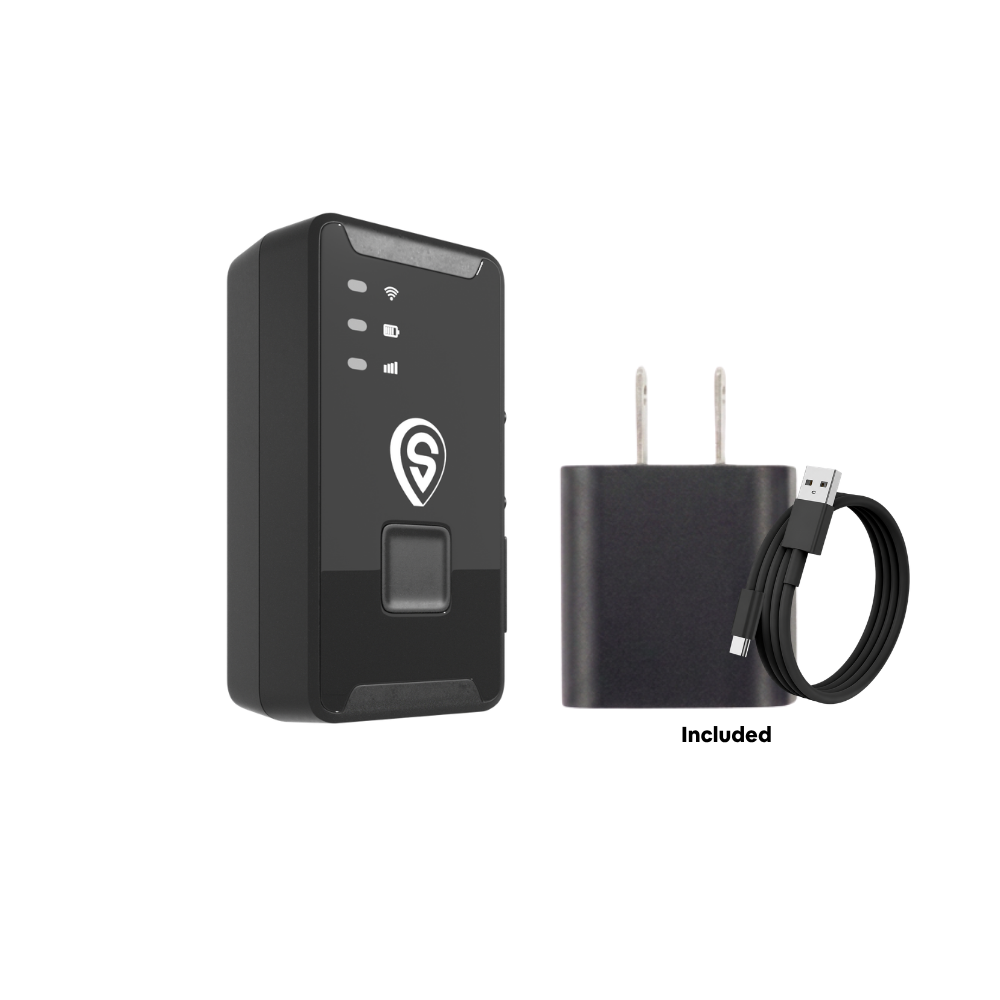
ShadowTrack
- Live tracking, updated every 5 seconds while moving
- Up to 15 days of battery life per charge
- Geofence alerts if equipment leaves the job site
- Weatherproof magnetic case, no wiring required
 Buy Now on Amazon
Because the tracker updates every 5 seconds while it's moving, once a machine is on a trailer or a truck bed leaving the site, you're watching it happen in real time, not checking a stale pin from an hour ago. And it comes with no long-term lock-in: month-to-month, or prepay and save.
Hiding a tracker inside a generator housing or a toolbox works for some equipment, but for anything exposed to the weather, a dedicated case keeps it mounted and dry without any tools.
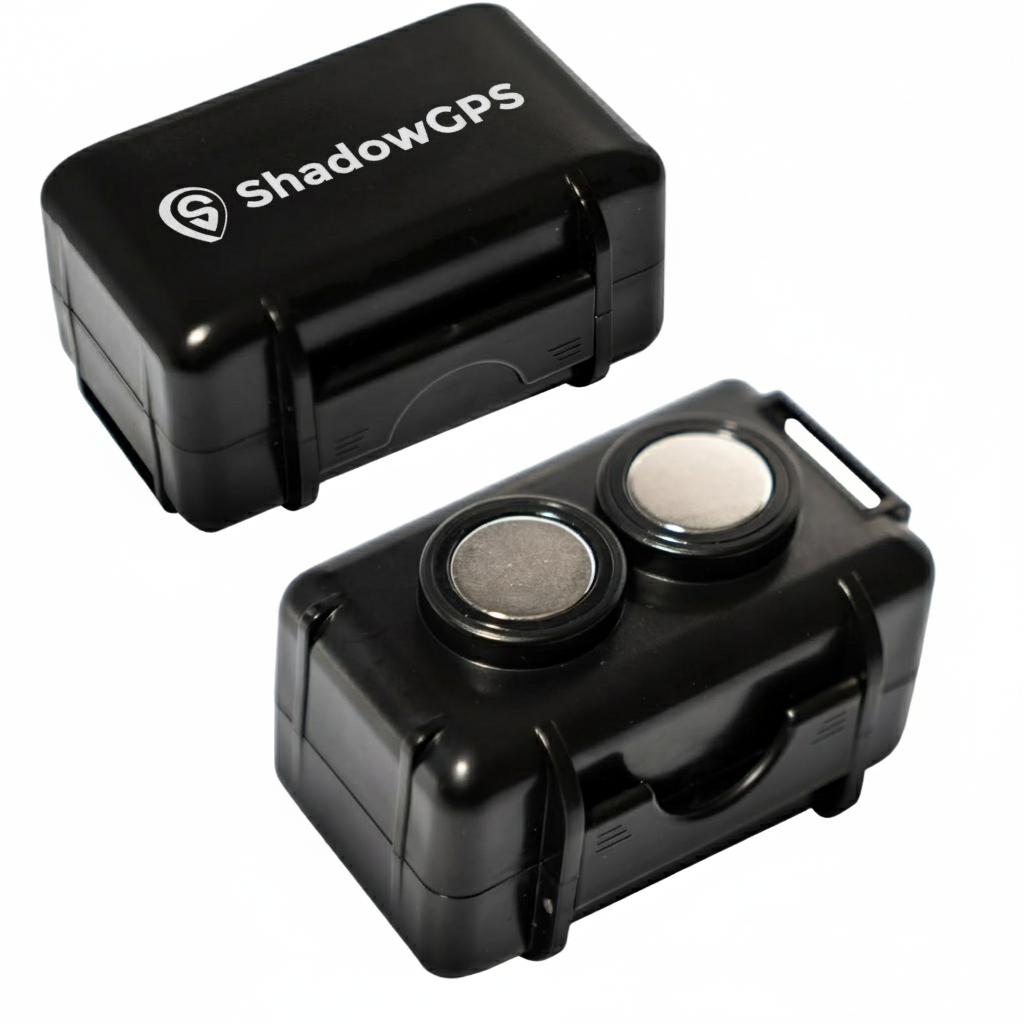
Magnetic Mount Weatherproof GPS Case
- Neodymium magnet mount, holds on metal equipment surfaces
- Weatherproof housing for outdoor job-site conditions
GPS Tracking Solutions: Simple Trackers vs. Enterprise Telematics
Most of the "best GPS tracker for construction equipment" comparisons online are written for national fleets managing hundreds of machines across dozens of job sites. If you're an owner-operator or a small crew running two to five pieces of equipment, that's a different tool than what you actually need. Here's how the categories compare.
| What you need | Enterprise telematics platform | Basic Bluetooth tag | ShadowTrack |
|---|---|---|---|
| Best for | Large fleets, dozens+ of assets | Short-range, no cellular reach | Owner-operators, 1–5 assets |
| Setup | Scheduled install, onboarding | Pair to phone in minutes | Magnet-mount in under 2 min |
| Contract | Often multi-year | None, but limited range | None, ever |
| Battery life | Varies, often wired-in | Months, but short signal range | Up to 15 days, cellular range |
| Real-time updates | Yes, often at a premium tier | No, relies on nearby phones | Yes, every 5 seconds |
| Monthly cost | Custom quote, per-asset fees | Low or none | $12–$15/mo flat |
| Right for a small contractor? | Usually more than needed | Usually not enough range | Built for exactly this |
5 Ways GPS Tracking Improves Equipment Utilization
Theft prevention gets the headlines, but day-to-day utilization is where GPS tracking pays for itself month after month. Real-time tracking provides continuous visibility into where every asset is and whether it's actually being used.
- Reduces idle time. GPS tracking can reduce equipment idle time by 20–30% by showing supervisors exactly which machines are sitting unused on a site instead of guessing from memory.
- Improves resource allocation. GPS tracking improves resource allocation efficiency by roughly 25%, since a supervisor can see equipment availability across every site before dispatching a rental replacement.
- Cuts project delays. Real-time tracking minimizes project delays by about 30% by catching equipment shortages and location mix-ups before they stall a crew.
- Sharpens maintenance timing. GPS tracking enhances equipment maintenance scheduling accuracy by around 40% when engine hours are logged automatically instead of estimated.
- Surfaces underused machines. GPS tracking helps identify underutilized equipment across job sites, which informs real decisions about buying, selling, or relocating a piece of equipment instead of letting it depreciate in a yard.
Monitoring engine hours and activity also lets a small crew schedule preventive maintenance before a failure strands a machine mid-project, and it automates a usage log that supports accountability, billing, and, if you ever need it, compliance with labor recordkeeping.
Real-World Use Cases for Small Construction Businesses
The solo equipment owner
One excavator is your business. A hidden battery tracker means you get an alert the moment it moves off a site overnight, before it's gone for good.
The small paving or grading crew
Three to five machines rotate between two or three active sites. One dashboard shows a foreman where every piece of equipment is without a single phone call.
The equipment rental owner-operator
Renting out a skid steer or generator means it leaves your sight for days. A geofence alert flags unauthorized equipment movement the moment it happens.
How to Choose the Right GPS Tracking Solution for Your Equipment
Match the tracker to the asset, not the other way around. A quick framework:
- If the asset has an ignition and you want engine-hour and diagnostic data, a hardwired tracker is worth the extra step.
- If the asset has no power source at all, a battery-powered tracker with long battery life is the only real option.
- If you're running 1-5 assets, look for month-to-month pricing before you look at feature lists built for hundred-machine fleets.
- Confirm the tracker's build is rated for outdoor, weatherproof, job-site conditions, not just car interiors.
Frequently Asked Questions
Is there a monthly fee for a construction equipment GPS tracker?
Yes, most GPS tracking systems run a monthly fee for the cellular connection and software, typically $12 to $15 per asset. ShadowTrack includes a 14-day free trial and has no contract, ever: pay month-to-month, or prepay and save.
Can I install a GPS tracker on older construction equipment?
Yes. GPS tracking devices can be installed on older construction equipment without any special wiring. A battery-powered tracker mounts with a magnet or hides in a compartment, so age and onboard electronics don't matter.
How accurate is GPS tracking for construction equipment?
Modern GPS trackers offer location accuracy within a few meters, precise enough to show exactly where a machine sits on a job site rather than a general area.
How long does GPS tracker installation take?
Installation typically takes around 15 minutes per asset for a battery-powered tracker, with no tools or professional installer required.
What percentage of stolen construction equipment is recovered?
Less than 21% of stolen construction equipment is ever recovered, according to National Insurance Crime Bureau data. Equipment with active GPS tracking is recovered at significantly higher rates than untracked equipment.
Does GPS tracking need a SIM card?
No separate SIM card purchase is needed. The cellular connection is built into the tracker and covered by the monthly plan, so it works out of the box on a nationwide network.
Can GPS tracking reduce equipment idle time?
Yes. GPS tracking reduces equipment idle time by an estimated 20–30% by giving supervisors visibility into which machines are sitting unused so they can reassign or schedule them instead of renting a replacement.
Know where every piece of equipment is, today.
Mount it or hide it on the asset, watch it update live, and cancel any time. No contract, ever.
Pricing and specs current as of August 2026 and subject to change. Theft and recovery figures cited from the National Equipment Register (NER) and National Insurance Crime Bureau (NICB) public reporting. Utilization figures (idle time, resource allocation, project delay, and maintenance scheduling improvements) reflect industry-reported ranges for construction fleets using GPS tracking, not guaranteed results. Amazon links are affiliate links; ShadowGPS may earn a commission at no extra cost to you.

