

A GPS tracker can cost you $15 or $150, and the monthly fee can be $0 or $50. Before you buy, it helps to know which price actually buys you a tracker that works when you need it.
We compared hardware price, monthly fee, update speed, and battery life across the cheapest GPS trackers people actually buy in 2026, from subscription-free options like the Apple AirTag to low-cost cellular trackers like Bouncie, Tracki, and LandAirSea. We also looked at where "cheap" quietly gets expensive: slow updates, surprise fees, and two-year contracts.
Below you'll find the cheapest device for each situation, what each one actually costs over a year, and how to tell a genuinely budget-friendly tracker from one that just looks cheap on the shelf.
The cheapest GPS tracker overall is the Apple AirTag ($29, no subscription), and the cheapest cellular car tracker with a monthly plan is Bouncie ($9-$9.65/mo). If you want no monthly fee at all for a car or asset, LandAirSea's Silver Cloud tier and Family1st's no-fee tracker are the closest options, though most cellular trackers still need a paid plan for live tracking. Battery-tier trackers like Spytec and BrickHouse cost more per month but hold a charge for a week or longer. If you'd rather pay a bit more for speed, ShadowGPS runs $12-$15/mo with no contract and updates every 5 seconds, faster than any of the above.
The Cheapest GPS Trackers Compared
Here's how the most-searched budget GPS trackers stack up on the four things that actually decide your total cost: the device price, the monthly fee, how often it updates, and how long the battery lasts between charges.
| Tracker | Hardware Price | Monthly Fee | Update Frequency | Battery Life | Contract |
|---|---|---|---|---|---|
| Apple AirTag | ~$29 | $0, no subscription | Only near other Apple devices | ~1 year (CR2032) | None |
| Bouncie | ~$0-$30 (device often bundled) | $9.00-$9.65/mo | Every 15 seconds while moving | Vehicle-powered | None |
| ShadowAuto / ShadowTrack | $69.90 | $12-$15/mo | Every 5 seconds while moving, standard on every plan | Vehicle-powered (Auto) / ~15 days (Track) | None, ever |
| Tracki | ~$25-$50 | $9.95-$30/mo (lower with 2-yr prepay) | 10 seconds to 1 hour by plan | Days to weeks by mode | 2-yr rate for lowest price |
| LandAirSea 54 | ~$40-$50 | $9.95-$49.95/mo by plan | 3 minutes to 3 seconds by tier | Days to weeks by usage | 2-yr rate for lowest price |
| Spytec GL300 | ~$30-$40 | $25-$45/mo for fastest tiers | 60 sec down to 5 sec (paywalled) | 7-10 days | None |
| BrickHouse Spark Nano 7 | ~$40-$60 | $17.99-$34.99/mo, 12 months often included | Tiered by plan | Days to weeks by mode | None |
Third-party pricing pulled from manufacturer sites and major retailers; monthly fees and promos change often, so confirm current pricing before you buy.
How We Picked These Budget GPS Trackers
We focused on trackers people are actually searching for and buying at this price point: cellular trackers with real GPS chips, not just Bluetooth tags mislabeled as "GPS." For each one we checked the true cost over a year (device plus 12 months of fees), the update frequency you get at the base plan, and whether the "no monthly fee" claim held up once you wanted live tracking instead of stored history.
Reliability also depends on the technology. Cellular trackers report location from anywhere there's a signal, which is what most car owners actually need. Bluetooth crowd-sourced finders like the AirTag are cheaper and last longer on a battery, but they only update when another Apple device happens to pass nearby, which matters if your car or asset ever leaves populated areas.
ShadowAuto: If You Want Faster Updates Than the Cheapest Trackers Offer
Every tracker above trades something for its low price: the AirTag trades real-time updates, and Bouncie trades refresh speed for its low fee. ShadowAuto doesn't try to win on price. It's built for a car or truck that matters to you, and it plugs into the OBD-II port in under two minutes with zero wiring.
What you get for $12-$15 a month is a standard 5-second refresh on every plan, not just the top tier, plus trip timeline, trip replay, and Car Alarm for theft alerts. No contract, ever, whether you pay monthly or prepay to save.
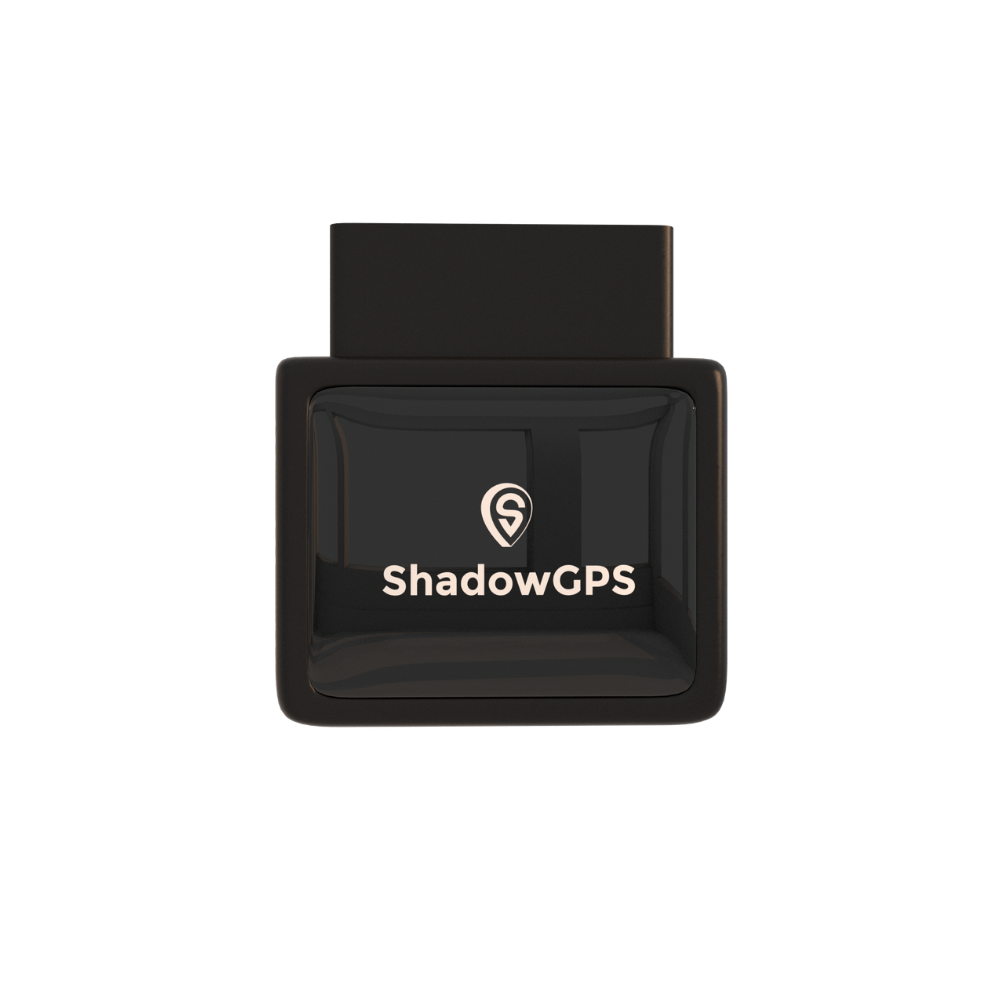
ShadowAuto
- Updates every 5 seconds while moving
- Trip timeline & trip replay
- Car Alarm & vehicle diagnostics


ShadowTrack: For a Trailer, Rental, or Anything Without an OBD Port
If what you're tracking doesn't have an OBD-II port, whether that's a trailer, a piece of equipment, or a Turo rental you'd rather hide a tracker inside, ShadowTrack covers the same 5-second refresh in a battery-powered, weatherproof, magnetic-mount unit that runs about 15 days per charge.
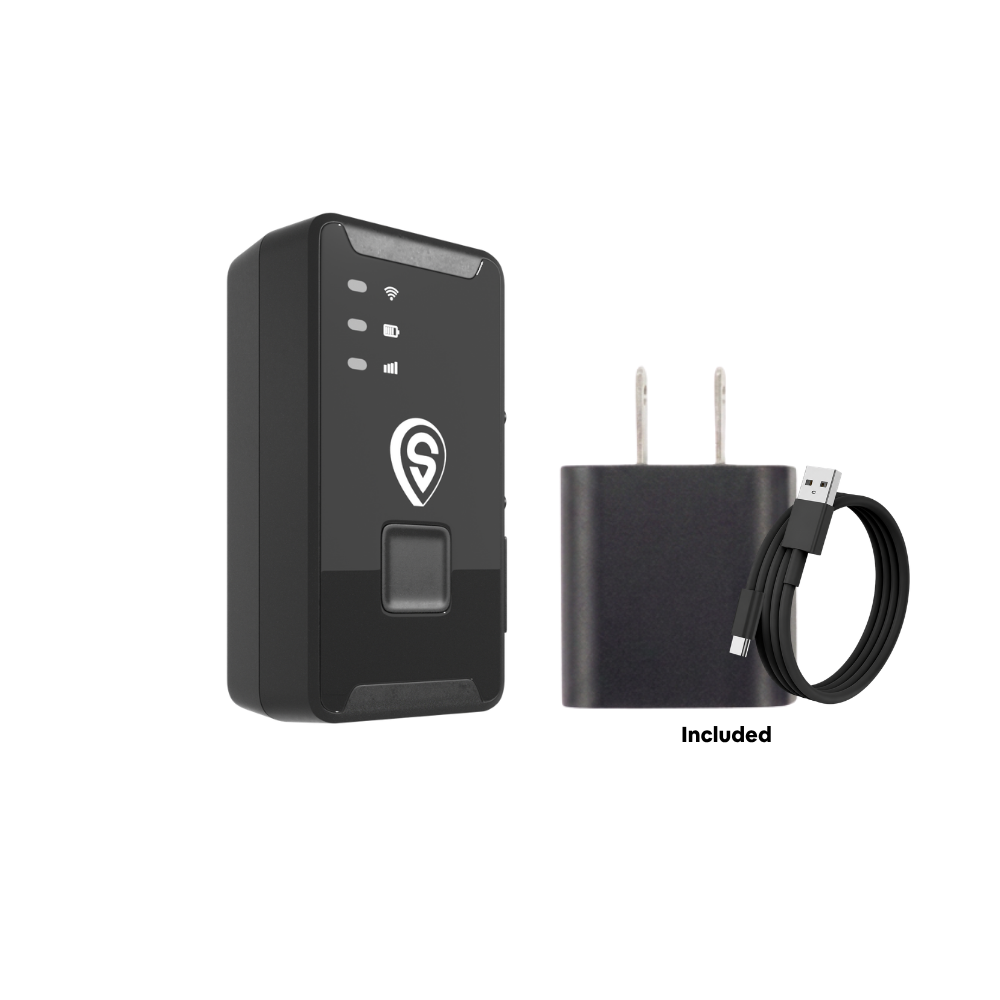
ShadowTrack
- Updates every 5 seconds while moving
- Weatherproof, magnetic mount
- Up to ~15 days per charge
1. Apple AirTag
The AirTag is the cheapest GPS tracker you can buy with zero ongoing cost. Apple AirTag works for up to a year on a single CR2032 battery, and there's no subscription for tracking, ever.
The catch is the technology. An AirTag isn't a real-time cellular tracker: it relies on Apple's Find My crowd-sourced network, so it only reports a location when a nearby iPhone quietly picks up its Bluetooth signal. That works well in cities and parking lots, but it can go dark for hours on a rural drive or in a garage.

Pros
- No monthly fee, ever
- Battery lasts about a year
- Coin-sized and easy to hide
Cons
- No true real-time location, especially away from other iPhones
- iOS-only experience; weaker for Android owners
Best for: tracking bags, tools, or a car parked in populated areas where you don't need live, moving updates.
2. Bouncie
Bouncie plugs into your car's OBD-II port and is widely considered the best overall GPS tracker for ease of use at this price. It also offers impact detection and curfew alerts, which are useful for a teen driver.
At $9.00-$9.65 a month, it's one of the least expensive real-time cellular plans on the market, updating roughly every 15 seconds while the vehicle is moving.

Pros
- Lowest monthly fee among true real-time OBD trackers
- No contract
- Impact detection and curfew alerts
Cons
- 15-second updates, about 3x slower than ShadowGPS's standard refresh
- Dies the moment it's unplugged, since it draws power from the OBD port
Best for: one family car where you want the lowest possible monthly fee and don't mind a slower refresh.
3. Tracki
Tracki features three physical buttons for emergency alerts, which is unusual at this price and makes it a common pick for tracking a person as well as a vehicle or asset. It's small, magnetic, and portable enough to move between a car, a bag, or equipment.
Pricing ranges from about $9.95 to $30 a month depending on how often you want it to update, and the cheapest rate requires a two-year commitment.

Pros
- Rock-bottom monthly rate with a 2-year prepay
- Physical SOS buttons
- Flexible update intervals, from minutes to seconds
Cons
- The cheapest rate locks you into a 2-year plan
- Fastest paid tier (10 sec) still costs $30/mo
Best for: tracking a person, pet, or piece of equipment where SOS alerts matter more than car-specific features.
4. LandAirSea 54
LandAirSea 54 provides speed, battery, and geofencing alerts in a compact magnetic waterproof case, plus historical playback of trips. It has built-in magnet strong enough to hold to the underside of a car or trailer, which makes it popular for tracking a vehicle you don't want to plug anything into.
Like most low-cost GPS units, it needs a monthly plan for live tracking. Plans run from about $9.95 up to $49.95 depending on how fast you want updates, with the lowest rate tied to a two-year term.

Pros
- Strong magnetic mount, no OBD port needed
- Waterproof case, long battery life
- Trip history and geofence alerts
Cons
- Base plan updates only every few minutes
- Users report surprise fees if they don't watch the renewal terms
Best for: a trailer, boat, or borrowed vehicle where a hidden magnetic mount matters more than fast updates.
5. Spytec GL300
Spytec GL300 has a battery life of 7 to 10 days, which is strong for a real-time cellular tracker of this size. It's a good pick when you need to track an asset that isn't near power for a week at a time, like a rental car or piece of equipment.
The fastest 5-second updates are paywalled behind higher tiers, with monthly fees running $25 to $45 depending on how frequently you want the location to refresh.

Pros
- 7-10 day battery life
- No contract
- Compact and easy to hide
Cons
- You pay a premium for fast updates, up to $45/mo
- Needs regular charging compared to a vehicle-powered plug-in
Best for: a rental car, storage unit, or equipment that sits away from power for days at a time.
6. BrickHouse Security Spark Nano 7
BrickHouse Security offers up to 12 months of service included with some bundles, which changes the year-one math even though its monthly fee ($17.99-$34.99) runs higher than Bouncie or AirTag. The weatherproof BrickHouse EON Odyssey is a good option too if you need long battery life over portability.

Pros
- Bundled service can cover the first year
- No contract
- Weatherproof options with long battery life
Cons
- Once included service ends, monthly fee is one of the higher ones here
- Update speed is tiered by plan, not standard across the board
Best for: buyers who want the first year of service bundled into the purchase price instead of billed monthly.
Is There a GPS Tracker With No Monthly Fee?
Short answer: yes, but only if you're okay with Bluetooth-only tracking
The Apple AirTag is the clearest true no-fee option: no subscription for tracking, ever, just the one-time $29 purchase. A Samsung SmartTag works the same way for Android owners. Beyond Bluetooth tags, most cellular GPS trackers require a plan for live tracking capabilities, even when the listing says "no monthly fee," because that claim usually refers to the hardware not being locked to a specific carrier, not to the app subscription itself. Read the fine print on any tracker advertised as fee-free before you buy: if it uses a SIM card and reports location over a cellular network, it almost always needs a paid plan to actually show you where the vehicle is in real time.
What a Cheap GPS Tracker Subscription Actually Costs
Monthly subscription costs for GPS trackers typically range from $7 to $16 for basic real-time plans, climbing toward $30-$50 for the fastest update tiers on brands like Spytec and LandAirSea. A cellular GPS tracker generally requires a hardware purchase plus that ongoing data subscription, since the device is sending location over a mobile network the same way a phone does.
Two things push a "cheap" subscription higher than it looks on the box:
- Speed tiers. The advertised low price is almost always the slowest update interval; getting near real-time updates often bumps you two or three pricing tiers higher.
- Contract length. The cheapest monthly rate on brands like Tracki and LandAirSea is usually locked behind a two-year prepay, and cancelling early forfeits the discount.
GPS Tracker vs. Apple AirTag: Which Is Actually Cheaper for a Car?
An AirTag wins on sticker price every time: $29 once versus $70-$100 in hardware plus $9-$15 a month for a cellular tracker. But for a car specifically, the math flips once you factor in what you're actually trying to do.
If your car is stolen or your teen driver goes somewhere with no other Apple devices around, an AirTag can go silent for hours because it depends on someone else's iPhone passing by. A cellular GPS tracker reports its own location the moment it has signal, which is the difference between finding a car in minutes versus not finding it at all. For everyday parking-lot use in a busy area, an AirTag is genuinely fine. For a vehicle you need to locate the moment something goes wrong, the monthly fee is buying you a real answer, not just a cheaper one.
Real-Time vs. Battery-Saving Updates: What Cheap Costs You
Reliability of GPS trackers can vary significantly based on the technology used. Premium real-time GPS trackers update location every 3 to 10 seconds, while budget-tier GPS trackers may update once every few minutes or daily to conserve battery. Multi-GNSS receivers also improve tracking accuracy in urban areas where tall buildings can otherwise throw off a single-satellite reading, and typical GPS accuracy runs 8-15 feet in open sky.
None of this means a slower tracker is a bad tracker. A once-a-day update is plenty for checking on a stored boat or seasonal equipment. It's simply not the right tool for a moving vehicle you might need to locate in the next five minutes.
Which Cheap Tracker Fits Your Situation
Parent tracking a teen driver
You want fast, reliable updates and alerts, not a device that goes quiet the moment the car leaves a populated area. Bouncie or ShadowAuto both plug into the OBD port in minutes.
Turo host or rental owner
A hidden, battery-powered option like ShadowTrack or a magnetic pick like LandAirSea 54 lets you track a vehicle without touching the renter's dashboard.
Small fleet, 2-5 vehicles
Per-vehicle cost adds up fast. Compare the true monthly fee per vehicle, not just the device price, and standardize on one plan tier across the fleet to avoid managing different refresh rates.
How to Avoid Overpaying for a "Cheap" Tracker
Checklist before you buy
Confirm the plan price at the update speed you'll actually use, not the cheapest advertised tier. Check whether the lowest rate requires a 1- or 2-year prepay, and what happens if you cancel early. Ask whether tamper alerts and geofence alerts are included at your plan level or reserved for a higher tier. And if a listing says "no monthly fee," verify whether that applies to live tracking or only to viewing stored trip history.
Frequently Asked Questions
What is the cheapest GPS tracking device available?
The Apple AirTag is the cheapest at around $29 with no subscription, though it relies on Apple's Find My network rather than true real-time cellular tracking. For a cellular tracker with live updates, Bouncie's $9-$9.65/mo plan is the least expensive.
Is there a GPS tracker with no monthly fee?
Yes, if you're willing to use a Bluetooth tag instead of a cellular tracker. The Apple AirTag and Samsung SmartTag have no ongoing cost. Most cellular trackers with a SIM card still need a paid plan for live tracking, regardless of how the listing is worded.
What is the best budget GPS tracker without a subscription?
The Apple AirTag remains the top pick for a no-subscription tracker. It's best suited to bags, tools, and vehicles that mostly stay in populated areas rather than a car you'd need to locate the moment it's out of range of other Apple devices.
What is the cheapest car GPS tracker available?
Bouncie is the cheapest true real-time cellular option for a car, at roughly $9.00-$9.65 a month with no contract. It plugs into the OBD-II port and updates about every 15 seconds while the vehicle moves.
Is there a free GPS tracker for cars?
There's no truly free real-time cellular tracker; hardware and data plans both cost something. The closest thing to free is a one-time-purchase Bluetooth tag like the AirTag, which has no recurring cost but doesn't provide true real-time cellular tracking.
Is a GPS tracker better than an AirTag?
For a car, a cellular GPS tracker is generally the better choice because it reports its own location instead of waiting for a nearby iPhone. An AirTag is fine for lower-stakes items like bags or tools, or as a backup on a car that mostly stays in busy areas.
What is the cheapest GPS tracker for a small fleet?
For 2-5 vehicles, compare the per-vehicle monthly total at the update speed you'll actually use, not just the cheapest headline plan. OBD-II trackers like Bouncie or ShadowAuto are the simplest to standardize across a small fleet since each vehicle powers its own unit.
Bottom Line
If your only goal is the lowest possible price and you can live with Bluetooth-only tracking, the Apple AirTag wins. If you want a real cellular tracker for the least money, Bouncie's $9-$9.65/mo plan is the cheapest genuine option on the market. Just weigh the trade-off before you buy: slower updates, a two-year contract, or a subscription that only looks fee-free until you want live tracking.
If what you actually need is certainty, not just a low number on the box, that's the gap ShadowAuto and ShadowTrack are built to close: a 5-second refresh standard on every plan, no contract, ever, and no reason to guess whether "cheap" means "slow."
Plug it in. See it move. Cancel any time.
No contract, ever. Month-to-month, or prepay and save.
This guide reflects pricing, specifications, and legal information published as of September 2026. Subscription pricing and features are subject to change by each manufacturer.

