

Handing your teenager the car keys for the first time is one of the most nerve-wracking moments of parenting. Motor vehicle crashes are still the leading cause of death for U.S. teens, and drivers aged 15 to 20 make up only about 5% of licensed drivers, yet they're involved in nearly 9% of all fatal crashes.
A GPS tracker for teen driver use closes the gap between "I hope they're driving safely" and "I know exactly how they're driving." The right tracker gives you real-time location, speed alerts, and detailed driving reports, so conversations with your teen are based on facts instead of guesswork.
This guide breaks down the key features that actually matter for monitoring teen drivers, compares the best GPS trackers on the market in 2026, and shows you how to introduce a tracker without turning your car keys into a battleground.
The best GPS tracker for a teen driver is an OBD-II plug-in tracker with real-time tracking, speed alerts, geofencing, and detailed driving reports. ShadowAuto plugs into your teen's car OBD-II port in under two minutes, updates location every 5 seconds while driving, and sends instant alerts for speeding, harsh braking, and curfew violations, all with no contract.
Why Teen Drivers Need a GPS Tracker
Trust matters in any parent-teen relationship, but trust doesn't stop a crash. According to the CDC, motor vehicle crashes remain the leading cause of death for U.S. teenagers. NHTSA data shows drivers aged 15 to 20 account for roughly 5% of licensed drivers, yet nearly 9% of all drivers in fatal crashes, and the Insurance Institute for Highway Safety puts the teen crash rate per mile driven at close to four times that of older, experienced drivers.
The first year behind the wheel is the most dangerous. Inexperience with hazard perception, peer pressure from passengers, nighttime driving, and speeding all combine to put new drivers at far greater risk than adults with years of practice. A GPS vehicle tracker doesn't replace driver's education or supervised practice hours, but it does give parents something supervision alone can't: an objective record of driving behavior after your teen drives off alone.
That's the real value of monitoring teen drivers. Instead of wondering whether your teenage driver is speeding on the highway or drove somewhere they shouldn't have, you get data: actual speeds, routes, timestamps, and alerts the moment something looks risky.
Key Features to Look for in a GPS Tracker for Teen Drivers
Not every car tracker is built with new drivers in mind. Here are the key features that separate a tracker worth buying from one that will just collect dust in a glovebox.
Real-Time GPS Tracking and Location Sharing
Real-time tracking shows your teen's car location on a map (often layered right over Google Maps) so you always know your vehicle's location without texting to ask. Look for a tracker that refreshes every few seconds while the vehicle is moving, not every few minutes. A faster refresh rate means you're seeing what's actually happening now, not where the car was five minutes ago.
Speed Alerts
Speed is one of the top contributing factors in fatal teen crashes. Speed alerts let you set a speed limit threshold, say, 70 mph on the highway or 30 mph in a neighborhood, and get an instant notification if your teen's driving speed crosses it. Being able to set speed alerts yourself, rather than relying on a fixed default, matters because every family's comfort level and local roads are different.
Geofencing (Virtual Boundary Alerts)
A geofence is a virtual boundary you draw around a specific area, like home, school, or a friend's neighborhood, on a map. When your teen's car crosses that boundary, you receive alerts the moment it happens. Geofencing is one of the simplest ways to confirm your teen actually went where they said they were going.
Curfew Alerts
Curfew alerts are time-based: if the car is moving after a set hour, you're notified. Since nighttime driving carries significantly higher crash risk for new drivers, and many states enforce graduated license nighttime restrictions, curfew alerts help you enforce the rules even while you're asleep.
Detailed Driving Reports and Driving Habits
Trip history and driving reports log every trip: route taken, top speed, rapid acceleration, and harsh braking events. Some trackers package this into a driver's report card, a simple letter grade or score summarizing safe driving habits over a week or month. This is the feature that turns a tracker into a coaching tool instead of just a surveillance device: rather than telling your teen to "drive safer," you can point to a specific hard braking event on a specific street and talk through what happened.
Crash Detection and Emergency Response
Crash detection uses the tracker's sensors to recognize a sudden, severe impact and can alert you (and in some systems, emergency response services) immediately. For a new driver, this closes the gap between "something happened" and "I know about it," which matters most in the moments right after a crash.
Tamper Alerts
Most teens who want to avoid monitoring will simply unplug the device. Tamper alerts notify you the moment the tracker loses power or is disconnected from the car's OBD-II port, so you know immediately rather than discovering a blank map an hour later.
Best GPS Trackers for Teen Drivers in 2026
We compared trackers built specifically for vehicle monitoring (not Bluetooth item finders, which can't provide real-time tracking or driving behavior alerts) on install method, refresh rate, alert customization, and monthly subscription cost.
1. ShadowAuto
ShadowAuto is an OBD-II plug-in tracker that draws power directly from your teen's car, so there's no battery to charge and nothing to remember. Plug it into the car's OBD II port under the dash and it starts reporting in minutes, updating location every 5 seconds while the vehicle is moving.
Beyond real-time tracking, ShadowAuto covers the full feature list parents actually need: speed alerts, geofencing, curfew alerts, detailed driving reports with harsh braking and rapid acceleration flags, tamper alerts if the device is unplugged, and vehicle diagnostics that surface engine codes and battery health. It's built for the family car that matters, not an enterprise fleet.
Pros
- Updates every 5 seconds while driving
- Vehicle-powered, no battery life to manage
- Speed, curfew, geofence, and tamper alerts included
- No contract, cancel any time
Cons
- Requires a visible OBD-II port (standard on vehicles made after 1996)
- Monthly subscription required for real-time monitoring
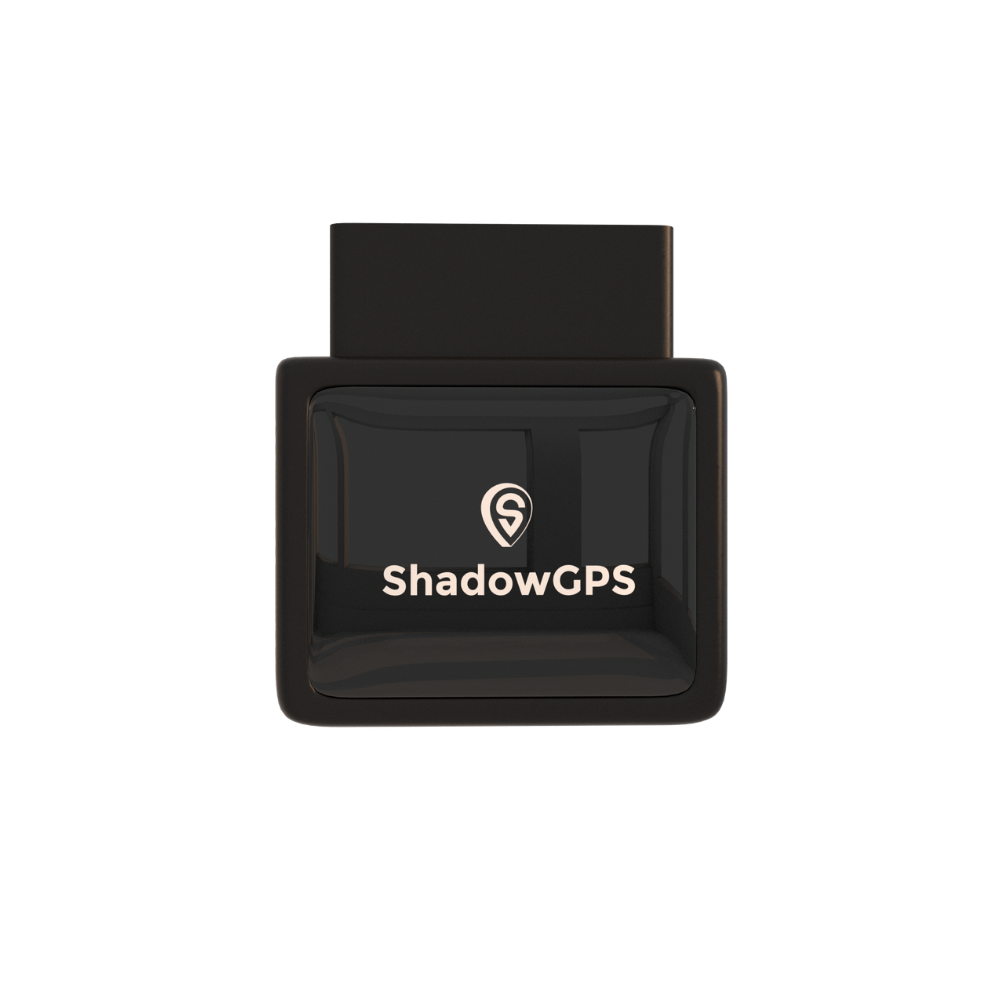
ShadowAuto
- Real-time tracking every 5 seconds
- Speed, curfew & geofence alerts
- Detailed driving reports & tamper alerts
 Buy Now on Amazon
Best for: parents who want the fastest refresh rate on the market and don't want to think about charging a device.
2. ShadowTrack
Not every teen's car has easy access to an OBD-II port, and some parents want the option to move a tracker between vehicles (or hide it somewhere less obvious than under the dash). ShadowTrack is a battery-powered tracker with the same 5-second refresh rate as ShadowAuto, housed in a weatherproof magnetic case that can be mounted almost anywhere in or under the vehicle.
It runs up to about 15 days on a charge, so it needs more attention than a plug-in tracker, but it gives you full flexibility if you're tracking a hand-me-down car, a shared family vehicle, or a rental a Turo host wants monitored between drivers.
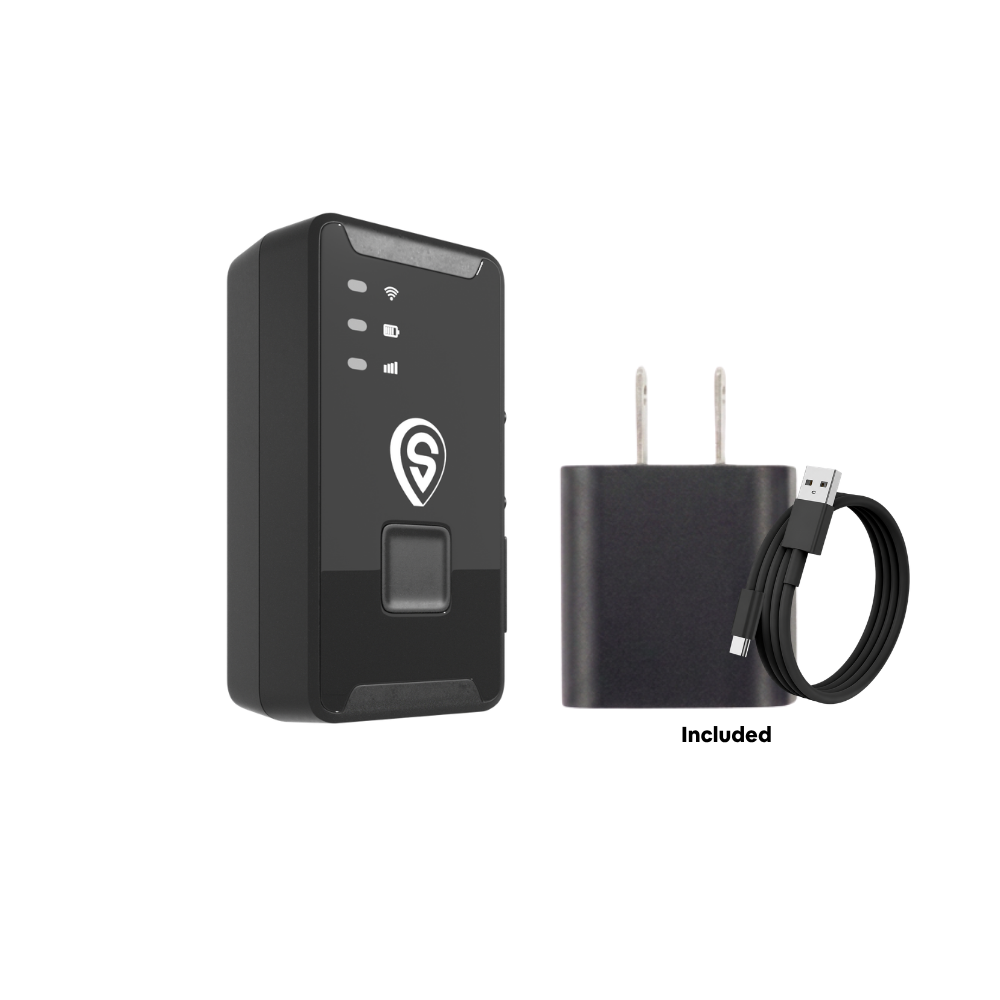
ShadowTrack
- ~15 days of battery life per charge
- Weatherproof, magnet-mount in under 2 minutes
- Same real-time tracking & alerts as ShadowAuto
Best for: parents who need a hidden or portable tracker instead of an OBD-II plug-in.
3. MOTOsafety
MOTOsafety is an OBD tracker built specifically around teen driving, and its signature feature is a daily A-to-F report card grading your teen's driving habits based on speeding, harsh braking, and rapid acceleration. It also includes a built-in teen driving course.
It's a reasonable option if the report card feature is the deciding factor for your family, though the monthly subscription runs higher than most OBD alternatives, and the app and hardware feel dated next to newer trackers.
Pros
- Built-in daily report card feature
- Includes an online teen driving course
Cons
- Around $19.99/mo, higher than most OBD competitors
- Slower refresh rate than newer trackers

Best for: parents who specifically want a graded report card and a driving course bundled in.
4. Bouncie
Bouncie is a low-cost OBD tracker with a 15-second refresh rate (about 3x slower than ShadowAuto's 5-second updates), speed alerts, geofencing, and tamper alerts. It's a workable entry point if price is the only factor.
The tradeoff: Bouncie is OBD-only with no portable option, and independent reviews point to a service and billing gap despite decent app-store ratings.

Best for: budget-focused parents who don't need the fastest possible refresh rate.
5. LandAirSea Portable
If your teen has removed a visible OBD tracker before, or you'd rather the device not be found at all, the LandAirSea Portable is a magnetic, battery-powered tracker that hides under the vehicle or in the trunk. No OBD port or wiring required.
The tradeoff is battery life: the base plan uses slower update intervals, and faster refresh tiers cost significantly more per month than a standard OBD tracker.

Best for: parents who need a fully discreet, no-OBD tracking device.
GPS Tracker Comparison Table
| Tracker | Install | Refresh Rate | Key Feature | Price | Contract |
|---|---|---|---|---|---|
| MOTOsafety | OBD-II plug-in | ~60 sec | Daily report card + driving course | $19.99/mo | None |
| Bouncie | OBD-II plug-in | 15 sec | Tamper alerts, low price | $9.00–$9.65/mo | None |
| LandAirSea Portable | Magnetic, hidden | 3 min (base) – 3 sec (top tier) | Fully hidden, no OBD needed | $9.95–$49.95/mo | None (2-yr for best rate) |
| ShadowTrack | Magnetic, portable | 5 sec | Hidden install, ~15-day battery |
$10-$13/mo (4+ trackers) or $12-$15/mo |
None, ever |
| ShadowAuto | OBD-II plug-in | 5 sec | Fastest standard refresh, no charging |
$10-$13/mo (4+ trackers) or $12-$15/mo |
None, ever |
How Much Does a GPS Tracker for a Teen Driver Cost?
Most GPS trackers for vehicles require two costs: the device itself, and a monthly subscription for real-time monitoring, alerts, and driving reports. Monthly subscription fees for teen-focused trackers typically run $9 to $20 per month, which can add up to well over $200 a year depending on the plan.
ShadowAuto and ShadowTrack are priced at $69.90 for the device, with plans at $12 to $15 a month and a 14-day free trial. There's no contract on either, so you can pay month-to-month or prepay to save, and cancel any time without a penalty. If a tracker's pricing page doesn't clearly answer "is there a monthly fee," treat that as a red flag before you buy.
One more thing worth checking: some auto insurers offer a discount for enrolling in a driving-behavior monitoring program, so ask your insurance provider whether a GPS tracker's driving reports qualify.
How to Talk to Your Teen About GPS Tracking
Should you tell your teen about the tracker, or install it quietly? Almost always, tell them. When a teen understands they're being monitored, the tracker itself becomes a deterrent: knowing a speeding alert goes straight to a parent's phone is often enough to encourage safer decisions on its own.
Frame the conversation around care, not control. Explain that the tracker exists because you want them to come home safely, not because you don't trust them. Set clear expectations up front, including what you will and won't do with the data, and consider tying loosened restrictions to a track record of safe driving. Most teens respond better to a GPS tracker positioned as part of graduated driving privileges than one that feels like pure surveillance.
Common Mistakes Parents Make With Teen GPS Trackers
- Reacting to every alert. Calling your teen every time they go two miles over turns the tracker into a source of conflict. Review patterns weekly instead of responding to every ping.
- Never reviewing trip history. The value of driving reports comes from actually looking at them and using specific examples to coach better driving habits.
- Setting unrealistic geofence boundaries. Boundaries that are too tight create unnecessary conflict without improving safety.
- Never loosening restrictions. Keep the same curfew and speed alerts for a 19-year-old with two clean years of driving as you had on day one, and the tracker stops feeling fair.
GPS Tracking Use Cases Beyond a New Driver's License
The brand-new driver
Full monitoring: real-time tracking, tight speed alerts, curfew, and geofencing around home, school, and work while your teen builds experience.
The shared family car
Know which driver had the car and when, and use trip history to sort out fuel levels, mileage, or "who was driving when this happened" questions.
The graduated, trusted driver
Dial back alert sensitivity and lean on driving reports and a report card feature to reinforce good habits rather than restrict every trip.
Parents managing more than one vehicle, a second family car, a teen's car and a Turo rental, or a small fleet of 2 to 5 vehicles for a family business, can apply the same setup across every car from one mobile app account instead of juggling separate tools for personal tracking and fleet management.
Frequently Asked Questions
What is the best GPS tracker for a teen driver?
The best option for most families is an OBD-II plug-in tracker with real-time tracking, speed alerts, geofencing, curfew alerts, and detailed driving reports, without a monthly-fee surprise. ShadowAuto covers all of these with a 5-second refresh rate and no contract.
How does a GPS tracker help monitor teen driving?
It provides real-time location, driving speed, and behavior alerts for speeding, harsh braking, and rapid acceleration, plus trip history so you can review driving habits and coach specific incidents instead of guessing at general behavior.
Is it legal to put a GPS tracker in my teen's car?
Yes, in the U.S. it's generally legal for a parent or legal guardian to place a GPS tracker in a vehicle they own or that a minor child drives. Laws vary by state, so check local rules if the car isn't titled in your name.
Should I tell my teen I'm tracking their car?
Almost always, yes. Transparency turns the tracker into a deterrent on its own and protects trust. Discovering a hidden tracker later tends to damage the relationship far more than an upfront conversation.
Does a GPS tracker need a monthly subscription?
Most trackers that offer real-time tracking, alerts, and driving reports require a monthly subscription to cover cellular data. ShadowGPS plans run $12 to $15/mo with a 14-day free trial and no contract, month-to-month or prepay and save.
Where does a GPS tracker plug into the car?
An OBD-II tracker plugs into the car's OBD-II port, usually located under the dashboard near the steering column. It's standard on nearly every vehicle made after 1996 and takes under two minutes to plug in.
Can a GPS tracker detect a car accident?
Trackers with crash detection can sense a sudden, severe impact and alert you right away, closing the gap between an accident happening and a parent finding out.
What speed should I set alerts for a new driver?
A common setup is around 70 mph on highways and 30 to 35 mph in residential neighborhoods, then adjust based on the actual speed limit on roads your teen regularly drives.
The Bottom Line
A GPS tracker for a teen driver isn't a magic fix, and it won't replace supervised practice or good parenting. What it does is bridge the gap between the control you have when your teen is a passenger and the uncertainty of the moment they drive off alone. Real-time tracking, speed alerts, geofencing, curfew alerts, and detailed driving reports give you the data to coach better driving habits and respond fast if something goes wrong.
The goal isn't to track your teen forever, it's to use the highest-risk first year or two of driving to build safe habits, then loosen monitoring as your teenage driver proves themselves behind the wheel.
Know exactly how your teen is driving.
Plug ShadowAuto into your teen's OBD-II port and see live tracking, speed alerts, and driving reports in minutes. No contract, ever.
Pricing and specs current as of August 2026 and subject to change; confirm current plan pricing and battery specifications on each provider's site before purchasing. Amazon links are affiliate links; ShadowGPS may earn a commission at no extra cost to you. Insurance discounts vary by carrier and aren't guaranteed. This article is for informational purposes only and isn't legal advice on GPS tracking laws in your state.

