

AI fleet management used to be a story about 500-truck operations, a dispatch room, and a software contract with a lot of zeros. In 2026, that story is changing quickly. The same idea, using data to spot a problem before it costs you, is now reaching the parent with a teen driver, the Turo host with two cars, and the contractor running three work trucks.
Here is how AI is really being used, what changed this year, which platforms lead, and what it means if you own one to five vehicles.
AI fleet management uses machine learning and predictive analytics to turn GPS tracking, engine diagnostics, and driving data into action: predicting breakdowns, planning better routes, coaching safer driving, and cutting fuel costs. In 2026, AI systems are moving from dashboards that report problems to agents that help fix them.
What Is Meant by Fleet Management?
Fleet management is the work of keeping a group of vehicles running, safe, legal, and earning their keep. It covers vehicle tracking, maintenance, fuel, drivers, and paperwork like regulatory compliance.
At a big company, fleet managers oversee thousands of trucks with fleet management software. For you, it might be two family cars and a pickup.
Fleet operations share the same goals at every size: know where your vehicles are, keep them healthy, run efficient operations, and spend less on surprises.
What Is AI Fleet Management?
Fleet management using AI adds a layer of reasoning on top of your data. Traditional fleet management systems report what already happened. AI powered systems use predictive analytics to identify patterns and predict what happens next.
The Three Building Blocks
- Data: GPS tracking, engine diagnostics, fuel usage, and driving events. The industry calls these telematics devices and telematics systems. Most owners just call it a tracker.
- Machine learning: machine learning algorithms learn what "normal" looks like for each car, driver, and route.
- Action: alerts, work orders, new routes, or coaching tips, increasingly handled automatically.
Put simply, the data tells you where your car is. The AI tells you what it means.
AI vs. Traditional Fleet Management
Here is how the same jobs change, and where the operational efficiency gains come from.
| Task | Traditional approach | AI-powered approach |
|---|---|---|
| Maintenance | Fixed schedule, or fix it after it breaks | Predictive maintenance flags parts likely to fail |
| Routing | Driver picks the route | Route optimization adjusts for live traffic and weather |
| Safety | Review incidents after the fact | Real-time alerts and automatic coaching |
| Fuel | Monthly fuel card review | Spots excessive idling and odd fill-ups as they happen |
| Reporting | You dig through spreadsheets | Actionable insights in plain language |
| Compliance | Paper logs and manual checks | Automated Hours of Service tracking |
How Is AI Being Used in Fleet Management?
These are the seven jobs AI is doing in fleet operations right now.
1. Predictive Maintenance
Using predictive analytics, AI reads engine health signals, vehicle performance trends, fault codes, and maintenance records to predict part failures before vehicle breakdowns happen. Instead of a tow truck on Tuesday, fleet managers get a heads-up on Friday, and fewer emergency repairs mean lower operational costs.
McKinsey research links predictive maintenance to 30% to 50% less unplanned downtime. Those figures come mostly from factories, and false alarms can erase the savings, so treat them as a ceiling.
2. Route Optimization and Route Planning
Route planning used to be guesswork. Now machine learning and predictive analytics weigh live traffic, weather, and other environmental factors to choose optimized routing. Vendors commonly report 15% to 20% lower fuel consumption from AI route optimization.
Automated dispatching matches each job with the closest vehicle and reroutes to avoid service disruptions. Load balancing keeps any one truck from being overloaded.
3. Driver Behavior Monitoring
AI scores driver behavior events like speeding, harsh braking, and phone use, then gives fleet managers coaching tips to improve safety. Some providers report AI driver behavior monitoring cuts accidents by around 22%.
AI dashcams enhance safety further by alerting drivers in the moment and saving video evidence after a crash. Better driver performance can also reduce insurance costs.
4. Fuel Management
Fuel is usually the biggest slice of operational costs a fleet can control. Predictive analytics flags excessive idling, wasteful habits, and suspicious fill-ups, then suggests fixes that improve fuel efficiency.
Platforms like Tourmo combine driver scoring, coaching, and gamification to raise fuel efficiency.
5. Compliance and Hours of Service
For regulated commercial fleets, AI automates Hours of Service logs and inspection tracking. It can also flag non-compliant driving in real time, so regulatory compliance stops being a paperwork job.
6. Video and Computer Vision
Computer vision cameras enhance safety by recognizing tailgating, rolling stops, and distraction, a meaningful step for fleet safety. Samsara now stitches footage from four cameras into one view around a truck.
7. Plain-Language Answers
Generative AI lets fleet managers ask "which van idled most last week?" and get actionable insights instead of a spreadsheet. Geotab even lets customers ask fleet questions from inside ChatGPT, Claude, or Copilot.
What Does Fleet AI Do? The 4-Step Loop
Every AI fleet tool runs the same loop, whatever the brand.
Step 1: Collect
Trackers and sensors gather vehicle data like vehicle locations, speed, engine performance, and fuel. Continuous monitoring keeps the picture current while the car moves.
Step 2: Detect
The system compares new operational data against normal patterns. A harsh braking event, a fault code, or a car leaving a geofence at 2 a.m. gets flagged.
Step 3: Predict
Predictive modeling and predictive analytics estimate what happens next: which part fails, which route runs late, which driver needs coaching.
Step 4: Act
The result is an alert, a work order, a new route or, in 2026, a task an AI agent completes on its own.
AI in Fleet Management: Six Future Trends for 2026
The money is following the tech. One industry estimate puts the AI fleet management market at $5.2 billion in 2024, on track for $14.4 billion by 2030.
1. From Dashboards to AI Agents
The biggest shift this year is agentic AI. Samsara launched Agent Studio in June 2026 and Motive introduced Automations in May 2026, both built to turn fleet data into finished work for fleet managers instead of more charts.
2. One Data Layer, Not Siloed Data
Siloed data quietly kills AI projects. Motive argues that one integrated platform gives AI a single data layer, and Geotab now offers a connector so fleet data can flow into any AI tool.
Seamless integration with existing systems is now a buying requirement, and it makes data driven decision making possible.
3. Proven Payback, Not Pilots
Vendors now publish ROI and performance metrics. An IDC study of six Motive customers reported a five-month payback. It's a small sample, but AI in fleet operations is past the pilot phase and becoming a competitive advantage.
4. Safety Tools for Smaller Fleets
AI powered safety tools now reach smaller fleet operators, not just national carriers.
5. Legacy Systems Get Left Behind
Fleets stuck on legacy systems that can't share data struggle to add AI. Clean data exchange between tools matters more than any single feature.
6. Privacy and Ethical AI Move to the Front
As AI sees more of how people drive, data privacy, access controls, and ethical AI practices matter more. Good platforms limit who sees what and tell drivers exactly what is tracked.
What Fleet Management Using AI Means for One to Five Vehicles
Here is the gap most articles miss. Enterprise AI platforms are built for hundreds of trucks. If you own one car or a handful, you don't need an AI agent yet. You need the reliable data AI runs on: where your car is, early warnings, and how it's driven.
Parents of teen drivers
Trip history shows where and when your teen drove, so a talk about driver safety starts with facts instead of guesses.
Turo hosts
Confirm your car is where the trip says it should be, and catch engine codes between guests before a renter does.
Small fleets (two to five-plus)
See every truck on one map, improve asset utilization, and keep maintenance on schedule.
The Small-Fleet AI Checklist
Before paying for anything labeled AI, make sure you have these five basics to improve safety and control costs:
- Live GPS tracking that updates fast enough to matter
- Trip history and replay to review driver behavior
- Engine diagnostics with fault code alerts
- Geofence and theft alerts
- No long contract, so you can switch as AI tools mature
Get those right and you capture most of the operational efficiency and fleet optimization value.
Where ShadowGPS Fits
ShadowGPS doesn't sell an enterprise AI platform. We build the clean, real-time foundation smart systems depend on, made for people who own their car or truck.
ShadowAuto plugs into your OBD-II port in under two minutes, with no tools needed. Your car shows up in the app updating every 5 seconds while moving, with trip timeline, trip replay, car alarm, and engine codes.
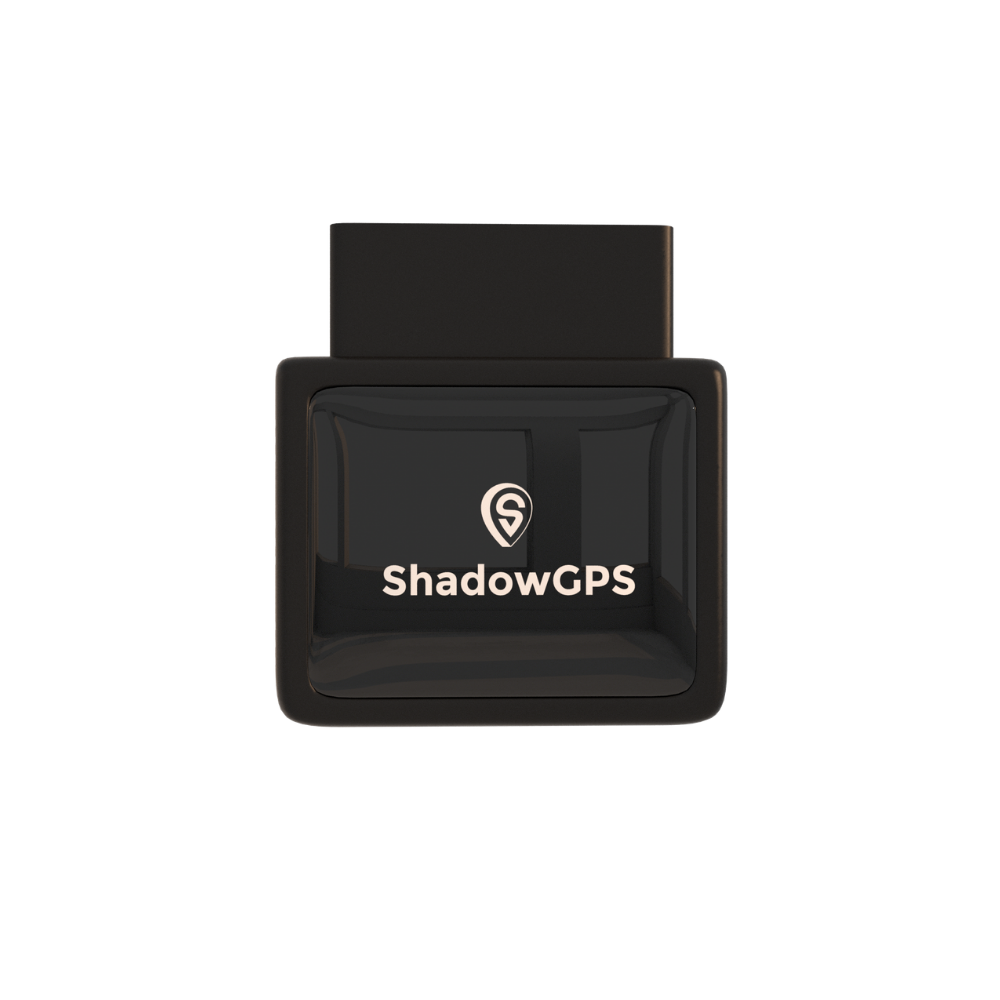
ShadowAuto
- Plugs in under 2 minutes, no tools
- Live tracking, trip timeline & trip replay
- Car alarm and engine code alerts


For trailers, equipment, or anything without an OBD-II port, ShadowTrack is the battery version, with about 15 days per charge.
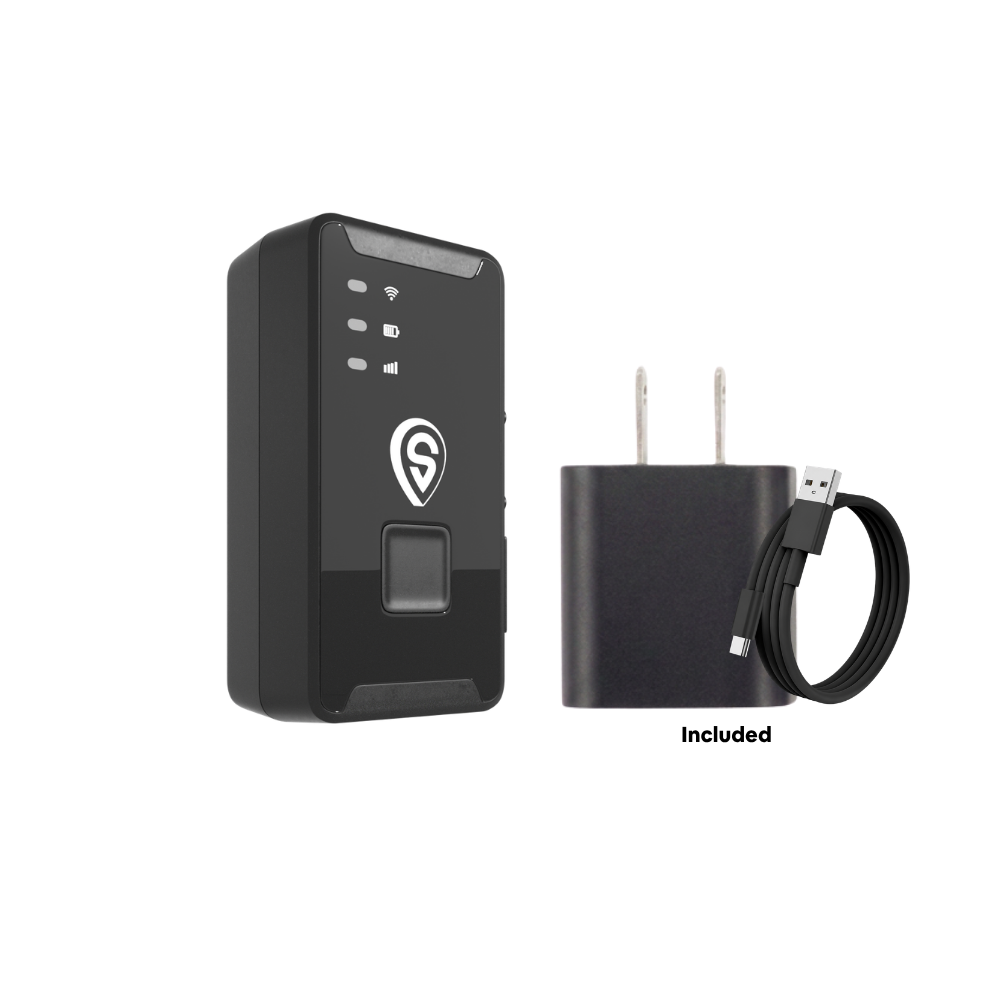
ShadowTrack
- About 15 days per charge
- Weatherproof magnetic case
- Live tracking and trip replay
Best for: families, Turo hosts, and owner-operators with one to five-plus vehicles who want certainty today. Not sure which one fits? See OBD-II vs. battery-powered GPS trackers.
Top 5 Fleet Management Software With AI in 2026
For fleet operators running a larger commercial fleet, these fleet management systems lead the pack this year. Most use quote-based pricing.
1. Samsara
A connected operations platform with AI dashcams, AI ride-alongs, and Agent Studio. Best for larger fleets wanting one system.
2. Motive
Covers driver safety, ELD compliance, spend management, and AI Automations. Strongest on safety coaching.
3. Geotab
An open platform connecting its own device, carmaker data, and third-party sensors, with the Geotab Ace AI assistant.
4. Verizon Connect
Large-scale fleet software with vehicle tracking, routing, and AI video for enterprise service fleets.
5. Fleetio
Maintenance-first software with seamless integration for tracker data, work orders, and parts. For AI video safety, Lytx is also worth a look.
| Platform | Best for | Standout AI feature | Pricing | Contract |
|---|---|---|---|---|
| Samsara | Mid-size to large fleets | Agent Studio AI agents | Quote-based | Set by quote |
| Motive | Trucking and field fleets | AI dashcam + Automations | Quote-based | Set by quote |
| Geotab | Data-heavy fleets | Geotab Ace assistant | Through resellers | Set by reseller |
| Verizon Connect | Large service fleets | AI video and routing | Quote-based | Set by quote |
| Fleetio | Maintenance teams | Maintenance automation | Per-vehicle plans | Plan-based |
| ShadowGPS | one to five-plus vehicles, families, Turo | Real-time tracking + engine codes | $69.90 + $12-$15/mo | None, ever |
Features and pricing as of October 2026. Confirm with each provider.
What the Numbers Really Say
Here is where the headline percentages come from and how much weight to give them.
| Claim | Source | How to read it |
|---|---|---|
| 30% to 50% less unplanned downtime | McKinsey, mostly factory data | A ceiling for mature predictive maintenance programs |
| 15% to 20% lower fuel consumption | Vendor reports on route optimization | Biggest fuel savings on multi-stop routes |
| About 22% fewer accidents | Vendor reports on driver behavior monitoring | Depends on coaching follow-through |
| Up to 45% less idle time | Vendor case studies using predictive analytics | Idle-heavy fleets gain the most |
| Five-month payback | IDC study of six Motive customers | Promising, but a small sample |
Our take: fuel savings are real but uneven. A crew truck idling at job sites sees more fuel savings than a family sedan, and data driven decision making only lowers fuel costs if someone acts on the alert.
How to Get Started: A 5-Step AI Readiness Framework
Whether you run three trucks or three hundred, here is how to make AI earn its keep in your fleet operations.
Step 1: Pick One Problem
Start with whatever hurts most: high fuel costs, vehicle downtime, or a need to enhance driver safety.
Step 2: Get Reliable Data Flowing
No AI can fix stale data. A tracker that updates slowly gives predictive analytics nothing to learn from.
Step 3: Set Baseline Performance Metrics
Write down today's fuel consumption per mile, idle hours, and maintenance spend. Without baseline performance metrics, you can't prove operational metrics improved.
Step 4: Check Integration With Existing Systems
Fleet managers should ask how any fleet software shares data with existing tools. Good integration prevents gaps from day one.
Step 5: Review Every Ninety Days
Compare fleet performance against your baseline each quarter. Keep what drives operational efficiency, cost control, and service reliability.
Want real numbers for a small fleet? Read how much GPS tracking costs for a small fleet in 2026 and what ROI to expect in year one.
Risks and Limits of AI Systems
False Alarms
In fleet operations, too many false alerts train drivers to disregard them, which is worse than no alert.
Data Privacy and Consent
Tracking a car you own is generally legal, but tracking employees comes with rules. Our guide to GPS tracking laws for employee vehicles covers the details.
Key Takeaways
In 2026, AI turns predictive analytics into action: predictive maintenance, route optimization, smarter coaching, and AI agents. Larger fleets should compare Samsara, Motive, Geotab, Verizon Connect, and Fleetio. Owners of one to five vehicles gain most from fast, reliable tracking and engine alerts.
Frequently Asked Questions
How is AI being used in fleet management?
For predictive maintenance, route optimization, driver behavior monitoring, fuel management, compliance, and AI dashcams. In 2026, AI agents also handle routine tasks like creating work orders.
What is meant by fleet management?
Overseeing a group of vehicles: tracking them, maintaining them, managing drivers and fuel, and staying compliant. It applies to two family cars as much as 2,000 trucks.
What are the top 5 fleet management software?
For larger fleets: Samsara, Motive, Geotab, Verizon Connect, and Fleetio. For one to five vehicles, a plug-in GPS tracker with a straightforward app usually covers it.
What does fleet AI do?
Fleet AI collects vehicle data, detects unusual patterns, predicts problems like part failures or late routes, and triggers an action such as an alert or work order.
Is AI fleet management worth it for a small fleet?
Enterprise AI platforms rarely pay off for very small fleets. Live tracking, trip history, engine alerts, and geofences deliver most of the value first.
Can AI help reduce insurance costs?
Often, yes. Some insurers discount fleets using AI safety tools, and dashcam footage helps challenge false claims. Ask your insurer.
Is there a monthly fee for a GPS tracker?
Real-time trackers use cellular data, so most charge a monthly fee. ShadowGPS runs $12-$15/mo with no contract, ever. Month-to-month, or prepay and save.
Does a GPS tracker need a SIM card?
Not one you buy yourself. ShadowAuto and ShadowTrack have cellular connectivity built in. Plug it in, open the app.
Start With the Data That Matters
Plug it in, see it move, cancel any time.
Pricing as of October 2026. Some links are affiliate links. Third-party statistics come from the cited sources and may not apply to every fleet. Follow local laws when tracking vehicles driven by others.

