The best GPS tracker for a snowmobile is a small, battery-powered tracker you can hide on the sled itself, because snowmobiles have no OBD-II port to plug into. For most owners that means a weatherproof, magnetic cellular tracker for theft protection, plus a satellite device if you ride past the last cell tower.
That second part matters more than most buying guides admit. A sled that sits in a garage, on a trailer at a trailhead, or behind a cabin is a very different problem from a rider who is 40 miles into the backcountry. One tracker rarely does both jobs well.
We make GPS trackers, so we will be straight with you: below you will see exactly where our own trackers fit, where they don't, and which competitor we would pick instead for those cases.
Best GPS tracker for a snowmobile: a hidden, weatherproof, battery-powered cellular tracker such as ShadowTrack for theft protection at home, at the trailhead, and in storage. Add a satellite tracker (SPOT Trace) or satellite communicator (Garmin inReach Mini 2) if you ride where there is no cell signal. Put a plug-in OBD-II tracker (ShadowAuto) in the truck that tows your sled, so the whole setup is covered.
ShadowTrack: a hidden, weatherproof tracker for your sled
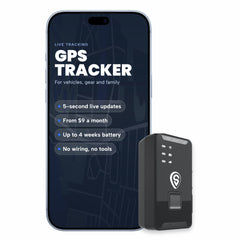
ShadowTrack is a pocket-sized, rechargeable GPS tracker in a weatherproof magnetic case. You don't wire anything. Charge it, open the ShadowGPS app, and tuck it somewhere hidden on the sled. The whole setup takes under two minutes.
When your snowmobile moves, the app shows it live, refreshing every 5 seconds. That speed is what you want in the first hour after a theft, when a sled on a trailer can cover a lot of highway. You also get motion alerts, geofences around your garage or cabin, tamper alerts, and a full year of trip history with route replay.
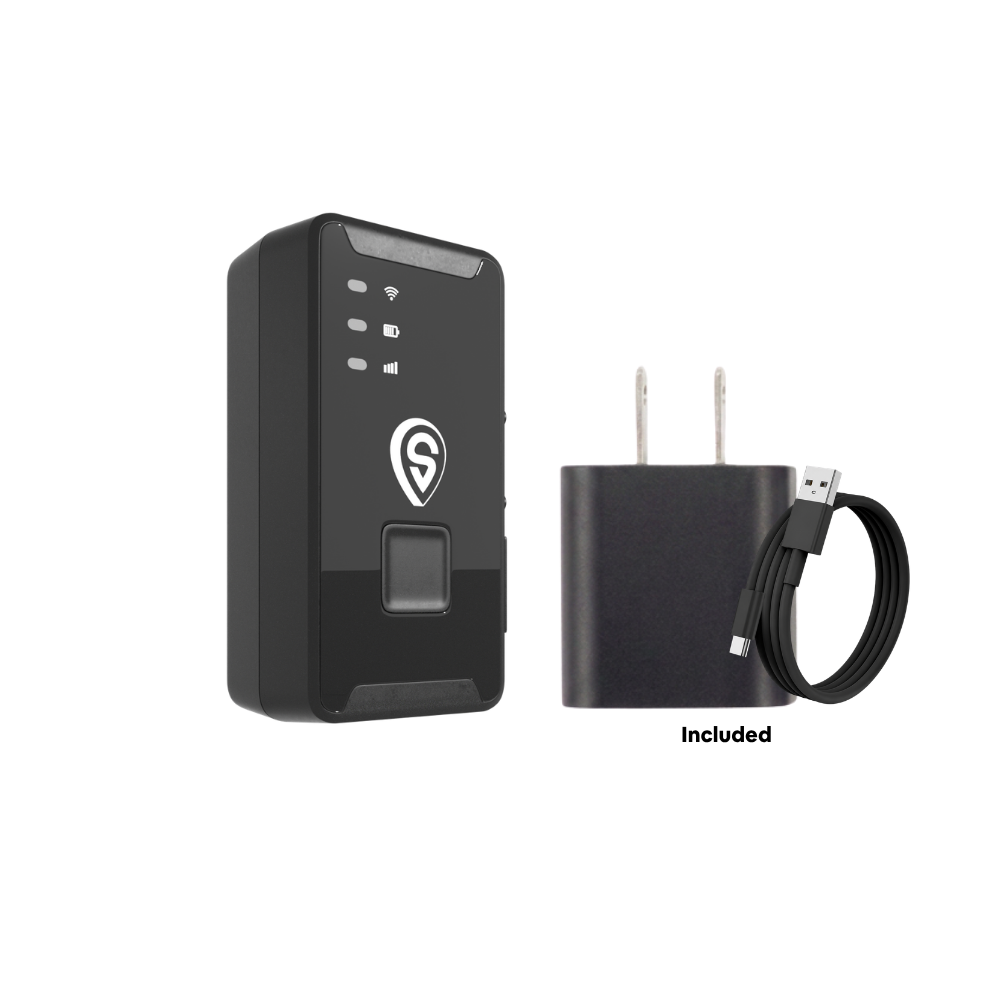
ShadowTrack
- Weatherproof magnetic case that hides anywhere on the sled
- Live location every 5 seconds while it moves
- Rechargeable, up to about 2 weeks per charge

Pros
- No wiring, no tools, hidden in under 2 minutes
- Fast live tracking, motion, geofence and tamper alerts
- Moves to your ATV, UTV or jet ski when snow season ends
- No contract, month-to-month or prepay
Cons
- Cellular, so it can't report from areas with zero cell service
- Like every lithium battery, runtime drops in deep cold
- Not an SOS or messaging device for rider safety
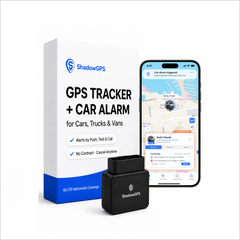
Don't forget the truck. Thieves often take the whole setup, trailer and all, and NICB's snowmobile theft data even counts cases where the stolen vehicle was the one carrying the sled. ShadowAuto plugs into your truck's OBD-II port, runs off the truck's power, and sends car alarm and tamper alerts if someone messes with it. Both trackers show up side by side in the same app.
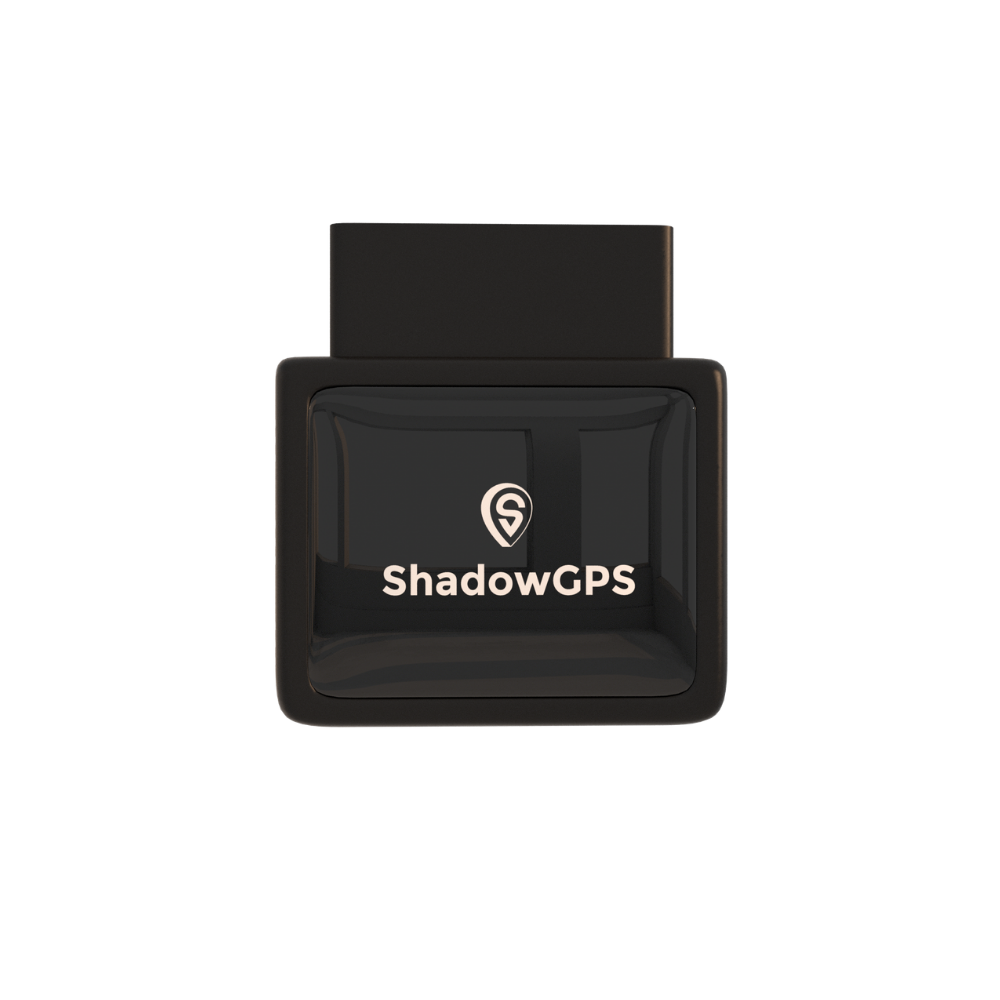
ShadowAuto
- Plug it into your truck's OBD-II port in under 2 minutes
- Powered by your truck, nothing to charge
- Car alarm, tamper alerts and engine codes in the app
Best for: sled owners who want to know where their snowmobile, trailer and tow truck are all winter, and through the off-season, from one app.
Why a snowmobile needs a different kind of GPS tracker
Most GPS trackers are built for cars that get driven every day. A snowmobile breaks almost every assumption those trackers make. Here are the four realities that should shape what you buy.
No OBD-II port
Sleds don't have the standard plug-in port cars and trucks use, so plug-in trackers are out. You need a battery-powered tracker or a hardwired one.
Brutal cold
Lithium batteries lose a big chunk of usable capacity below freezing. A tracker that lasts two weeks in October may need charging sooner in January.
Patchy coverage
Trails run far past cell towers. Cellular trackers are great at home and in town, but they go quiet where there is no signal.
Long storage season
Many sleds sit for six months or more. That is prime time for a garage or storage-unit theft that nobody notices for weeks.
Trailer theft
Sleds are often stolen on the trailer, from a driveway, motel lot or trailhead. Tracking only the sled leaves the trailer and truck exposed.
Several machines
Snowmobiling families often own more than one sled, so it helps to see every machine, plus the truck, in one place.
Snowmobile theft in 2026: what the numbers say
There are roughly 1.165 million registered snowmobiles in the U.S. in 2026, according to ISMA estimates reported by Powersports Business. Every one of them is easy to load, easy to hide, and easy to sell for parts.
The National Insurance Crime Bureau's latest recreational vehicle analysis paints a clear picture:
- 58,957 recreational vehicles (motorcycles, ATVs, snowmobiles and watercraft) were reported stolen in 2025, down 20% from 2024.
- About 63% were never recovered. Thefts are falling, but recovery is not getting easier.
- Speed decides recovery. More than half of the recoveries that do happen come within two weeks of the theft being reported.
NICB's dedicated snowmobile theft report found that only about 42% of stolen sleds had a recovery record, with the rest still missing. It also found that more sleds are reported stolen on Fridays and Saturdays, which lines up with trailheads, cabin weekends and motel parking lots.
What this means for you
A tracker doesn't make theft impossible. What it changes is the clock. Instead of discovering an empty trailer on Monday and filing a report with a description, you get a motion alert the moment your sled moves and can hand police a live location. That is the difference between the 42% and the rest.
Cellular vs. satellite: which snowmobile GPS tracker do you actually need?
This is the single most important decision, and most guides blur it. There are really two jobs, and they need two different kinds of device.
Job 1: theft protection (cellular tracker)
Thefts happen where people are: garages, driveways, storage units, trailhead lots, gas stations and hotels. Those places almost always have cell coverage. A cellular tracker is smaller, updates far faster, and costs less per month than satellite, which makes it the right tool for recovery.
Job 2: rider safety in the backcountry (satellite device)
If you ride where your phone shows "No Service," a cellular tracker can't report your position. For that, you need satellite. A satellite tracker such as SPOT Trace reports from almost anywhere with a view of the sky, and a satellite communicator such as the Garmin inReach Mini 2 adds SOS and two-way texting.
The simple framework: match the device to the rider
| If you are... | Main risk | What to carry |
|---|---|---|
| A trail rider who sticks to groomed, signed trails | Theft at home, trailhead or hotel | Cellular tracker on the sled (ShadowTrack) |
| A backcountry or mountain rider | Getting stuck or hurt with no signal, plus theft | Cellular tracker on the sled + satellite communicator on you |
| A family with 2 to 3 sleds and a trailer | Losing the whole setup in one theft | Tracker on each sled + OBD tracker in the tow truck |
| A small rental or outfitter (2 to 10+ sleds) | Late returns, off-limits riding, theft | Tracker on every sled with geofences, satellite for guides |
Think of it this way: the tracker on the sled protects your property, and the satellite device in your pocket protects you. Serious riders end up with both.
How we picked the best GPS trackers for snowmobiles
We compared each tracker on the things that actually decide whether it helps you get a sled back, or get yourself home. We looked at published specs, network type, plan terms and how well each one fits the way sleds are used and stored.
1. SPOT Trace
SPOT Trace skips cell towers and sends its position over the Globalstar satellite network. That makes it a strong theft tracker for remote cabins, hunting camps and mountain staging areas where a cellular tracker simply can't reach a tower.
The tradeoff is speed and size. Satellite updates come every few minutes rather than every few seconds, and the device is bigger than a pocket cellular tracker. It also needs an annual satellite plan.
Pros
- Works far beyond cell coverage
- Motion alerts by text or email
- Water-resistant, built for outdoor gear
Cons
- Updates in minutes, not seconds
- Needs a clear view of the sky, struggles inside a garage
- Annual plan plus activation fee


Best for: sleds stored or staged at remote cabins and camps with no cell signal.
2. Garmin inReach Mini 2
The inReach Mini 2 isn't really a sled tracker. It is a satellite communicator you clip to your jacket, and it is the device we would want on any rider heading into deep backcountry. It uses the Iridium satellite network for SOS, two-way texting and location sharing with family back home.
Because it travels with you, it won't help recover a sled stolen from your garage. Pair it with a hidden tracker on the machine.
Pros
- Interactive SOS to a 24/7 response center
- Two-way texting with no cell service
- Small and light enough to wear
Cons
- Not designed for theft recovery
- Highest device cost on this list
- Satellite plan required

Best for: backcountry, mountain and solo riders who need SOS and messaging off the grid.
3. LandAirSea 54
The LandAirSea 54 is a small, waterproof cellular tracker with a built-in magnet. Its motion-activated sleep mode helps the battery stretch when your sled sits still, which suits long storage stretches.
The catch is the plan structure. Faster updates sit on higher-priced tiers, and the best monthly rate usually needs a long prepay commitment.
Pros
- Waterproof body with internal magnet
- Sleep mode saves battery in storage
- Long-standing U.S. brand
Cons
- Fastest updates cost the most
- Best rate tied to a long commitment
- No signal, no updates

Best for: owners who mainly want to watch a stored sled and don't mind slower updates.
4. Tracki
Tracki is a tiny, general-purpose cellular tracker with global SIM coverage, which helps if you trailer your sled between the U.S. and Canada. Accessories like waterproof magnetic cases make it workable on a snowmobile.
Its update speed and battery life depend heavily on which plan tier and settings you choose. At its fastest settings, battery life can drop to just a few days, which is tough in cold weather.
Pros
- Very small and easy to hide
- Global coverage across borders
- Flexible interval settings
Cons
- Short battery at fast settings
- Best pricing needs a 2-year commitment
- Weatherproof case often sold separately

Best for: riders who regularly cross the U.S.–Canada border with their sled.
5. Monimoto 9
Monimoto 9 was built for powersports like ATVs, UTVs and off-road machines, and it works on sleds too. It behaves more like an alarm than a live tracker: a key fob disarms it when you are nearby, and if the machine moves without the fob, you get a call and the tracker starts reporting location.
That approach saves battery, but it means you won't see routine live tracking or detailed trip history the way you would with an always-on tracker.
Pros
- Key fob means fewer false alarms
- Designed for powersports and weather
- Battery-saving, alert-first design
Cons
- Not built for everyday live tracking
- Lighter on trip history and geofences
- Higher upfront price

Best for: owners who want a set-and-forget alarm on a sled or powersports machine rather than live tracking.
Snowmobile GPS tracker comparison table
| Tracker | Best for | Network | Works with no cell signal? | Power | Updates while moving | Contract |
|---|---|---|---|---|---|---|
| SPOT Trace | Remote cabins & camps | Satellite | Yes | Battery | Every few minutes | Annual plan |
| Garmin inReach Mini 2 | Rider SOS & messaging | Satellite | Yes | Rechargeable | Interval tracking | Satellite plan |
| LandAirSea 54 | Stored sleds | Cellular | No | Battery | Depends on plan tier | Best rate needs long prepay |
| Tracki | Cross-border riders | Cellular (global) | No | Rechargeable | Depends on plan tier | Best rate needs 2 years |
| Monimoto 9 | Alarm-style protection | Cellular | No | Battery | On alert | Subscription |
| ShadowAuto | The truck that tows your sled | Cellular | No | Plugs into OBD-II | Every 5 seconds | None, ever |
| ShadowTrack | Hidden theft protection on the sled | Cellular | No | Rechargeable | Every 5 seconds | None, ever |
Specs and plan terms are based on each manufacturer's published information as of November 2026 and can change. Check the current listing before you buy.
How to choose a GPS tracker for your snowmobile: 6-point checklist
Use this checklist before you buy any snowmobile GPS tracker, ours included.
1. Network: cellular, satellite, or both
Decide whether you need theft recovery, backcountry safety, or both. If thieves are your worry, cellular is faster and smaller. If you ride with no signal, carry satellite on your body.
2. Cold-weather behavior
According to Battery University, a lithium battery that delivers full capacity at 80°F typically delivers only about half at 0°F. The good news is that this loss is temporary and the capacity comes back once the battery warms up. Look for a published operating temperature range, and plan to charge more often in January than in November.
3. Battery and charging
Battery life claims are almost always measured in mild weather at slow update settings. Ask two questions: how long does it last at the update speed you actually want, and how easy is it to pull off the sled and charge indoors?
4. Weatherproofing and mount
Snow melts, refreezes and works its way into everything. Choose a sealed, weatherproof case and a strong magnet or secure mount that survives vibration and hard landings.
5. Update speed and alerts
Slow updates are fine for checking that a stored sled hasn't moved. They are a real problem when your sled is on a trailer doing 70 mph. Look for motion alerts, geofences and tamper alerts, not just a map dot.
6. Monthly fee and contract terms
Every tracker that reports live location needs a data plan, cellular or satellite. What varies is the contract. Many brands advertise a low monthly price that only applies if you lock in for one or two years, which is awkward for a vehicle you ride four months a year.
Where to hide a GPS tracker on a snowmobile
Good placement does two things at once: it keeps the tracker out of sight and it lets the signal out. Here's how to think about it.
Good spots to try
- Under the seat: usually dry, protected from the snow, and away from engine heat. Many sleds have storage space or open frame space under the seat.
- Inside the rear storage or bumper area: plastic panels let the signal through, and most thieves never look there.
- Behind plastic body panels in the nose: fine if the spot stays well away from the exhaust and hot engine parts.
- Inside a tunnel bag or rack bag: a quick option for riders who want to move the tracker between machines often.
Spots to avoid
- Near the exhaust, muffler or engine: heat is as hard on batteries as cold.
- Near the track, skis or suspension: moving parts and packed snow can knock it loose.
- Fully enclosed in metal: metal blocks GPS and cellular signals. Plastic, foam and fabric are fine.
Test before you trust it
After placing the tracker, take a short ride or tow your sled around the block. Open the app and check that the trip shows up cleanly. If it doesn't, move the tracker closer to a plastic panel that faces the sky.
How to set up ShadowTrack on your snowmobile in under 2 minutes
- Charge it indoors at room temperature until full.
- Download the ShadowGPS app on iPhone or Android and add your tracker.
- Place it in its magnetic case and hide it on the sled using the placement tips above.
- Set a geofence around your garage, storage unit or cabin so you get an alert if the sled leaves. Our guide to geofence alerts that catch overnight theft walks through it.
- Turn on motion and tamper alerts, then take a quick test ride.
Winter battery playbook: keep your tracker alive all season
Cold doesn't break a lithium battery, but it does shrink how long a charge lasts. These habits keep your snowmobile GPS tracker reporting when it counts.
- Let it warm up before charging. Battery experts warn against charging lithium cells below freezing. Bring the tracker inside and give it time to reach room temperature first.
- Charge on a routine. Pick a habit, like topping it up every other Sunday, so you never guess. Our GPS tracker battery guide covers what drains a battery fastest.
- Adjust update frequency for storage. ShadowTrack lets you control how often it updates in the app. Slower settings stretch the battery while the sled sits.
- Check before every trailer trip. The highest-risk moments are motel lots and trailhead parking, so start each trip with a full charge.
One tracker, every season: GPS tracking for all your powersports vehicles
A good GPS tracker for powersports vehicles shouldn't sit in a drawer from April to November. Because ShadowTrack isn't wired in, it moves with the season.
Winter
Snowmobile, sled trailer and the truck that tows them.
Spring & fall
ATV, UTV or side-by-side, and dirt bikes on the trailer to the trails.
Summer
Jet ski or small boat on the trailer, plus the cabin toys that sit outside.
If you ride motorcycles too, our guide on why GPS tracking matters for motorcycle security covers the road side of powersports. For more ideas, see these uses for GPS trackers beyond your car.
Example: a two-sled family in northern Wisconsin
Here's how a typical setup could look. A family owns two sleds, an enclosed trailer and a pickup. They put a ShadowTrack on each sled and a ShadowAuto in the truck, then draw one geofence around the house and another around the cabin.
On a Friday night stop at a motel, the trailer is parked in the lot. If anyone hooks up and drives off, the truck alerts and the sleds start showing movement, all in the same app. In March, the sled trackers come off and go onto the ATV and the fishing boat trailer. Same trackers, same account, all year.
For small rental shops, outfitters and lodges (2 to 10+ sleds)
If you rent sleds or guide trips, a tracker on every machine pays off fast. You can see who is running late, spot a rider heading toward a closed area with a geofence, and replay a trip when there's a damage question.
- Every sled in one account: view your whole lineup on one map, on the app or the web.
- Lower per-tracker pricing: plans drop when you run 4 or more trackers, still with no contract.
- Share Location: send a live link to a guide or a worried spouse without giving them your login.
- Satellite for guides: give lead guides a satellite communicator for areas with no service.
Small operators can also browse our guide to fleet GPS tracking for 3 to 10 vehicles.
Layered snowmobile security: GPS works best with these habits
NICB recommends stacking protections rather than relying on one. A GPS tracker is your recovery layer. These are your prevention layers:
- Lock it down: use a hitch lock and a wheel or tongue lock on the trailer, plus a cable lock through the sled's ski spindles or frame.
- Store it smart: keep the sled and trailer in a locked garage or enclosed trailer when you can, and park where there's light and cameras on the road.
- Record your details: photograph your sled and keep the VIN, registration and any custom features on your phone.
- Report fast: recovery odds drop as days pass, so report a theft to police and your insurer right away.
If your snowmobile is stolen
Call 911 or local police first, then open the app and share the live location with officers. Don't try to recover the sled yourself. Our step-by-step guide on what to do right after a theft applies to sleds and trailers too.
Is it legal to put a GPS tracker on a snowmobile?
Yes. Tracking a snowmobile, trailer or truck that you own is legal throughout the U.S. If you rent sleds to customers, disclose GPS tracking in your rental agreement. Tracking a vehicle or person you don't own, without consent, can break state laws, so keep trackers on your own property.
Snowmobile GPS tracker FAQs
Is there a monthly fee for a snowmobile GPS tracker?
Yes. Any tracker that shows live location needs a cellular or satellite data plan. ShadowGPS plans run from $9/mo with a 2-year prepay to $15/mo month-to-month, with lower rates for 4 or more trackers. No contract, ever: month-to-month, or prepay and save. Bluetooth tags have no fee, but they can't track a sled across town.
Does a snowmobile GPS tracker need a SIM card?
Cellular trackers need a cellular connection, but with most modern trackers it's already built in, so you don't buy or insert a SIM yourself. ShadowTrack and ShadowAuto come ready to connect once you activate a plan in the app. Learn more in our post on whether a GPS tracker needs a SIM card.
Can I plug an OBD GPS tracker into my snowmobile?
No. Snowmobiles don't have the standard OBD-II port that cars and trucks use, so plug-in trackers won't fit. Use a battery-powered tracker like ShadowTrack on the sled, and put a plug-in tracker like ShadowAuto in the truck that tows it.
Will a GPS tracker work in the backcountry with no cell service?
A cellular tracker can't report until it reaches a signal again. For riding with no cell service, use a satellite device such as SPOT Trace or a satellite communicator such as the Garmin inReach Mini 2. Most thefts happen in places with coverage, which is why a cellular tracker on the sled is still the best theft protection.
Do GPS trackers work in extreme cold?
Yes, but battery life shrinks. Lithium batteries can deliver roughly half their normal capacity around 0°F, and the capacity returns once they warm up. Charge more often in deep winter, and always let the tracker warm to room temperature before charging.
Where is the best place to hide a tracker on a snowmobile?
Under the seat, inside rear storage, or behind a plastic panel away from the exhaust are all good choices. Avoid hot engine parts, moving parts like the track and skis, and spots fully enclosed in metal, which block the signal.
How long does a snowmobile GPS tracker battery last?
It depends on how often the tracker updates, how much the sled moves, and the temperature. ShadowTrack lasts up to about 2 weeks per charge in normal use, and you can slow its update frequency in the app to stretch it while the sled is stored.
Can I use an AirTag on my snowmobile?
You can, but it's not a real GPS tracker. An AirTag only updates when a nearby Apple device passes by, which rarely happens at a cabin or on a rural road, and it can alert a thief's phone that it's there. See our breakdown of GPS vs. AirTag vs. RF trackers.
Will a GPS tracker lower my snowmobile insurance?
It might. Some insurers offer discounts for anti-theft devices on recreational vehicles. Call your insurer and ask whether a GPS tracker qualifies on your policy.
Can one account track my sleds, trailer and truck?
Yes. ShadowTrack and ShadowAuto both live in the same ShadowGPS app and web dashboard, so you can see every sled, trailer and truck on one map. Running 4 or more trackers also lowers your per-tracker rate.
Does ShadowTrack work if I ride in Canada?
Yes. ShadowGPS trackers have roaming coverage in 188 countries, including Canada, wherever there's a cellular signal.
Know where your sled is, all winter long
Hide ShadowTrack on your snowmobile, plug ShadowAuto into your truck, and see them both in one app. Plug it in, see it move, cancel any time.
This guide reflects pricing, specifications, and statistics published as of November 2026. Subscription pricing and features are subject to change by each manufacturer. As an Amazon Associate, ShadowGPS earns from qualifying purchases made through Amazon links in this post. Laws on GPS tracking vary by state; this article is general information, not legal advice.