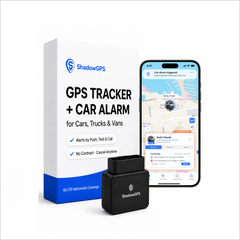
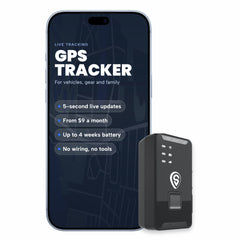
No, a GPS tracker doesn't have a fixed distance limit. A cellular GPS tracker can show you where your car is whether it's parked in your driveway or 2,000 miles away, as long as it can see the sky and reach a cell network.
So why do so many people ask about GPS tracker range? Because "range" means three different things on product boxes, and one of them is pure marketing. A $20 Bluetooth tag that promises "unlimited range" works nothing like a tracker plugged into your car.
This guide breaks down what actually limits a tracker, how every tracker type compares, and how to pick one that keeps working wherever your car, truck, or Turo rental goes.
A GPS tracker has no distance limit for finding its own location, because GPS satellites cover the entire planet. The real GPS tracker limit is how it reports that location to your phone: cellular trackers work anywhere with cell coverage, satellite trackers work almost anywhere outdoors, and Bluetooth tags only update when a phone is nearby.
GPS Has No Range. Your Tracker's Connection Does.
Here's the part most articles skip. GPS is a one-way system. Satellites broadcast timing signals, and your tracker listens. It never "talks back" to a GPS satellite, so there's no signal that can run out of distance on the way up.
The U.S. GPS constellation flies about 20,200 km (12,550 miles) above Earth, with at least 24 satellites kept available at all times and around 31 operational, according to GPS.gov. A tracker needs signals from at least four of them to calculate a position, and that works the same in Ohio as it does in Alaska.
The catch: knowing where it is doesn't help you unless the tracker can send that location to your phone. That second step is where every real-world range limit lives.
Range #1: Positioning (finding itself)
This is the GPS part. It's global and free, and it only needs a reasonably clear view of the sky. Outdoors, consumer GPS is typically accurate to around 16 feet (about 5 meters).
Range #2: Reporting (telling you)
This is the link from the tracker to your app. It might be a cell network, a satellite network, a radio receiver, or a passing iPhone. Whatever the link is, its coverage is your tracker's practical range.
Range #3: The marketing kind
Some Bluetooth tags advertise "unlimited range" because strangers' phones can relay their location. That's technically true and practically misleading for a car. The tag only updates when a compatible phone happens to pass by, and it can't show a live route while your car is moving.
GPS Tracker Range by Type: Side-by-Side Comparison
If you only read one section, make it this one. The type of reporting link decides almost everything about how far, how often, and how reliably you'll see your car.
| Tracker type | How it reports | Practical range | Live map while moving? | Monthly fee? | Best for |
|---|---|---|---|---|---|
| Bluetooth tag (AirTag, Tile) | Your phone, or nearby phones on the network | About 30 to 300 ft direct; farther only when a stranger's phone passes | No | Usually no | Keys, bags, luggage |
| RF (radio) tracker | Radio signal to a handheld receiver | Line of sight, usually a few miles at most | Direction only, no map | Varies | Hunting dogs, short-range recovery |
| Satellite GPS tracker (SPOT Trace, Garmin inReach) | Commercial satellite network | Nearly global, including off-grid areas | Yes, usually at slower intervals | Yes | Backcountry, boats, remote assets |
| Cellular GPS tracker (4G LTE / LTE-M) | Cell network, like a phone | Anywhere with cell coverage, coast to coast | Yes | Yes | Cars, trucks, teen drivers, small fleets |
| ShadowAuto & ShadowTrack | Multi-carrier LTE-M (Verizon, AT&T, T-Mobile) | Anywhere with U.S. cell coverage, plus roaming in 188 countries | Yes, live while moving | Yes, no contract | Your car, truck, Turo rental, trailer |
Ranges are typical real-world figures, not lab maximums. Bluetooth distance drops fast through walls and car metal. Satellite update intervals depend on the plan you choose.
What Really Limits a GPS Tracker: 7 Factors That Matter
Distance isn't on this list, and that's the point. These are the things that actually decide whether your tracker shows a fresh dot on the map.
1. Cell coverage where your car actually goes
A cellular tracker works anywhere your phone would get data, and stops reporting where your phone would show "No Service." Interstates and towns are rarely a problem. Long rural stretches, deep canyons, and some ranch land can be.
Before you buy, check the roads you drive on the FCC National Broadband Map, which shows mobile coverage by carrier. A tracker that can use more than one carrier has more chances to find a signal.
What happens when your car drives through a dead zone
The tracker usually keeps working out of sight. It can still calculate its position from satellites; it just can't send it until a signal returns. Many cellular trackers save those points and upload them once they reconnect, so you'll see a short gap and then the route fill in. Ask any brand you're considering how it handles this.
2. Sky view and obstructions
GPS signals are weak by the time they reach the ground, so they don't pass through thick concrete or solid metal well. Tall buildings can also bounce signals and pull the dot off by a few car lengths.
Parking garages and underground lots
Deep inside a parking structure, a tracker may lose both GPS and cell signal. Your app will usually show the last point near the entrance, which is still useful: you know which garage your car is in. Once it drives out, live tracking picks back up.
Placement inside your car
An OBD-II tracker sits under the dashboard, which is plenty of sky view for normal driving. A battery tracker needs more thought. Avoid sealed metal toolboxes or burying it deep in the frame, and give it a spot where plastic, glass, or fabric is between it and the sky.
3. Power
A tracker with a dead battery has a range of zero. That's the simplest limit, and the most common one people forget.
Plug-in OBD-II trackers draw power from your car, so you never charge them. Battery trackers trade that for portability and need charging every week or two, depending on how often they update and how much your car moves. Our guide on how long GPS tracker batteries last goes deeper.
4. Network generation (the 3G sunset)
In 2022, AT&T, T-Mobile, and Verizon shut down their 3G networks, and the FCC warned that GPS trackers and vehicle safety devices running on 3G would stop working. Plenty of older or bargain trackers still floating around online were built for those networks.
If a used or very low-priced tracker doesn't clearly say 4G LTE or LTE-M, assume its range in the U.S. today is zero. LTE-M is a version of 4G built for low-power devices, and it's designed to reach deeper into buildings than standard LTE.
5. Your plan and roaming
Crossing state lines doesn't matter to a cellular tracker. Crossing a border might. Road trips into Canada or Mexico depend on whether your tracker's plan includes roaming in that country.
ShadowGPS trackers have roaming coverage in 188 countries. If a cross-border trip is on the calendar, check your plan details before you leave.
6. Update interval: the range nobody talks about
Here's a limit that changes what you actually see. If a tracker only reports every 3 minutes, a car doing 60 mph travels about 3 miles between dots. Your "live" map is always a few miles behind.
ShadowGPS trackers refresh every 5 seconds while moving, so at that same highway speed the gap between updates is about 440 feet. That's the difference between "somewhere on I-95" and "just took exit 42."
7. Interference and jammers
Heavy electronics and certain dash gadgets can add noise, though this is rare in normal driving. Deliberate GPS jammers are a different story: the FCC says it's illegal to use, sell, or market them in the U.S. A good tracker with tamper alerts helps you know when something's off.
4 Myths About GPS Tracker Range
- "Unlimited range" means it tracks my car anywhere. On a Bluetooth tag, it means "anywhere a compatible phone walks past." That's fine for a lost suitcase, not for a car on the move.
- GPS trackers stop working when you leave your state. Cell networks don't care about state lines. A cellular tracker works in all 50 states wherever there's coverage.
- Trackers send their signal up to GPS satellites. They don't. Only satellite communicators transmit to space, and they use separate commercial networks, not GPS.
- Range and accuracy are the same thing. Range is how far it can report. Accuracy is how close the dot is to reality. GPS.gov puts smartphone GPS at about 4.9 meters (16 feet) under open sky, and trackers land in a similar zone. More in our GPS accuracy guide.
Real-World Range: What to Expect Day to Day
Specs are one thing. Here's how range plays out in the situations ShadowGPS owners actually ask about.
Teen driver, 300-mile trip
A cellular tracker follows the whole route. Expect short gaps on remote stretches, then the trip fills back in.
Turo guest crosses state lines
Your rental stays on the map. A geofence alert tells you the moment it leaves the area you expected.
Airport parking garage
The last point shows near the garage entrance. Tracking resumes as soon as the car drives out.
Truck at a rural ranch
If your phone has no bars there, a cellular tracker won't either. For true off-grid land, consider satellite.
3 to 5 work trucks across counties
Every truck shows in one app, with the same coverage your crew's phones get on the road.
Trailer at a job site
A battery tracker with a clear sky view reports fine. Avoid sealing it inside a metal box.
How to Choose a Tracker by Range: The 3-Question Check
Use this quick framework before you buy. Three answers tell you which type of tracker fits.
- Where will it go? Roads and towns with cell service point to a cellular tracker. True off-grid land or open water points to satellite.
- How often do you need to see it? Live, while it's moving, rules out Bluetooth tags. Check the real update interval, not just "real-time" on the box.
- How long must it run on its own? If your car has an OBD-II port, plug-in power means no charging. Trailers, equipment, and older cars need a battery tracker.
Quick picks by situation
- Family car, teen driver, or Turo rental: a plug-in OBD-II cellular tracker. Not sure where your port is? Find your OBD2 port in 30 seconds.
- Trailer, equipment, or a car without an easy OBD-II port: a battery-powered cellular tracker.
- Backcountry trips beyond cell coverage: a satellite tracker or communicator.
- Keys and bags: a Bluetooth tag. Here's how GPS, AirTag, and RF trackers compare for cars and bikes.
Where ShadowGPS Fits
ShadowAuto and ShadowTrack: cellular range, no contract
Both ShadowGPS trackers use multi-carrier LTE-M, so they report anywhere your car finds U.S. cell coverage, with roaming in 188 countries for the trips that go farther. The fast refresh we covered above means the dot on your map keeps up with your car instead of trailing miles behind.
Setup is simple. ShadowAuto plugs into your car's OBD-II port in under 2 minutes, with no tools and no wiring. Then you just open the app and see where your car is, with live tracking, trip replay, geofence alerts, and Car Alarm for theft.
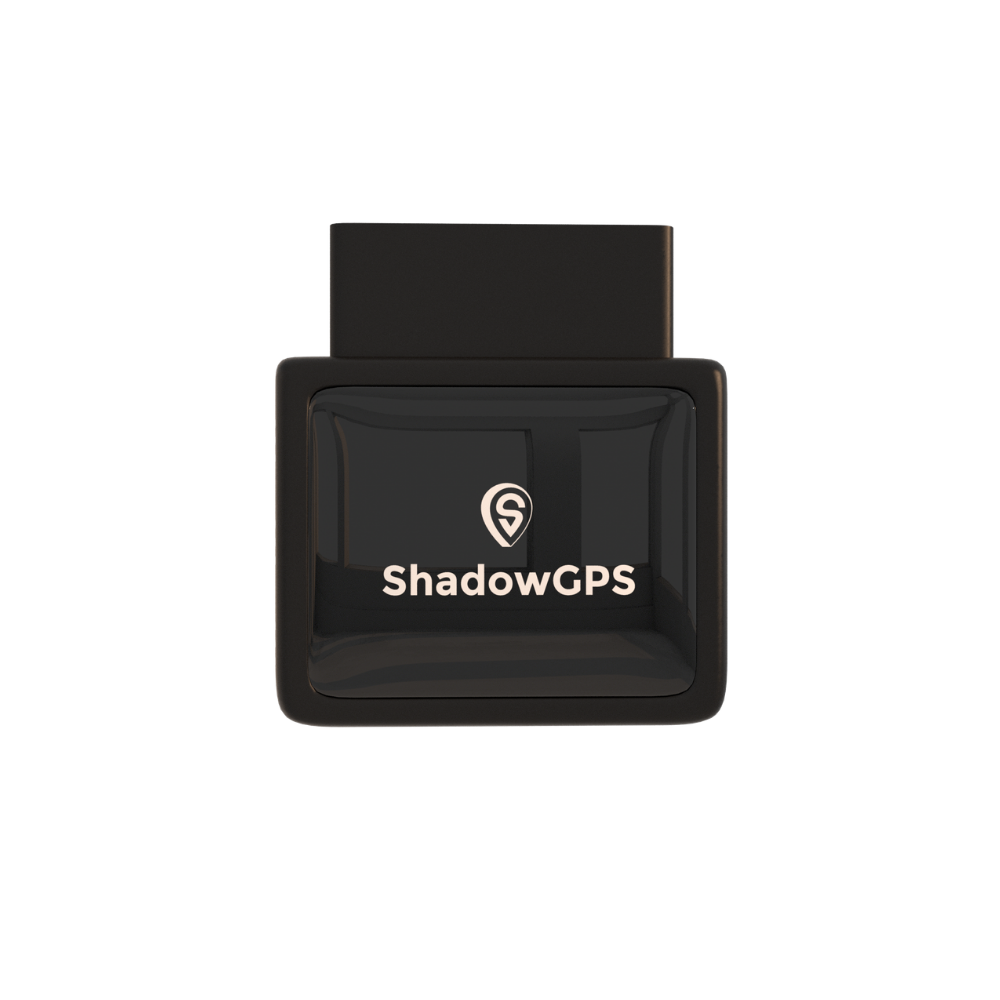
ShadowAuto
- Powered by your car, never needs charging
- Live tracking, trip timeline & trip replay
- Car Alarm & engine diagnostics

No OBD-II port, or tracking something that doesn't have one? ShadowTrack runs on its own rechargeable battery for up to about two weeks per charge, depending on how much it moves, and hides anywhere with the optional weatherproof magnetic case.
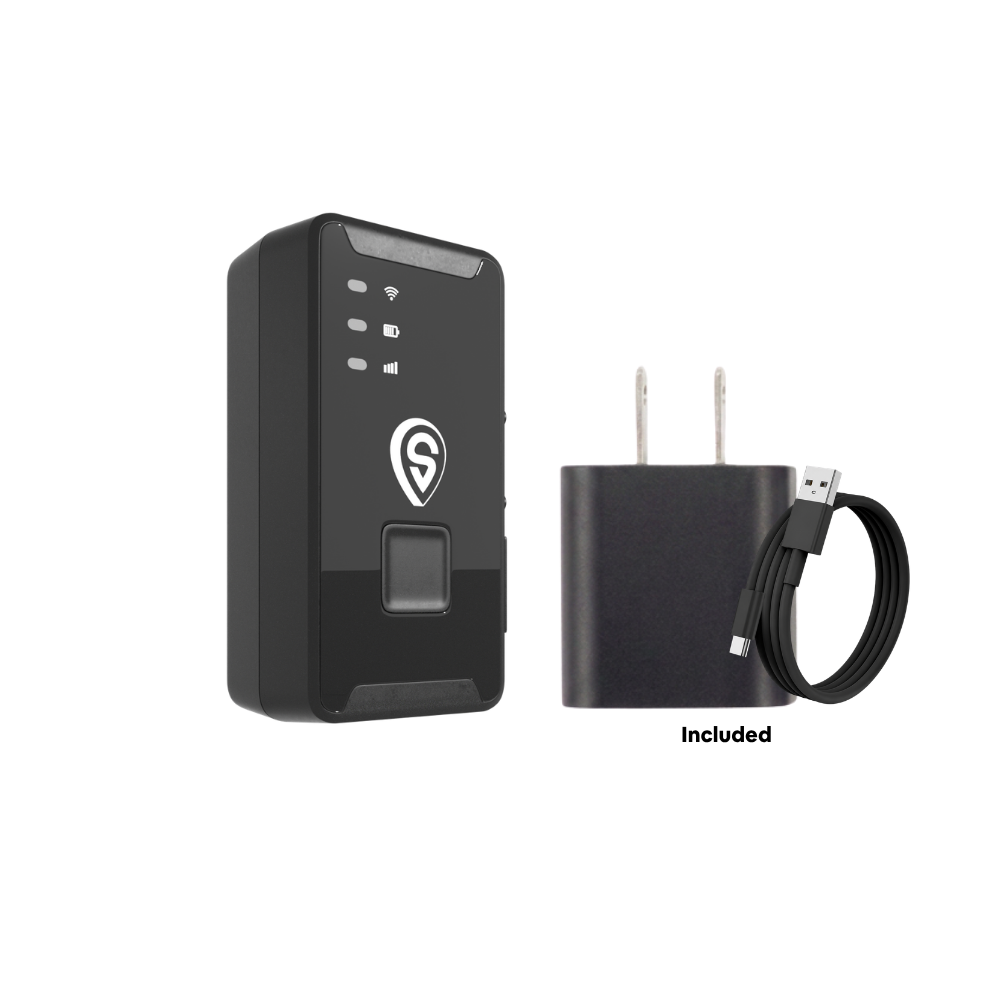
ShadowTrack
- Rechargeable, up to ~2 weeks per charge
- Magnet-mount or place it, under 2 minutes
- Motion, geofence & tamper alerts
Best for: anyone who owns a car, truck, or rental that matters to them and wants to know where it is across town or across the country. Turo hosts can see how it works on our Turo page, and small fleets can compare plans on the pricing page.
Owners rate ShadowGPS 4.3 to 4.6 out of 5 across 199 verified on-site reviews, and every order comes with a 30-day money-back guarantee.
Other Trackers and Their Range
Not every job needs a cellular tracker. To be fair to every option, here's how three popular alternatives handle range, judged on how they report location, what they're built for, and where they fall short for a car.
1. Apple AirTag
AirTag uses Bluetooth plus Apple's Find My network. Nearby, it connects straight to your iPhone. Farther away, it only updates when another Apple device passes close enough to relay its location.
Pros
- No monthly fee
- Huge relay network in busy cities
- Great for keys and luggage
Cons
- No live route while your car moves
- Goes quiet in rural areas with few iPhones
- Anti-stalking alerts can notify whoever's driving


Best for: keys, bags, and luggage. For cars, see why AirTags fall short for cars.
2. Tile
Tile works the same basic way as AirTag, but on both iPhone and Android, relaying through the Tile and Life360 app network. Direct Bluetooth range is short, and long-distance updates depend on other app users passing by.
Pros
- Works with iPhone and Android
- Small, simple, low upfront price
Cons
- Smaller relay network than Apple's
- No live tracking for a moving car

Best for: Android users who want a simple item finder for everyday things.
3. SPOT Trace
SPOT Trace reports over a commercial satellite network instead of cell towers, so it keeps working where phones don't. That reach comes with slower update intervals and a monthly plan of its own.
Pros
- Works far beyond cell coverage
- Good for boats and remote equipment
Cons
- Needs open sky, struggles indoors
- Slower updates than cellular trackers

Best for: boats, remote cabins, and gear that lives outside cell coverage. If you need two-way messaging off-grid, the Garmin inReach Mini 2 is the other name to know.
How to Test Your GPS Tracker's Range in 15 Minutes
Specs describe ideal conditions. A quick real-world test tells you how your tracker behaves in the places your car actually lives.
- Start at home. Confirm the dot matches your driveway or parking spot.
- Drive a short loop. Watch the route in the app and check that it follows the roads you took, not a jagged line between far-apart dots.
- Park in your usual garage. Note where the last point lands, and how quickly it updates once you drive out.
- Set a geofence. Draw a zone around home or work and drive out of it. Time how fast the alert hits your phone.
- Check a known weak spot. If there's a rural road or canyon where your phone drops signal, drive through and watch the route fill back in afterward.
Example: a Turo host with two cars might run this test from home, through the airport garage where guests pick up, and out to the edge of a city geofence. In about 15 minutes, they'd know exactly what the map shows during a real rental, before a guest ever has the keys.
6 Tips to Keep Your Tracker Connected
- Choose 4G LTE or LTE-M. Skip anything built for 2G or 3G networks.
- Use the OBD-II port when you can. Constant power removes the most common limit of all.
- Give battery trackers a sky view. Plastic, glass, and fabric are fine. Thick metal isn't.
- Charge on a schedule. Put a reminder on your calendar so a battery tracker never runs flat.
- Turn on tamper and motion alerts. You'll know if a tracker is unplugged or moved.
- Check your plan before border trips. Confirm roaming for Canada or Mexico before you go.
Still deciding between plug-in and battery? Our OBD2 vs. battery-powered GPS tracker comparison walks through it. Running a few work trucks? See choosing fleet GPS tracking for 3 to 10 vehicles.
Track what you own
Range doesn't change the rules. In the U.S., it's generally legal to track a car or truck you own, or one you have the right to track, like your teen's car on your title or a rental you list on Turo. Tracking a car you don't own, or a person without consent, can break state law. Employers should read our guide on GPS tracking and employee vehicles. This isn't legal advice, so check your state's rules if you're unsure.
GPS Tracker Range FAQ
Does a GPS tracker have a range limit?
Not for distance. GPS satellites cover the whole planet, so a tracker can find itself almost anywhere outdoors. The practical limit is its reporting link: a cellular tracker needs cell coverage, a satellite tracker needs open sky, and a Bluetooth tag needs a phone nearby.
Is there a monthly fee for a GPS tracker with no range limit?
Yes. Cellular and satellite trackers pay for network data, just like your phone. ShadowGPS plans run $9 to $15 a month for 1 to 3 trackers depending on how you pay, and less for 4 or more. No contract. Month-to-month, or prepay and save.
Does a GPS tracker need a SIM card to work long range?
A cellular tracker needs a cellular connection, but you usually don't have to buy or insert a SIM yourself. ShadowAuto and ShadowTrack come ready to connect; you just activate a plan in the app. More in our guide on whether your GPS tracker needs a SIM card.
Is a long-range GPS tracker hard to set up?
No. An OBD-II tracker like ShadowAuto plugs into the port under your dashboard in under 2 minutes, with no tools or wiring. A battery tracker like ShadowTrack just needs a charge and a good spot.
How far away can a GPS tracker be tracked?
With a cellular tracker, your distance from the car doesn't matter at all. You could be in Texas checking on a car in New York. What matters is whether the car has cell coverage where it is, and whether your phone has internet.
Do GPS trackers work in other states or countries?
State lines don't affect a cellular tracker. Other countries depend on roaming. ShadowGPS trackers have roaming coverage in 188 countries, but check your plan details before a trip into Canada or Mexico.
Does a GPS tracker work without cell service?
A cellular tracker can still figure out where it is, but it can't send that location until it reconnects. Many trackers save those points and upload them when signal returns. If your car regularly goes off-grid, a satellite tracker is the better fit for those trips.
Does a GPS tracker work in a parking garage?
Often partly. Upper levels with open sides usually work. Deep or underground levels can block GPS and cell signals, so the app shows the last point near the entrance. Tracking resumes once your car drives out.
What's the range of an AirTag compared to a GPS tracker?
An AirTag connects directly over short-range Bluetooth and only updates from farther away when another Apple device passes nearby. A cellular GPS tracker reports on its own from anywhere with coverage and can show your car moving live.
Does a GPS tracker need Wi-Fi?
No. A cellular GPS tracker uses the cell network, not Wi-Fi. Your phone just needs some internet connection, Wi-Fi or mobile data, to open the app and see the map.
Does weather affect GPS tracker range?
Normal rain, snow, and clouds have little effect on GPS. Severe storms can occasionally affect cell networks, and extreme cold can shorten battery life on battery-powered trackers.
Do old 3G GPS trackers still work?
Not in the U.S. The major carriers shut down 3G in 2022, so 3G-only trackers can no longer report. Look for 4G LTE or LTE-M on the box before you buy.
Wherever your car goes, know where it is
Plug it in, see it move, cancel any time. No contract, ever.
Pricing and specs current as of November 2026 and subject to change. Sources: GPS.gov (constellation and accuracy), FCC (3G phase-out, jammer enforcement, National Broadband Map). Some links on this page are affiliate links; we may earn a commission at no extra cost to you. Legal information is general and not legal advice.