

A Bluetooth tracker helps you find something that is probably close by. A GPS tracker tells you where something is right now, wherever it is. That one difference decides almost every "bluetooth vs gps tracker" question, and it matters most when the thing you care about has wheels.
If you've ever stood in a parking garage wondering which level you left your car on, a Bluetooth tag is plenty. If you've ever watched the clock at 11:40 p.m. waiting for your teenager to pull into the driveway, you want something that updates live. This guide shows you exactly where each one wins, where each one quietly fails, and how to pick the right tracker for your car, your truck, or the few vehicles your business depends on.
Choose a Bluetooth tracker (AirTag, Tile, Galaxy SmartTag) for keys, wallets, bags, and luggage: about $25 to $40, no monthly fee, a year on a coin battery, but it only updates when a nearby phone passes by. Choose a GPS tracker for your car, truck, trailer, Turo rental, or a small fleet: it finds itself by satellite and reports over its own cellular connection, so you see live location, trip history, and alerts from anywhere. Many people use both.
Bluetooth vs GPS Tracker: The Difference at a Glance
Here's the side-by-side comparison most people are looking for. Keep it handy, because every section below expands on one of these rows.
| Factor | Bluetooth tracker | GPS tracker |
|---|---|---|
| How it finds location | Borrows the location of a nearby phone | Calculates its own position from GPS satellites |
| How it reports | Through strangers' phones on a crowd network | Its own built-in cellular connection |
| Direct range | Roughly 30 to 400 ft to your phone | Anywhere with cell coverage |
| Update speed | Minutes to hours (depends on who walks by) | Live, seconds apart while moving |
| Works in rural areas | Poorly, few phones to relay | Yes, wherever there's cell signal |
| Trip history and replay | No | Yes |
| Alerts (geofence, speed, tamper) | Separation alerts only | Yes |
| Battery | About 1 year, replaceable coin cell | Car power (OBD-II) or rechargeable (days to weeks) |
| Phone compatibility | Often locked to one ecosystem | iPhone and Android app, plus web |
| Anti-stalking alerts | Yes, alerts people it travels with | No crowd-network alerts |
| Upfront cost | About $25 to $40 | About $30 to $100+ |
| Monthly fee | None | Yes, it pays for the cellular connection |
| Best for | Things you misplace | Things that move (your car, truck, trailer) |
How a Bluetooth Tracker Works
A Bluetooth tracker is a small tag with a chip, an antenna, and a coin battery. It runs on Bluetooth Low Energy (BLE), a low-power radio that constantly sends out a short, encrypted "I'm here" signal. That's why it can last a year without charging.
The tag itself has no idea where it is. It has no GPS chip and no cellular connection. It only works when a phone hears it.
Direct range: when your own phone hears it
When your phone is within range, usually a few dozen to a few hundred feet depending on the tag and the walls in between, the app shows the tag nearby and can make it ring. This is the "where are my keys" moment Bluetooth trackers are built for.
Crowd networks: when a stranger's phone hears it
Once you're out of range, the tag depends on other people. Apple's Find My network, Google's Find Hub network, Samsung's SmartThings Find, and Tile's network all work the same basic way: a passing phone hears your tag, stamps it with its own location, and anonymously uploads it for you.
In a busy downtown, that can update often. In a quiet suburb at 2 a.m. or on a rural highway, it may not update for hours. You're not seeing your tag's location. You're seeing the last place a stranger's phone happened to notice it.
Ultra-wideband and Precision Finding
Some tags add ultra-wideband (UWB) for arrow-style directions in the last few feet. Apple's second-generation AirTag, released January 2026, extended Precision Finding to roughly 200 feet with a compatible iPhone and added a louder speaker. That's a real upgrade for finding a bag in your house. It doesn't change how the tag reports location from across town.
How a GPS Tracker Works
A GPS tracker does two jobs a Bluetooth tag can't. First, it listens to the network of GPS satellites and calculates its own latitude and longitude. Second, it sends that position to your phone over its own cellular connection, no nearby phone required.
Under open sky, consumer GPS is typically accurate to within about 16 feet, according to GPS.gov. Modern trackers also blend in cell-tower and Wi-Fi data to help in parking garages and dense city blocks.
Why GPS trackers have a monthly fee
The monthly fee pays for the cellular data that moves your location from the tracker to your phone, plus the app, maps, trip history, and alerts. Think of it like a tiny phone plan for your car. It's also why a GPS tracker doesn't need a phone nearby to report.
The fair question isn't "is there a fee," it's "am I locked in." With ShadowGPS the answer is no: no contract, month-to-month, or prepay and save. See the current plans.
Does a GPS tracker need a SIM card?
Not one you have to buy. A vehicle GPS tracker like ShadowAuto or ShadowTrack comes with its cellular connection built in, and your plan covers it. We go deeper in does your GPS tracker need a SIM card.
OBD-II vs battery GPS trackers
Vehicle GPS trackers come in two main styles. An OBD-II tracker plugs into the diagnostic port under your dashboard, draws power from your car, and never needs charging. A battery tracker is portable, so you can hide it in a trailer, a boat, equipment, or any car without an OBD-II port. Our OBD2 vs battery-powered GPS tracker guide breaks down the trade-offs.
When a Bluetooth Tracker Wins
Bluetooth trackers are genuinely great at one job: helping you find everyday things that are usually near you. For that job, a GPS tracker is overkill.
Keys and wallets
The classic use. Ring the tag, follow the sound, done. No charging, no fee, and a year of battery.
Bags and luggage
Airports are packed with phones, so crowd networks update often. Some airlines now accept shared AirTag locations for lost bags.
Remotes, backpacks, bikes in the garage
Anything that stays inside your normal orbit and only goes missing for a few minutes at a time.
A Bluetooth tag is also a fine backup for "which row did I park in" at the mall. The key word is where you left it. As soon as something is moving without you, the math changes.
When a GPS Tracker Wins
A GPS tracker wins whenever the question is "where is it right now, and where has it been?" That covers most situations involving your car or truck.
A teen driver
See the route home, get an alert when they arrive, and review trips later. You're not waiting for a stranger's iPhone to drive past.
A Turo or rental car
Confirm late returns, mileage, and routes with real trip history. Turo actually prohibits AirTags as vehicle trackers.
Your family car or truck
Know it's still where you parked it overnight, and get an alert the moment it moves when it shouldn't.
Example: the Friday-night teen driver
Your 17-year-old takes the family SUV to a friend's house 20 minutes away. With an AirTag in the glovebox, you'll see a dot that updates when someone's iPhone happens to pass near the car. With a GPS tracker, you see the drive happen, you can set a geofence alert for "arrived at home," and you can replay the trip the next morning if something feels off. For more on this, read what every parent should know before handing over the keys.
Example: the Turo host with a late return
A guest is two hours late and not answering. A Bluetooth tag might tell you the car was near a gas station at some point this afternoon. A GPS tracker shows you where the car is now and its full route since pickup, which is exactly the kind of record you want when talking to the guest or to Turo support. Hosts can learn more on our Turo host page.
Example: the family truck parked overnight
Theft is down, but it hasn't gone away. The NICB counted 659,880 vehicles stolen in the US in 2025, still about one every 48 seconds, and the Chevrolet Silverado 1500 and Ford F-150 both made its most-stolen list (NICB). A GPS tracker with movement and tamper alerts lets you know the moment your truck moves when it shouldn't, so you can check the live map and call the police with a current location, not a guess. Learn how to set that up in how to set up geofence alerts that catch overnight theft.
Example: the landscaper with three trucks and a trailer
Small operators need to know which truck is at which job, whether the trailer is still in the yard on Sunday, and who drove where. Bluetooth tags can't produce trip reports or alert you when a trailer leaves the lot at night. GPS trackers can, and battery models cover the trailer that has no OBD-II port.
Why Bluetooth Trackers Struggle With Cars
Plenty of people start with an AirTag in the car because it's already in the drawer. It's worth knowing exactly where that setup falls short before you rely on it.
1. Updates depend on strangers
A moving car can travel miles between crowd-network pings. On a highway at night or in a rural area, you may see a location that's an hour old. For a lost wallet that's fine. For a car that's being driven away, stale location is the whole problem.
2. Anti-stalking alerts tell the driver it's there
This is a safety feature, and a good one. Since May 2024, Apple and Google have supported a shared standard called Detecting Unwanted Location Trackers, so iPhone and Android users get a "found moving with you" alert when an unknown Bluetooth tracker travels with them (Apple Newsroom). The same alert fires on the phone of whoever is driving your car, including a thief, who can then make the tag play a sound and find it.
3. No trip history, no real alerts
Bluetooth tags show a dot, not a timeline. There's no trip replay, no speed data, no geofence alert when your car leaves the driveway, and no tamper alert. Those are the features that turn "I think it's fine" into "I know it's fine."
4. Ecosystem lock-in
An AirTag needs an iPhone. A Galaxy SmartTag needs a Samsung Galaxy phone. If your family is split between iPhone and Android, one tag won't work for everyone. A GPS tracker's app runs on both, plus a web dashboard.
5. Turo prohibits AirTags as active trackers
Turo's host policy permits GPS and other vehicle tracking devices, but states that AirTags may not be used in vehicles as active tracking devices, with penalties that can reach account suspension (Turo Help Center). If you host, this one decides it for you. Read one host's story in Turo banned AirTags, so I switched to an OBD-II GPS tracker.
We cover the AirTag-specific version of this question in more detail in GPS tracker vs Apple AirTag: why AirTags fail for cars.
The 3-Question Test: Which Tracker Do You Need?
Most GPS tracker vs Bluetooth tracker decisions come down to three questions. Answer them about the thing you want to track. If you answer "yes" to any of them, you want GPS.
- Will it move without you? A car driven by your teen, a rental driven by a guest, or a truck driven by a crew member moves on its own. Your keys don't.
- Will it spend time away from crowds? Rural roads, a storage lot, a farm, a trailer parked at a job site. Fewer phones means fewer Bluetooth updates.
- Would an hour-old location cost you something real? Money, time, a missed recovery window, or just a sleepless night. If "roughly, a while ago" isn't good enough, Bluetooth isn't either.
Three "no" answers? Save your money and get a Bluetooth tag. It's the right tool.
Scenario cheat sheet
| What you're tracking | Best pick | Why |
|---|---|---|
| Keys, wallet, remote | Bluetooth | Short range, ring-to-find, no fee |
| Checked luggage | Bluetooth | Airports are dense with phones |
| Bike or scooter | Either (GPS if it's valuable) | Bluetooth for finding, GPS for theft alerts |
| Teen driver's car | GPS (OBD-II) | Live location, arrival alerts, trip replay |
| Turo or rental car | GPS (OBD-II) | Trip records, and Turo prohibits AirTags |
| Family car or truck overnight | GPS | Movement and tamper alerts, live location |
| Trailer, boat, or equipment | GPS (battery) | No OBD-II port, often parked away from crowds |
| 2 to 5+ work vehicles | GPS (OBD-II + battery) | One app for every truck and trailer |
The Trackers We'd Actually Use
Here's how we'd set it up, starting with the car and ending with the keys in your pocket.
ShadowGPS: ShadowAuto and ShadowTrack
ShadowGPS trackers are built for the car or truck you own. Your location refreshes every 5 seconds while you're moving, which is fast enough to follow a drive turn by turn instead of guessing between pings. You get live tracking, a trip timeline, trip replay, geofence and tamper alerts, Car Alarm, and Share Location, in an app for iPhone and Android plus a web dashboard.
Setup is simple. ShadowAuto plugs into your OBD-II port in under 2 minutes, no tools, and runs on your car's power so there's nothing to charge. Not sure where your port is? Find it in 30 seconds.
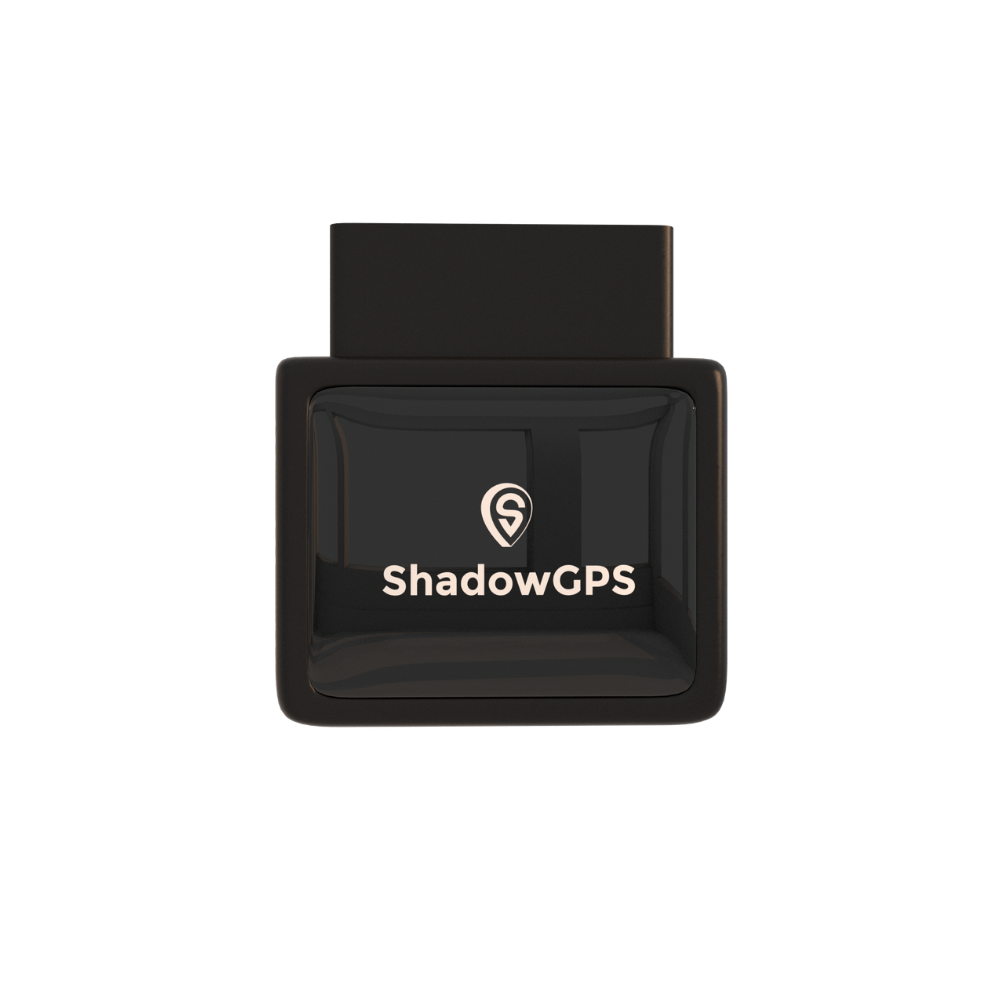
ShadowAuto
Plug-in · OBD-II · For cars & trucks
Plans $10-$13/mo (4+ trackers) or $12-$15/mo · No contract, ever.
- Plug it in, no tools, never needs charging
- Live tracking, trip timeline and trip replay
- Car Alarm, tamper alerts and engine codes

Tracking a trailer, boat, equipment, or a car without an OBD-II port? ShadowTrack is the battery version. It lasts about 15 days per charge, fits a weatherproof magnetic case, and hides anywhere in under 2 minutes.
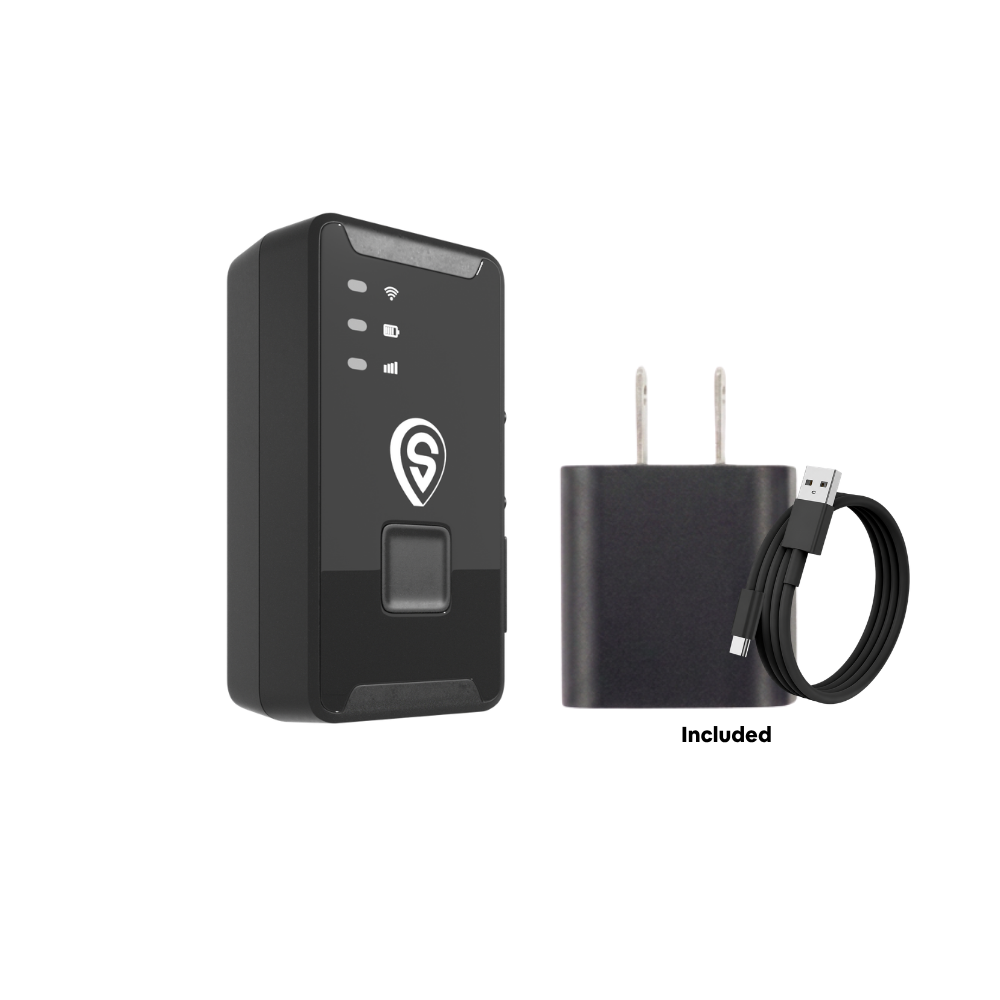
ShadowTrack
Battery · Portable · For trailers, equipment & any car
Plans $10-$13/mo (4+ trackers) or $12-$15/mo · No contract, ever.
- About 15 days per charge, rechargeable
- Magnet-mount or hide it, no wiring
- Same app, alerts and trip history as ShadowAuto
Both are backed by 99.9% network uptime, a 30-day money-back guarantee, and a 4.3 to 4.6 out of 5 average across 199 verified reviews on our site.
Best for: parents of teen drivers, Turo hosts, anyone who wants certainty about the car or truck that matters to them, and small operators running 2 to 5+ vehicles.
1. Apple AirTag (2nd generation)
If your household is all iPhone, the AirTag is the easiest Bluetooth tracker to live with. Apple's Find My network is enormous, setup takes seconds, and the 2026 model adds longer-range Precision Finding and a louder speaker. It's about $29 with no fee.
Pros
- Huge Find My crowd network
- Precision Finding up to about 200 ft
- About a year per replaceable battery
Cons
- iPhone only
- Not live, updates depend on nearby phones
- Prohibited by Turo as a vehicle tracker


Best for: keys, bags, and luggage in an all-iPhone household.
2. Tile Pro
Tile works with both iPhone and Android, which makes it the practical pick when your family uses different phones. The Pro model is Tile's longest-range, loudest tag, and its button can ring your phone when it's the thing that's lost.
Pros
- Works on iPhone and Android
- Loud ring, longer direct range than most tags
- Button finds your phone too
Cons
- Smaller crowd network than Apple or Google
- Some features need an optional plan
- No live tracking for a moving car

Best for: families that mix iPhone and Android and want one tag for everyone's keys.
3. Samsung Galaxy SmartTag
If you carry a Samsung Galaxy phone, SmartTag plugs straight into SmartThings Find and gets UWB directions on supported phones. It's the Galaxy equivalent of an AirTag, with the same strengths and the same limits.
Pros
- Deep Galaxy phone integration
- UWB directions on supported models
- No monthly fee
Cons
- Samsung Galaxy phones only
- Updates depend on nearby Galaxy devices
- No trip history or vehicle alerts

Best for: keys and bags for Samsung Galaxy owners.
Bluetooth vs GPS Trackers Compared by Product
| Tracker | Type | Location updates | Phones | Power | Monthly fee |
|---|---|---|---|---|---|
| Apple AirTag (2nd gen) | Bluetooth + UWB | When nearby Apple devices pass | iPhone | Coin cell, about 1 yr | None |
| Tile Pro | Bluetooth | When nearby Tile app users pass | iPhone + Android | Coin cell, about 1 yr | Optional |
| Samsung Galaxy SmartTag | Bluetooth + UWB | When nearby Galaxy devices pass | Galaxy only | Coin cell, long life | None |
| ShadowTrack | GPS + cellular | Live, seconds apart while moving | iPhone + Android + web | Rechargeable, about 15 days | $12-$15, no contract |
| ShadowAuto | GPS + cellular | Live, seconds apart while moving | iPhone + Android + web | Your car's OBD-II port | $12-$15, no contract |
Pricing and specs as of September 2026. Bluetooth battery life varies with use. ShadowGPS plans run $10-$13/mo per tracker for 4+ trackers.
What You Actually Pay for Each
A Bluetooth tag is a one-time purchase, usually $25 to $40, plus a coin battery each year. That's the whole cost, and for keys and bags it's hard to beat.
A GPS tracker costs more upfront and has a monthly fee, because it carries its own cellular connection and does far more: live location, trip history, alerts, and a record you can actually use. ShadowAuto and ShadowTrack are $69.90 each, with plans from $12 to $15 a month. No contract. Month-to-month, or prepay and save.
The better question is what each one is worth to you. A Bluetooth tag is worth it for anything you misplace. A GPS tracker is worth it for anything you'd lose sleep over.
Should You Use Both?
Often, yes. The GPS tracker vs Bluetooth tracker choice isn't always either-or, because they cover different ground. A simple, layered setup looks like this:
- GPS tracker in the car or truck. Live location, trip replay, and alerts for the thing that moves.
- Bluetooth tag on the keys. For the Tuesday morning scramble.
- Bluetooth tag in the checked bag. Airports are where crowd networks shine.
- Battery GPS tracker on the trailer or boat. For the property that sits away from crowds for weeks.
Some newer trackers also blend both radios, using Bluetooth indoors and GPS plus cellular on the road. Whatever you choose, make sure the device that watches your car can report on its own, without waiting for a stranger's phone.
Tracking a Small Fleet? Bluetooth Doesn't Scale
If you run 2 to 5+ vehicles, say a couple of service trucks, a work van, and a trailer, Bluetooth tags simply don't give you the tools you need. You can't see which truck is at which job, pull up yesterday's routes, or get an alert when a trailer leaves the yard on a Sunday.
GPS trackers give you all of that in one app. Mix OBD-II trackers in the trucks with battery trackers on the trailers and equipment. Our guide on choosing fleet GPS tracking for 3 to 10 vehicles walks through the setup.
A quick word on legality and consent
Tracking a car or truck you own is generally legal in the US. Tracking a vehicle you don't own, or a person without their consent, can break state stalking and privacy laws, and rules vary by state. If others drive your car, like a teen, a Turo guest, or an employee, tell them it's tracked. It's the right thing to do, and for Turo hosts and many employers it's also required. For business vehicles, read is GPS tracking legal for employee vehicles. This isn't legal advice, so check your state's rules if you're unsure.
Worried someone put a tracker on your own car? Our step-by-step guide on how to find a tracker on your car covers both Bluetooth tags and GPS devices.
Bluetooth vs GPS Tracker FAQs
Is a Bluetooth tracker the same as a GPS tracker?
No. A Bluetooth tracker has no GPS chip and no cellular connection, so it borrows the location of nearby phones. A GPS tracker calculates its own position from satellites and sends it to you over its own cellular connection, so it can report live from almost anywhere.
Is there a monthly fee for a GPS tracker?
Yes, most GPS trackers have one because they use cellular data to send you their location. ShadowGPS plans run $12 to $15 a month with no contract. Month-to-month, or prepay and save, and you can cancel any time. Bluetooth tags have no required monthly fee.
Does a GPS tracker need a SIM card?
Not one you buy separately. ShadowAuto and ShadowTrack come with their cellular connection built in, and your plan covers it. You just plug it in and activate it in the app.
Is a GPS tracker hard to set up in a car?
Not with a plug-in tracker. ShadowAuto plugs into your OBD-II port, usually under the steering column, in under 2 minutes with no tools or wiring. ShadowTrack is battery-powered, so you just charge it and place it.
Is an AirTag a GPS tracker?
No. An AirTag is a Bluetooth and ultra-wideband tracker. It shows up on a map only because nearby Apple devices report where they heard it, so its location can be minutes or hours old.
Can I use a Bluetooth tracker to track my car?
You can use one to remember where you parked, but it's a weak way to follow a car that's moving. Updates depend on passing phones, there's no trip history, and anti-stalking alerts can notify whoever is driving that the tag is there.
What is the range of a Bluetooth tracker?
Direct range to your own phone is usually about 30 to 400 feet, depending on the tag, walls, and interference. Beyond that, a Bluetooth tracker relies on a crowd network of other people's phones to report where it is.
Which is more accurate, Bluetooth or GPS?
Up close, UWB-equipped Bluetooth tags can point you to an item within a few feet. Over distance, GPS is far more useful, since it's typically accurate to about 16 feet under open sky and updates continuously, while a Bluetooth tag's map location is only as fresh as the last phone that heard it.
Do GPS trackers work without cell service?
A cellular GPS tracker can still see satellites without cell service, but it can't send you its location until it reconnects. Many trackers store points and upload them once signal returns. For true backcountry use with no coverage, you'd need a satellite communicator.
Can Turo hosts use AirTags?
Not as an active vehicle tracker. Turo's host policy prohibits AirTags in vehicles as active tracking devices and can penalize hosts up to account suspension, while GPS trackers are permitted. Check Turo's current policy and disclosure rules for your location.
Which is better for a teen driver?
A GPS tracker. It shows live location and speed, sends arrival and departure alerts, and lets you replay trips. A Bluetooth tag can't do any of that reliably for a moving car.
Which battery lasts longer?
Bluetooth tags usually last about a year on a coin battery. Battery GPS trackers last days to weeks, and ShadowTrack gets about 15 days per charge. An OBD-II tracker like ShadowAuto runs on your car's power and never needs charging.
Can I use a Bluetooth tracker and a GPS tracker together?
Yes, and many people do. Put a GPS tracker in the car or truck for live tracking and alerts, and use Bluetooth tags on keys, wallets, and luggage.
Know where your car is. Not where it was.
Plug it in, see it move, cancel any time. ShadowGPS trackers are $69.90 with plans from $12 a month, no contract, ever.
Pricing current as of September 2026. Some links on this page are affiliate links, which means ShadowGPS may earn a commission at no extra cost to you. Competitor features are based on manufacturer information and may change. Always follow your state's laws on vehicle tracking and consent. Sources: Turo vehicle tracking policy, Apple Newsroom, GPS.gov, NICB 2025 Vehicle Theft Report.

