

Your car is already one of the most connected things you own. It knows where it parked, how hard you braked this morning, and the exact moment the check-engine light came on. The biggest telematics trends heading into 2027 are less about flashy new gadgets and more about one plain question: who gets to see that information, and how quickly can you see it?
This guide translates the industry's shifts into everyday language for the people who actually own the car or truck: parents handing keys to a new teen driver, families who need the truck to be where they left it, Turo hosts, and anyone running two to five vehicles. For each trend you get what's changing, why it matters to you, and one practical thing to do about it.
The top telematics trends for 2027 are:
- Tighter rules on who can use your driving data
- Insurance driving apps going mainstream
- Cellular networks shifting from LTE toward 5G
- Satellite backup for cellular dead zones
- AI turning location pings into plain-language alerts
- Engine codes and EV battery data moving to your phone
- Tracking as the recovery layer while theft falls but doesn't vanish
- New security and supply-chain rules for connected cars
- Anti-stalking standards reshaping small trackers
- No-contract, plug-in tracking for families and small fleets
What "telematics" means in plain English
Telematics is the industry word for a device that reads where a car is (plus some data about the car itself) and sends it over a cellular network to an app. In everyday terms, it's a GPS tracker with a phone connection. When a fleet company, carmaker, or insurer says "telematics," picture a tracker and you'll be right almost every time.
That tracker can come in three forms:
- Built in by the carmaker. Services like GM's OnStar or your brand's connected app. Convenient, but the carmaker controls the data and the plan.
- Plug-in (OBD-II). A small tracker you plug into the diagnostic port under your dashboard. It runs on your car's power and can read engine codes.
- Battery-powered. A portable tracker you hide or magnet-mount on a trailer, a piece of equipment, or a car you'd rather not plug anything into.
Keep those three in mind. Almost every trend below changes one of them.
Telematics trends 2027 at a glance
| Trend | What's changing | What it means for you |
|---|---|---|
| 1. Data privacy rules | Regulators now require clear consent before carmakers share driving data | More opt-out choices; owner-controlled trackers look better |
| 2. Insurance apps | Driving-score programs are becoming a normal part of buying a policy | Possible discounts, but the score works for your insurer first |
| 3. Network shift | LTE spectrum is gradually moving to 5G; 2G and 3G are gone | Ask any tracker brand how its network plan holds up |
| 4. Satellite backup | New chips add satellite fallback when cell signal drops | Useful for ranches and remote roads, overkill for most drivers |
| 5. AI alerts | Software spots patterns and suggests actions | Fewer noisy pings, more "this looks wrong" alerts |
| 6. Diagnostics and EV data | Engine codes and battery health show up in apps | Catch problems before a tow truck does |
| 7. Theft and recovery | Thefts dropped sharply in 2025, but organized rings adapt | Prevention plus live location still wins |
| 8. Security rules | U.S. software restrictions start with model year 2027 cars | Security becomes a real buying factor |
| 9. Anti-stalking standards | Phones now warn people about unknown Bluetooth tags | Tags are for keys; your car needs a real GPS tracker |
| 10. Owner-first tracking | Fleet-grade features reach families and small fleets, no contract | Pro tools without enterprise pricing or paperwork |
The 10 telematics trends to watch in 2027
1. Your data, your say: privacy moves from fine print to enforcement
This is the telematics trend with the most direct effect on everyday drivers. On January 14, 2026, the Federal Trade Commission finalized an order against General Motors and OnStar over allegations that they collected precise location and driving-behavior data and sold it without drivers' informed consent.
According to the FTC's complaint, that data reached consumer reporting agencies that supplied information to insurers. The final order bans GM from sharing that data with those agencies for five years and, for 20 years, requires express consent before collecting or sharing connected-car data. Owners must also be able to request a copy of their data, ask for deletion, and turn off precise location tracking.
GM isn't alone in the spotlight. Texas's attorney general has also sued Allstate and several carmakers over alleged data practices, which tells you the scrutiny is spreading, not fading.
What to do about it
- Open your car's connected-services app and review the data-sharing and "driving insights" settings.
- If you're unsure what's been collected, use the carmaker's data request option.
- For location you actually want, choose a tracker where you own the account and decide who sees the map.
2. Insurance driving apps go mainstream
Usage-based insurance (UBI) used to be a niche discount. Now it's a standard offer. More than 21 million U.S. policyholders shared driving data with their insurer in 2024, a 28% compound annual growth rate since 2018, according to IoT Insurance Observatory research.
A LendingTree survey from April 2026 found 26% of drivers were enrolled in a program, with Gen Z highest at 40%. Among drivers not yet enrolled, 29% said they're likely to join within a year.
Here's the part most trend articles skip: an insurance app scores you for your insurer. Some programs only lower rates, while others can raise them if the score looks risky. A personal GPS tracker works the other way around. It reports to you, and nobody else sees it unless you share it.
What to do about it
- Before enrolling, ask one question: "Can this program raise my rate?"
- For a teen driver, ask your agent about good-student and safe-driver discounts first.
- If you want to know where your car is right now, don't rely on an insurance app. Most don't offer a live map.
3. The network shift: LTE slowly gives way to 5G
Every cellular tracker depends on a network, and networks retire. The major U.S. carriers have already shut down their 2G and 3G networks, which stranded older trackers and alarm systems along the way.
The next chapter is LTE. Leaked internal documents reported in late 2025 suggested T-Mobile plans to move most of its LTE spectrum to 5G over roughly two years, keeping a narrow LTE lane for older connected devices until around 2035. T-Mobile has publicly said a full LTE shutdown is still years away, so treat this as a slow change, not a cliff.
Meanwhile, a newer standard called 5G RedCap ("reduced capability") is arriving for mid-range connected devices. It sits between today's low-power tracker networks and full 5G.
What to do about it
- Skip bargain-bin trackers built on old network tech. They may already be on borrowed time.
- Ask any brand: "Which networks does this use, and what happens when a network changes?"
- Prefer a tracker where the cellular service comes with the plan, so you're not managing a SIM card yourself.
4. Satellite fills the dead zones
Chipmakers are building satellite fallback straight into small tracking modules. Nordic Semiconductor, for example, is adding 3GPP-standard satellite (NTN) support so a device can talk to low-orbit satellites when towers disappear.
That matters for a ranch truck, a hunting-camp trailer, or equipment parked far off the grid. For a family car that spends its life on city streets, school lots, and highways, strong cellular coverage already does the job. The honest take: satellite is a 2027 trend to watch, not a reason to delay protecting the car you drive every day.
5. AI turns pings into plain-language alerts
Large fleet platforms are moving from dashboards to AI that recommends actions. Geotab, for instance, describes AI agents that can draft maintenance schedules and reroute drivers around weather or traffic.
For one-car owners, the useful version is simpler: fewer, smarter alerts. Instead of a flood of location updates, expect trackers to flag what's unusual, like your car moving at 3 a.m. or leaving a zone you set. The raw data stays the same. What's changing is how clearly it tells you something needs attention.
What to do about it
- Set up two or three geofences (home, school, the Turo pickup spot) instead of dozens.
- Turn on a car alarm or movement alert for overnight hours.
- Use trip replay to review a drive together, not to build a case against someone.
6. Engine codes and EV battery data move to your phone
The OBD-II port under your dash has always held diagnostic codes. The trend is putting those codes in a friendly app, so "check engine" becomes "here's what's likely wrong" before you call a shop.
Electric cars add a new data layer: battery health and charging behavior. Fleet platforms now track EV and gas vehicles side by side, and mixed households are next. One practical note: not every EV has an easy-to-reach standard OBD-II port, so a battery-powered tracker is often the simpler choice there.
7. Theft falls, but tracking becomes the recovery layer
Good news first. U.S. vehicle thefts fell 23.2% in 2025, from 850,708 to 659,880, according to the National Insurance Crime Bureau (NICB). That's the lowest level in several decades.
Prevention is working. Hyundai and Kia, targets of a viral theft wave, saw their share of thefts drop to 14% in 2025, down from 21% in 2023, after anti-theft retrofits, as Kelley Blue Book reported from NICB data.
Still, NICB says a vehicle is stolen roughly every 48 seconds, and it warns that organized theft networks keep evolving, with about 21% of 2025's stolen vehicles never recovered. That's why the 2027 approach is layered: lock it, park it well, and keep a live location you can hand to police. See our guide to how GPS trackers help police recover stolen cars.
8. Connected-car security and supply-chain rules arrive
In January 2025, the U.S. Commerce Department finalized a rule on connected passenger cars. Software restrictions tied to China and Russia begin with model year 2027, and hardware restrictions follow with model year 2030.
That makes 2027 the first model year where the origin of your car's connectivity software is a legal requirement, not just a spec-sheet detail. The bigger takeaway for owners: security is becoming a normal buying question, the same way crash ratings are.
What to do about it
- Accept your car's software updates. Many security fixes arrive quietly this way.
- Ask any tracker brand where your location history is stored and who can access it.
- Use a strong, unique password on your tracker app account.
9. Anti-stalking standards reshape small trackers
Apple and Google built a shared standard called Detecting Unwanted Location Trackers, so iPhones and Android phones warn people when an unknown Bluetooth tag seems to be traveling with them. Several tag makers committed to support it.
That's a healthy change. It also clarifies what Bluetooth tags are for: keys, bags, and luggage. On a car, a tag only updates when a compatible phone passes nearby, and it's designed to alert whoever is carrying it. We break down that difference in why AirTags fall short for cars.
The line to remember: track property you own. Tracking a person without their knowledge is a different thing entirely, and in many states it's illegal. If you ever suspect a tracker on your own car, here's how to find a tracker on your car.
10. Owner-first tracking for families and small fleets
For years, the best location tools were locked behind enterprise sales calls and long terms. The quiet telematics trend of 2027 is that fleet-grade features (live maps, trip history, geofences, engine codes) now fit in a plug-in tracker that one person can set up in minutes.
Families are the clearest example. According to the CDC, drivers aged 16 to 19 face a higher crash risk than any other age group, with a fatal crash rate per mile almost three times that of drivers 20 and older. Risk is highest in the first months after getting licensed.
The shift in 2027 is from policing to coaching. Parents use shared location and trip replay to talk through a drive, and pair it with something like the CDC's parent-teen driving agreement. Our family safety tracking guide covers how to set this up without making it feel like distrust.
Hype vs. reality: what won't reach your driveway in 2027
Plenty of telematics trend reports are written for fleets with thousands of trucks. Here's how the buzzwords actually land for someone with one to five vehicles.
| Buzzword | What it is | Reality for owners in 2027 |
|---|---|---|
| V2X | Cars talking to other cars and traffic lights | Early and mostly built into select new models; not something you add |
| Digital twins | Virtual models of a fleet used to test changes | Enterprise planning tool; skip it |
| Autonomous driving data | Data feeding self-driving systems | Relevant to carmakers, not to finding your truck |
| AI dash cams | Cameras that flag risky driving | Useful for work vans; optional for most families |
| AI alerts | Smarter, filtered notifications | Real and useful today |
| Owner-controlled data | You decide who sees location | Real, and the biggest shift of the year |
The 2027 tracker checklist: 6 questions to ask before you buy
Trends are only useful if they change what you buy. Use this quick framework. It follows the order real buyers ask questions in.
- Is there a monthly fee, and is there a contract? Cellular trackers need a service plan. The good ones are month-to-month with no contract.
- Does it need a SIM card? You shouldn't have to buy or swap one. The connection should come with the plan.
- Do I plug it in, or does it need wiring? A plug-in OBD-II tracker should take minutes and no tools.
- How does the subscription work, and can I cancel easily? Look for clear pricing and cancellation without hoops.
- How often does it update? Some trackers refresh every few minutes. For a moving car, faster is far more useful.
- Who owns the data? The 2027 must-have. You should control who sees your map.
Where ShadowGPS fits in the 2027 picture
ShadowAuto and ShadowTrack: modern tracking, owned by you
We built ShadowGPS for the person who owns the car, not for an enterprise fleet department. Your tracker updates every 5 seconds while your car is moving, so the dot on your phone matches the street it's actually on. You plug it in, open the app, and you know where your car or truck is. That's the whole idea.
ShadowAuto is the plug-in option. It goes into your OBD-II port in under two minutes, runs on your car's power, and adds live tracking, trip timeline and replay, a car alarm alert, shared location, and engine codes.
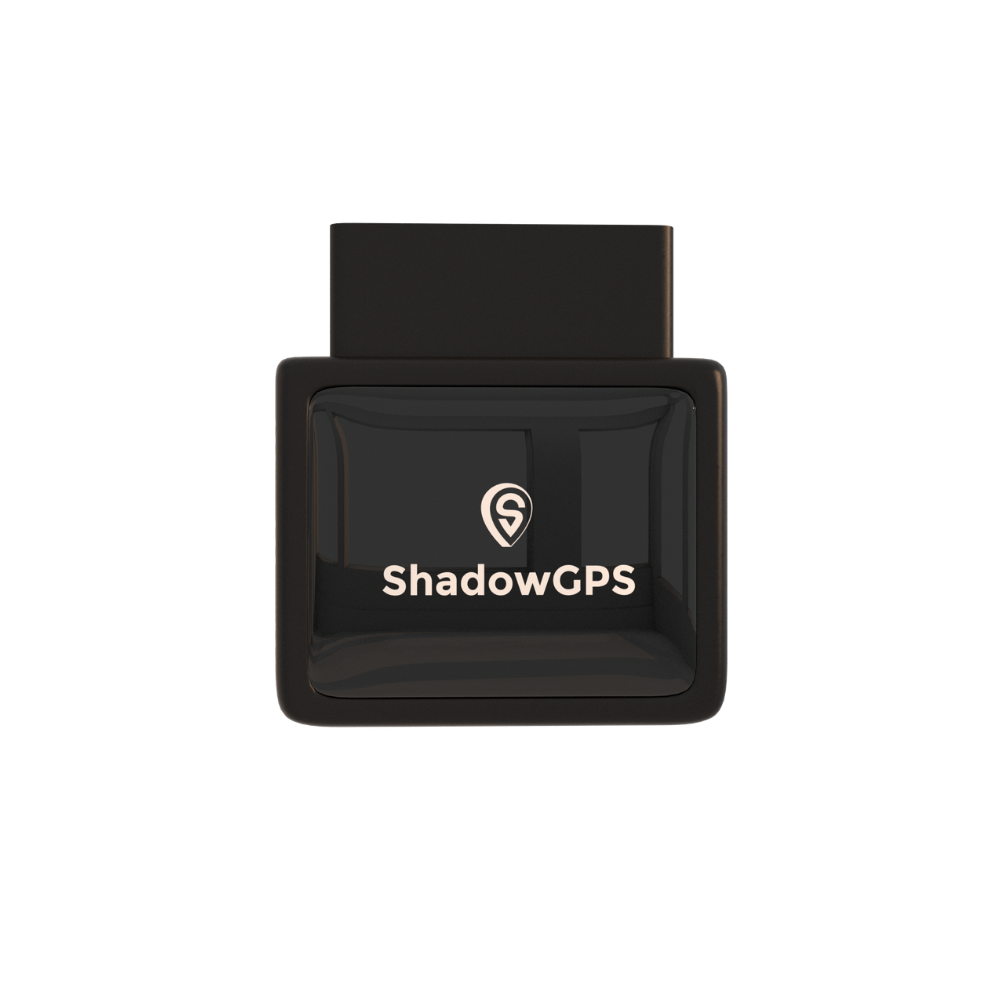
ShadowAuto
- Plug it in, no tools, under 2 minutes
- Live map, trip timeline and trip replay
- Car alarm alerts plus engine codes


If your car has no easy port, or you want to protect a trailer, equipment, or a second car without plugging anything in, ShadowTrack is the portable option. It runs about 15 days per charge and hides almost anywhere.
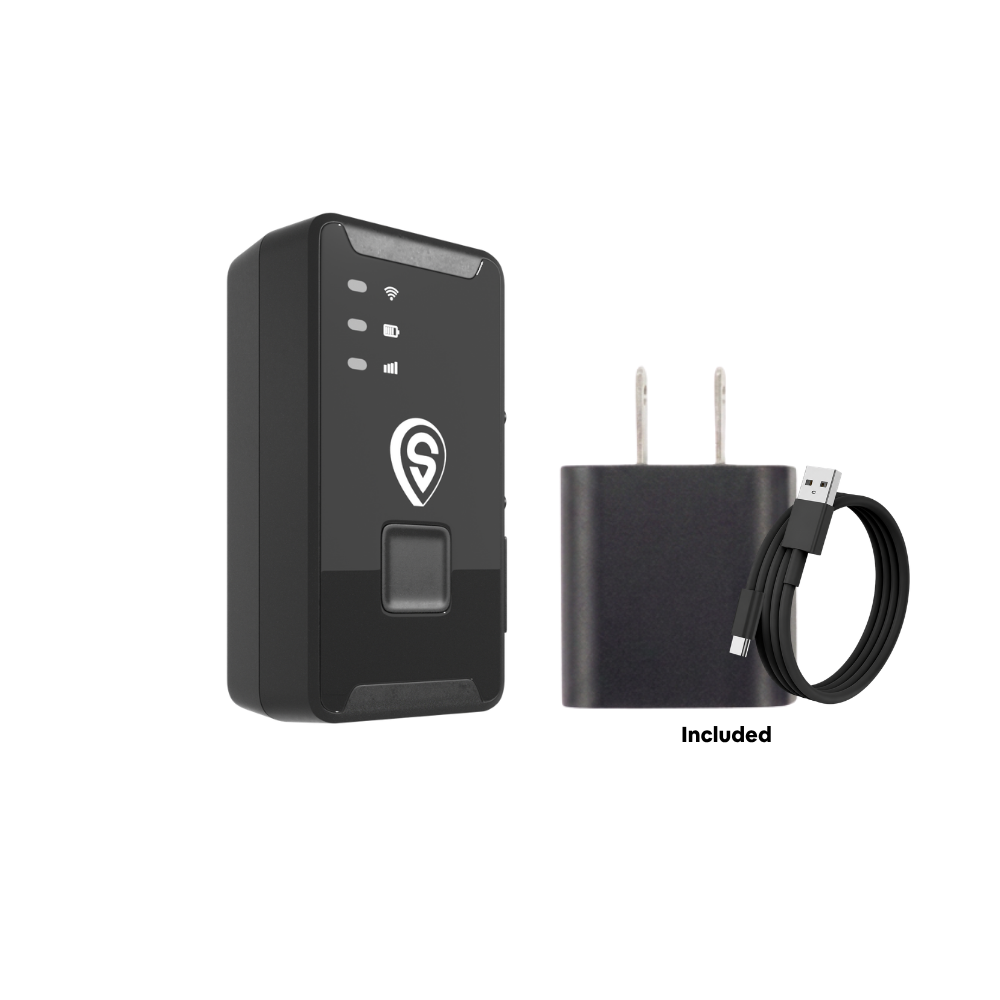
ShadowTrack
- Magnet-mount or hide it in under 2 minutes
- Works on trailers, equipment and cars
- Same live map and trip history in one app
Both trackers come ready to connect. The cellular service is part of your plan, so there's no SIM card to buy. Is there a monthly fee? Yes: $12 to $15 a month, with no contract. Go month-to-month, or prepay and save. Every order is covered by a 30-day money-back guarantee.
Best for: parents of new drivers, families protecting a car or truck that matters, Turo hosts, and owner-operators running 2 to 5+ vehicles. Compare plans on our pricing page.
How owners are putting these trends to work
Three common setups we see. They're illustrative examples, not individual customer stories.
The parent of a new driver
ShadowAuto in the family sedan, a geofence around school, and a weekly trip-replay chat. Shared location replaces the "text me when you get there" standoff.
The Turo host with 3 cars
A plug-in tracker in each car, disclosed in the listing, plus a car alarm alert overnight. See our Turo tracking page.
The 4-truck owner-operator
ShadowAuto in each truck and ShadowTrack on the equipment trailer, all in one app. The 4+ tracker plan keeps it simple, still with no contract.
Factory systems vs. insurance apps vs. GPS trackers vs. Bluetooth tags
Four very different tools all get lumped under "telematics." Here's how they compare for an owner who simply wants to know where the car is.
| Option | Who the data serves first | Live map for you | Monthly fee | Best for |
|---|---|---|---|---|
| Built-in carmaker services | The carmaker and partners you consent to | Varies by brand and plan | Often a free trial, then paid | Remote start, crash help |
| Insurance driving app or plug-in | Your insurer | Usually no | Free, tied to your policy | A possible premium discount |
| Bluetooth tag (e.g. Apple AirTag) | You, via nearby phones | Only when a phone passes by | None | Keys, bags, luggage |
| Enterprise fleet platform | The business | Yes | Quote-based | Large, regulated fleets |
| ShadowAuto (plug-in GPS tracker) | You, the owner | Yes, live | $12-$15/mo, no contract | Your car, teen driver, Turo, small fleet |
| ShadowTrack (battery GPS tracker) | You, the owner | Yes, live | $12-$15/mo, no contract | Trailers, equipment, cars without an easy port |
Features and pricing for third-party services vary by brand, plan and state. ShadowGPS pricing checked September 2026. For a deeper product roundup, see the best GPS trackers for cars.
Is it legal to track your own car?
In general, yes: tracking a car or truck you own is legal across the U.S. Tracking a car you don't own, or tracking a person without their consent, can break state laws, including anti-stalking laws. For a family car driven by your teen, talk about it openly. For rentals and work vehicles, disclose tracking in writing and follow the platform's current rules. For employee vehicles, read our guide to GPS tracking laws for work vehicles. This is general information, not legal advice.
Telematics trends FAQ
What are the biggest telematics trends for 2027?
The biggest shifts are stricter rules on driving-data sharing, mainstream insurance driving apps, the gradual move from LTE to 5G, satellite backup, AI-filtered alerts, diagnostics in your phone, new connected-car security rules, anti-stalking standards for Bluetooth tags, and no-contract plug-in tracking for families and small fleets.
What is telematics in simple terms?
It's a tracker. A device reads where your car is, and sometimes engine data, then sends it over a cellular network to an app. It can be built in by the carmaker, plugged into your OBD-II port, or battery-powered.
Is telematics the same as GPS tracking?
Close. GPS finds the location; the cellular connection sends it to you. "Telematics" is the industry term for both together, and it often includes car data like engine codes or driving events.
Is there a monthly fee for a GPS tracker?
Real-time cellular trackers need a service plan. ShadowGPS plans run $12 to $15 a month ($10 to $13 with 4+ trackers), with no contract. Go month-to-month, or prepay and save.
Does a GPS tracker need a SIM card?
Not one you buy yourself. ShadowAuto and ShadowTrack come ready to connect, and the cellular service is included in your plan.
Will my GPS tracker stop working when networks switch to 5G?
Carriers retire networks slowly and with notice. The 2G and 3G shutdowns are done, and LTE changes are expected to roll out over years. Buy from a brand that tells you which networks it uses and how it handles changes.
Can my insurance company see my tracker data?
Insurance apps share driving data with your insurer by design. A personal GPS tracker reports to your account, and you decide who else sees it.
What is usage-based insurance?
It's car insurance priced partly on how, when or how much you drive, measured by an app or small device. Some programs only offer discounts, while others can raise rates, so ask before enrolling.
How is AI changing vehicle tracking?
For big fleets, AI suggests maintenance and routes. For owners, it means smarter alerts, like movement at an odd hour or a car leaving a set zone, instead of a stream of raw location pings.
Is it legal to put a tracker on my own car?
Generally yes, if you own the car. Tracking a car you don't own, or a person without consent, can violate state law. Check your state's rules and disclose tracking to anyone else who drives it.
Plug it in. See it move. Cancel any time.
The biggest trend of 2027 is simple: your car's location should belong to you. Plug in a ShadowGPS tracker and know where your car or truck is, with no contract, ever.
Pricing checked September 2026 and subject to change. Some links on this page are affiliate links; we may earn a commission at no extra cost to you. Sources: Federal Trade Commission, National Insurance Crime Bureau, Centers for Disease Control and Prevention, IoT Insurance Observatory (via Carrier Management), LendingTree, U.S. Department of Commerce rule summary (via Mayer Brown), Kelley Blue Book, Geotab, Nordic Semiconductor (via Rutronik). Legal information is general and not legal advice.
