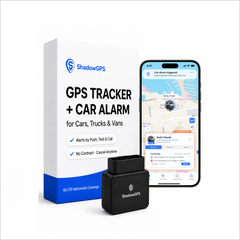
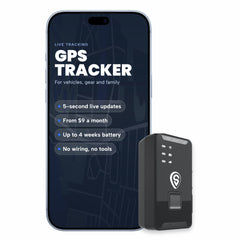
Can a GPS tracker be detected? Yes, it can. Most trackers can be found with a careful look under the dash and around the bumpers, and some can be picked up by a radio frequency (RF) detector while they're sending data. Blocking one is possible too, but in the United States the most common blocking tool, a GPS jammer, is a federal crime to use.
People ask this question from two very different seats. Some just put a tracker on their own car, truck, or Turo rental and want to know if a thief could find it. Others found something odd under a bumper and want to know if someone is tracking them. This guide answers both, in plain words, with the specific places to look, the tools that actually work, and what to do next.
Yes, a GPS tracker can be detected and it can be blocked, but neither is as easy as the internet makes it sound. A physical search finds most trackers. RF detectors only catch a cellular tracker in the seconds it's transmitting. Phones only alert you to Bluetooth tags like AirTags, not cellular GPS trackers. Jammers can stop a tracker from getting a new GPS fix, but they're illegal to use in the U.S., and the tracker still keeps its last known location.
First, How a GPS Tracker Actually Works (and Why That Decides Detection)
Most people picture a GPS tracker "beaming" its location into space. It doesn't. A tracker receives signals from GPS satellites to figure out where it is, and receiving gives off nothing anyone can detect.
The part that can be detected is the second job: sending that location to your phone. Real-time trackers do this over a cellular network (often LTE-M), the same kind of connection your phone uses. Every time the tracker sends an update, it gives off a short radio burst. That burst is what an RF detector listens for. If you're curious about the cellular side, our guide on whether a GPS tracker needs a SIM card explains it.
So the honest answer to "can a GPS tracker be detected" depends on what kind of tracker it is:
- Cellular GPS trackers (plug-in OBD-II, battery-powered, hardwired) give off radio bursts when they report. They can be found by hand and sometimes by RF sweep.
- Bluetooth tags (Apple AirTag, Tile, Samsung SmartTag) don't use GPS at all. They borrow nearby phones to report a position, and modern phones can warn you when one is traveling with you.
- Passive GPS loggers record trips to memory and never transmit. No electronic detector can hear them. Only a physical search finds them.
If you're still sorting out which type is which, our breakdown of GPS vs. AirTag vs. RF trackers covers the differences in detail.
How GPS Trackers Are Detected: 6 Methods, Ranked by What Actually Works
Here's every common detection method, starting with the one that finds the most trackers for the least money.
1. A physical inspection (the most reliable method)
Most trackers on cars and trucks sit in a handful of predictable places, because whoever placed them needed quick access. A flashlight, a small mirror, and 15 minutes cover nearly all of them.
- The OBD-II port: under the dashboard on the driver's side. Anything plugged in that you didn't put there is worth a closer look. Not sure where yours is? Here's how to find your OBD2 port in 30 seconds.
- Behind and inside the bumpers: front and rear, especially the inner lip where a magnet sticks well.
- Wheel wells: feel along the top of the plastic liners.
- The frame rails and undercarriage: look for a small black box held by magnets.
- Under the seats and in seat pockets: including under the rear seat cushion.
- Glove box, center console, and trunk: check around the spare tire and in side compartments.
- Behind the dash and near the fuse box: extra wires taped into the harness can point to a hardwired tracker.
For a full, spot-by-spot walkthrough with photos, see our step-by-step guide on how to find a tracker on your car.
2. RF detectors and "bug sweepers"
An RF detector (sold as a GPS tracker detector, bug sweeper, or car tracker detector) listens for radio transmissions and beeps when it hears one. Despite the name, it doesn't detect GPS. It detects the cellular burst the tracker sends when it reports.
That's the catch. A detector only works in the moments a tracker is transmitting. A tracker that sleeps while the car is parked, or reports every few hours, is silent nearly all the time. Budget detectors also false-alarm on your car's own radios, like the key fob, Bluetooth, and tire pressure sensors.
Tip: if you use one, have someone drive while you sweep. Trackers report most often when the car is moving.
3. Your phone's unknown tracker alerts (Bluetooth tags only)
Since May 2024, iPhones and Android phones can warn you about an unknown Bluetooth tracker moving with you, no matter which brand or platform it belongs to. Apple and Google built this together under an industry standard called Detecting Unwanted Location Trackers. It works on iOS 17.5 and later and on Android 6.0 and later.
iPhones show "Item Found Moving With You." Android shows "Tracker traveling with you." Either alert lets you play a sound on the tag to find it.
The limit is important: these alerts don't detect cellular GPS trackers. A plug-in or battery GPS tracker doesn't talk to your phone, so your phone has nothing to notice. Bluetooth scanner apps have the same blind spot.
4. A spectrum analyzer (the newest DIY method)
Researchers at NYU's Tandon School of Engineering found that many budget GPS trackers send their bursts on a steady schedule, often about once a minute while the car is moving. Using an inexpensive handheld spectrum analyzer, their method reliably picked up trackers hidden in glove compartments and under bumpers in testing.
It's promising, especially for domestic violence advocates and security teams. It still can't catch passive loggers or devices modified to avoid detection, and it takes some technical comfort to use.
5. A mechanic on a lift
Can a mechanic find a GPS tracker? Yes, if you ask them to look. A routine oil change won't include a search, but a technician with your car on a lift can see the whole undercarriage in minutes. Hardwired trackers also tend to show up during electrical work.
6. A professional sweep
Private security firms and some investigators use a non-linear junction detector (NLJD). It finds electronic circuits whether or not they're powered on or transmitting. It's the most thorough option and also the most expensive, so it makes sense mainly for high-stakes situations.
Which GPS tracker detection method works best?
Start with a physical inspection; it finds most trackers for free. Add your phone's built-in alerts for Bluetooth tags. Use an RF detector only as a backup, and only while the car is moving. If the stakes are high, pay for a professional sweep.
| Detection method | What it finds | What it misses | Cost | Reliability |
|---|---|---|---|---|
| Physical inspection | Plug-in, magnetic, and most hidden trackers | Deeply wired trackers behind panels | Free | High for common spots |
| Phone unknown tracker alerts | AirTag, Tile, SmartTag and other compatible tags | All cellular GPS trackers | Free | Good, tags only |
| Bluetooth scanner app | Bluetooth devices nearby | Cellular trackers, passive loggers | Free to low | Low to moderate |
| RF detector / bug sweeper | Cellular trackers while transmitting | Sleeping trackers, passive loggers | Low to moderate | Hit or miss |
| Spectrum analyzer (NYU method) | Trackers with regular report bursts | Passive loggers, modified devices | Low to moderate | Promising |
| Mechanic on a lift | Undercarriage and wired trackers | Small tags tucked in the cabin | Shop labor | High when asked |
| Professional sweep (NLJD) | Any electronics, on or off | Very little | High | Very high |
Can a GPS Tracker Be Blocked?
Yes, a GPS tracker can be blocked, mostly in three ways: jamming the signal, shielding the tracker, or simply unplugging or removing it. Here's how each works, and what your tracker still tells you when it happens.
GPS jammers: they work, and they're illegal
A GPS jammer is a small transmitter, often plugged into a 12V outlet, that floods the GPS frequency (mainly the L1 band at 1575.42 MHz) with noise. The tracker can't hear the satellites, so it can't calculate a fresh position.
Here's what matters most: in the United States, it's illegal to use, sell, market, or import a GPS jammer. The FCC enforces this ban because jammers can knock out aviation navigation, 911 location, and police radios for everyone nearby, not just the target. In one well-known case, the FCC fined a New Jersey driver $31,875 after his truck's jammer interfered with GPS systems at Newark Liberty International Airport.
Jammers also have a blind spot: a GPS-only jammer doesn't erase the tracker's last known location, and it doesn't stop the cellular connection. Many trackers can keep reporting an approximate position from nearby cell towers.
Shielding: metal, garages, and containers
Thick metal blocks radio signals. A tracker inside a metal box, a shipping container, or deep in an underground garage can lose its GPS fix, its cell connection, or both. This happens innocently every day, too: parking garages and tunnels cause gaps for every tracker on the market.
For an owner, a sudden signal drop matters more than the drop itself. A tracker that goes quiet somewhere it normally has a strong signal is worth checking right away.
Unplugging or removing the tracker
This is the most common real-world "block," and it's low-tech. A plug-in OBD-II tracker is easy to spot and pull. That's exactly why the type of tracker you choose, and the alerts you turn on, matter so much.
GPS spoofing, briefly
Spoofing broadcasts fake satellite signals so a receiver reports a false location. It takes specialized equipment and is mostly a concern for aviation, shipping, and high-value cargo, not a typical family car. It's also illegal under the same federal rules as jamming.
What does your tracker still show if it's jammed or blocked?
Three things: the last known location before the signal dropped, the time it dropped, and (on many trackers) an approximate position from cell towers. That's a real starting point for police. A tracker that goes silent in an area with strong coverage is itself a warning sign that someone may be tampering with your car or truck.
Which GPS Trackers Are Hardest to Detect or Block?
Every tracker type trades something. Here's how they compare on detection and blocking, so you can match the type to your situation.
| Tracker type | How it reports | Easy to spot by hand? | Caught by RF sweep? | Phone alert? | If jammed or blocked |
|---|---|---|---|---|---|
| Bluetooth tag (AirTag, Tile) | Nearby phones relay it | Moderate, coin-sized | No | Yes, on iOS 17.5+ and Android 6+ | Not GPS; only updates near phones |
| Passive GPS logger | Saves trips, no live signal | Hard if well hidden | No, never transmits | No | Nothing live to lose; must be retrieved |
| OBD-II plug-in tracker | GPS + cellular, car-powered | Yes, if you check the port | Sometimes, while driving | No | Last known location stays; can be unplugged |
| Battery magnetic tracker | GPS + cellular, rechargeable | Moderate, often under the car | Sometimes, while transmitting | No | Last known location stays |
| Hardwired tracker | GPS + cellular, wired into the electrical system | Hard, behind panels | Sometimes | No | Last known location stays |
| ShadowAuto + ShadowTrack (two-layer setup) | Live updates while moving, plus tamper and motion alerts | Plug-in is visible; ShadowTrack hides as backup | Possible while moving | No | Last known location, alerts, and a second tracker still reporting |
Notice the trade-off in that last row. A tracker that reports often is easier for a professional sweep to hear while your car is moving. We think that's the right trade for a car you own: knowing quickly where it is matters more than being impossible to find.
Own the Tracker? Here's How to Keep It Working When Someone Looks for It
If you track your own car, your teen's car, or a Turo rental, detection isn't really the threat. A thief has minutes, not hours, and rarely brings a bug sweeper. What matters is how fast you know something is wrong. That's the idea behind a simple three-step framework: Layer, Alert, Act.
Step 1: Layer your trackers
One visible tracker plus one hidden backup is the setup professionals use, and it's easy to copy. A plug-in OBD-II tracker gives you always-on power and vehicle details. A small battery tracker hidden elsewhere keeps reporting if the first one gets pulled.
ShadowAuto is the plug-in half of that setup. You plug it in to the OBD-II port in under 2 minutes, no tools and no wiring, and it updates your car's location every 5 seconds while it's moving. It also gives you trip timeline, trip replay, and Car Alarm alerts in the ShadowGPS app.
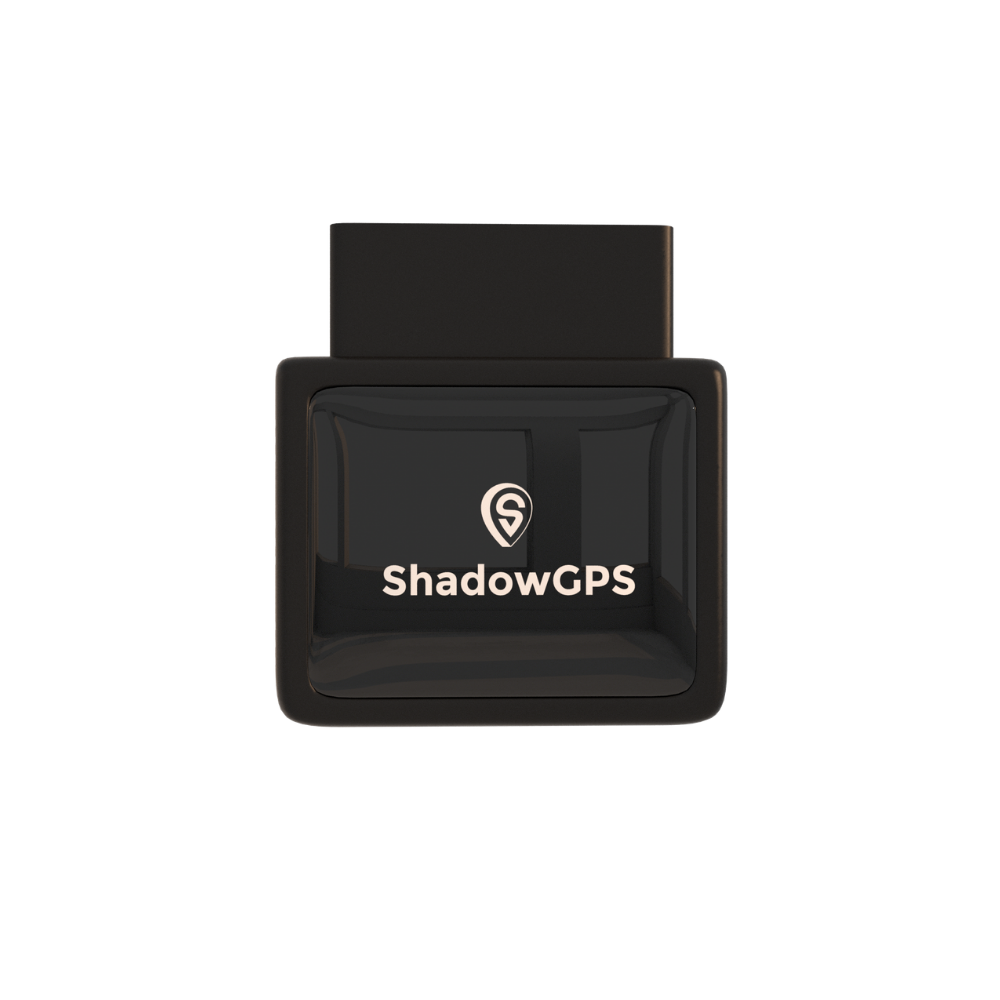
ShadowAuto
- Updates every 5 seconds while moving
- Trip timeline & trip replay
- Car Alarm & vehicle diagnostics


ShadowTrack is the hidden half. It runs on a rechargeable battery for up to about two weeks per charge, needs no OBD port, and fits a weatherproof magnetic case so you can tuck it somewhere a quick search won't reach. You can also adjust how often it reports in the app, which lets you balance battery life against update speed.
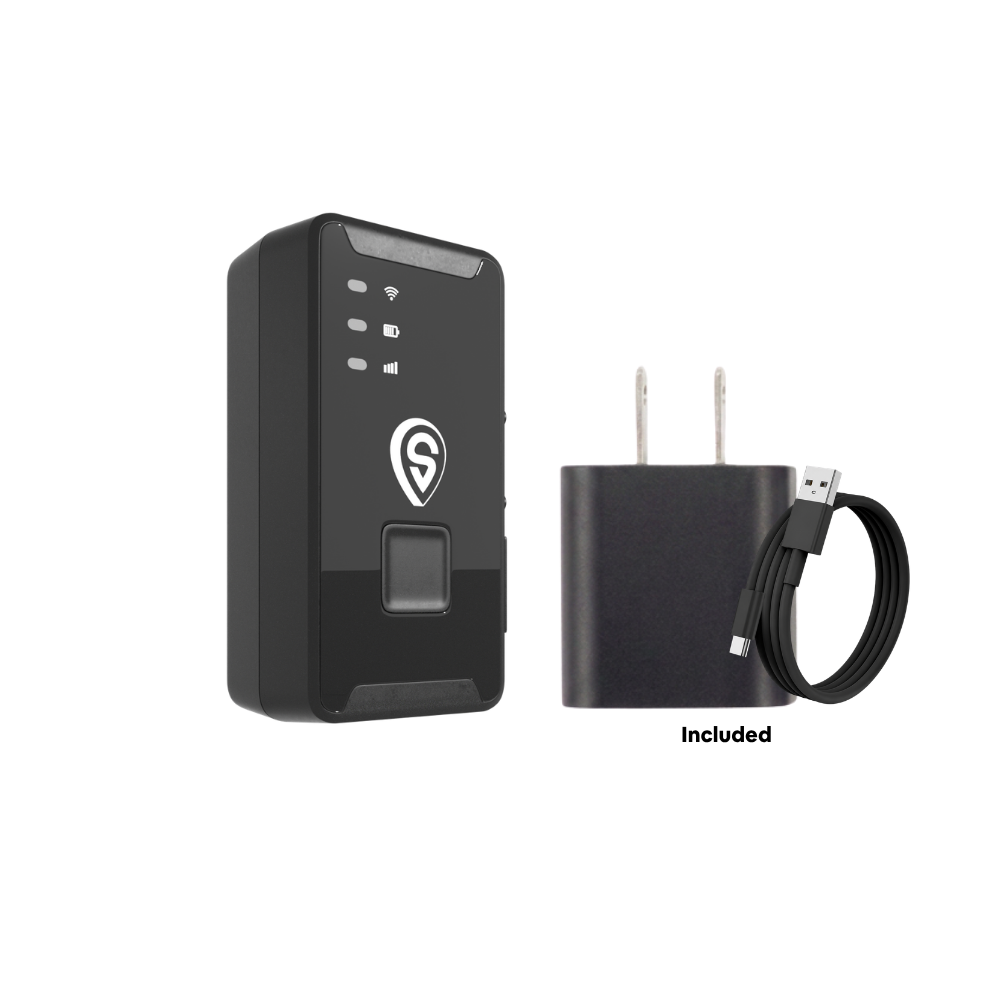
ShadowTrack
- Live updates while moving, adjustable in the app
- Weatherproof, magnetic mount
- Motion, geofence & tamper alerts
Step 2: Turn on the alerts that catch tampering
Alerts turn "someone found my tracker" into "I know the second something changed." Set these up the day you plug in:
- Tamper alerts: a heads-up when the tracker is disturbed or loses power.
- Geofence alerts: draw a zone around your driveway, lot, or Turo pickup spot and get pinged when your car leaves it. Our guide to geofence alerts that catch overnight theft shows the exact setup.
- Motion and Car Alarm alerts: know when your car moves at a time it shouldn't.
- Speed and curfew alerts: useful for teen drivers and rental guests.
Step 3: Act fast, and let police do the recovery
If an alert fires or a tracker goes quiet, open the app and note the last known location and time. Call the police with that information, and don't try to recover your car yourself. Our immediate recovery steps for a stolen vehicle walk through exactly what to share.
Speed matters because theft is still common even as it falls. The National Insurance Crime Bureau counted 659,880 vehicles stolen in 2025, down 23% from 2024, with the Los Angeles metro area alone reporting nearly 54,000.
Example: how the two-layer setup plays out
Picture a Turo host with a ShadowAuto in the OBD-II port and a ShadowTrack in its magnetic case elsewhere on the car. A guest overstays and pulls the plug-in tracker. The host gets a tamper alert, the plug-in's last known location is saved, and the hidden ShadowTrack keeps showing where the car goes next. That's the difference between "it's gone" and "here's where it is" when the host calls the police and Turo support. (This is an illustration of how the setup works, not a specific customer case.)
Think Someone Is Tracking You? What to Do (Safely)
Finding an unknown tracker on your car is unsettling. A calm, careful approach protects both your safety and your legal options.
- Don't rip it off right away. Photograph it where it sits, note the date and location, and write down any brand or serial number you can see. That evidence matters later.
- Check your phone for Bluetooth alerts. If it's a tag like an AirTag, your phone's alert screen can show its identifier and how to disable it.
- Contact local police. In many states, placing a tracker on a car you don't own without consent is illegal, and police can document it.
- If you feel unsafe, reach out for support. The National Domestic Violence Hotline (1-800-799-7233) helps people make a safety plan, including what to do about a tracker.
- Remove it when it's safe to. Removing a tracker can alert the person who placed it, so plan that step with police or an advocate.
Is it legal to track a car, or to block a tracker?
In general, you can legally track a car or truck you own, including one your minor child drives or a rental in your fleet, though Turo hosts should follow Turo's disclosure rules. Tracking a car you don't own, or an adult without consent, can break state stalking and privacy laws. Police generally need a warrant to put a GPS tracker on your car, a rule set by the U.S. Supreme Court in United States v. Jones (2012). Blocking a tracker with a jammer is illegal under federal law no matter whose tracker it is. This isn't legal advice; check your state's laws for your situation.
What This Means for You
Parents of teen drivers
Your teen can find a plug-in tracker under the dash, and that's fine. Being open about it builds trust, and speed and curfew alerts keep working whether they know or not.
Turo hosts
Pair a plug-in tracker with a hidden battery backup. Turn on geofence and tamper alerts so an unplugged tracker becomes an instant heads-up, not a mystery. See our Turo host setup.
Small fleet owners (2 to 5+ vehicles)
Tell drivers the trucks are tracked. A visible tracker discourages misuse, and a signal drop in good coverage flags tampering fast across every vehicle on one account.
Frequently Asked Questions
Can a GPS tracker be detected?
Yes. Most GPS trackers can be found with a careful physical search of the OBD-II port, bumpers, wheel wells, undercarriage, seats, and trunk. Cellular trackers can also be picked up by an RF detector, but only in the moments they are transmitting. Passive loggers never transmit, so only a physical search finds them.
Can my phone detect a GPS tracker on my car?
Only if it's a Bluetooth tag. Since May 2024, iPhones on iOS 17.5 or later and Android phones on 6.0 or later alert you when an unknown tag like an AirTag, Tile, or SmartTag travels with you. Phones cannot detect cellular GPS trackers, because those trackers never connect to your phone.
Do GPS tracker detectors actually work?
Sometimes. A GPS tracker detector is really an RF detector that hears the cellular burst a tracker sends when it reports. If the tracker is asleep or between reports, the detector hears nothing, and budget models false-alarm on key fobs and tire sensors. Sweep while the car is moving and always pair it with a hands-on search.
Can a mechanic find a GPS tracker?
Yes, if you ask. A mechanic with your car on a lift can check the undercarriage, bumpers, and wiring quickly. They won't usually look during routine service, so tell them what you're worried about.
Can police detect a GPS tracker on my car?
Police can help document and remove a tracker you find, and some departments have sweep equipment. If you think a tracker was placed on your car without your consent, report it. Police themselves generally need a warrant to place a tracker on your car, under the Supreme Court's 2012 decision in United States v. Jones.
Can a GPS tracker be blocked?
Yes. A tracker can be blocked by a GPS jammer, by thick metal shielding such as a container or underground garage, or simply by being unplugged or removed. Jamming is illegal in the U.S. In every case, the tracker's last known location stays on record, and a sudden signal loss can trigger an alert.
Are GPS jammers legal in the United States?
No. Federal law makes it illegal to use, sell, market, or import a GPS jammer, and the FCC actively enforces the ban with fines and equipment seizure. Jammers can disrupt aviation navigation and 911 location for everyone nearby, which is why the rules are strict.
Does a metal box or Faraday bag block a GPS tracker?
Thick, fully enclosed metal can block both the GPS fix and the cellular connection, which is why trackers also lose signal in tunnels and deep parking garages. For an owner, the useful part is the record: the tracker keeps its last known location, and a signal drop where coverage is normally strong is a reason to check on your car right away.
What happens when someone unplugs a GPS tracker?
An OBD-II tracker stops getting power from the car when it is unplugged, so live updates stop. The app keeps the last known location, and tamper alerts can let you know right away. That's why many owners add a hidden battery tracker, like ShadowTrack, as a backup that keeps reporting.
Can someone tell if I'm tracking my own car?
They can if they look. A plug-in tracker under the dash is visible to anyone who checks the OBD-II port, and that's fine for a car you own. If you want a tracker a quick search won't turn up, a small battery tracker in a magnetic case is harder to spot. Only track cars you own or have permission to track.
How do I know if there's a tracker on my car?
Check the OBD-II port first, then the bumpers, wheel wells, frame, seats, glove box, and trunk with a flashlight. Watch for phone alerts about unknown Bluetooth tags. If you still suspect something, ask a mechanic to check on a lift or hire a professional sweep.
Is there a monthly fee for a ShadowGPS tracker?
Yes. Real-time tracking uses a cellular connection, so there is a monthly fee: $15/mo month-to-month, or prepay and save, as low as $9/mo on a longer plan. No contract, ever, and you can cancel any time.
Know where it is. Every 5 seconds.
Plug it in, see it move, cancel any time. No contract, ever.
This guide reflects pricing, product features, and legal information published as of November 2026. Subscription pricing and features are subject to change. Some links are affiliate links; ShadowGPS may earn a commission at no extra cost to you. Nothing here is legal advice. Laws on tracking and jammers vary, so check the rules where you live.