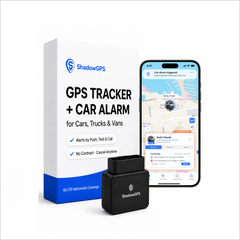
Reach under your steering wheel, near your left knee, and you'll probably feel a small plastic socket with two rows of pins. That's your car's OBD2 port, and it's the most useful connector in your car that most drivers never touch.
So, what is an OBD2 port? It's a standardized 16-pin plug that lets tools talk to your car's computer. Mechanics use it to read check engine codes. Insurance companies use it for driving discounts. And plug-in GPS trackers use it for power and car data, so you can see where your car or truck is from your phone without any wiring.
This guide covers what the port does, whether your car has one, what's safe to plug in, how a GPS tracker actually uses it, and the security issue every owner should know about.
An OBD2 port (On-Board Diagnostics, second generation) is a standardized 16-pin connector, usually under the dashboard on the driver's side, that gives outside devices access to your car's computer and a constant 12-volt power supply. It has been required on every gas-powered car and light truck sold in the US since model year 1996. A GPS tracker plugs into it for power and car data, while its own GPS chip and cellular connection handle the location.
What Is an OBD2 Port?
An OBD2 port is the physical doorway into your car's on-board diagnostics system. That system is a network of sensors and computers that constantly checks your engine, emissions equipment, and transmission while you drive.
When something goes wrong, the engine computer (often called the ECU or PCM) stores a diagnostic trouble code (DTC) and turns on the check engine light. The OBD2 port is where a scan tool, code reader, or other device connects to read that code and live sensor data.
Think of it like the USB port on a laptop. The laptop works fine without anything plugged in, but the port is how you get information in and out.
OBD2 vs. OBD-II vs. DLC: same port, different names
You'll see this connector called several things, and they all mean the same plug:
- OBD2 or OBD-II: the two spellings are interchangeable. Both refer to the second-generation On-Board Diagnostics standard.
- DLC (Data Link Connector): the official name used in service manuals and inspection paperwork.
- J1962 connector: named after SAE J1962, the engineering standard that defines its shape and pin layout.
- Diagnostic port or OBD port: everyday shorthand for the same thing.
"OBD1" (or OBD-I) refers to the older, pre-1996 systems. Those used different plugs and codes for each carmaker, which is exactly the mess OBD2 was created to fix.
Why the OBD2 port exists: a 60-second history
The port was born from clean air rules, not car tracking. California's Air Resources Board (CARB) pushed carmakers to build self-monitoring emissions systems, and the US Environmental Protection Agency followed with federal requirements.
Federal rules first applied in model year 1994, but carmakers could get waivers through 1995. By model year 1996, OBD2 was required on all light-duty cars and trucks sold in the US. Today, many states run their smog checks and emissions inspections by simply plugging into this port, as described in CARB's OBD II fact sheet.
Two more milestones matter for anything you plug in today. Since model year 2008, US cars use CAN bus as the standard OBD2 communication language, which makes modern plug-in devices far more consistent across brands. And because every port shares the same shape and power pin, one device can work in a Ford, a Toyota, and a Kia without adapters.
Does My Car Have an OBD2 Port?
If your car or light truck is a 1996 model or newer and runs on gas, the answer is yes. Diesel cars and light trucks followed in 1997. For most drivers in the US, that settles it.
A quick way to confirm: open the hood and look for the emissions label (usually on the underside of the hood or near the radiator). It will say "OBD II certified" or similar on compliant cars.
| What you drive | OBD2 port? | What to know |
|---|---|---|
| Gas car, SUV, or light truck, 1996 or newer | Yes | Standard 16-pin Type A port, 12V |
| Diesel car or light truck, 1997 or newer | Yes | Same connector as gas models |
| Hybrid or plug-in hybrid | Yes | Has a gas engine, so the port is required |
| Fully electric (EV) | Depends on brand | Many legacy-brand EVs (Chevy Bolt, Nissan Leaf, Mustang Mach-E) have one; many Teslas do not offer standard access |
| Medium and heavy trucks | Often a different plug | Type B (24V) J1962 or a 9-pin J1939 connector on big rigs |
| Pre-1996 cars, classic cars, most motorcycles | Usually no | Older OBD1 or no standard port |
| Trailers, boats, equipment | No | No engine computer to plug into |
EVs are the gray area. The port was designed around tailpipe emissions, so fully electric cars were not covered by the original rule. California's newer Advanced Clean Cars II regulations add data standardization requirements for 2026 and later zero-emission vehicles, so expect this to become more consistent over time.
Where Is the OBD2 Port Located?
Federal rules require the port to sit within reach of the driver's seat, so you rarely need tools to find it. In most cars it's under the dashboard, left of the steering column, just above the pedals.
Other common spots include:
- Behind a small snap-off panel under the dash (common on Honda, Hyundai, and some BMW models)
- Under the steering column, facing down
- Near the center console or beside the parking brake
- Rarely, under the glove box or behind the ashtray
Use your phone's flashlight and look for a trapezoid-shaped socket about two inches wide. For a model-by-model walkthrough, see our guide: Where Is My OBD2 Port? Find It in 30 Seconds.
What the OBD2 Port Actually Does
Every OBD2 port does two jobs at once. It carries data between your car's computers and whatever is plugged in, and it supplies power straight from your car's battery. That second job is the one most guides skip, and it's the reason plug-in GPS trackers work so well.
The 16 pins, in plain words
Only some of the 16 pins have fixed jobs. The rest are left to each carmaker. Here are the ones that matter:
| Pin | What it does | Why it matters to you |
|---|---|---|
| 16 | Battery power (+12V on cars) | Powers scan tools and plug-in trackers, often even with the engine off |
| 4 and 5 | Chassis ground and signal ground | Completes the power circuit |
| 6 and 14 | CAN High and CAN Low | The main data line on 2008 and newer cars |
| 7 and 15 | K-Line and L-Line (ISO 9141 / 14230) | Data lines on many older European and Asian models |
| 2 and 10 | SAE J1850 bus | Data lines on older Ford and GM models |
| 1, 3, 8, 9, 11, 12, 13 | Manufacturer's choice | Used for brand-specific features |
For an engineer-level deep dive on protocols and parameter IDs, CSS Electronics' OBD2 explainer is one of the clearest references available.
Type A vs. Type B connectors
The SAE J1962 standard defines two versions of the 16-pin plug. Type A supplies 12 volts and is what you'll find in passenger cars, SUVs, and pickups. Type B supplies 24 volts, has a split groove down the middle, and shows up in some medium and heavy-duty trucks.
If you're adding a tracker to a work truck, check which one you have before you buy.
What data comes out of the port
- Diagnostic trouble codes (DTCs): the five-character codes behind the check engine light, like P0420 or P0300.
- Live data (PIDs): engine RPM, speed, coolant temperature, throttle position, fuel trims, and more.
- Freeze frame data: a snapshot of conditions at the moment a fault was stored.
- Readiness monitors: whether your emissions systems have finished their self-tests, which is what smog checks look at.
- Vehicle info: your VIN and battery voltage on most modern cars.
Does the OBD2 port know where your car is?
No. This is the most common misunderstanding, and plenty of articles blur it. The OBD2 port has no GPS data in it. A GPS tracker that plugs into the port uses its own built-in GPS receiver to find the location and its own cellular connection to send it to your phone. The port supplies the power and the car data that make the tracker smarter, like knowing when the ignition turns on.
What Can You Plug Into an OBD2 Port?
The port started as a mechanic's tool. Today it's a power-and-data hub for a whole category of plug-in devices:
Scan tools and code readers
Handheld readers and Bluetooth OBD2 adapters (often ELM327-based) read and clear check engine codes with a phone app.
GPS trackers
Plug-in trackers draw power from the port and show your car's live location, trip history, and alerts on your phone.
Insurance dongles
Usage-based insurance plugs log driving habits for possible discounts. They are not built to show you live location.
Dash cam power cables
OBD2 power cables run a dash cam in parking mode without splicing into the fuse box.
Head-up displays (HUDs)
Project speed and RPM onto the windshield using live data from the port.
Performance tuners
Change engine settings for power or economy. These can affect your warranty, so research first.
A rule of thumb: devices that only read data (scanners, trackers, HUDs) are low-risk. Devices that write changes to your car's computer (tuners, key programmers) deserve real caution.
How Does a GPS Tracker Use the OBD2 Port?
Here's the part most OBD2 guides leave out. A plug-in GPS tracker uses the port for three things, and only one of them is location-related at all.
1. Power: always on, nothing to charge
Pin 16 delivers constant battery power, so an OBD2 tracker never needs charging. That's the biggest practical difference from a battery-powered tracker. When your car is parked, a good tracker drops into a low-power sleep mode and wakes the moment the car moves.
2. Car data: ignition, voltage, and engine codes
Because it's connected to your car's network, the tracker can tell when the ignition turns on, read battery voltage, and pull engine trouble codes. That's how you get a "trip started" alert or see a check engine code on your phone before you've even reached the car. If you want to go further with this, here's how to read engine diagnostics remotely.
3. Location: the tracker's own GPS and cellular connection
Inside the tracker is a GPS receiver that listens to satellites to calculate where your car is. A built-in cellular modem then sends that position to the cloud, and the app on your phone shows it on a map. No SIM card to buy, no phone pairing. If you've wondered about the SIM question, we break it down in Does Your GPS Tracker Need a SIM Card?
From your dashboard to your phone, step by step
- You plug the tracker into the OBD2 port. It powers on immediately from pin 16.
- The GPS chip locks onto satellites and calculates your car's position, speed, and direction.
- The tracker reads car data like ignition status and engine codes through the port.
- The cellular modem sends the update over the mobile network.
- Your app shows it live: the dot moves on the map, trips are logged, and alerts arrive when something happens.
How often step 5 refreshes is what separates trackers. Many update every 30 seconds to several minutes. ShadowAuto refreshes every 5 seconds while your car is moving, so the dot on your map keeps pace with real traffic instead of jumping from block to block.
What that looks like day to day
- Live tracking: see exactly where your car is right now.
- Trip timeline and trip replay: review every drive, stop by stop.
- Car alarm and tamper alerts: get notified if your car moves when it shouldn't or the tracker gets unplugged.
- Share location: send a live link to family when you're on the road.
- Engine codes: know what the check engine light means before you call the shop.
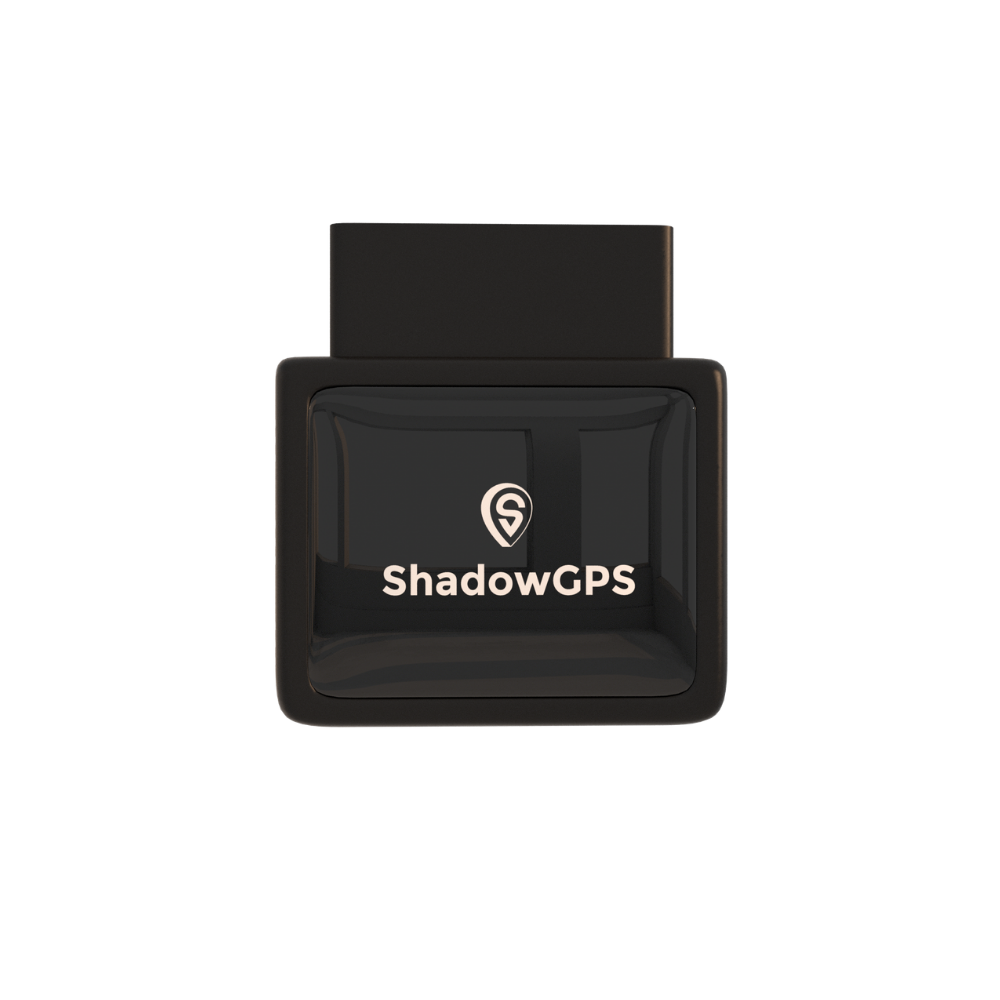
ShadowAuto
- Plugs into your OBD2 port in under 2 minutes, no tools
- Live tracking, trip timeline & trip replay
- Car alarm, tamper alerts & engine codes


How to Plug a GPS Tracker Into Your OBD2 Port
If you can plug in a phone charger, you can do this. The whole job takes under 2 minutes:
- Turn your car off and take the key out.
- Find the OBD2 port under the driver's side dash (use a flashlight if needed).
- Line up the trapezoid shape and press the tracker in firmly until it's fully seated. It only fits one way.
- Start your car so the tracker can power up and lock onto GPS. A short drive helps the first fix.
- Open the app, add your tracker, and watch your car appear on the map.
Want a version with photos? See how to set up a GPS tracker in your car.
Pro tips from support conversations
- Port in an awkward spot? A short OBD2 extension cable lets you tuck the tracker up under the dash where knees and feet won't bump it.
- Already have an insurance dongle? A quality OBD2 Y-splitter lets both devices share the port.
- Taking the car to a shop? Mechanics may unplug it to connect their scanner. Just plug it back in afterward, and your tamper alert will tell you if it was left out.
OBD2 GPS Tracker vs. Other Tracker Types
The OBD2 port is one way to power a tracker, not the only way. Here's how the options compare for someone who wants to know where their car is:
| Tracker type | Power source | Setup | Live location? | Best for |
|---|---|---|---|---|
| OBD2 plug-in tracker | Car's OBD2 port | Plug in, minutes | Yes, via cellular | Daily-driven cars, teen drivers, Turo |
| Hardwired tracker | Spliced into wiring | A pro wires it in | Yes, via cellular | Permanent, fully hidden setups |
| Battery-powered tracker | Rechargeable battery | Magnet-mount or hide | Yes, via cellular | Trailers, equipment, cars without a port |
| Bluetooth tag (AirTag, Tile) | Coin battery | Drop it in | Only when a nearby phone passes by | Keys and bags, not cars |
| Insurance OBD2 dongle | Car's OBD2 port | Plug in | No, data goes to the insurer | Driving-score discounts |
| ShadowAuto (OBD2) | Car's OBD2 port, never charge | Plug in, under 2 min | Yes, live on your phone while you drive | Your car or truck, no contract |
Comparison reflects typical product categories as of November 2026. Individual products vary.
Weighing plug-in against battery power? Our side-by-side breakdown, OBD2 vs. Battery-Powered GPS Tracker, goes deeper. And if you've considered an AirTag, here's why AirTags fall short for cars.
Will an OBD2 GPS Tracker Drain Your Car Battery?
Not if your battery is healthy and you drive the car regularly. This is one of the top questions we hear, so here's the honest math.
Every modern car pulls a small amount of power while parked to keep the clock, alarm, and keyless entry alive. A healthy car should draw no more than about 50 milliamps when off. According to fleet tracking provider GPS Insight, most GPS trackers draw less than 10 milliamps when idle, which is a small fraction of what your car already uses.
Where problems show up:
- An old or weak battery that's already near the end of its life.
- A car that sits for weeks without being driven, like a winter-stored classic.
- Stacking several always-on devices (tracker plus dash cam plus insurance dongle).
- No-name devices with no sleep mode. Sleep mode is the single most important feature for any plug-in device.
If your car will sit parked for long stretches, a battery-powered tracker is the better fit for that one vehicle.
Is the OBD2 Port a Security Risk?
It can be, and this is worth knowing whether or not you ever buy a tracker. The same port your mechanic uses to program a replacement key fob can be misused by thieves.
Police departments from Waterbury, Connecticut to Houston have warned drivers about this method. A thief gets into the cabin, connects a key programming tool to the OBD2 port, and pairs a blank fob that the car then accepts. The National Insurance Crime Bureau has highlighted police advice to use OBD port locks against it.
The bigger picture is improving. NICB data shows US vehicle thefts fell to 659,880 in 2025, down 23% from 2024, but that still works out to a car stolen roughly every 48 seconds.
How to protect your OBD2 port
- OBD port lock: a physical cover that blocks anything from plugging in.
- Steering wheel lock: a visible deterrent that slows down a quick getaway.
- Software key-programming lockouts: some newer cars let the dealer restrict new key pairing.
- A GPS tracker with a car alarm and tamper alerts: it won't stop someone from getting in, but it tells you the moment your car moves or the tracker is pulled, and shows you where your car is going.
One catch: an OBD lock and an OBD2 tracker compete for the same port. If you want both, use an extension cable to move the tracker and lock the original port, or pair the lock with a battery-powered tracker hidden elsewhere in the car. Our guide to GPS trackers and car theft covers more layered protection ideas.
No OBD2 Port? Here's What to Use Instead
If you drive a Tesla, a pre-1996 classic, or a motorcycle, or you want to track a trailer or piece of equipment, a plug-in tracker isn't an option. A battery-powered tracker solves the same problem without any port at all.
ShadowTrack runs on a rechargeable battery that lasts up to about 15 days per charge, and it fits into a weatherproof magnetic case so you can mount it almost anywhere. Same app, same live map, same alerts as ShadowAuto.
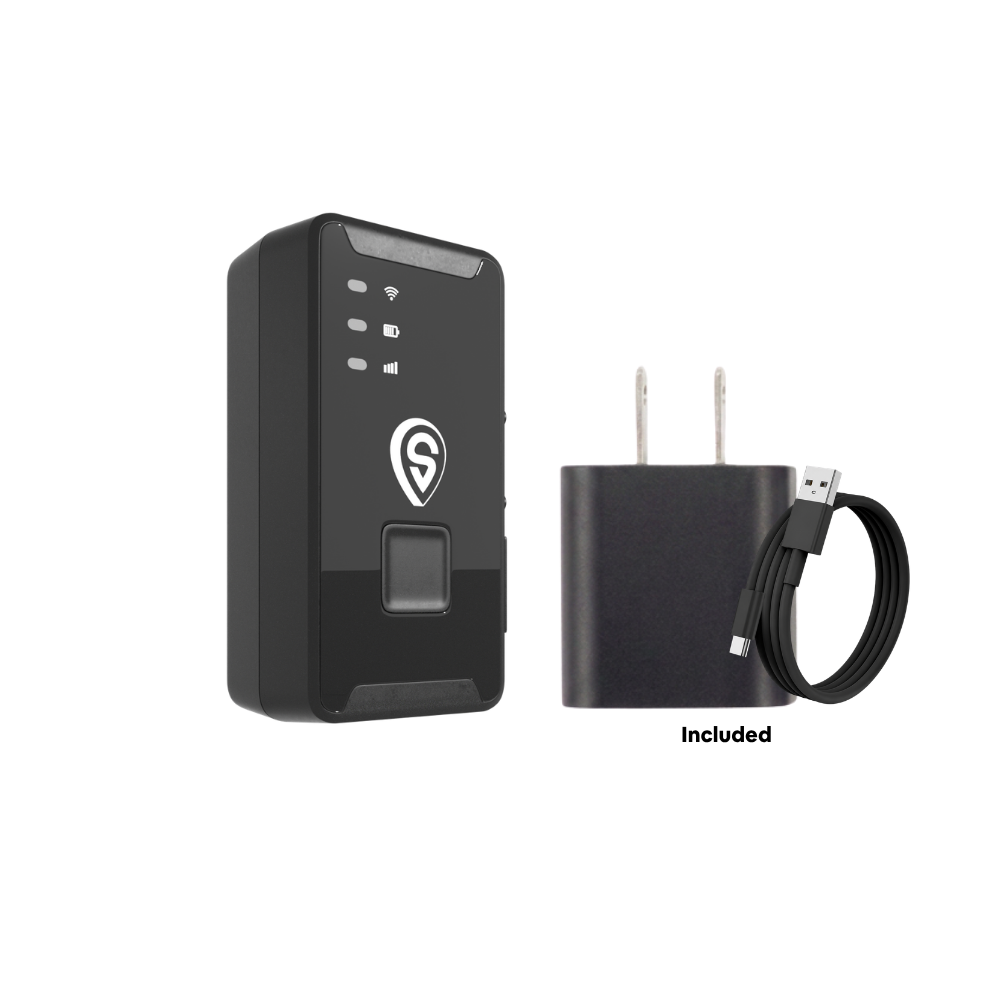
ShadowTrack
- Up to ~15 days per charge
- Works on EVs, classics, trailers & equipment
- Hides anywhere with the weatherproof magnetic case
Who Uses an OBD2 GPS Tracker?
Most people who plug a tracker into their OBD2 port aren't fleet managers. They're owners with one car or truck that matters to them.
Parents of teen drivers
See that your new driver made it to school and back, review trips together, and get an alert if the car leaves an area you've set. More in our teen driver guide.
Turo and rental hosts
Know where each car is between bookings and confirm it comes back on time. See ShadowGPS for Turo hosts.
Small fleets (2 to 5+ vehicles)
Contractors, landscapers, and service businesses see every truck on one map without a long-term contract.
Example: one family, two cars, zero guesswork
Here's an illustrative setup we see often. A parent plugs a tracker into the family SUV their 17-year-old drives and another into their own pickup. They set a geofence around the high school and home, turn on trip alerts, and share live location with the other parent.
The result isn't watching every turn. It's a calm check of the app when the teen is late, a trip replay to talk through a hard-braking moment, and an alert if the pickup moves overnight. That's the real job of the OBD2 port here: quietly powering certainty.
Common OBD2 Mistakes to Avoid
- Forcing the plug in at an angle. It only fits one way. Bent pins can stop scanners and trackers from working.
- Leaving a basic Bluetooth scanner plugged in for months. Some have no sleep mode and can slowly drain your battery.
- Clearing codes without fixing the problem. The check engine light will come back, and your car may fail its emissions check because readiness monitors reset.
- Plugging in performance tuners blindly. Writing changes to the engine computer can affect your warranty and emissions compliance.
- Assuming the port tracks you on its own. It doesn't. Location only comes from a GPS tracker or your car's own connected services.
Is it legal to plug a GPS tracker into a car?
Plugging a tracker into a car or truck you own is legal across the US. That includes a family car your teen drives or a rental car you own and list on Turo (hosts should follow the platform's disclosure rules). Tracking a car you don't own, without the owner's consent, is a different story and can break state laws. For employee vehicles, see our guide to GPS tracking laws for employee vehicles. This isn't legal advice, so check your state's rules if you're unsure.
OBD2 Port FAQ
What is an OBD2 port used for?
It's used to read your car's diagnostic trouble codes and live engine data, run emissions inspections, and power plug-in devices like GPS trackers, insurance dongles, dash cam cables, and head-up displays.
Is there a monthly fee for an OBD2 GPS tracker?
Yes, any tracker that shows live location needs a cellular connection, so there's a monthly fee. ShadowGPS plans are $15/mo month-to-month, or as low as $9/mo if you prepay. No contract, ever. Month-to-month, or prepay and save. See current pricing.
Does an OBD2 GPS tracker need a SIM card?
Not one you have to buy. ShadowAuto comes with its cellular connection built in and covered by your plan. You just plug it in and add it in the app.
Is it hard to plug a GPS tracker into the OBD2 port?
No. Find the port under the dash, press the tracker in, and start your car. It takes under 2 minutes with no tools and no wiring.
Is OBD2 the same as OBD-II?
Yes. OBD2 and OBD-II are two spellings of the same second-generation On-Board Diagnostics standard. You may also see it called the DLC or J1962 connector.
Does every car have an OBD2 port?
Every gas-powered car and light truck sold in the US since model year 1996 has one. Some fully electric cars, many motorcycles, and pre-1996 cars do not.
Can the OBD2 port track my car's location?
Not by itself. The port has no GPS data. A GPS tracker plugged into it uses its own GPS receiver and cellular connection for location, and uses the port for power and car data.
Can I leave a device plugged into the OBD2 port all the time?
Yes, if it's designed for it. GPS trackers and quality adapters use a sleep mode to keep power draw tiny while parked. Avoid leaving basic scanners without a sleep mode plugged in for long periods.
Can I use a GPS tracker and an insurance dongle at the same time?
Yes, with a quality OBD2 Y-splitter cable that turns one port into two. Check with your insurer first, since some programs require their device to plug in directly.
Can thieves use the OBD2 port to steal a car?
Yes, some thieves connect key programming tools to the port to pair a new key fob. An OBD port lock, a steering wheel lock, and a GPS tracker with theft alerts make your car a harder, more traceable target.
How do I check if there's a tracker already plugged into my car?
Start with the OBD2 port: look under the dash for any device or adapter you didn't add. Then check under seats, in the trunk, and behind bumpers. Our step-by-step guide shows how to find a tracker on your car.
The Bottom Line
Your car's OBD2 port is a small, standardized doorway to your car's computer and a reliable source of constant power. Mechanics use it to read codes. You can use it to turn a 2-minute plug-in into round-the-clock certainty about where your car or truck is.
Plug it in, see it move, cancel any time.
Put your OBD2 port to work
Plug in ShadowAuto and see your car on your phone in minutes. No car port? ShadowTrack goes anywhere. No contract, ever.
Pricing as of November 2026: device $69.90; plans $15/mo month-to-month, $13/mo quarterly, $12/mo annual, or $9/mo with 2-year prepay (1 to 3 trackers, USD). No contract, ever. Sources: US EPA and California Air Resources Board OBD II requirements; SAE J1962 connector standard; National Insurance Crime Bureau theft data; local police reporting on OBD key-programming theft. As an Amazon Associate, ShadowGPS earns from qualifying purchases. This article is general information, not legal advice.